
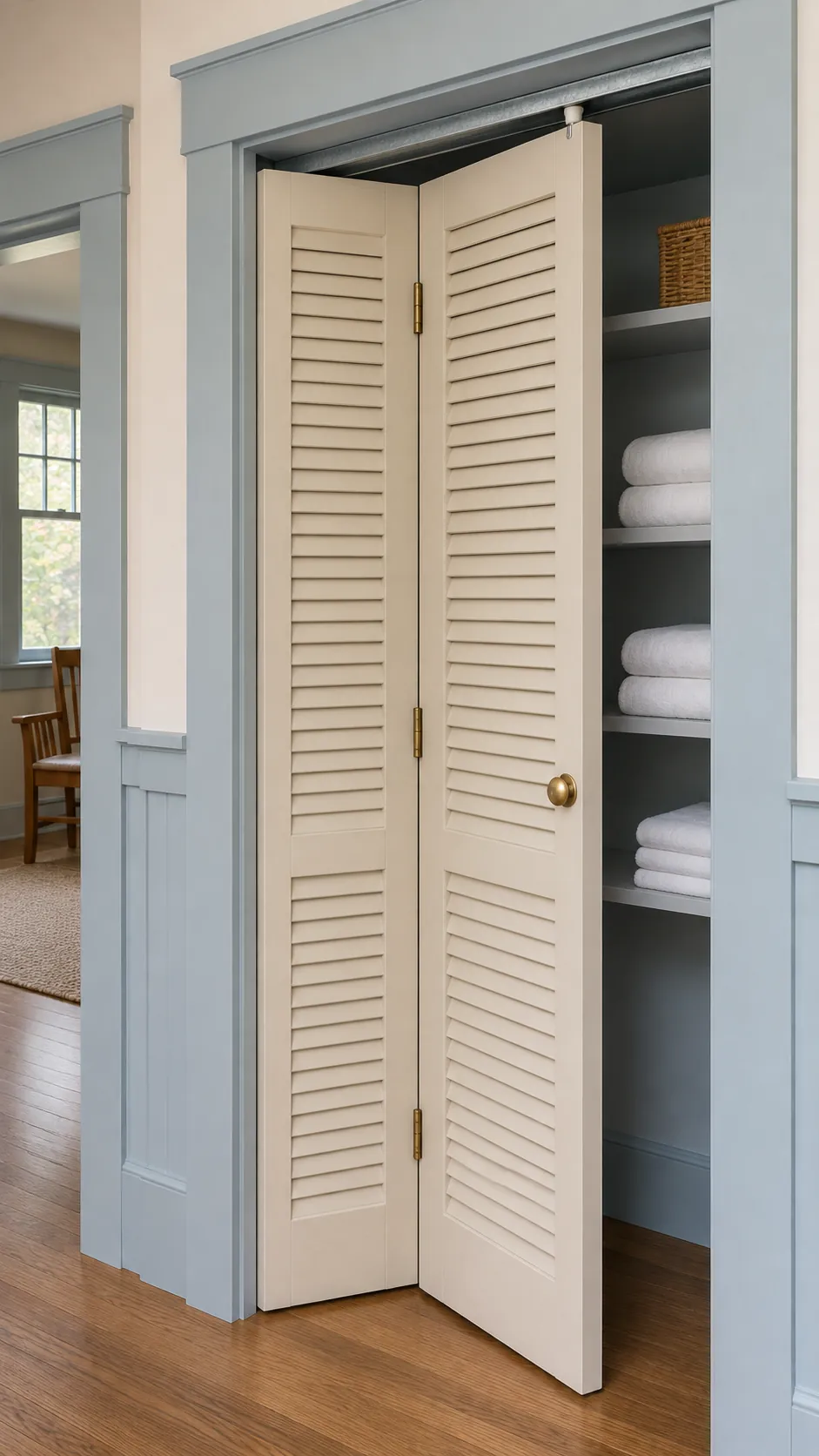
If the closet door drops at the corner or the top guide pops out the moment you fold it, stop pulling on the knob. A bifold door stays upright on two pivots at the jamb while a guide travels in the overhead track. Find the part that lost its seat before you try to put the door back. A loose bracket or a damaged guide can send the door straight out of the track again.
Tell the traveling guide from the fixed pivots
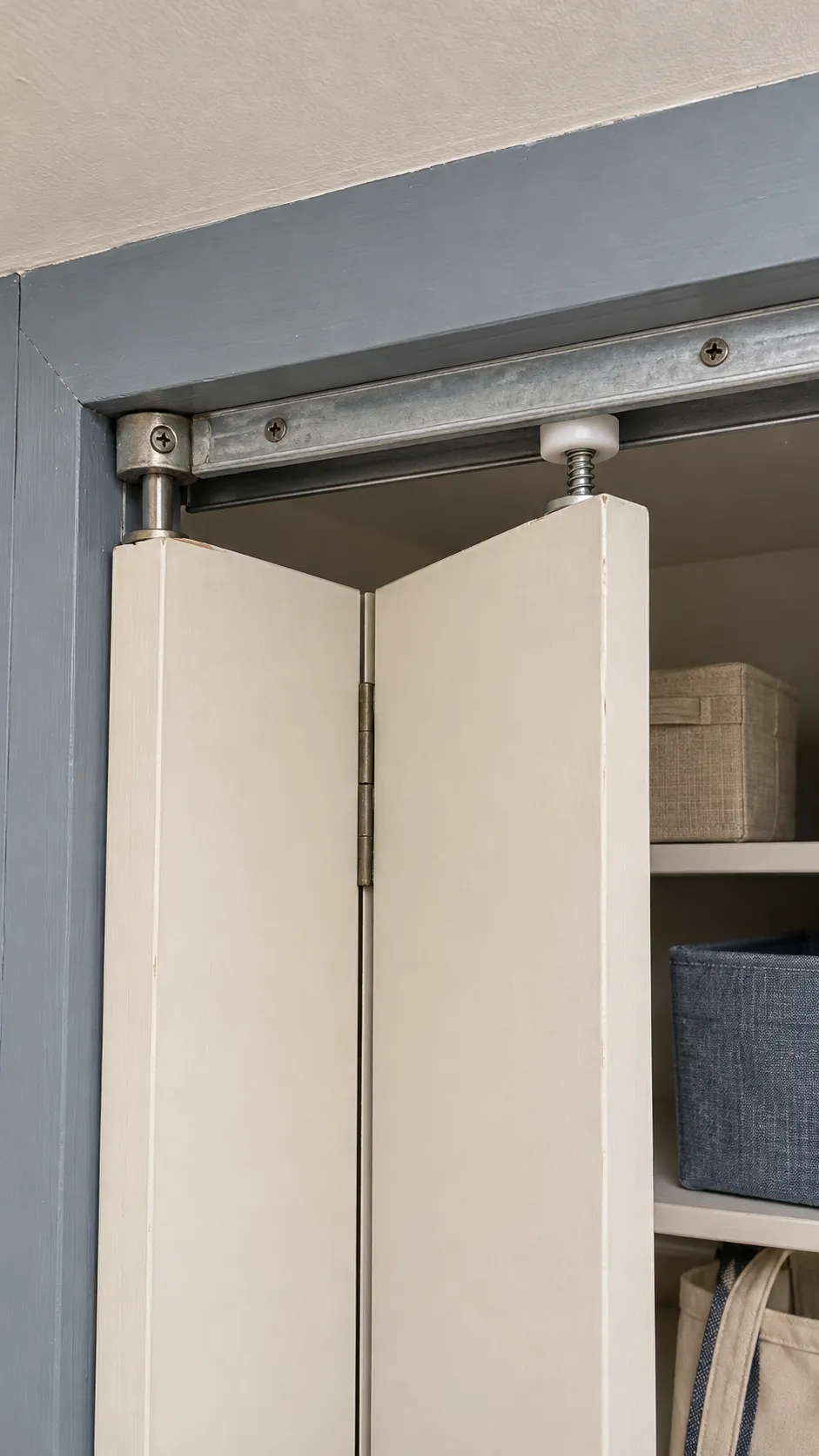
Support the outer edge of the panels and look up at the track. The top pivot sits in a socket close to the jamb. The guide at the other end travels along the channel as the panels fold. A bottom pivot usually sits in a small bracket on the floor or jamb. A pivot that has come out can let the whole assembly tip, while an escaped guide often leaves the door standing at the jamb with the free end swinging.
Some kits use a nylon guide cap, others use a wheel, and some have a locking clip at the top pivot. Look for the maker’s installation sheet if you can identify the hardware. Ask someone to steady tall panels while you inspect them and keep fingers out of the fold.
Find the reason the guide jumped
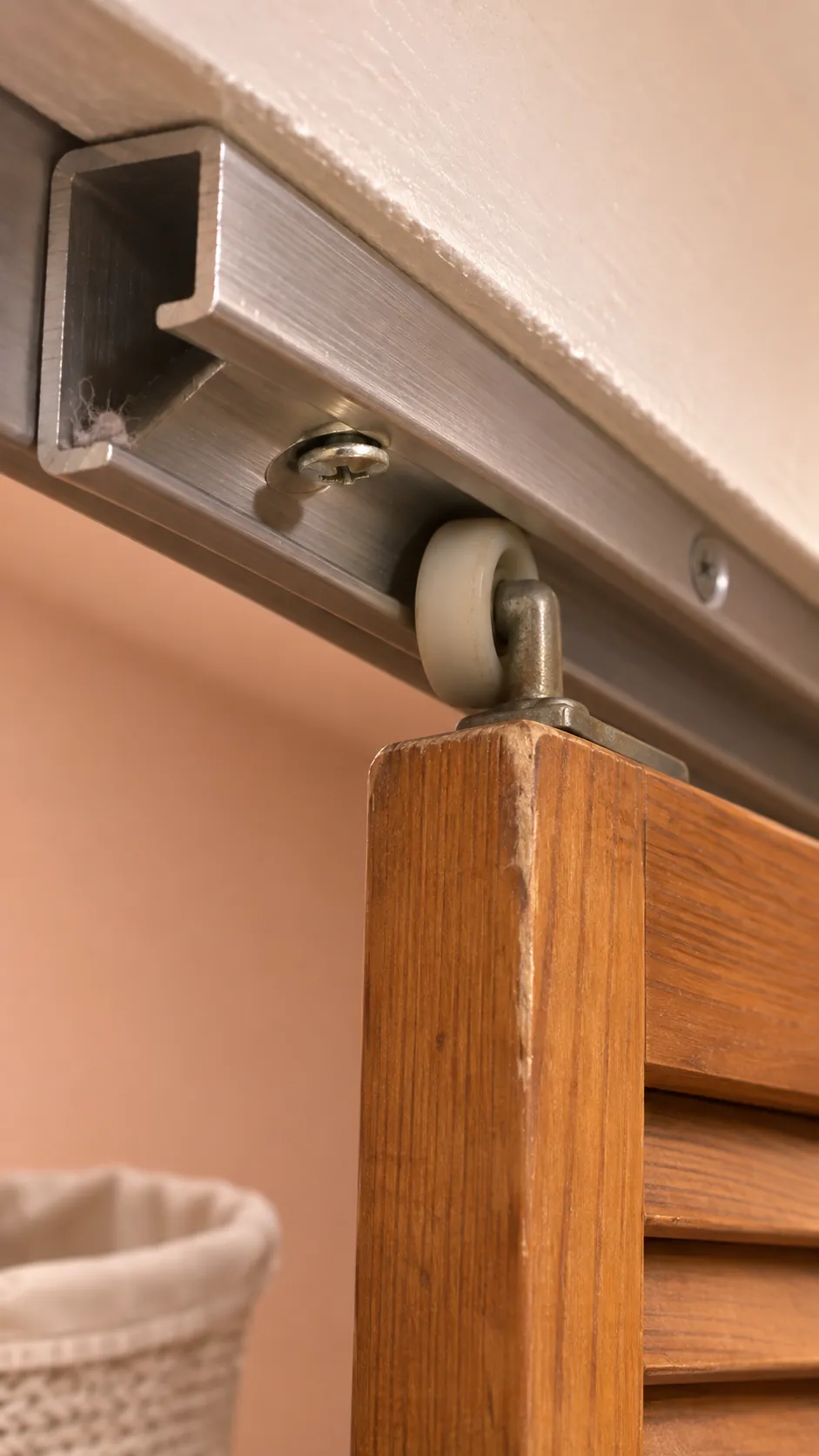
Check whether the top track is tight against the header. A protruding screw or a bent lip can catch the door guide roller at the same point on every pass. Vacuum loose debris, then wipe the channel with a dry cloth. Check the guide for chips or flat spots and see whether a spring loaded stem retracts and returns smoothly when the panels are safely supported.
At the jamb, look for a top pivot bracket that has slid from its old position or a bottom bracket that rocks on its screws. Check the material around the pin sockets too. If the door skin or the block around a pin has split, the pin can sit crooked even when both brackets are tight.
Put the guide back in the channel
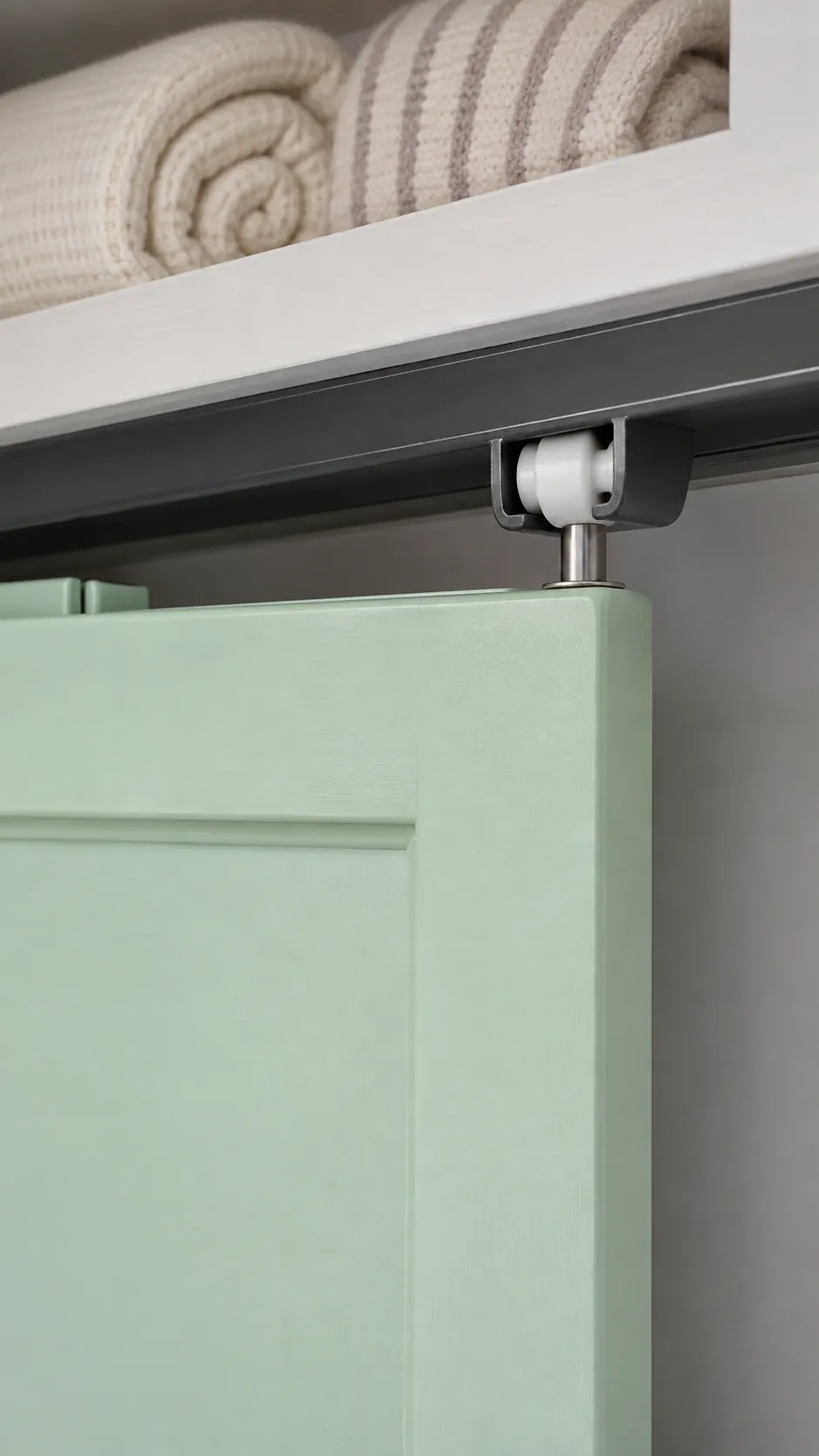
If both pivots are seated and the guide is intact, fold the panels slightly and support their free edge. For a typical spring loaded guide, press the guide down, move it under the open side of the track and release it into the channel. Keep fingers clear of the channel as you release the spring. Check that the guide is captured by the track before letting go of the panel. Use the maker’s procedure if the track has an access slot or the guide uses a clip instead of a spring.
Reseat a pivot that has slipped out
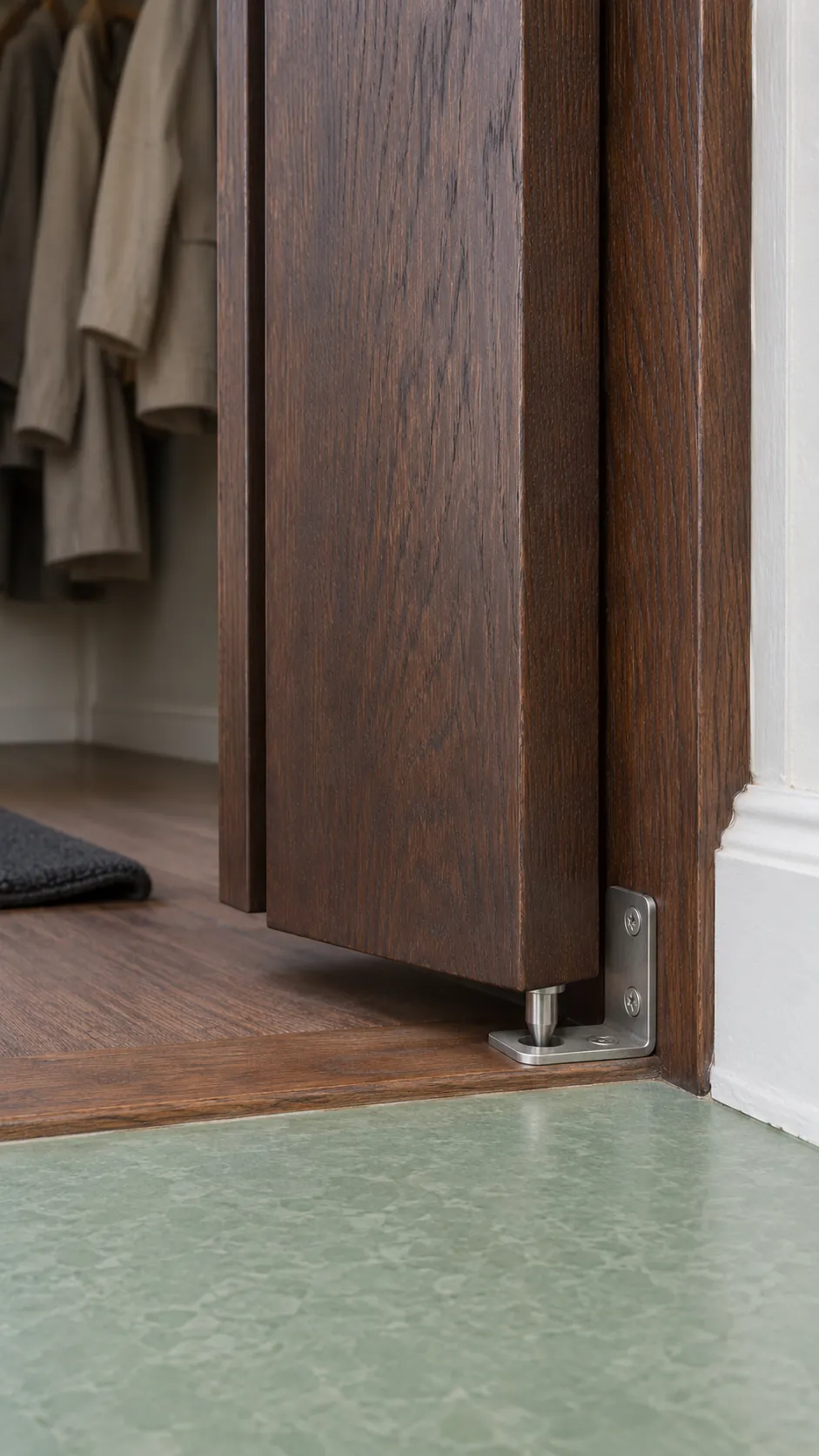
Have a helper support the folded panels if either pivot is out. For many light wood doors, you engage the upper pivot in its socket, lift the assembly enough to place the bottom pivot into its bracket, then seat the guide. Some kits use a different order or a release lever. Confirm the sequence for the hardware on your door and stop if getting it into place requires force.
Look directly at the bottom bracket before releasing the weight. The pin should sit in the intended socket or notch rather than on the edge of the bracket. Check that any top pivot lock has clicked or slid back into its secured position.
Adjust the gaps before you test the door
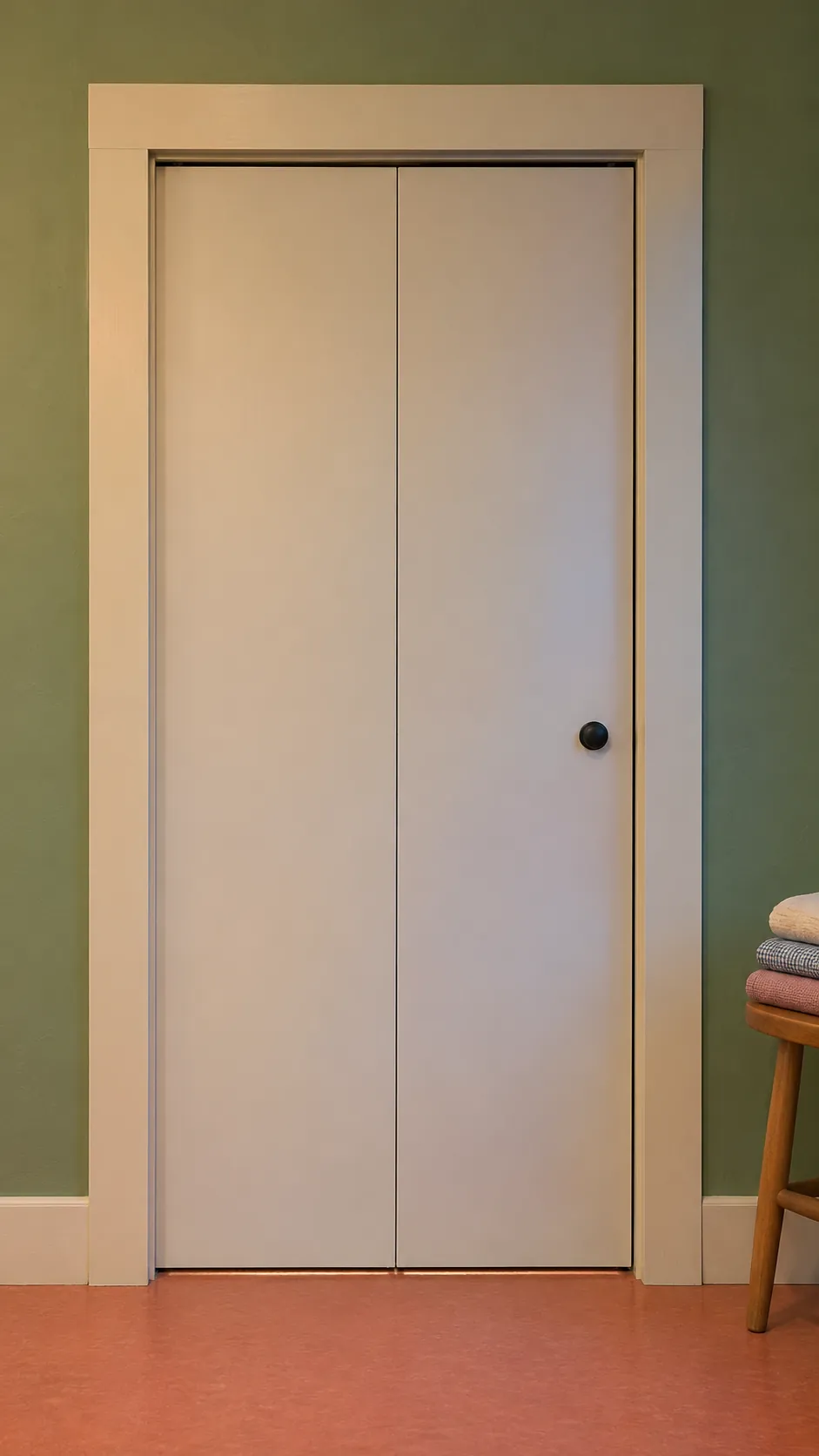
Close the panels slowly and check the gap at the pivot jamb from top to bottom. If the gap tapers or the door brushes the floor, follow the hardware instructions for alignment. On common systems the top pivot bracket slides sideways after you loosen its locking screw, while the bottom pivot controls height or sits in one of several lateral notches. Mark the starting positions and support the door while you make small changes.
Tighten the locking screw after each change. Leave the guide deep enough to stay captured throughout the swing and leave enough clearance that the door clears the header and floor. Test it slowly several times. If it binds at a single spot, identify that contact before moving a second adjustment.
Replace the part that can no longer hold
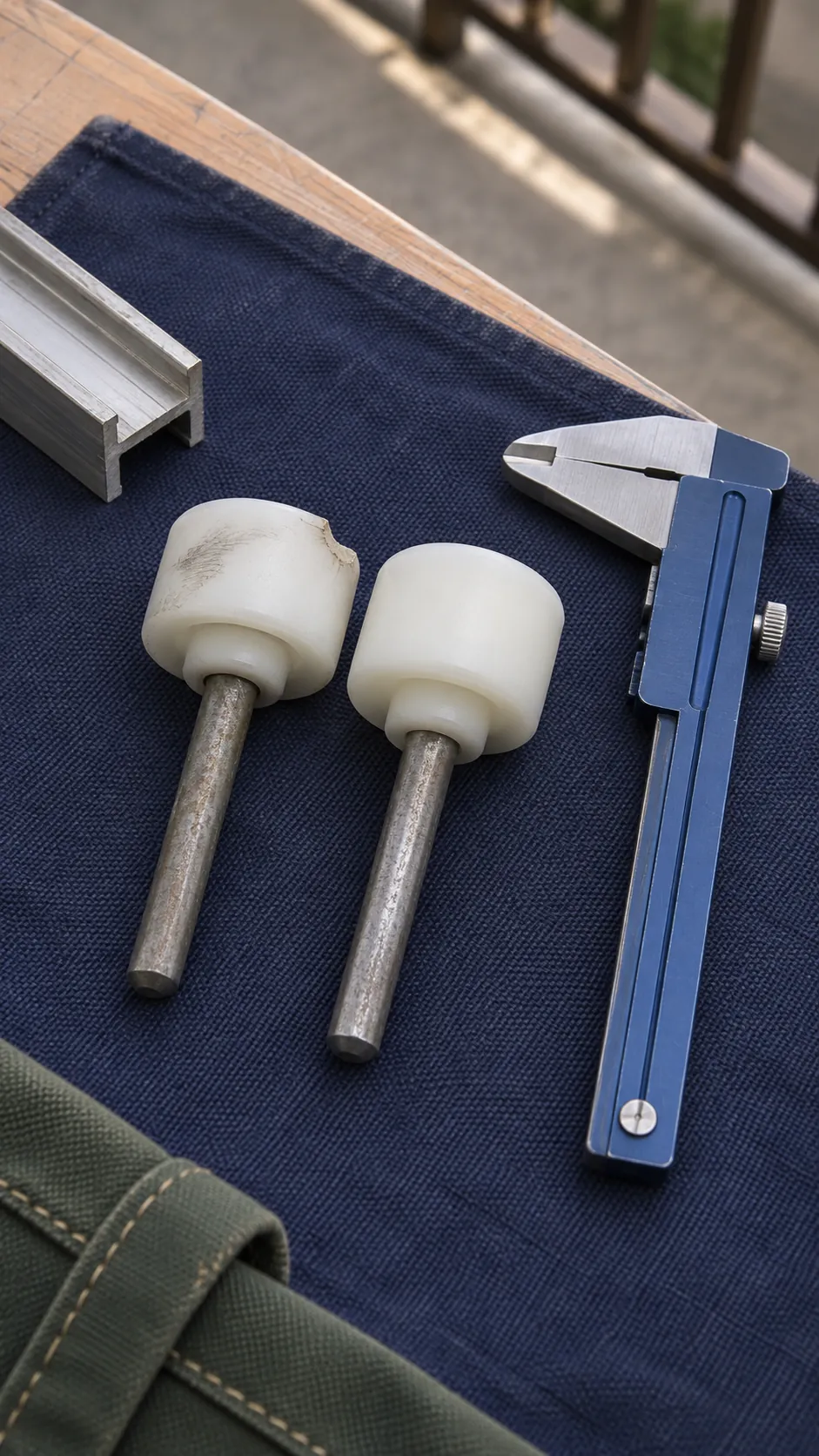
A chipped guide, weak spring, bent track or pivot socket that no longer holds deserves a compatible replacement. Bring the worn part or its measurements to the hardware store. The stem diameter, guide shape and track opening matter as much as the overall length. A loose bracket needs sound material for its screws to grip. Use a listed repair bracket if the maker offers one for a damaged pivot pocket, and replace the panel or get help if the door material has crumbled around it.
Finish by opening the door slowly through the spot where it used to jump. The guide should stay in the channel without an upward shove, and the pivot side should stay steady when the panels fold.