
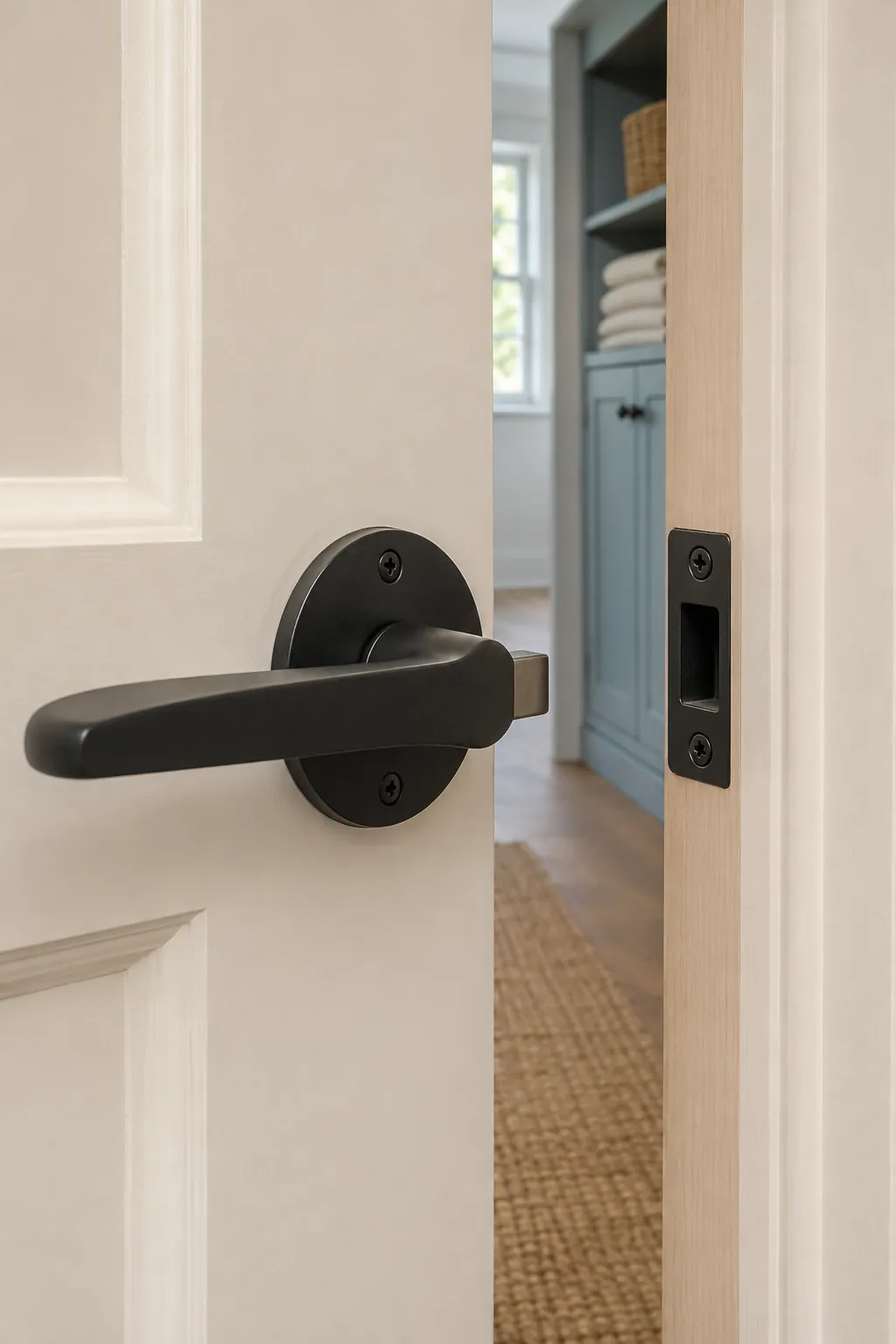
The door reaches the frame and bounces back, or it seems closed until you give it a light push. A dab of chalk on the latch can show which way it misses and help you decide whether to adjust the strike or fix the way the door hangs.
Test the latch with the door open
Turn the handle with the door open. The spring latch should retract into the door edge and pop back out when you release the handle. Press the beveled tip with your thumb and let go. If it stays in or moves only part of the way, check the handle mounting and service or replace the latch before adjusting the strike.
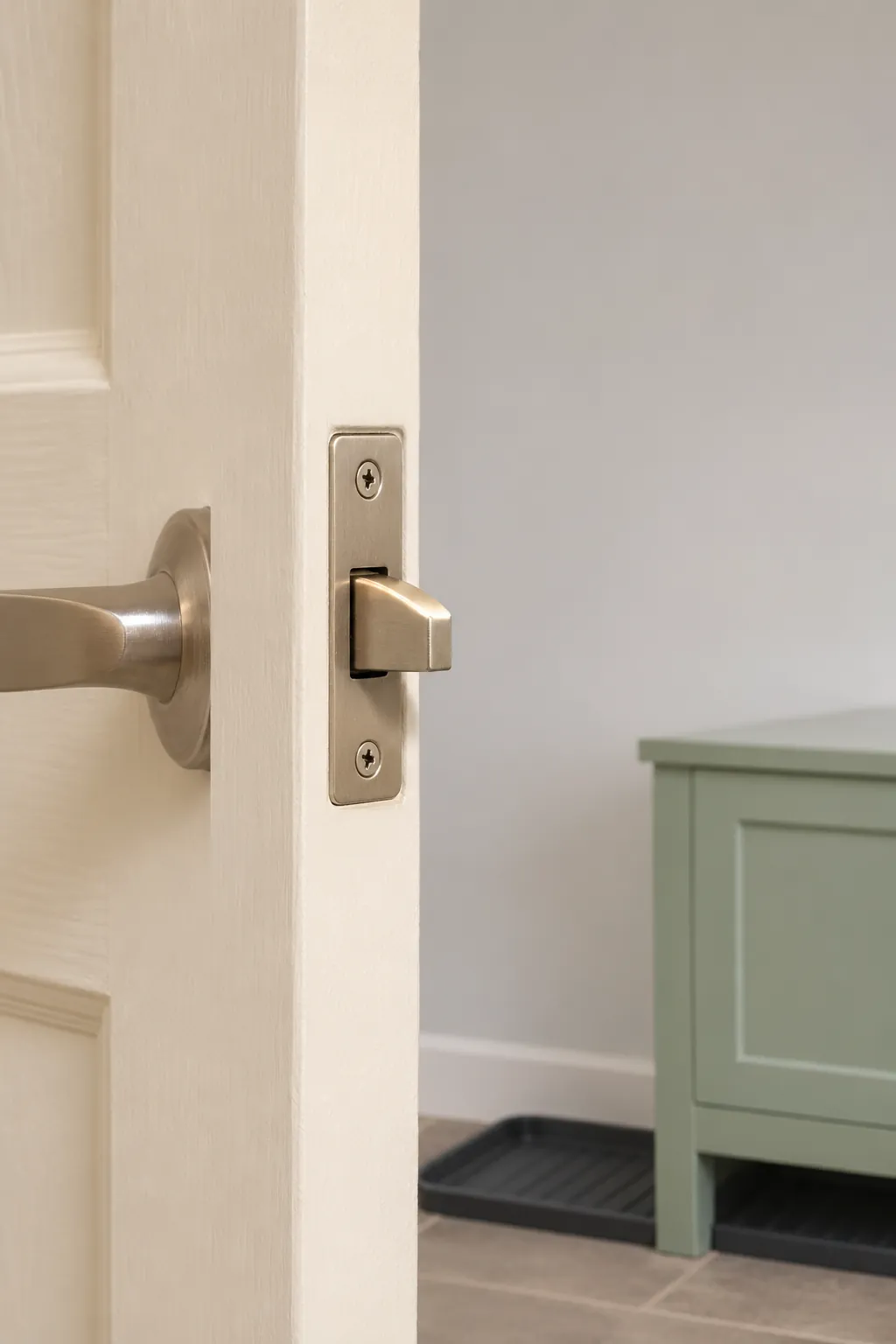
Locate the contact with a chalk mark
Dry the latch tip and rub a little washable chalk on it. Gently close the door until the latch touches the strike, then reopen it and look for the mark. A mark on the lower edge points to a low latch. A mark on the upper edge points to a high one.
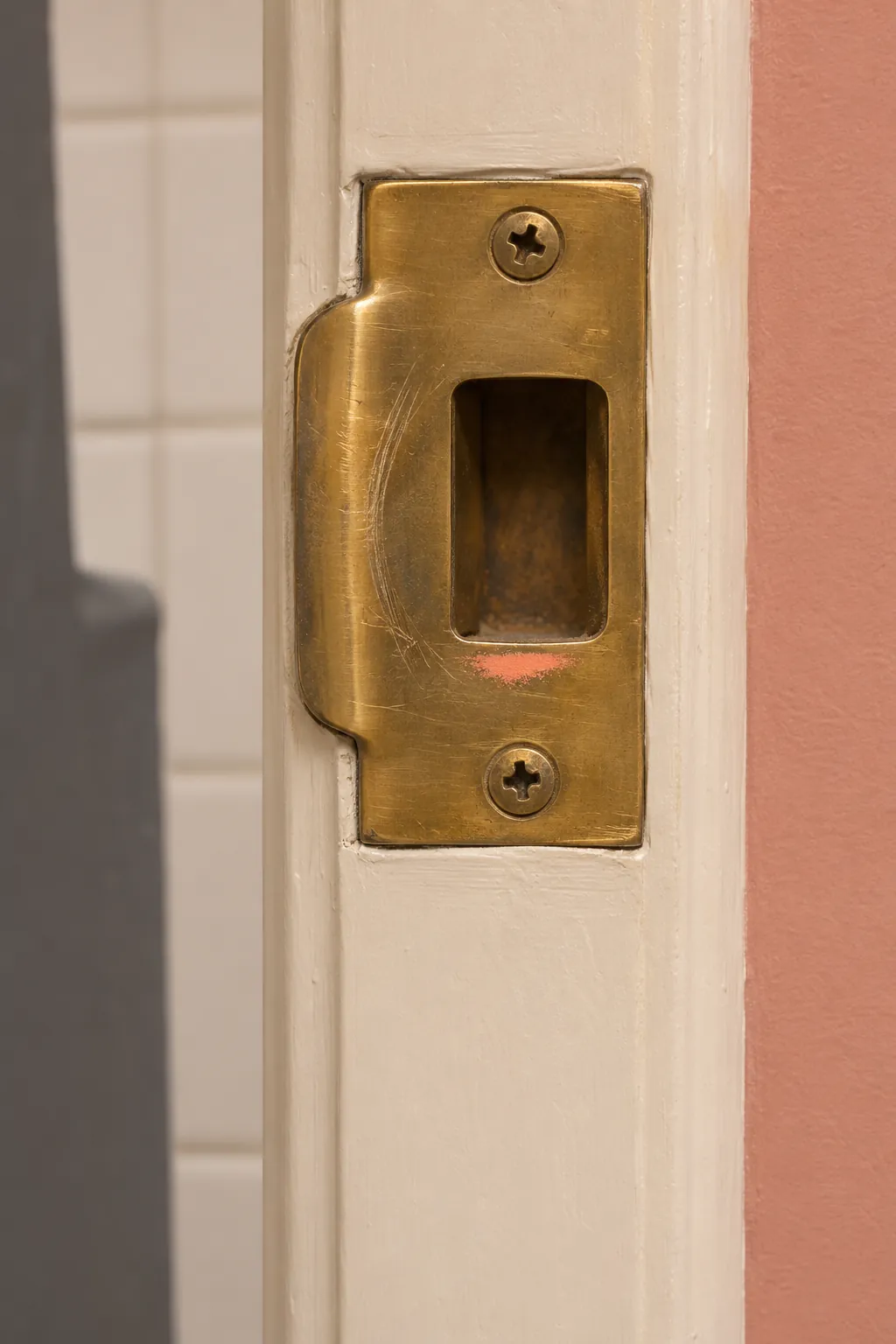
If the latch appears centered vertically but leaves a mark near the curved lip, check along the stop as well. A door held forward by a loose rubber bumper or a buildup of paint may stop before the bolt reaches the opening. If the tip fits into the metal opening and still will not extend fully, check the wood pocket behind it for an obstruction.
Check whether the door has shifted
Read the gap along the top and both sides. Open the door slightly and lift the latch edge while watching the hinges. If a hinge leaf moves against the jamb, support the door with a wedge and snug the screws. Repair any screw hole that no longer grips before checking the chalk mark again.
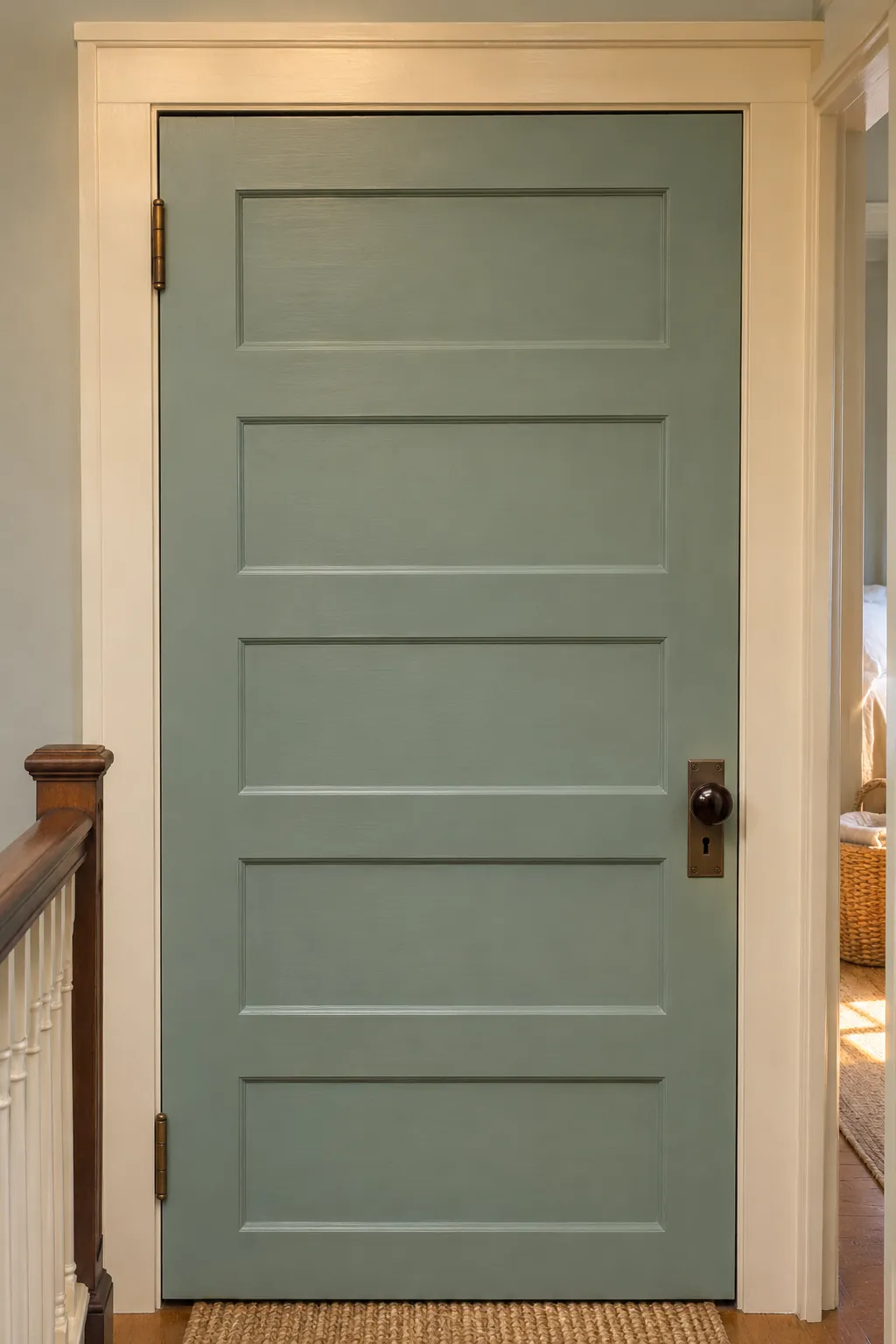
If the door sits square and the hinges are firm, leave them where they are. A strike plate can sit a little high or low even with a correctly hung door, especially after a latch or trim replacement.
Adjust the strike for a small miss
If your strike has slotted mounting holes, loosen its screws and slide it toward the chalk mark. Tighten both screws and check the latch with a gentle close. Keep the plate seated flush in its recess.
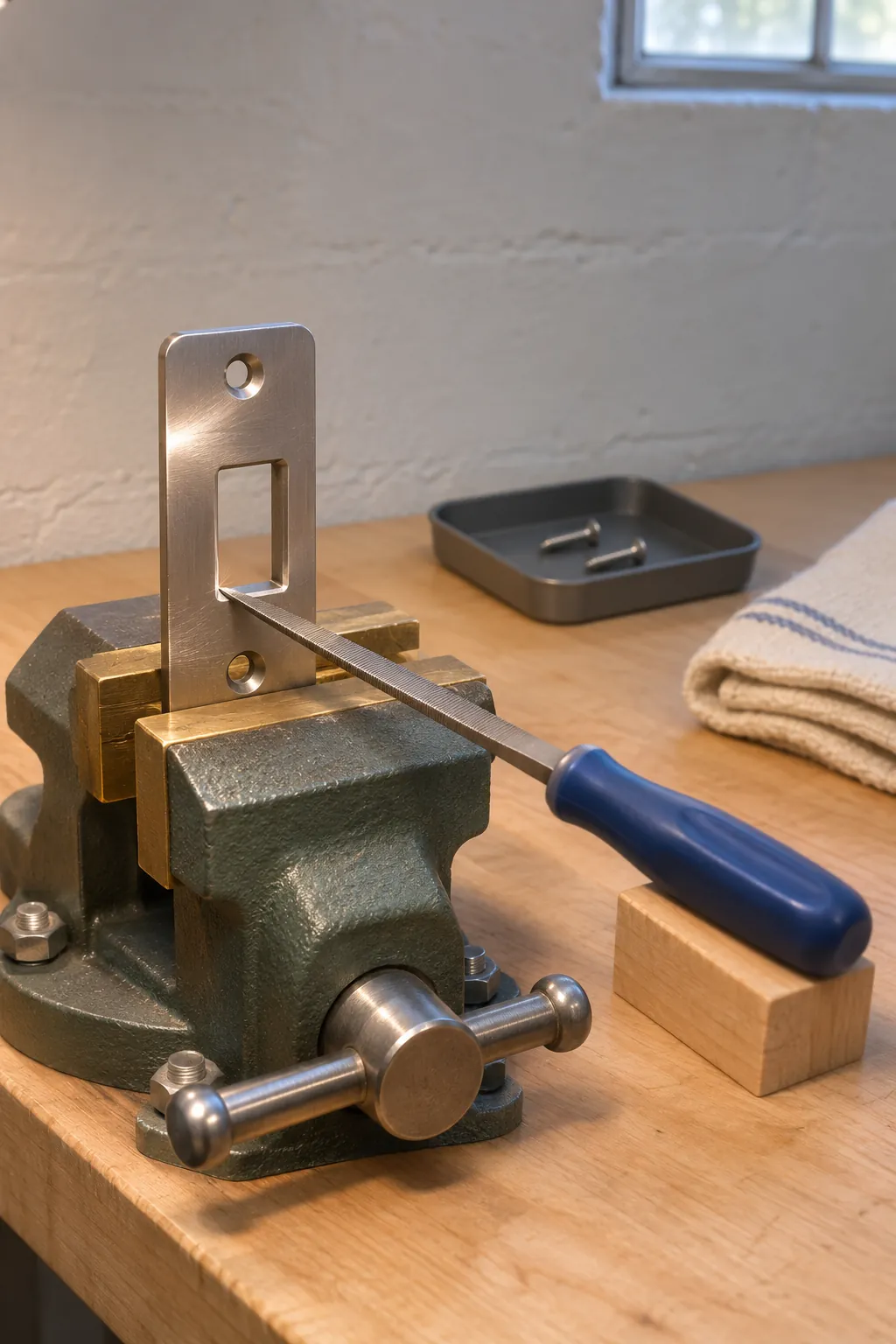
On a plain interior passage strike, a narrow metal file can relieve a tiny burr or overlap at the marked edge. Remove the plate and clamp it securely before filing. Take a few strokes, smooth the edge, and reinstall it to test. Leave enough metal around the opening for the latch to hold. For a larger miss, move the plate.
Move the plate when the holes cannot line up
Hold the plate so the chalk mark falls inside its opening and mark the plate outline and screw centers with a pencil. Remove the old plate. If a new screw center overlaps an old hole, glue a snug hardwood dowel into the old hole and let it cure before trimming it flush and drilling a new pilot hole.
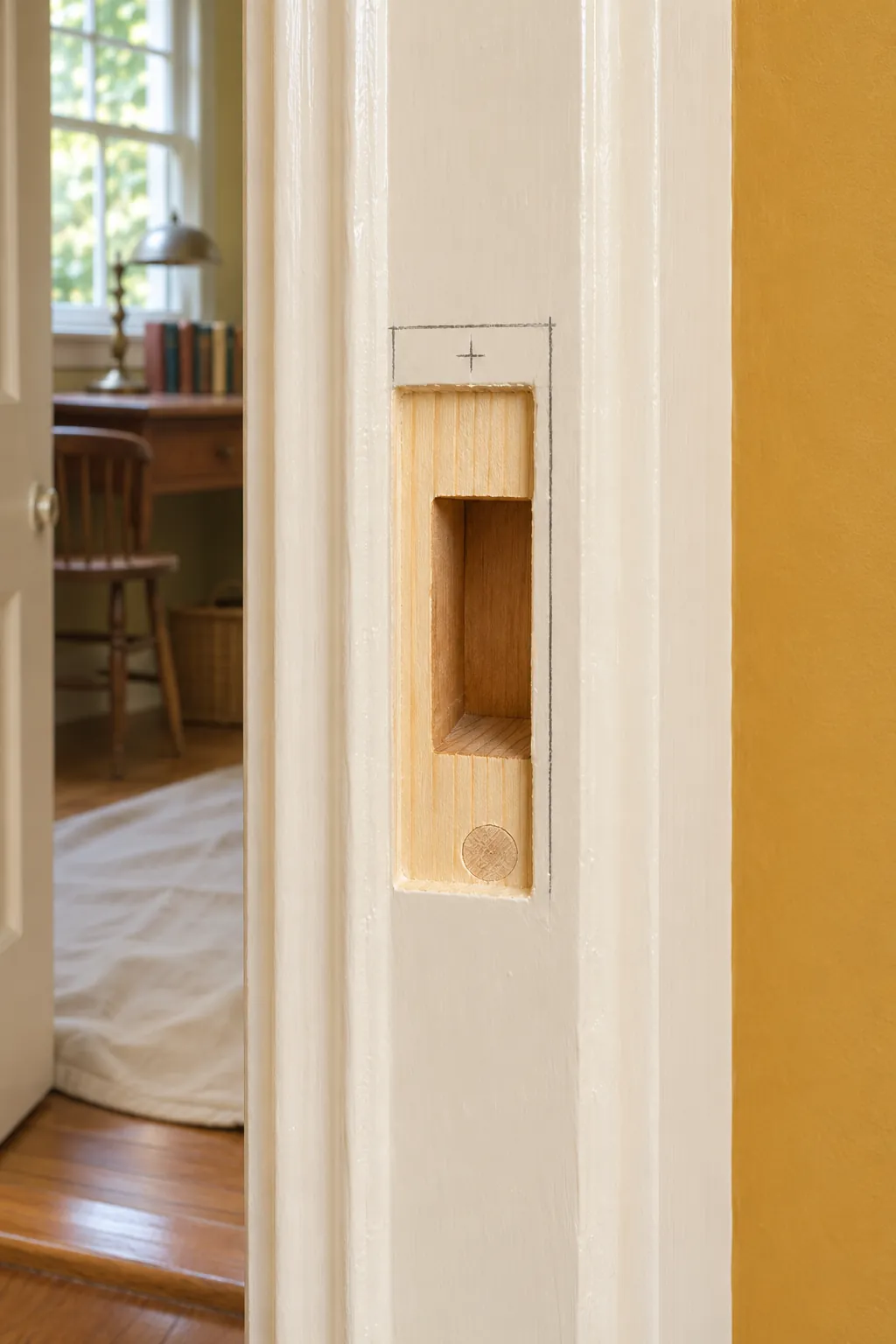
Use a sharp chisel to extend the shallow recess only where the plate needs to move. Check the deeper pocket behind the opening and extend it enough for the latch to spring out fully. Install the plate flat, with its curved lip facing the approaching latch and both screw heads flush.
Test the closed door for a steady catch
Close the door slowly without holding the lever down. Listen for the spring latch to click and then give the closed door a light pull with the handle untouched. If the door rattles with the latch engaged, use the adjustment tab only if your strike has one. Move it a little at a time and retest so the door still closes freely.
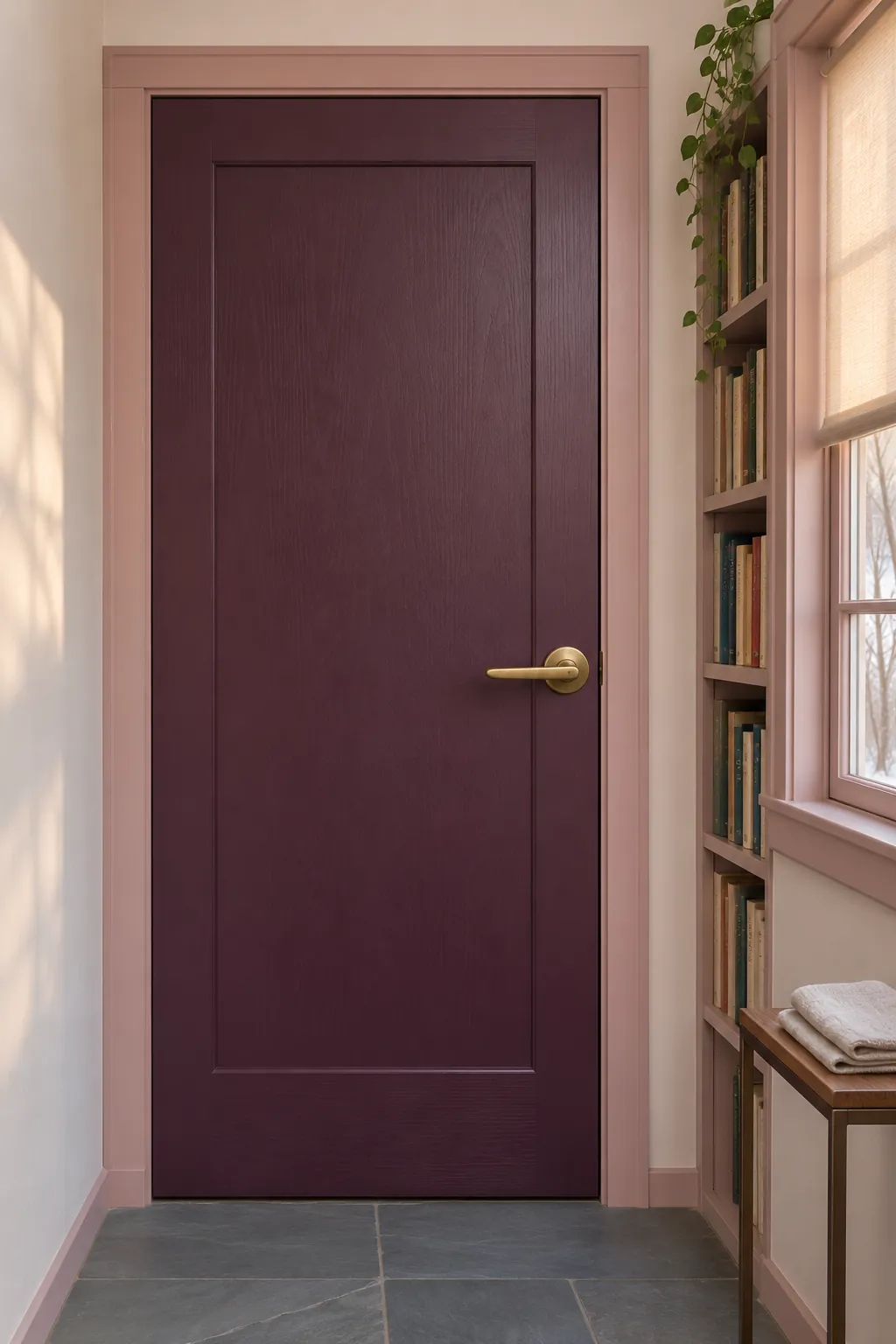
A gap too wide for the latch to reach, a moving jamb or sudden misalignment at several doors calls for a closer look at the frame. For a fire rated or exterior door, use its hardware guidance before filing or moving the strike.