
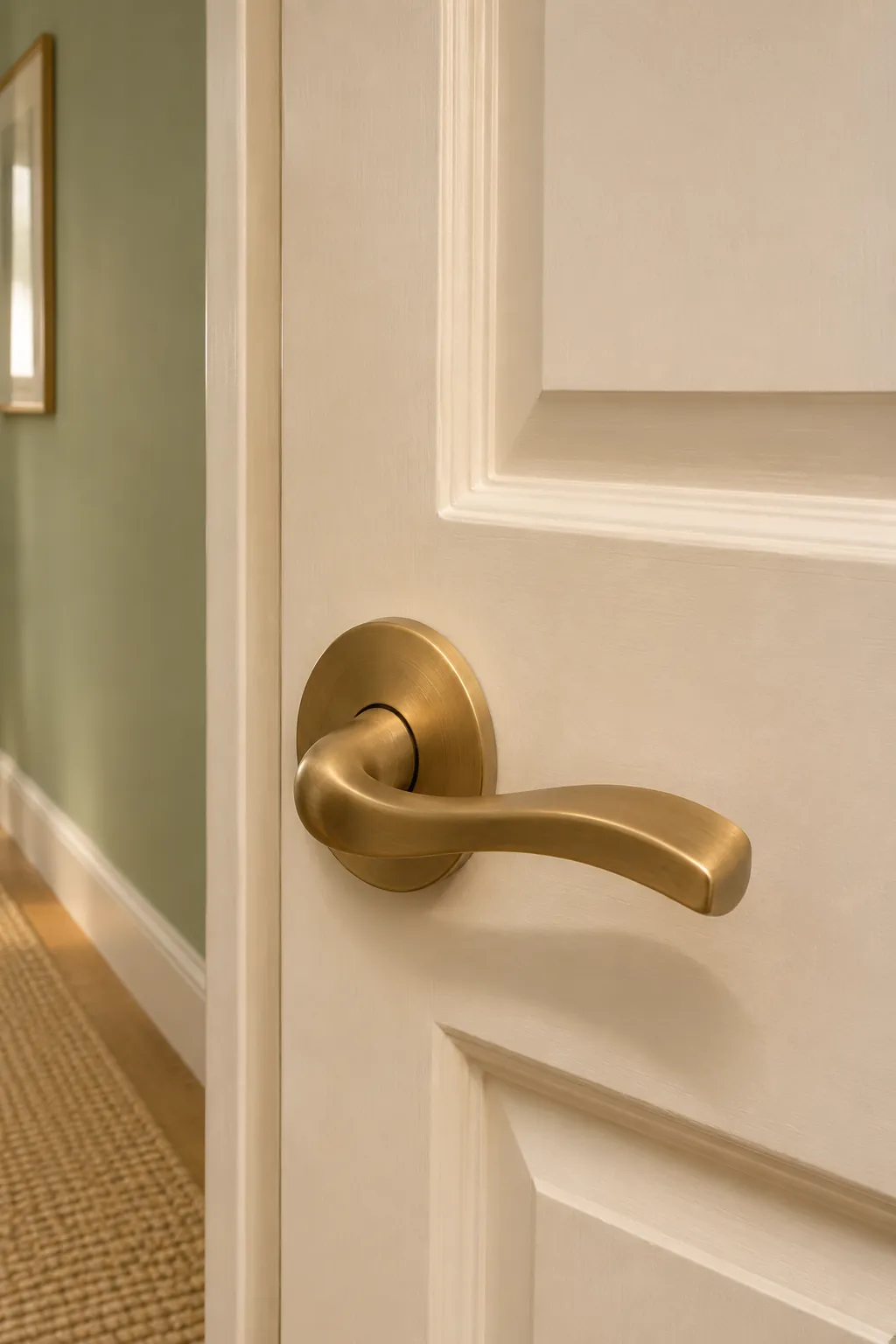
When the lever rocks in your hand, watch the plate under it before you reach for a screwdriver. A lever that wobbles on a firm plate needs a different fix from a whole handle set that moves against the door.
Find out which part moves
Open the door and wiggle the handle gently without turning it. Watch the mounting plate, the round or rectangular piece against the door. If the handle moves and the plate stays put, check the connection between the handle and its spindle. If the plate shifts against the door, look for loose mounting screws.
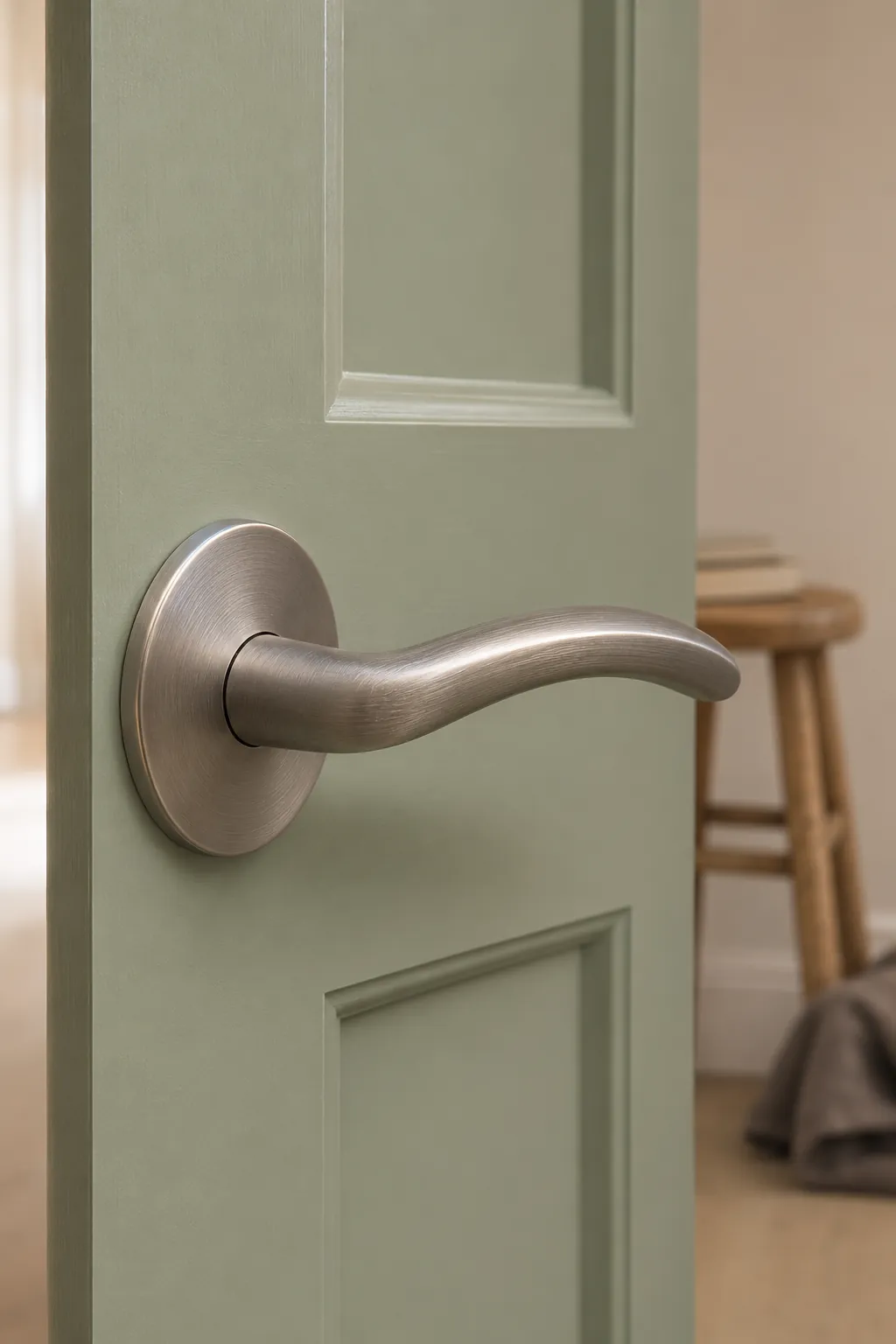
Turn the handle and watch the latch at the door edge. Some movement as the handle turns is normal. A loose joint, a delayed latch or a handle that comes away from the plate gives you a more useful clue.
Tighten the small screw under a loose lever
Look underneath the lever neck for a tiny set screw. On a typical lever with an exposed set screw, seat the handle fully on the spindle and tighten the screw gently with the correct hex key. If the spindle has a flat or a recess for the screw, align the handle so the screw seats where the maker intended.
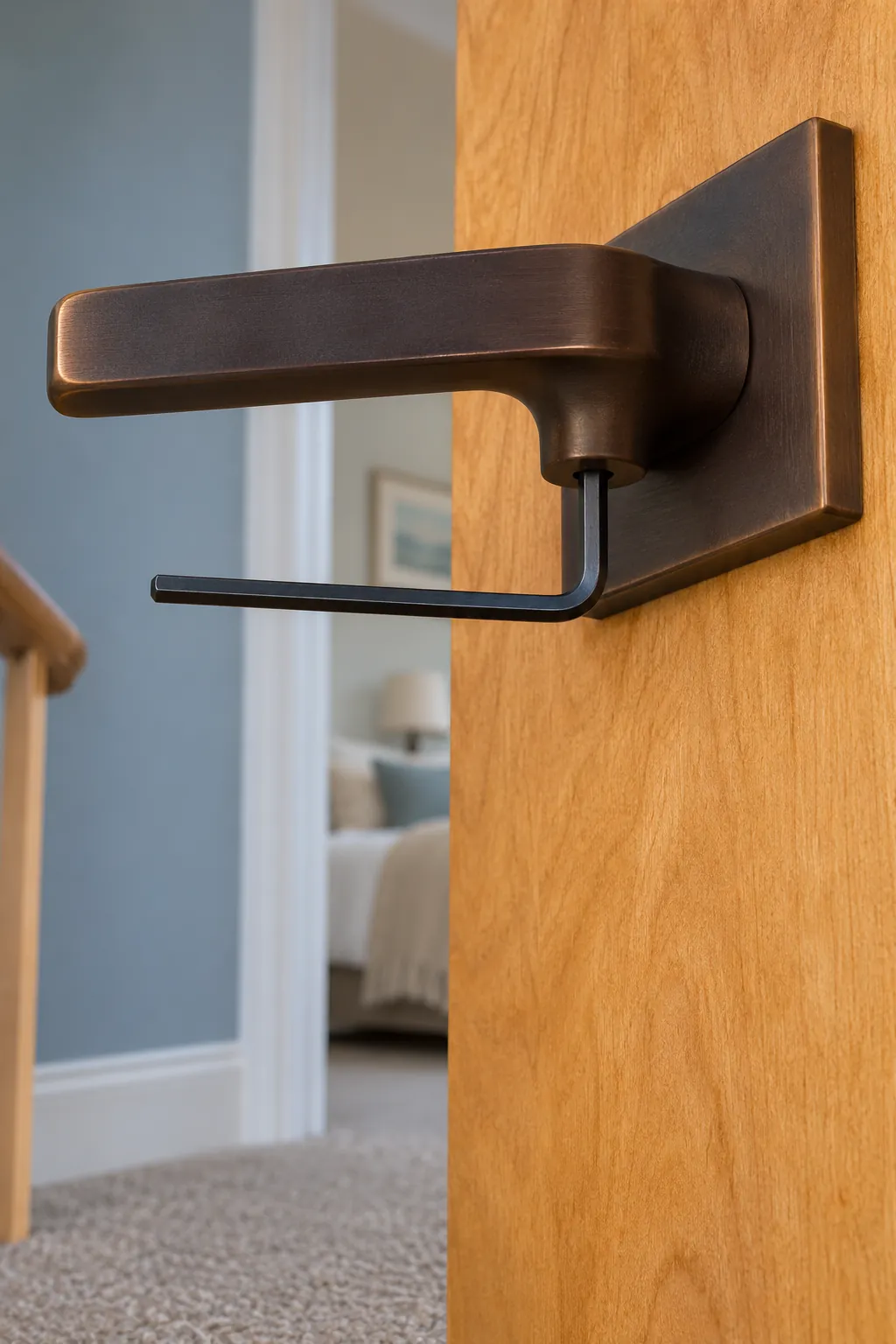
Some models secure the lever with a reverse acting retaining screw or a release pin. Check the product instructions if the screw behaves differently or the handle will not sit fully. Replace a missing screw with the manufacturer’s matching part.
Tighten visible mounting screws in small turns
If the whole plate moves and the mounting screws are visible, hold both sides of the handle set flat against the door. Use a hand screwdriver and alternate small turns on the two screws until the plates stop shifting. Turn the lever after each pass. If it binds, ease off a little and check that both sides sit centered.
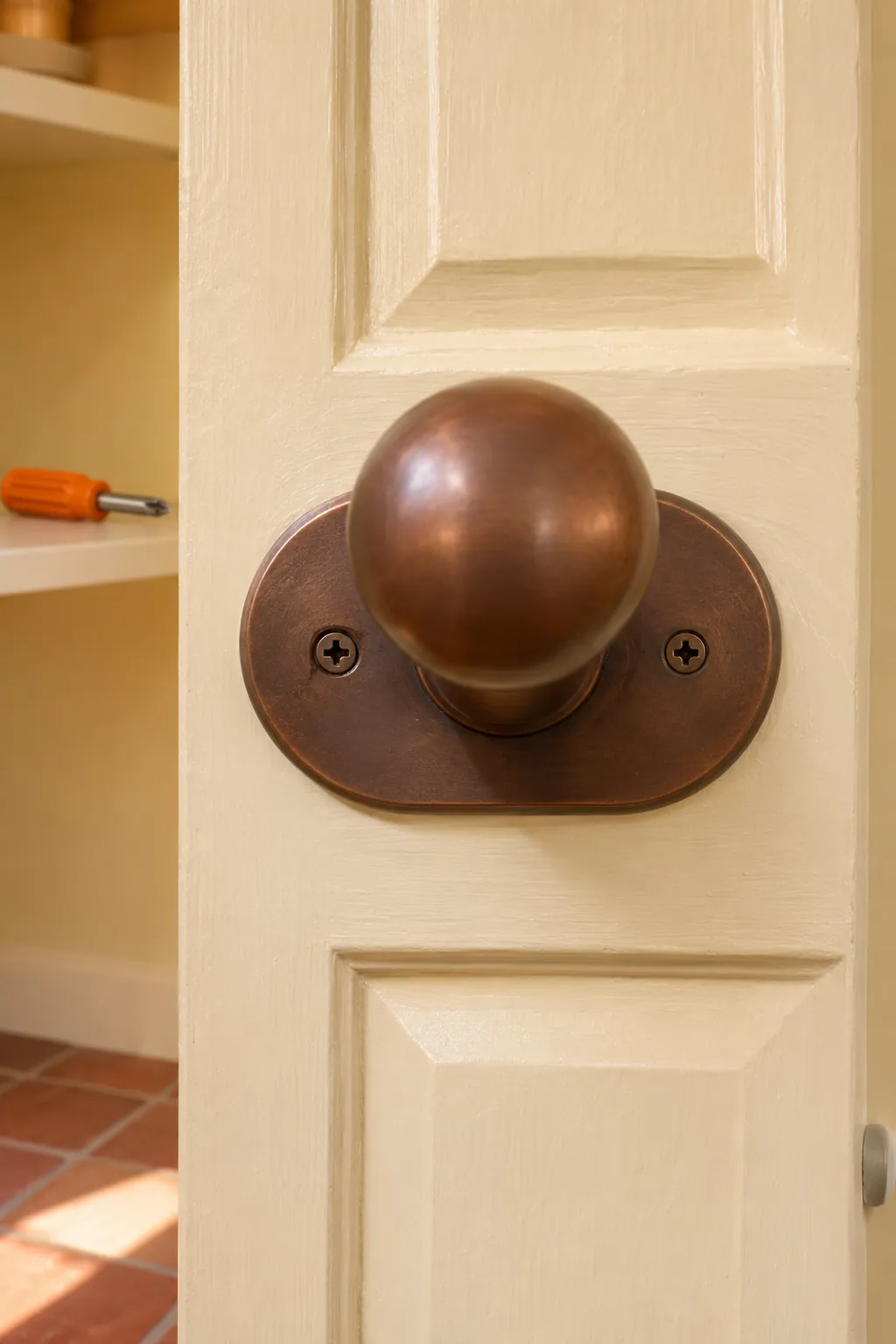
Remove the trim cover to reach hidden screws
Look for a small release slot or pinhole on the neck. On a model with a spring detent, press the detent with the tool specified by the maker and pull the handle straight off. A lever with a set screw may release when you loosen that screw instead.
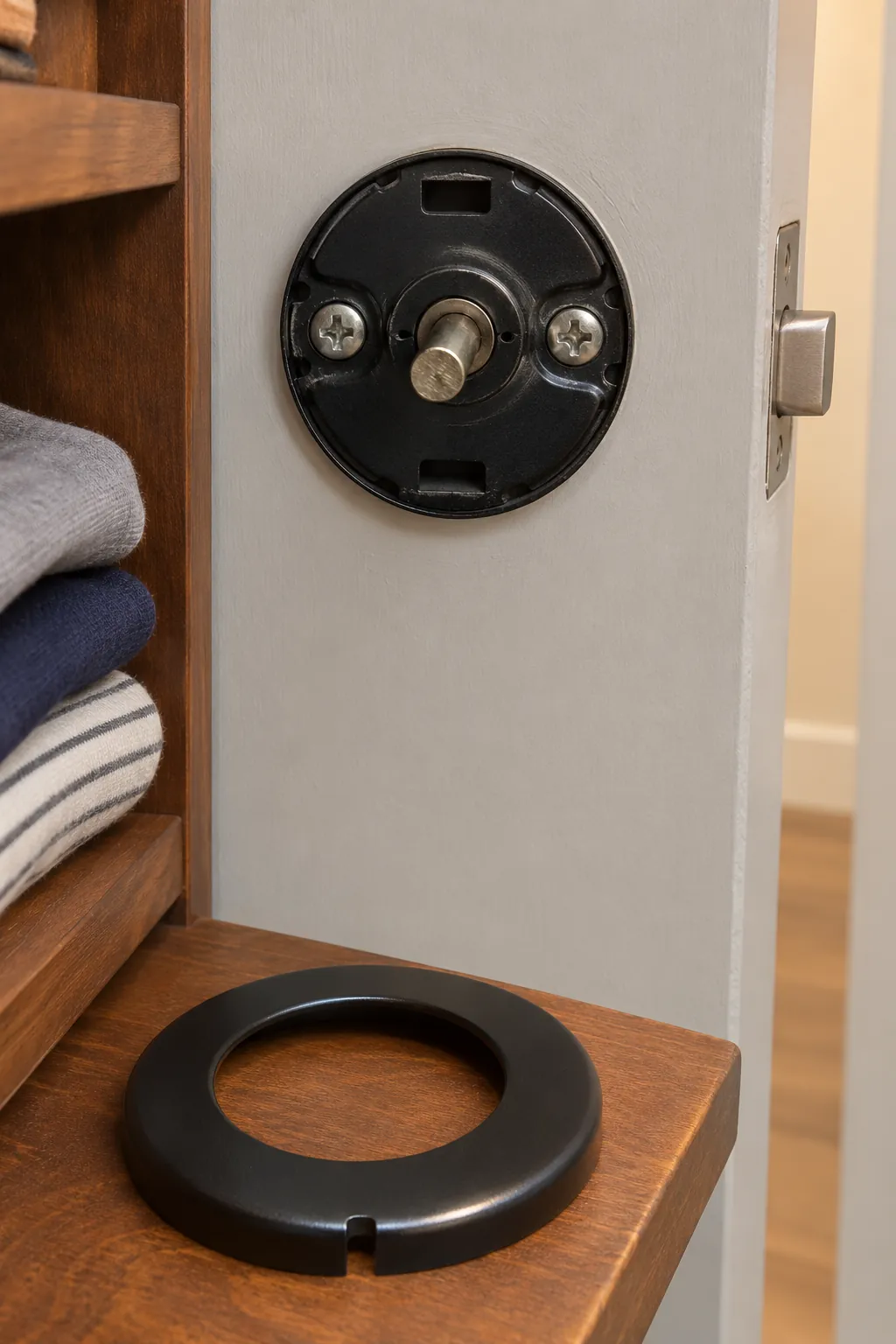
Find the cover’s notch or check whether the cover unscrews. Protect the door finish and release the cover from its intended opening. Snug the exposed mounting screws evenly, then refit the cover and handle. A snap fitted handle should click and resist a gentle pull.
Inspect the spindle if the wobble comes back
A lever that still rocks on a solid base can have a worn socket, a rounded spindle or damaged set screw threads. Lay the parts on a towel and inspect the contact surfaces. Replace the worn part if you can get the correct match. If the latch mechanism binds or the mounting posts are damaged, replacing the full set may be simpler.
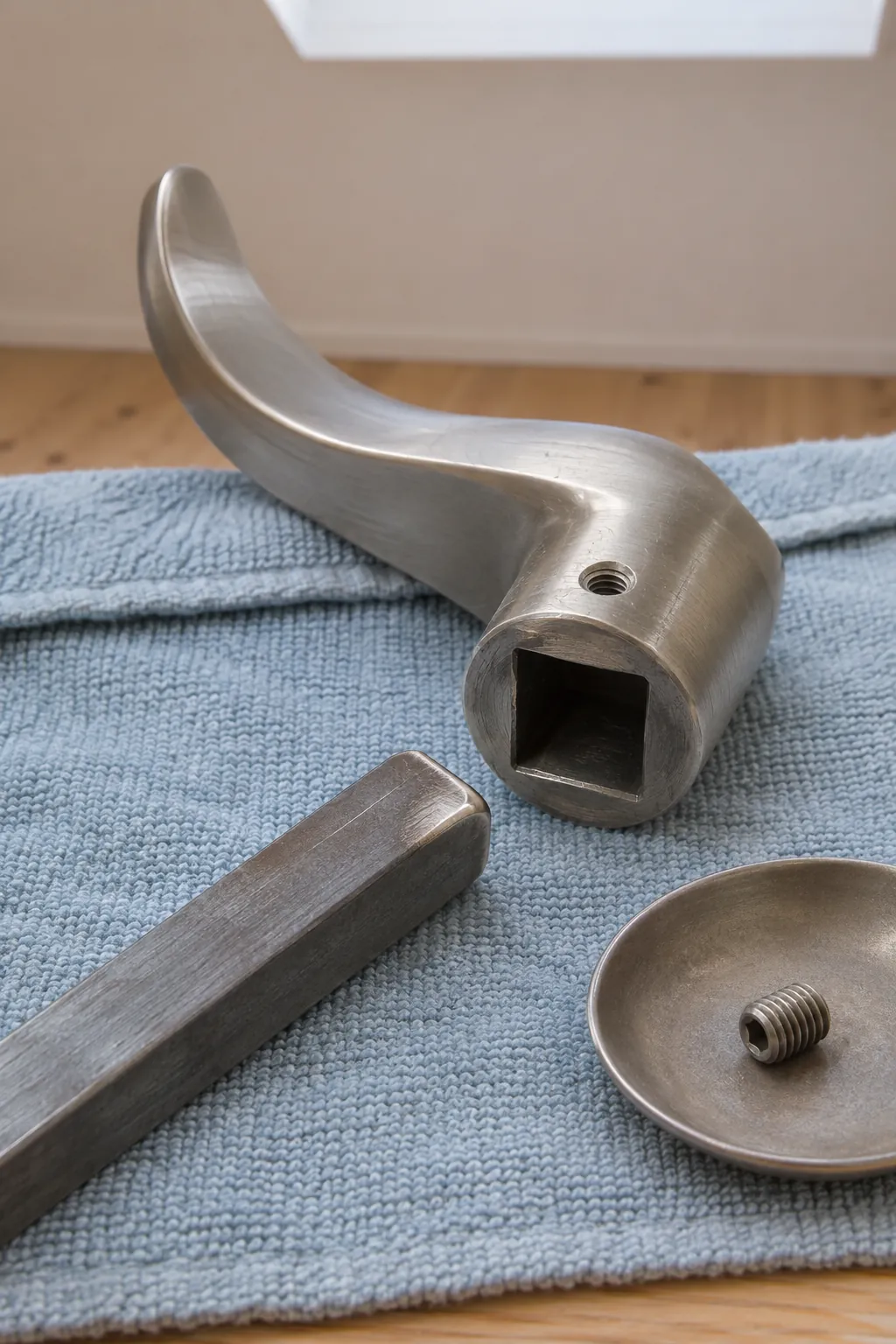
Measure the door thickness and the backset, which is the distance from the door edge to the center of the handle bore. Match the existing latch and door prep when you buy a replacement.
Verify the handle and latch with the door open
Before closing the door, turn each handle and let it return several times. The latch should pull in smoothly and spring back to full extension. Give the handle a gentle pull to test the retainer and make sure the mounting plate stays still.

Close the door gently and check that it latches and opens from both sides. If a privacy handle has a lock, test its operation with the door open before relying on it. A lever that returns slowly after tightening is a reason to check screw tension and alignment again.