
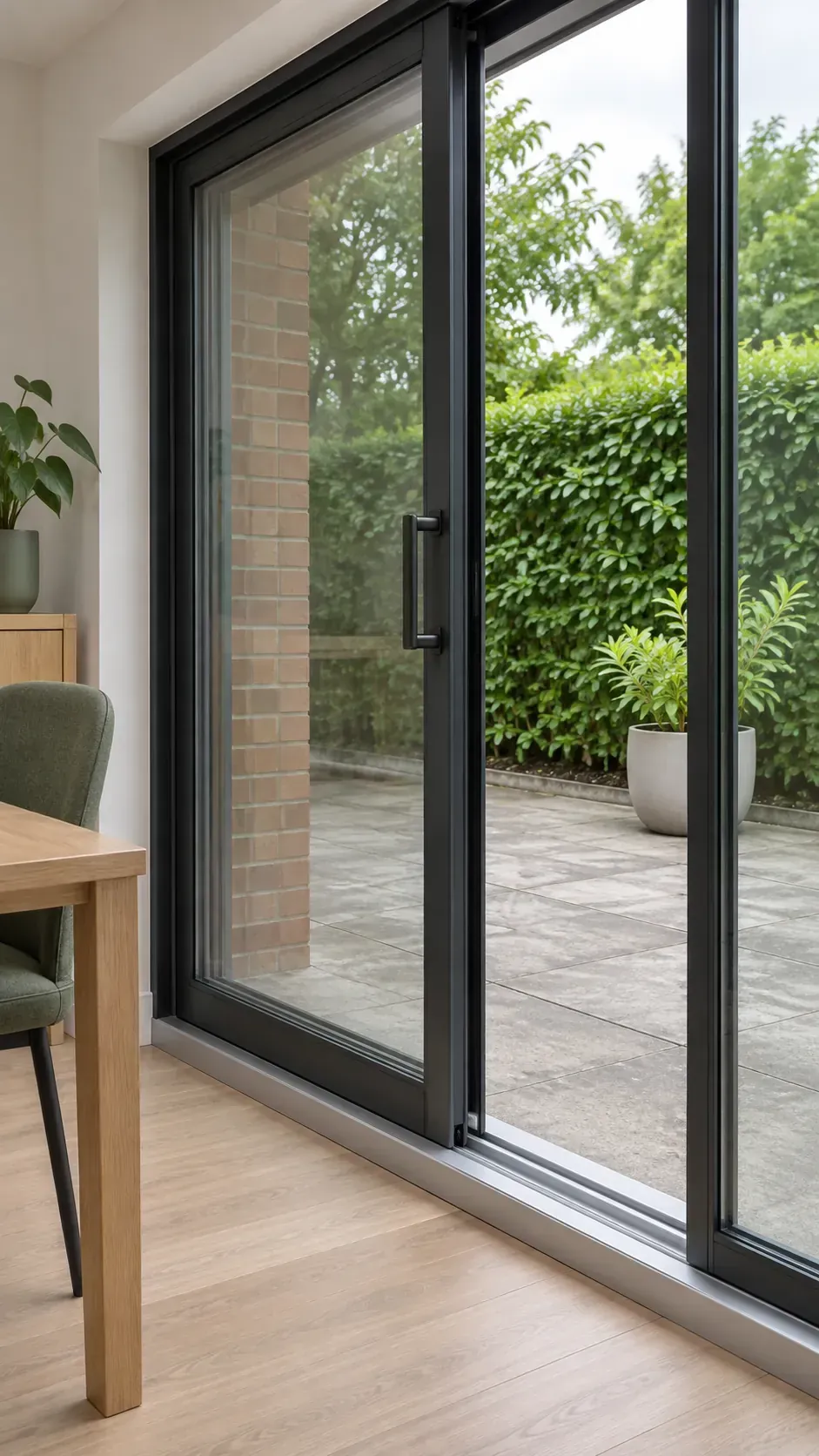
A patio door that takes both hands to move is already telling you something. If it sticks at the same spot on the sill, examine that short stretch first. If it drags all the way across, look at how the panel sits on its rollers. Work from the track up, so you can rule out a simple cleaning job before paying for new hardware.
Notice where the door slows down
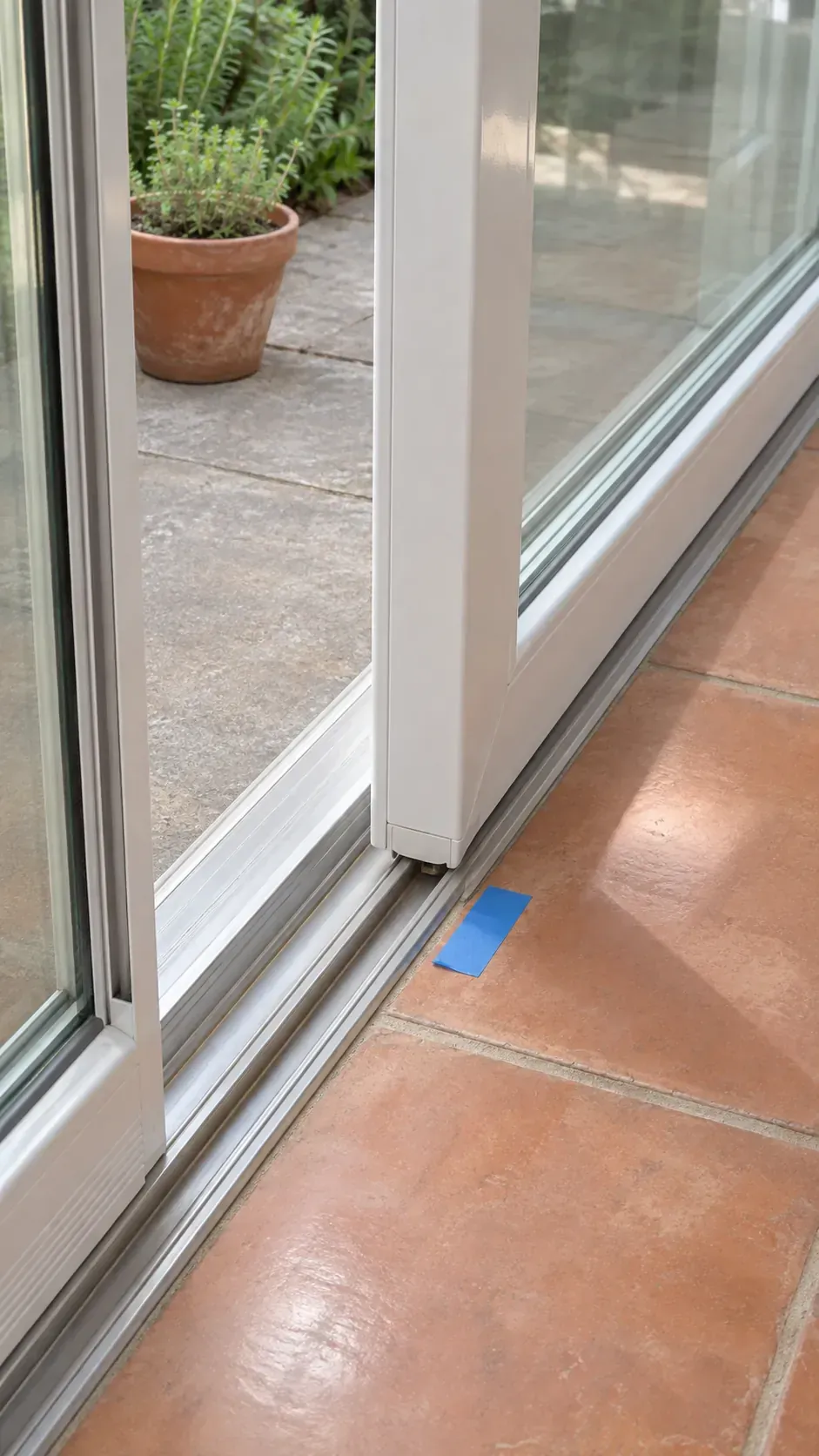
Unlock the door completely and slide the glass panel slowly. If there is a separate screen, move it out of the way so you can tell which panel is resisting. Mark any spot where the glass door catches with a piece of tape on the adjacent floor, clear of the rail. Repeat the pass to see if the resistance comes back at that spot.
A single bump suggests debris or damage on the rail. Grinding on most of the travel, metal shavings or an uneven gap at the closing jamb points toward the rollers or panel alignment. If it only sticks in the last inch, check whether the latch or weatherstrip is catching.
Clear grit out of the bottom track
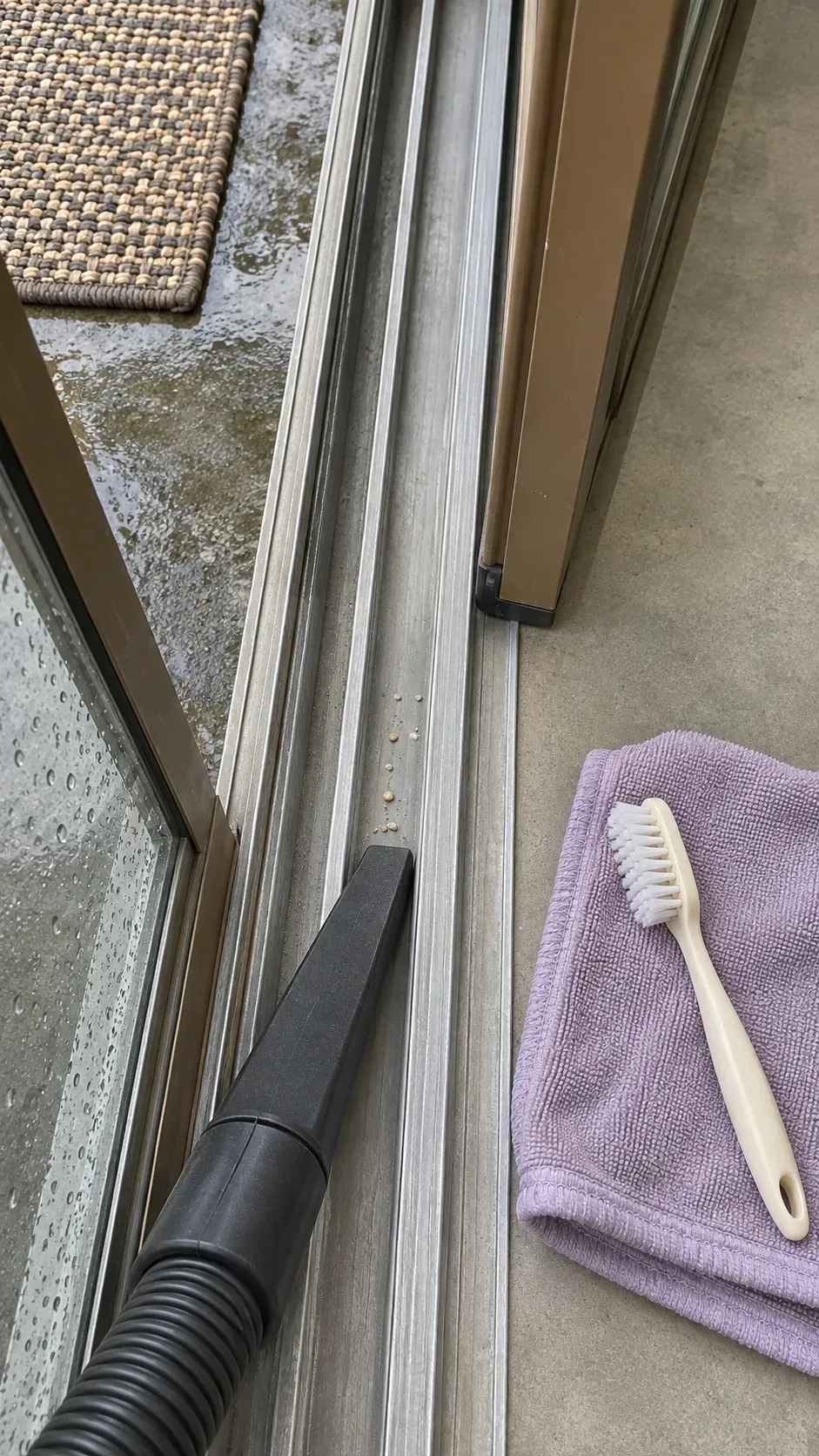
Vacuum the exposed channels with a crevice attachment. Move the panel to reach the rest of the sill and use a soft nylon brush to free compacted dirt in the corners. Wipe the running rail with a cloth and a little water with mild dish soap if the door maker permits it. Wipe again with clean water on the cloth and dry the rail before testing.
Clear the drain openings of loose debris while you have access. Keep the sill free of thick grease, which can hold grit where the rollers run. If the manufacturer specifies a lubricant, follow its directions for the surface and amount. Some tracks call for cleaning alone.
Check the rail for wear or damage
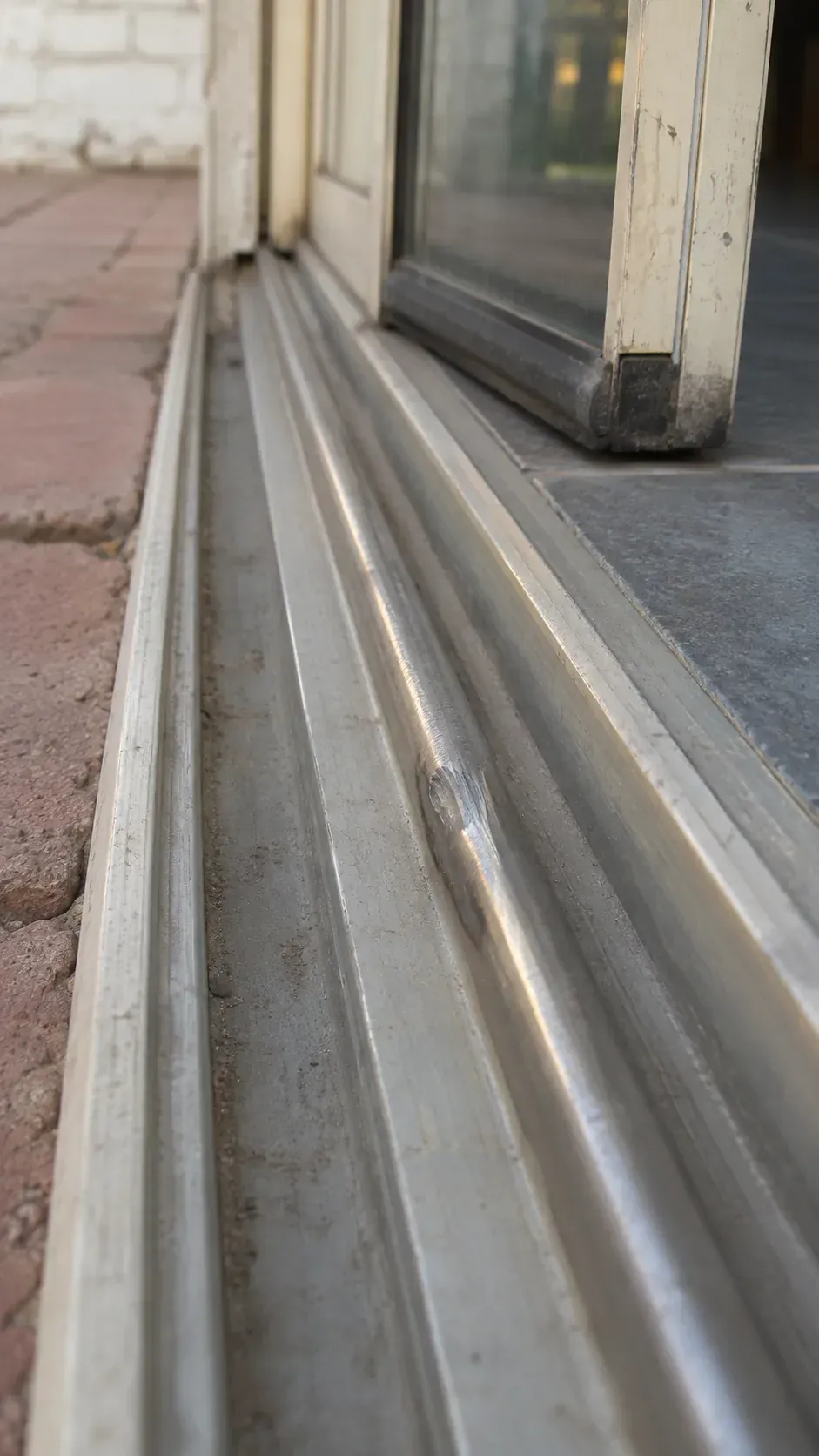
Run your eyes along the raised rail in good light. A small dent, a flat spot or a raised edge can stop a roller at the exact place you marked. A bright rub line on the side of the rail can also show where the panel is dragging against it.
Avoid hammering or prying at the rail while the door is installed. A replaceable rail or compatible track cap may be an option on a sound sill, but it changes the running surface and sometimes the door height. Ask the manufacturer or a door repair shop which repair fits your model.
Adjust the rollers in small steps
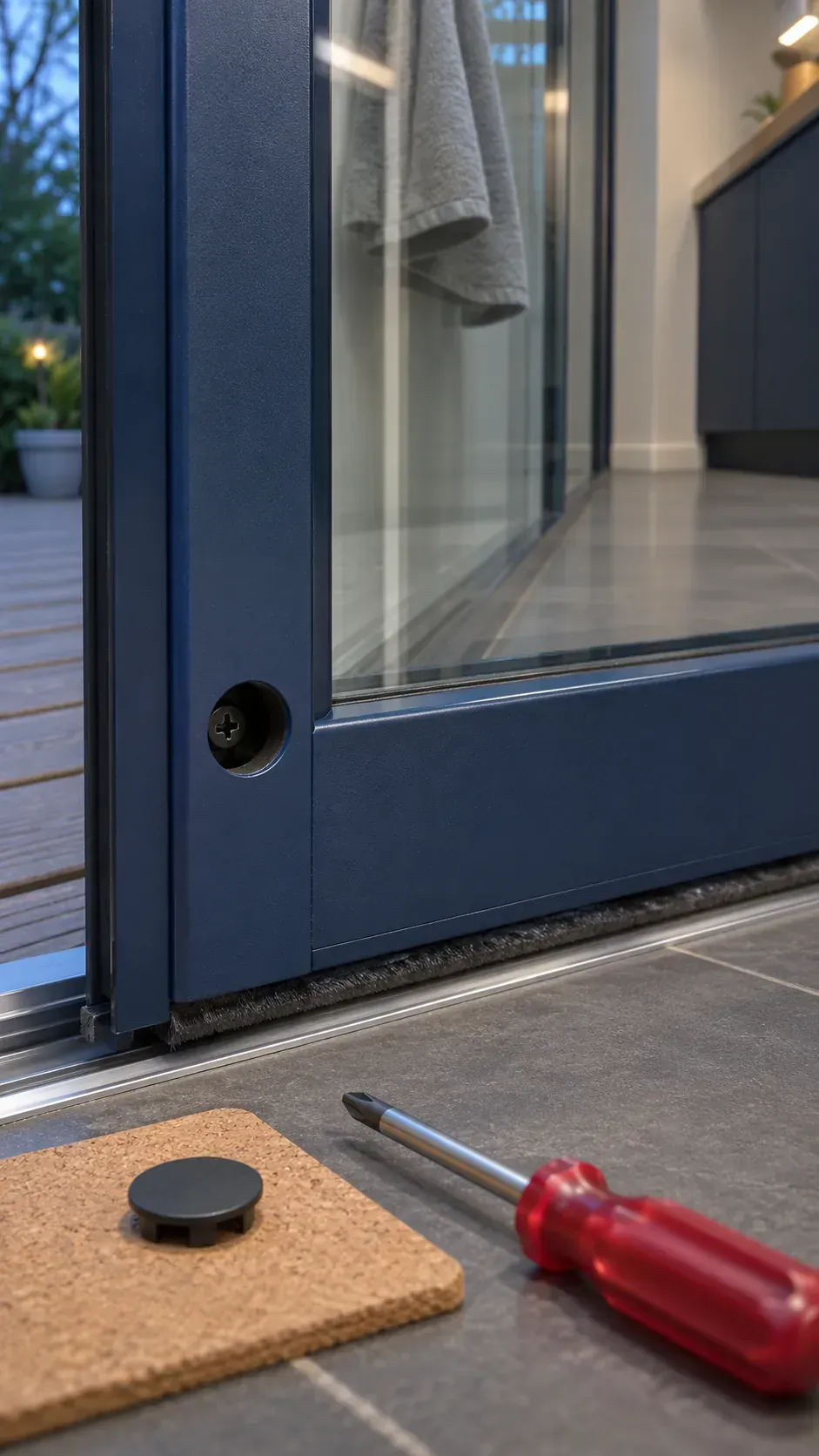
Slide the door to just short of closing and compare the gap between the moving stile and the jamb at the top and bottom. If the gap tapers, look up the roller adjustment procedure for the model. Many doors have small access plugs near both lower corners. Confirm which screws control height before turning anything, since nearby screws may hold the frame together.
Record the starting position of each adjuster and use a quarter turn at a time. Directions vary by model. If the instructions say to take weight off the roller before turning the screw, use the specified support method. Stop if the screw binds, spins freely or requires force. Keep the clearances the maker calls for so the door still sits securely in both tracks.
Know when the rollers need replacement
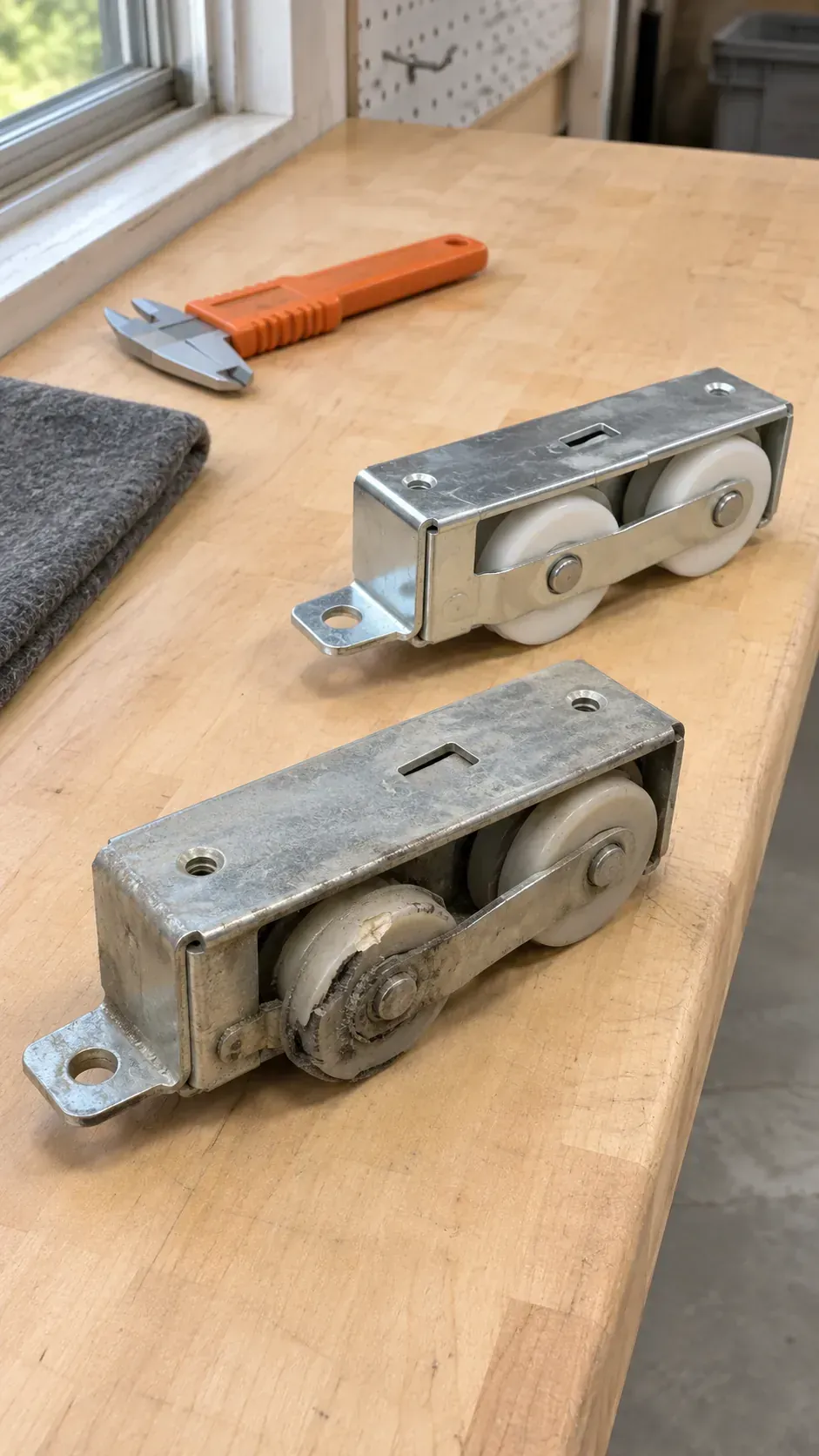
If the track is clean and sound but the door grinds, bumps in a regular rhythm or will not hold an adjustment, the roller wheels or bearings may be worn. Look for a model label near the jamb or on the panel edge. Use the series and age to identify the matching roller assembly, since housings and adjustment access can differ even when the wheels look alike.
Removing a glazed panel is a different job from cleaning the track. Some models have retainers or stops that must come out in a particular order. If you cannot confirm the removal procedure or safely handle the panel with the help and equipment the maker specifies, have a door technician replace the rollers.
Test the slide and the lock
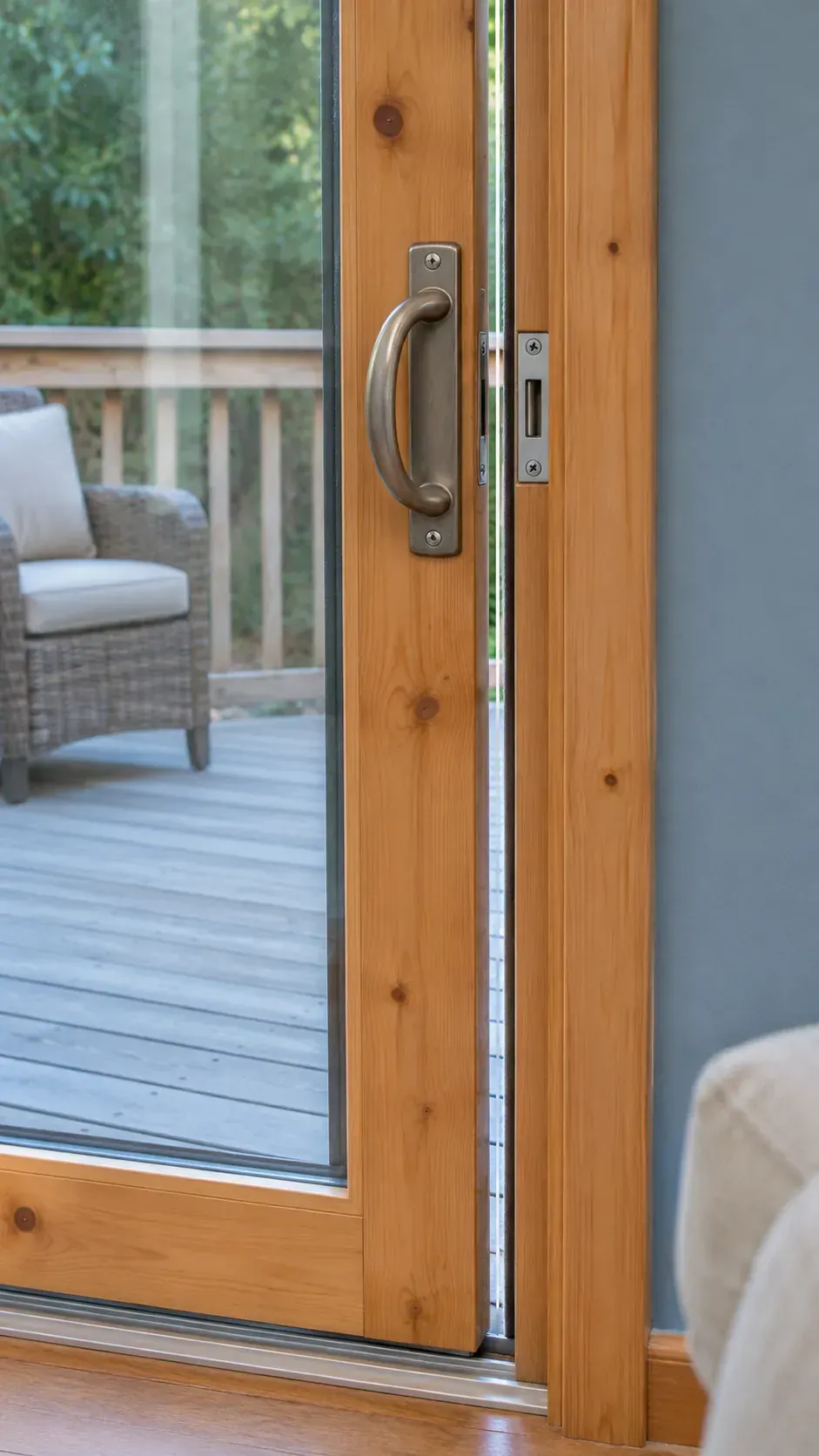
Slide the panel from fully open to nearly closed several times and check the spot that used to catch. The door should move without scraping, and the gap at the jamb should be even. Close it and check that the latch engages without lifting or pushing down on the handle. If movement is smooth until the latch reaches the keeper, inspect the keeper position using the model’s instructions.
If the drag comes back after cleaning and adjustment, note where it starts and whether you hear grinding. Those details give a repairer a clearer starting point than a door that simply feels heavy.