
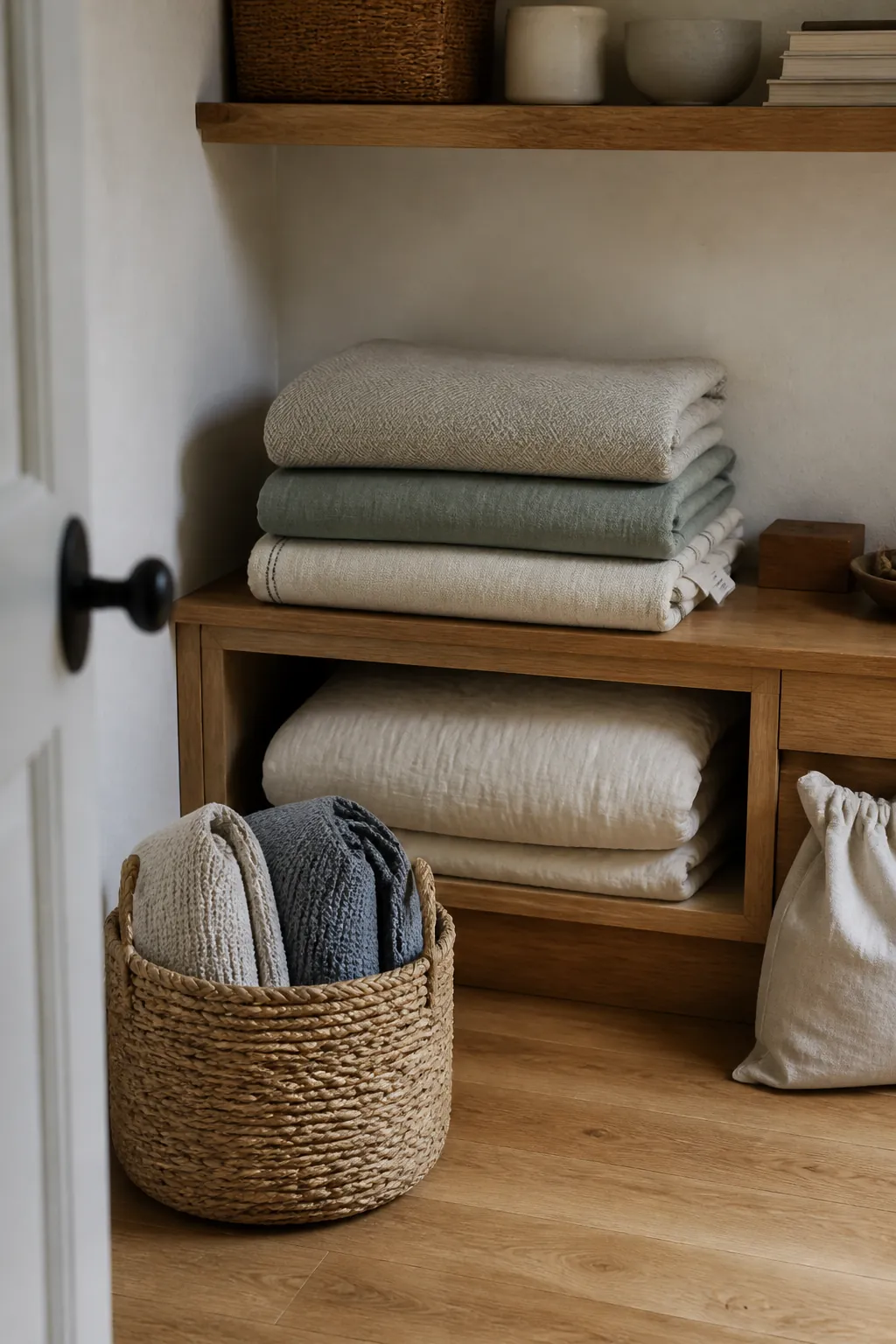
A neat shelf can collapse into a bulky pile after one cold evening. The real problem is rarely the fold alone. A useful system has to match the blanket thickness, the space available, and how often you reach for it, while also keeping clean fabric dry and easy to identify.
The most reliable approach is to measure the storage space first, then shape each blanket to fit that space. This prevents overstuffed baskets, leaning shelf stacks, and compressed fibers that never quite recover. It also makes seasonal bedding organization much easier because every piece has a clear home.
Start With a Flat Rectangle
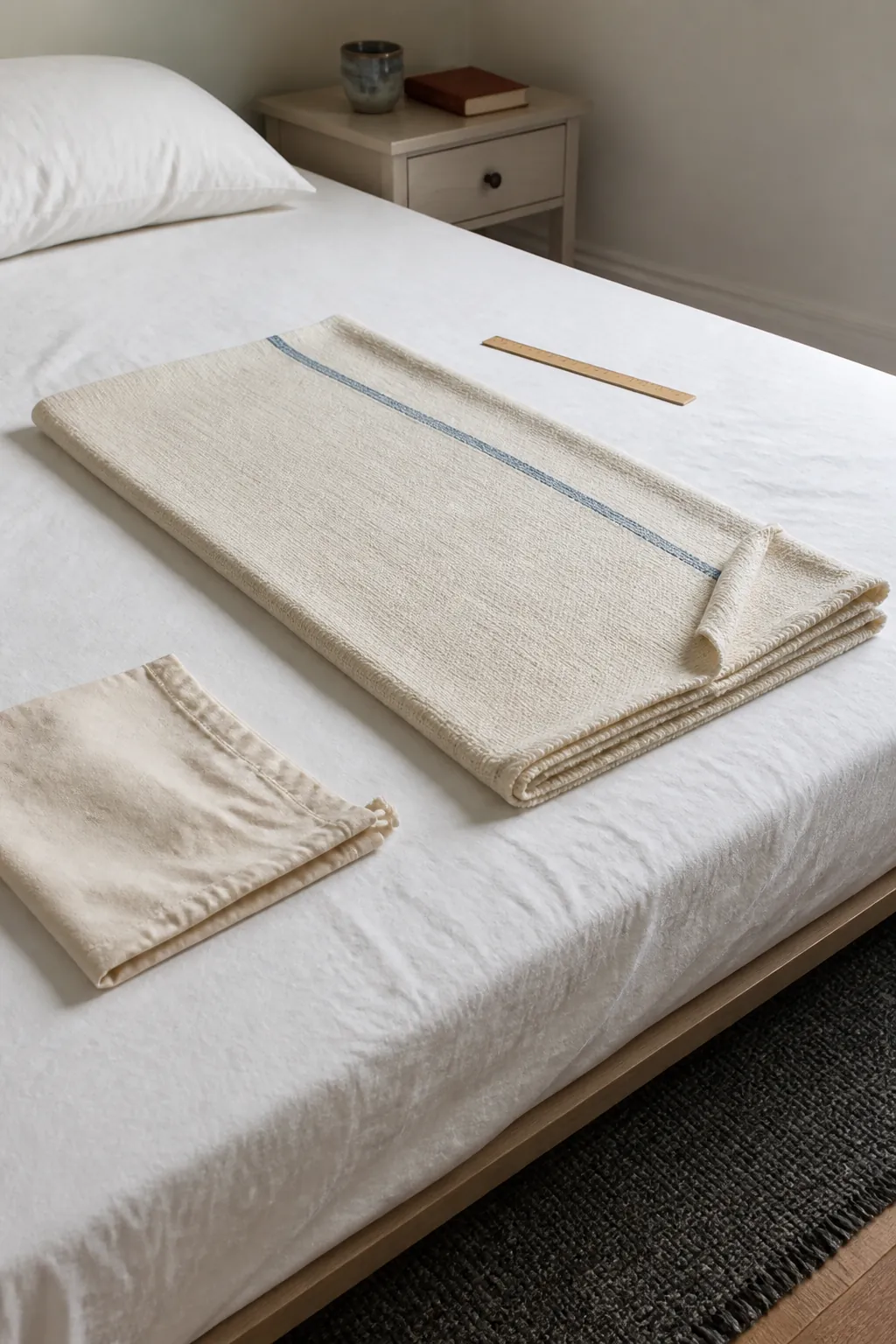
Spread the blanket on a clean bed or floor and smooth the corners without pulling the fabric out of shape. Fold irregular edges inward until the blanket forms a clear rectangle, since a square foundation is easier to size for any shelf or bin. For a standard throw, bring one long side toward the center, repeat with the other side, then press out trapped air with your palms.
Keep fringes tucked inside the first fold so they do not snag or create a lumpy edge. Thick seams should land on different layers rather than directly on top of one another. This small adjustment produces an even bundle that stacks without tilting.
Size the Fold for a Closet Shelf
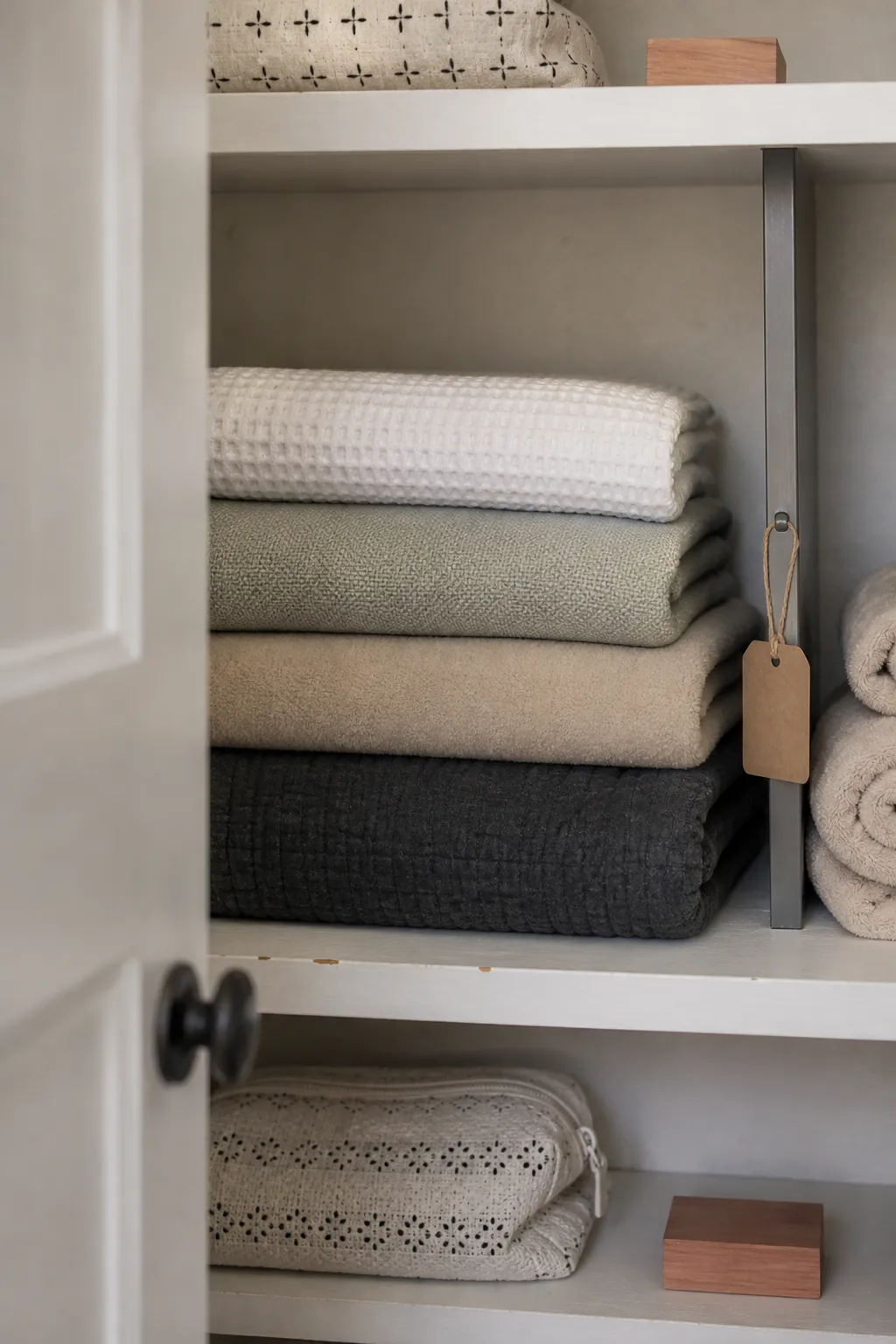
Measure shelf depth and height before deciding how many times to fold. Aim for a finished bundle slightly shallower than the shelf so the front edge does not hang over and catch on the door. Divide the available height by the number of blankets you want in one stack, then fold each piece to stay within that limit.
Place the heaviest blanket at the bottom and lighter knits above it. Limit each stack to a height you can remove without dragging down neighboring linens. Shelf dividers can keep folded linen organization stable when several sizes share one wide shelf.
Make a Self Contained Bundle for Baskets
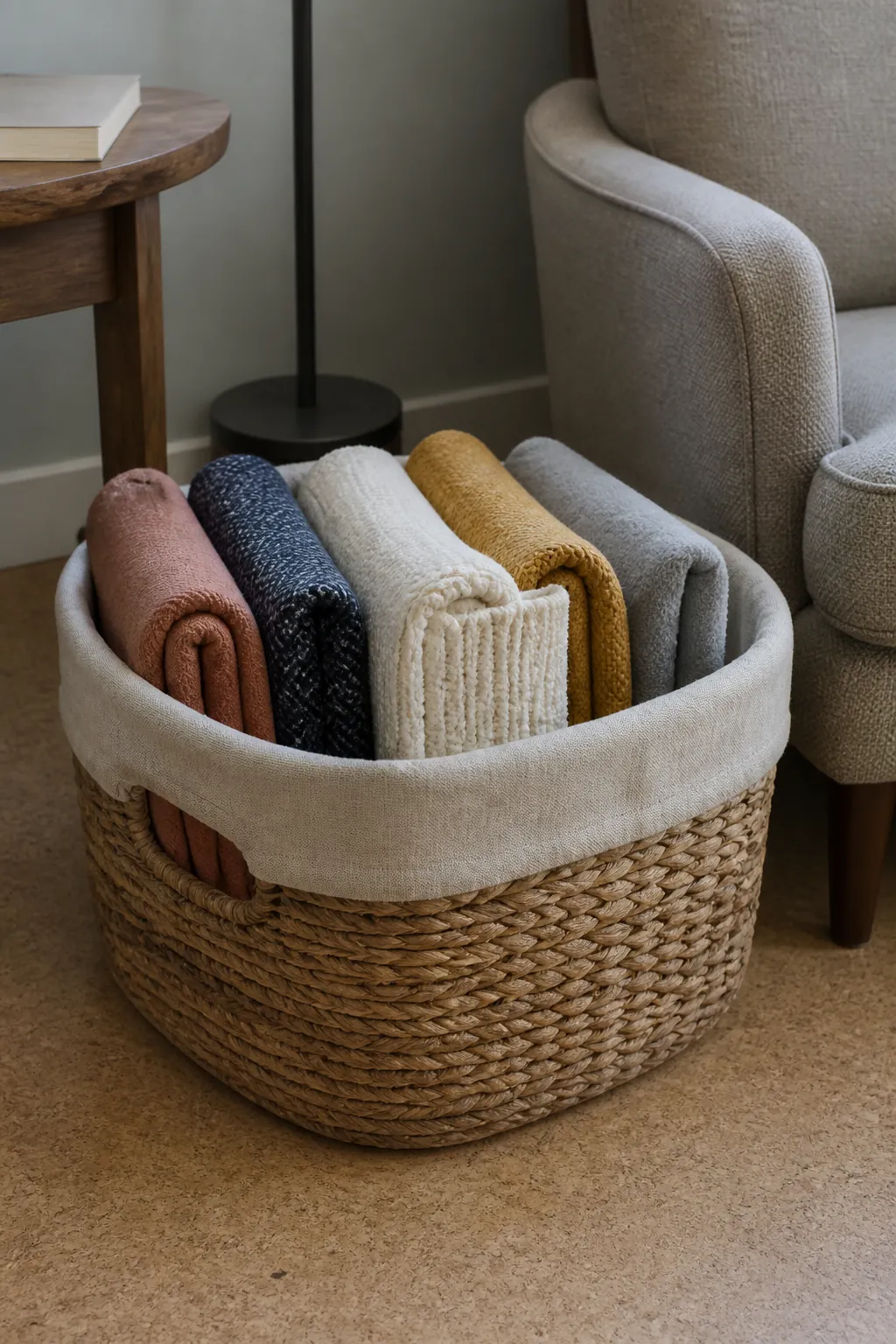
Basket storage for throws works best when each blanket holds its own shape. Fold the blanket into thirds lengthwise, then fold the lower end upward twice while leaving a short flap at the top. Tuck that flap over the bundle like an envelope, using gentle tension rather than stretching the weave.
Stand the finished bundles upright with the folded edge visible. Vertical placement lets you pull one throw without disturbing the others and makes colors easy to recognize. Choose a basket with smooth interior walls so wicker ends do not catch loose loops or fringe.
Roll Delicate Knits Instead of Creasing Them
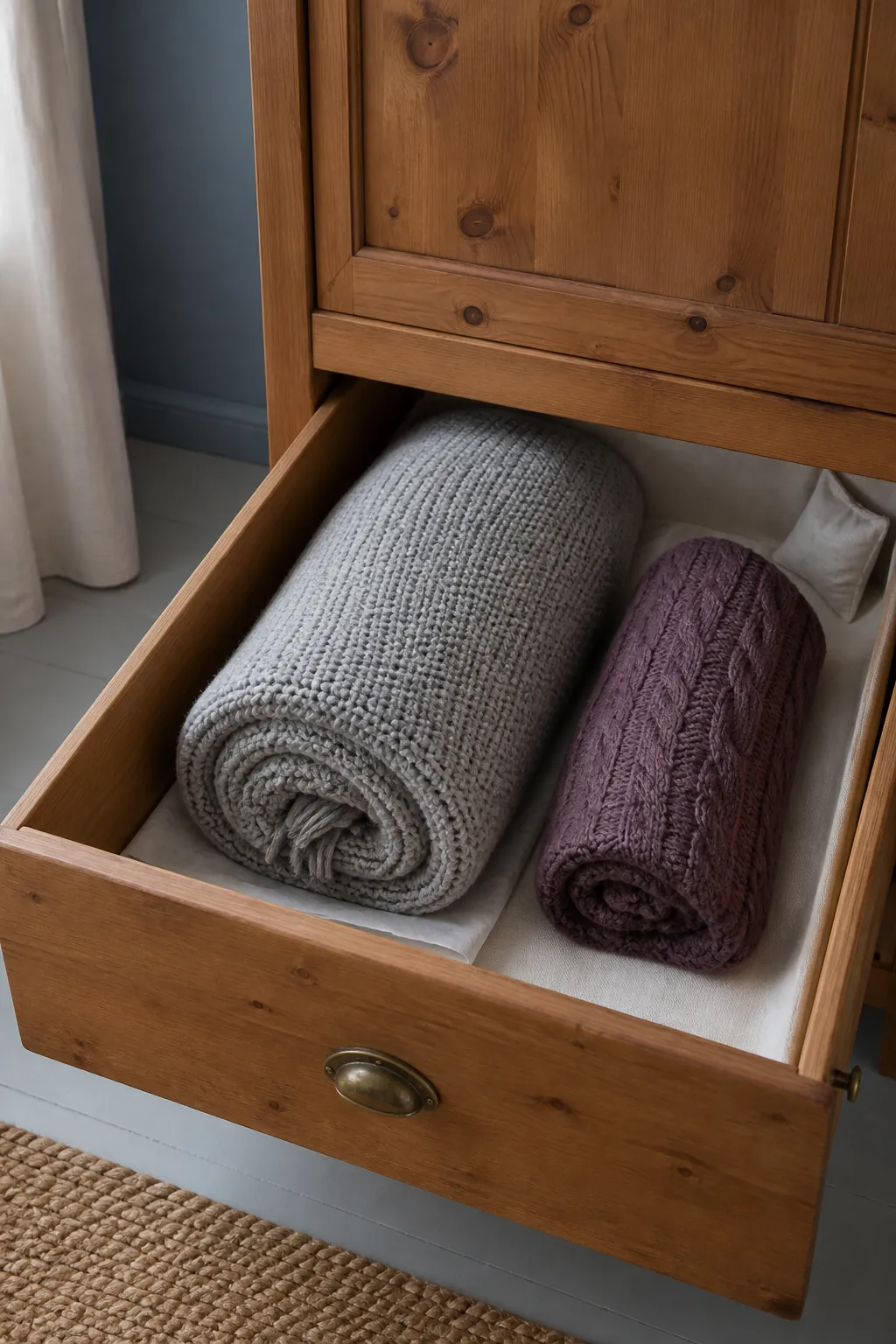
Loose knits, weighted fringe, and delicate fibers can develop hard creases when stored under pressure. Begin with a loose lengthwise fold that supports the blanket without narrowing it too much. Roll from the plain edge toward the decorative edge, guiding the fabric rather than squeezing it.
Place the roll on its side in a roomy bin or deep drawer. Do not stand a heavy knit on one end because its own weight can stretch the lower section. A clean cotton liner adds protection while allowing more airflow than a tightly sealed plastic container.
Compress Bulky Bedding With Care
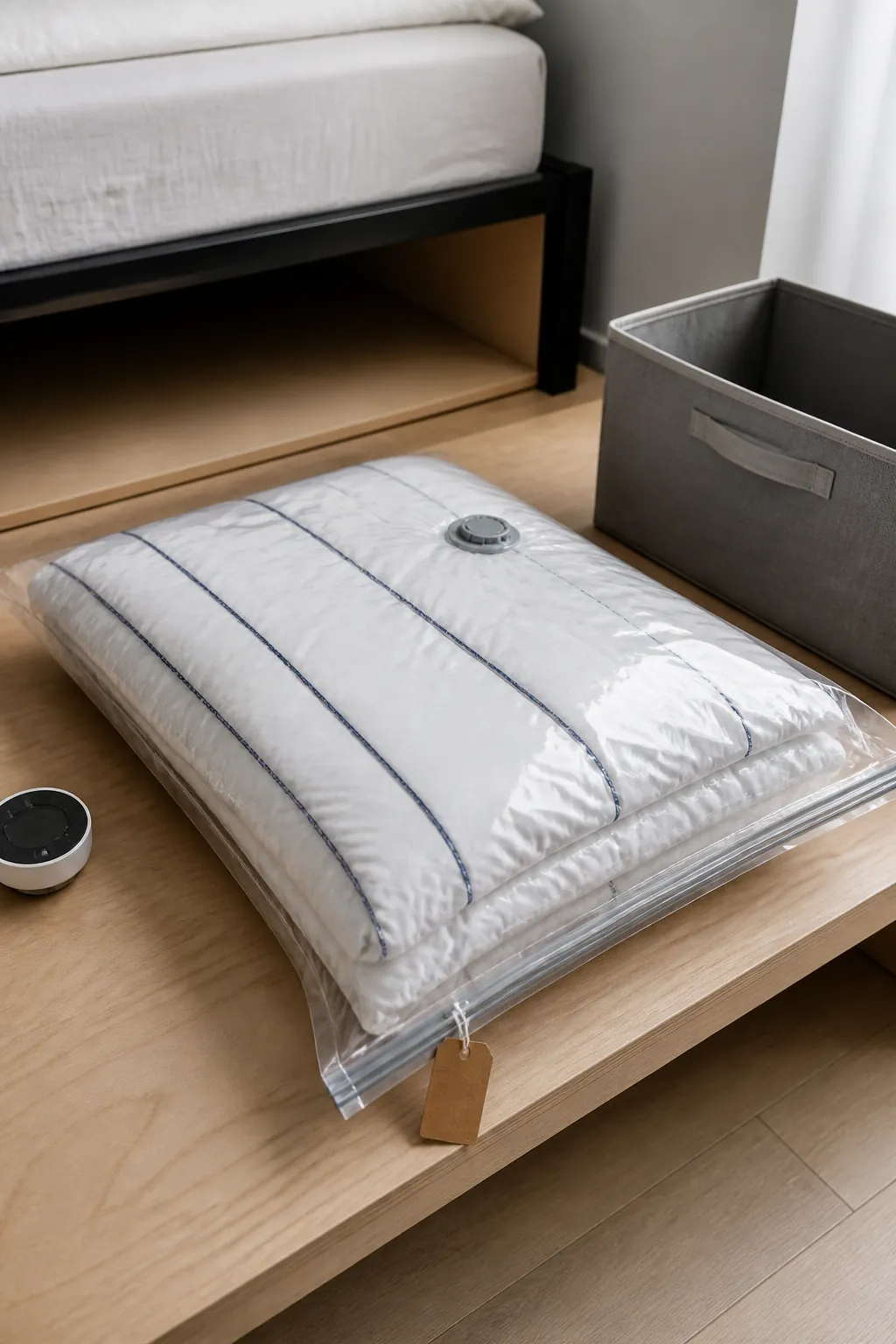
Vacuum bag bedding storage can reclaim space, but it is better for washable synthetic comforters than for down, wool, or heirloom textiles. Fold the clean and completely dry comforter to match the bag width, then make broad folds that distribute filling evenly. Stop removing air once the package is compact and stable rather than forcing it into a rigid slab.
Label the bag with contents and storage date before placing it under a bed or on a supported shelf. Check long term packages periodically for seal failure, condensation, or odor. If the material has special care instructions, those instructions take priority over the desire to save space.
Keep Everyday Throws Easy to Reach
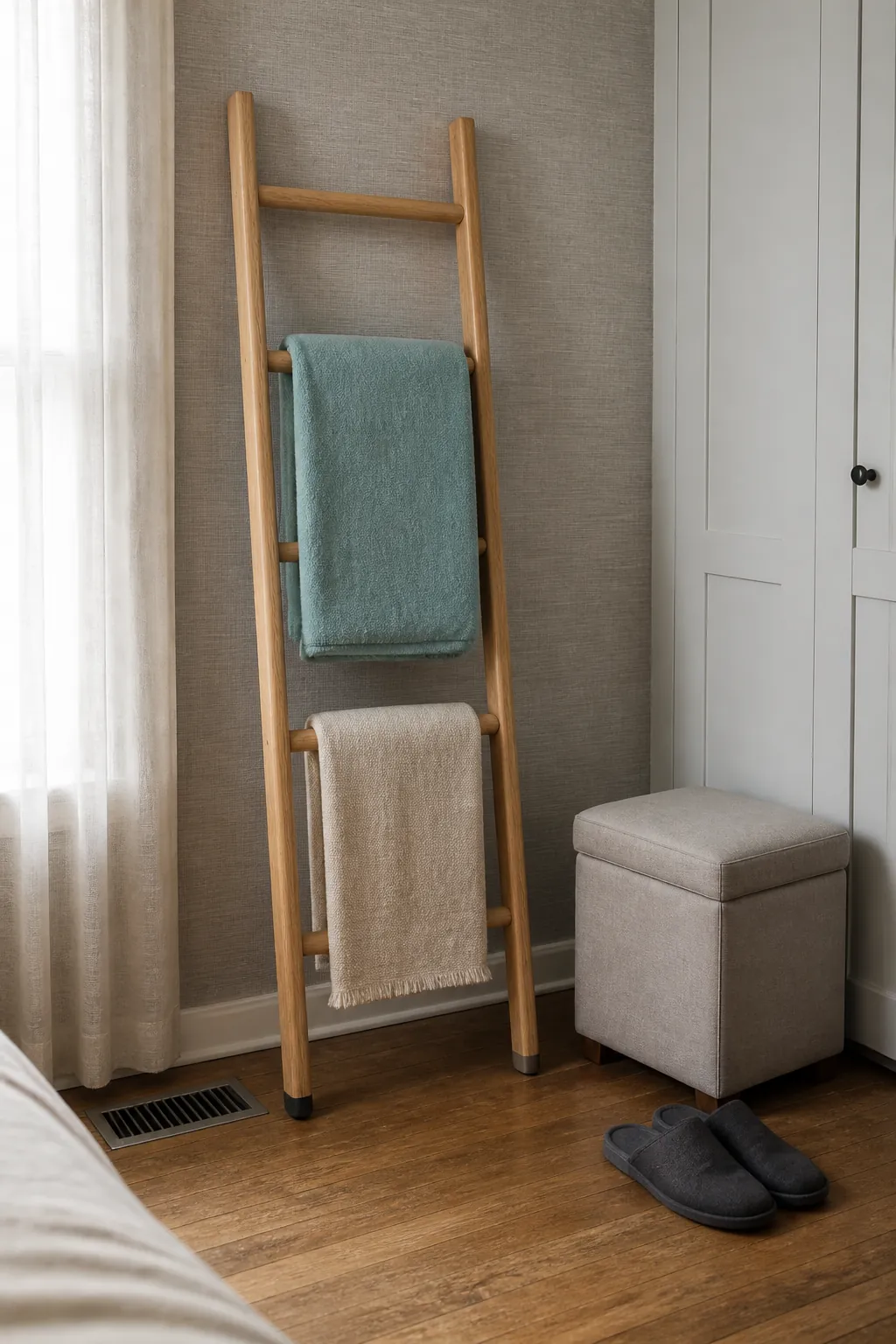
A blanket used every day should not be buried in a seasonal container. Fold it lengthwise into a narrow panel, then fold that panel over a blanket ladder rung with equal weight on both sides. For an ottoman, use a compact rectangle and leave enough open space for the lid to close without pressing the hinges.
Rotate the fold every few weeks if a heavy throw stays on display, since a permanent crease can flatten the pile. Keep the ladder away from cooking moisture, direct sun, and floor vents. These blanket storage ideas preserve convenience without turning the room into an open linen closet.
Protect Clean Blankets During Long Storage
Wash or air every blanket according to its care label, then wait until it is fully dry before folding. Choose a cool interior space, keep bundles off the floor, and avoid containers that already carry fragrance or moisture. Place frequently used pieces at eye level and seasonal pieces higher or farther back, with a simple label that prevents needless unpacking. Revisit the storage area when seasons change, unfold long stored textiles, and refold them along different lines before returning them to their clean, dry place.