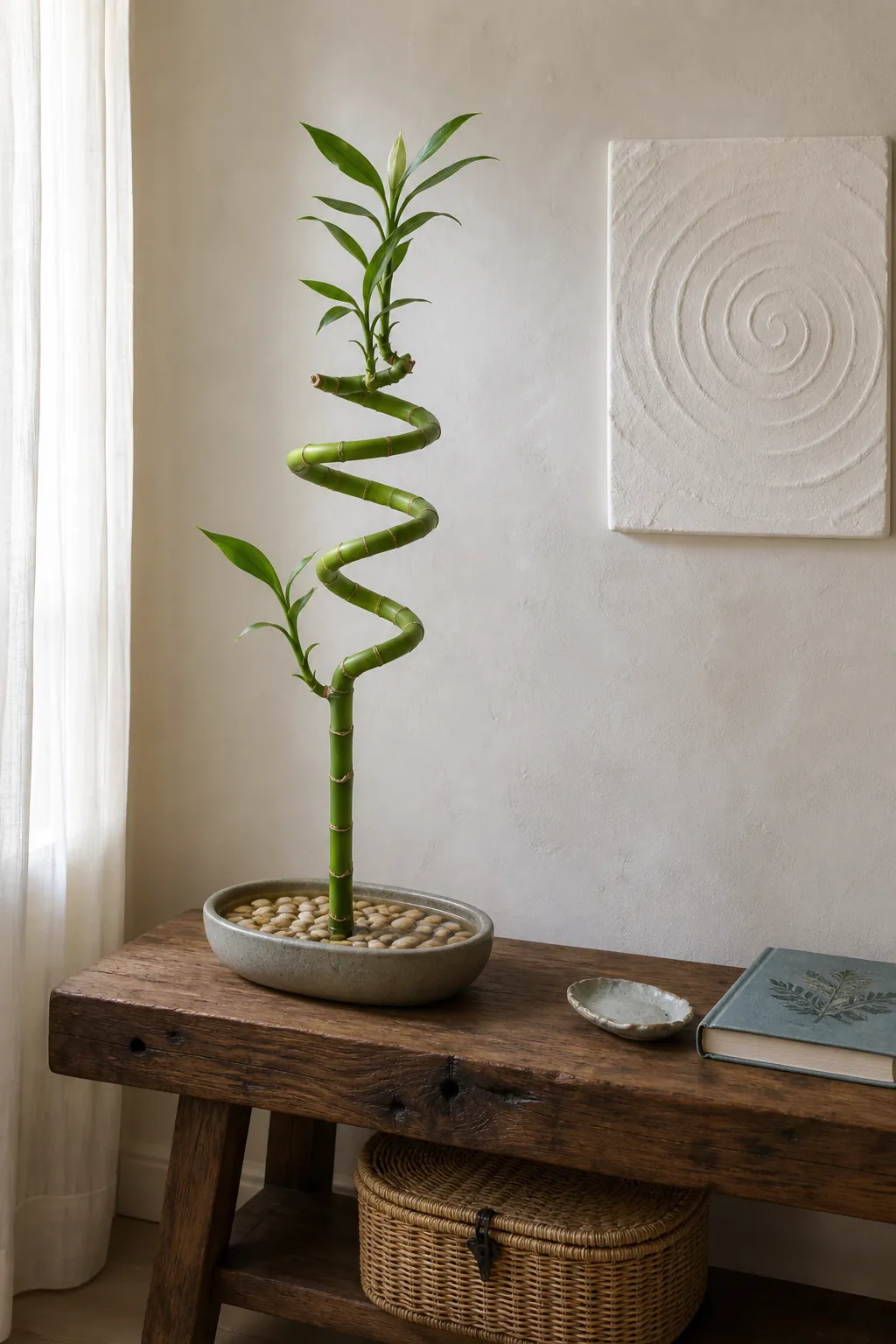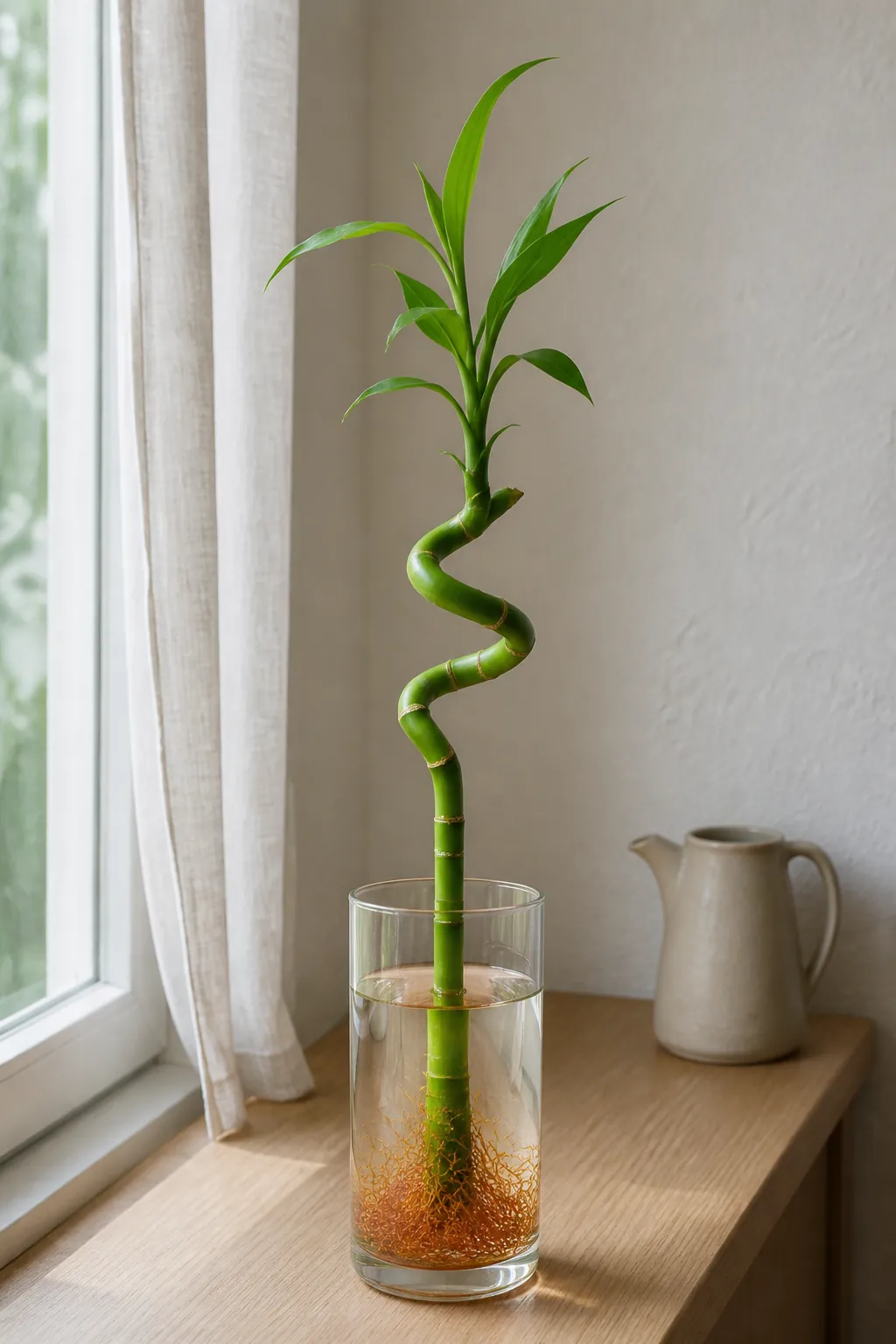
A straight lucky bamboo stalk will not suddenly curl because it has reached a certain age. The familiar spiral is a record of patient light training, and only the soft new shoot can change direction. Once that distinction is clear, the process becomes less mysterious and much safer for the plant.
Start With Healthy New Growth
Choose a lucky bamboo with a firm green cane, clean roots, and an active leafy shoot. The older cane is already rigid, so your spiral will develop in the flexible growth above it rather than in the woody section below. A shoot that is several inches long gives you enough growth to see its direction without asking a weak plant to perform.
Delay shaping if the cane is yellow, the roots smell sour, or the leaves are rapidly browning. Training changes the light pattern and requires repeated handling, which adds stress to a plant that is already struggling. Restore steady care first, then begin when fresh green growth shows that the plant is actively growing.
Build a Simple Open Box
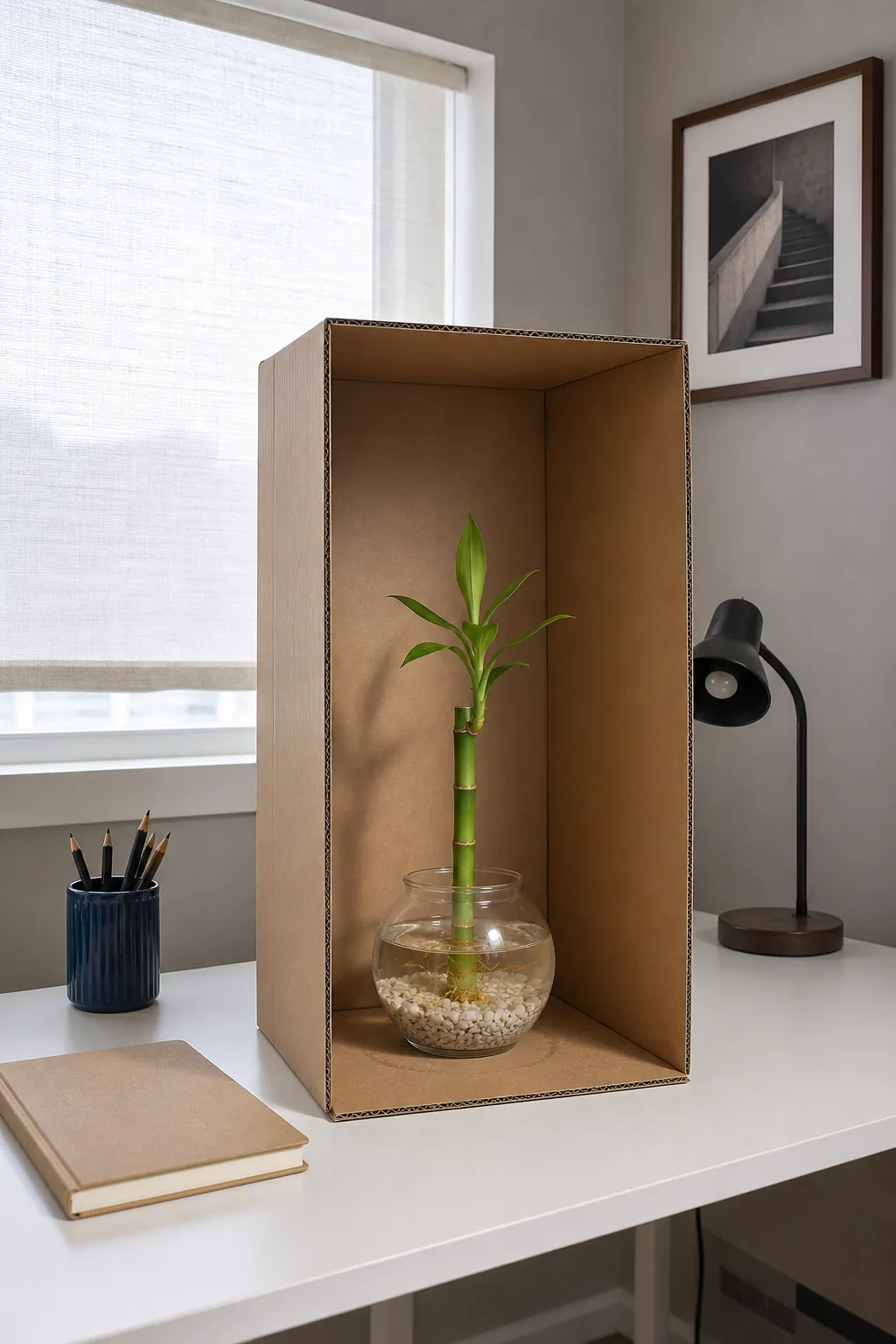
A tall cardboard box creates controlled directional light without wire or force. Cut away one vertical side so the plant receives most of its usable light from that opening, then place the container upright inside. Leave generous space around the leaves so they do not rub against cardboard or become trapped as they turn.
The box should guide light, not create darkness. Put the open side toward a bright window with indirect light, and keep hot sun from striking the leaves through the opening. If the interior feels warm or the shoot becomes pale and stretched, increase ambient brightness and ventilation rather than moving the plant into direct sun.
Let the Shoot Bend Toward Light
Mark the starting position on the container and resist the urge to rotate it every day. The shoot needs time to produce visible growth toward the opening, and premature turns create a vague zigzag instead of a readable curve. Watch the newest leaves and the soft stem beneath them, since that is where the response appears.
Growth speed changes with season, temperature, and light, so use the plant rather than a rigid calendar as your signal. A clear lean may take several weeks. Photographing the plant from the same position once a week makes subtle movement easier to judge and prevents unnecessary handling.
Rotate in Measured Quarter Turns
When the new shoot has made a definite bend toward the opening, rotate the entire container about one quarter turn. Keep the cane upright and return the box to the same window position. The growing tip will gradually seek the opening again, adding the next part of the curve.
Repeat only after another distinct bend has formed. Equal turns and similar growth intervals produce a more even lucky bamboo spiral, while irregular turns create a looser organic shape. Do not twist the shoot with your fingers, because a crease or crack cannot be repaired by later growth.
Keep Water and Roots Stable
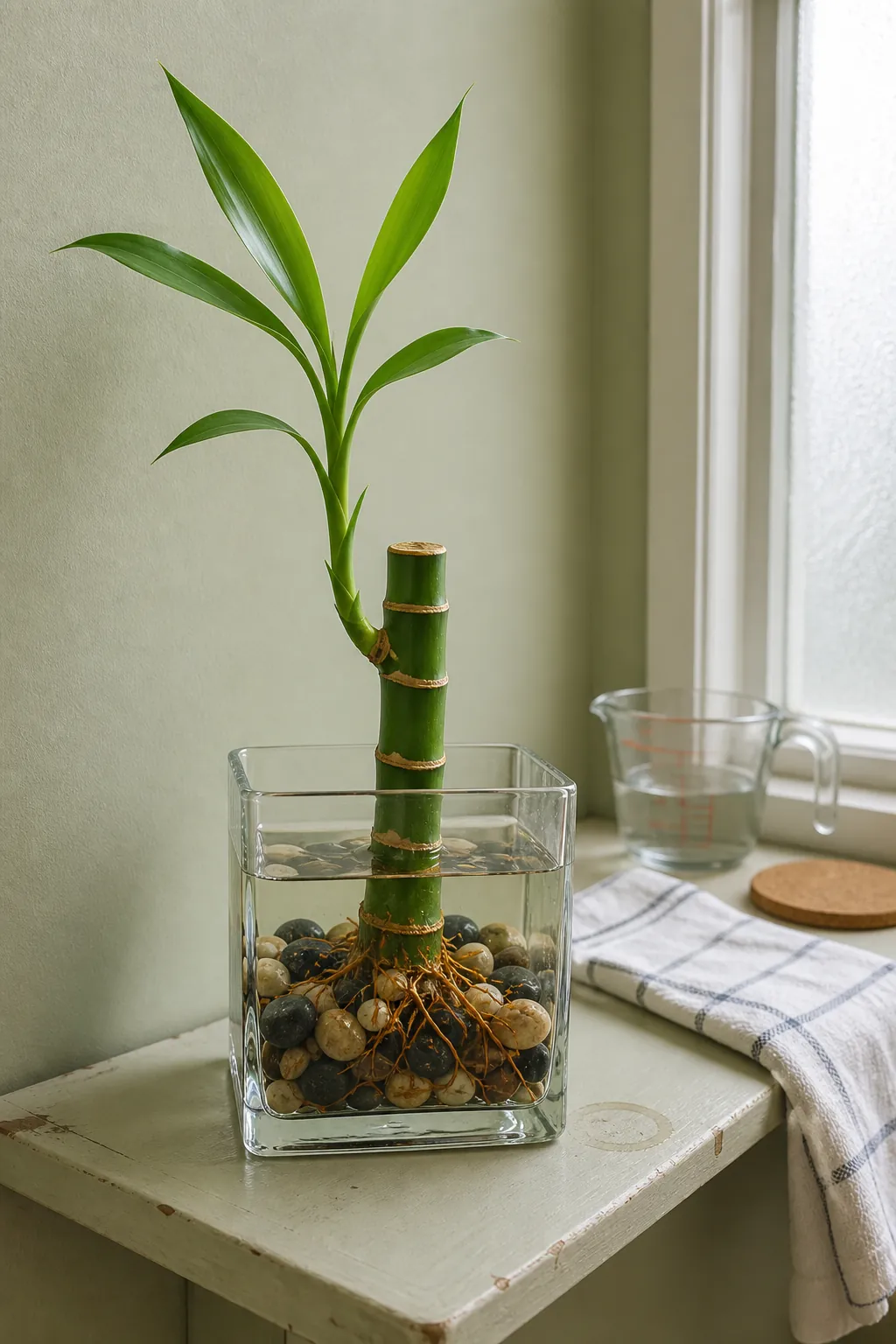
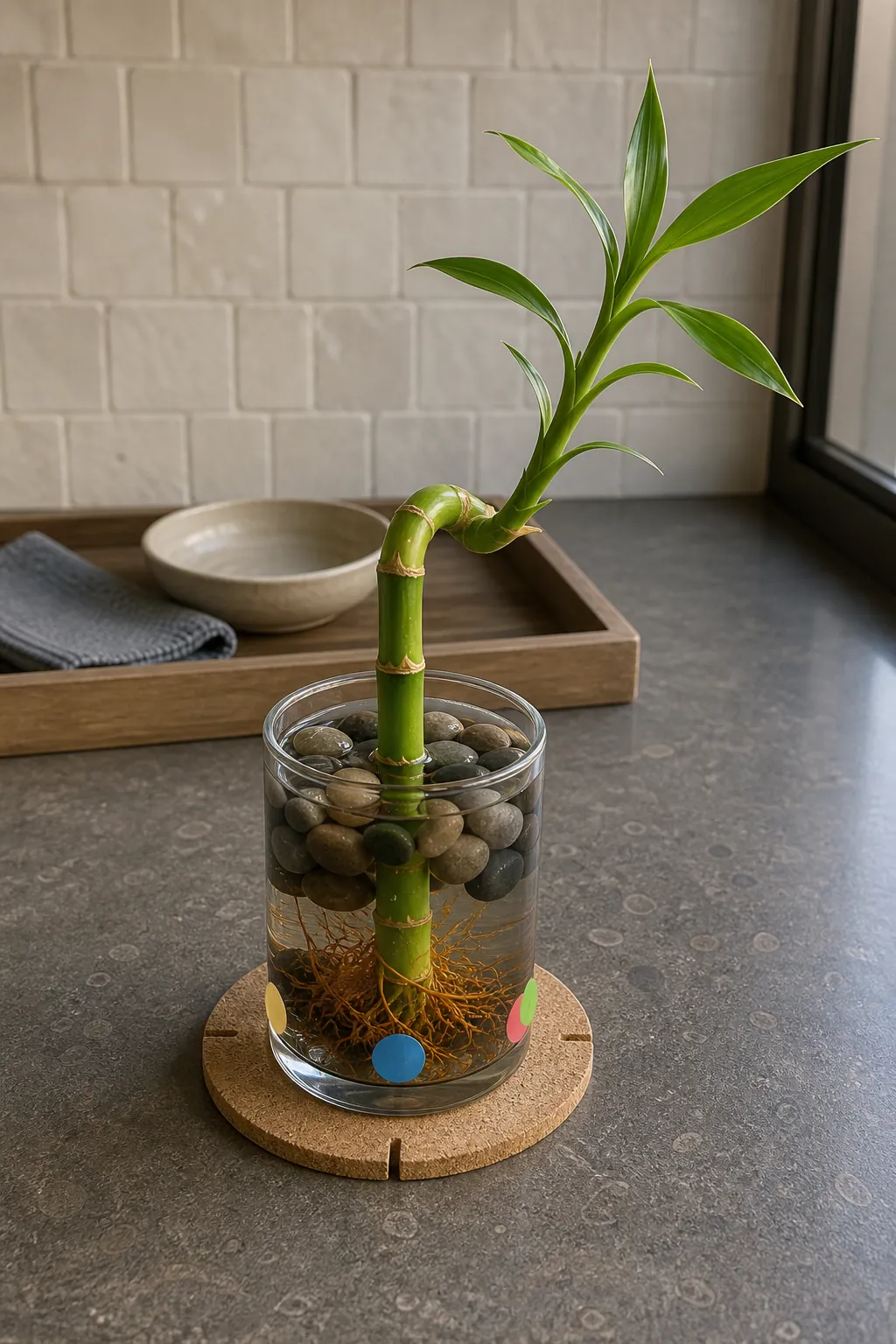
Light training works best when every other condition stays predictable. For a plant grown in water, keep the roots covered while leaving most of the cane above the waterline, and refresh the vessel before it becomes cloudy or develops odor. Filtered water or rainwater can help where tap water contains enough fluoride or salts to brown sensitive leaf tips.
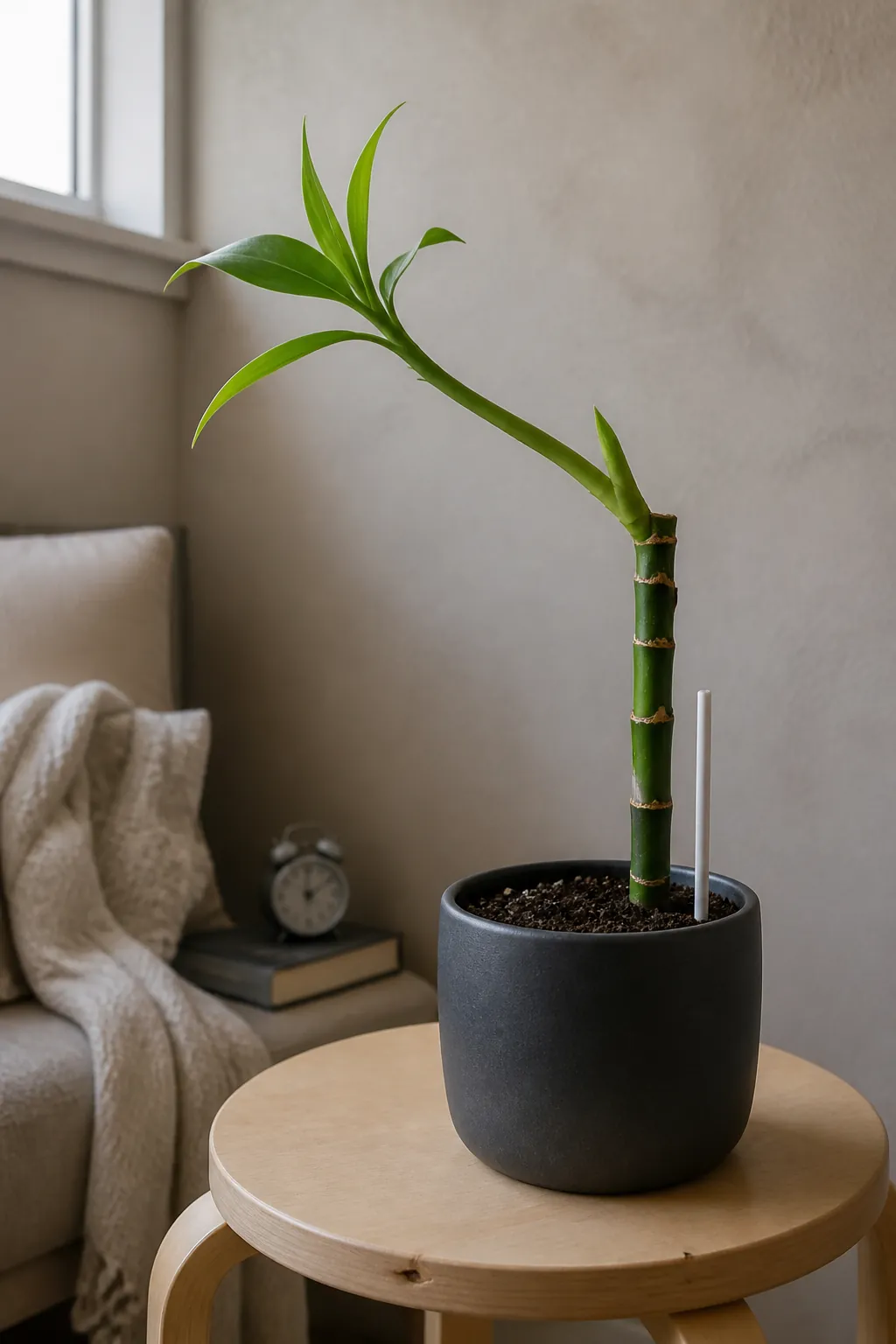
For a plant grown in potting mix, keep the medium lightly moist but never saturated. Avoid heavy feeding during shaping, since fertilizer does not make a neat spiral and excess salts can damage roots. Warm indoor conditions, clean leaves, and protection from drafts support steady growth better than frequent changes.
Finish the Shape Without Rushing
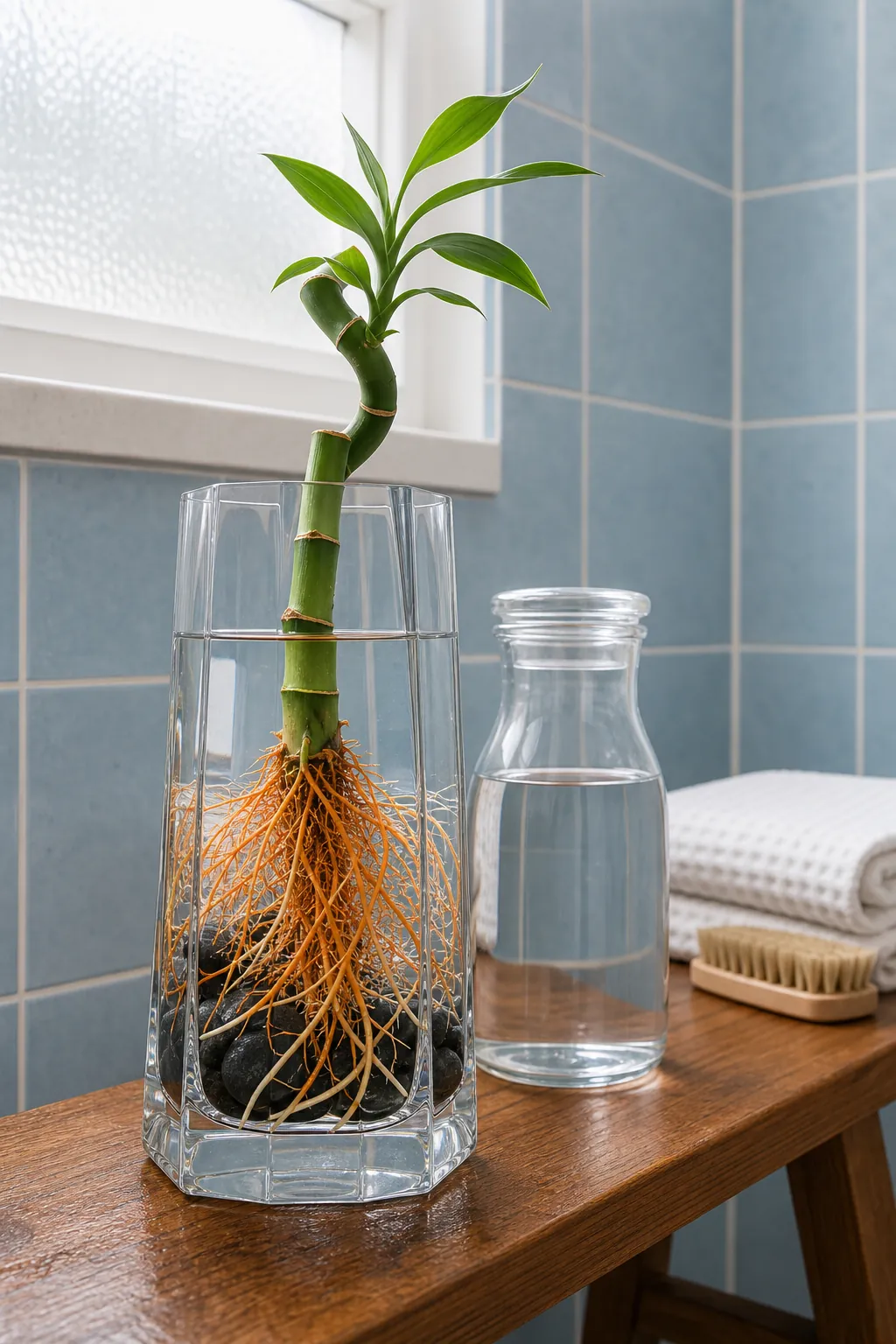
Several turns can take many months because each curve must be grown rather than bent into place. Stop training when the shape suits the arrangement, then remove the box and return the plant to bright indirect light from a broader direction. The completed sections will keep their form while the tip resumes a more ordinary path toward available light.
If the gaps between curves become long, the plant probably needs brighter indirect light before the next turn. If leaves scorch, move it farther from intense sun and let it recover without rotating. A healthy imperfect curve is more attractive than a tight spiral produced by damaged leaves, weak roots, or a cracked shoot.