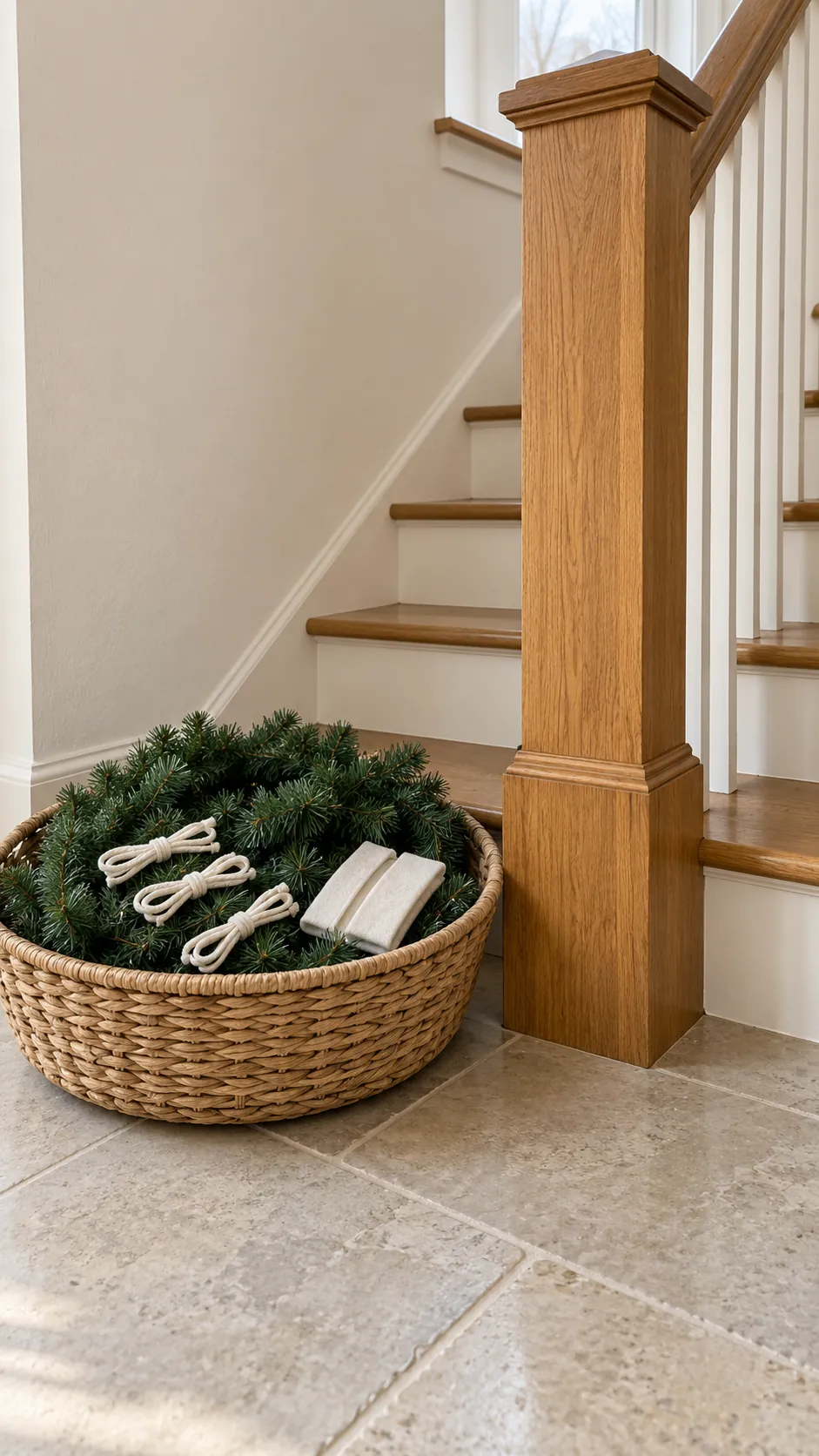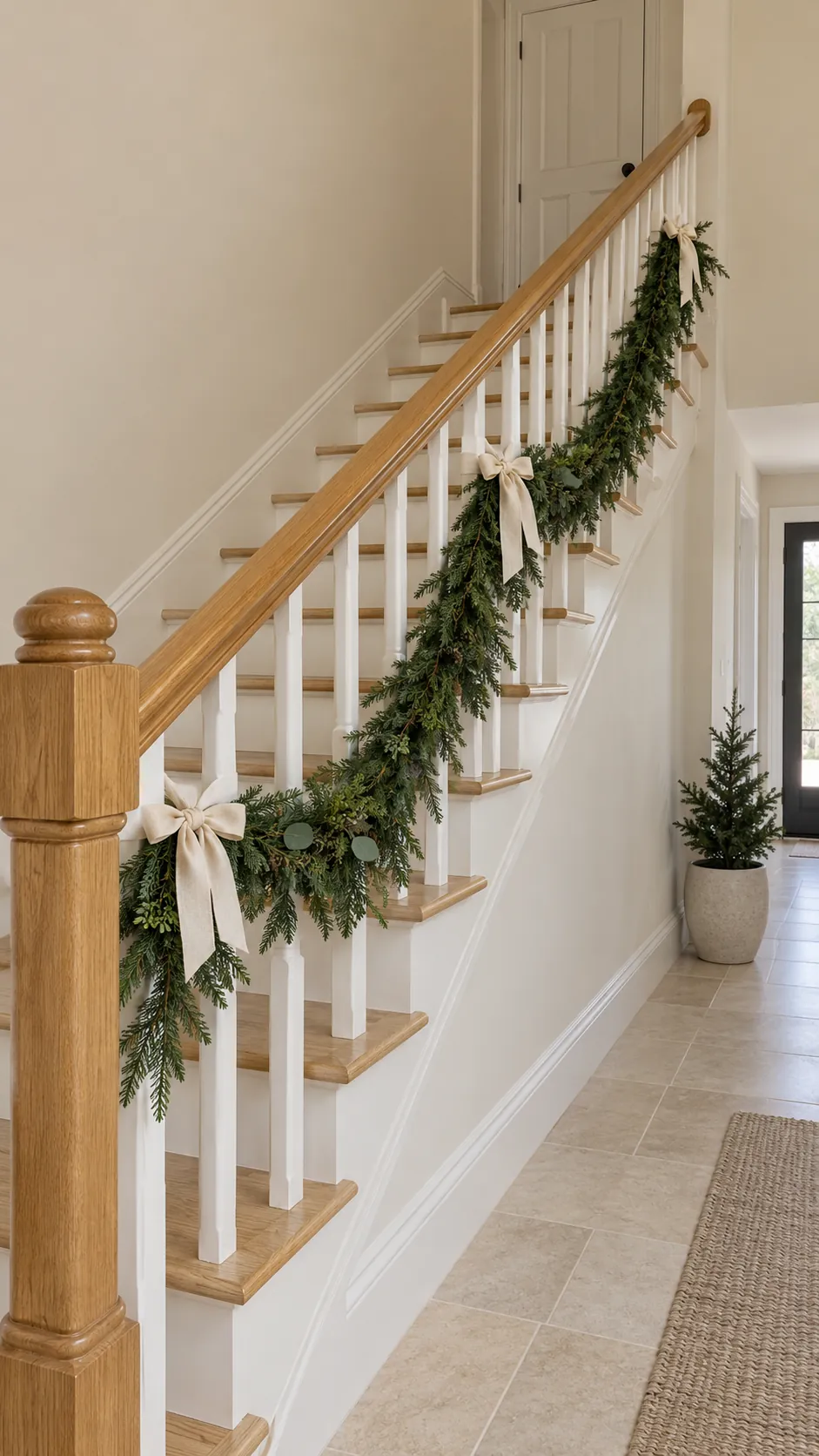
Hidden wire and sliding ties can damage a beautiful finish even when a decoration looks soft from the outside. Protect the contact points first, then support the greenery where it will not interfere with the stairs. A small amount of preparation also makes removal much gentler.
Check the finish before choosing an attachment
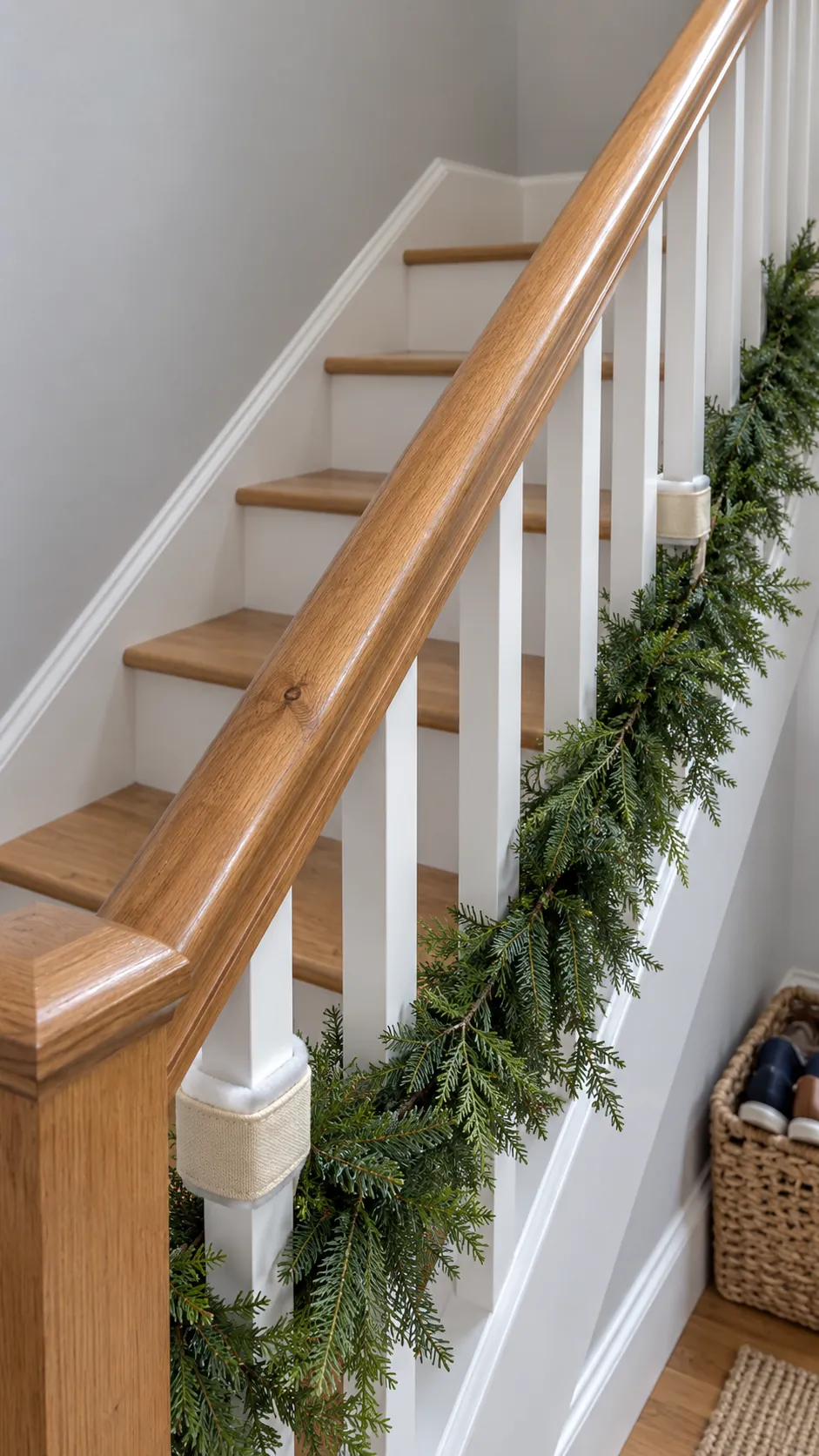
A pretty swag is not worth a scratched banister or a handrail you can no longer grip. The safest starting point is to keep the greenery on the outside of the balusters, below the handrail, with soft barriers at every contact point. This arrangement separates holiday railing decor from the surface people use for support.
Look for peeling paint, a sticky finish, loose spindles, or existing dents before decorating. A recently painted or refinished railing needs the full curing time specified by its finish manufacturer, which can be longer than the time it takes to feel dry. If you do not know what coating is on the wood, avoid adhesive hooks and tapes on that surface rather than assuming a removable label means safe for every finish.
Prepare soft ties and clean contact pads
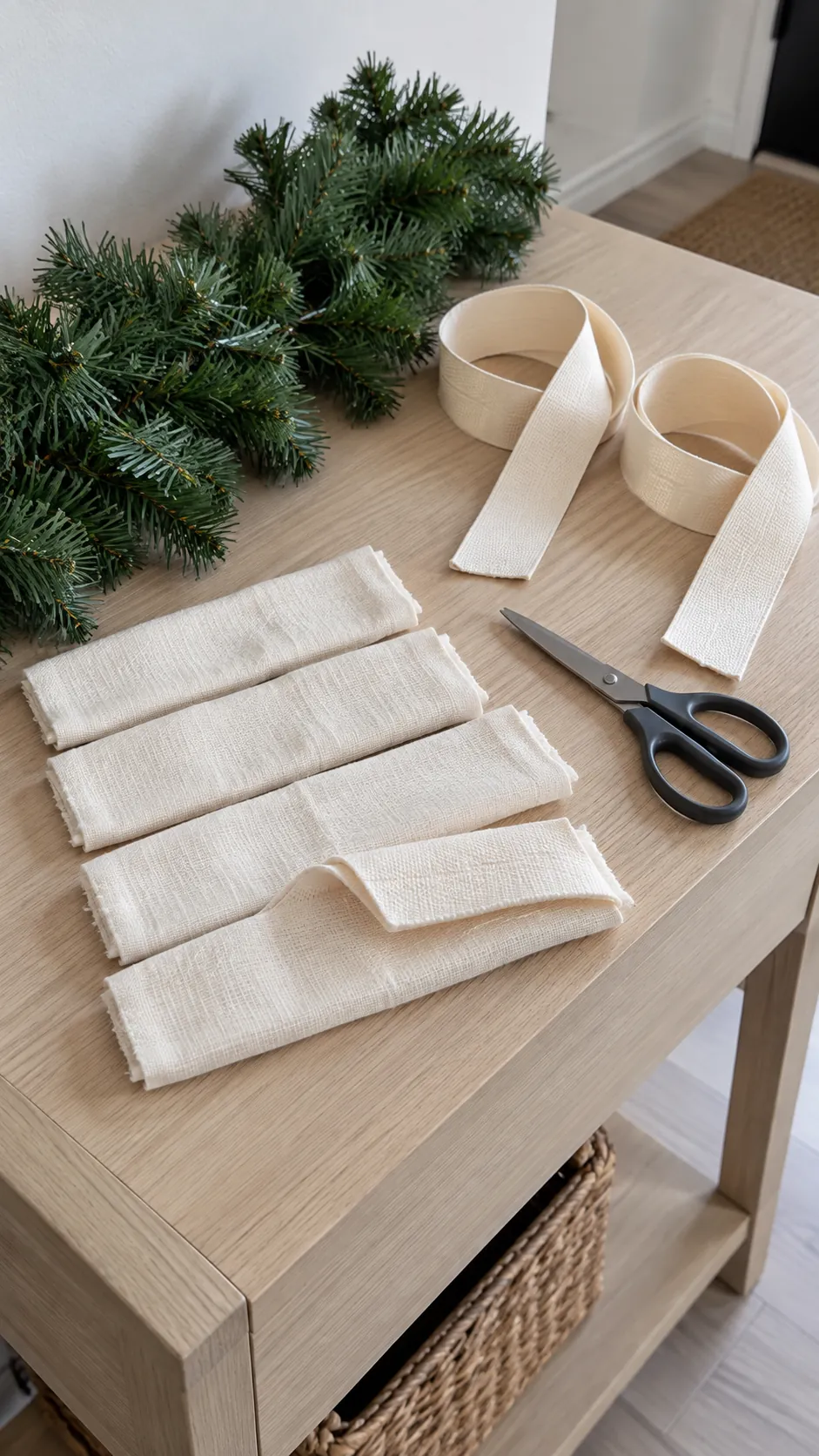
For a lightweight artificial garland, gather wide cotton ribbon or soft reusable fabric straps, clean undyed cotton strips for padding, and scissors. Choose straps whose rough fastening face stays away from the wood, with the smooth face and padding against the railing. Narrow bare wire, fishing line, and tightly cinched plastic cable ties concentrate pressure and can cut or mark a finish.
Wipe the attachment locations with a soft cloth, using only a cleaning method compatible with the existing coating. Let the surface dry completely before covering it. Dust trapped beneath even a soft strap can act like grit when the decoration moves.
Inspect the garland backbone for exposed wire ends and hard plastic joints. Turn those parts away from the wood and cover any unavoidable contact with a separate clean pad. Ribbon that bleeds dye, adhesive backed felt, and rubber materials of unknown compatibility are poor choices for an unfamiliar finish.
Support the greenery from sound balusters
Lay the garland out on the floor beside the stairs before lifting it into place. Plan several attachment points along its length so no single spindle carries the whole decoration. Use sound balusters on the outside of the stair run, choosing a position below the handrail and away from the walking side.
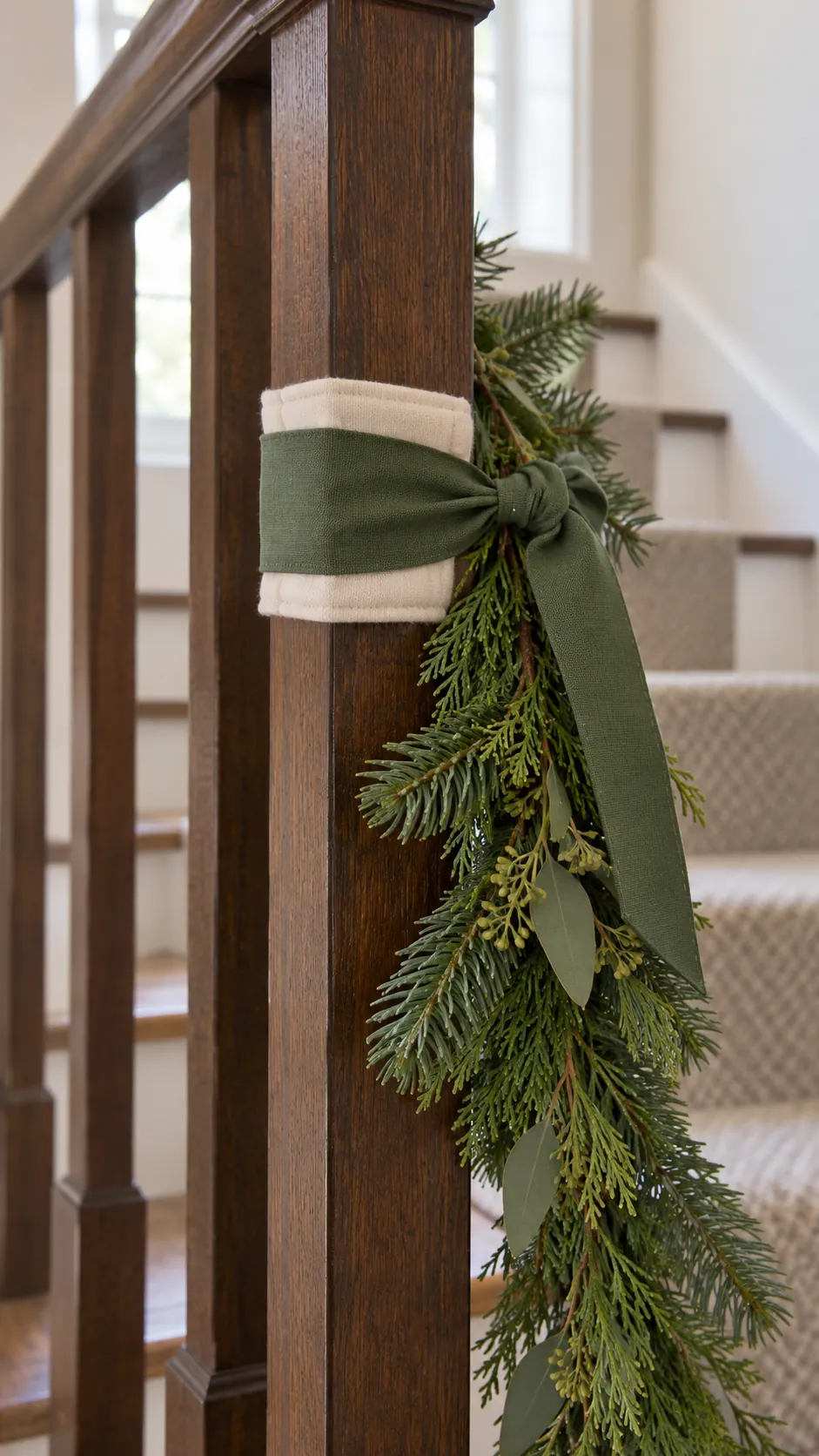
Wrap a clean cotton pad around each contact location, then loop a soft tie around the padded baluster and the garland backbone. Fasten it just enough to hold the decoration without compressing the pad into a thin line. Keep any strap closure facing outward, and tuck ends into the foliage where they cannot catch clothing. Add another support if the garland pulls a tie sideways, and choose a lighter garland if the railing or attachment cannot support it securely.
Shape the swags without dragging the branches
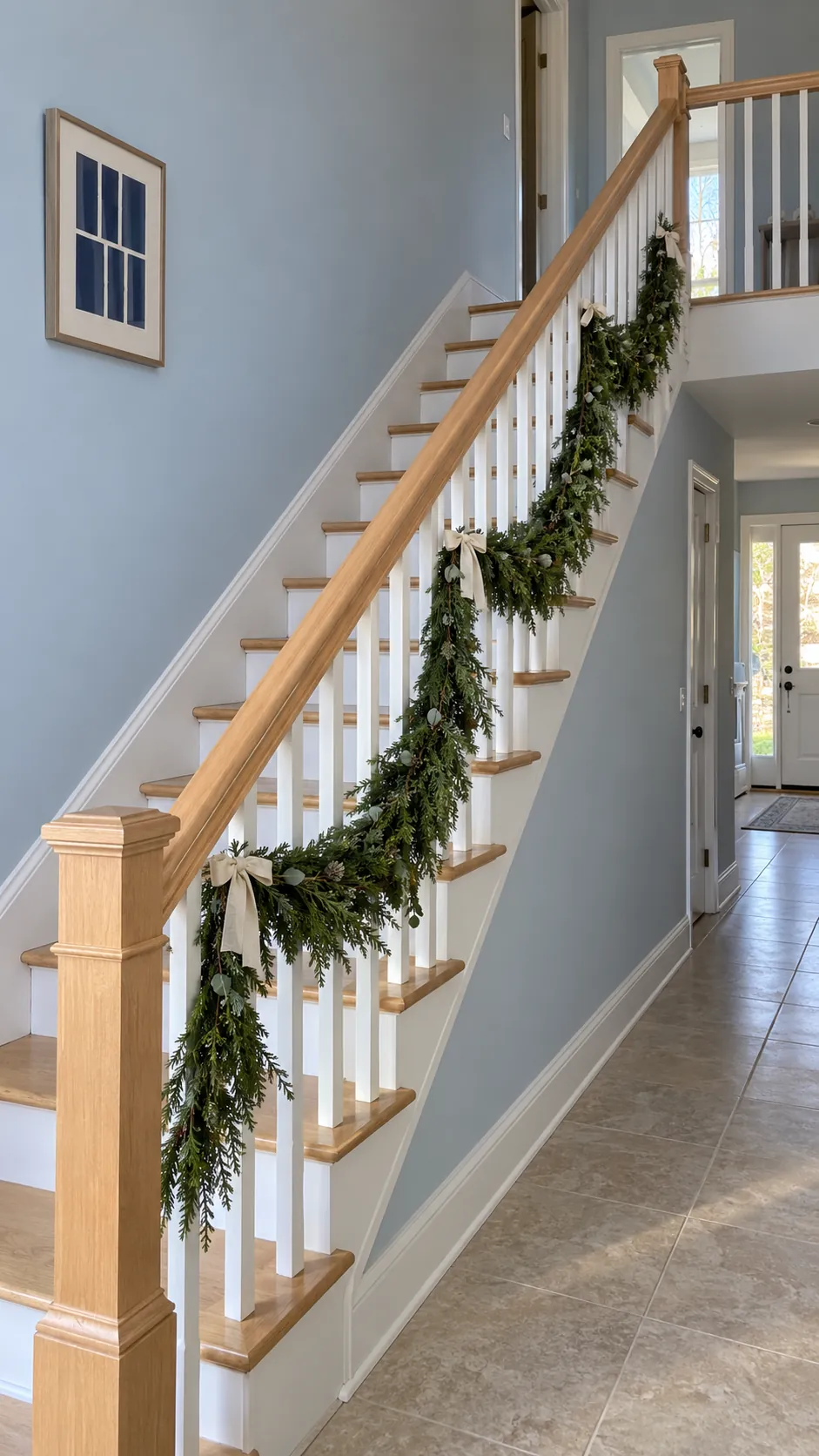
Once the supports are in place, lift and settle the foliage into shallow swags. Do not slide the entire garland along the rail to correct its position, because hidden wire and hard needles can scrape as they travel. Untie the affected point, move the padding and garland together, then fasten it again.
The handrail needs to remain continuously usable along its length. Keep bows, ornament hooks, branches, and strap tails below it on the outside, and make sure nothing projects into the stair path. If your staircase has no suitable outside mounting space, decorate a nearby wall or console instead of filling the route people need to use.
For banister ribbon styling, tie a decorative bow to the garland support rather than tightening it directly around the finished rail. Let the bow conceal the support while leaving the protective pad in position. Check the arrangement from both the bottom and top of the staircase, since a tail that looks harmless from below may intrude into the route from above.
Route lights and check for movement
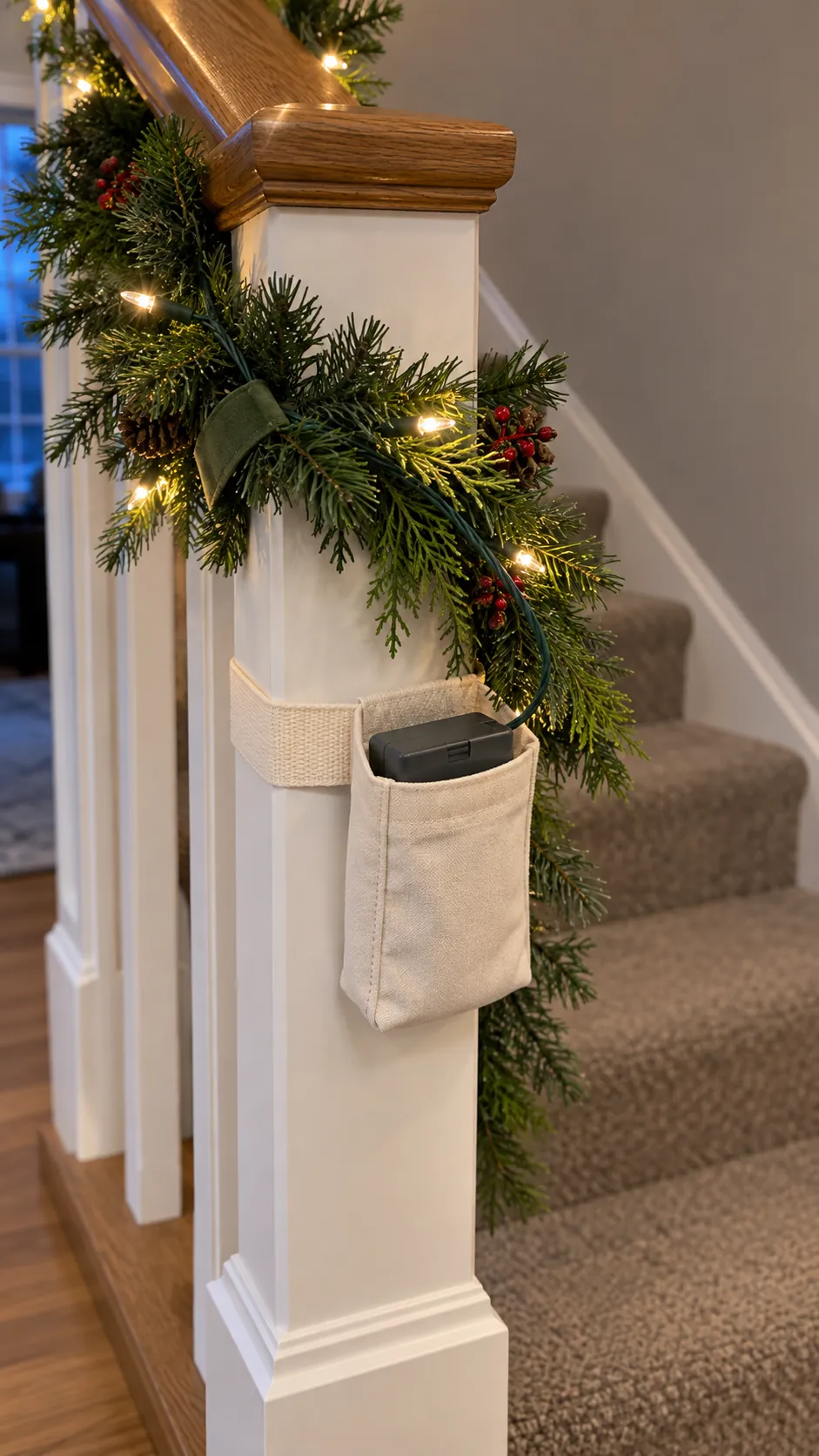
If you use lights, choose a set suited to the location and follow its instructions. Keep its power lead away from stair treads, door openings, and the gripping surface, and never use the light wire as a structural garland tie. A battery pack can sit in a supported pouch on the outside of the railing, provided it does not strain the wire or hang where someone can catch it.
Gently check that the garland stays where you placed it without shaking or loading the railing. Recheck pads and supports after the first evening, then periodically during the display. A slipped pad, rubbing wire, or shifting tie is a reason to take down that section and correct it, not simply tighten it harder.
Remove the ties before lifting away the garland
Unplug the lights or switch off the battery pack before removal. Support the greenery while releasing one tie at a time, and lift each section away from the balusters instead of pulling the whole length down the staircase. Keep released ribbon and loose decorations in a basket so they do not fall onto the treads.
Remove the cotton pads and inspect the finish in good light. Clean it only with the method suitable for that coating, without scraping off residue or polishing an unfamiliar surface with a new product. Save clean ties separately from any exposed garland wire, and replace pads that have collected grit before using them again next Christmas.