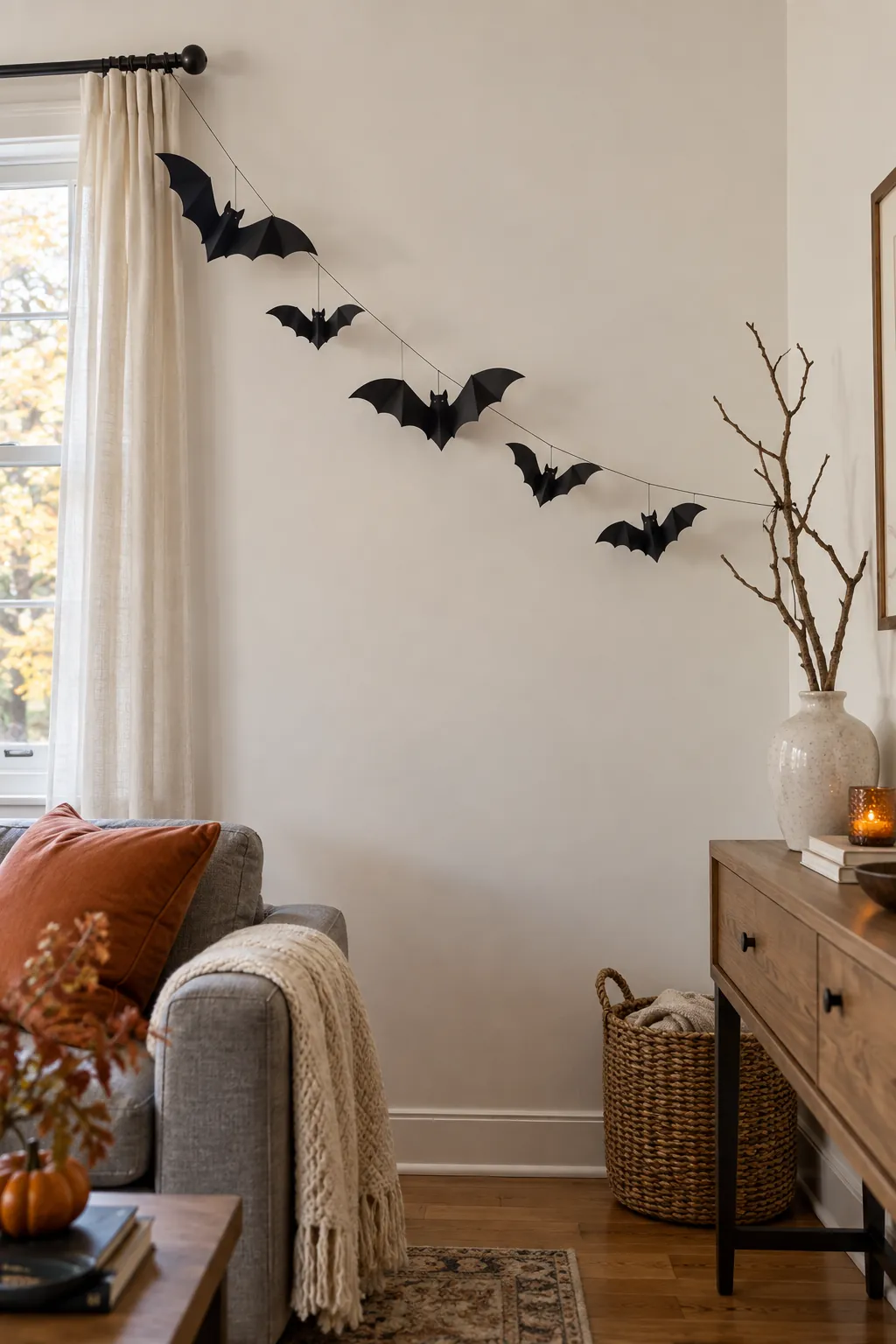
That dramatic flight of black bats across a wall looks simple until the paint comes away with the decorations. Even products sold as removable can behave differently on fresh paint, weak paint, or a warm room. The safest way to keep the display and the finish is to move the attachment point to something you can lift, clip, or stand independently.
Think about the view you want first: a cluster in a window, a sweep above a doorway, or a flock rising from a shelf. Then choose a support that already belongs to the room. The paper bats can still look as though they are flying across the painted wall while every actual attachment stays elsewhere.
Make Lightweight Bats Before Choosing the Support
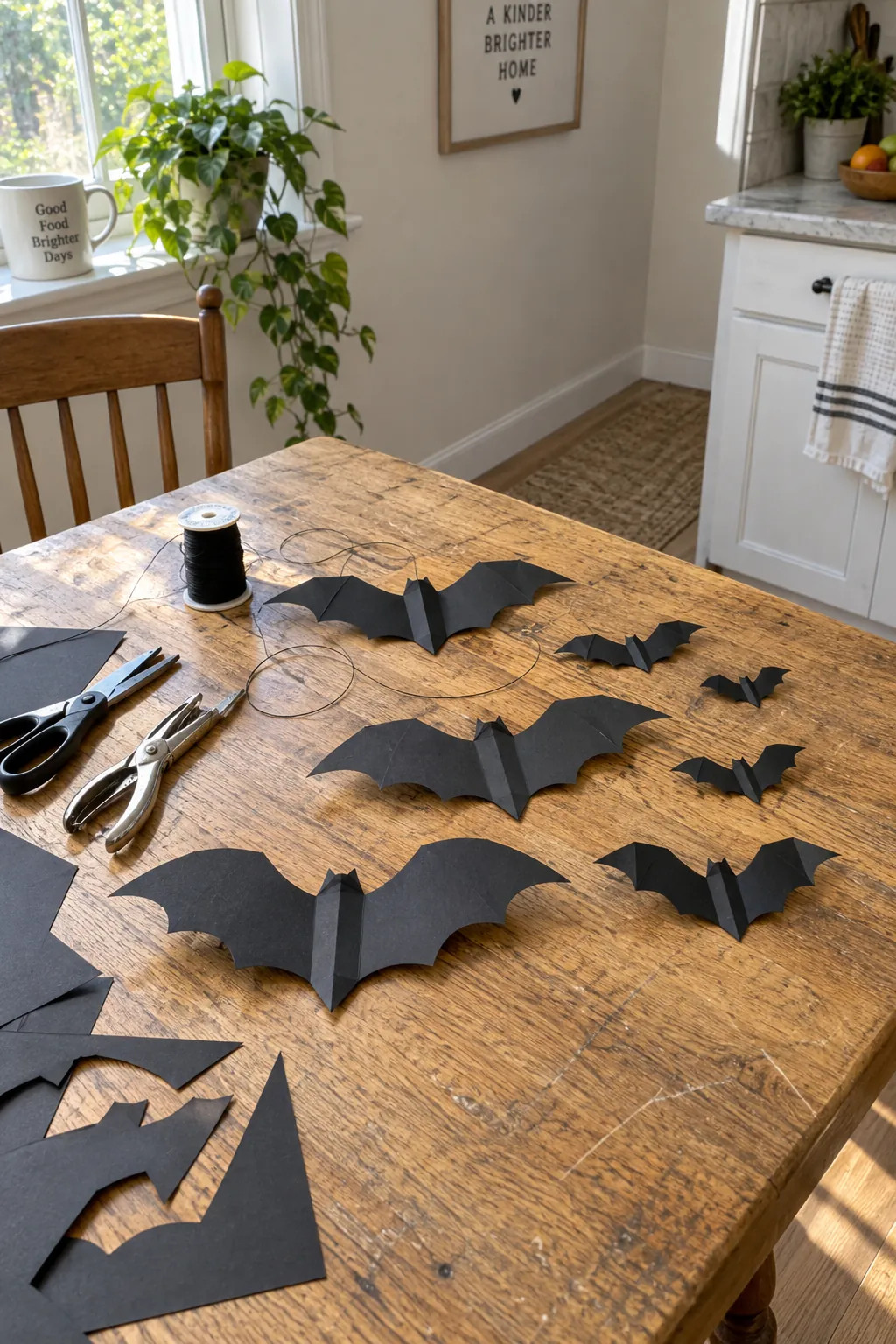
Cut bats from black cardstock rather than thick board, and mix two or three sizes so the flock reads naturally from a distance. Fold each body very gently so the wings lift a little, but keep the central strip flat enough for a clip or thread hole. Make a few extra pieces in case a wing bends during assembly. If children will help, use blunt scissors and let an adult make any holes with a punch.
Lay the bats on a table in the shape of the intended flight before you hang anything. This is the moment to adjust spacing, change direction, and count the supports you need. A loose cluster often looks fuller than a rigid row, yet each bat still needs a clear attachment point.
Use a Tension Rod Inside a Window Recess
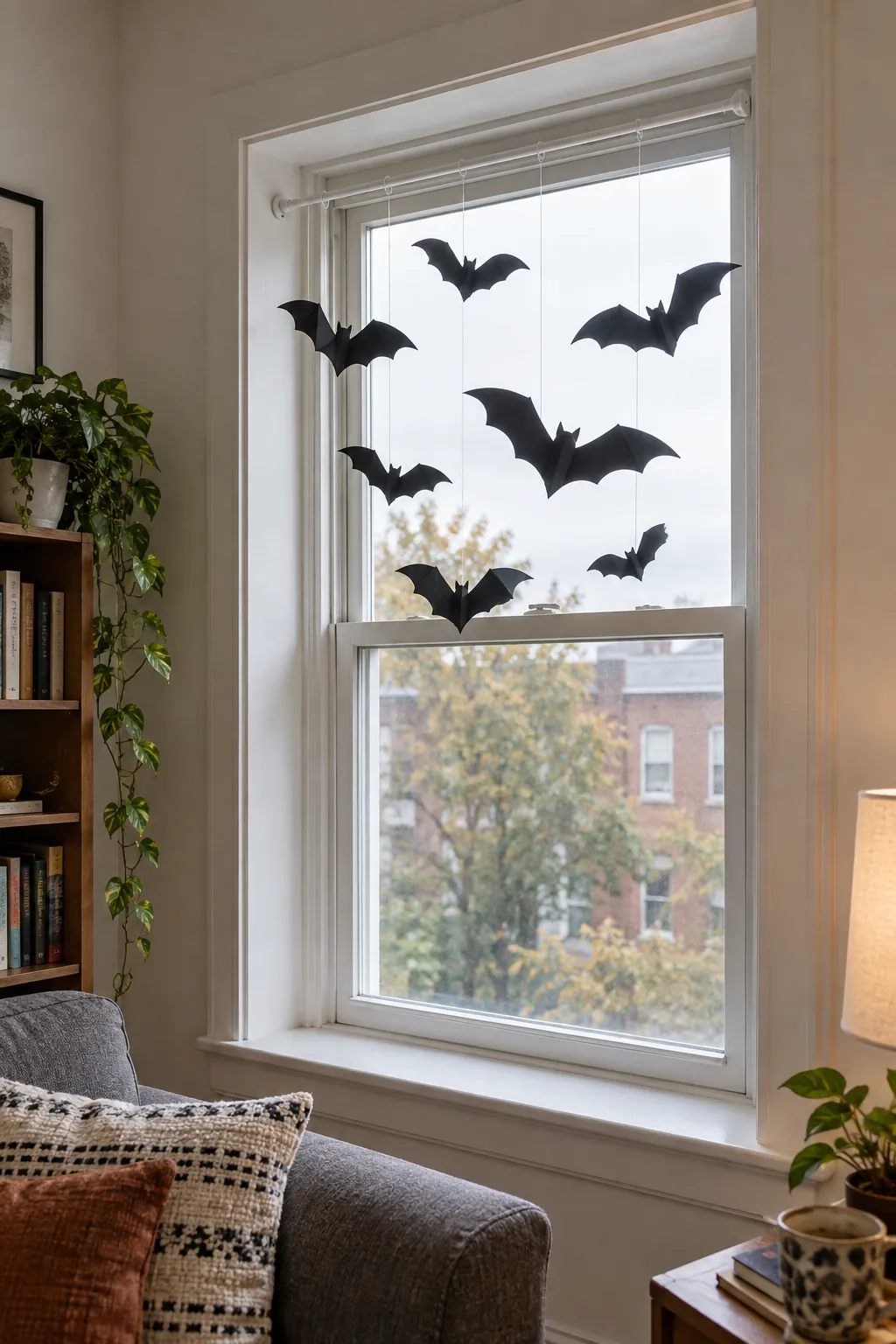
A small tension rod seated inside a window recess gives you a hanging rail without touching the wall paint. Tie fine thread through the center of each bat and knot the other end around the rod. Set different thread lengths so the group appears to rise or turn in flight. Check the rod against the window frame with a light tug before adding the paper pieces.
Keep the bats clear of a window that opens and of any blind cord or handle. If a breeze makes them twist, shorten the threads or use slightly heavier cardstock. This method is especially useful in a rented room where the painted wall beside the window is fragile.
Clip a Bat Garland to an Existing Curtain Rod
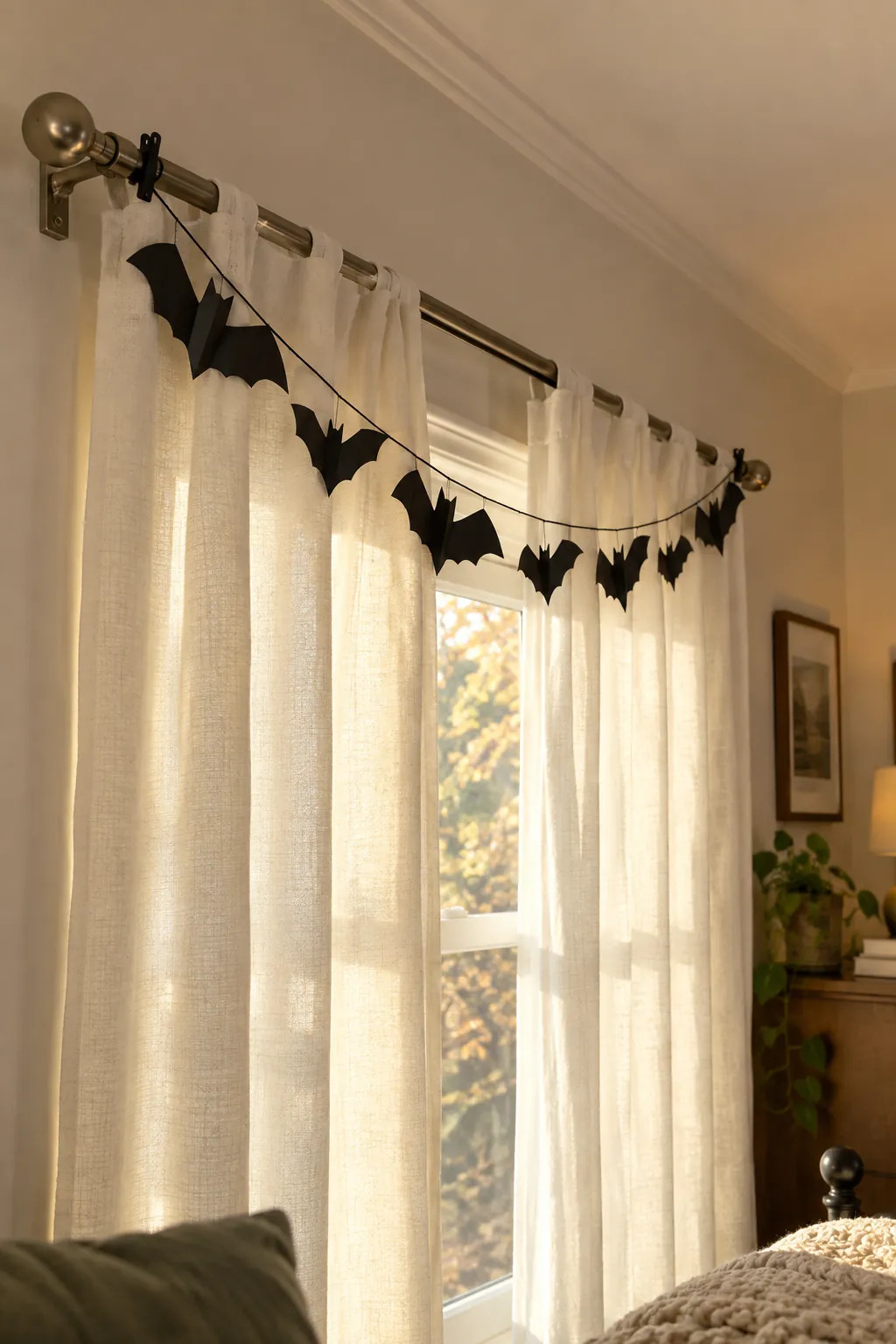
If a curtain rod is already in place, string bats along a length of dark thread and attach the ends to the rod with small clips. Let the garland dip gently across the upper part of the window so it reads as one planned shape. Keep the clips outside the moving curtain rings. The wall remains untouched, and the whole garland comes down in one piece.
Test the curtain after installation instead of assuming it will still slide. A short garland over one side may be more practical than a dramatic span across the entire window. If the room has a patterned curtain, use fewer bats so their silhouettes stay readable.
Hang a Flock From an Over Door Hook
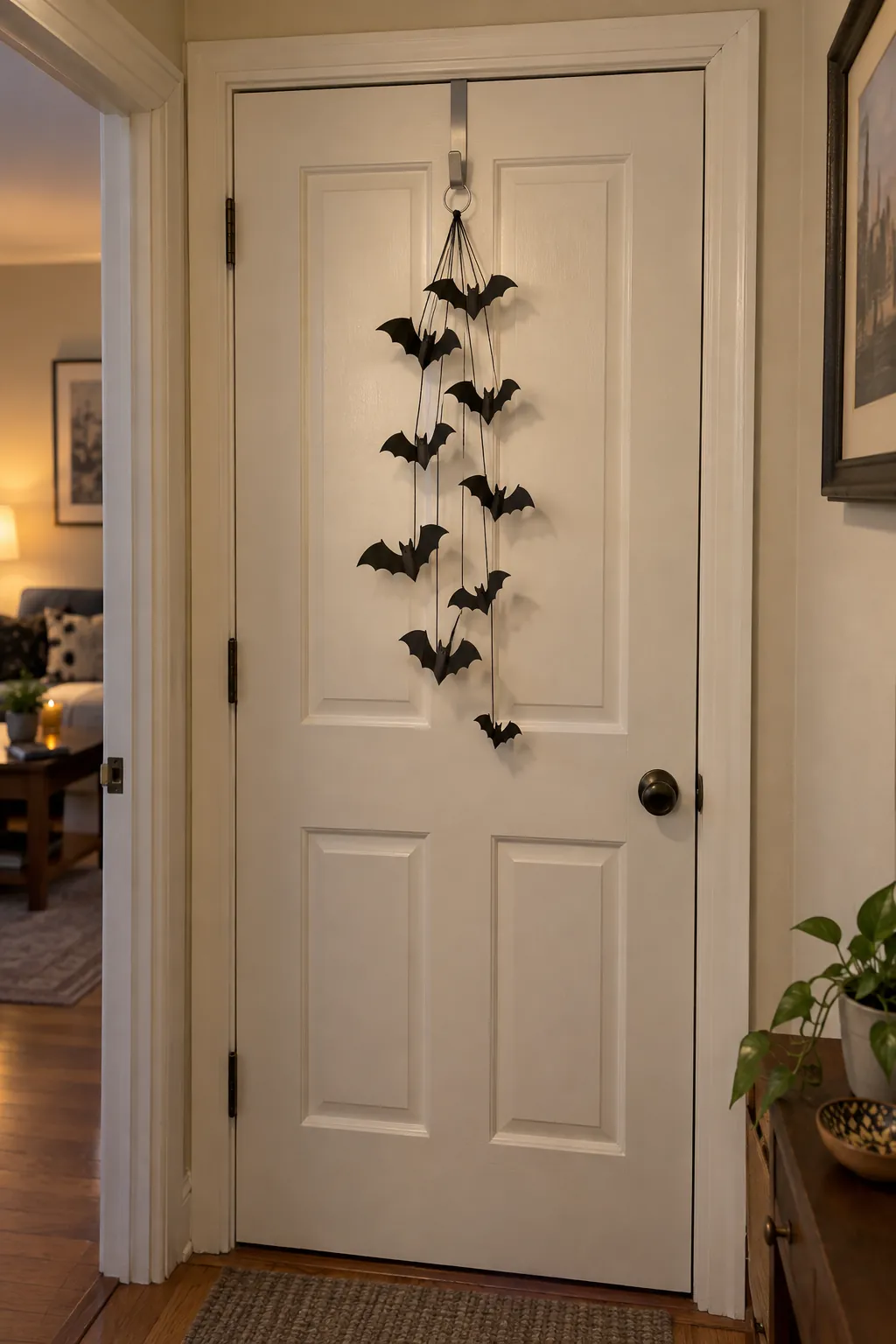
An over door hook can hold several strands of paper bats above a doorway without any attachment to the painted surface. Gather the strands on one lightweight ring, then place that ring on the hook. Vary the lengths and keep the lowest bat above the path of a tall guest. A narrow door with plenty of clearance gives the cleanest result.
Close the door slowly to check that the hook does not scrape the frame or stop the latch. A padded hook may help protect the door edge, but only if it still allows the door to close properly. Move the display to a different doorway if the swing catches the threads.
Build a Freestanding Branch Display
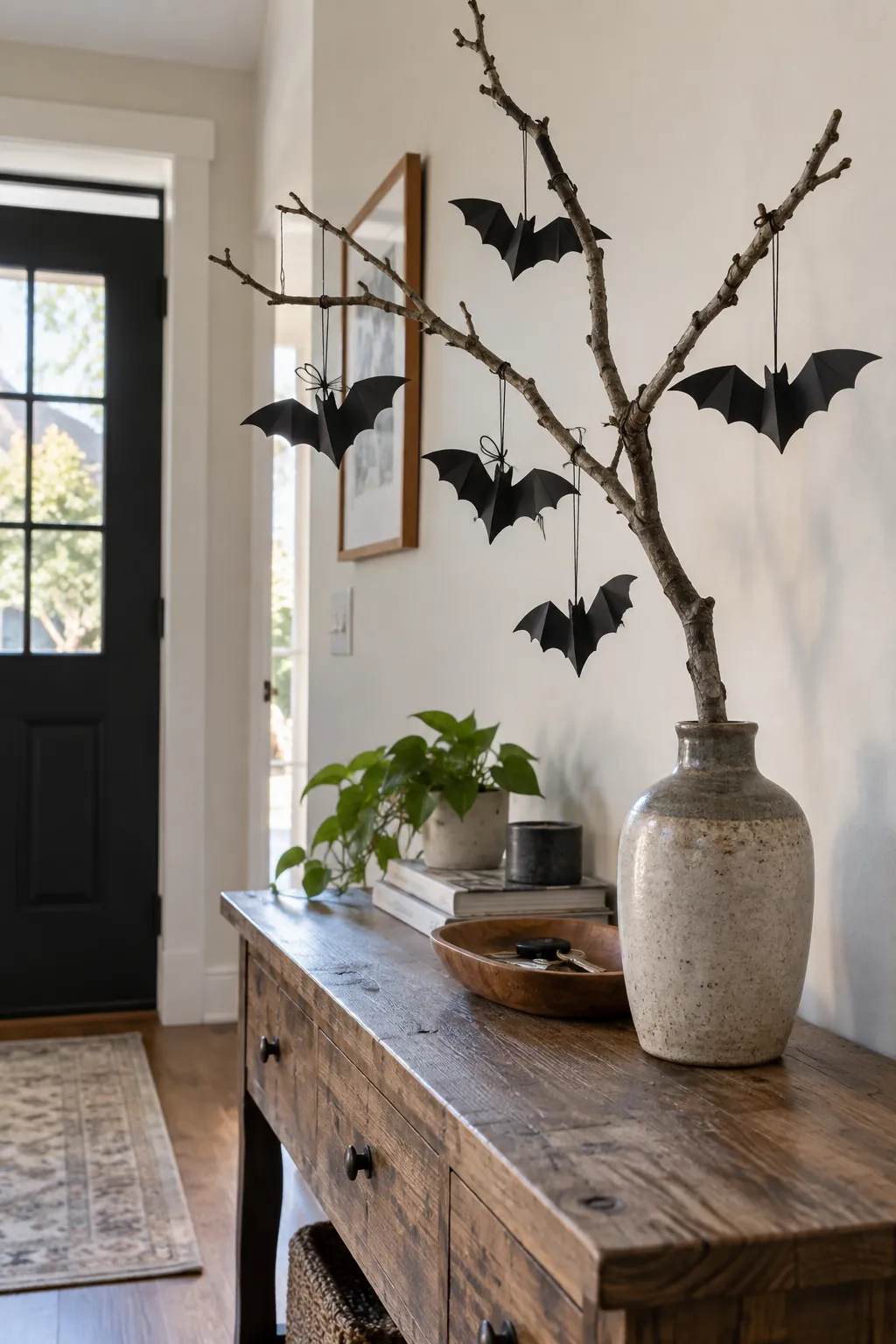
A branch in a heavy vase makes a bat display that can sit on a console or sideboard. Tie bats at different heights with dark thread, leaving the branch visible so the arrangement does not become a tangle. Place the vase where hands will not brush it as they reach for keys or snacks. Add weight inside the vessel if the branch makes it top heavy.
Dry and clean a natural branch before bringing it inside, or use a sturdy artificial stem. This option is useful when you want the flock near a painted wall for the visual effect but cannot attach anything to that wall. Rotate the vase until the bats read clearly against the background from the usual viewing angle.
Put Suction Cups on Glass Instead of Paint
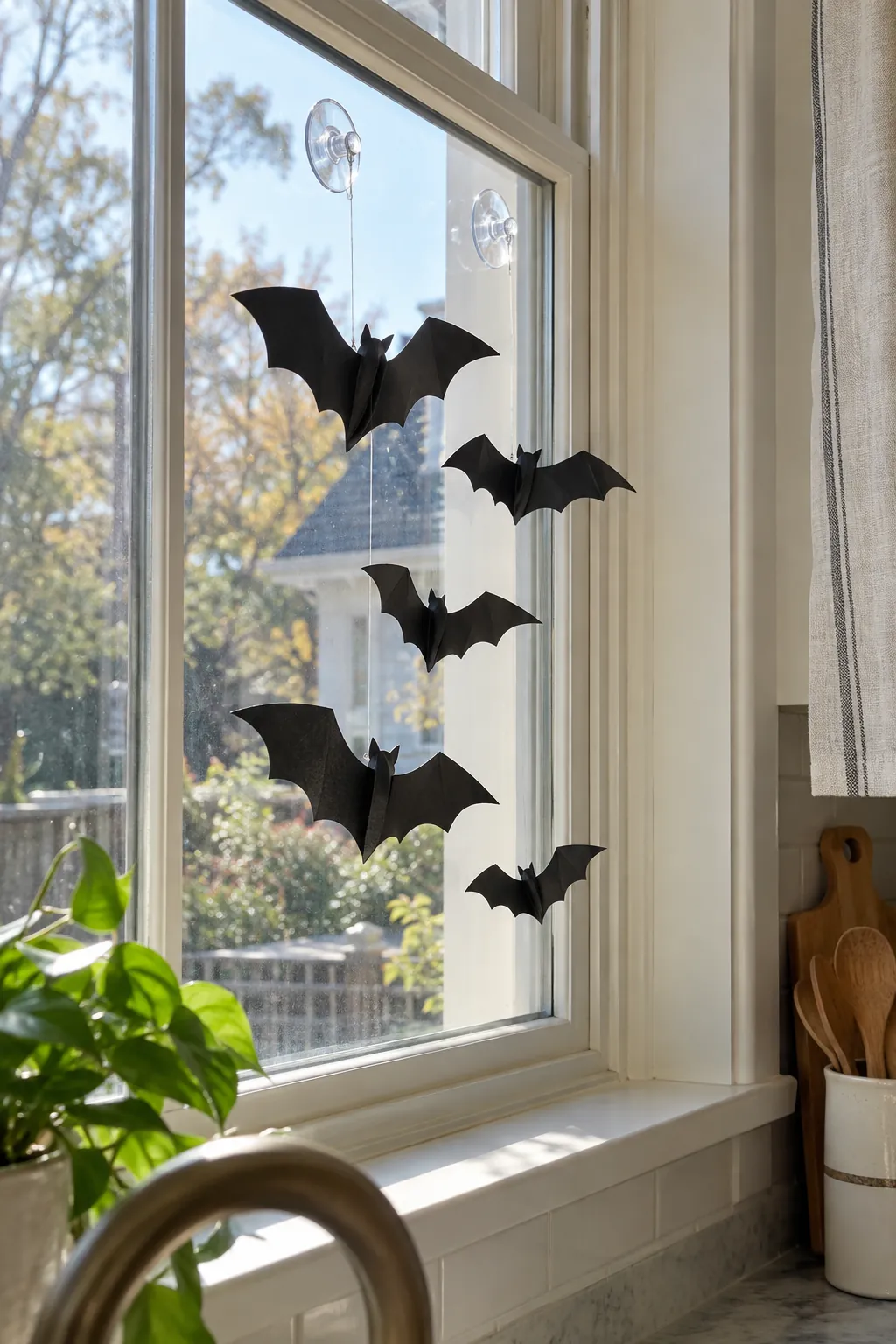
Small suction cups can hold light bat strands on clean window glass or a glass door. Press each cup onto dry glass, then hang only a few paper pieces from it. Check the hold after an hour and again the next day, since temperature changes and condensation can release a cup. Keep the display away from a door handle and any opening window panel.
Use a piece of thread long enough to let the bats sit in front of a pale wall or curtain, creating the illusion of a wall display. Do not put suction cups on painted trim or assume they will work on textured glass. If a cup drops during testing, switch to a rod or freestanding support rather than adding more weight to it.
Use Shelf Edges and Bookcase Sides as Anchors
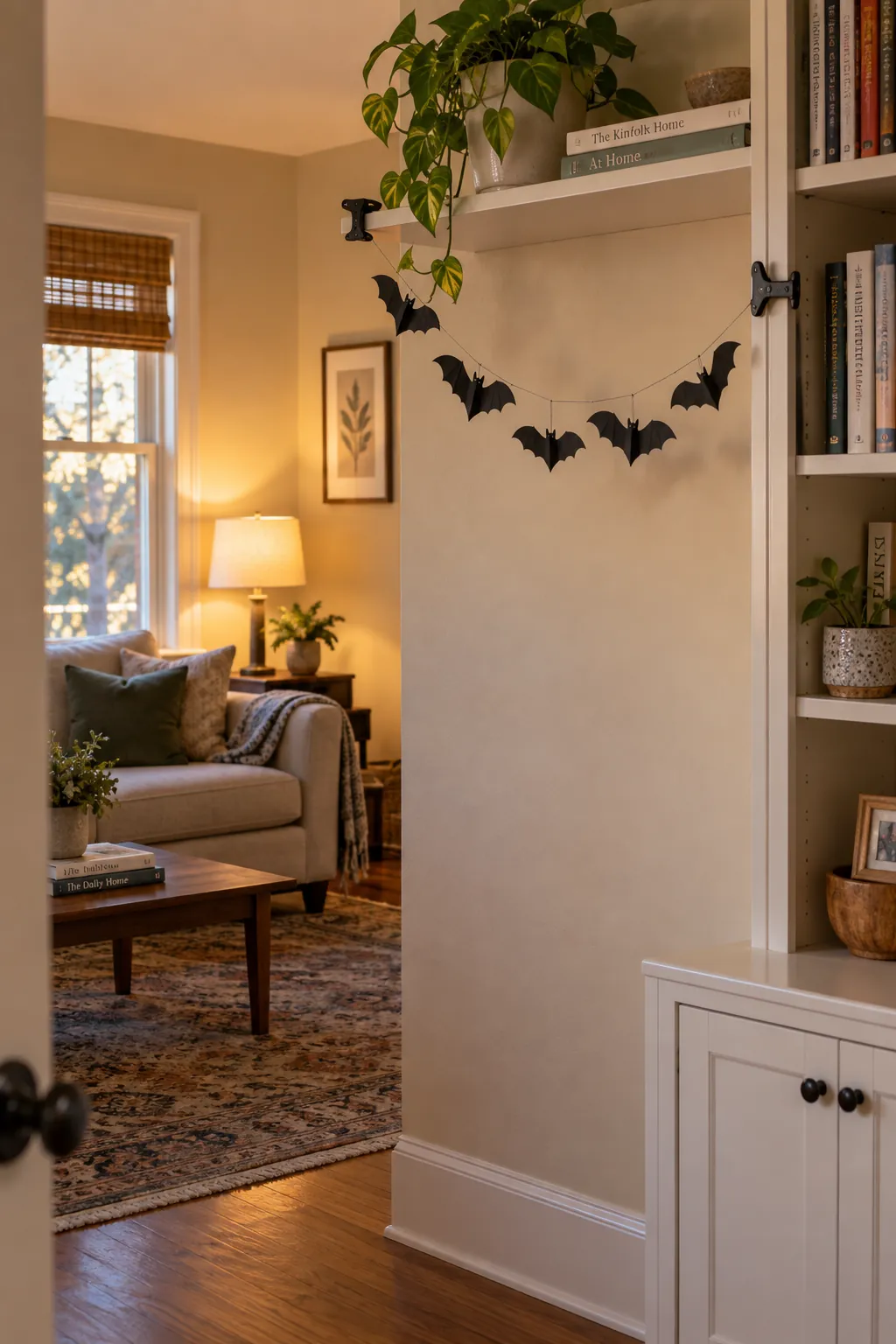
Small removable clips can grip a shelf edge or the side of a bookcase, allowing bats to float in front of the painted wall. Test the clip on a hidden part of the furniture first, particularly if the finish is soft or painted. Run the thread between two clips to form a shallow arc, then tie individual bats along it. This creates a wide display without a single adhesive point on the wall.
Leave enough clearance for books, cabinet doors, and people walking past. If the furniture is tall, use a stable step stool for setup and do not pull on an unsecured bookcase. A short flock above a shelf can feel more intentional than a long line stretched across the room.
Take the Display Down Without Creating a New Problem
Remove the bats from the bottom upward so loose strands do not catch on the rest of the arrangement. Unclip or untie each support before pulling on the thread, and lift tension rods out gently rather than letting them spring against a frame. Wipe any glass suction marks with a suitable glass cloth. Inspect the furniture and window frame as you go so a minor scuff does not go unnoticed.
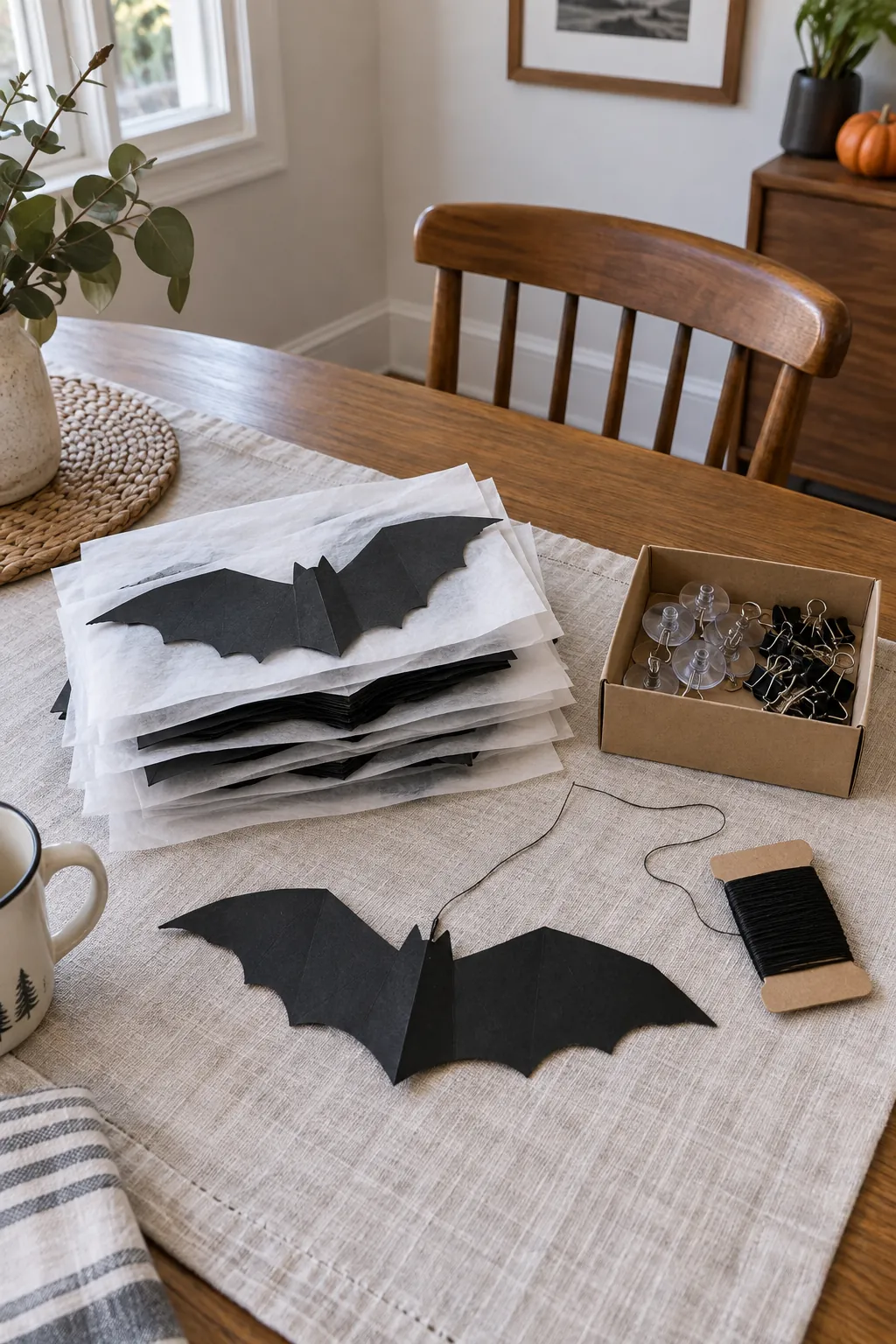
Store flat bats between sheets of paper, with the strands loosely wound on a piece of card. Label the card with the support location so the next installation is quicker. The whole point of a wall safe display is that the painted surface looks exactly as it did before Halloween.