
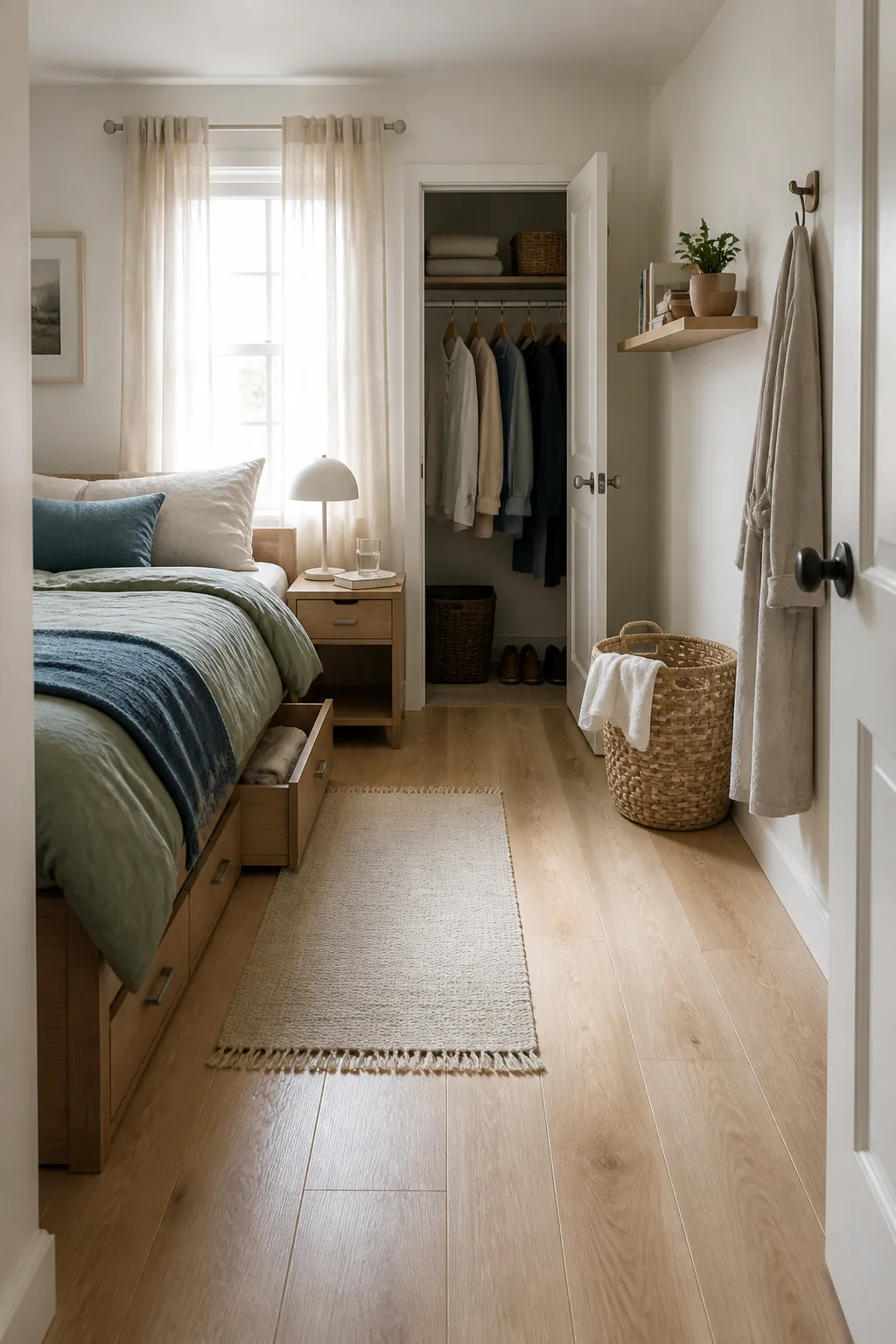
A small room becomes frustrating when every clear surface has to serve as temporary storage. The answer is not to hide more objects in random containers. It is to reduce what the room must hold, give each remaining category one practical home, and make returning items easier than dropping them on the nearest chair.
Work with the room as it is. Notice where clothing lands, which items crowd the bedside, and what blocks cleaning or movement. Those repeated trouble spots reveal the bedroom storage zones the room actually needs.
Clear One Working Zone Before Sorting
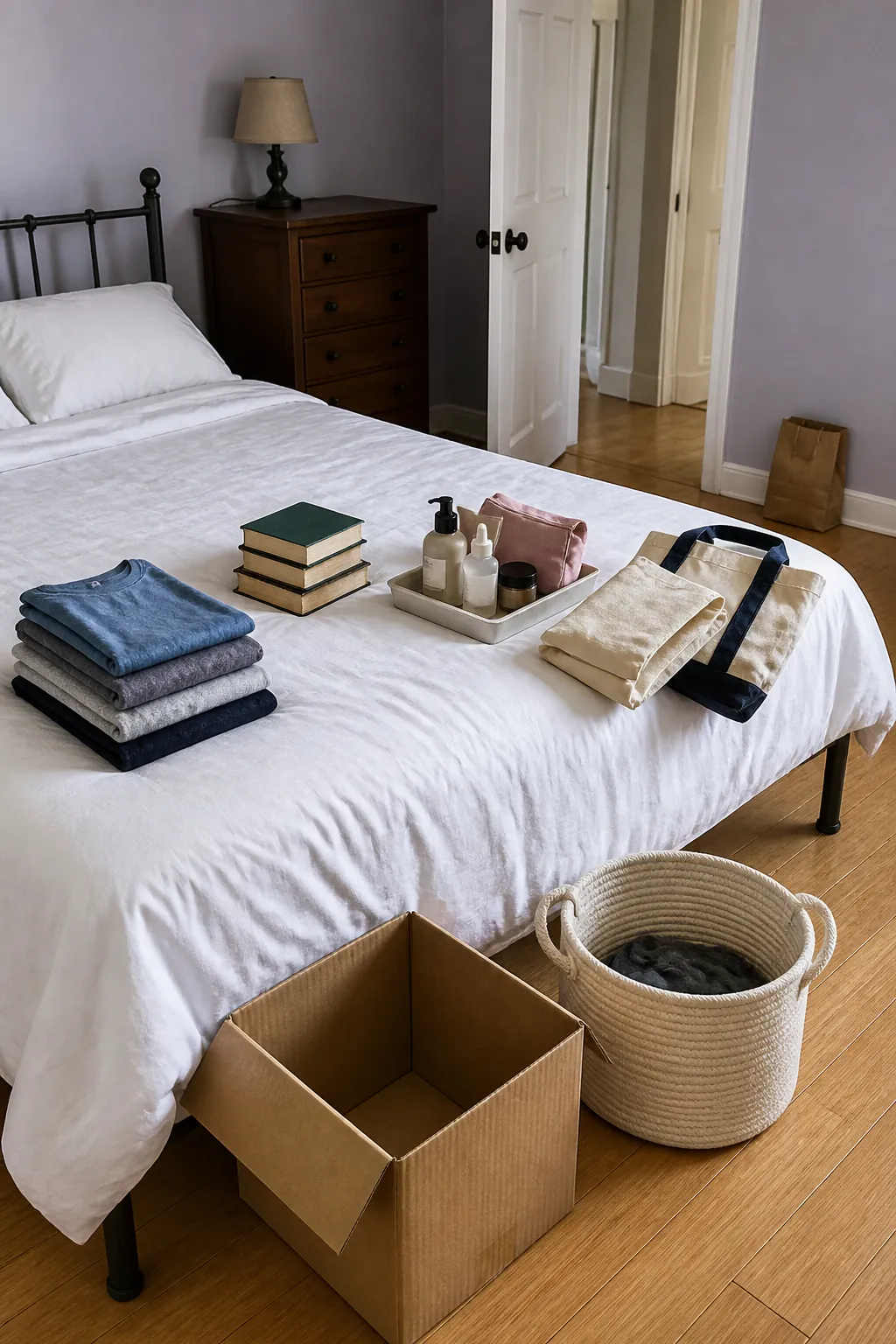
Begin with a small area such as the bed, one dresser drawer, or a patch of floor rather than emptying the whole room. Remove rubbish, laundry, dishes, and items that belong elsewhere first. The remaining objects are easier to judge once these obvious exits are gone.
Group like with like and keep each category visible until you understand its volume. Use temporary boxes you already own before buying organizers. A container should solve a measured storage problem, not create permission to keep more than the room can support.
Assign Storage by How Often You Reach for It
Daily clothing, medicines, chargers, and grooming tools deserve the easiest positions. Occasional items can go higher, deeper, or beneath the bed, while true seasonal belongings can move to the least convenient safe space. This protects prime storage from objects you touch only a few times each year.
Keep category boundaries firm enough to be useful. When one drawer is full, edit the category rather than forcing items into another zone. Small bedroom organization lasts when the available space defines the limit.
Use Under Bed Space as a Real Drawer
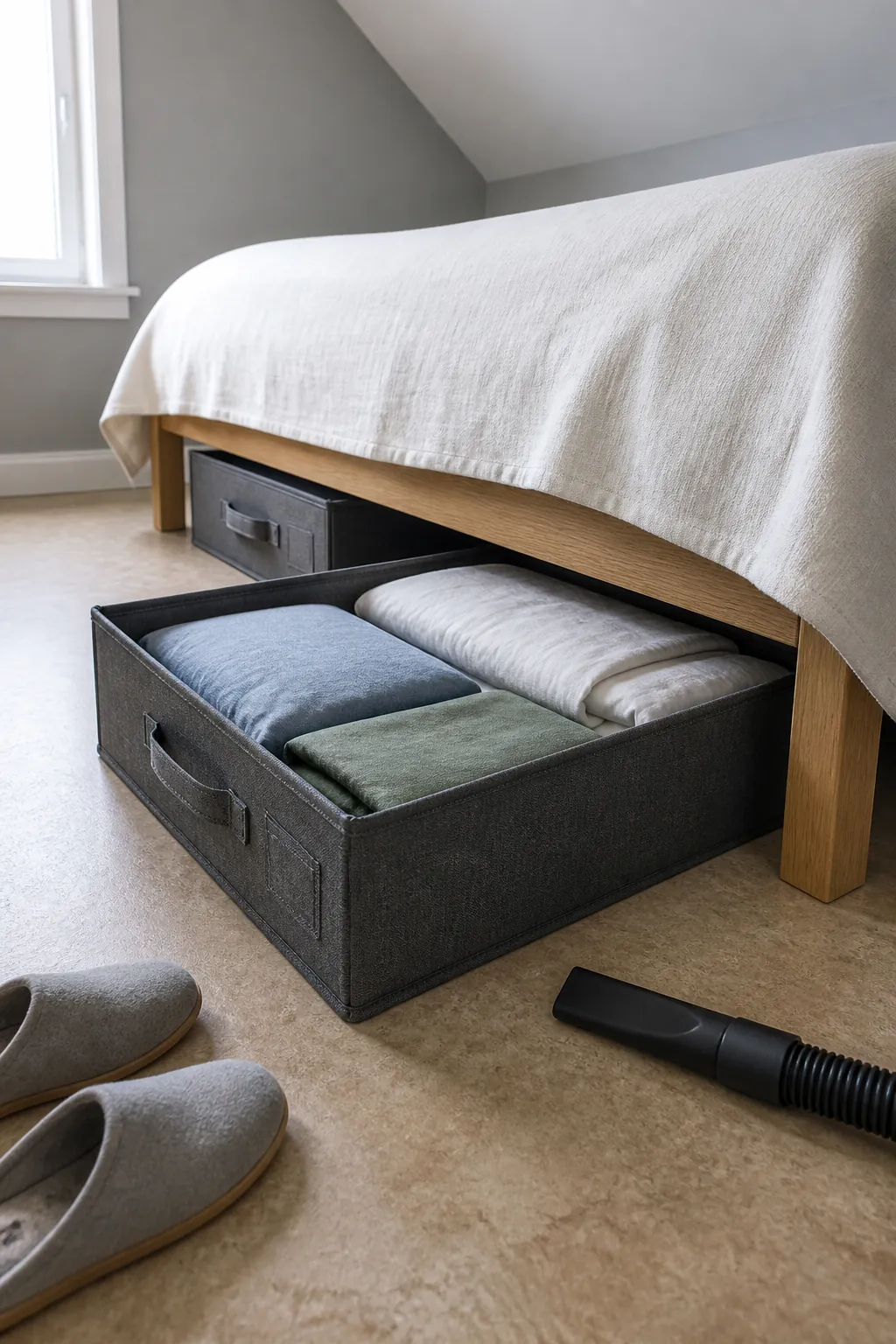
Under bed storage works best when containers slide out fully and contents can be reached without moving furniture. Measure the clear height around supports and allow room for handles. Choose low bins that protect clean textiles while remaining easy to inspect.
Store one category per container, such as spare bedding or out of season clothing. Keep shoes clean and dry before enclosing them. Do not pack the area so tightly that dusting, ventilation, or access becomes impossible.
Give the Bedside a Strict Purpose
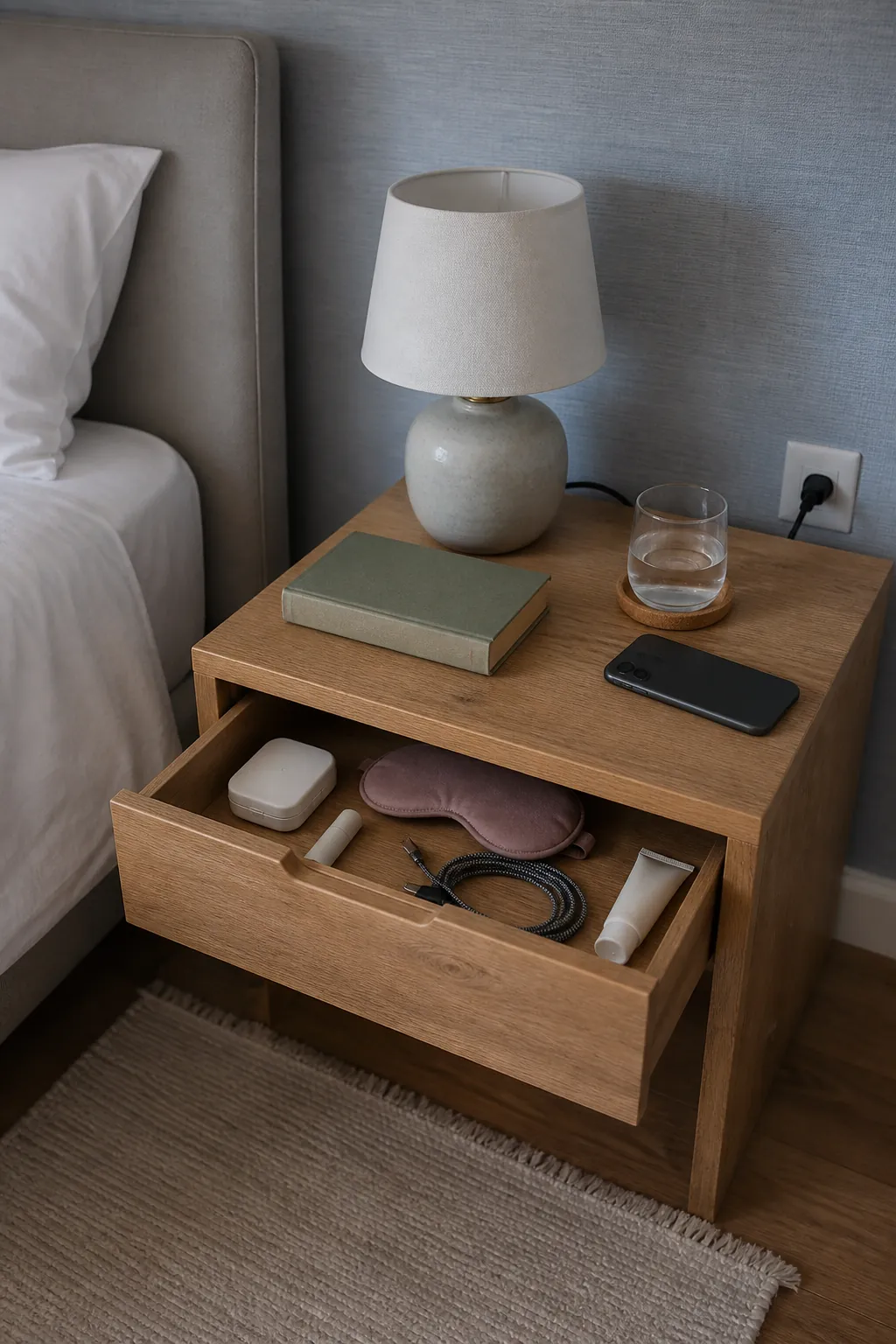
The bedside should support sleep and the first minutes of morning, not become a general holding area. Keep only the lamp, current book, water, essential medicine, and charging equipment you actually use there. A small drawer or lidded box can contain personal items that create visual noise.
Route cables so they remain reachable without crossing the floor. Move cosmetics, paperwork, and spare accessories to their own zones. These bedside storage ideas preserve a calm surface while keeping essential objects close.
Edit the Closet Before Adding Hardware
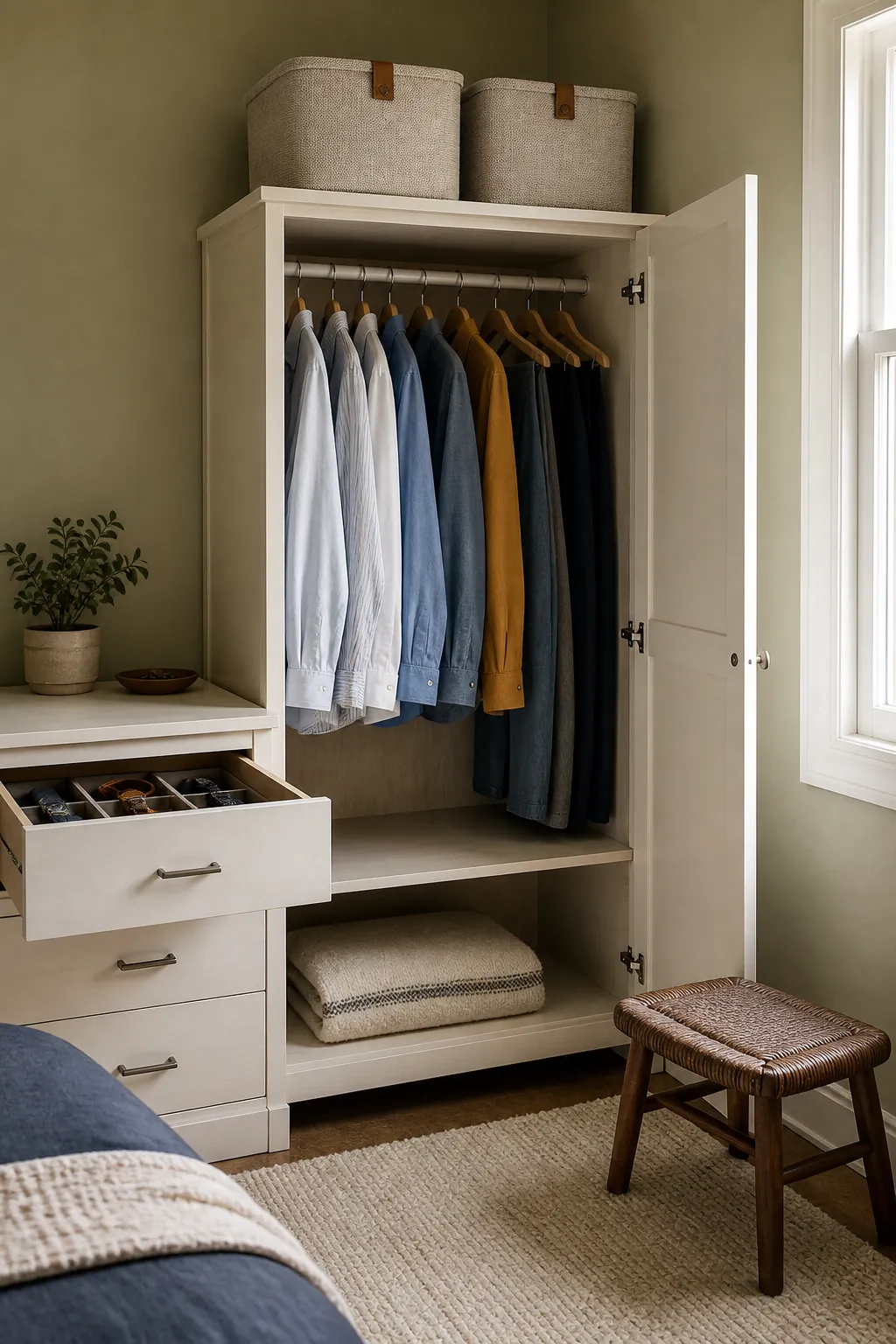
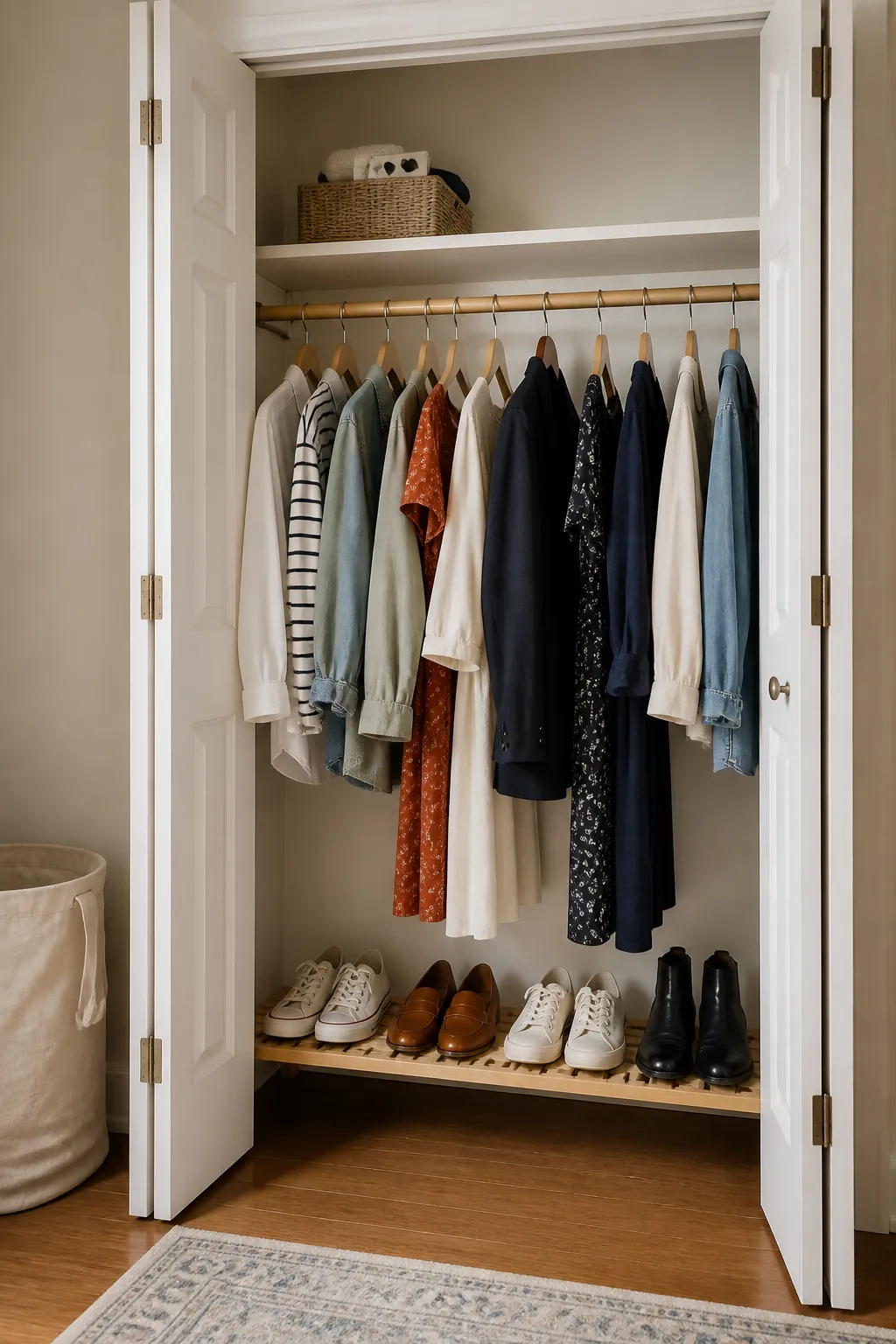
Closet decluttering should begin with what fits your life now, not with a new rack. Remove empty packaging, damaged hangers, clothing awaiting repair, and garments that belong in another season. Separate hanging clothes from pieces that keep their shape better when folded.
Use consistent hanger direction and leave enough space to see each item. Place shoes on a clean lower shelf rather than in a loose pile. Small wardrobe solutions work only after the wardrobe has enough breathing room to operate.
Move Light Categories Up the Wall
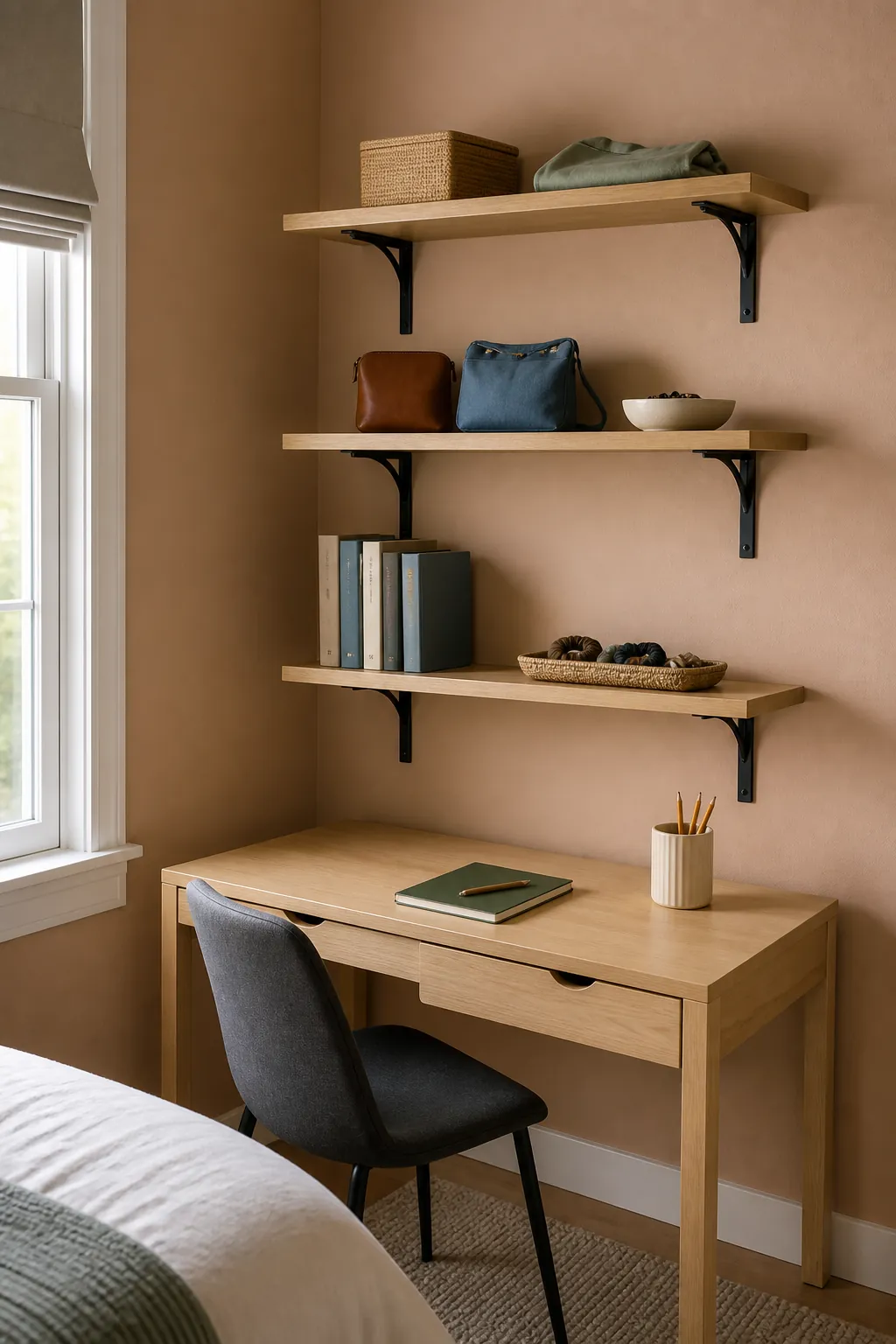
Vertical bedroom shelves can lift books, small bags, and light keepsakes away from crowded furniture tops. Use properly supported shelves and keep heavy objects at a comfortable height. Leave some open space so the wall does not become another dense display.
Place frequently used items on the lowest shelf and occasional items above. Corral small accessories in one shallow container instead of scattering several tiny boxes across the wall. Every shelf still needs a defined category and a safe load.
Close the Room With a Short Evening Reset
Return worn clothing to the closet, laundry basket, or a single designated wear again hook. Clear cups and rubbish, place personal care items in their container, and restore the bedside surface. Finish by checking the floor and the path to the door. A clutter free bedroom depends less on occasional perfection than on a simple reset that prevents yesterday’s objects from becoming tomorrow’s pile.