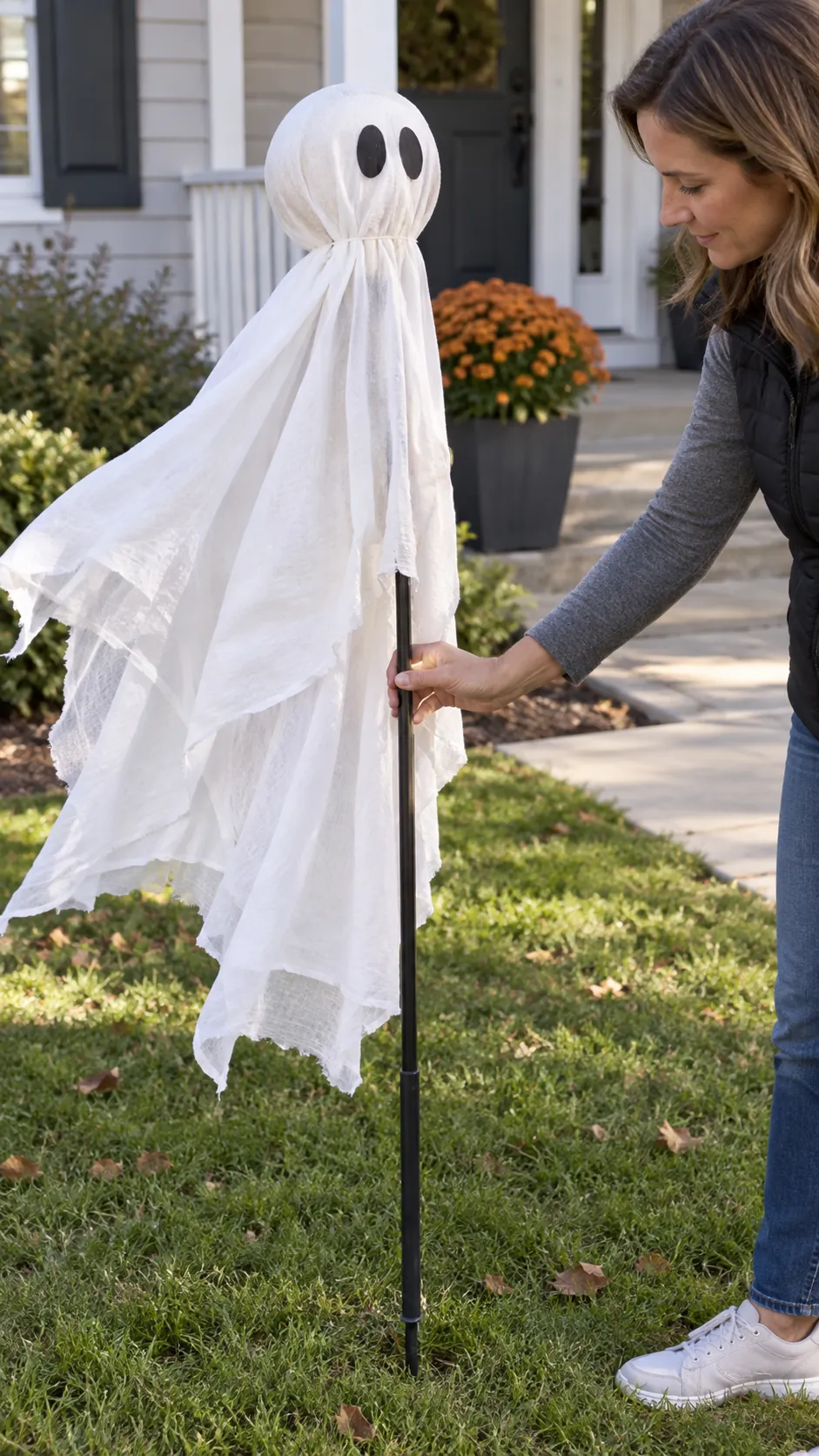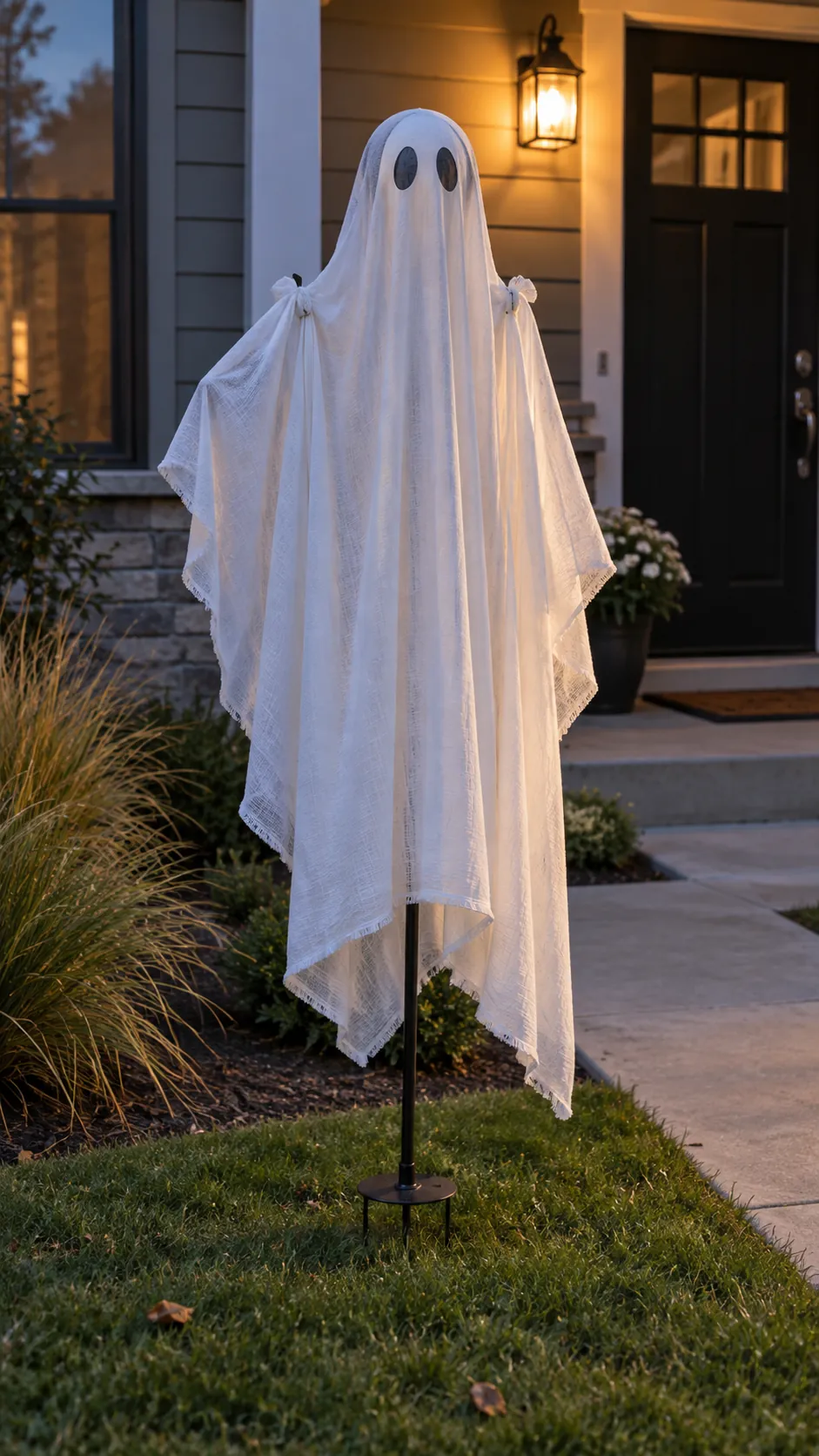
A ghost that looks perfect indoors can become a tight white knot after one windy evening. The fix starts with the part that actually moves: the head, the suspension cord, or the loose hem. Build a stable shape first, then allow only a controlled amount of sway.
Find the twist before adding more weight
A fabric ghost can fail in three different ways. The entire figure may spin around its hanging cord, a loose tail may wrap around the body, or the support may lean until the cloth catches on a nearby object. Watch it in a light breeze for a minute before changing anything, because each failure needs a different fix.
If the head rotates while the hem stays open, address the suspension point. If only one corner winds around the pole, shorten or secure that corner. A heavy object tied to an unstable ghost can make the support more dangerous without fixing the shape.
Choose cloth that moves as one layer
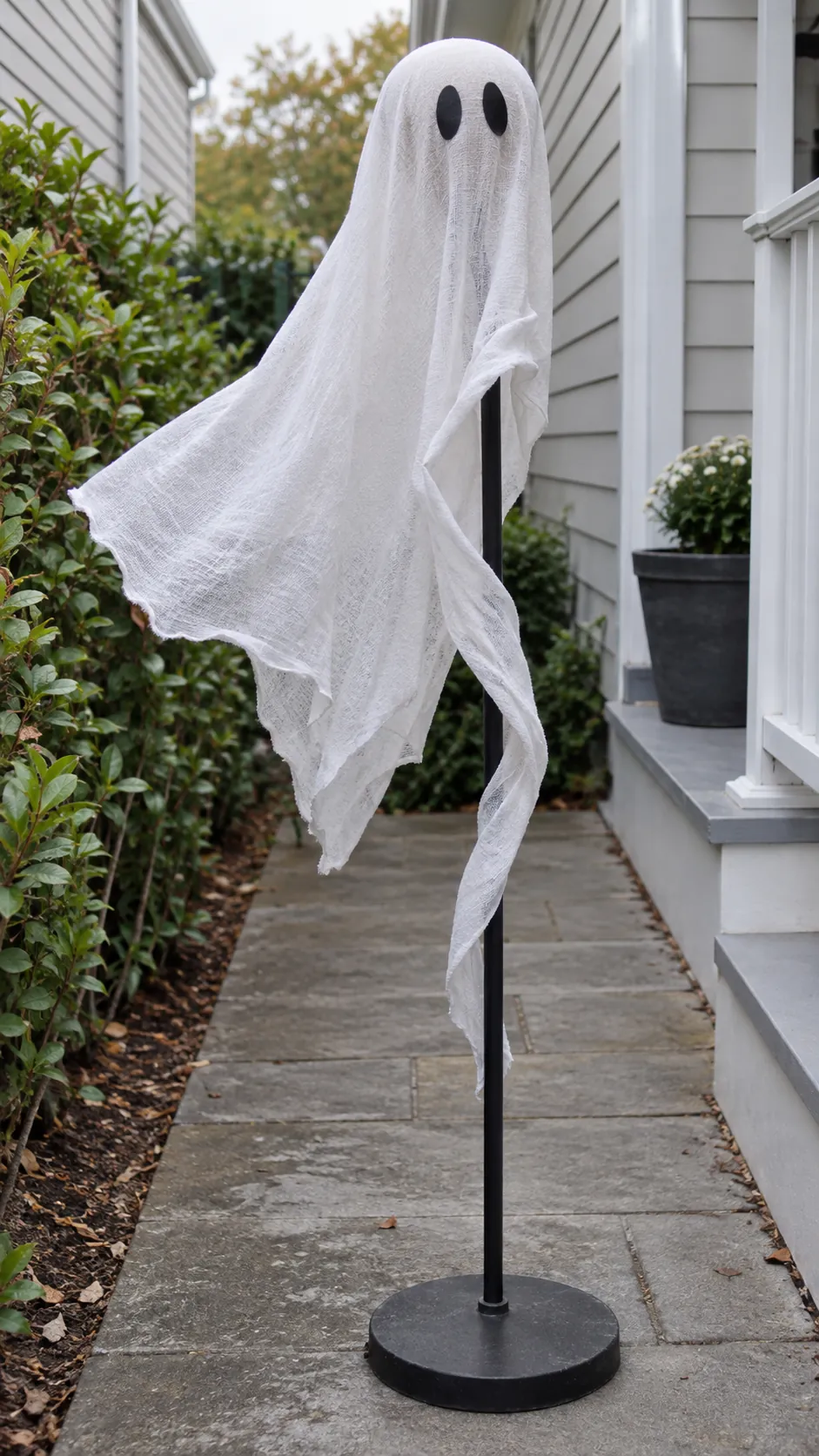
Open gauze looks atmospheric but separate long strips can braid together outdoors. A single light curtain panel or thin woven sheet usually gives a clearer silhouette and fewer free ends. Test a sample outside: it should move gently, release water, and return to its shape when the breeze fades.
Fabric ghost decorations need enough drape to look soft, yet not so much length that the hem touches soil, railings, or a porch light. Trim the panel to the installed height instead of folding a large surplus underneath. Keep a small allowance at the bottom for movement and avoid loose fringe at the edge.
Keep the head centered on a rigid support
A round head on a narrow unsupported rod can wobble like a pendulum. Seat a lightweight foam or wire head firmly on a tomato cage, tripod of stakes, or braced pole. Tie the cloth just below the head so the widest part of the ghost cannot slide sideways.
The frame does not need to fill the entire skirt. It needs to hold the shoulder line and give the fabric a predictable path as air moves through it. Check the base first: a cage should be staked at its legs, and a container should be broad and weighted appropriately for its height.
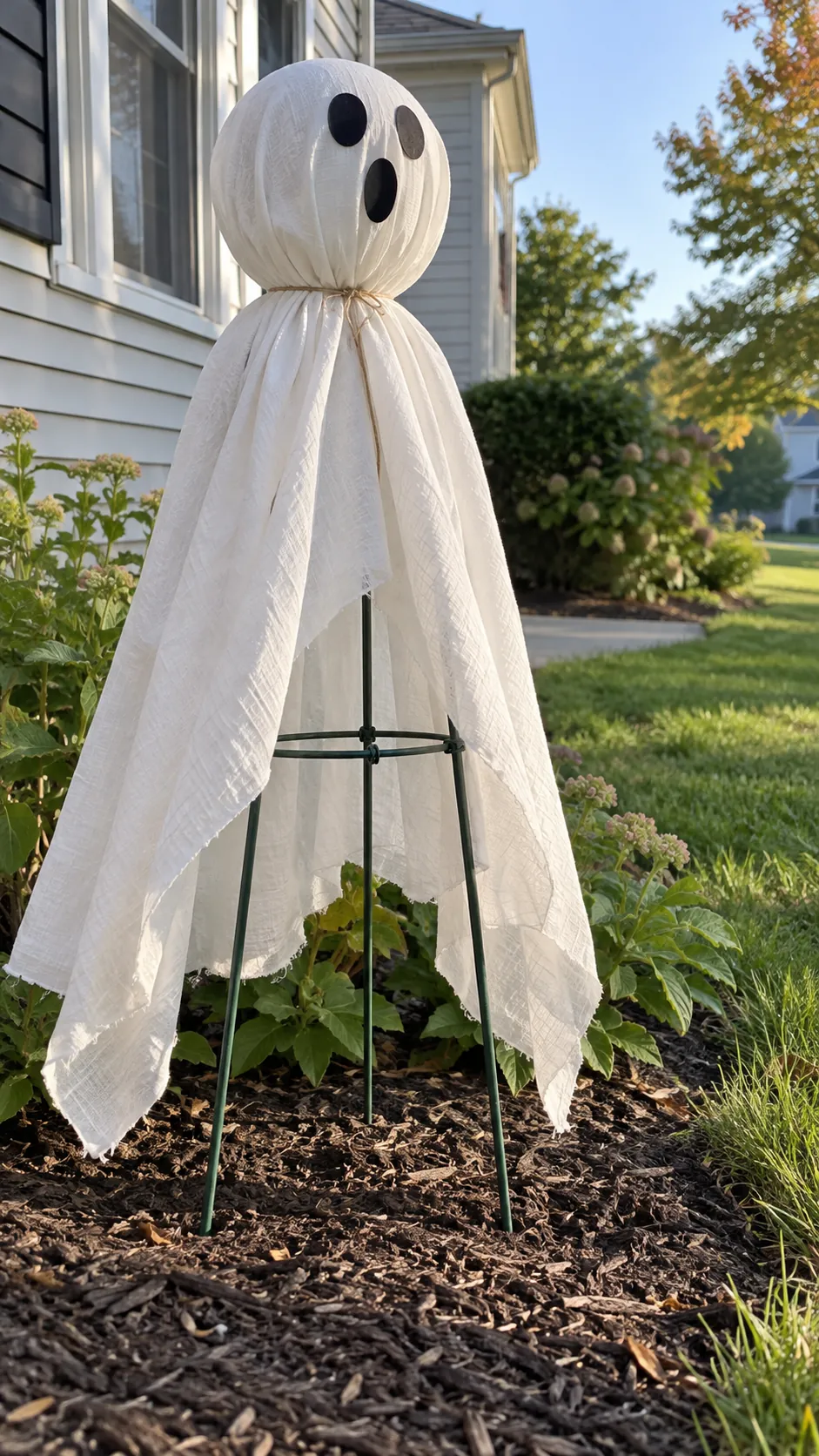
Hang from two points when the setting allows it
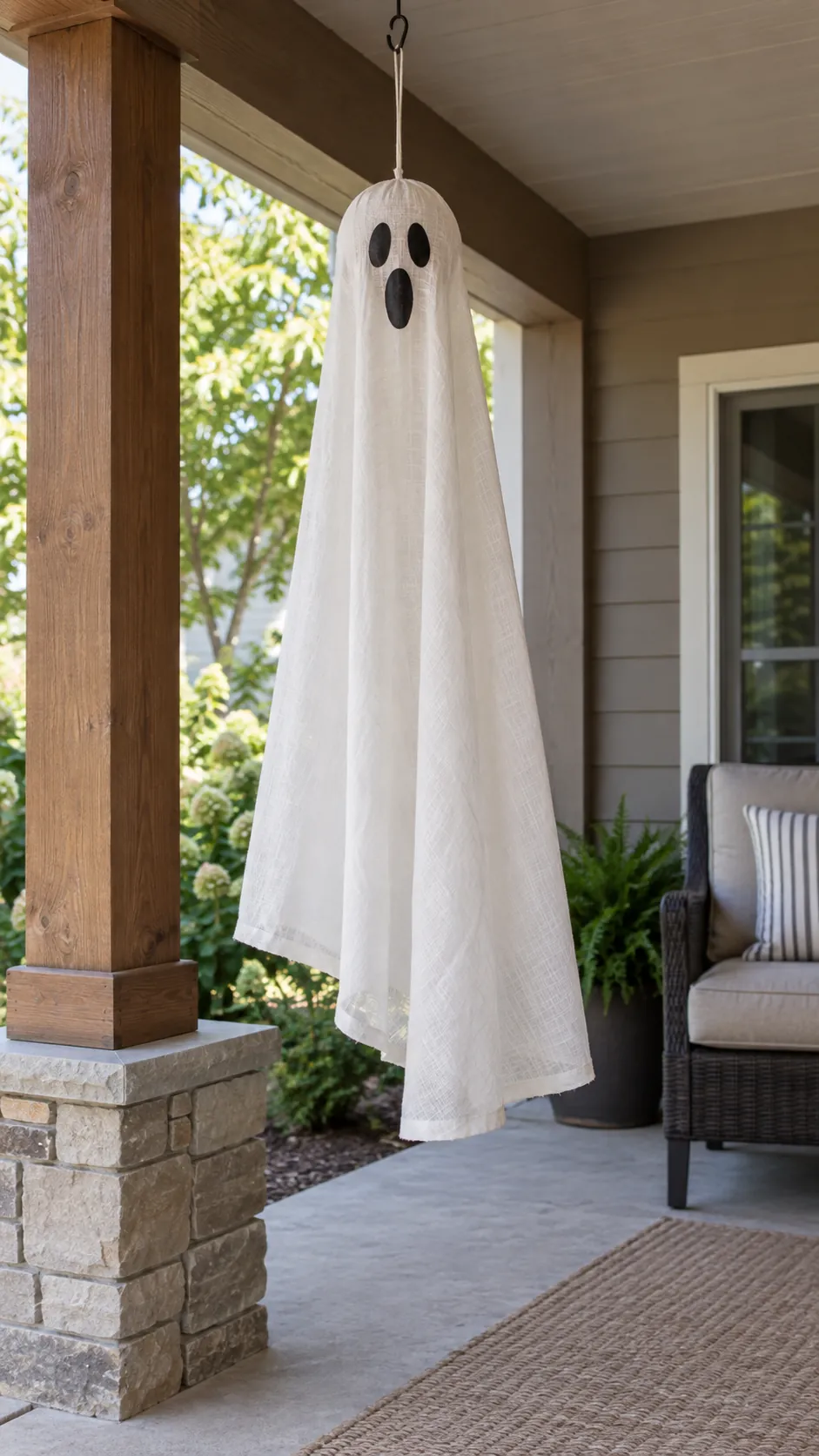
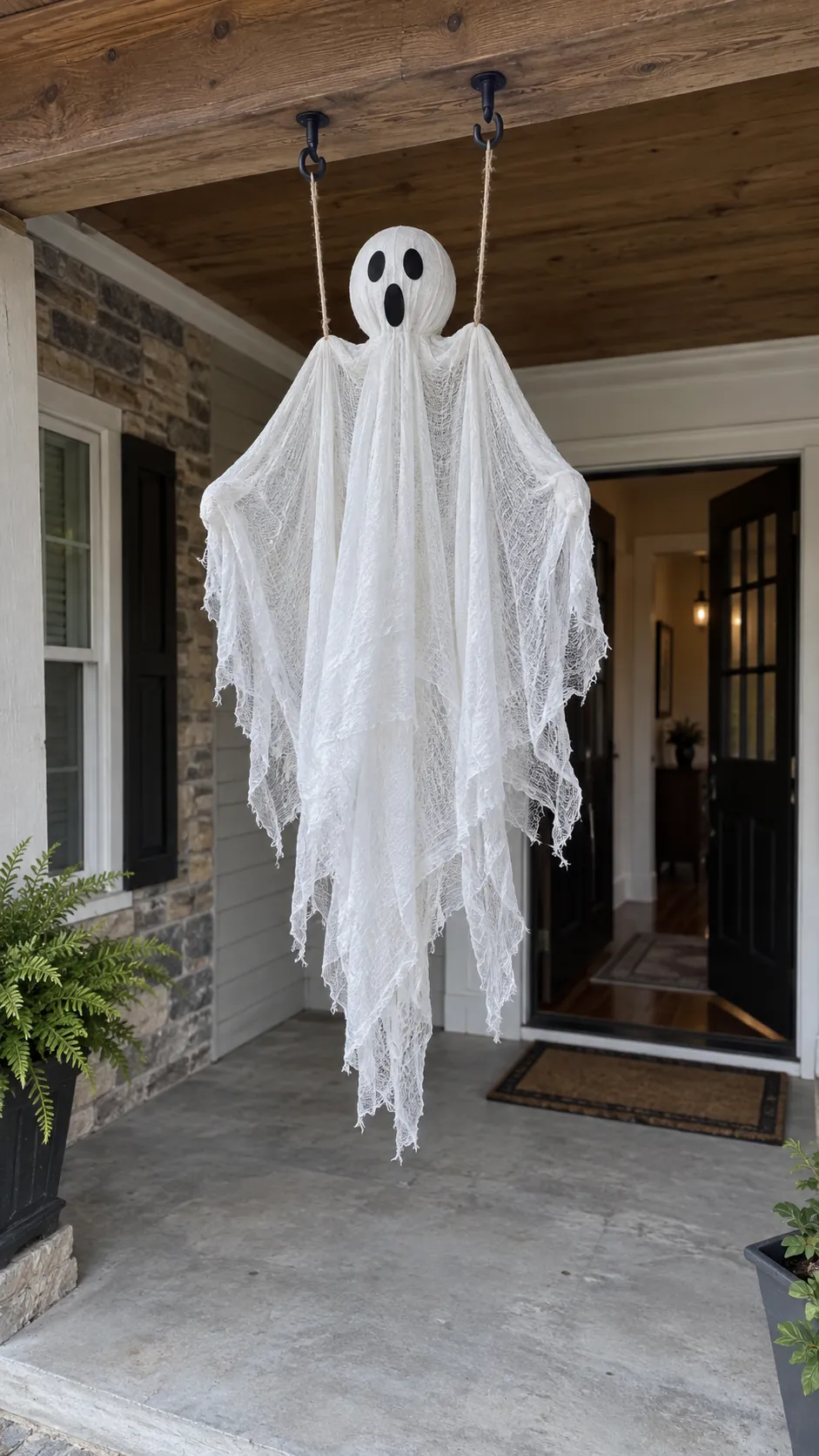
A single cord gives a hanging ghost freedom to rotate, which is why a lovely porch display can become a knot overnight. If there are two suitable rated attachment points, run two short cords from separate shoulder points instead. Spread the cords enough to define the body without pulling the fabric into a flat banner.
Do not add hooks to an unknown surface just for this effect. A stable porch beam or existing support can work, but the figure must stay above visitor head height and clear of a door swing. If only one overhead point is available, use a discreet lower tether instead.
Add a soft tether that stops full rotation
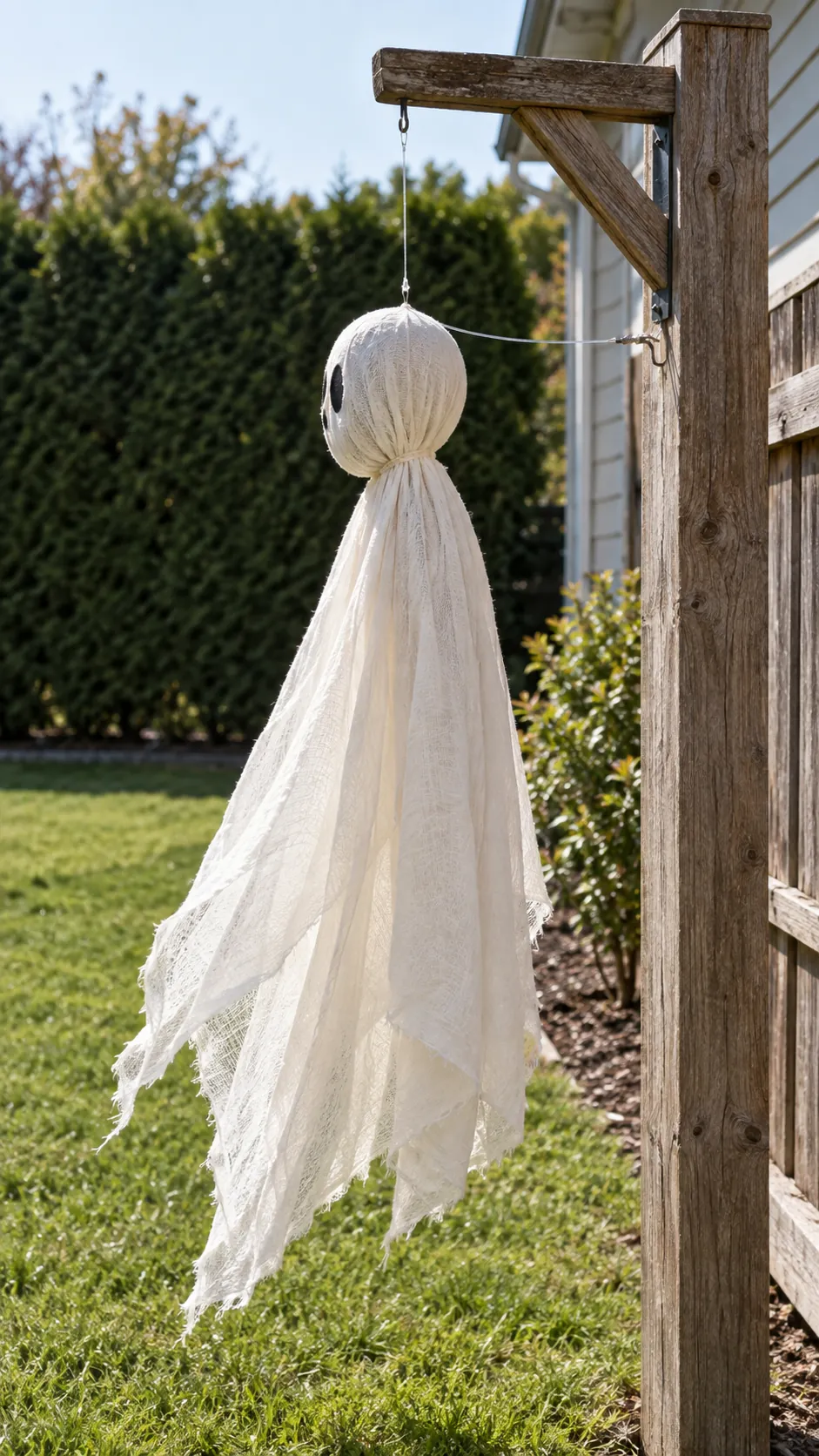
A thin line from the ghost body to its own support pole can limit the turn before the cloth wraps around the cord. Tie it behind the fabric at a point below the head, then leave enough slack for a small natural sway. The line should resist a full spin, not hold the ghost rigid in a gust.
Keep every tether within the display footprint. A line across a walkway is a trip hazard even when it disappears visually at dusk. On a porch, connect to a nearby rail only if the line stays well away from guests and the railing is secure.
Anchor the lower cloth without making a sail
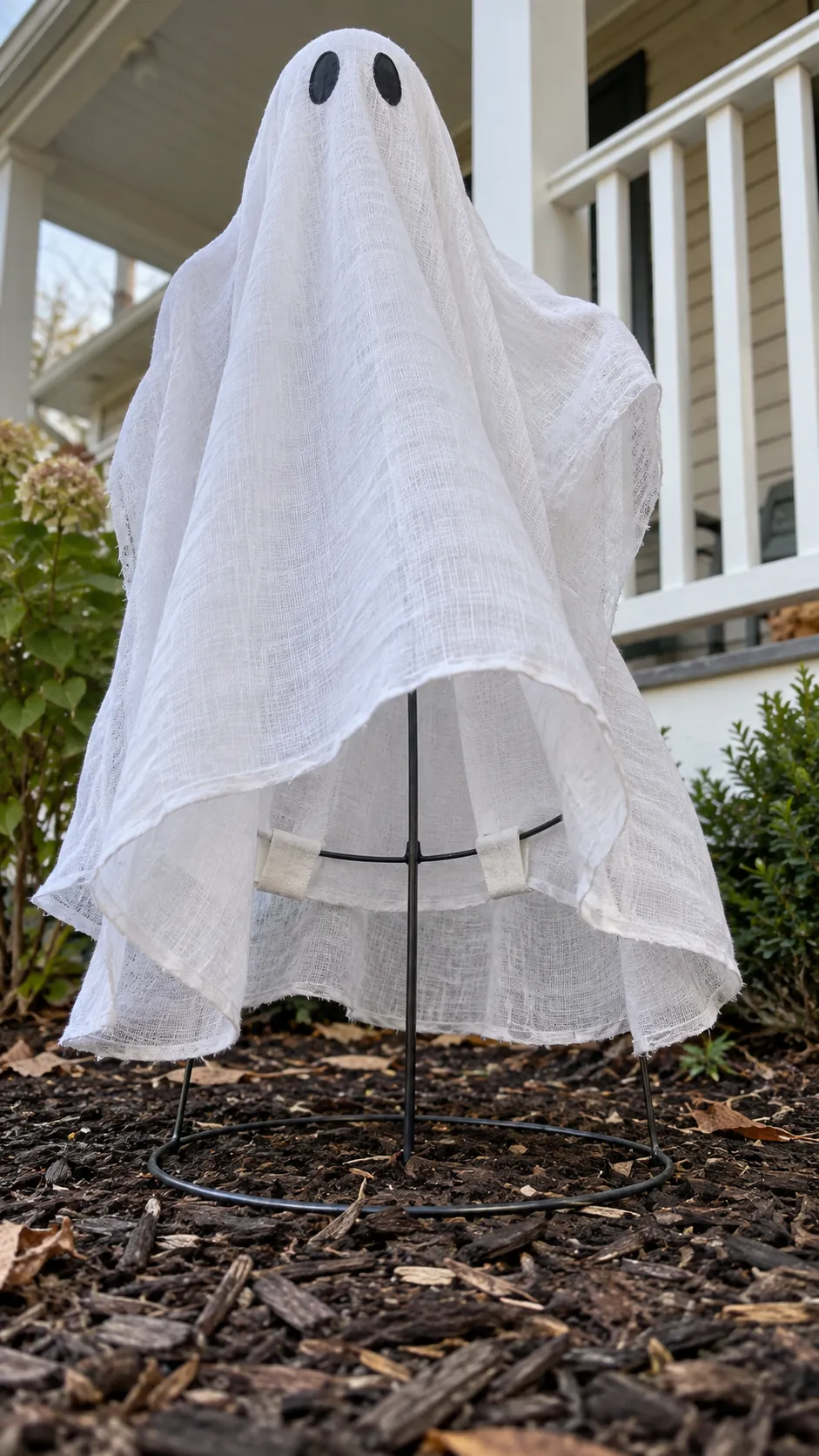
For a standing ghost, attach two or three small fabric tabs to the inner frame near the hem. This prevents one corner from wrapping around the stake while still allowing the outer layer to ripple. Put attachment points where they disappear in the folds rather than pulling the face or body out of shape.
A little weight in a sewn hem can help a compact ghost, but avoid dangling stones or metal pieces. A weighted skirt that catches strong wind transfers force into the whole structure. In an exposed yard, shorten the cloth and use a more open frame before adding any hem weight.
Give multiple ghosts separate space
When two hanging ghosts touch, their cords and fabric often wind together. Move them farther apart than their full sideways reach, including the length of their loose tails. A fence garland works better with several small ghosts tied individually than with one continuous sheet spanning every attachment point.
Look for collisions with shrubs, porch posts, signs, and lights as well as other decorations. The empty space around the figure is part of the construction. It allows a small sway to end naturally rather than turning each breeze into another twist.
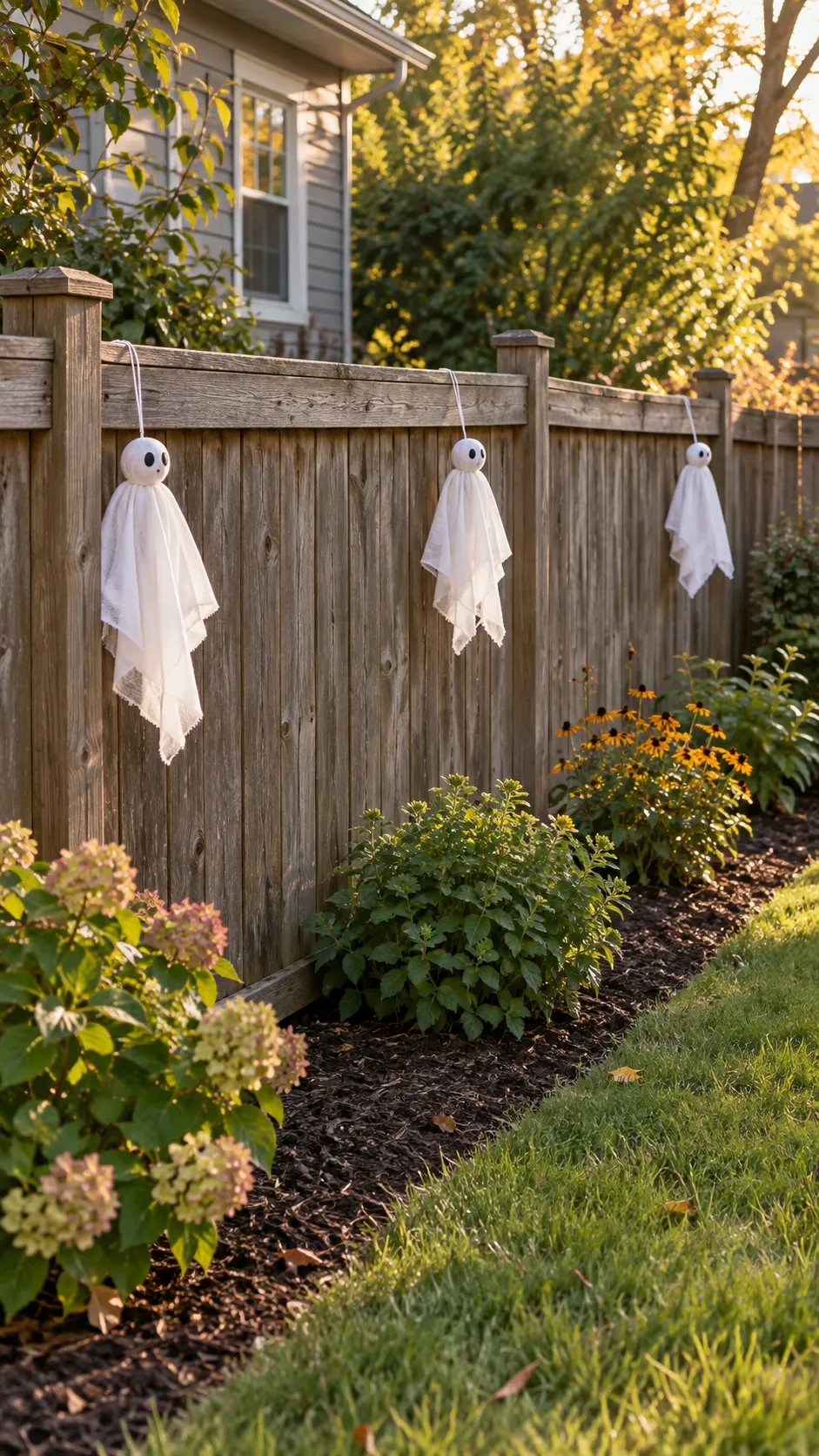
Run a wind check and take displays down early
After adjusting a ghost, watch it in the actual location and tug the support gently in several directions. If the head rotates freely, the base shifts, or a loose tail reaches a nearby obstacle, correct that specific problem before leaving it outside. Check ties again after rain because damp cloth changes weight and drape.
No fabric ghost is an all weather structure. Bring hanging pieces inside when gusts are forecast or when you would not leave a patio umbrella open. Removing a temporary display before bad weather is more reliable than adding enough anchors to make the decoration stiff and heavy.