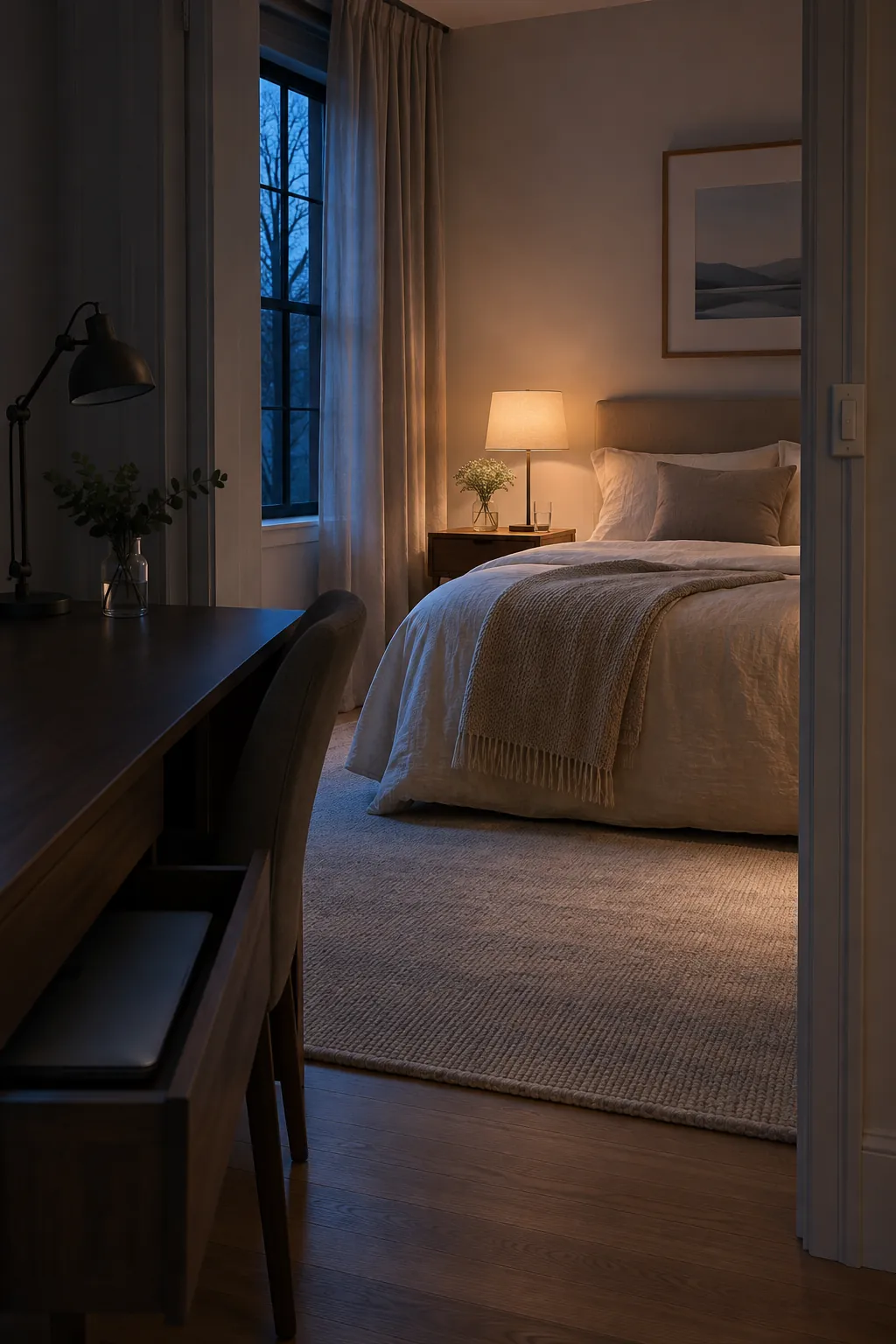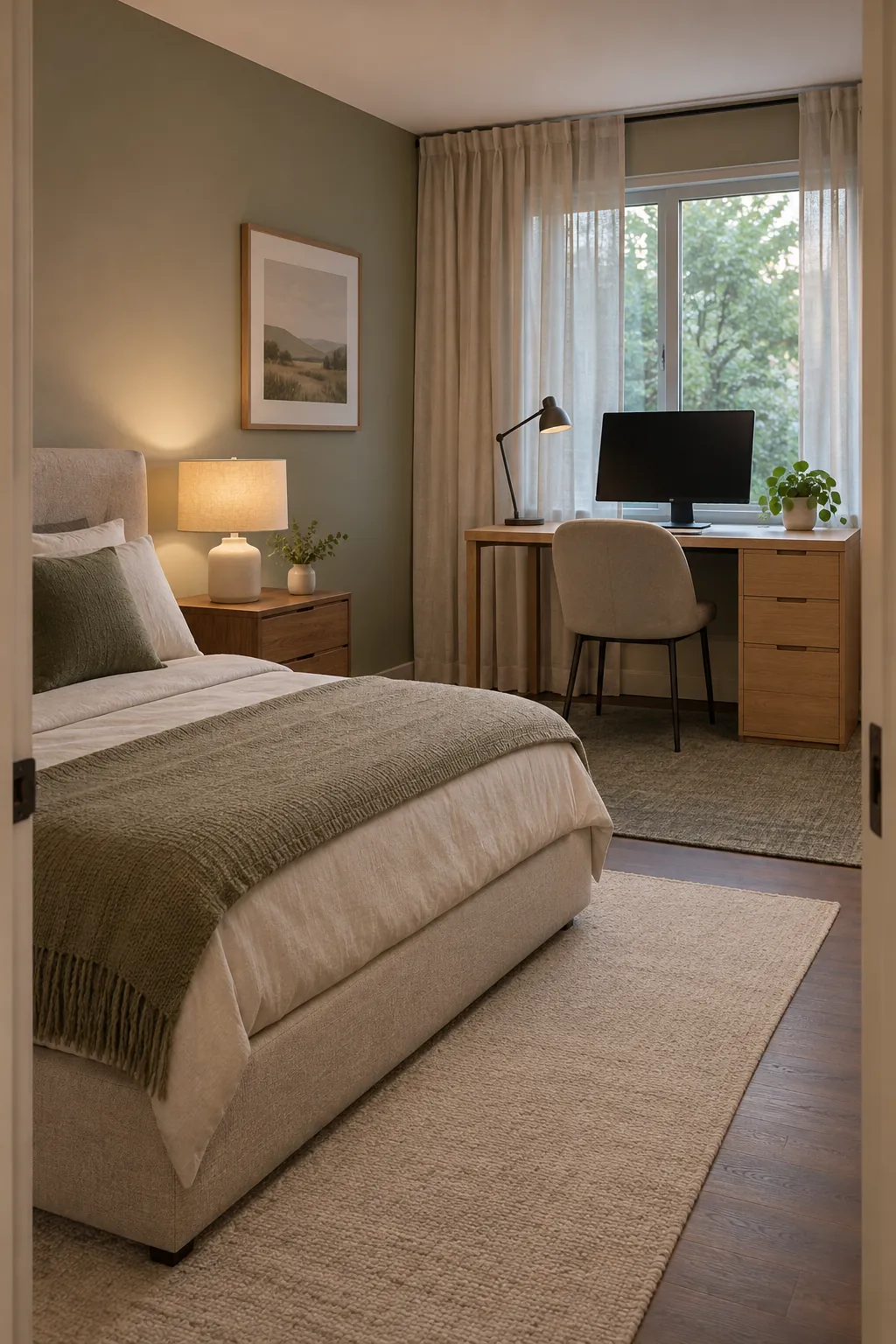
When work happens within arm’s reach of the bed, the hardest part is often not fitting the furniture. It is stopping unfinished tasks, screen light, cables, and meeting clutter from following you into the evening. A restful room needs a clear change in what you see, how you light the space, and what you do when work ends.
Turn the Desk Away From the Pillow
Place the monitor so its front does not face you in bed, even if the desk can move only a few inches. A side wall position often works because the chair can face away from the sleep zone while the desk still receives window light. Check the chair clearance before settling on the angle, since a cramped work position will not last.
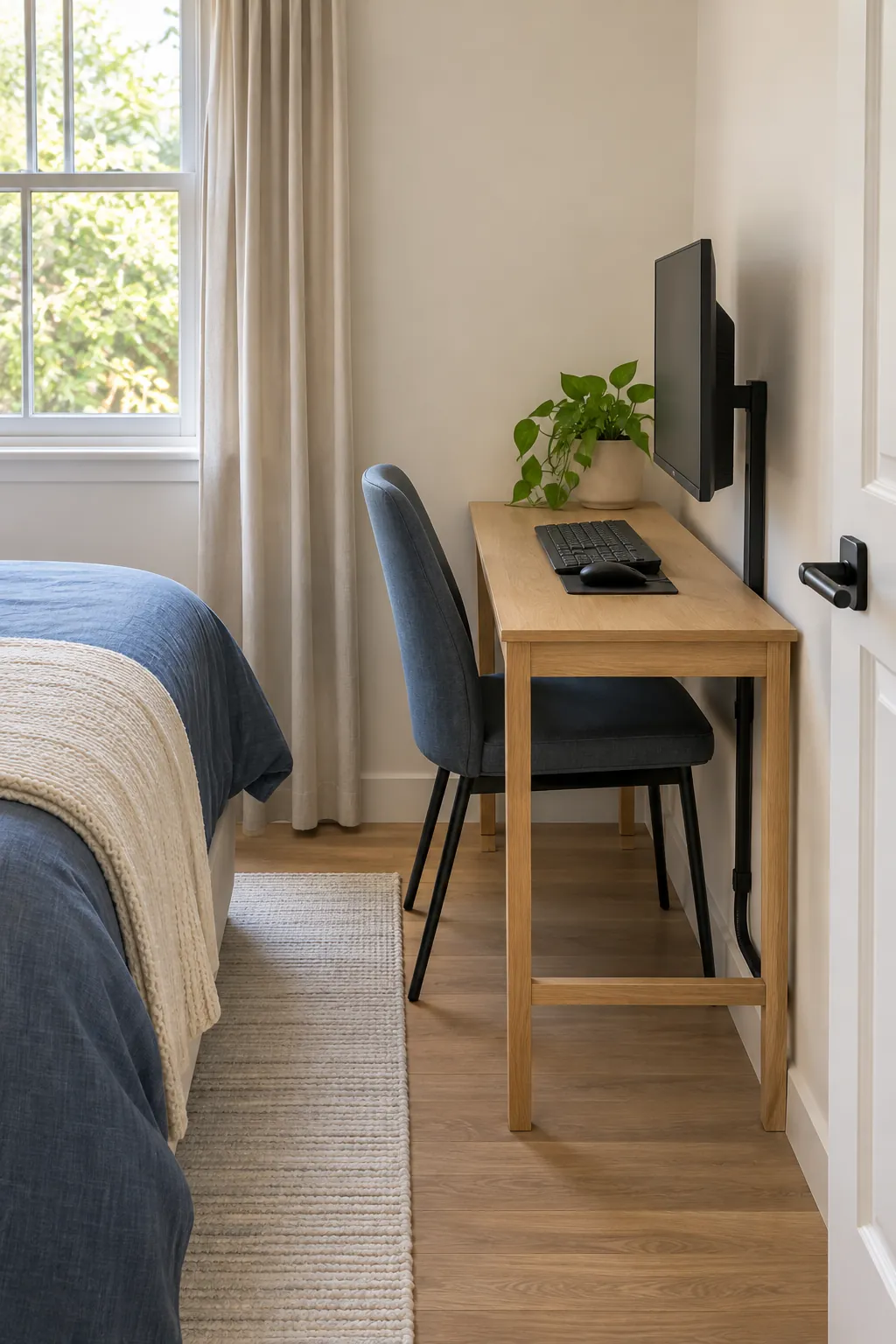
Mark the Work Zone With One Rug
A small flat rug beneath the chair can define the desk footprint without dividing the whole room. Choose a surface that lets the chair move smoothly and does not curl at the edge. Keep the bed on its own softer rug so your feet register a physical change between working and resting.
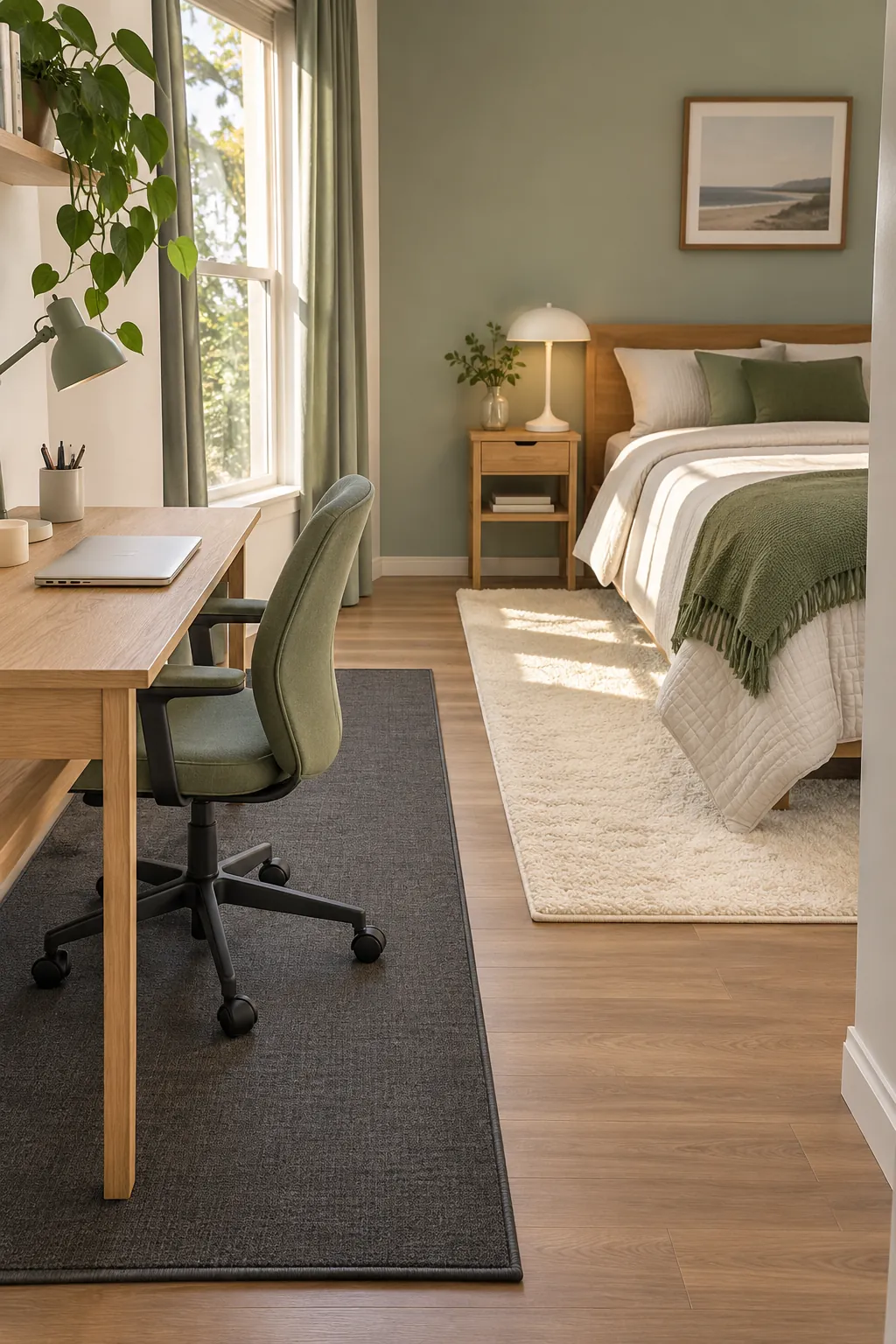
Use a Light Visual Divider
An open shelf, a slatted screen, or a curtain can interrupt the direct view without making a small bedroom feel sealed. Keep the divider lower or visually open near the window so daylight can still cross the room. Secure tall furniture correctly and leave enough space for the chair to move.
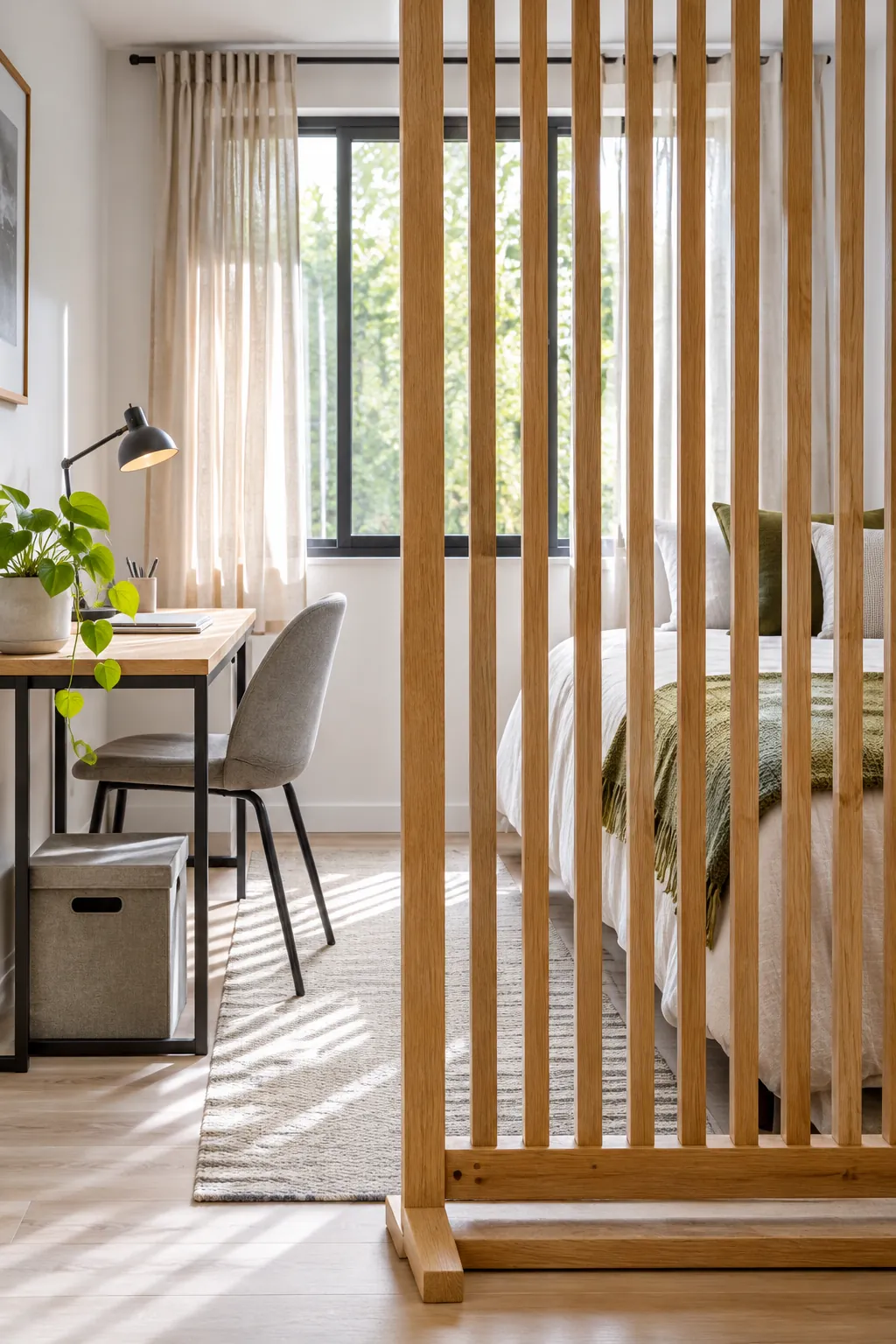
Give Work Its Own Task Light
Use a focused desk lamp while working, then turn it off completely at the end of the day. Bedside lamps should be warmer, softer, and lower so the evening scene feels different from the work scene. This contrast creates a strong cue even when the furniture remains close together.
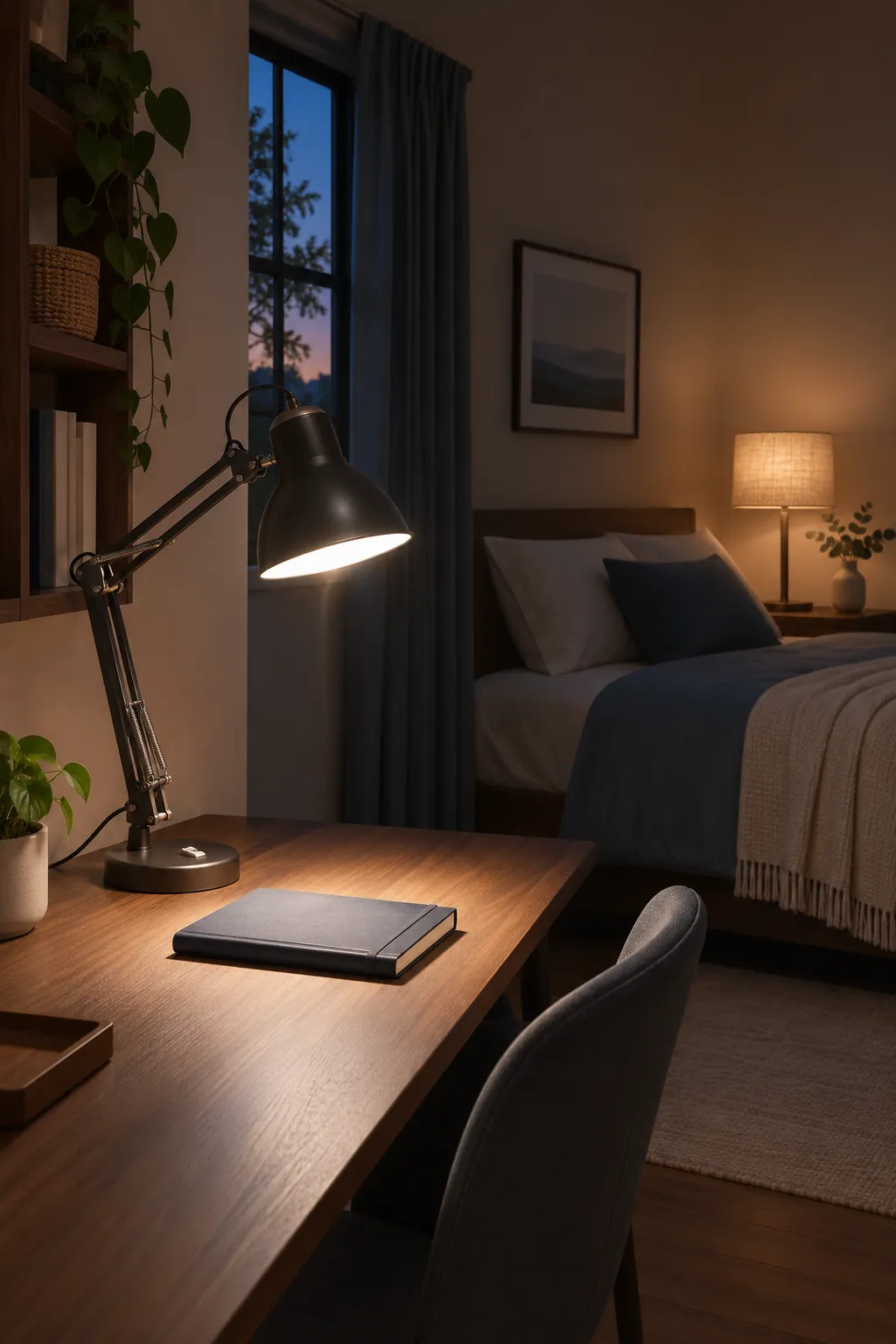
Close Down Every Visible Work Cue
Give the laptop, notes, headset, and charging cable a closed drawer or lidded box. Clear the desktop before you change clothes or begin your evening routine, since visible papers can keep a task active in your mind. If the monitor must remain, cover its status light and leave the screen completely dark.
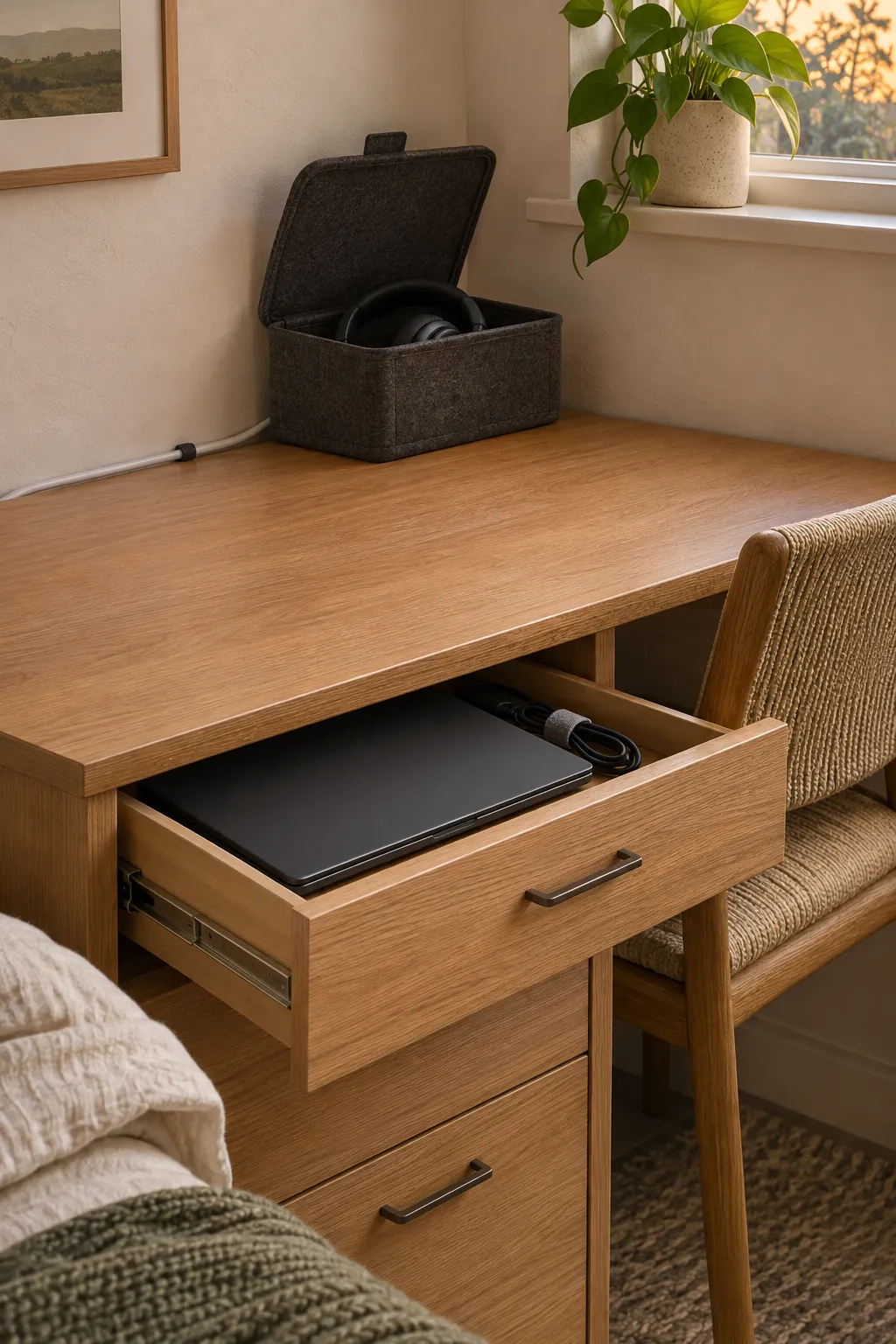
Create a Short End of Day Reset
Choose a repeatable closing sequence: save the work, write the first task for tomorrow, store loose items, switch off the task lamp, and push in the chair. Open the curtains or window for a moment if the room needs fresh air, then turn on the bedside light. The routine matters because it gives the room a clear transition that furniture alone cannot provide.