
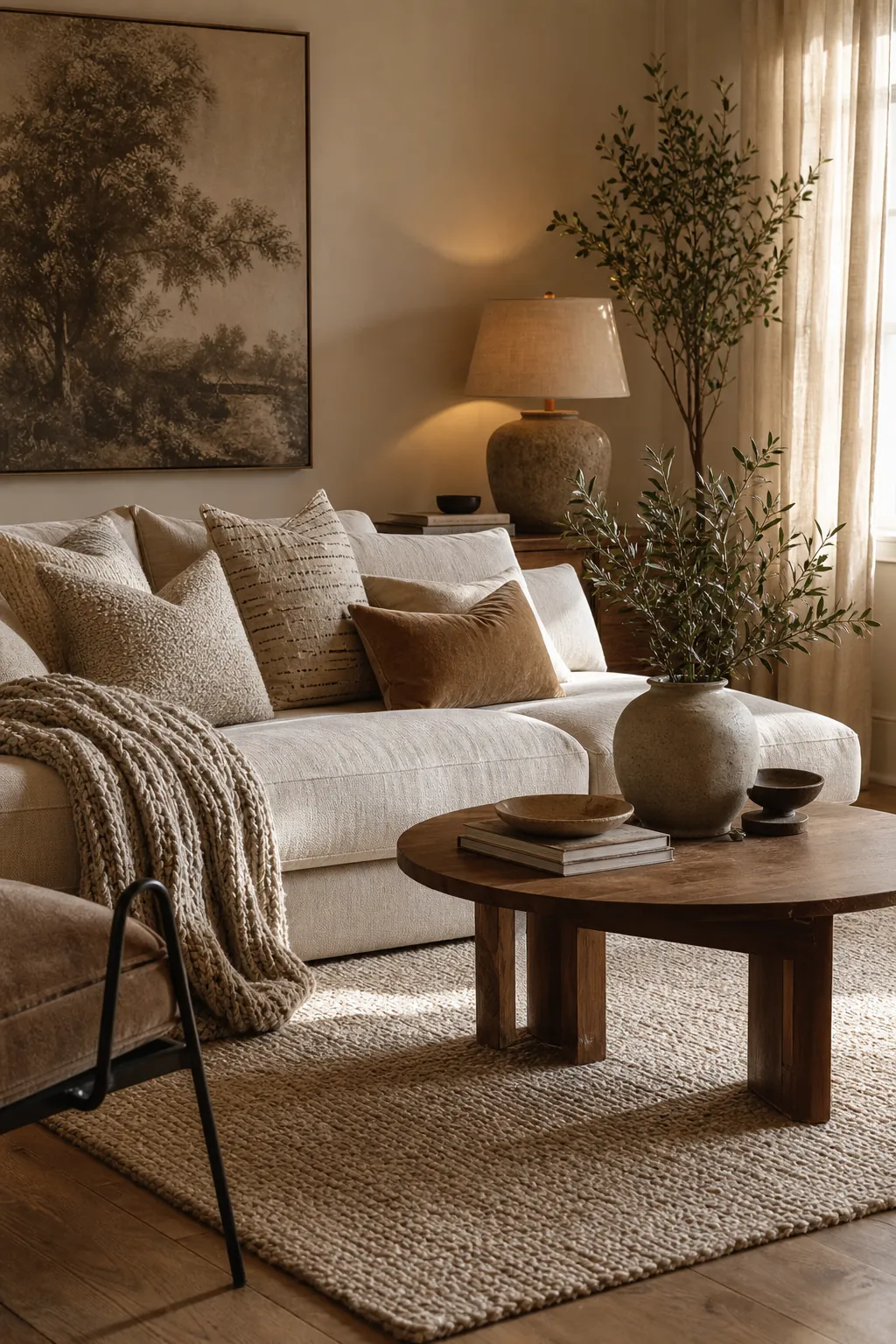
A beige living room usually falls flat for one simple reason: everything is too close in tone, texture, shape, and shine. The sofa, wall, rug, curtains, pillows, and wood all sit in the same visual lane, so the eye has nowhere to rest.
The fix is not to abandon beige. The fix is to give beige something to work against. A layered beige living room needs texture, value contrast, warm lighting, visible shadow, and a few personal details that break up the smooth neutral surface.
Start With The Real Problem
When people describe a beige room as boring, they usually do not mean the color itself is wrong. They mean the room feels unfinished. The rug is close to the sofa color. The pillows are the same size. The curtains disappear into the wall. The coffee table has no texture. The lighting comes from one overhead source. Even beautiful pieces can blur together when they share the same value and surface.
Before buying anything, look at the room in a quick phone photo. Squint at it. If the sofa, wall, rug, and curtains blend into one pale block, the room needs separation, not necessarily more color.
Mix Beige Textures First
The easiest way to make beige feel expensive is to stop repeating the same smooth fabric. A linen sofa, cotton pillows, flat polyester curtains, and a low-pile rug can all be neutral, but together they often read thin. Add surfaces that catch light differently.
- Nubby: boucle, slub linen, woven wool, chunky knits.
- Natural: jute, rattan, cane, oak, walnut, stone, clay.
- Soft: velvet, brushed cotton, wool pile, washed linen.
- Matte: ceramic, plaster, honed stone, unlacquered wood.
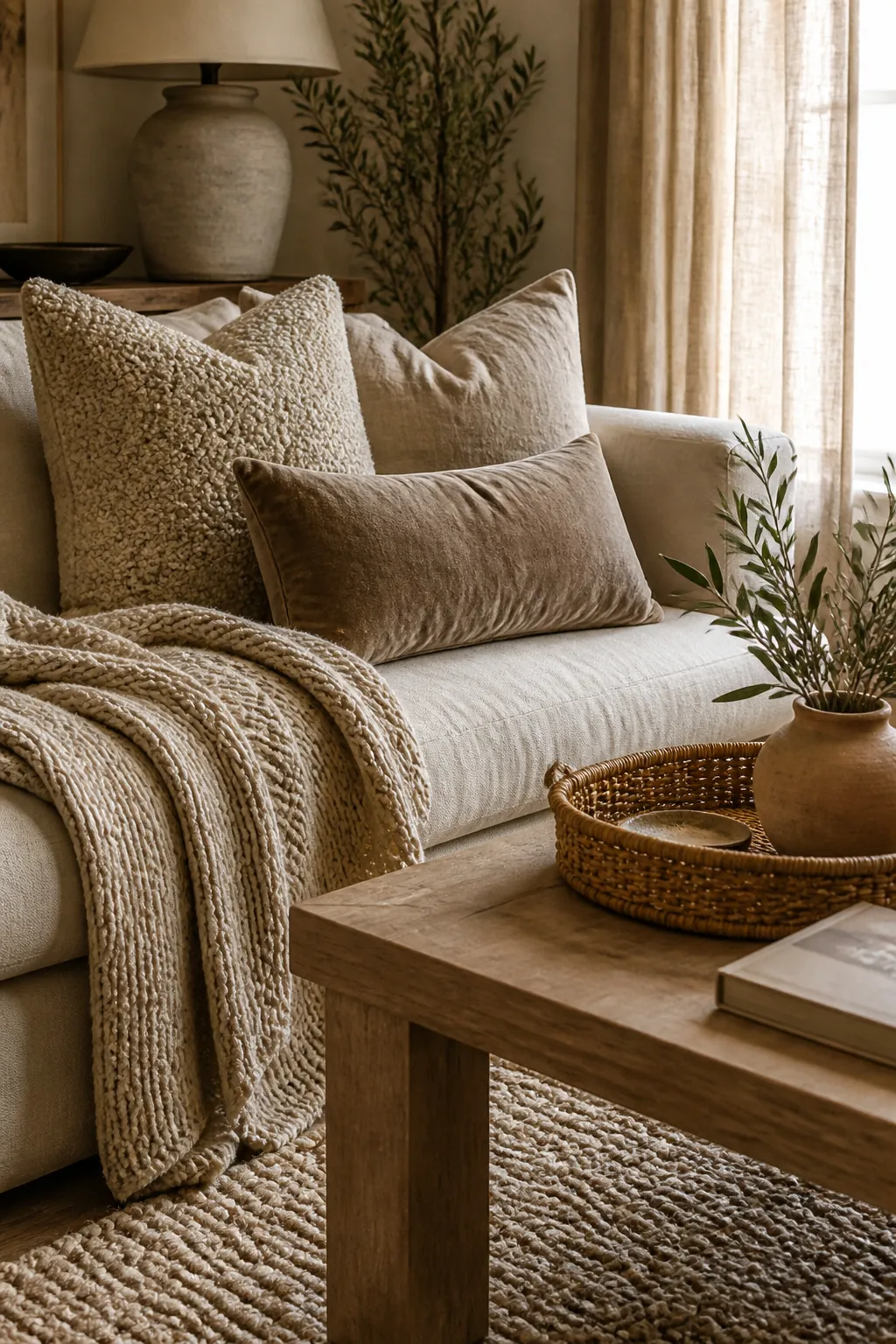
The goal is not to cover the room in decor. The goal is to make every beige surface do a different job. If one piece is smooth, put something ribbed, woven, rough, or matte near it.
Use Three Beige Temperatures
Flat beige rooms often use only one undertone. Everything is cream, everything is gray-beige, or everything is yellow-beige. A layered room usually mixes three related neutrals so the palette has movement.
Try this combination: warm white for breathing room, oatmeal beige for softness, and taupe or mushroom for shadow. If your floor is cool gray, lean into taupe and stone beige. If your floor is honey oak, use cream, camel, and warm linen. If your sofa is very yellow beige, balance it with cooler mushroom pillows or a taupe rug.
This is where a lot of beige rooms go wrong. Matching every neutral exactly can make the room look like it was bought in one afternoon. Slightly varied undertones make the space feel collected.
Add Small Dark Accents
Beige needs a little weight. Without dark notes, the room can look washed out, especially in bright daylight or builder-grade spaces with pale floors. You do not need a black wall or a dramatic sofa. A few small dark accents are enough.
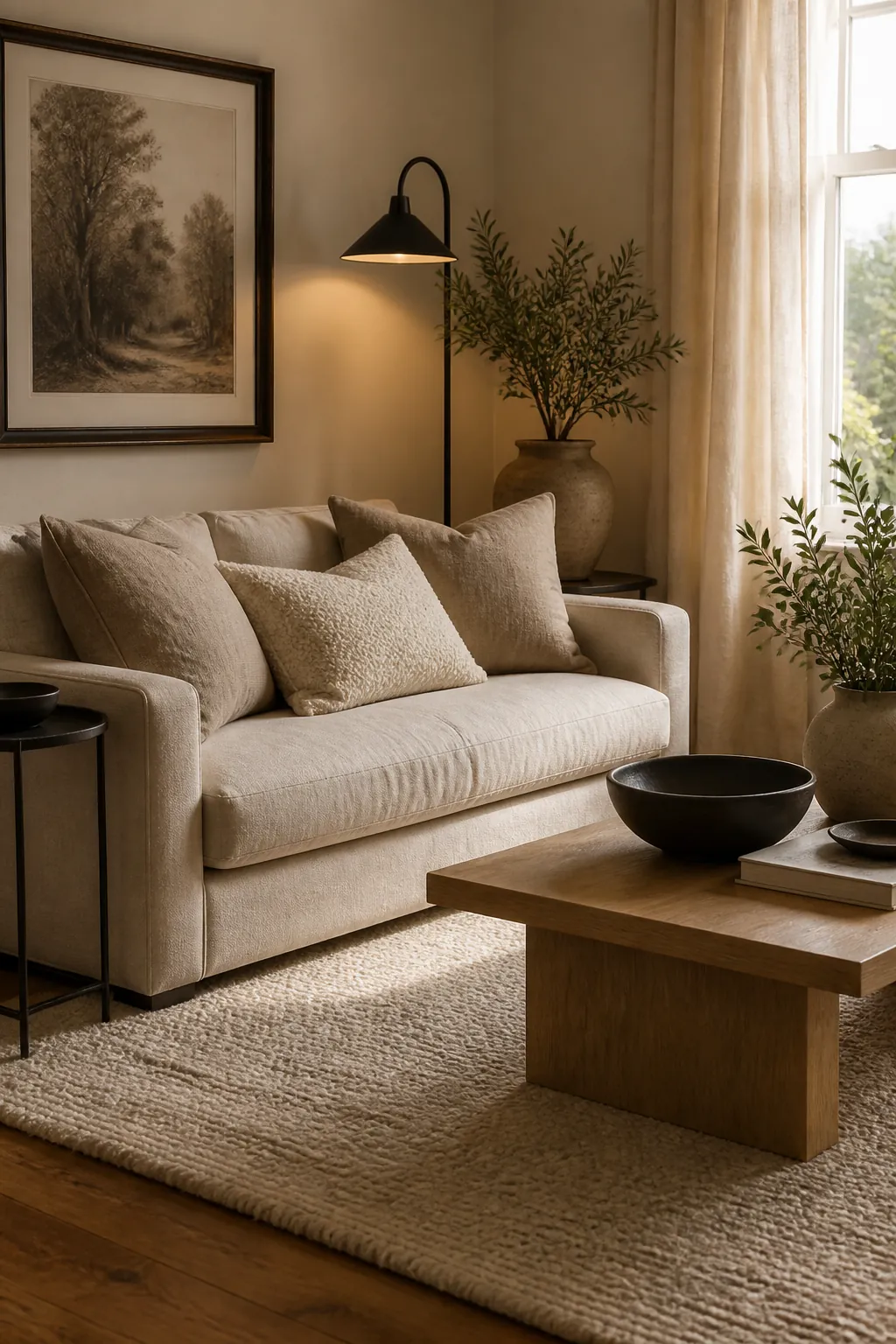
Repeat one darker finish two or three times: a black picture frame, a bronze floor lamp, a charcoal bowl, dark wood legs, or a deep brown side table. The repetition matters. One dark object can look random. Three small dark moments make the beige palette feel intentional.
Layer Rugs Instead Of Flattening The Floor
The rug is usually the largest decor decision in a living room, so it can either save the beige palette or make the whole room blur together. If the sofa, rug, and floor are all pale and smooth, the seating area will feel like one sheet of color.
A practical formula is a natural base rug with a softer rug on top: jute under wool, sisal under a vintage-style low-pile rug, or a large flatweave under a smaller plush neutral. This works especially well when you want a calm look but still need the floor to feel designed.
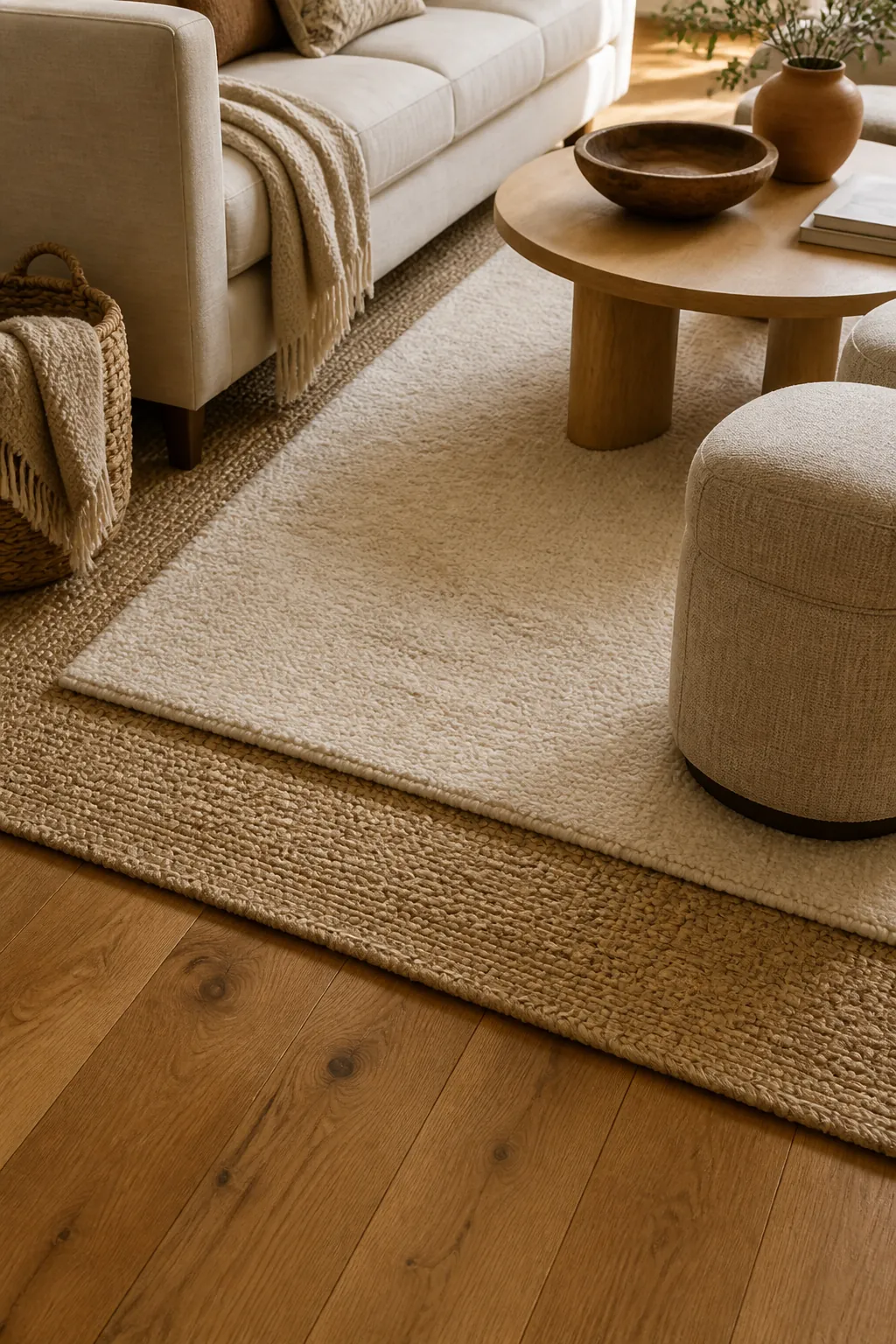
Keep the scale generous. A too-small rug makes a beige room look disconnected because each piece of furniture floats alone. At minimum, the front legs of the sofa and chairs should sit on the rug. In a larger room, pull the furniture inward so the rug creates one conversation zone instead of a beige perimeter around the walls.
Bring Pattern In Quietly
A beige room does not have to be plain to feel calm. It just needs pattern with restraint. Use pattern to create rhythm: one large shape, one medium stripe or check, and one small organic motif. Keep the colors close so the room still reads soft.
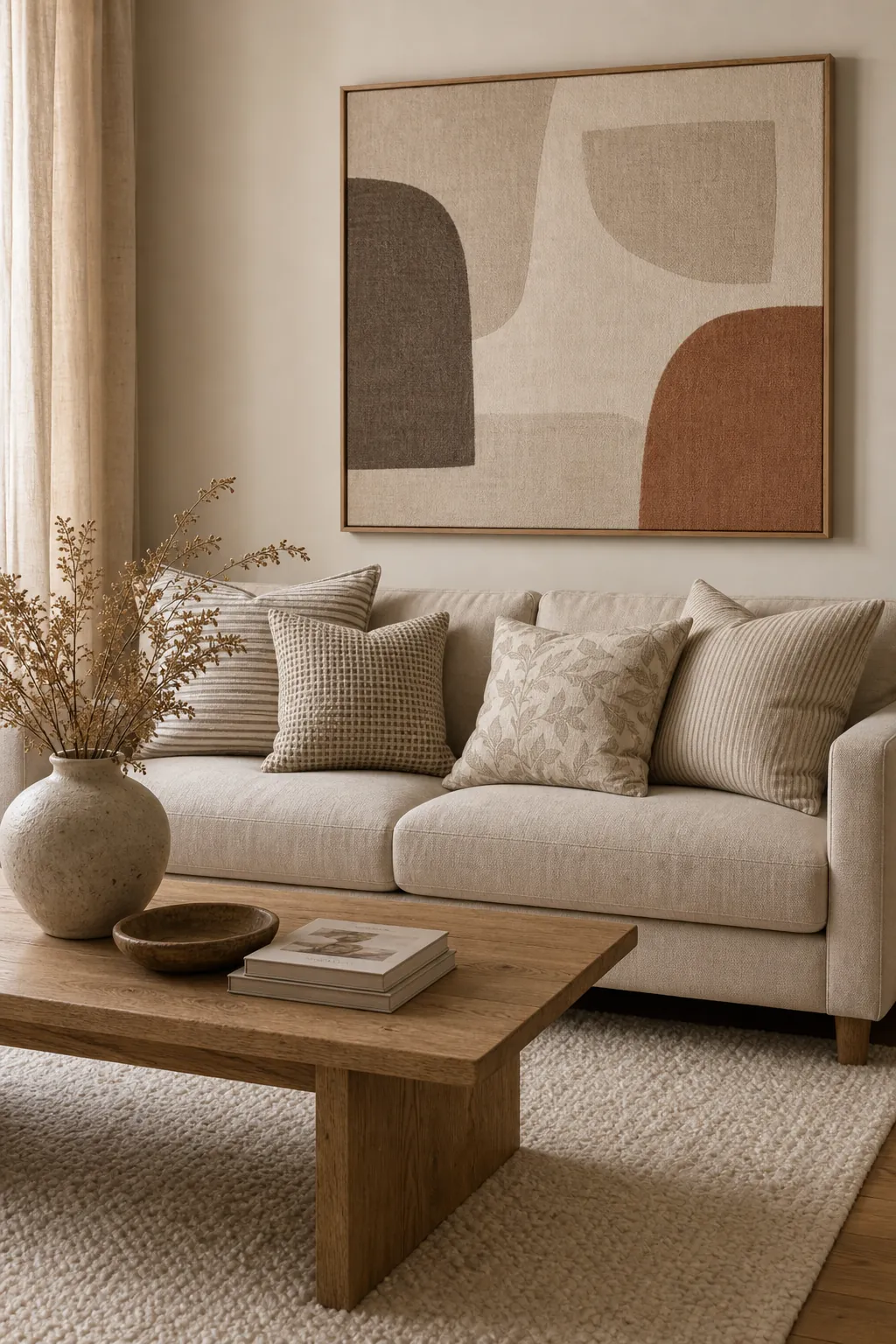
Art is the safest starting point if you are unsure. Choose one piece with cream, taupe, clay, charcoal, soft olive, or warm brown, then repeat one or two of those colors in pillows, books, vases, or a throw. The room will feel cohesive because the palette comes from one anchor.
Use Lighting To Create Shadow
Overhead lighting can make beige feel flat because it washes every surface evenly. Layered lighting gives the room depth. Use one ambient source, one task source, and one accent source at different heights.
- Ambient: a shaded ceiling fixture, warm recessed lights, or a soft floor lamp.
- Task: a reading lamp beside a chair or sofa.
- Accent: a small lamp on a console, picture light, or candle-style glow on a table.
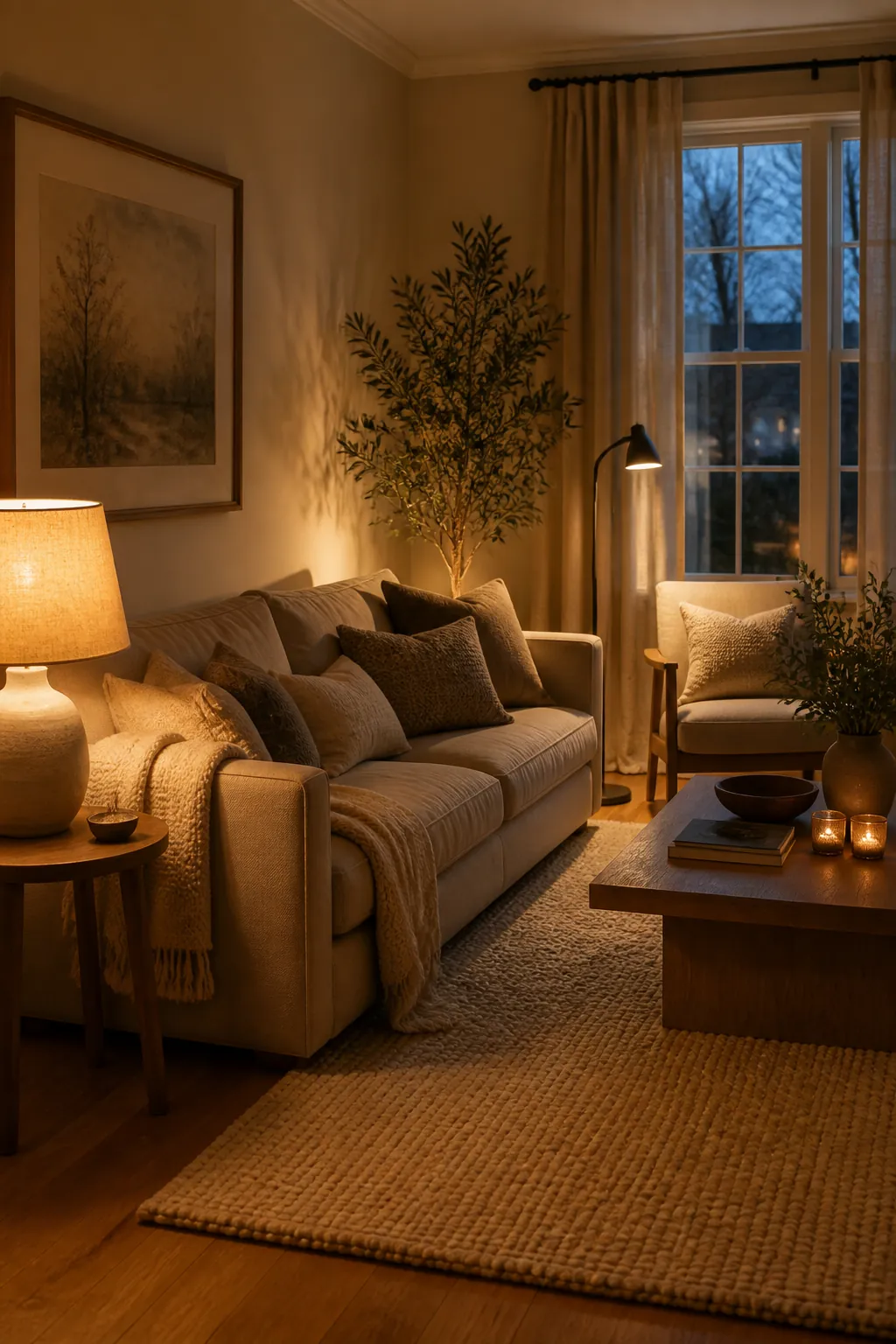
Use warm bulbs, but do not make the room orange. A soft warm white usually feels better than a very yellow bulb. The point is to create gentle shadows behind furniture, under tables, across pillows, and around art. Shadow is what makes a neutral room feel dimensional.
Finish With Objects That Have Shape
The last layer is where beige rooms become personal. Add a few objects with different heights and silhouettes: a low bowl, a tall vase, a leaning frame, a stack of books, a sculptural lamp, a plant, or a handmade ceramic piece. Avoid lining everything up at the same height.
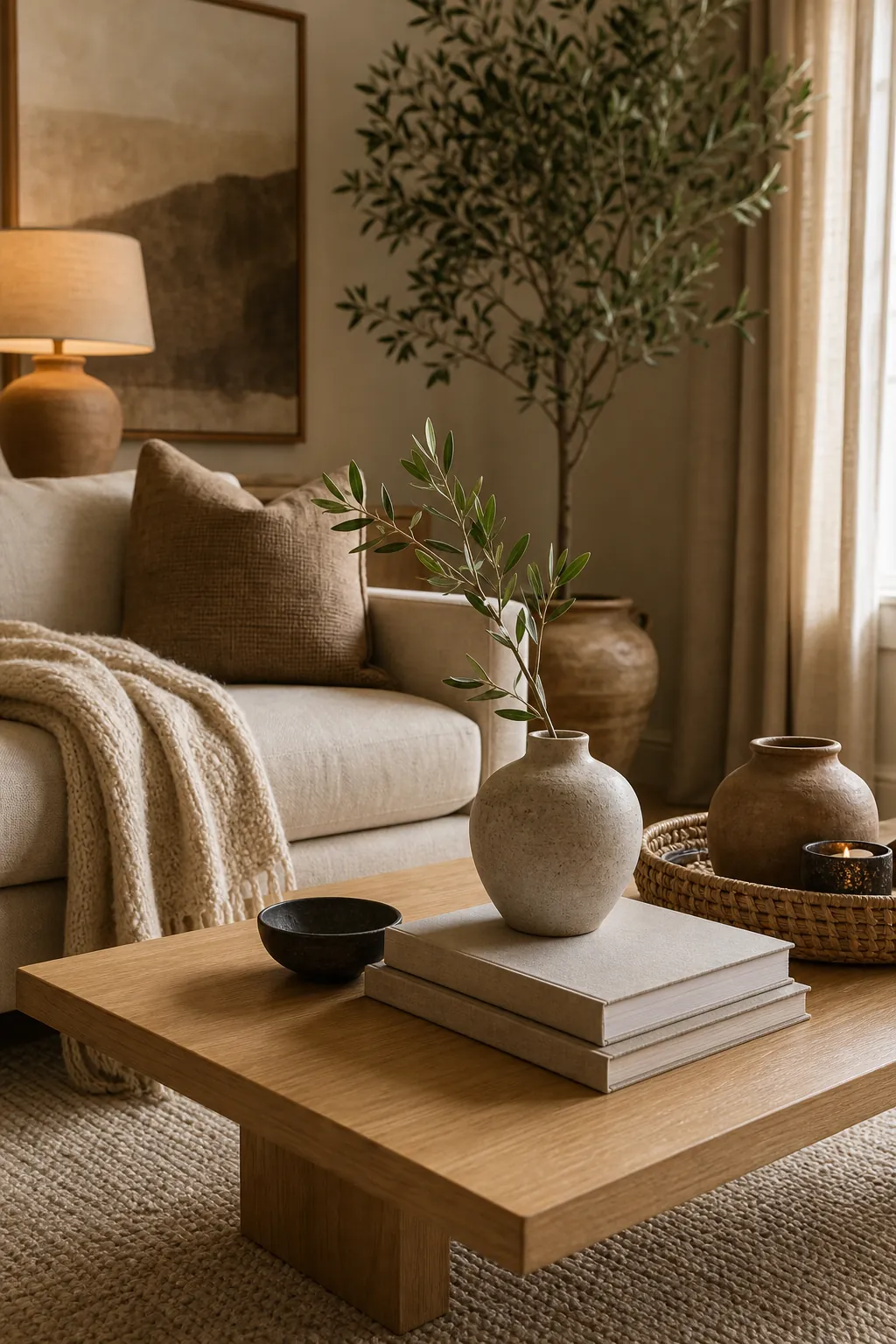
A good coffee table or side table arrangement has one vertical item, one low item, one natural texture, and one personal detail. It should not look crowded. It should look like the room has a point of view.
A Simple Beige Layering Checklist
- Use at least three neutral values: light, medium, and dark.
- Mix at least four textures: linen, wool, wood, ceramic, rattan, stone, velvet, or boucle.
- Repeat one dark accent finish two or three times.
- Choose a rug large enough to connect the seating area.
- Add one piece of art that gives the room a palette.
- Use more than one light source, ideally at different heights.
- Finish with objects that vary in shape, scale, and material.
The best beige living rooms are not empty or overly matched. They are calm because the palette is controlled, and they are interesting because the surfaces, shadows, and shapes keep changing. Keep the beige, but make it work harder.