
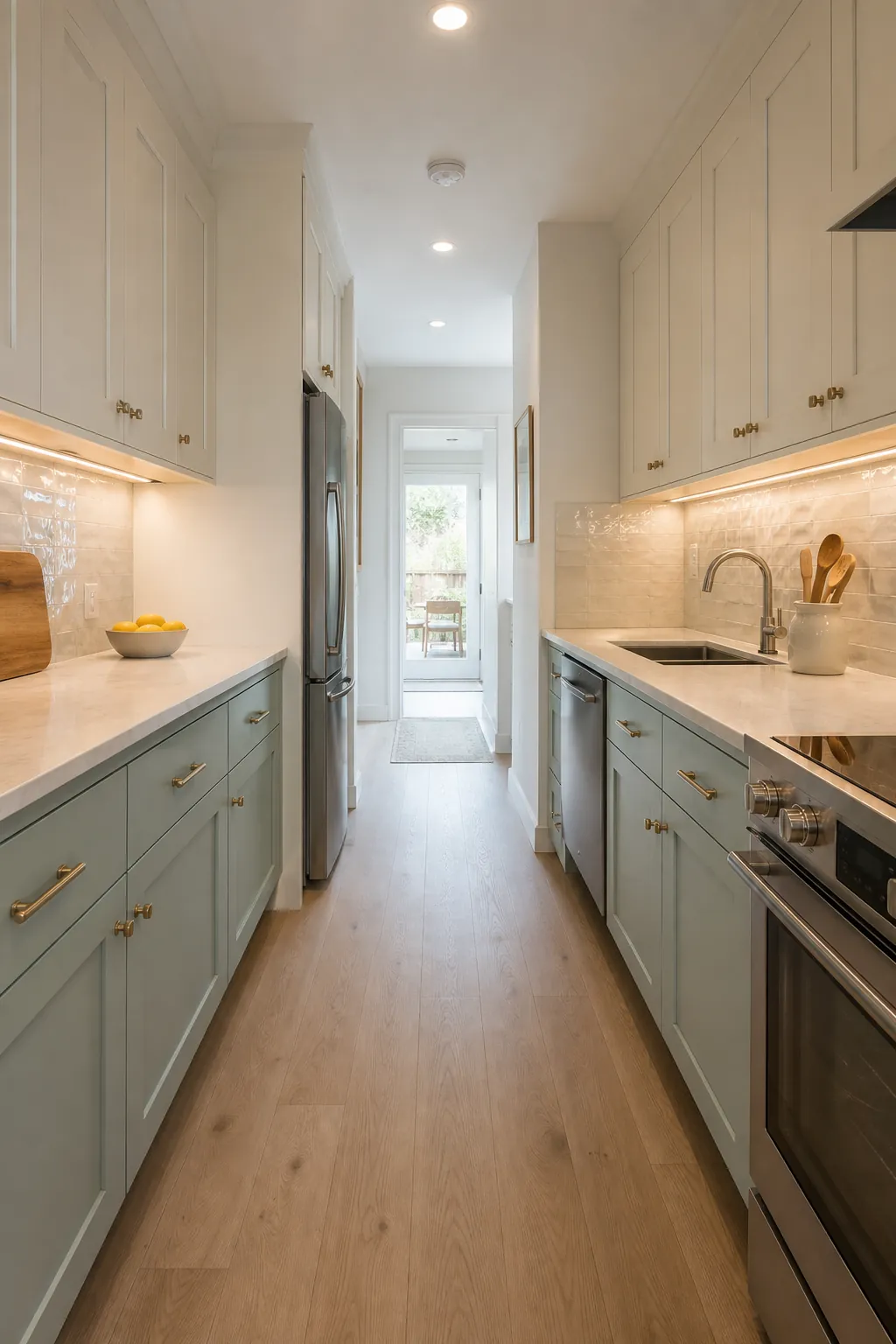
A galley kitchen does not feel tight just because it is small. It feels tight when the room makes you dodge: the refrigerator door swings into your hip, the counter is covered before dinner starts, the corners stay dark, and a second person turns every task into a negotiation. The win is not always a bigger footprint. The win is a clearer path, lighter sightlines, better kitchen lighting, and storage that stops fighting the aisle.
Recent homeowner discussions around narrow kitchens kept circling the same frustrations: no natural light, awkward guest flow, bulky appliances, not enough landing space, and storage that technically exists but is hard to use. That is the right way to think about a galley kitchen. Do not start with decor. Start with the exact moment the kitchen feels narrow, then fix that moment.
Start With The Squeeze You Actually Feel
Before buying organizers or choosing tile, spend ten minutes in the kitchen with a tape measure. Open the dishwasher, refrigerator, oven, and the deepest drawer. Stand where you normally prep. Ask one person to pass behind you. The problem area will usually announce itself fast.
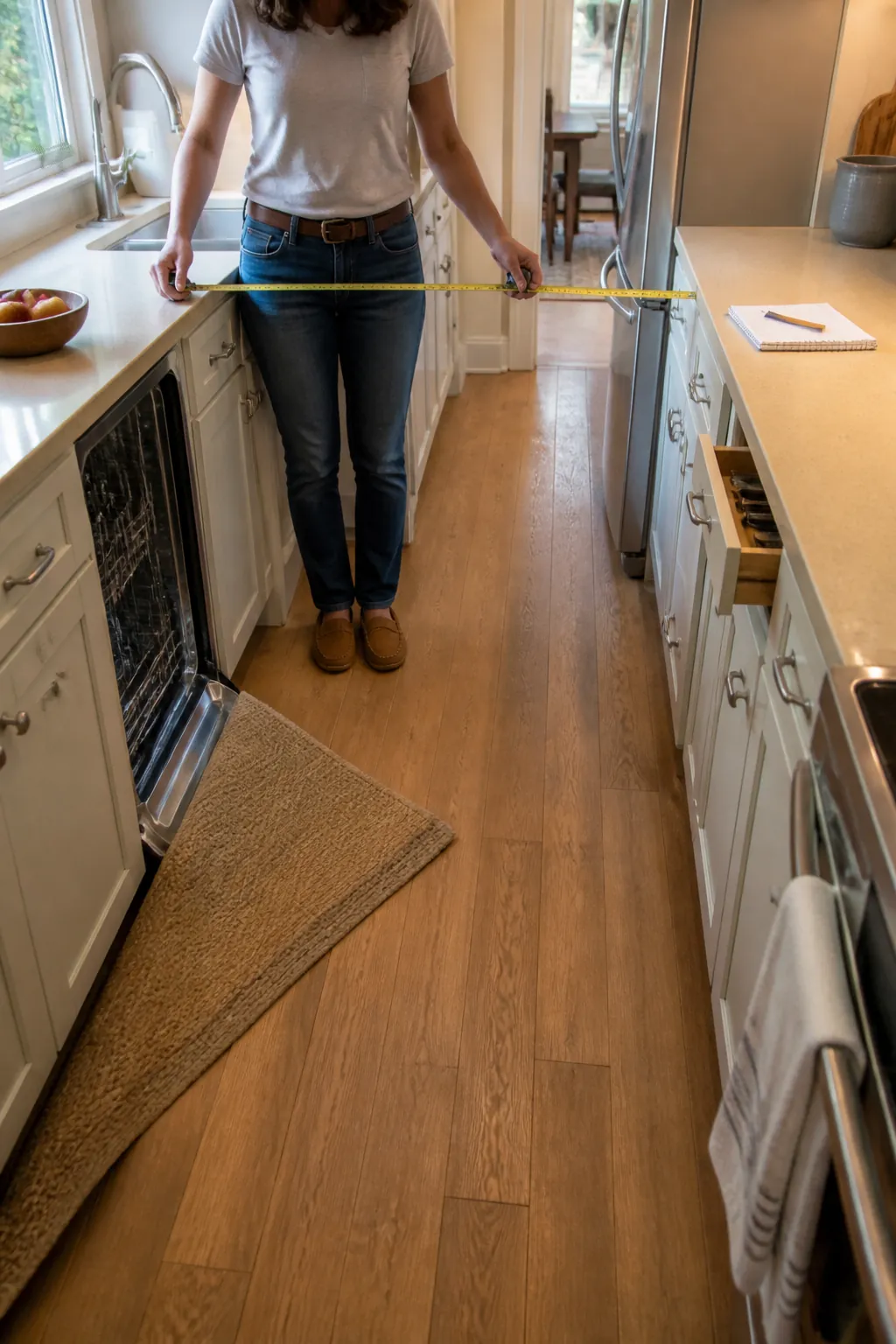
In a compact kitchen, a few inches can matter more than a whole style change. A fridge that projects past the cabinets, a trash can in the traffic lane, or a drawer pull that catches clothing can make the room feel smaller than it is. Measure the conflict, not just the wall length.
- If appliance doors collide, look at hinge direction, counter-depth models, or moving small appliances out of the main run.
- If prep feels cramped, protect one uninterrupted stretch of counter instead of scattering storage across every surface.
- If two people cannot pass, remove anything that lives on the floor: freestanding bins, step stools, rolling carts, and pet bowls.
- If the room feels visually crowded, reduce contrast and busy detail at eye level first.
Let One Side Carry The Visual Weight
The fastest way to make a narrow kitchen feel like a corridor is to load both walls with heavy upper cabinets, dark finishes, and tall blocks. You may gain storage, but the room starts pressing inward. A better small kitchen layout usually gives one wall the serious storage job and lets the opposite side breathe.
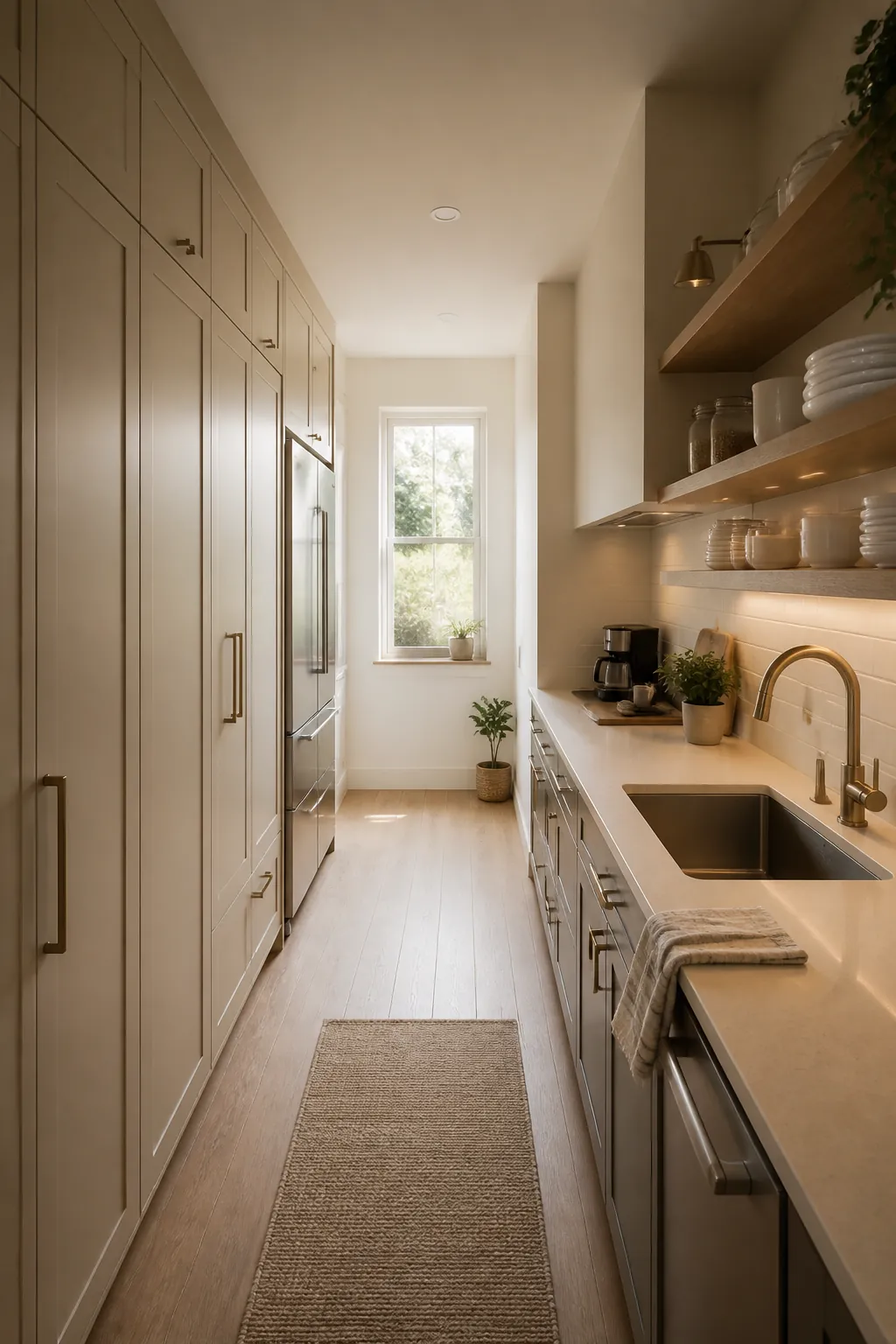
This does not mean stripping the kitchen bare. It means choosing a hierarchy. Put pantry cabinets, refrigerator panels, broom storage, and small-appliance garages on the side where they make the most sense. On the other side, use lighter uppers, glass fronts, open shelving, or simply fewer wall cabinets. The room still works hard, but it stops looking boxed in.
For kitchen design, that balance matters more than matching every cabinet perfectly. A compact kitchen feels calmer when the eye can move down one side without hitting a wall of visual interruptions.
Move Light Onto The Counters
Many galley kitchens have one ceiling fixture trying to do every job. It lights the floor, throws shadows from your body onto the counter, and leaves the end of the room flat. Better kitchen lighting is layered: general light overhead, task light under cabinets, and a warm glow at the far end so the room has depth.
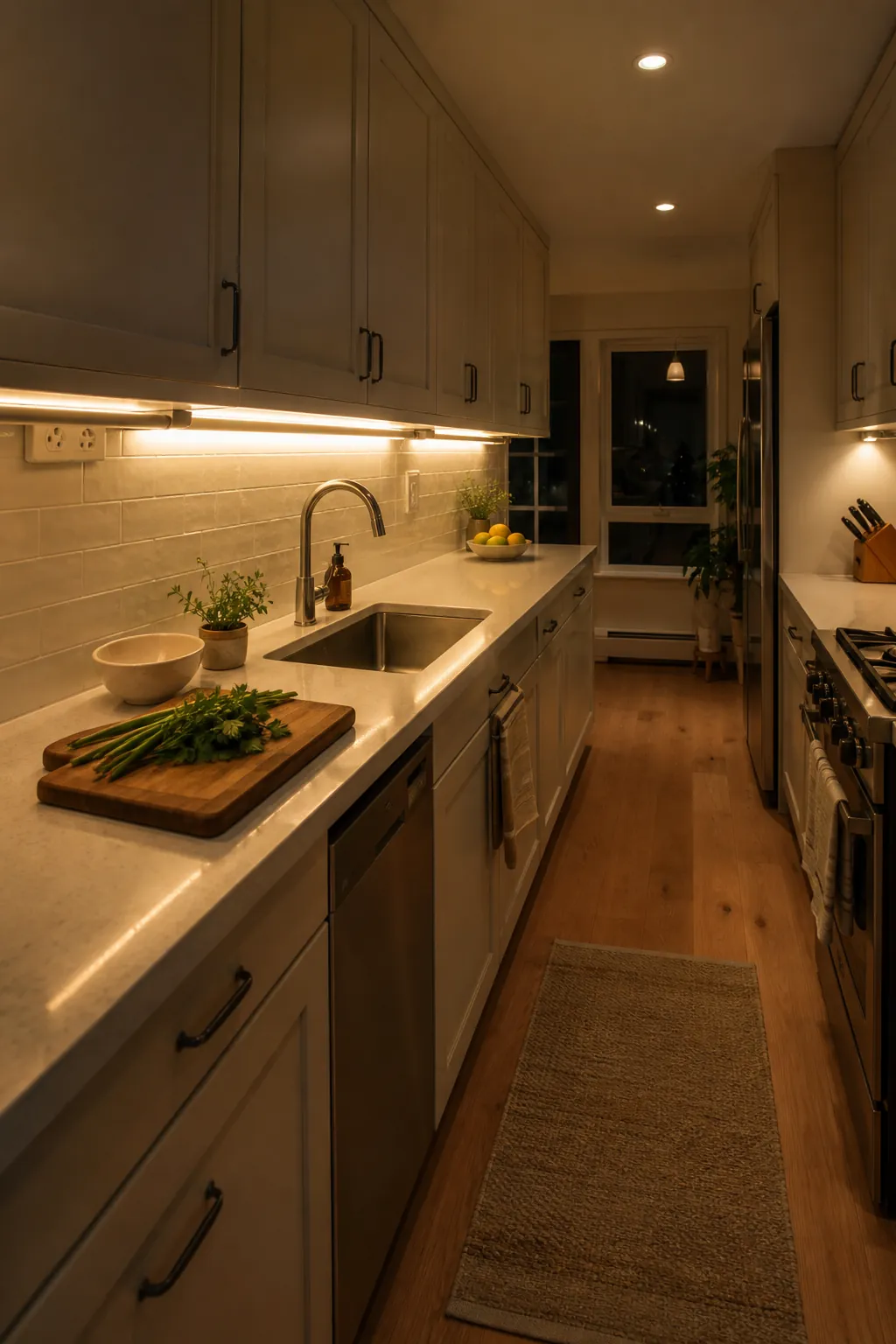
Under-cabinet strips are often the highest-impact change because they put light where your hands work. In a kitchen with little or no daylight, warm white light around 2700K to 3000K usually feels more livable than cold blue-white light. If the cabinets are pale, angled downlights or gimbal lights can bounce light off the doors and make the space feel wider.
Do not rely only on a dramatic pendant in the center. It may look good in a photo, but it will not solve shadowed chopping boards. The goal is not brighter everywhere; it is brighter where the tightness shows up: the prep zone, the sink, the stove, and the dark end wall.
Make Counter Organization Non-Negotiable
Counter clutter shortens a galley kitchen. Every coffee maker, knife block, mail pile, drying rack, and decorative tray becomes another stop sign for the eye. If the kitchen already has a narrow footprint, a crowded counter makes the walls feel even closer.
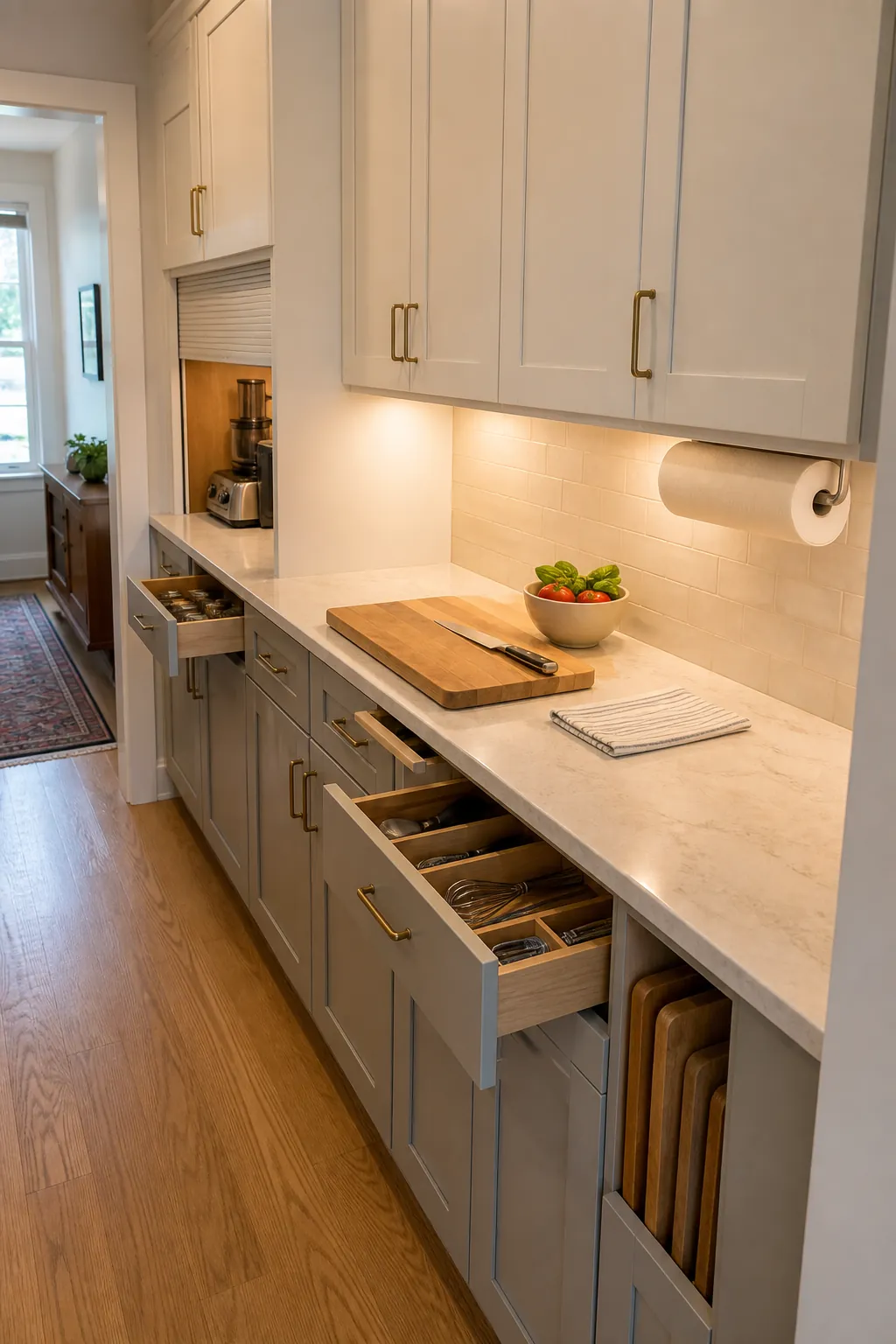
The rule is simple: keep out only what earns daily counter space. A kettle you use five times a day can stay. A stand mixer used twice a month belongs in a cabinet, pantry, or appliance garage. Paper towels can move under a cabinet. Spices can move into a drawer insert. Cutting boards can stand in a slim vertical slot instead of lying flat.
Counter organization is not about minimalism for its own sake. It is about protecting a working landing zone. In a small kitchen, one clear 24- to 36-inch prep stretch feels more luxurious than three cluttered half-counters.
Use Shallow And Flush Choices Before Moving Walls
When a galley kitchen feels less tight after a remodel, the reason is often boring: bulky pieces stopped sticking into the aisle. Counter-depth refrigerators, panel-ready dishwashers, recessed microwaves, slimmer pantry cabinets, and shallower counters on one side can create a better kitchen flow without changing the room envelope.
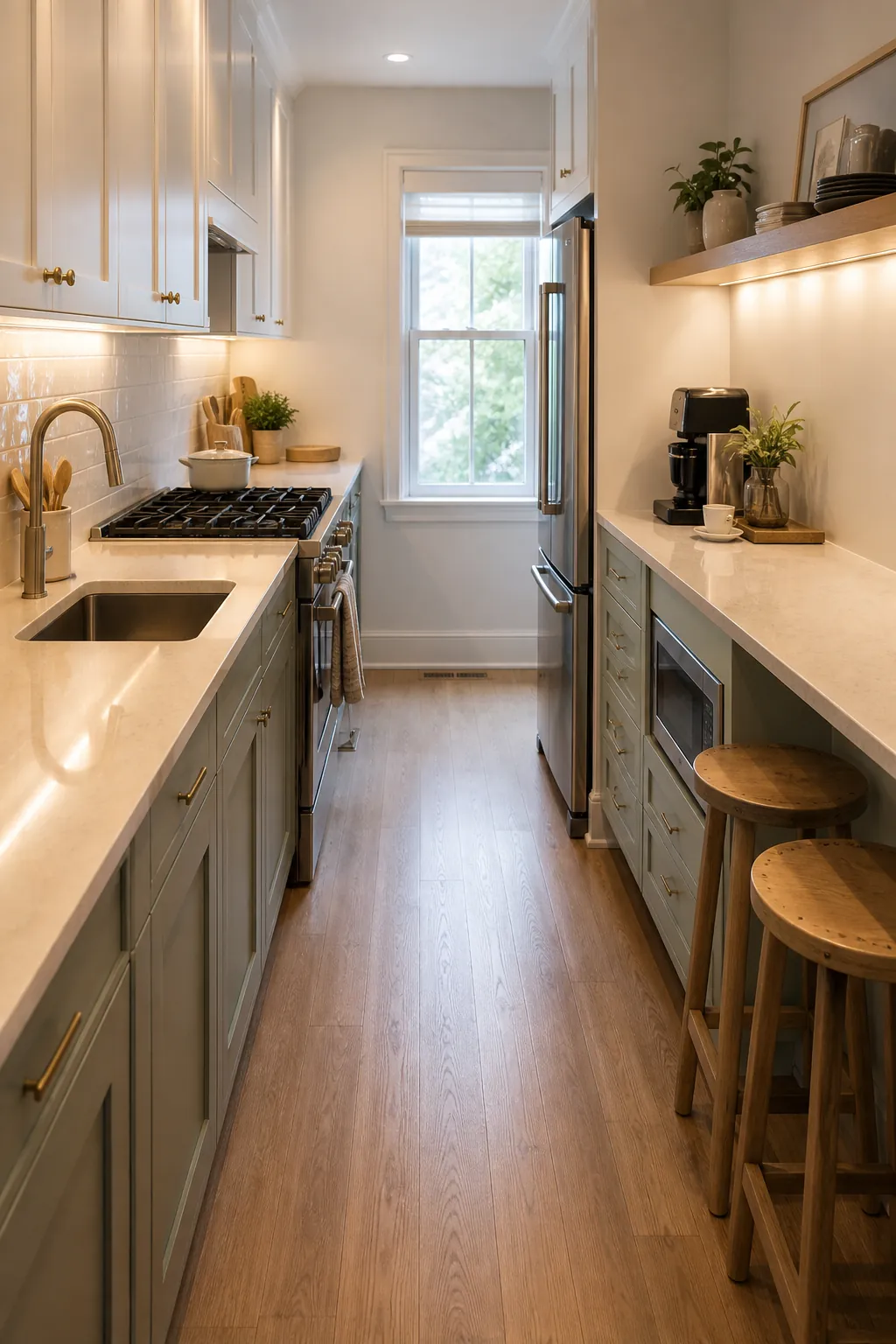
One useful move is staggering depth: keep the main cooking side full depth, then make the opposite side shallower where possible. That opposite run might hold a coffee zone, glassware, shallow drawers, or a slim breakfast perch. It still contributes storage and function, but it gives the center of the room back to your body.
For renters or budget updates, the same idea applies at a smaller scale. Replace a protruding freestanding trash can with an under-sink bin. Swap deep countertop organizers for a wall rail. Choose a narrow rolling cart only if it can park completely outside the walkway.
Choose Kitchen Storage That Opens Cleanly
Storage that blocks the aisle is not good storage. Deep base cabinets can hide cookware so well that you end up kneeling in the walkway to reach it. Wide doors can swing into another person. High shelves can turn everyday items into a balancing act.
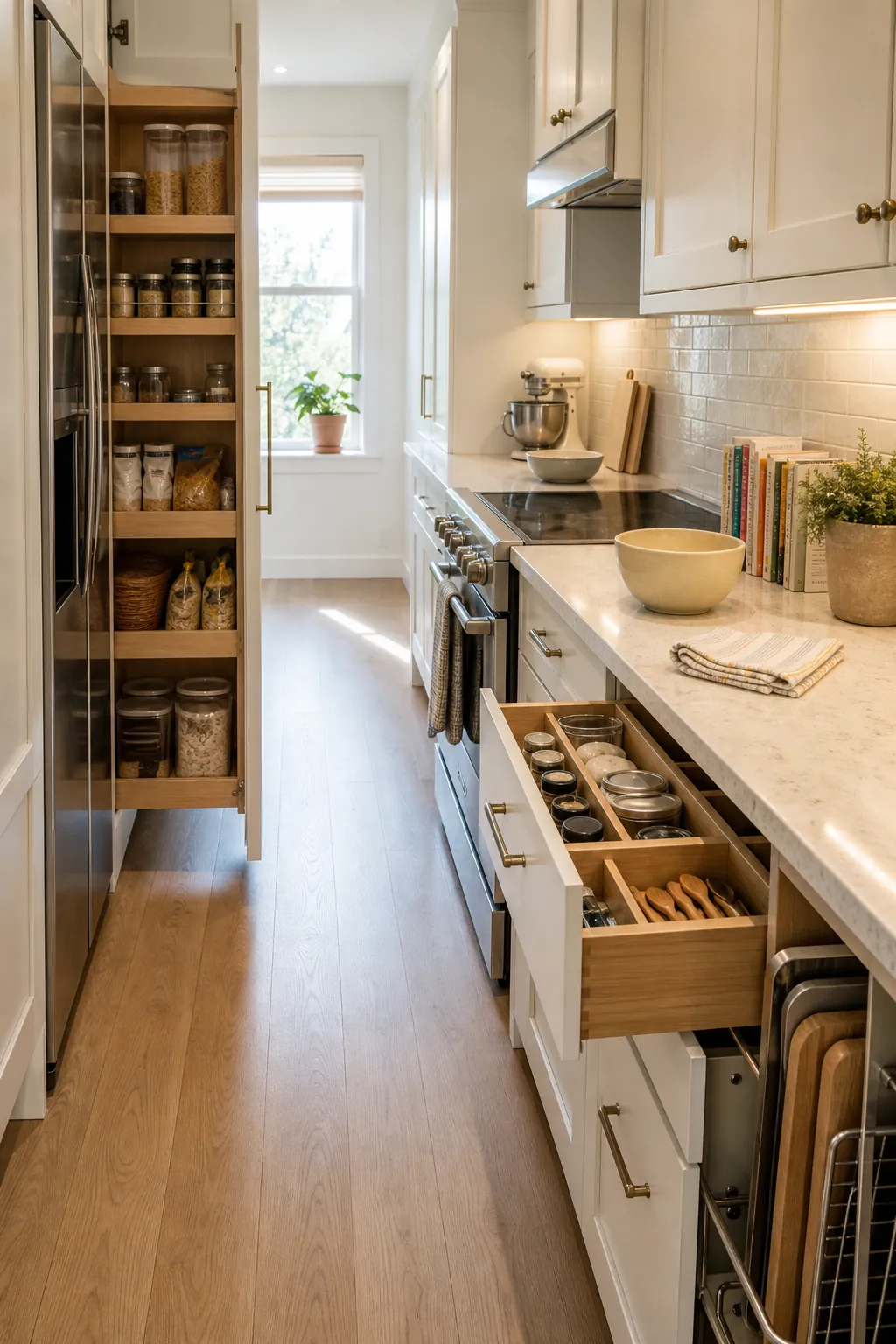
Drawers, pull-out shelves, tray dividers, lazy Susans, and narrow vertical organizers make a compact kitchen easier to use because they bring the object to you. You spend less time crouching, shifting, and blocking traffic. In a galley kitchen, that physical ease changes the mood of the room.
Use vertical storage, but be selective. Tall cabinets are excellent when grouped into one intentional wall. Wall-to-wall uppers on both sides are often the move that makes the kitchen feel tight. More storage is only a win when it reduces daily friction.
Give The Eye A Long Calm Line
The eye reads a narrow kitchen quickly. If it sees broken flooring, high-contrast cabinet changes, busy backsplash seams, cluttered open shelves, and a dark blank end wall, the room feels shorter and tighter. If it sees a clean run of counter, consistent flooring, reflective tile, and one bright focal point, the same footprint feels more open.
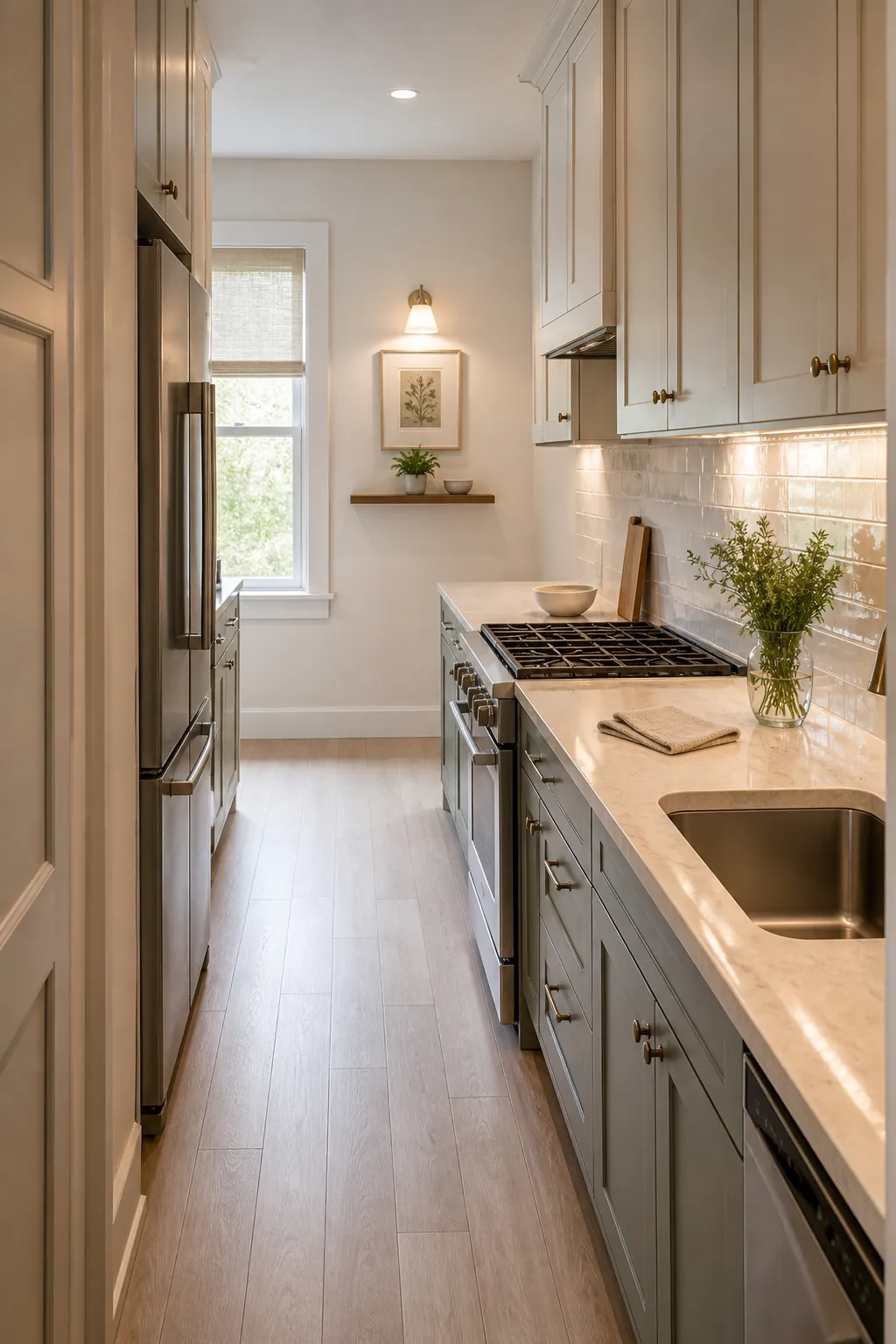
This is where small kitchen ideas often become practical. A glossy backsplash can bounce light. A pale counter can soften a dark lower cabinet. A mirror, art piece, window treatment, or warm lamp at the far end can pull attention forward instead of sideways. Long horizontal tile or a continuous shelf can visually stretch the room.
The caution: do not add a feature wall just because the room feels plain. In a narrow kitchen, the best feature is often restraint. Choose one moment of character, then let the rest of the room support it.
Plan Kitchen Flow For Two People
A galley kitchen can work beautifully for one cook and still feel awkward when guests arrive. The solution is not forcing seating into the aisle. It is deciding where people should naturally pause, talk, and help without standing in front of the sink or stove.
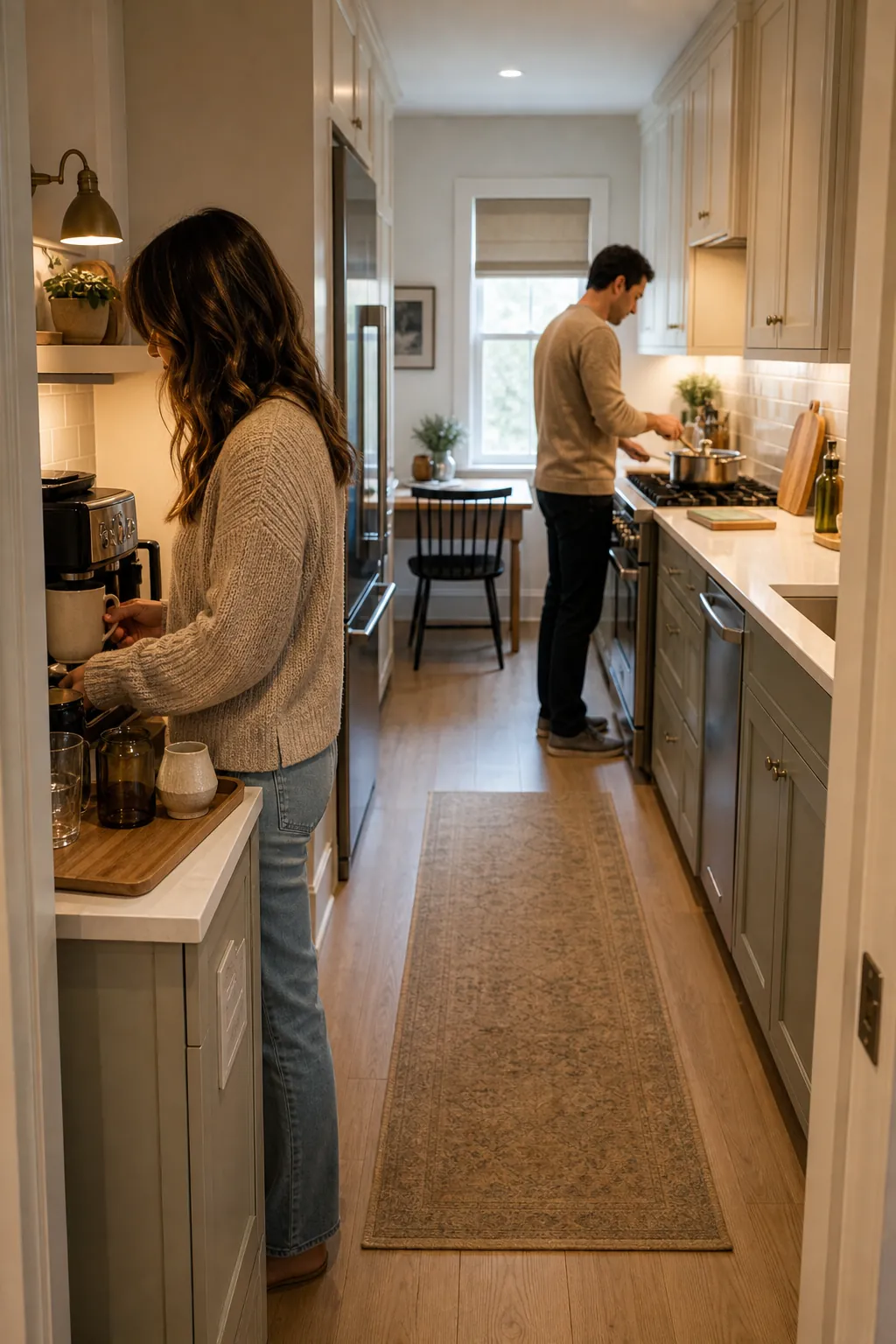
Put the social or self-serve zone near the entrance: glasses, coffee, snacks, breakfast items, or a small tray station. Keep the working triangle deeper inside the kitchen. That way, a guest can refill a drink without crossing behind the cook. If there is space at the end, a wall-mounted drop-leaf table, small round bistro table, or slim perch can give the room a destination without blocking the main lane.
This is the difference between a narrow kitchen and a stressful narrow kitchen. The room feels less tight when every person has an obvious place to stand.
A Practical Reset Plan For A Tight Galley Kitchen
If the kitchen feels tense right now, do the changes in this order. It keeps you from spending money on finishes before fixing the real bottleneck.
- Clear one full prep zone and move rarely used appliances off the counter.
- Remove aisle obstacles such as floor bins, oversized mats, freestanding carts, and door-hanging storage that bumps shoulders.
- Add under-cabinet task lighting before repainting or retiling.
- Group tall storage on one side and lighten the opposite side where possible.
- Flush out bulky pieces with counter-depth, recessed, wall-mounted, or shallower alternatives.
- Create a long sightline with calmer finishes, reflective surfaces, and one bright end point.
- Assign social traffic to the entrance or end of the kitchen instead of the cooking lane.
The real test is not whether the kitchen photographs bigger. It is whether breakfast, dishes, meal prep, and hosting feel less like squeezing through a hallway. A better galley kitchen keeps the strengths of the layout: efficient reach, strong storage, and compact movement. It simply removes the daily friction that made the narrow room feel tighter than it had to.