
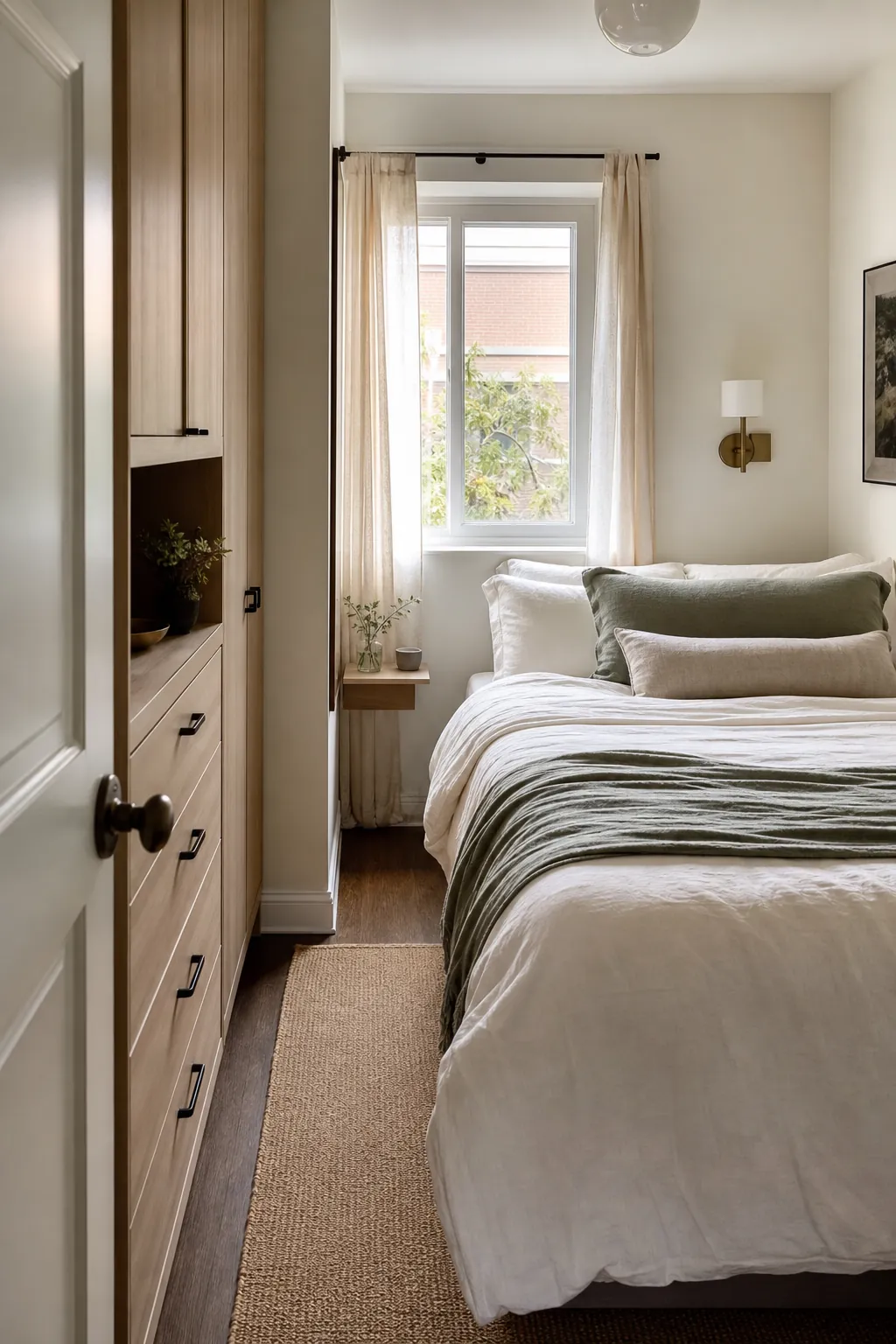
A narrow bedroom usually feels frustrating for one simple reason: the bed is doing all the talking. It takes the widest bite out of the floor plan, then every drawer, door swing, laundry basket, nightstand, and half-open closet has to argue for the space that is left. The fix is not to buy tiny furniture at random. The fix is to make the room choose a clear path, a clear storage wall, and a bed position that does not punish you every morning.
If your Narrow Bedroom feels cramped even after you declutter, treat it like a traffic problem first and a decorating problem second. A good Small Bedroom Layout lets you walk in, reach the bed, open storage, and move around without turning sideways at every step. Once the flow works, the room can finally look calm.
Start with the walking path, not the furniture
The most useful question is not “Where can everything fit?” It is “Where does my body need to move every day?” In a compact bedroom, the main route is usually door to bed, bed to closet, closet to mirror, and bed to window or bathroom. When that route zigzags around furniture corners, the room feels smaller than it is.
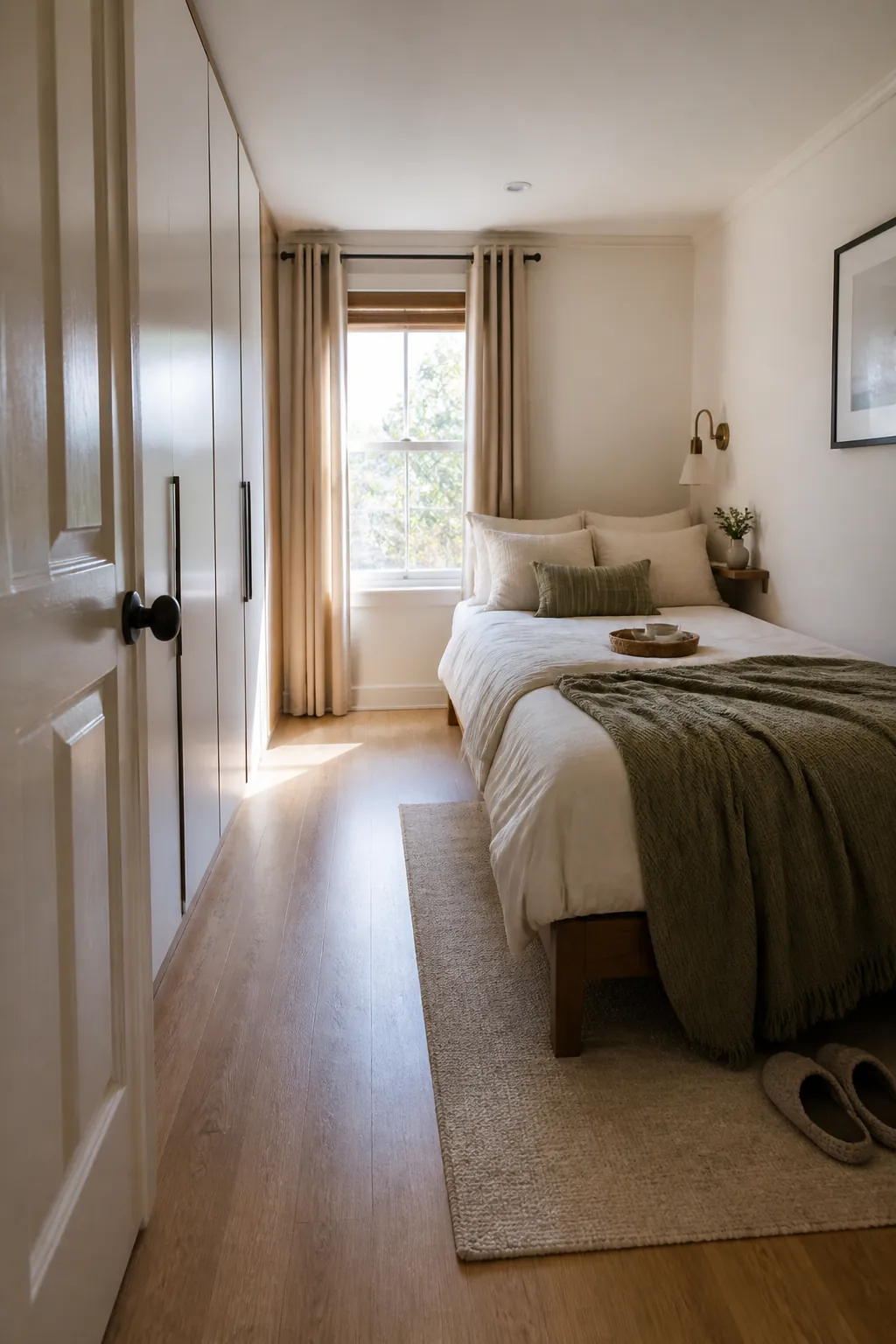
Stand in the doorway and look for the straightest possible lane. In many narrow rooms, that means keeping one long side visually quiet and letting the opposite wall handle storage. If the bed, dresser, and desk all stick into the same path, the room will never feel easy, even if each piece technically fits.
- Keep the main walkway continuous. A smaller uninterrupted path feels better than two broken paths.
- Protect drawer and closet clearance. Storage that cannot open fully becomes clutter in disguise.
- Remove furniture that creates a pinch point. A nightstand, bench, or chair is not useful if you have to dodge it every day.
Choose the bed placement that gives the room breathing space
Bed Placement decides almost everything in a narrow bedroom. A centered bed with matching nightstands looks balanced in a larger room, but in a slim room it can waste both sides at once. If you need better Bedroom Flow, it is often smarter to place the bed against one long wall or into a corner, then make the open side generous enough to use comfortably.
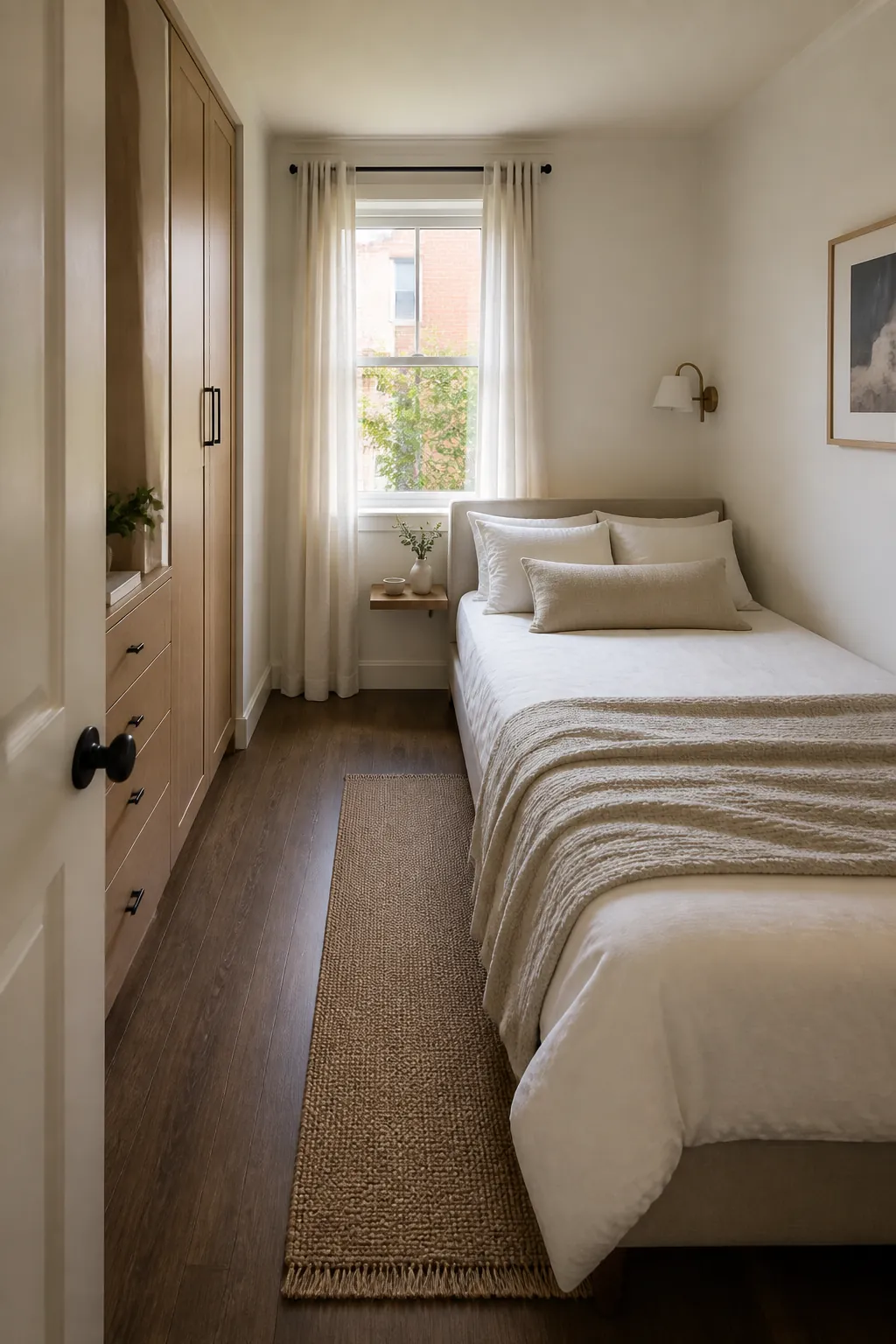
For one person, a bed against the wall can be a practical win. For two people, it depends on habits. If both sleepers need easy access, try a narrower nightstand on each side, wall sconces instead of table lamps, and a low-profile bed frame that does not add unnecessary inches. If one side access is acceptable, a corner bed can open a real lane for getting dressed, making the bed, or using a desk.
The rule is simple: do not preserve symmetry at the cost of function. A narrow bedroom works better when the layout supports real movement, not a showroom photo.
Make one wall do the storage work
Scattered storage makes a small room feel busy. A dresser here, bins there, a rail in the corner, and baskets under the window all create visual noise. A stronger Small Room Design move is to choose one storage wall and make it work harder.
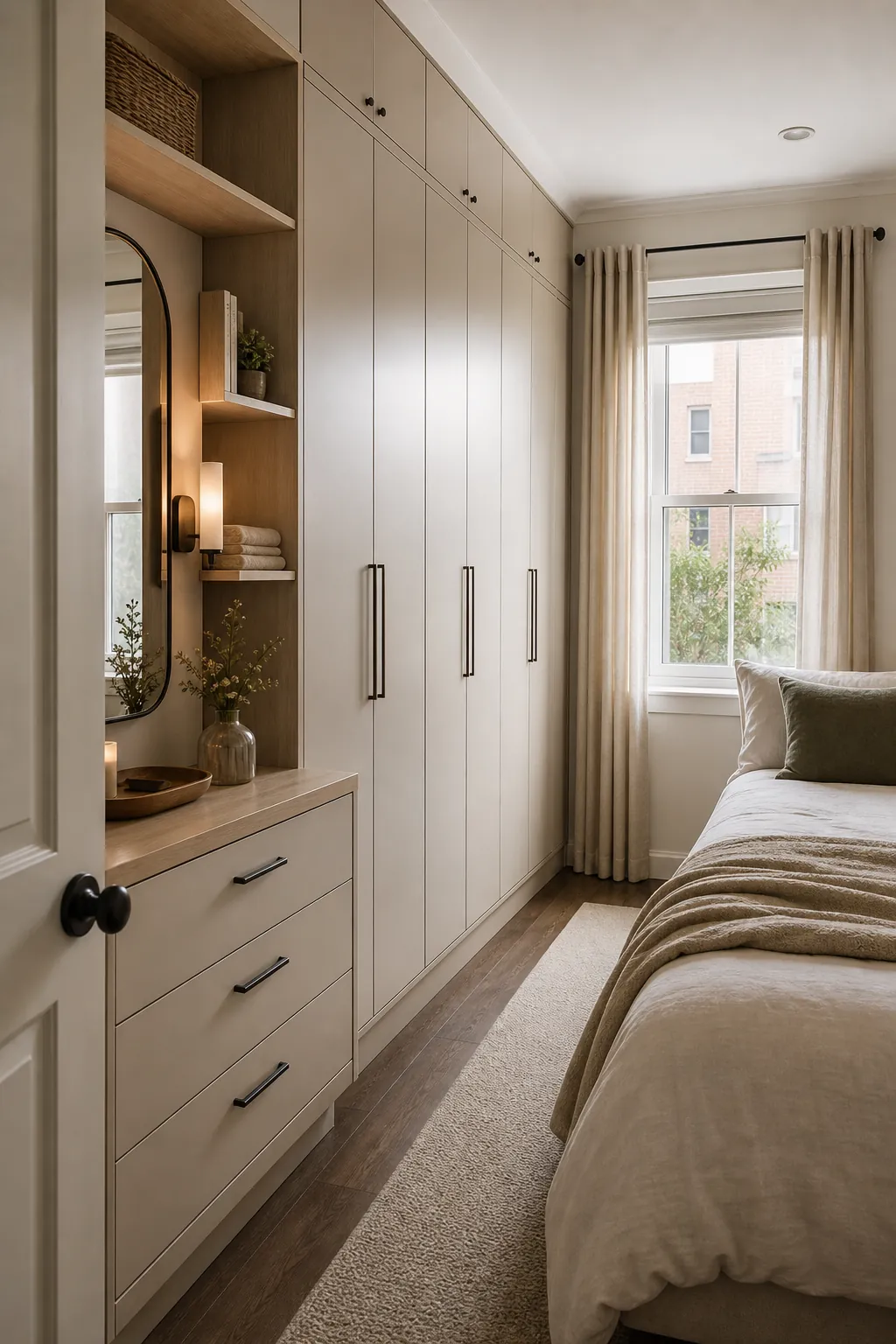
That storage wall might be a shallow wardrobe, a tall dresser, a closet system with internal drawers, or a run of closed cabinets above a desk. The point is not to fill the wall from corner to corner. The point is to keep Bedroom Storage in one intentional zone so the rest of the room can breathe.
- Go taller before you go deeper. Height gives storage without stealing the walkway.
- Use closed fronts for visual calm. Open shelves can look crowded fast in a narrow room.
- Prefer shallow pieces where possible. A deep dresser opposite the bed can ruin the entire traffic lane.
Replace bulky nightstands with wall-mounted solutions
A full nightstand is often too expensive in floor space. If the only thing you need beside the bed is a phone, book, water glass, and light, Wall Mounted Storage can do the job with less bulk. A floating shelf, narrow ledge, small wall cabinet, or sconce gives you function without adding another leggy piece of furniture to navigate around.
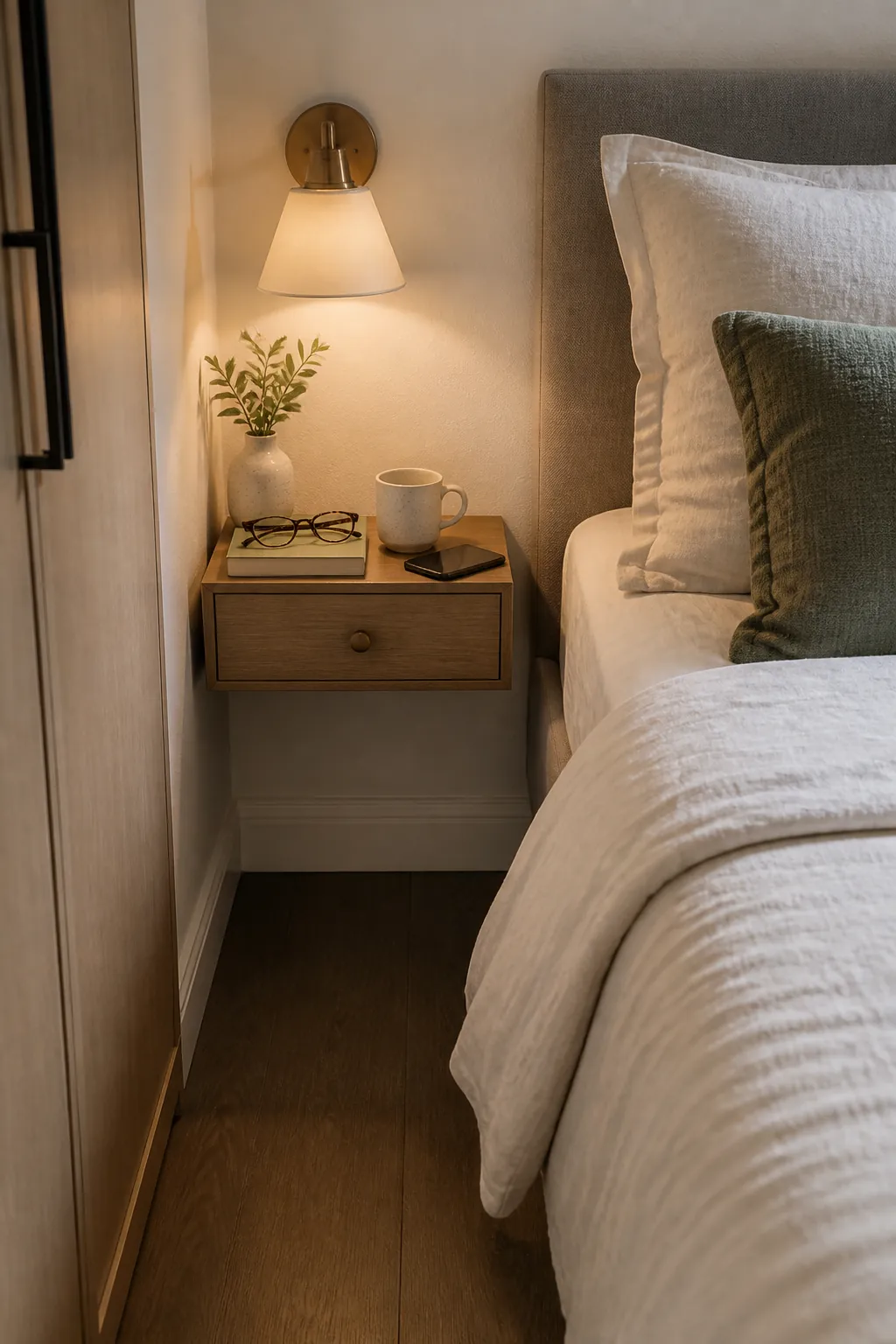
This is one of the easiest Small Bedroom Ideas to apply in a rental because it can be scaled to your comfort level. If you cannot drill into the wall, use a slim C-table, a narrow clip-on lamp, or a headboard with a shallow ledge. The goal is to free the floor and keep the bedside zone from becoming a pile of small objects.
Keep the surface intentionally small. A tiny shelf forces editing, and editing is what a narrow bedroom needs.
Use furniture placement to stop the room from feeling like a hallway
A narrow bedroom can accidentally feel like a corridor: bed on one side, storage on the other, and a long empty strip through the middle. Better Furniture Placement gives the room small moments of pause. That might be a rug tucked under the front two-thirds of the bed, a mirror placed where it catches daylight, or a compact desk under the window instead of beside the bed.
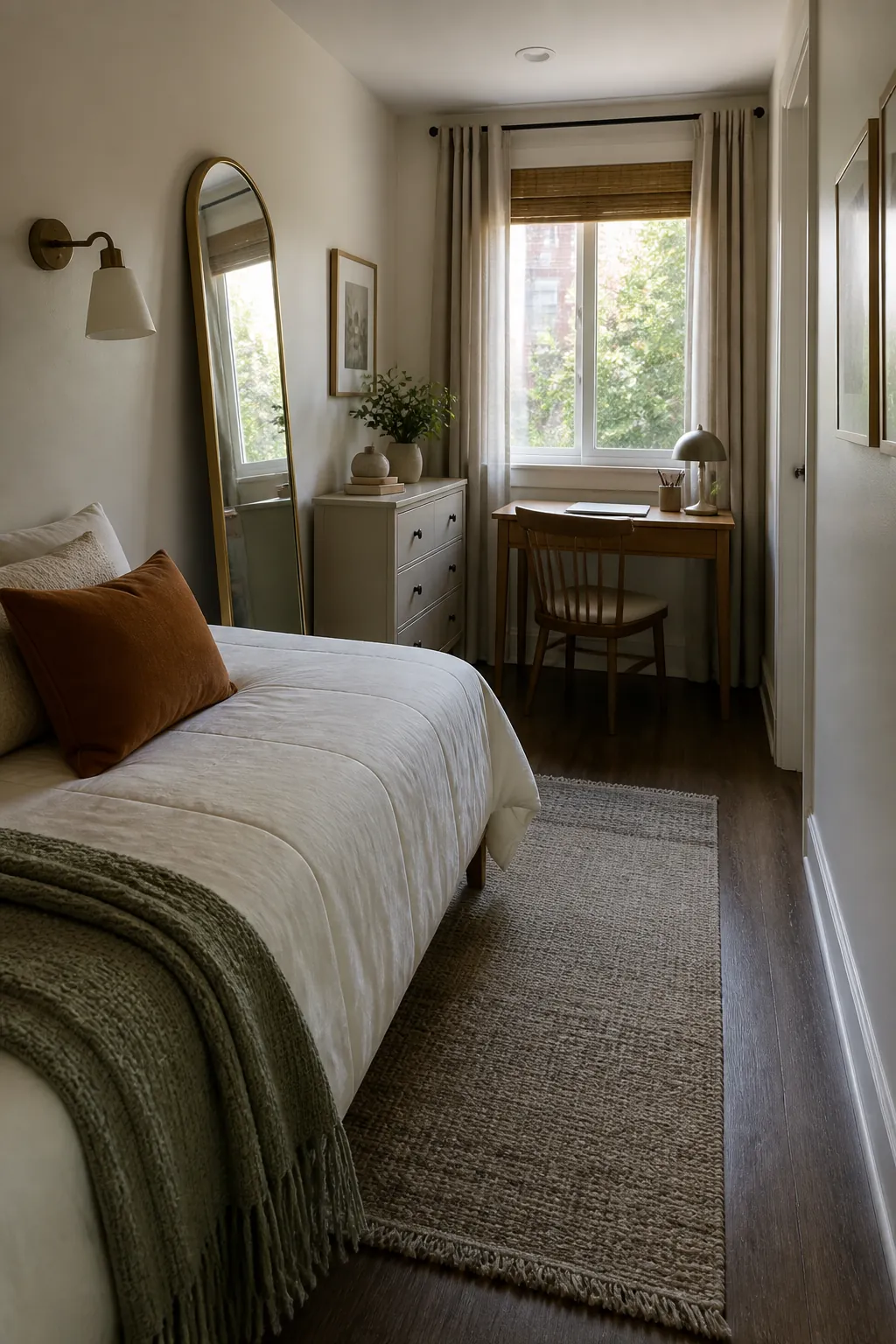
Think in zones, but keep them light. The sleep zone should feel anchored. The getting-ready zone should have storage and a mirror near each other. If there is a work zone, it should not block the closet or become the first thing you trip over. A Compact Bedroom does not need more furniture to feel complete. It needs each piece to have a reason and a place.
One strong move is to leave the window wall lighter. Daylight at the end of a narrow room pulls the eye forward and makes the room feel less boxed in. If the window wall must hold a desk or dresser, choose a slim profile and keep the top clear.
Edit the room until every inch has a job
The last step is less glamorous, but it is the step that makes the layout last. Narrow bedrooms expose every extra object. A chair becomes a clothing pile. A deep hamper blocks a closet. A large bedside lamp steals the only useful surface. The room works better when every inch has a job and every job has a home.
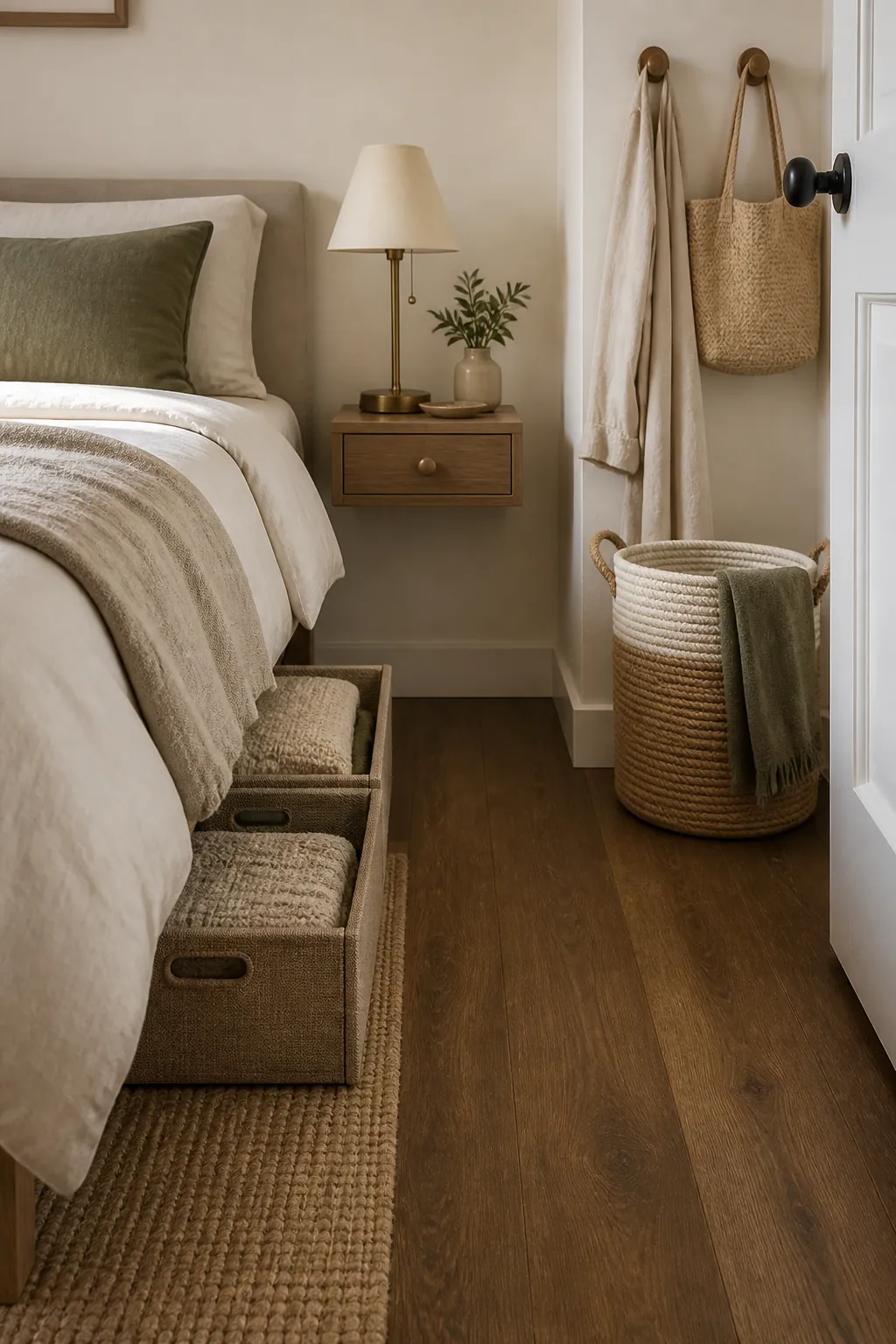
Use under-bed storage for low-frequency items, not daily clutter. Put hooks where clothes actually land. Keep the laundry basket close enough that it gets used. If a dresser drawer needs clearance, protect that clearance like it is part of the furniture. The best narrow bedroom is not the one with the most storage; it is the one where storage is easy enough that the floor stays clear.
Before buying anything, test the layout with tape on the floor. Mark the bed, storage, desk, and walkway. Open the closet. Pretend to make the bed. Pretend to get dressed in a hurry. If the room passes that ordinary morning test, the design is already stronger than most inspiration photos.
A narrow bedroom works when it stops asking you to squeeze around your own furniture. Give the room one clear path, one hardworking storage zone, and a bed position that matches how you actually live. After that, the decorating gets much easier.