
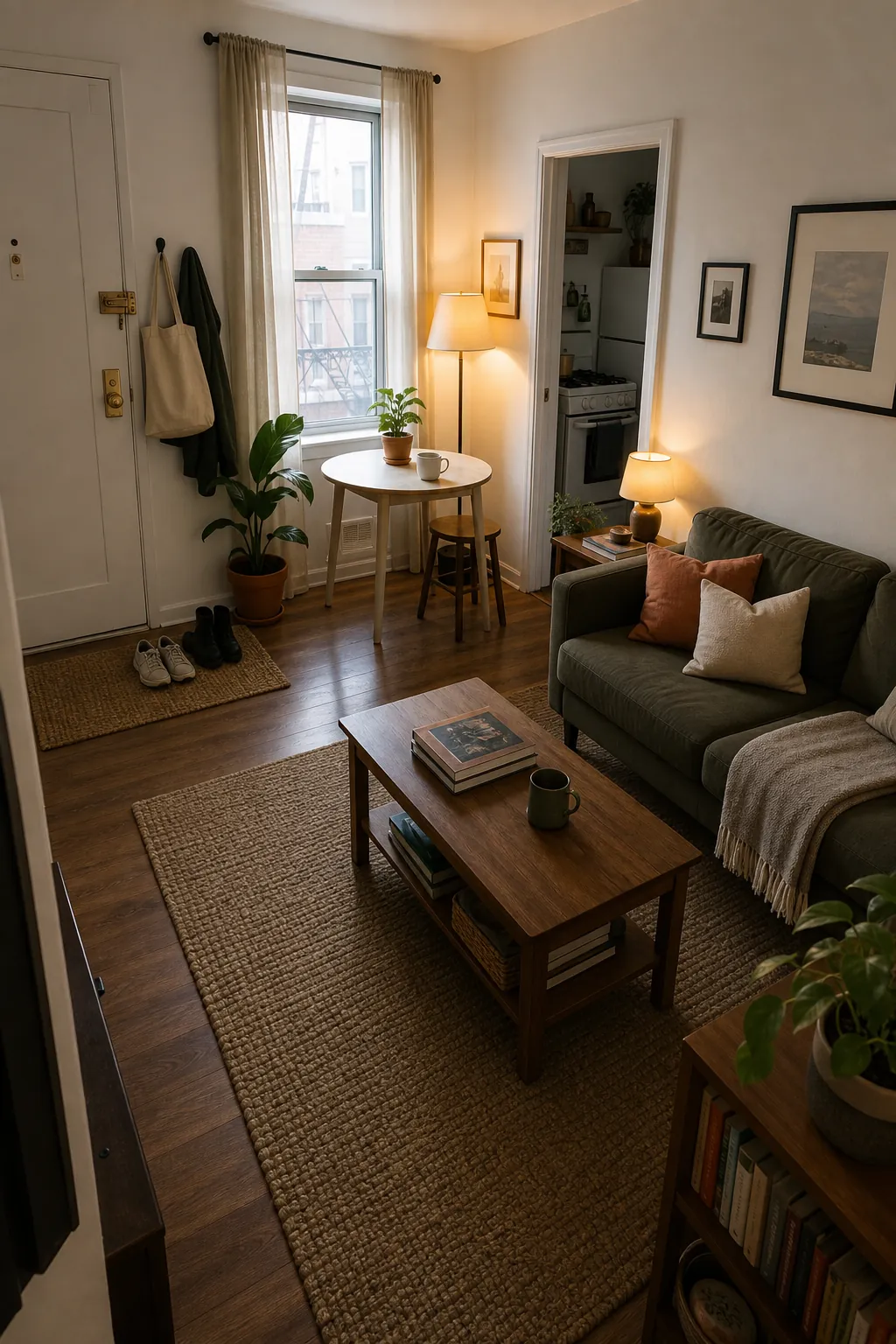
A small apartment can be clean, furnished, and technically decorated, yet still feel like a place you are passing through. That is the frustrating part. You may already have a sofa, posters, a bed, and a decent desk, but when you walk in after work it still feels more like a unit than a home.
The fix is not to buy more random decor. A real home feeling comes from three things working together: comfort you can feel, routines the space supports, and personal evidence that you actually live there. In a small apartment, every choice has to earn its space, so the goal is not a bigger shopping list. It is a smarter order of operations.
Start with the parts of the apartment your body notices first: the entry, the lighting, the floor, the blank walls, the clutter zones, and the places where your evening routine happens. When those pieces start working, even a plain rental begins to feel settled.
Start With The First Five Minutes Home
The first test of a real home is what happens when you unlock the door. If your keys, shoes, bag, mail, jacket, and reusable tote all land in different places, the apartment starts every evening with a small mess. That mess matters because it tells your brain the space is not ready for you.
Create a tiny landing zone even if you do not have an entryway. A narrow shoe rack, a wall hook, a tray for keys, and a washable mat can be enough. If the front door opens directly into the living room, use a slim console, a small stool, or a lidded basket to create a pause point. The goal is to make coming home feel like a ritual instead of a spill.
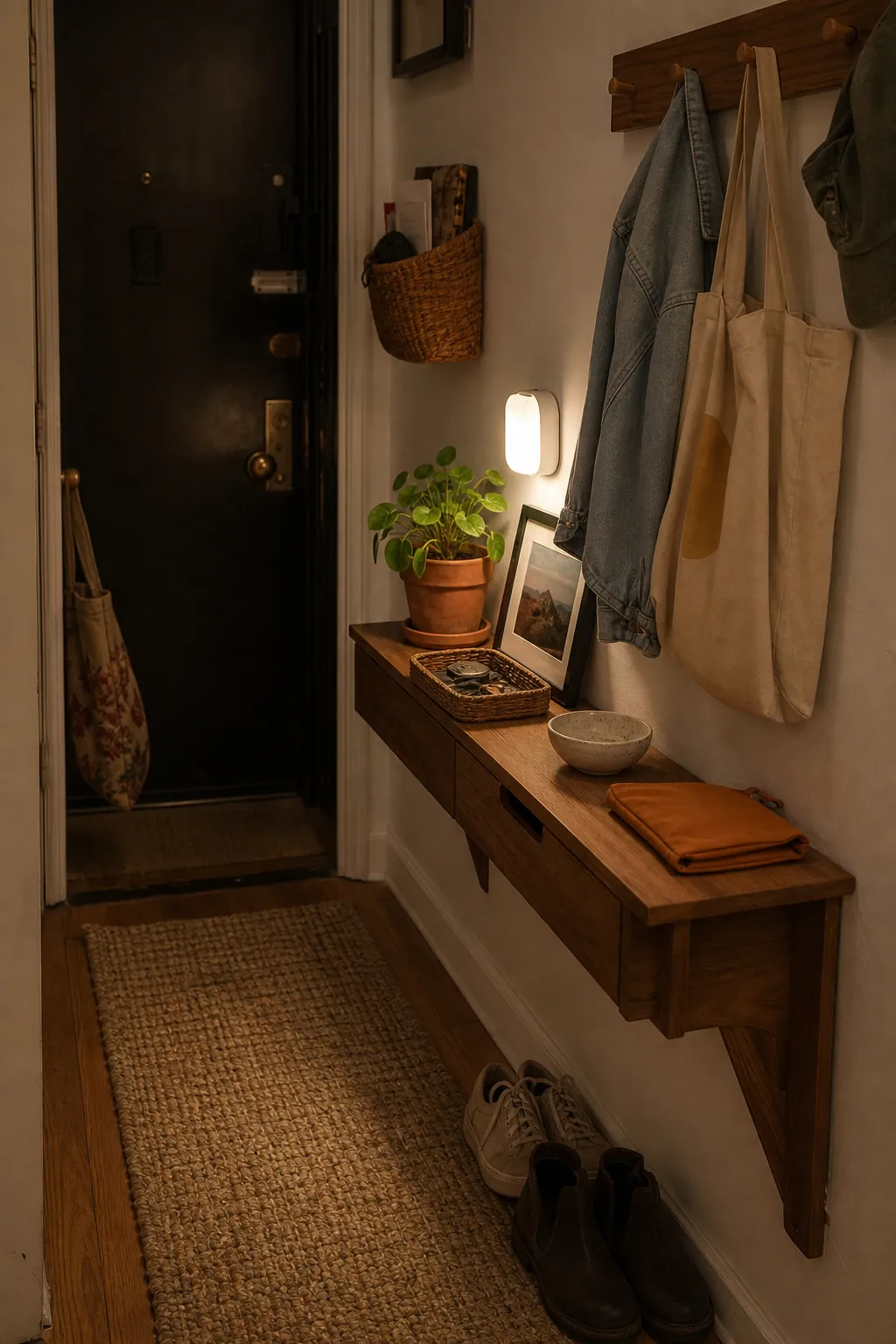
Do not overcomplicate this. One hook for the bag you use most, one place for the shoes you actually wear, one tray for pocket items, and one light you can turn on without crossing the room. If the apartment has no wired entry light, a rechargeable picture light, plug-in sconce, or small lamp on a timer can make the first minute home feel calmer.
Turn Off The Landlord Light
Many rentals fail the home test because the only light is a ceiling fixture that makes everything look flat. Overhead lighting is useful when you are cleaning, packing, or searching for something. It is rarely the light you want for dinner, reading, stretching, or winding down.
Layer your lighting before you buy more decorative pieces. Use one floor lamp near the sofa, one table lamp or wall plug-in near the bed or desk, and one small accent light for a shelf, plant, or kitchen corner. Warm bulbs usually feel more residential than cool white bulbs. If one change can make a small apartment feel less temporary in one evening, it is replacing harsh light with warm, lower light.
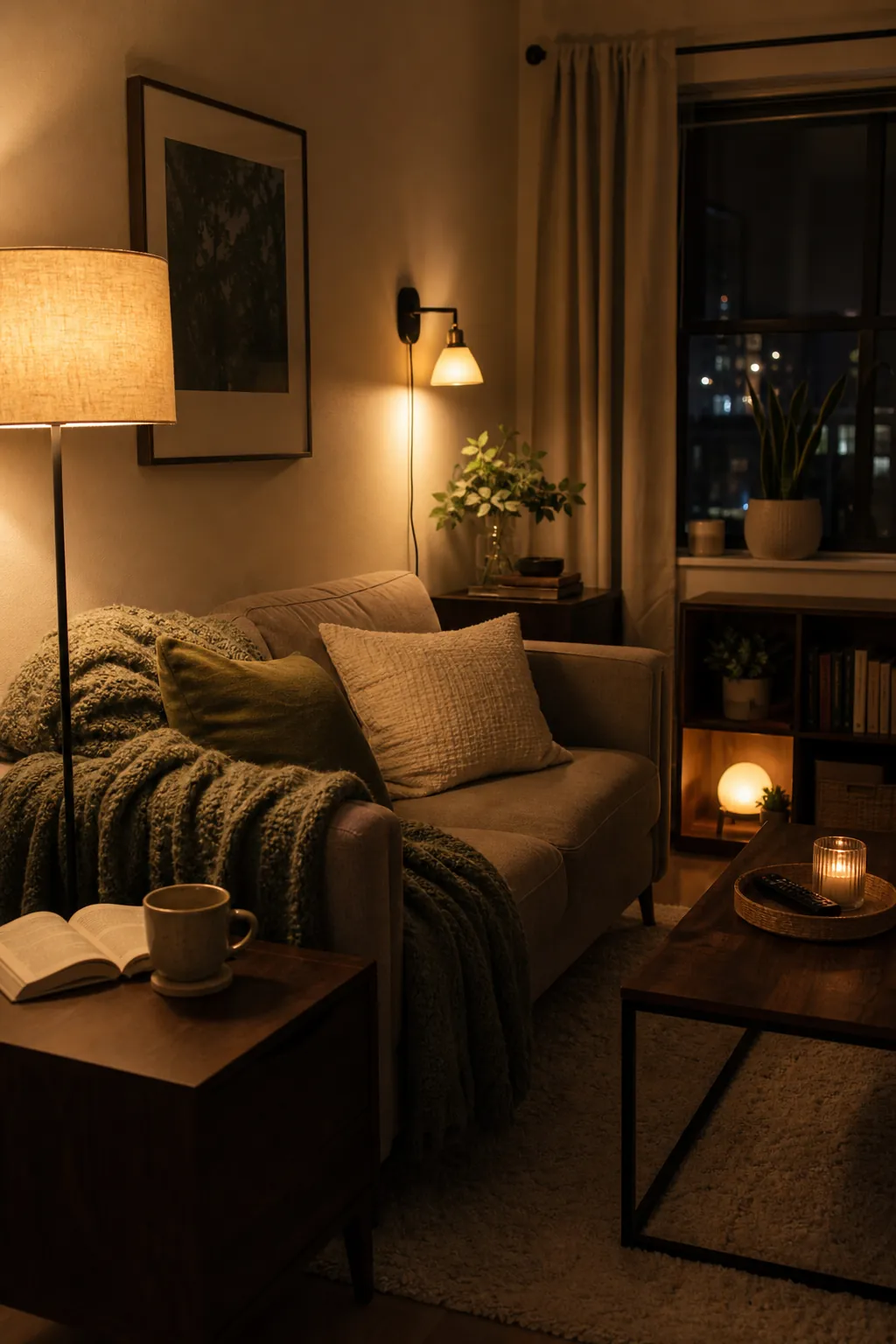
Think in zones, not fixtures. The sofa needs a relaxing glow. The desk needs focused light. The kitchen needs practical light for cooking. The bed needs a lamp you can reach without getting up. In a studio, these lighting zones quietly tell your body where one activity ends and another begins.
Timers help too. A lamp that turns on before you get home changes the feeling of walking into the apartment. It says the room was waiting for you, not sitting empty.
Make One Area Feel Finished First
The fastest way to make a small apartment feel unfinished is to sprinkle tiny fixes everywhere. One pillow in the living room, one small print above the desk, one plant on the windowsill, one random basket in the bedroom. None of it is wrong, but the apartment still reads as temporary because no area has enough weight to feel intentional.
Choose one main zone and finish it first. For most people, that is the living area or the bed wall. In the living area, the big three are a properly sized rug, curtains that look deliberate, and seating arranged around how you actually relax or host. A rug that is too small makes the room feel like furniture floating on a floor. A larger rug makes the furniture feel like a room.
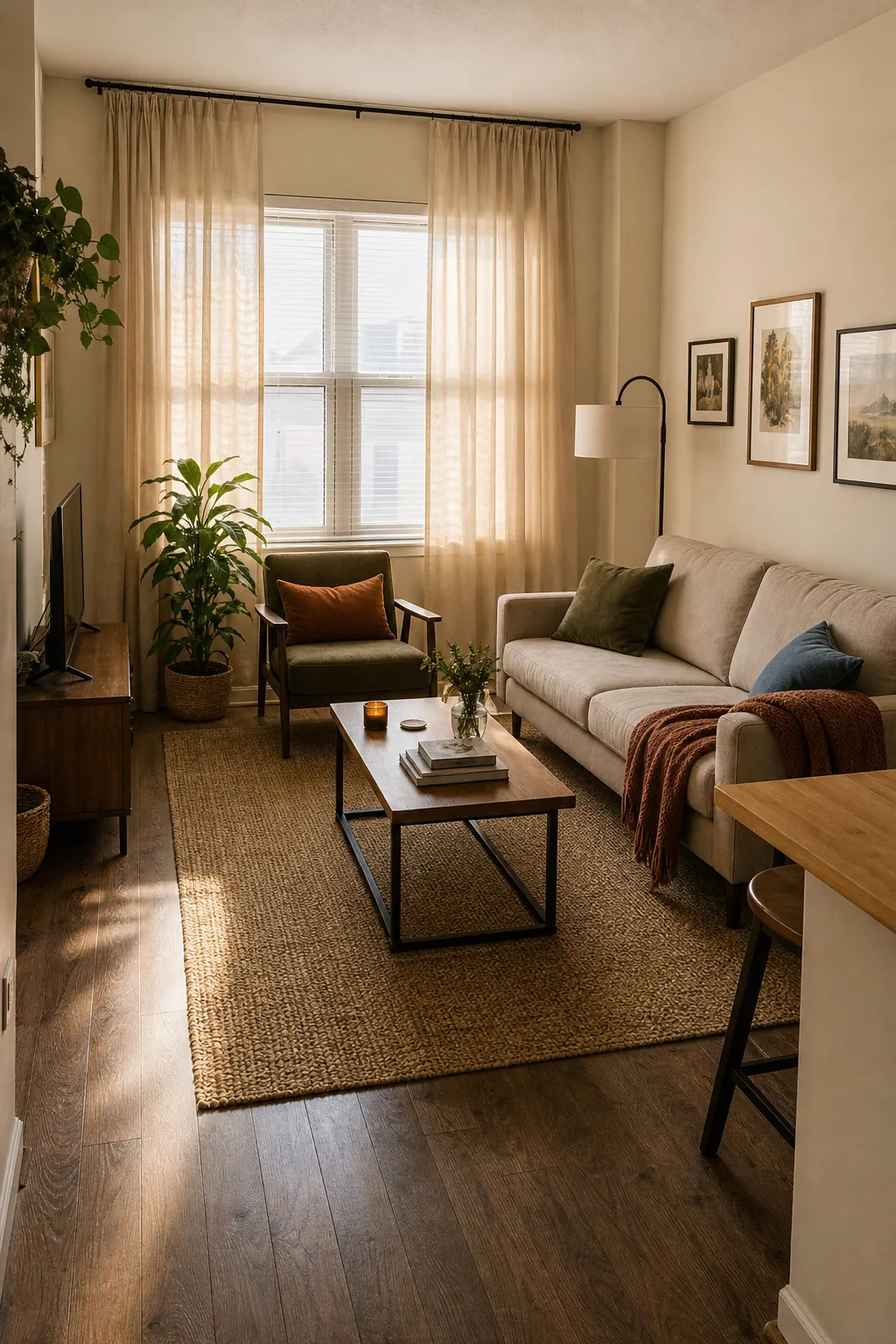
With curtains, go higher and wider than the window when your lease allows a tension rod or removable hardware. The fabric does not have to be expensive. The effect comes from the scale. Curtains soften hard rental edges, hide awkward blinds, and make the ceiling feel taller.
Finishing one zone also protects your budget. Once the main zone looks coherent, you can see what the apartment actually needs. Often the answer is less than you expected.
Use Personal Evidence, Not Random Decor
A home needs proof of the person who lives there. That proof can be framed photos, art from a local market, a stack of books you reach for, a guitar stand, a trail map, ceramics from a trip, or a small collection arranged with care. What matters is that the object says something true about your life.
This is where many small apartments go wrong. People buy decor that looks acceptable, then wonder why the room still feels anonymous. Generic decor fills space. Personal evidence gives the space a memory. If you already have posters, frame them. If you have photos trapped on your phone, print a few. If you have a hobby, give it one visible, tidy place instead of hiding it all in a closet.
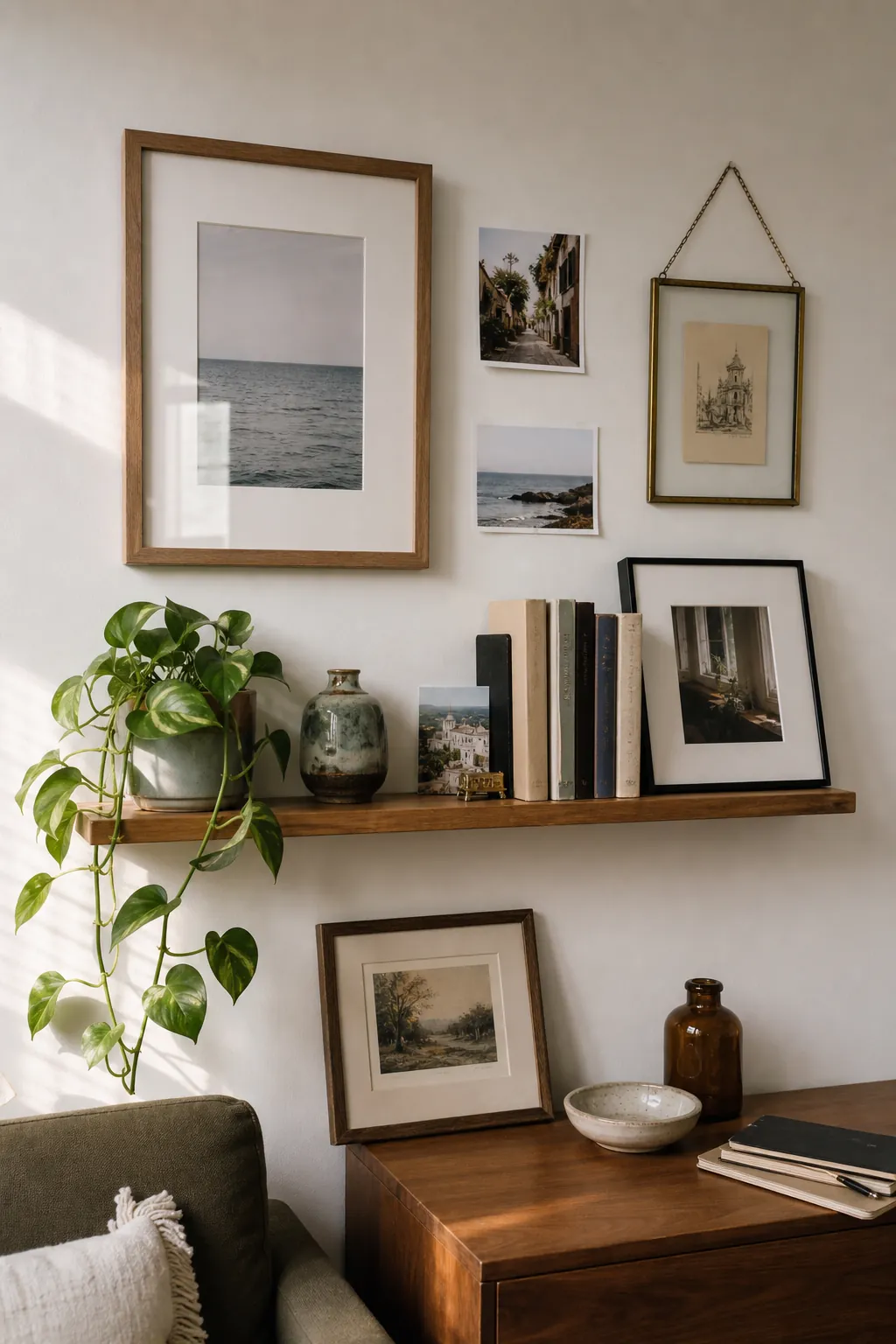
Use the rule of one strong surface. Style one shelf, one picture ledge, one dresser top, or one wall before decorating every blank spot. Leave breathing room around the objects. A small apartment feels more grown-up when your favorite things have space around them.
If you rent and worry about wall damage, use renter-friendly hanging strips, leaning frames, picture ledges, or a large framed piece on top of a console. Blank walls are not calm by default. Sometimes they just make the place feel unclaimed.
Hide The Visual Noise
Clutter in a small apartment is not only about having too much stuff. It is also about too many visible categories at once: cables, shoes, mail, cleaning supplies, pantry overflow, gym gear, laundry, remotes, skincare, pet items, and half-finished projects. Even if every item is useful, the apartment can feel busy and unsettled.
Do not start with cute bins. Start by naming the problem category. Where does mail pile up? Where do worn-once clothes land? Which items move from table to chair to floor? Once the category is clear, give it a home that matches the habit. The best storage is not the prettiest container; it is the container you will actually use on a tired night.
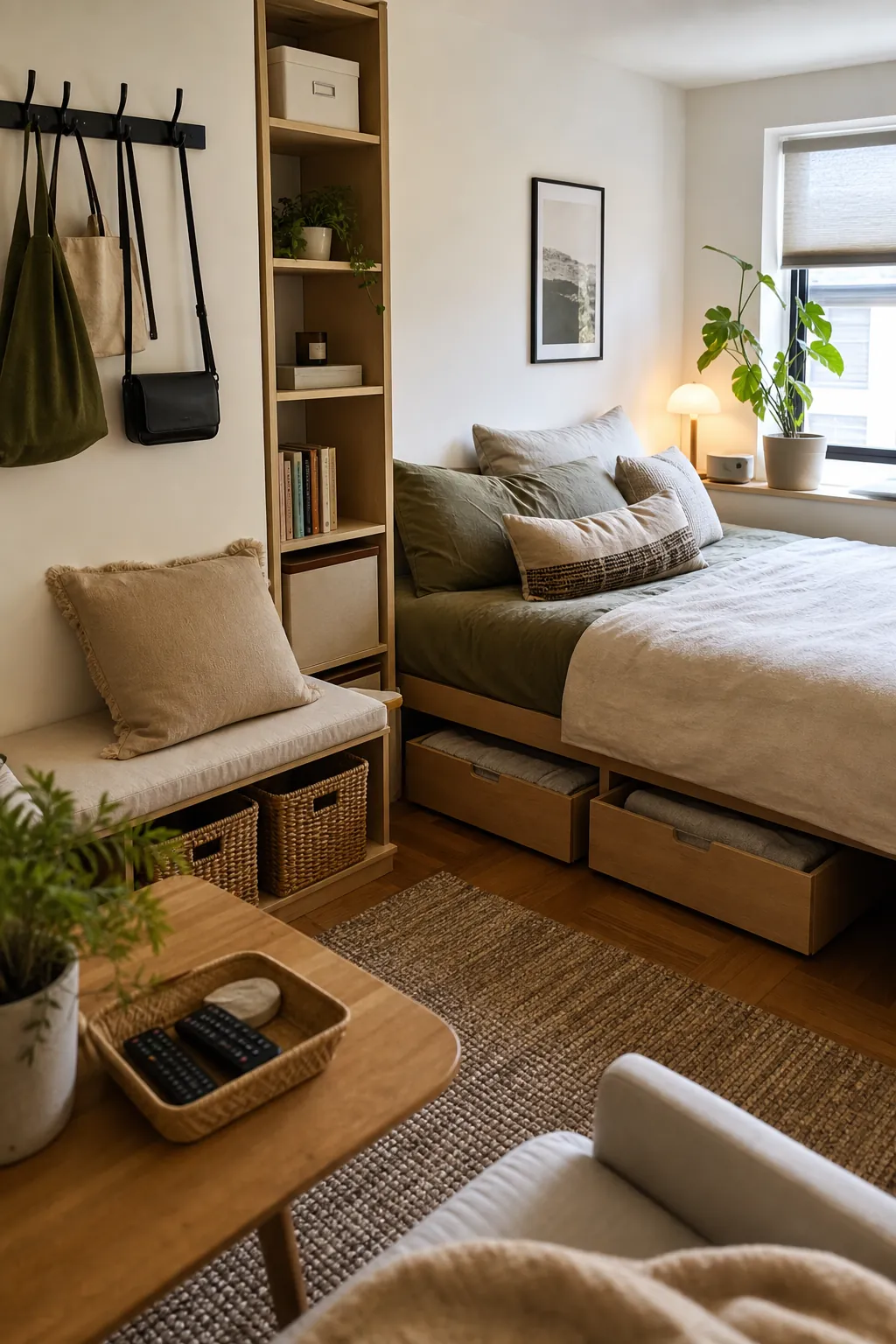
- Use closed storage for ugly necessities. Cleaning products, cords, and backup toiletries usually look better behind a door or inside a lidded basket.
- Use open storage only for attractive, repeated-use items. Books, bowls, folded throws, and plants can live in the open without making the room feel chaotic.
- Use vertical space carefully. Tall shelves, over-door hooks, and wall-mounted rails help when floor space is limited, but keep them edited so the walls do not feel crowded.
Small homes do not need to be minimalist, but they do need visual decisions. If everything is visible, nothing feels restful. When the daily mess has a landing place, the whole apartment feels more adult.
Add Texture Before You Add More Color
Color helps, but texture often does more in a rental. White walls, vinyl floors, smooth cabinets, and basic blinds can make a small apartment feel cold even when the layout is good. Soft and natural textures interrupt that rental flatness.
Look for linen curtains, a wool or jute-style rug, cotton bedding, a woven tray, a wood stool, ceramic lamps, textured pillow covers, and a throw blanket that feels good on your skin. A plant helps too, real or realistic. You do not need a jungle. One healthy plant near a window can make the apartment feel tended.
Texture is what makes a room feel touchable. That matters because home is not only something you see in a photo. It is the sound of fabric when you close the curtains, the softness under your feet, the weight of a mug, the place your hand automatically reaches for a lamp switch.
Build A Ritual The Apartment Can Hold
Decor can make an apartment look better, but routines make it feel like yours. Cooking one simple dinner, lighting a lamp at the same time each evening, watering a plant, playing music while you reset the room, or keeping a book beside the sofa can change your relationship with the space.
This is why a place can still feel temporary after you buy the right rug. It may look improved, but you have not lived into it yet. A real home is built by repeated ordinary moments. Give those moments a physical place.
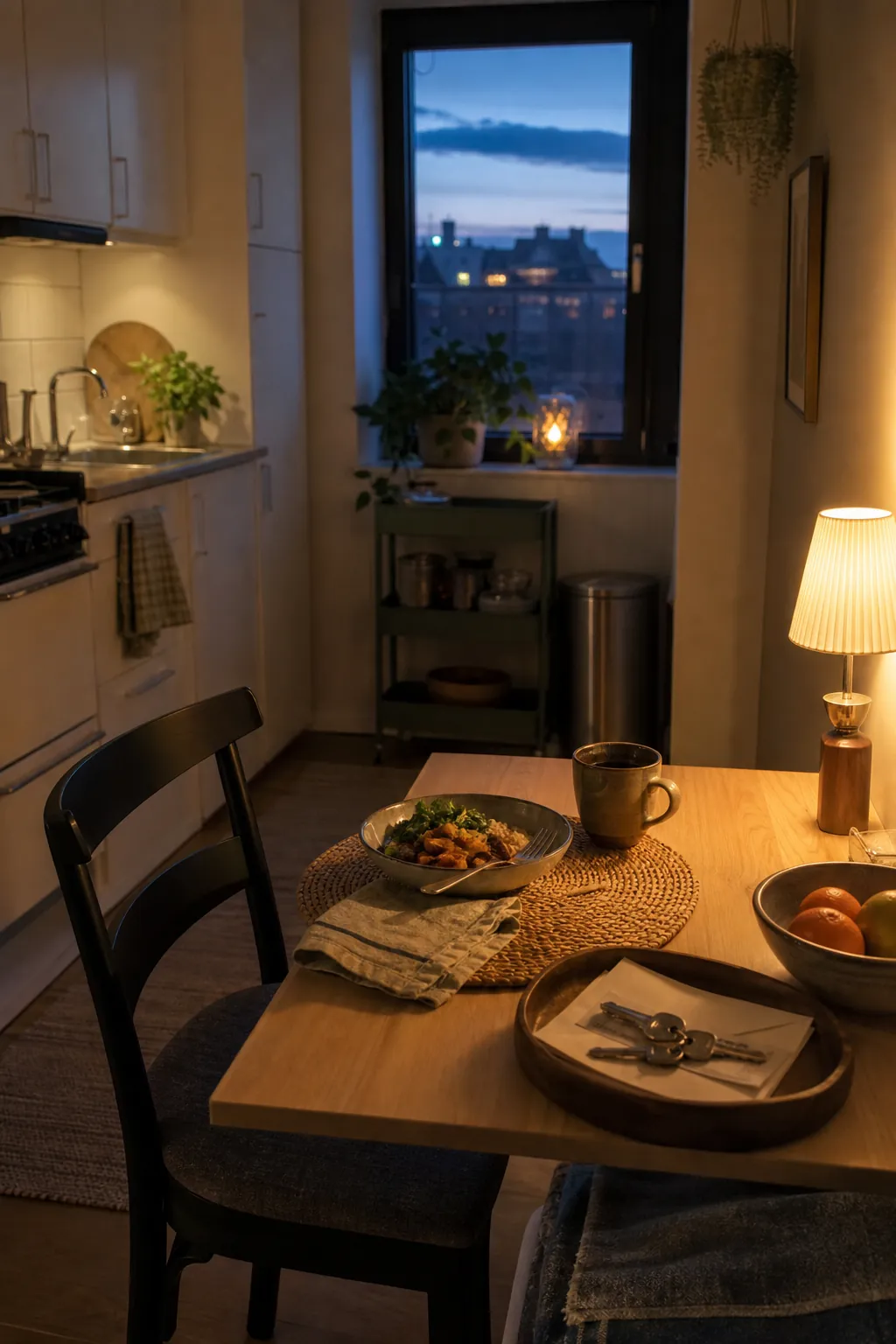
If you want the apartment to feel more relaxing after work, create a small evening sequence. Put the bag on its hook. Turn on the lamp. Start water for tea or dinner. Clear the tray. Fold the blanket. These are not aesthetic tricks. They are signals that the day has shifted.
What To Buy First If Your Budget Is Tight
If you can only make a few changes, use this order. It solves the biggest emotional problems first.
- Warm lamps and better bulbs. They change the mood immediately and work in every rental.
- A real entry drop zone. It reduces daily mess and makes coming home feel calmer.
- One large rug for the main zone. It defines the room and adds softness underfoot.
- Curtains or a better window treatment. They soften the rental shell and help with privacy, light, and noise.
- Framed personal art or photos. They make the room feel claimed without adding clutter.
- Closed storage for the problem category. Buy storage for the mess you actually have, not the fantasy version of your routine.
Skip the tiny decor haul at first. Small objects can be wonderful after the room has structure, but they rarely fix the feeling of an unfinished apartment on their own.
What Makes A Small Apartment Feel Less Like Home
Some choices seem harmless but quietly keep a small space feeling temporary. A rug that only sits under the coffee table can make the living area feel disconnected. Cool bulbs can make cozy furniture look clinical. Unframed posters can read like a dorm room even if the art itself is good. Too many throws and pillows can make a small sofa feel crowded instead of comfortable.
The same goes for buying storage before editing. If you store items you do not use, you have not solved the apartment. You have just hidden the decision. Keep what you use, what you love, and what supports the life you are actually living in the apartment now.
The Apartment Starts Feeling Real When It Starts Answering You
A small apartment does not need to look expensive to feel like a real home. It needs to answer your day. It needs a place for your keys, light that feels gentle at night, a soft zone where your body can land, personal things that are not apologizing for being there, and enough hidden storage that ordinary life does not stay scattered across every surface.
Make the first five minutes home easier. Make one zone feel finished. Put your real life where you can see it. Then repeat the small rituals until the apartment stops feeling like a unit you rent and starts feeling like a place that recognizes you.