
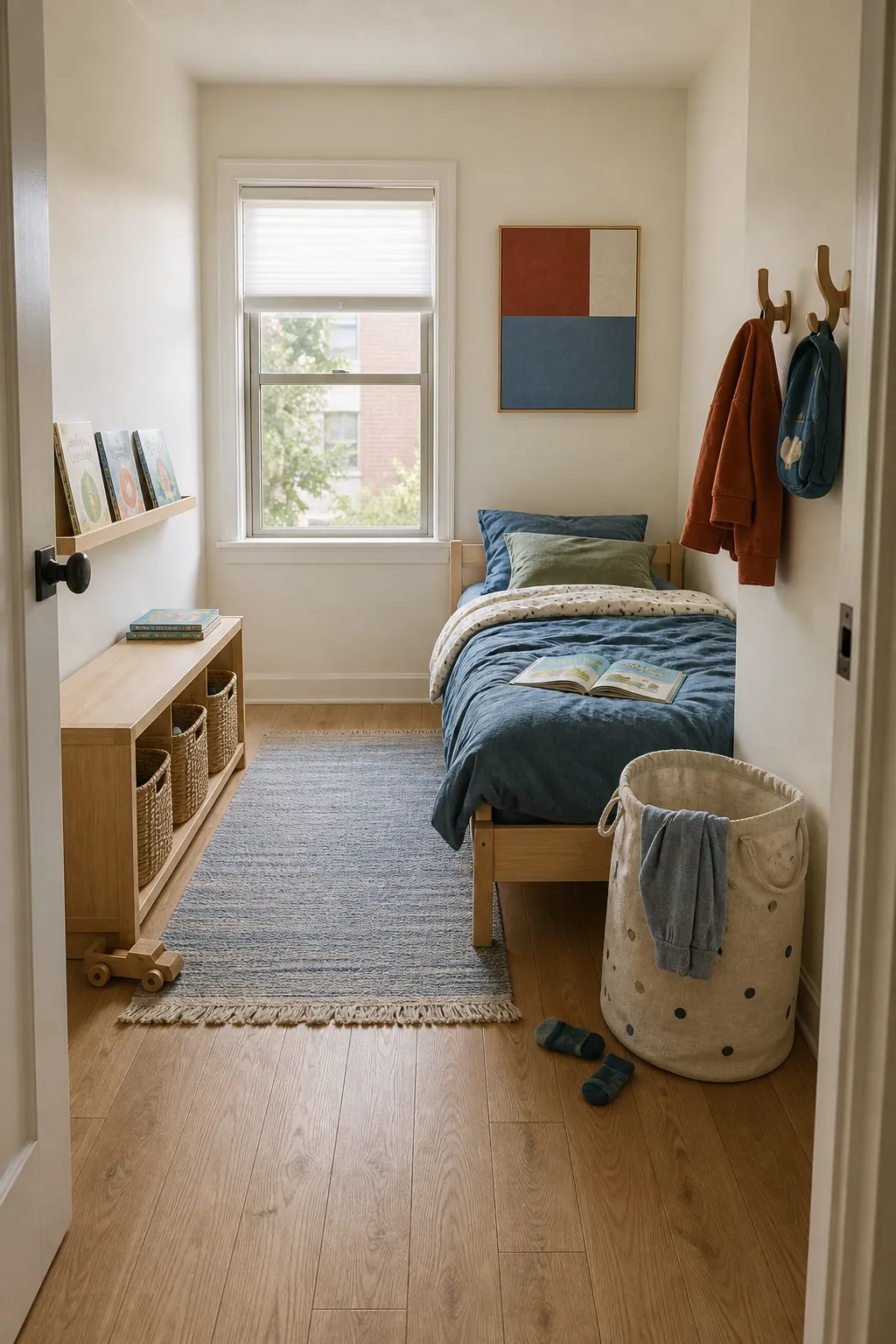
A small kids room becomes difficult to clean long before it looks truly dirty. The real problem is usually that every toy, shirt, book, and half-finished project has to be moved before anyone can vacuum, wipe a surface, or change the sheets. When cleanup requires dozens of tiny decisions, even a motivated child stalls—and an already-busy parent ends up doing the whole job.
The fix is not a prettier set of organizers. It is a room that can return to a usable baseline quickly. An easy clean kids room has fewer decisions, forgiving storage, clear floor space, and a routine short enough to repeat. The goal is not a room that stays photo-ready. The goal is a room that can recover from ordinary play in about ten minutes and then be properly cleaned without a forty-minute pickup first.
Start With a Room That Can Reset in 10 Minutes
Use a more useful standard than “clean”: make the room resettable. A reset means the walking path is clear, dirty clothes are contained, toys are off the floor, books are back in one place, and the bed is accessible. Dusting, vacuuming, and laundry are separate cleaning jobs. This distinction matters because children can help restore the room even when they are too young to clean it thoroughly.
Test the current setup with one question: Could a child put most things away without opening a lid, moving another object, matching a complex label, or asking where it belongs? Every “no” reveals friction. A lidded box wedged under other boxes may technically be storage, but it will behave like no storage at all during a rushed bedtime cleanup.
Reduce the Volume Before Buying More Storage
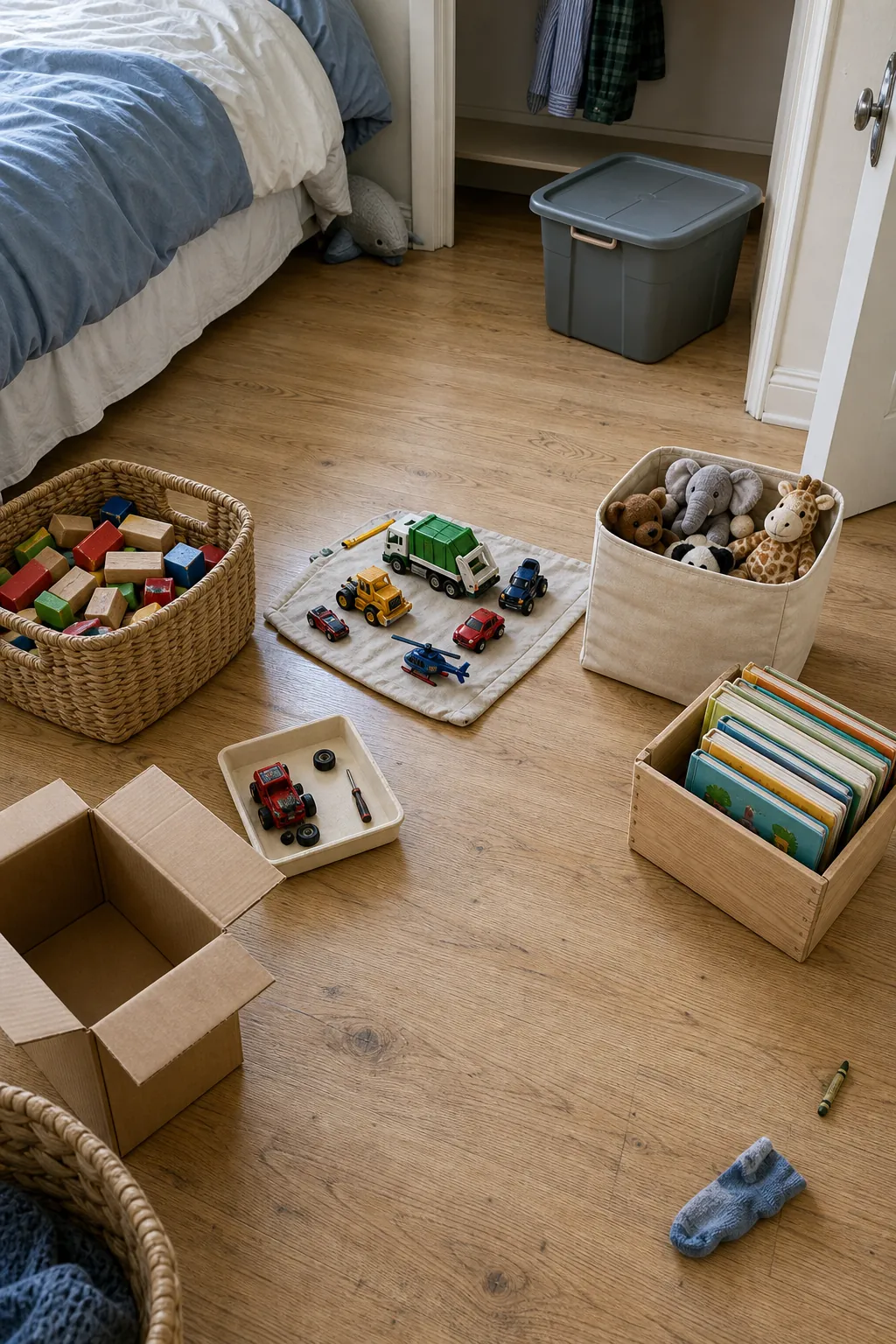
Parents often reach for more bins when the room is overflowing, but extra containers can preserve the real problem: too many active items for the available space. In parent discussions about impossible bedrooms, the repeated pattern is not a lack of effort. It is a toy inventory so large that a child cannot see the categories, finish a pickup, or fit pieces back into their containers.
Work in small passes rather than emptying the entire room into one overwhelming mountain. Start with obvious rubbish and broken pieces. Then remove outgrown toys, duplicate supplies, and anything that has not been chosen in months. Put uncertain items in a dated “pause box” outside the room. If nobody asks for them over the next few weeks, donating them becomes less emotional because the decision has already had a trial period.
- Keep: current favorites, open-ended toys, bedtime comfort items, and clothes that fit now.
- Rotate: valuable toys that are loved but do not need to be available every day.
- Repair or complete: sets missing a necessary piece, books with torn pages, and unfinished projects worth saving.
- Release: broken objects, outgrown gear, duplicates, and toys that create more sorting than play.
Do not use a surprise trash-bag purge as a threat. A child may be more willing to choose when there is a reversible holding step. The practical objective is simple: the items kept in the room must fit the room on an ordinary messy day, not only after an adult packs them perfectly.
Give Every Item a Low-Friction Home
Small kids room organization works when the storage categories match the way a child thinks. Adults may enjoy separating animals by species or craft supplies by medium. A young child is more likely to succeed with broad homes: blocks, vehicles, pretend play, soft toys, books, art, and dress-up. Use the fewest categories that still prevent frustrating tangles and lost parts.
Place the most-used toy storage between the child’s knee and shoulder height. Open-front bins, easy-glide drawers, sturdy baskets, and low shelves remove steps from cleanup. Picture labels can help pre-readers, but the picture should describe a real category rather than turn the shelf into a matching game. If a child must rotate a box, read tiny print, or stack containers in a precise order, the system is designed for an adult.
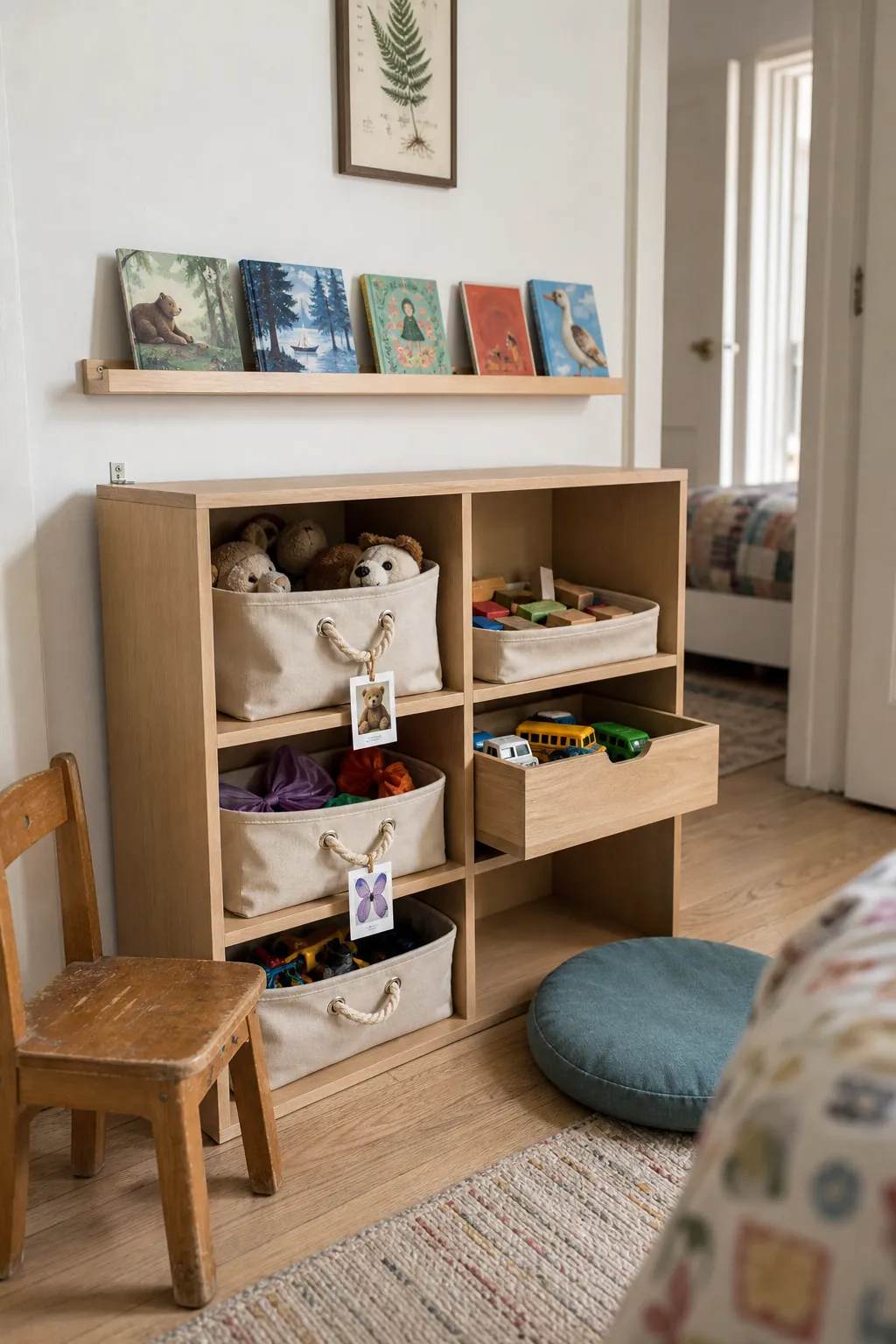
Give toys with many tiny parts one controlled home. Building bricks, doll accessories, puzzles, and craft pieces can stay in a shallow tray, zipper pouch, or latching case that comes out as one activity. This is different from putting lids on every basket. Broad everyday categories should be fast; piece-heavy activities should be contained.
Leave Storage Deliberately Underfilled
A storage bin that holds everything only when tracks are nested, dolls are arranged, and plush toys are compressed is already over capacity. Children put things away loosely. Leave roughly a quarter of each everyday container empty so imperfect cleanup still works. That breathing room is what turns storage bins from display props into a dependable tool.
Use the rim as the limit. If toys rise above it or prevent the drawer from closing easily, rotate or remove something instead of adding another container. One-in, one-out can help with new gifts, but it does not have to be punitive. Let the child choose which item moves to the rotation box and which stays available.
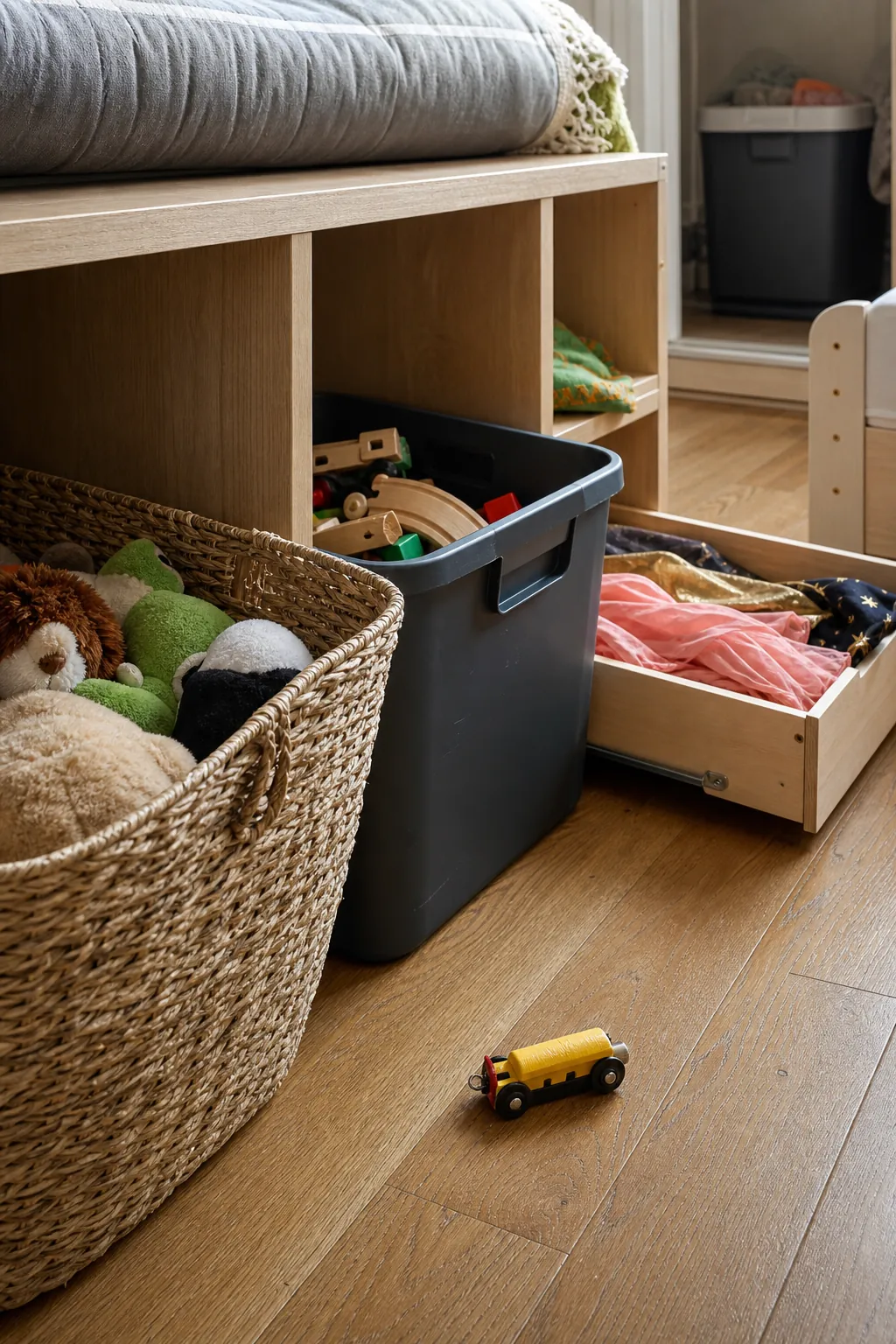
Rotation storage belongs outside the active play zone whenever possible: a high closet shelf secured from climbing, a labeled tote in another room, or a protected storage area. It should not become a second daily toy closet. Swap a small selection every month or when interest drops, and trade rather than simply adding.
Make the Floor and Surfaces Easy to Reach
A tidy kids room can still be hard to clean if furniture blocks the vacuum, every tabletop is covered, or textiles trap crumbs and dust. Design the room so the actual cleaning tools can reach it. Keep a clear route from the door to the bed and storage. Choose one washable rug rather than several overlapping mats, and avoid using the floor as the permanent home for baskets.
Limit each surface to a specific job. A bedside table might hold a lamp, water, and the current book—nothing else. A dresser top might hold one tray for hair accessories. The more open surface remains, the faster it can be wiped. Use closed storage for visually busy necessities and open storage for the few categories children put away themselves.
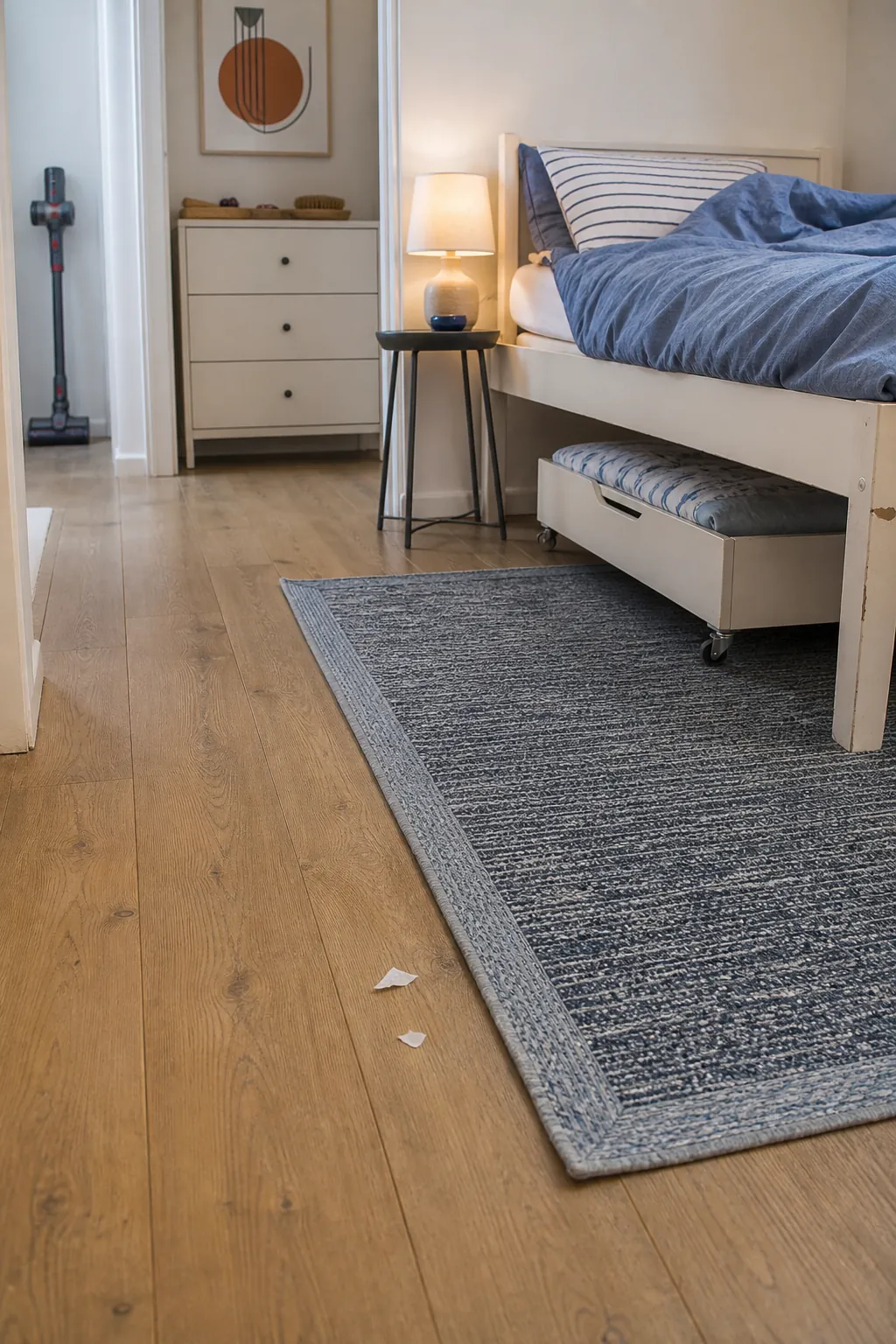
Under-bed storage is useful only when it has one defined purpose and pulls out without a struggle. Reserve it for spare bedding, off-season clothes, or a small rotation—not a mixed layer of forgotten toys. A bed with enough clearance for a vacuum or a fitted, easy-glide drawer is easier to maintain than a narrow dust-catching gap.
Catch Clutter Where It Lands
Notice what repeatedly misses its intended home. Dirty clothes beside the bed mean the hamper is too far away, too small, or hard to open. Books piled on the floor may need a forward-facing ledge near the reading spot. Costumes draped over furniture may need two sturdy low hooks. The mess is data: it shows where the room’s path conflicts with the child’s actual habits.
Create a compact landing zone near the doorway or bed with a hamper, two or three hooks, a book return basket, and one tray for pocket-sized treasures. Do not build a new category for every stray object. Each catch point should replace a recurring floor pile, not invite more belongings into the room.
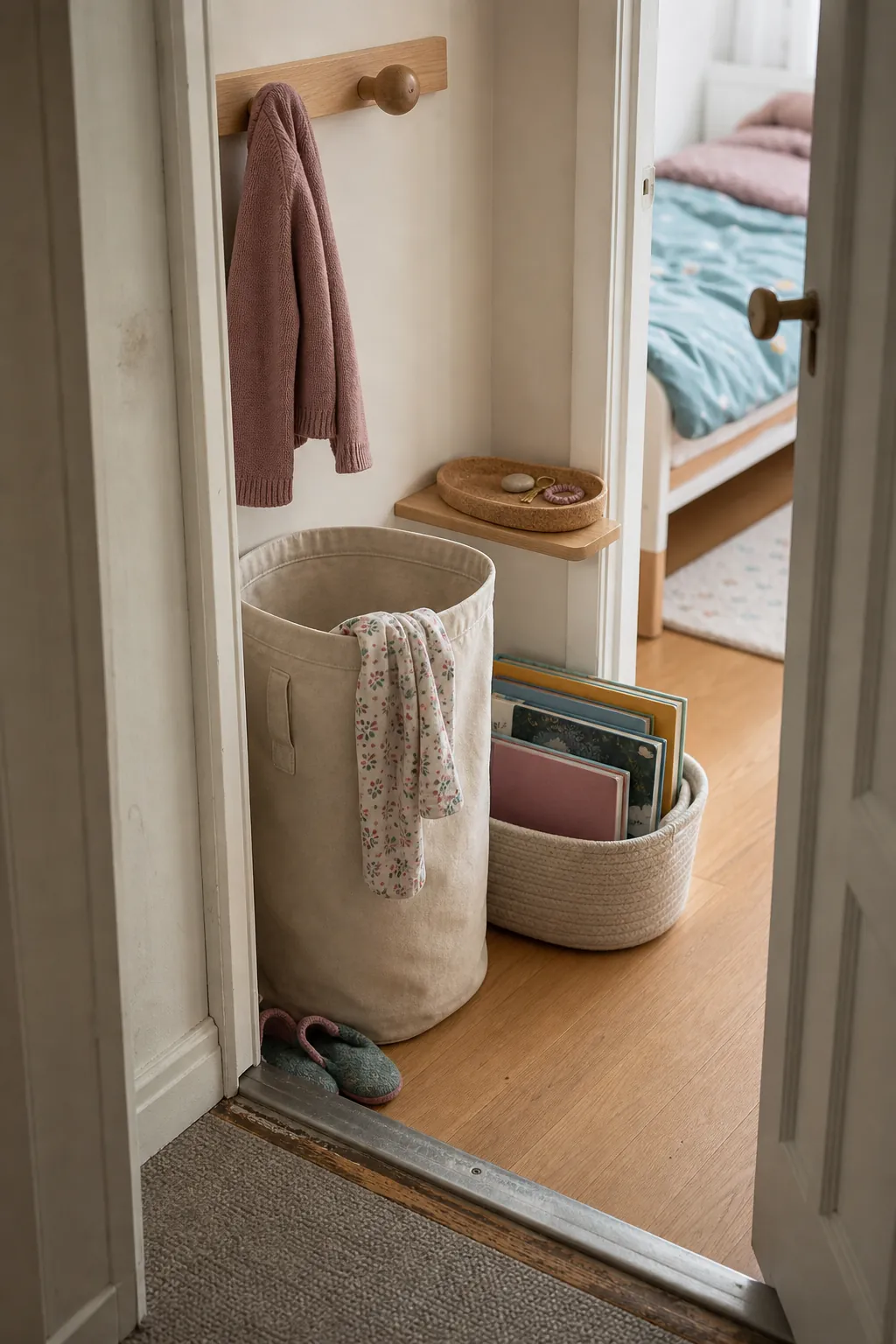
Keep the doorway and night path free of baskets, stools, and loose toys. This gives the room a visible baseline and prevents cleanup from becoming a safety issue in the dark. If an object has no sensible home after several resets, decide whether it belongs somewhere else in the house.
Use a Two-Speed Cleaning Routine
Trying to deep-clean the room every day creates burnout. Separate the routine into a brief daily reset and a real weekly clean. The reset protects the system; the weekly clean removes dust and handles maintenance.
The nightly reset
- Put dirty clothes in the hamper.
- Return books to the ledge or basket.
- Drop toys into their broad homes.
- Move cups, dishes, and rubbish out.
- Clear the walking path and pull the bedding straight.
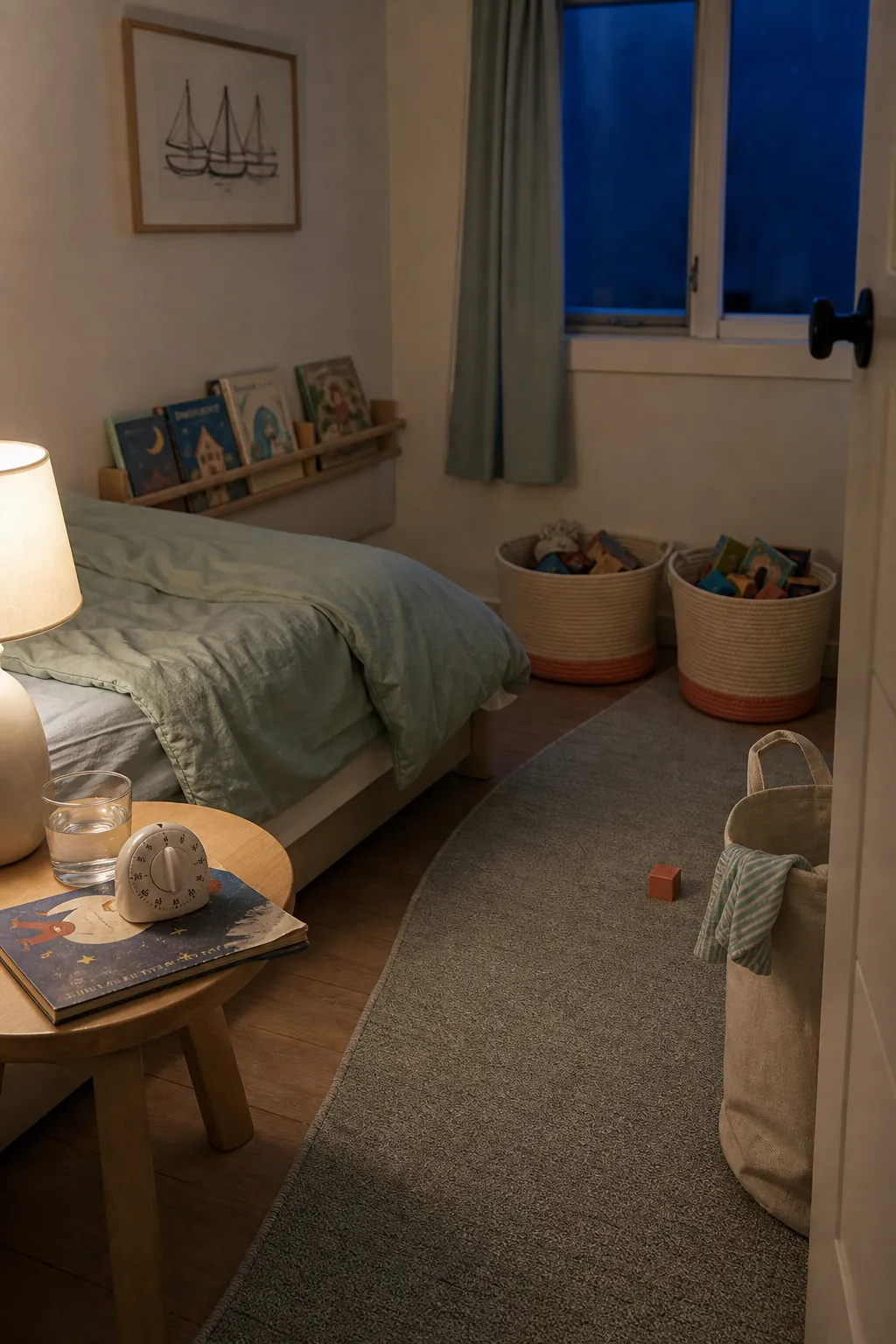
Attach this reset to something that already happens, such as bath time or the start of the bedtime routine. Use one song or a ten-minute timer. Do not add surprise jobs after the child completes the visible list; a finish line only motivates when it stays in the same place.
The weekly clean
- Change bedding and collect laundry.
- Dust from high surfaces down to low ones.
- Wipe reachable furniture and frequently touched handles.
- Vacuum or mop the open floor, including under movable storage.
- Return stray pieces and move one ignored item to the rotation box.
Because the room was reset first, the weekly clean can begin with cleaning rather than sorting. Keep supplies out of children’s reach and follow product directions. A small caddy stored elsewhere can hold the adult cleaning supplies so setup does not become another barrier.
Teach One Visible Job at a Time
“Clean your room” is a project, not a single instruction. Give one concrete action: put every book in this basket, find all dirty clothes, or park the toy cars in this bin. When that is done, name the next job. The American Academy of Pediatrics includes putting toys away, placing dirty clothes in a hamper, and neatening bookshelves among age-appropriate responsibilities for many children ages five to seven, while younger children still benefit from working beside an adult.
Use the same short order each evening so the child learns the sequence. Picture cues can show the five reset steps, but keep the chart simple enough to scan. The long-term skill is not perfect folding or color-coded sorting. It is noticing what needs to happen, beginning without a fight, and completing a manageable reset.
Do a Safety Check Before Calling the Room Finished
Kid-accessible storage should not create a climbing hazard. The U.S. Consumer Product Safety Commission advises anchoring furniture such as dressers and bookcases to the wall, placing heavier items lower, and avoiding tempting objects high on furniture. Secure tall and low units according to their manufacturer’s instructions; low does not automatically mean tip-proof.
- Anchor dressers, bookcases, and other climbable furniture.
- Keep heavy bins and frequently used items on lower shelves.
- Check cords, blind loops, damaged plugs, and overloaded outlets.
- Do not place toys where a child must climb to retrieve them.
- Keep the doorway and path to the bed unobstructed.
Safety is part of easy maintenance. When the child can reach daily belongings without climbing and the adult can see the floor and exits, both cleanup and supervision become simpler.
Try This 30-Minute Room Reset Today
- Minutes 0–5: remove rubbish, dishes, and dirty laundry.
- Minutes 5–12: gather obvious donations, broken toys, and outgrown items into separate boxes.
- Minutes 12–20: sort what remains into five to seven broad categories.
- Minutes 20–25: place the most-used categories in open, reachable storage and move overflow into rotation.
- Minutes 25–30: clear the walking path, wipe one surface, and write the five-step nightly reset.
Stop when the timer ends, even if the room is not transformed. Repeat another short pass later instead of creating an all-day project. The room becomes easier to clean when every improvement removes a decision from tomorrow’s reset. Fewer active toys, broad homes, spare capacity, reachable surfaces, and one repeatable routine will do more than a wall of perfect labels ever could.