
Moving into a studio apartment can feel overwhelming when faced with a single room that needs to serve as bedroom, living room, kitchen, and office all at once. The average studio apartment spans just 500-600 square feet, which means every design choice matters when creating a space that feels like home rather than a cramped box.
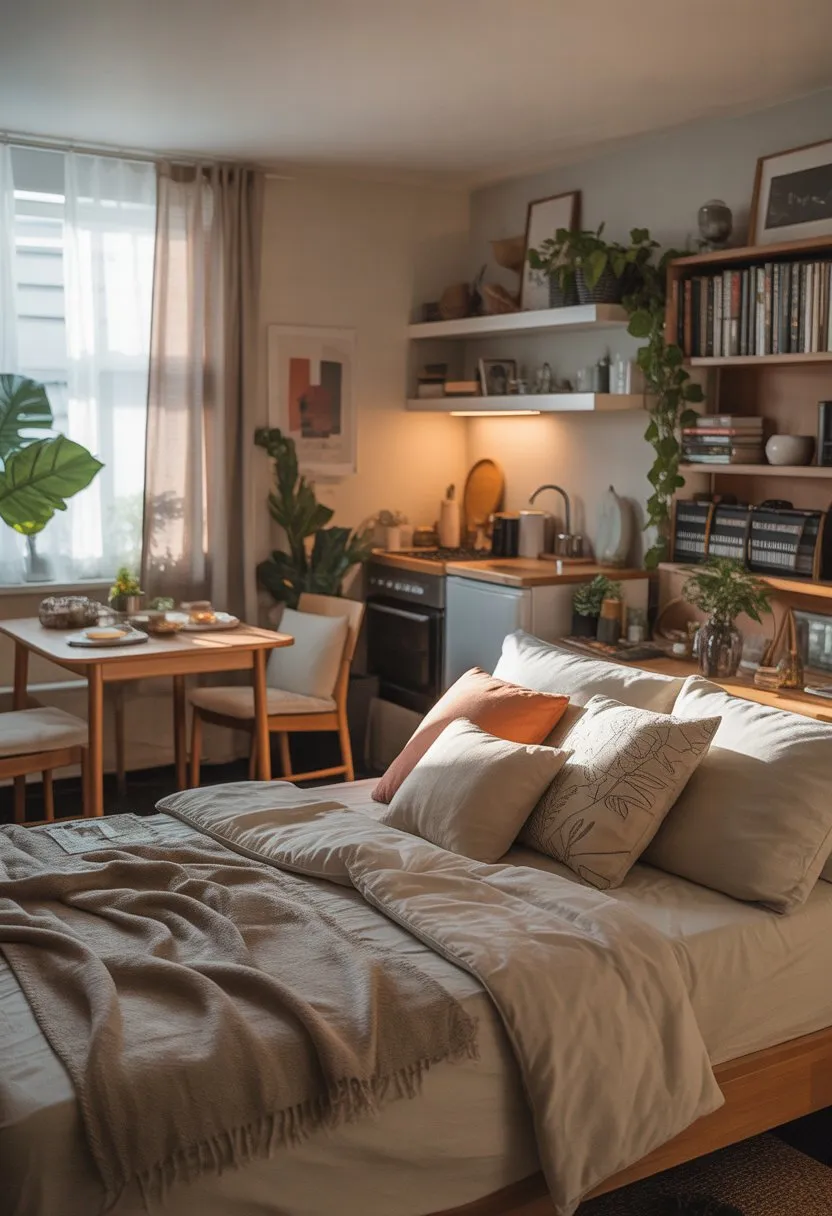
The key to transforming a studio apartment into a cozy home lies in smart furniture choices, creative storage solutions, and design tricks that maximize both space and comfort. Simple changes like using mirrors to reflect light, choosing multi-functional furniture, and creating separate zones can make even the smallest studio feel spacious and welcoming.
With the right approach, anyone can turn their compact living space into a functional and stylish home. From strategic lighting placement to adding personal touches with plants and textiles, these proven methods help studio dwellers create a space they actually want to spend time in.
Key Takeaways
- Multi-functional furniture and smart storage solutions maximize every square foot of limited space
- Strategic use of lighting, mirrors, and neutral colors creates the illusion of a larger, more open area
- Personal touches like plants, textiles, and meaningful decor transform a generic space into a true home
Maximize Functionality with Multi-Functional Furniture
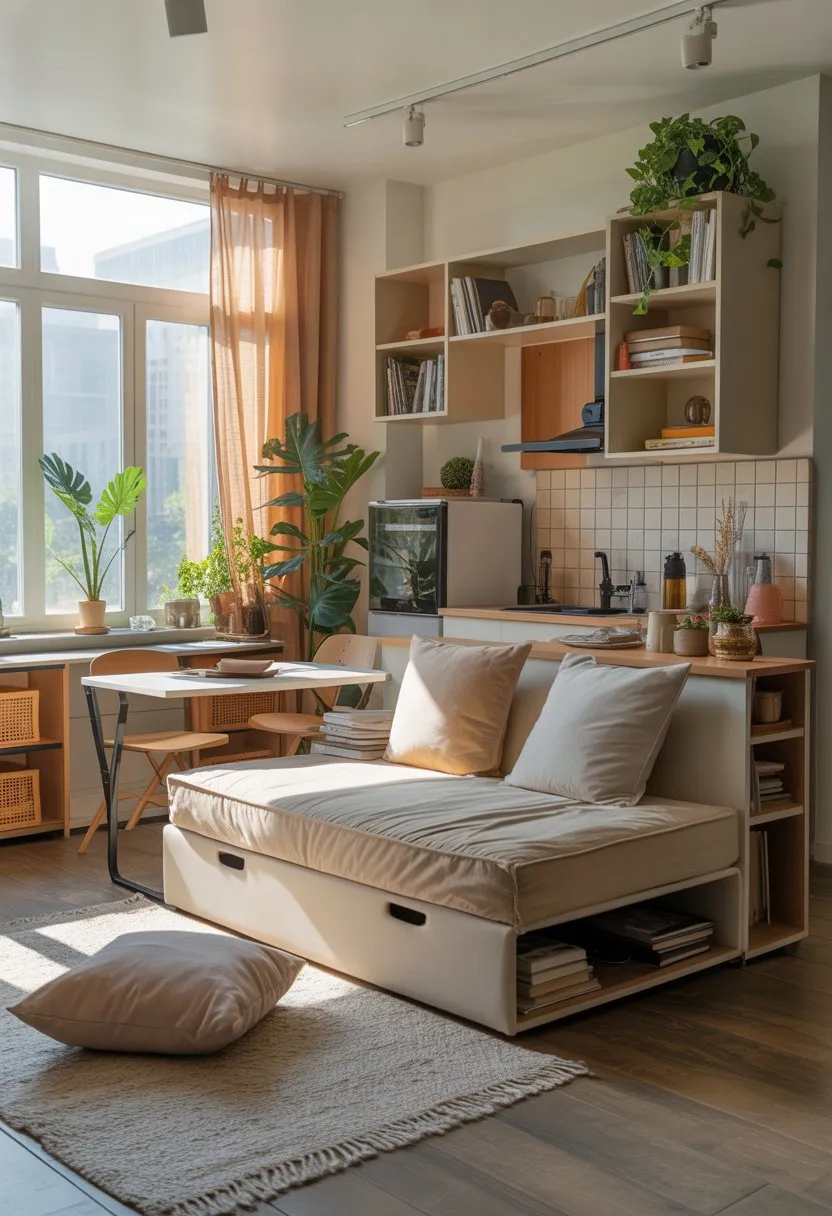
Smart furniture choices can transform a cramped studio into a comfortable living space. Murphy beds create sleeping areas that disappear during the day, while storage ottomans hide clutter and provide extra seating.
Choosing a Murphy Bed for Space-Saving Comfort
Murphy beds offer the perfect solution for studio apartment design challenges. These wall-mounted beds fold up completely during the day. This creates valuable floor space for other activities.
Modern murphy beds come with different features. Some include built-in desks or shelving units. Others have storage compartments for bedding and personal items.
Key benefits of murphy beds:
- Free up to 50 square feet of floor space
- Available in twin, full, and queen sizes
- Include safety mechanisms to prevent accidents
- Can support weight up to 3,000 pounds
Installation requires a sturdy wall and proper mounting hardware. Most murphy beds need 8-9 feet of ceiling height to operate properly. Professional installation ensures safety and smooth operation.
Using Storage Ottomans and Hidden Storage Solutions
Storage ottomans serve multiple purposes in small spaces. They provide comfortable seating during the day. At night, they store blankets, books, or seasonal items inside.
These pieces work well as coffee tables too. Many storage ottomans include removable trays on top. This creates a stable surface for drinks and snacks.
Popular storage ottoman styles:
- Round ottomans – Best for small spaces and easy movement
- Square ottomans – More storage space and stable surfaces
- Bench-style ottomans – Seat multiple people along walls
Hidden storage solutions extend beyond ottomans. Beds with built-in drawers store clothing and linens. Hollow nightstands hide electronics and personal items.
Selecting Fold-Down Desks for Flexible Workspaces
Fold-down desks create instant workspaces when needed. They mount directly to walls and fold flat when not in use. This saves precious floor space in studios.
Wall-mounted desks work best near windows for natural light. They need at least 24 inches of width for comfortable use. Some models include built-in storage shelves above the work surface.
Essential features to consider:
- Weight capacity – Most support 50-75 pounds
- Depth when open – 16-20 inches provides adequate workspace
- Height adjustment – Fixed at 29-30 inches for standard use
- Cable management – Built-in holes for charging cords
Multi-functional furniture maximizes every square foot in studio apartments. These pieces adapt to different needs throughout the day. They keep living spaces organized and clutter-free.
Define Separate Living Zones
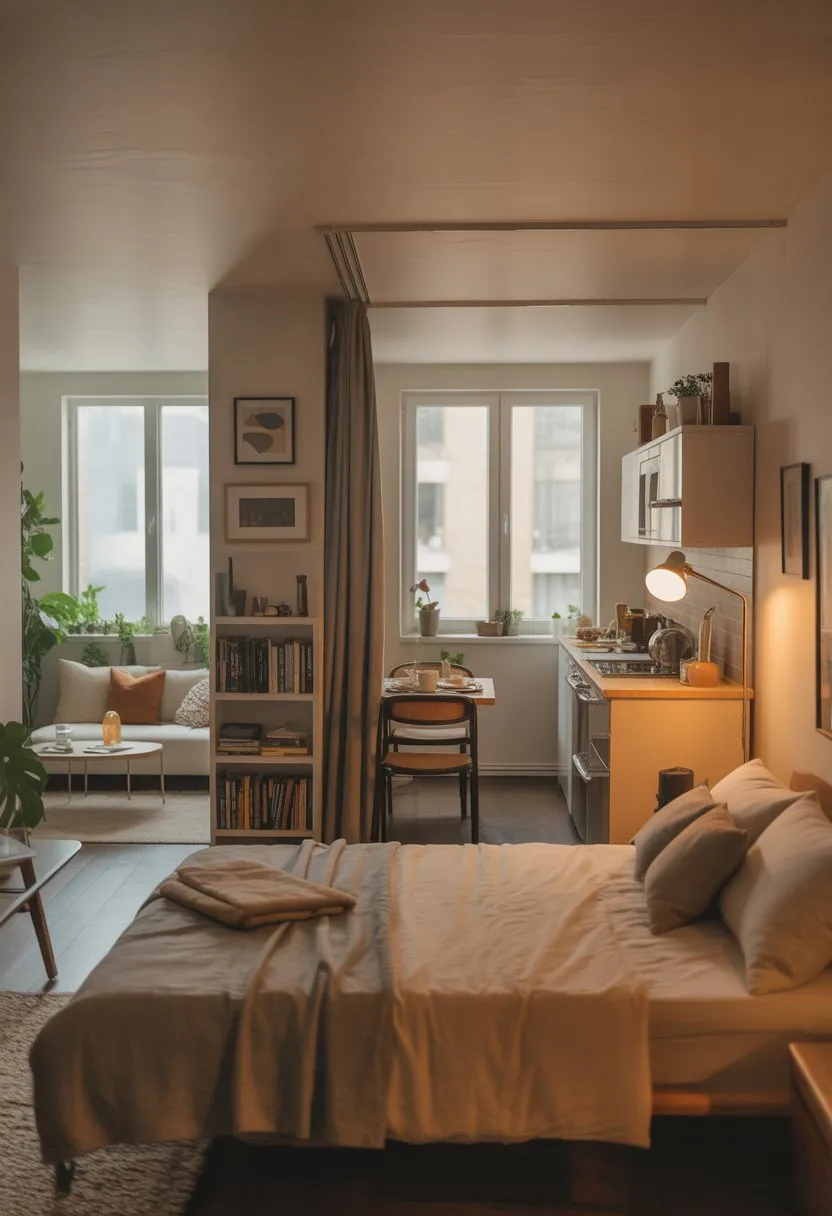
Creating distinct areas in a studio apartment helps maximize functionality and makes the space feel more organized. Strategic furniture placement, room dividers, and thoughtful use of rugs and lighting can transform one large room into multiple defined zones.
Creating Visual Dividers with Furniture
Strategic furniture placement serves as the foundation for dividing studio apartments into functional areas. A bookshelf positioned perpendicular to the wall creates an instant room divider while providing valuable storage space.
Back-to-back furniture arrangements work exceptionally well in small spaces. Position a sofa with its back facing the bedroom area to naturally separate sleeping and living zones. This technique maintains openness while creating clear boundaries.
Multi-functional pieces maximize both division and utility. A tall bookshelf can separate the living area from a home office while displaying books and decor. Console tables placed behind sofas create defined walkways and additional surface space.
Kitchen islands or bar carts help separate cooking areas from living spaces. These moveable pieces can be repositioned as needed while providing extra counter space and storage.
The key is choosing furniture that serves multiple purposes. A desk positioned to face away from the bed creates a dedicated work zone. Storage ottomans can define seating areas while hiding clutter.
Utilizing Room Dividers and Curtains
Room dividers offer flexible solutions for studio apartments without permanent modifications. Folding screens provide instant privacy and can be moved or stored when not needed. They come in various materials from wood to fabric panels.
Ceiling-mounted curtains create soft divisions between areas. Install curtain tracks on the ceiling to separate sleeping areas from living spaces. Choose heavier fabrics for better sound dampening and privacy.
Sliding panels mounted on ceiling tracks offer a more permanent solution. Glass panels maintain light flow while creating separation. Wooden or fabric panels provide complete privacy when closed.
Hanging beads or macrame create decorative divisions in studio apartments. These options add texture and visual interest while maintaining an open feel. They work best for lighter separations like defining dining areas.
The advantage of these solutions is their flexibility. Curtains can be drawn back during the day to open up the space, then closed at night for privacy.
Strategic Placement of Rugs and Lighting
Area rugs create powerful visual boundaries without taking up vertical space. Place different rugs under distinct furniture groupings to define separate zones. A bold patterned rug under the bed and a neutral one in the living area creates clear divisions.
Rug sizing matters for effective zone definition. The rug should extend beyond furniture edges to properly anchor each area. In small spaces, choose rugs that complement rather than compete with each other.
Layered lighting enhances zone definition throughout studio apartments. Floor lamps positioned near seating areas create cozy reading nooks. Pendant lights hung over dining tables establish dedicated eating spaces.
Table and desk lamps provide task lighting while defining work areas. String lights can outline sleeping areas or create ambient boundaries between zones.
Dimmer switches allow residents to adjust lighting levels for different activities. Bright lighting for work areas and softer lighting for relaxation zones help establish the purpose of each space.
Different lighting temperatures also help define areas. Warmer lights for living spaces and cooler lights for work areas signal different functions within the same room.
Let Natural Light In
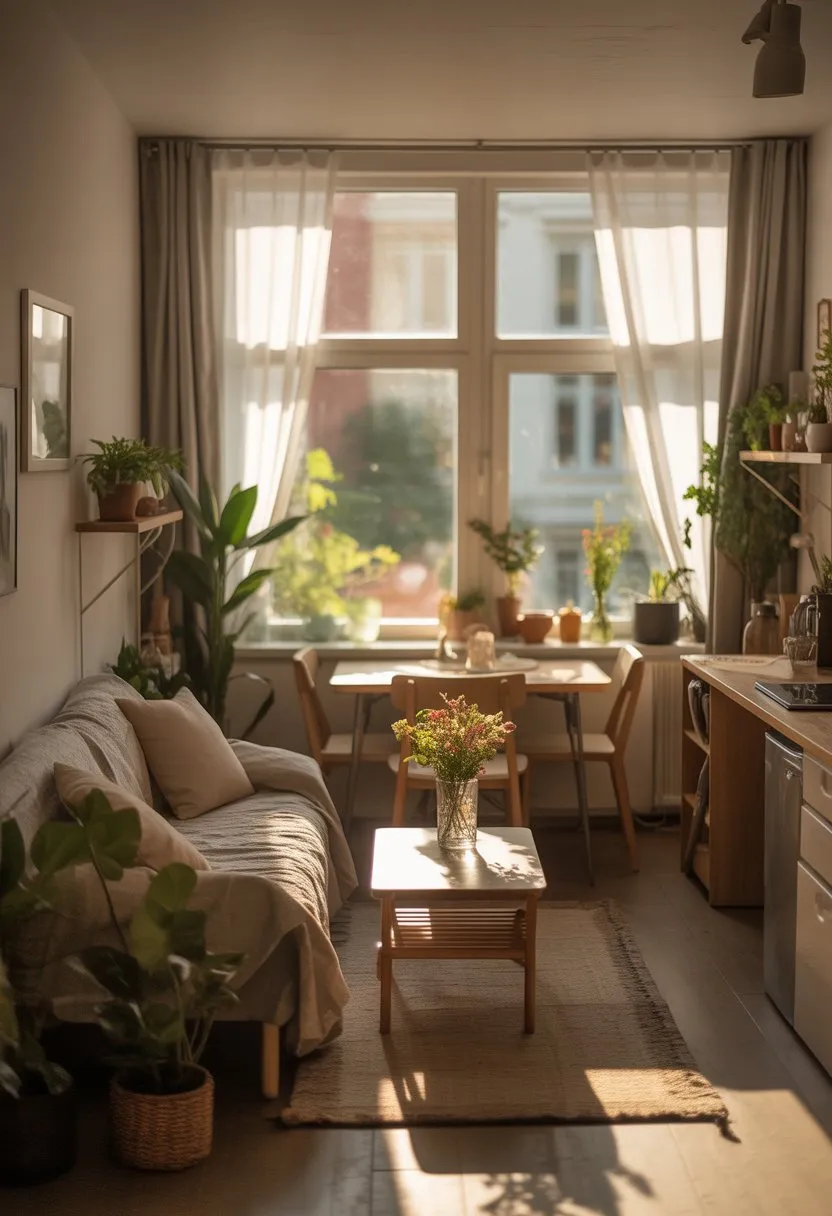
Maximizing natural light transforms a studio apartment from cramped to cozy. Light window treatments and clear window areas help small spaces feel bigger and brighter.
Choosing Sheer Window Treatments
Sheer curtains offer the perfect balance between privacy and brightness in a studio apartment. These lightweight fabrics let natural light filter through while keeping neighbors from seeing inside.
White or cream sheers work best with neutral tones throughout the space. They reflect more light than darker colors and create an airy feeling.
Installation tips for maximum light:
- Hang curtains close to the ceiling
- Extend rods 6-8 inches beyond window frame
- Choose panels that just touch the floor
Layering works well for flexibility. Residents can pair sheers with heavier curtains that pull back during the day. This setup allows full light exposure when needed and privacy at night.
Avoid thick or dark window treatments that block precious sunlight. Heavy drapes make studio apartments feel smaller and darker than they already are.
Keeping Windows Clear of Obstructions
Furniture placement makes a huge difference in how much natural light enters a studio apartment. Large items near windows block precious sunlight from reaching the living space.
Move tall bookshelves, plants, and storage units away from window areas. Even small decorations on windowsills can reduce light flow into the room.
Common window blockers to relocate:
- Floor lamps
- Large plants or trees
- Storage boxes
- Workout equipment
- Drying racks
The area within three feet of windows should stay mostly empty. This zone lets light spread throughout the studio apartment without barriers.
Clean windows monthly to remove dust and grime that blocks natural light. Dirty glass can reduce brightness by up to 25 percent, making neutral tones look dull and spaces feel smaller.
Amplify Space with Mirrors and Reflective Surfaces
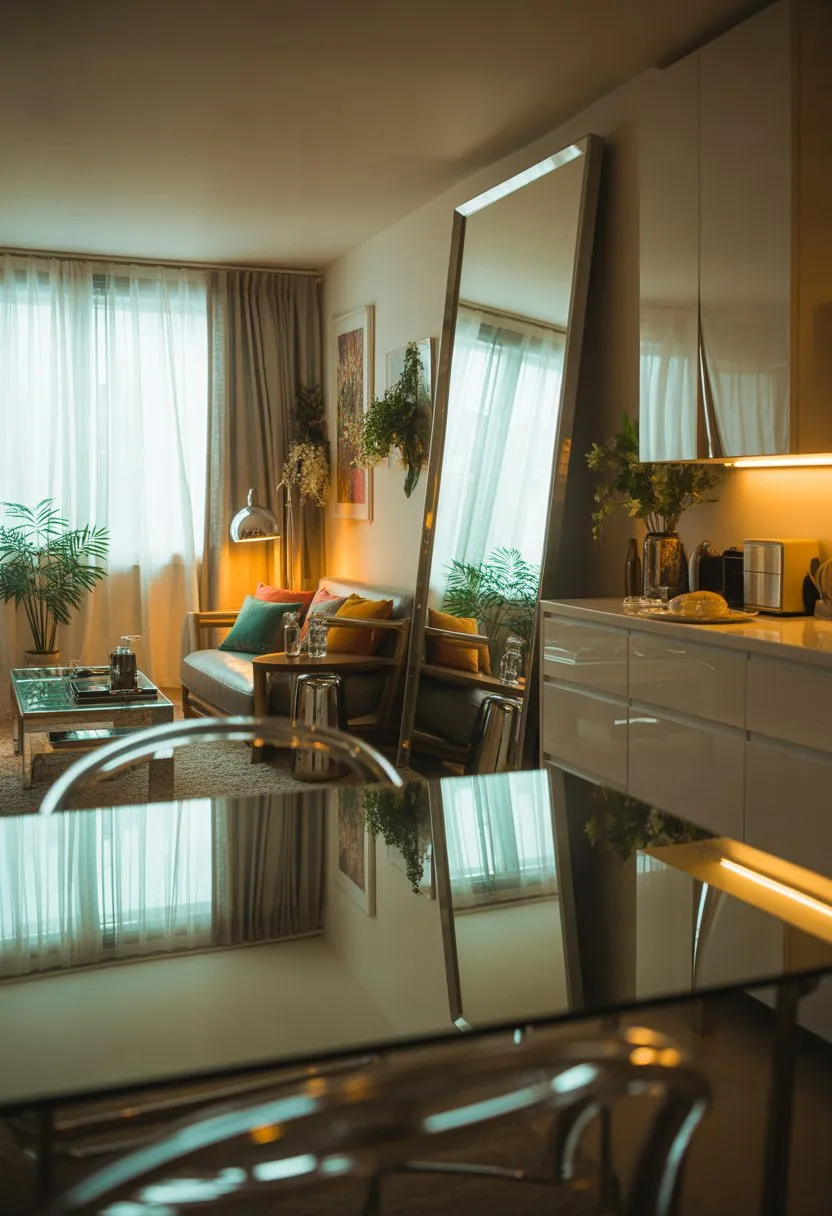
Mirrors create the illusion of more space by bouncing light around and adding visual depth to cramped quarters. Smart placement and mirrored furniture can transform a small studio into a bright, open-feeling home.
Strategic Mirror Placement for Depth
Placing mirrors across from windows doubles natural light and makes rooms feel twice as large. The reflected light brightens dark corners and creates an airy atmosphere in cramped spaces.
Leaning mirrors work perfectly in studio apartments. A tall mirror propped against a wall adds height without taking up floor space. Position it where it can reflect the most interesting part of the room.
Behind furniture placement creates surprising depth. A large mirror behind a sofa or dining table makes the room feel much bigger. It reflects decorative items and creates the illusion of extended space.
Consider these effective spots for mirrors:
- Opposite windows to maximize natural light
- At the end of narrow areas to widen them visually
- Near lamps to amplify evening lighting
- On walls perpendicular to windows for side lighting
Wall-mounted mirrors should be eye level or slightly higher. This draws the gaze upward and makes ceilings appear taller. Choose frameless options for modern spaces or decorative frames to add personality.
Selecting Mirrored Furniture Pieces
Mirrored furniture reflects light while providing storage and function. These pieces feel less heavy than solid furniture, making studios appear less cluttered.
Mirrored nightstands work well in bedroom areas. They provide bedside storage without the visual weight of wooden pieces. The reflective surface bounces light from bedside lamps around the room.
Console tables with mirrors serve double duty in entryways. They offer surface space for keys and mail while reflecting light from nearby windows or fixtures.
Popular mirrored furniture options include:
- Coffee tables that reflect ceiling lights
- Wardrobes that don’t overwhelm small bedrooms
- Side tables that brighten dark corners
- Vanities that maximize bathroom lighting
Mirrored cabinet doors on existing furniture create instant reflection without buying new pieces. Adhesive mirror tiles can transform plain surfaces into light-bouncing focal points.
Choose pieces with beveled edges for added elegance. These create subtle light patterns that add interest without being overwhelming in small spaces.
Embrace Minimalism for an Open Feel
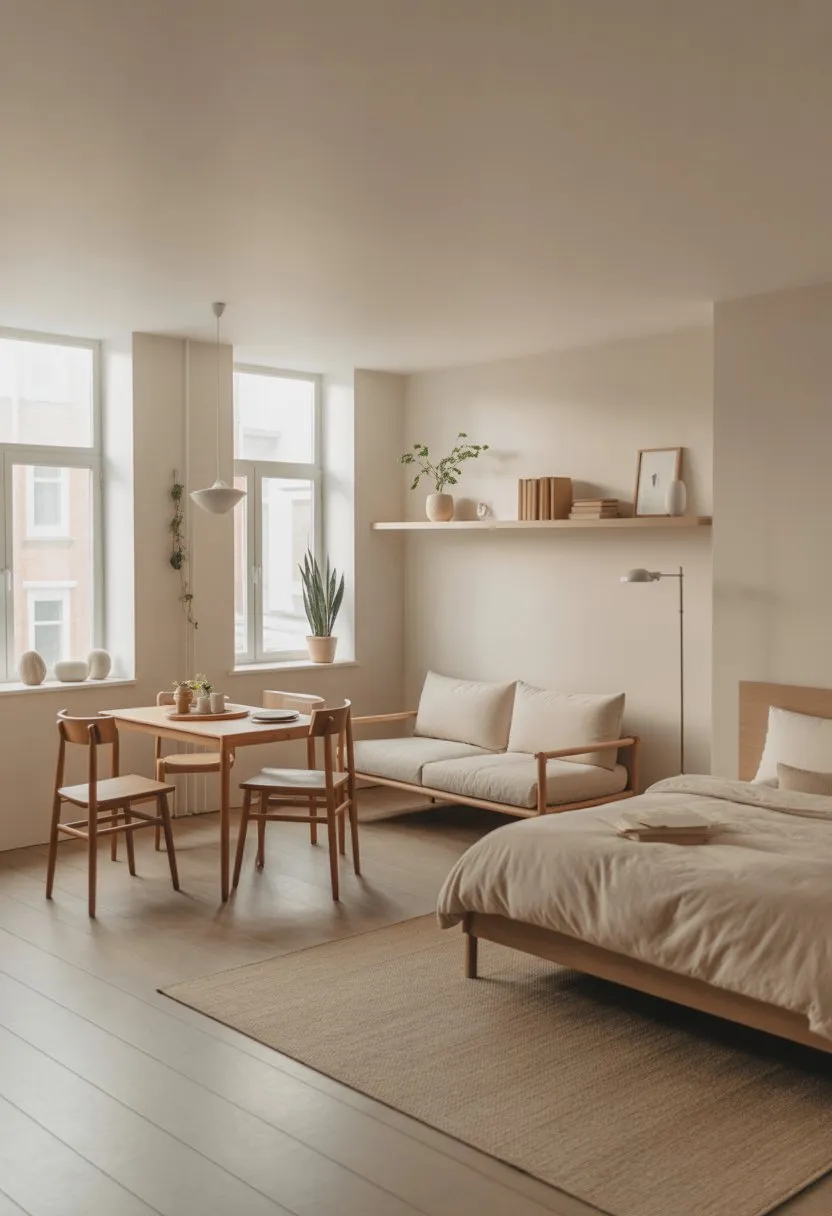
Minimalism transforms small spaces by removing visual clutter and focusing on essential items that serve multiple purposes. This approach creates breathing room and makes studio apartments feel larger than their actual square footage.
Reducing Clutter and Visual Noise
Visual clutter makes small spaces feel cramped and chaotic. When surfaces are covered with items, the eye has nowhere to rest.
Studio dwellers should keep countertops, tables, and floors mostly clear. This simple change instantly opens up the space.
Smart storage solutions help hide necessary items:
- Under-bed storage boxes for seasonal clothes
- Wall-mounted shelves instead of floor furniture
- Built-in cabinets that blend into walls
- Multi-functional furniture with hidden compartments
Plants can add life without creating clutter when chosen carefully. Residents should pick one or two larger plants instead of many small ones.
The key is having a place for everything. When items have designated homes, they stay off visible surfaces.
Adopting a ‘Less Is More’ Approach
Quality matters more than quantity in small spaces. Three well-chosen pieces create more impact than ten random items.
Studio residents should focus on furniture that serves multiple purposes. A storage ottoman works as seating, a footrest, and storage space.
Essential minimalist principles include:
- Choosing neutral colors that flow together
- Selecting furniture with clean, simple lines
- Keeping decorative items to a maximum of three per area
- Investing in fewer, higher-quality pieces
Each item should earn its place by being beautiful, functional, or both. This approach prevents accumulation of unnecessary objects.
Natural light becomes more noticeable when spaces are uncluttered. Windows stay unblocked, and light bounces off clean surfaces to brighten the entire apartment.
Use a Cohesive Color Palette and Neutral Tones
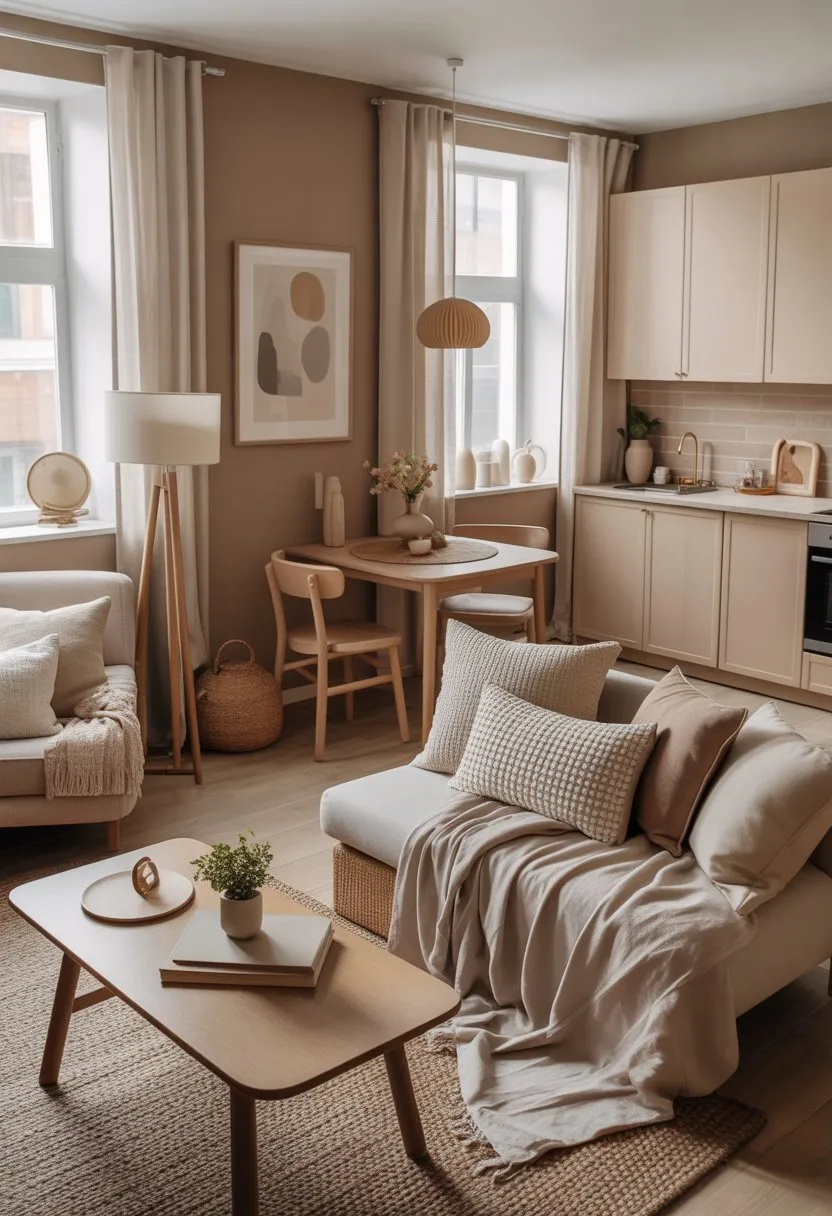
A consistent color scheme makes a studio apartment feel more spacious and organized. Light neutrals create visual flow while strategic pops of color add personality without overwhelming the small space.
Applying Light Colors to Walls and Furniture
Light colors make studio apartments feel bigger and brighter. White, cream, and soft beige walls reflect natural light and create an airy atmosphere.
Best neutral paint colors for studios:
- Warm white
- Light gray
- Soft cream
- Pale taupe
Residents should choose furniture in similar neutral tones. A beige sofa paired with white walls creates seamless flow. Light wood furniture adds warmth without making the space feel heavy.
Mixing different shades of the same neutral prevents boredom. Someone might combine ivory curtains with cream walls and off-white bedding. This layered approach adds depth while keeping things cohesive.
Glossy or semi-gloss paint finishes help reflect more light than flat paint. They make walls appear brighter and the room feel more open.
Incorporating Pops of Color with Accessories
Small colorful accessories bring life to neutral studio apartment design without overwhelming the space. Throw pillows, artwork, and plants add personality while staying balanced.
Easy ways to add color:
- Colorful throw pillows (2-3 maximum)
- One statement piece of art
- Green plants in decorative pots
- A bright throw blanket
- Colorful books on shelves
The key is choosing one or two accent colors and repeating them throughout the space. Blue pillows might match a blue vase and artwork frame. This creates unity in studio apartment decor.
Residents can change accessories seasonally to refresh their space. Orange accents work for fall while blues feel fresh in summer. This flexibility keeps neutral bases from feeling stale.
Bold accessories stand out more against neutral backgrounds. A bright yellow chair becomes a focal point in an all-white room.
Add Personality with Textiles and Personal Decor
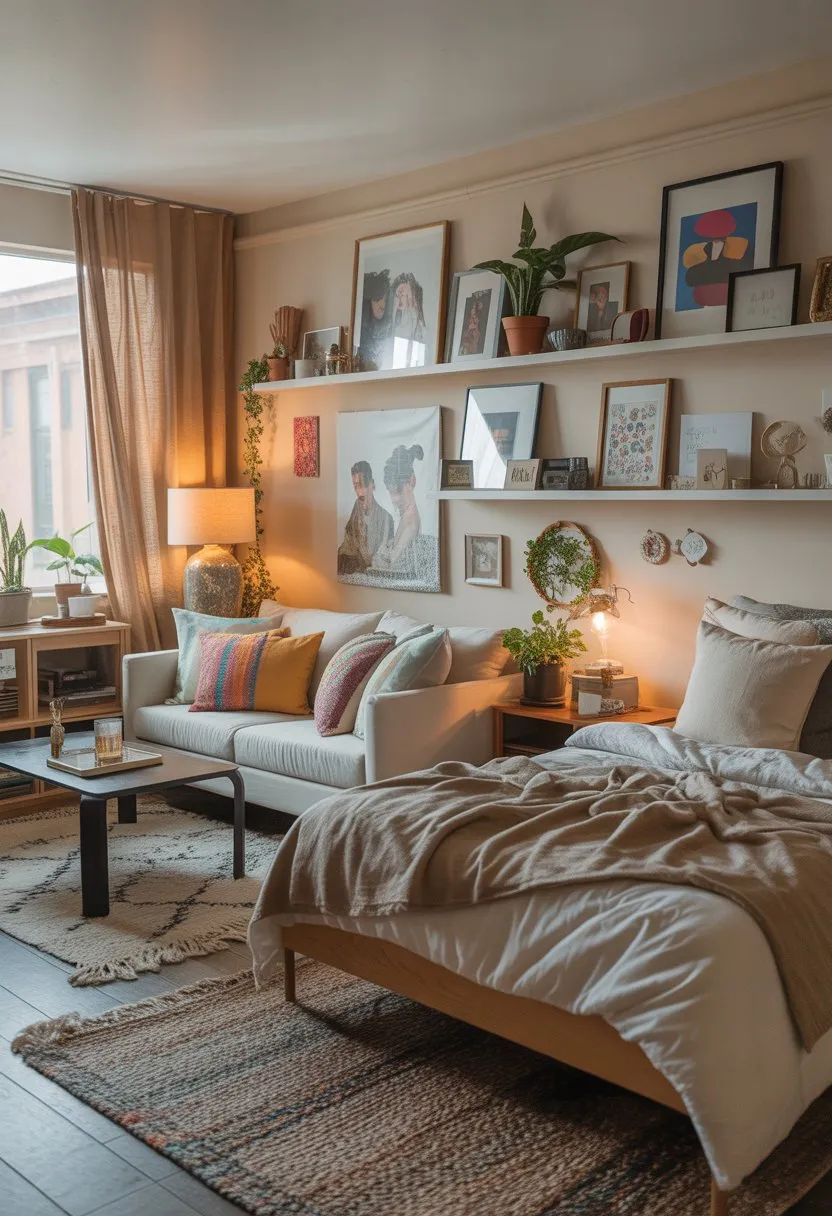
Textiles and personal items turn a plain studio apartment into a warm, inviting home. These soft touches add color, texture, and memories that make small spaces feel uniquely yours.
Layering Throw Pillows and Blankets
Throw pillows instantly change how a room looks and feels. They add pops of color to neutral furniture without taking up floor space.
Mix different textures like velvet, linen, and cotton. Choose two or three colors that work well together. This creates visual interest without making the space look messy.
Stack pillows in odd numbers on beds and couches. Use different sizes – one large pillow, one medium, and one small works well.
Blankets serve two purposes in studio apartments. They keep residents warm and add cozy style to any room.
Drape a soft throw over the back of a chair or sofa. Fold colorful blankets at the foot of the bed. Choose blankets with interesting patterns or textures.
Handmade quilts or family blankets add personal meaning to studio apartment decor. These pieces tell stories and make spaces feel more like home.
Incorporating Rugs and Curtains for Warmth
Rugs define different areas in open studio layouts. They create separate zones for sleeping, eating, and relaxing.
Place a large rug under the main seating area. Use a smaller rug beside the bed or in the kitchen area. Choose rugs with patterns or colors that match the overall style.
Light-colored rugs make small spaces look bigger. Darker rugs add warmth and coziness to bright rooms.
Curtains add privacy and softness to hard surfaces. They also block unwanted light and reduce noise from outside.
Hang curtains close to the ceiling to make windows look taller. Choose light fabrics that let natural light through during the day.
Layer curtains with blinds for better light control. Sheer curtains during the day and heavier curtains at night work well together.
Displaying Art, Photos, and Mementos
Personal photos make any space feel like home. They remind residents of loved ones and happy memories.
Create a small gallery wall with family photos and travel pictures. Mix different frame sizes and colors for visual interest.
Use floating shelves to display photos without taking up table space. Change photos seasonally to keep the display fresh.
Artwork adds personality without permanent changes. Choose pieces that make residents feel happy or inspired.
Hang art at eye level for the best impact. Group small pieces together instead of spreading them around the room.
Travel souvenirs and collections tell personal stories. Display them on shelves, tables, or window sills.
Keep displays simple and organized. Too many items make small spaces feel crowded. Rotate collections to keep the space feeling new.
Select the Right Lighting to Create Ambiance
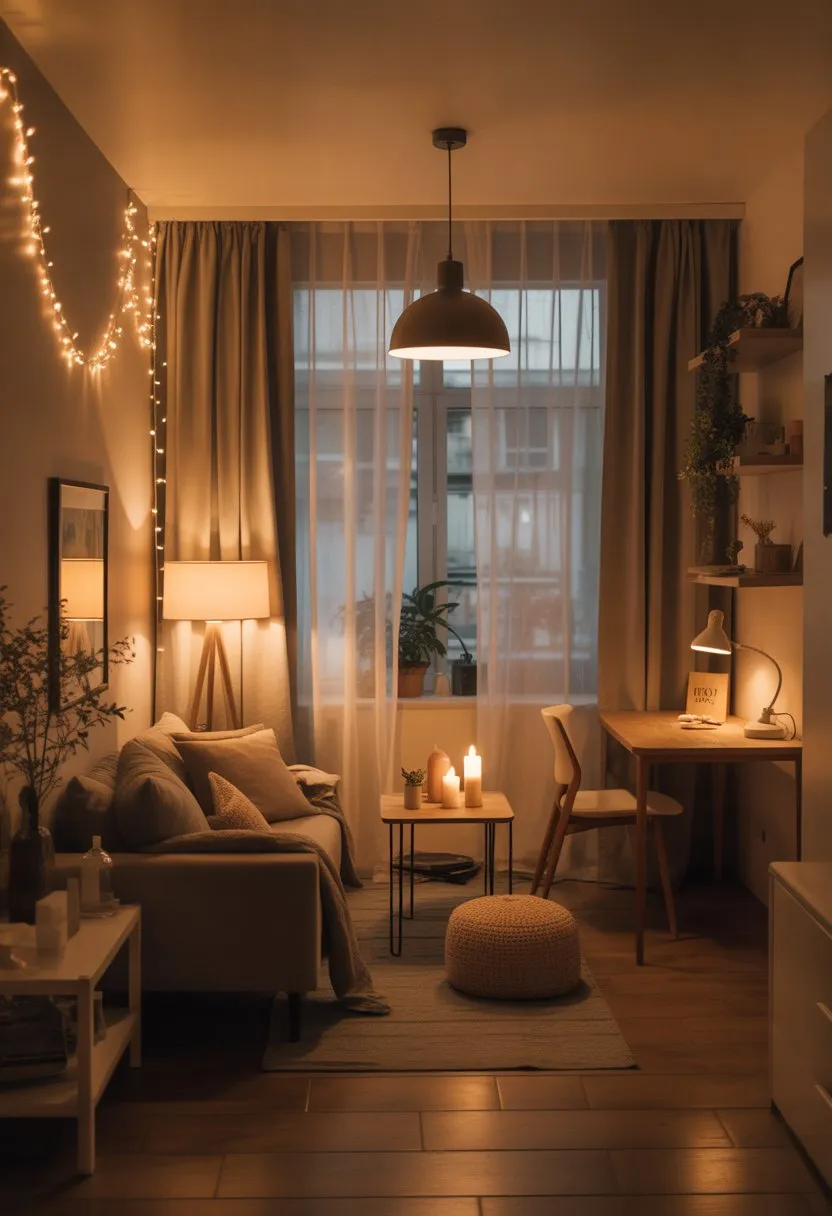
Good lighting can transform a studio apartment from cramped to cozy. The right mix of table lamps, floor lamps, and soft lighting options helps create different moods while making the space feel larger and more welcoming.
Choosing Table Lamps for Soft Illumination
Table lamps provide gentle lighting that makes a studio apartment feel warm and inviting. They work well on nightstands, desks, or small side tables without taking up floor space.
Warm white bulbs between 2700K and 3000K create the most comfortable atmosphere. These bulbs give off a soft, yellowish light that feels cozy in the evening.
Size matters when picking table lamps for small spaces. Choose lamps that are 24-27 inches tall for end tables. For desk work, pick lamps with adjustable arms or shades.
Table lamps with fabric or paper shades spread light more evenly than metal shades. This creates a softer glow that bounces off walls and makes the room feel bigger.
Place table lamps at different heights around the room. This creates layers of light that add depth to the space. A lamp on a dresser, another on a desk, and one by the bed works well.
Using Floor Lamps to Brighten Corners
Floor lamps are perfect for studio apartments because they provide lots of light while using minimal floor space. They fit easily into corners or beside furniture.
Torchiere floor lamps point light upward toward the ceiling. This bounces light around the room and makes ceilings look higher. They work great in dark corners.
Multi-head floor lamps offer more flexibility. These lamps have two or three adjustable lights on bendable arms. Residents can direct light where they need it most.
Choose floor lamps with slim bases to save space. Tree-style lamps with multiple bulbs give more light than single-bulb options. They also add visual interest to empty corners.
Position floor lamps behind seating areas to create reading nooks. Place them across from windows to balance natural light during the day.
Adding String Lights or Dimmable Options
String lights and dimmable fixtures help create different moods throughout the day. These options let residents adjust lighting based on activities and time.
LED string lights use very little energy and last for years. Hang them around windows, along walls, or above the bed area. Choose warm white over cool white for a cozy feel.
Dimmable bulbs work in most existing fixtures. They let people create bright light for cleaning or cooking, then dim down for relaxing or watching movies.
Smart bulbs offer the most control. Users can adjust brightness and even change colors through phone apps. Some smart bulbs work with voice assistants for hands-free control.
Plug-in dimmers work with any lamp that plugs into the wall. These small devices go between the lamp cord and outlet. They cost less than replacing all the light bulbs.
Battery-powered string lights work well for renters who cannot install permanent fixtures. They stick to walls or furniture without damage.
Optimize Vertical and Hidden Storage
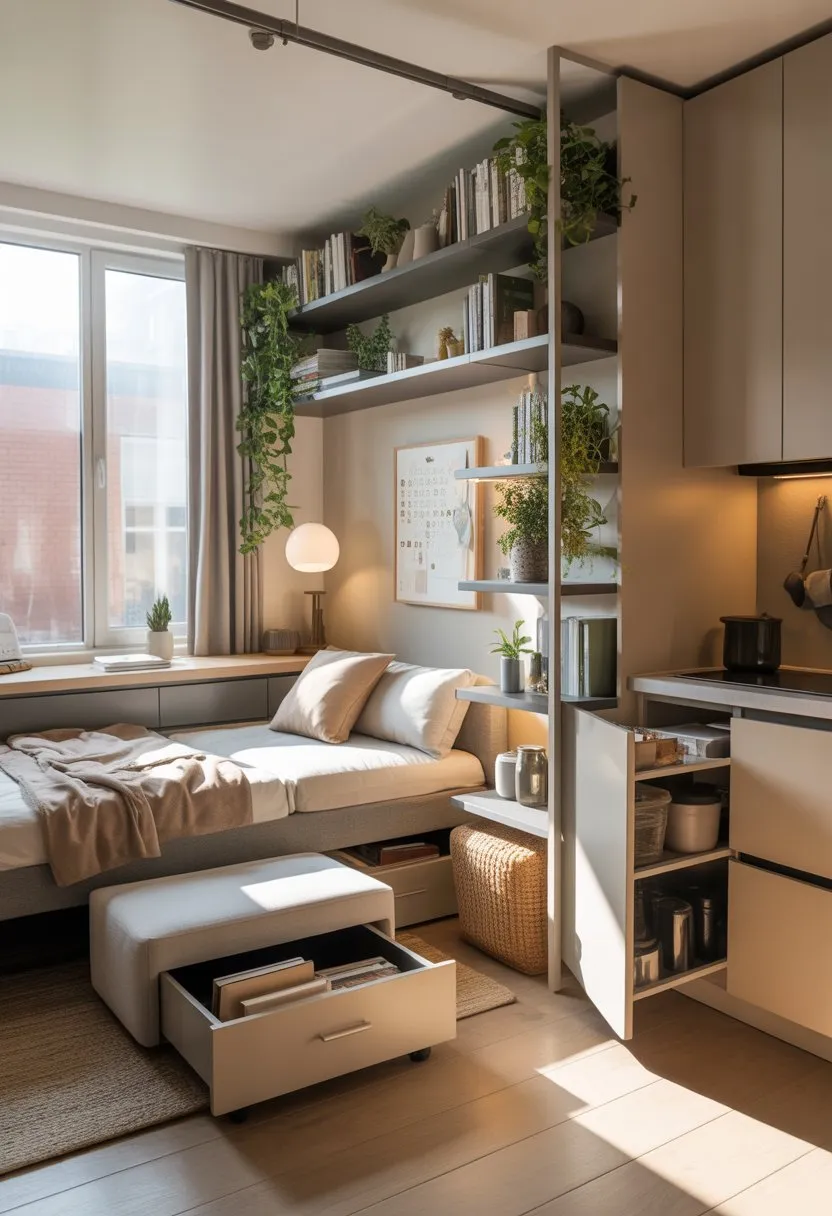
Studio apartments require smart storage solutions that don’t eat up precious floor space. Wall-mounted shelves and tall furniture units draw the eye upward while creating room for belongings, and hidden storage areas like under-bed spaces make every square inch count.
Installing Floating Shelves and Tall Units
Floating shelves transform bare walls into functional storage without taking up floor space. They work well above desks, around doorframes, or in awkward corners that regular furniture can’t reach.
Kitchen areas benefit from floating shelves that hold dishes, spices, and small appliances. This keeps counters clear and makes the space feel less crowded.
Living spaces can use floating shelves for books, plants, and decorative items. Install them at different heights to create visual interest while storing everyday items.
Tall storage units that stretch from floor to ceiling maximize vertical space in small spaces. A narrow bookcase or cabinet can fit into tight spots while providing lots of storage.
Murphy beds with built-in shelving units serve double duty. They fold up during the day to reveal storage compartments and desk space.
Choose units that match your wall color to make them blend in. This trick makes ceilings look higher and rooms feel bigger.
Making the Most of Under-Bed and Overhead Storage
Under-bed storage turns wasted space into a storage goldmine. Rolling drawers and storage bins slide easily under most beds for quick access to seasonal clothes, extra bedding, and shoes.
Storage ottomans placed at the foot of the bed provide seating while hiding blankets, pillows, or out-of-season items inside. They work as coffee tables too with a tray on top.
Vacuum-sealed bags compress bulky items like winter coats and comforters. They fit under beds or in closet corners while protecting items from dust.
Overhead storage in closets and above doorways holds items used less often. Install shelves or cabinets near the ceiling for holiday decorations, luggage, or extra linens.
Bed risers create extra height for larger storage containers underneath. This simple change can double the under-bed storage space without buying new furniture.
Label all hidden storage containers clearly. This saves time searching through boxes and keeps the studio apartment organized.
Personalize with Greenery and Cozy Touches
Plants bring life to small spaces while cozy reading spots create personal retreats. These simple additions transform studio apartments from basic living spaces into warm, welcoming homes.
Adding Indoor Plants for Freshness
Low-maintenance plants work best for studio apartment decor. Snake plants, pothos, and peace lilies need minimal care but make big impacts.
These plants clean the air while adding color. They make even the smallest studio apartment feel alive and fresh.
Place plants strategically to maximize their effect. Put tall plants in corners to draw the eye upward. This makes ceilings look higher.
Use hanging planters to save floor space. Macrame planters add texture while keeping greenery at eye level.
Small terrariums work perfectly on desks or coffee tables. They create mini gardens without taking up much room.
Stylish pots elevate the look of any plant. Choose pots that match your studio apartment style. White ceramic pots work with any decor theme.
Group plants of different heights together. This creates visual interest and makes spaces feel more complete.
Setting Up a Reading Nook or Special Corner
Pick an underused corner to create your cozy retreat. Even small studio apartments have spots that can become special spaces.
Start with a comfortable chair or floor cushions. Add a soft throw blanket in your favorite color or pattern.
Good lighting makes reading corners inviting. A small table lamp or floor lamp provides warm light. String lights add extra coziness.
Keep a small side table nearby for books and drinks. Floating shelves work if floor space is tight.
Add personal touches to make the corner yours. Display favorite books, photos, or small plants around the area.
Soft textures make reading nooks feel special. Use plush pillows, knitted throws, or a small area rug to define the space.
This corner becomes your escape spot. It gives studio apartment living a sense of separate, cozy zones.