
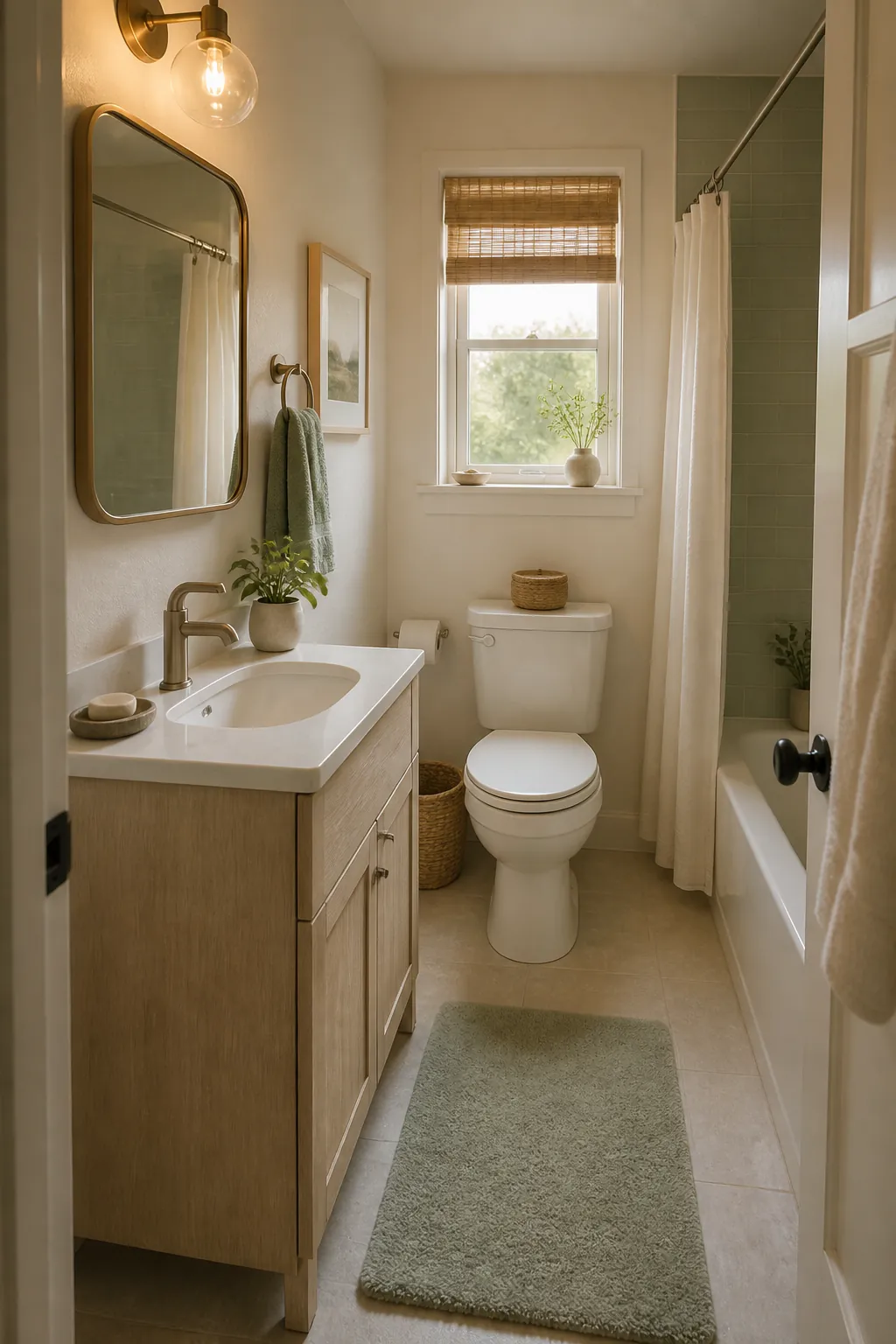
A tiny bathroom does not need a freestanding tub, marble walls, or a full remodel to feel relaxing. The real shift is smaller and more useful: remove the visual noise, make the lighting kinder, bring in soft texture, and give everyday items a place to land. A Tiny Spa Bathroom works when it still functions on a busy weekday morning.
The best approach is not to copy a hotel bathroom exactly. Hotels have hidden storage and staff. A small home bathroom needs calm that survives towels, toothpaste, laundry, skincare, and cleaning day. Start with the parts you touch and see most often: the vanity, mirror, lighting, towels, shower zone, and the few decorative pieces that stay visible.
Start by Removing the Things That Make the Room Feel Busy
Most tiny bathrooms do not feel small because of square footage alone. They feel small because every surface is doing too much. Bottles sit around the sink, the towel ring lands in the first sightline, the trash can is visible from the doorway, and five different finishes compete in one corner. Before buying anything new, do a reset.
- Keep only the daily-use items on the counter.
- Move extras into a medicine cabinet, drawer divider, basket, or over-toilet cabinet.
- Choose one visible tray for soap, lotion, and a small dish instead of letting items spread out.
- Hide the plunger, bulk toilet paper, cleaning spray, and extra products.
This is the first rule of Small Bathroom Spa design: the room should have breathing room before it has decor. Once the sink, toilet top, ledges, and floor are visually quieter, even basic tile and builder-grade fixtures start to look more intentional.
Fix the Bathroom Lighting Before You Add More Decor
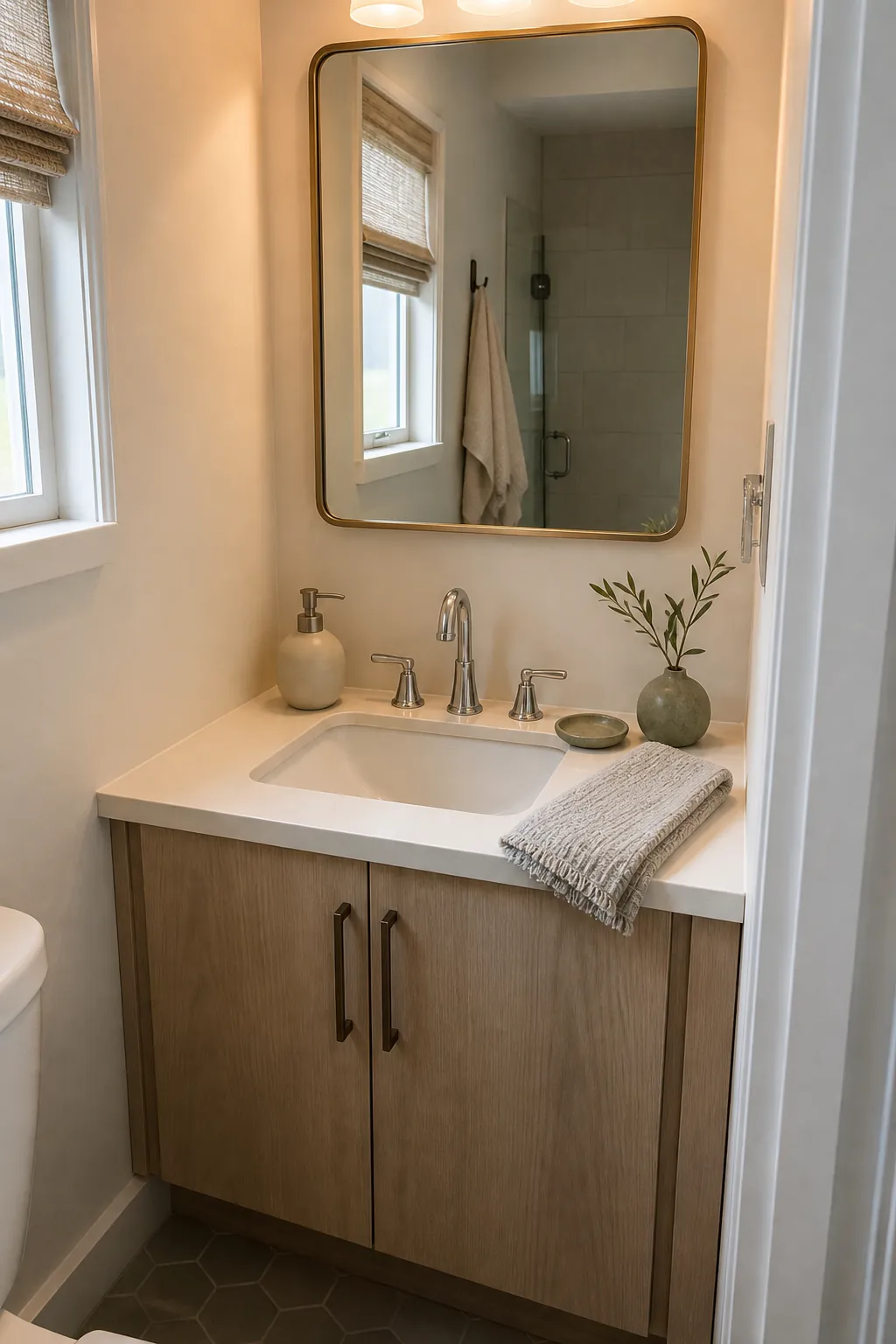
Lighting is where many tiny bathrooms lose the spa feeling. One bright vanity bar can make the mirror usable but the room harsh. One ceiling light can make the shower usable but cast shadows on your face. A dark shower, mismatched bulbs, or cold blue light will undo the calm feeling faster than the wrong towel color.
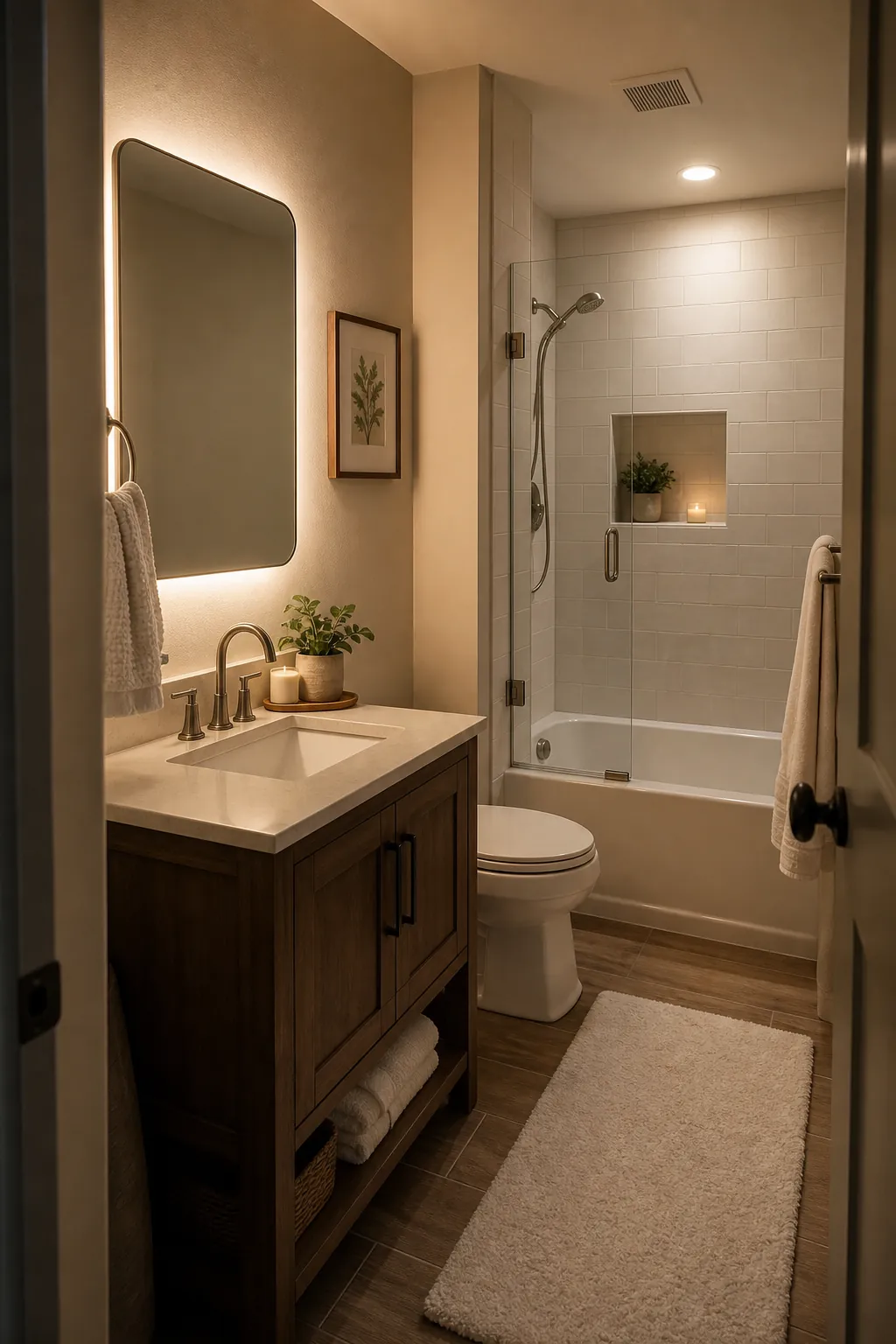
Think in layers. Use soft, even Bathroom Lighting at the mirror, practical overhead light for cleaning, and a warmer low-light option for night or bath time. If you are changing hardwired fixtures, use damp-rated or wet-rated products where required and bring in an electrician for shower lighting. If you rent, you can still make the room gentler with matching warm bulbs, a plug-in night light, a battery candle, or a backlit mirror that does not need rewiring.
Aim for consistency. Bulbs that all look “warm white” on the box can still feel different once installed. Choose one color temperature family, and if you do makeup or shaving at the mirror, prioritize light that makes skin tones look natural. Dimmers are especially useful in a tiny bathroom because the same room often needs bright cleaning light and soft evening light.
Use Soft Towels as the Main Luxury
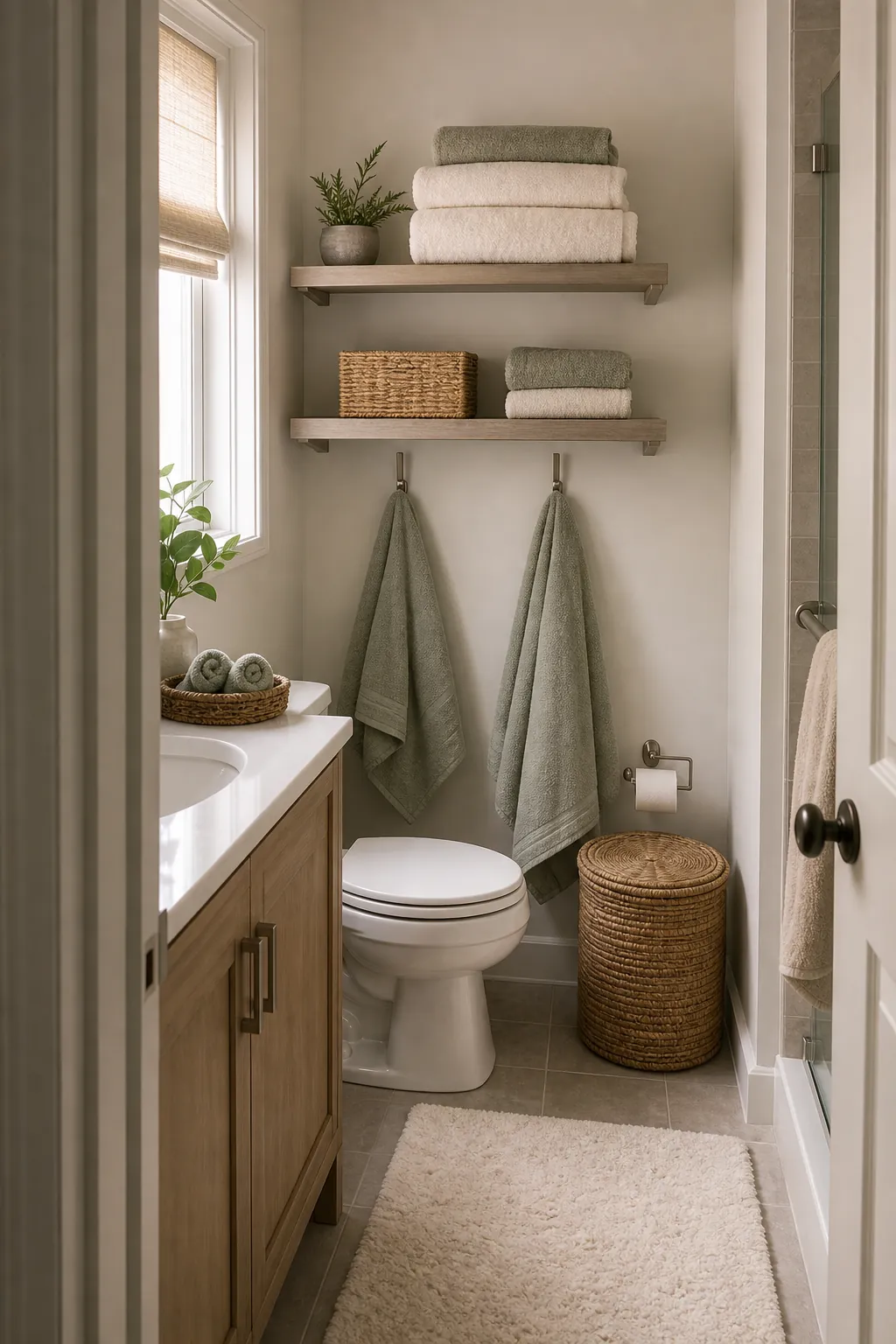
In a tiny bathroom, fabric carries more of the mood than furniture does. Soft Towels are practical, visible, and easy to change. They are also one of the few spa-like details that do not steal floor space.
Choose two towel colors at most. White, warm ivory, oatmeal, misty green, dusty blue, and pale gray all work well in a Calm Bathroom. If the room already has strong tile or wood tones, let the towels bridge the colors rather than fight them. Fold hand towels neatly on a shelf, roll a few washcloths in a small basket, or hang one plush bath towel where it looks intentional instead of crammed.
The storage matters as much as the towel itself. A slim ladder, wall hooks, floating shelf, or narrow cabinet can give towels a home without making the bathroom feel packed. If you only have one towel bar, keep the visible towel fresh and move extras out of sight. The goal is not a showroom stack; it is a bathroom that looks cared for even when used every day.
Bring in One or Two Bathroom Plants
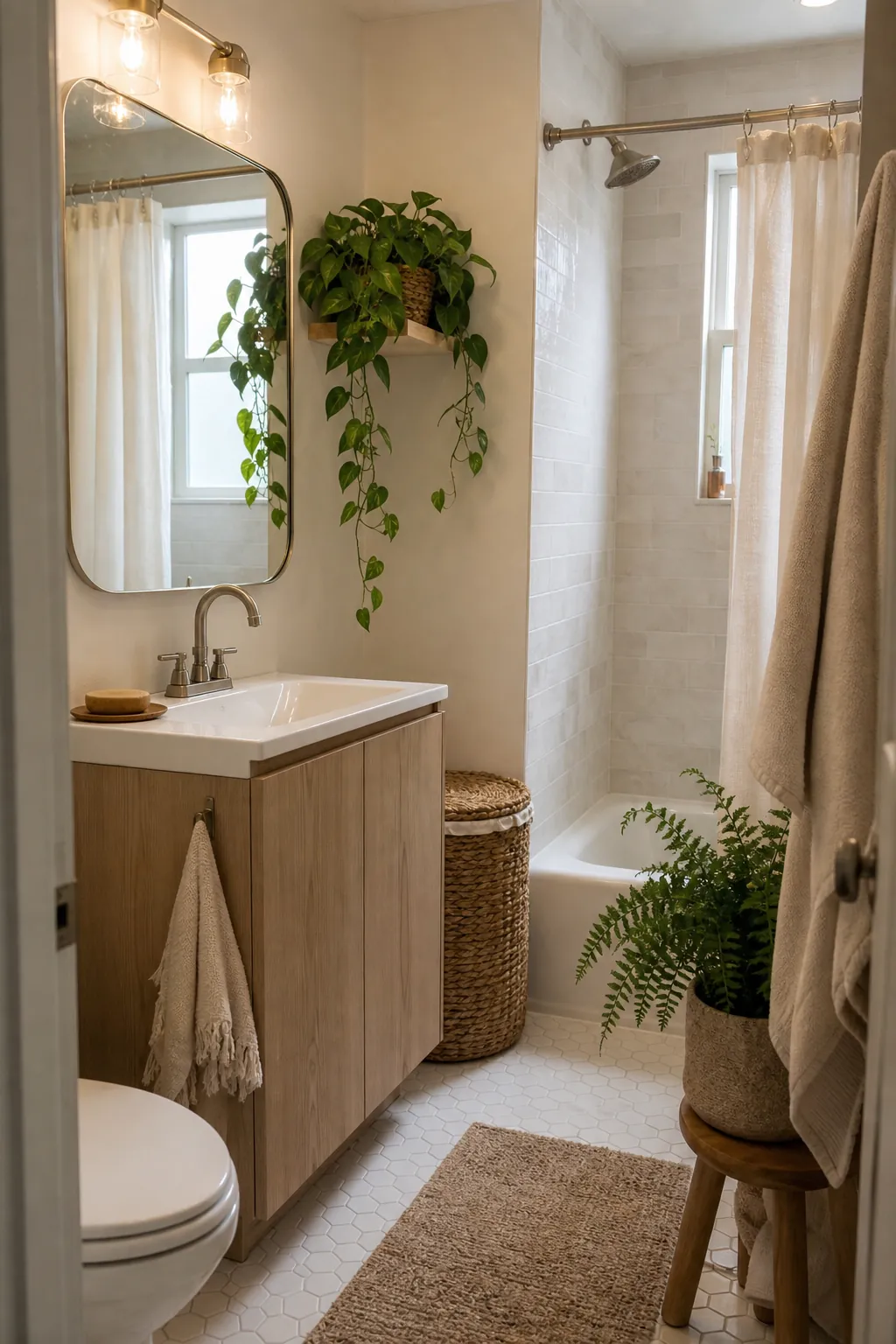
Bathroom Plants can make a small bathroom feel softer, but the key is restraint. One healthy plant in the right spot looks fresh. Five struggling plants on every ledge look like clutter. Match the plant to the light you actually have, not the photo you wish the room looked like.
If the bathroom has a window, try a pothos, fern, snake plant, or small trailing plant on a shelf. If the room has low light, use one realistic faux plant or dried eucalyptus instead of forcing a plant to suffer. Place greenery where it adds height or softens a hard corner: beside the vanity, on a stool near the tub, on a floating shelf, or in a small basket by the toilet if it does not block movement.
Greenery works best when the rest of the Bathroom Decor is quiet. A plant should feel like a breath of life, not another object asking for attention.
Make the Shower or Bath Feel Better to Use
A spa bathroom is not only about how the room photographs. It is about how it feels when you shower, wash your face, or get ready for bed. In a tiny bathroom, the shower or tub area is often the biggest visual surface and the place where small upgrades make the most difference.
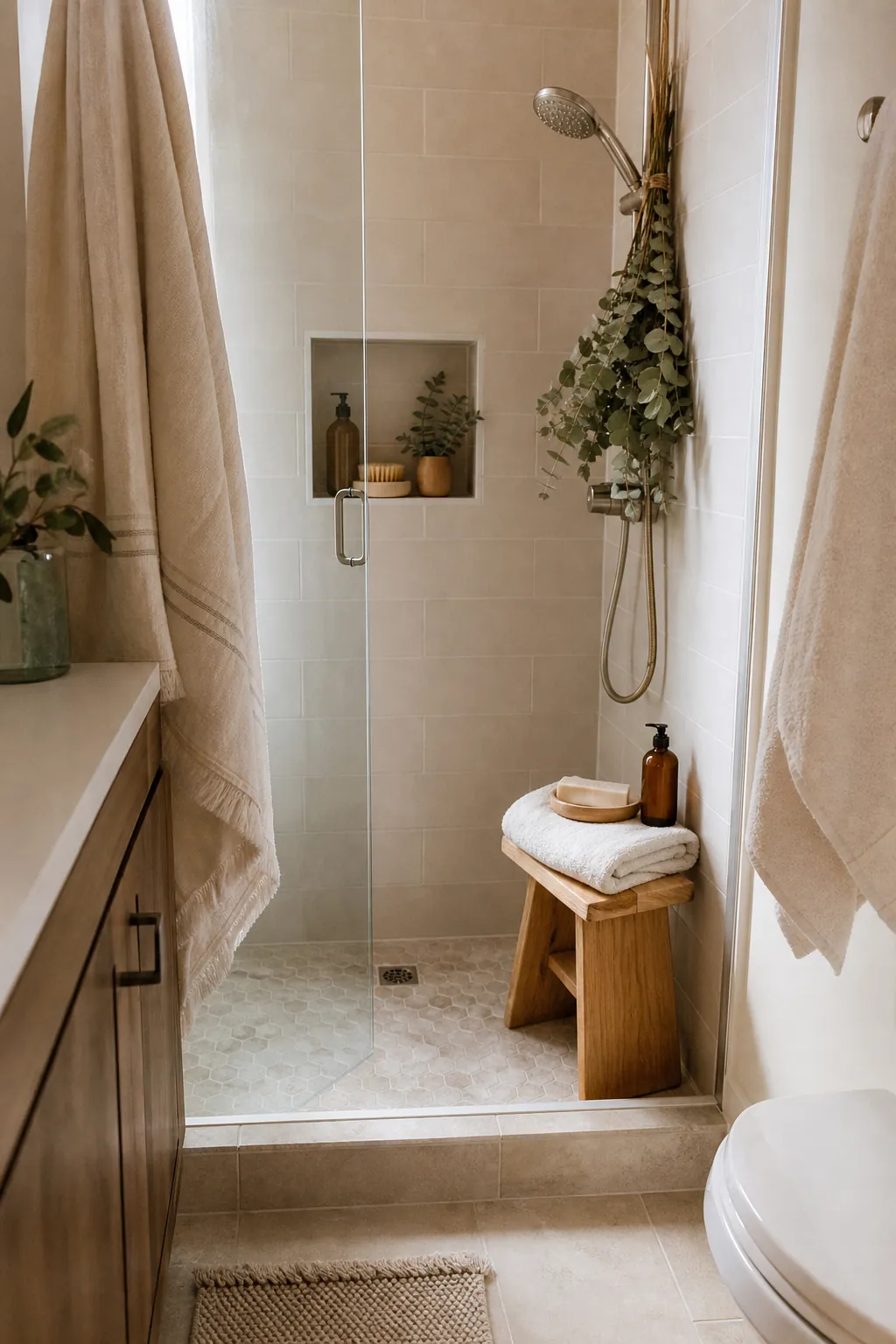
Start with the curtain, glass, mat, and shower storage. A clear glass panel or a lighter shower curtain can help the room feel more open. A washable cotton bath mat feels calmer than a loud rug. A simple caddy, niche, or wall-mounted dispenser keeps bottles from collecting along the tub edge. If you are replacing fixtures, a handheld shower head is practical for rinsing hair, cleaning walls, and making a small shower feel more flexible.
Then add one ritual detail: eucalyptus tied near the shower head, a wooden bath tray, a small stool for a towel, a refillable soap bottle, or a gentle scent you actually like. The best Spa Bathroom details are useful first and pretty second.
Keep the Color Palette Quiet but Not Lifeless
A tiny spa bathroom does not have to be all white. In fact, all white can feel cold if the lighting is harsh or the surfaces are flat. A better palette is controlled: one light base, one soft accent, and one natural texture.
- For a bright look, try warm white, pale greige, linen, or soft mushroom.
- For a gentle color, try dusty blue, muted sage, clay pink, or misty green.
- For texture, use wood, bamboo, stone, woven baskets, ribbed glass, or cotton.
If the bathroom already has busy tile, strong flooring, or a fixed vanity color, do not add more competition. Pull one quiet color from what is already there and repeat it in towels, art, soap, or the bath mat. This is where Bathroom Styling matters: repetition makes small spaces feel designed.
Add Spa Details Only After the Basics Work
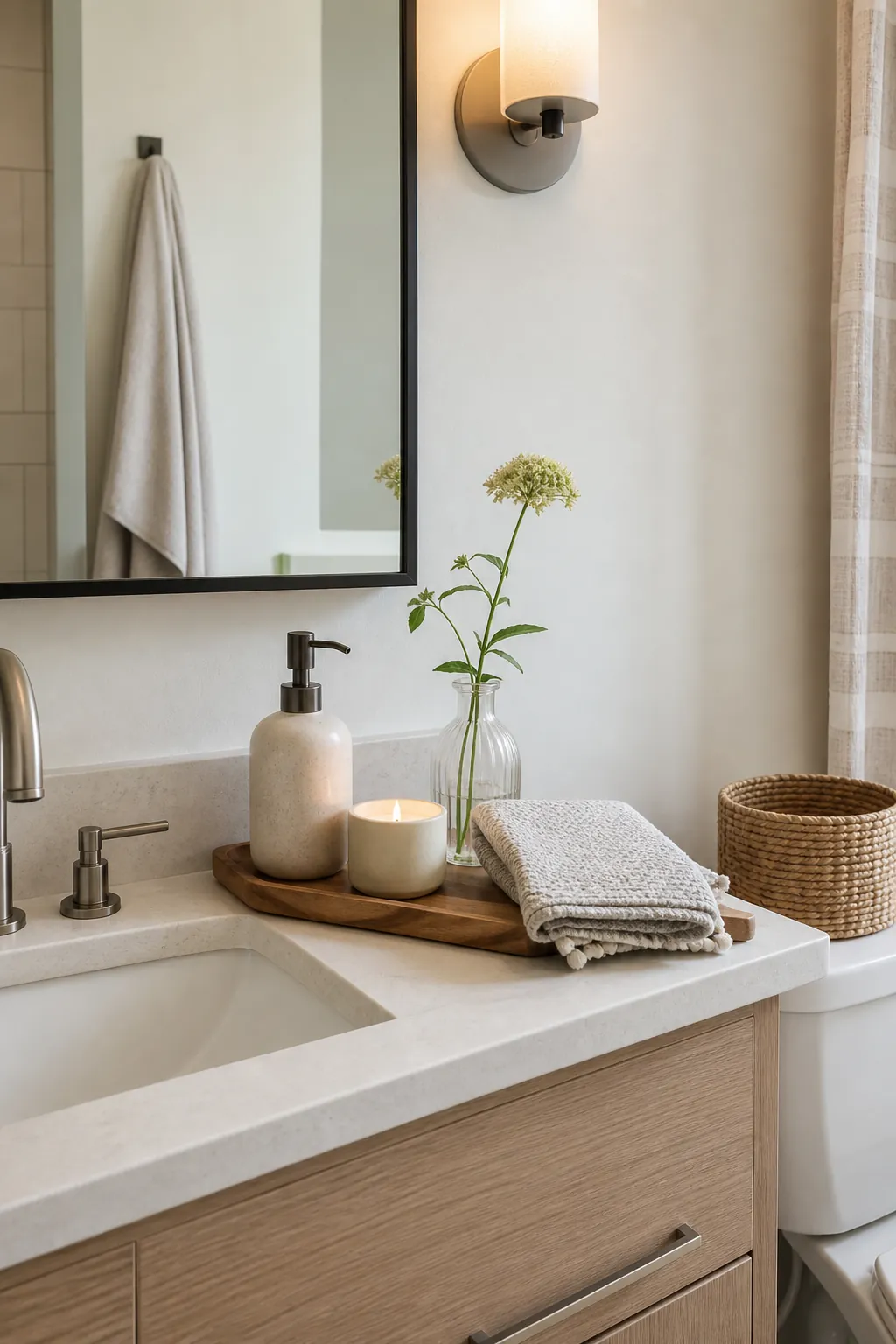
Once the bathroom is decluttered, better lit, and easier to use, the small details finally have room to work. Choose fewer, better pieces: a real soap dish, a clean tray, a framed print, one candle, a small vase, or a woven basket. Avoid filling every wall and shelf. Negative space is part of the spa feeling.
For renter-friendly Tiny Bathroom Ideas, focus on removable upgrades: peel-and-stick window film, a better shower curtain, matching towels, adhesive hooks rated for bathroom humidity, a small stool, a new mirror if allowed, or art hung with damage-free strips. For a homeowner, the most valuable upgrades are usually better lighting, a medicine cabinet, improved shower storage, and a quieter wall color.
The final test is simple: stand at the doorway and notice what your eye sees first. If it sees clutter, fix storage. If it sees shadows, fix lighting. If it sees too many colors, simplify the palette. If it already feels calm, stop adding. A tiny spa bathroom should feel restful because every visible thing has earned its place.