
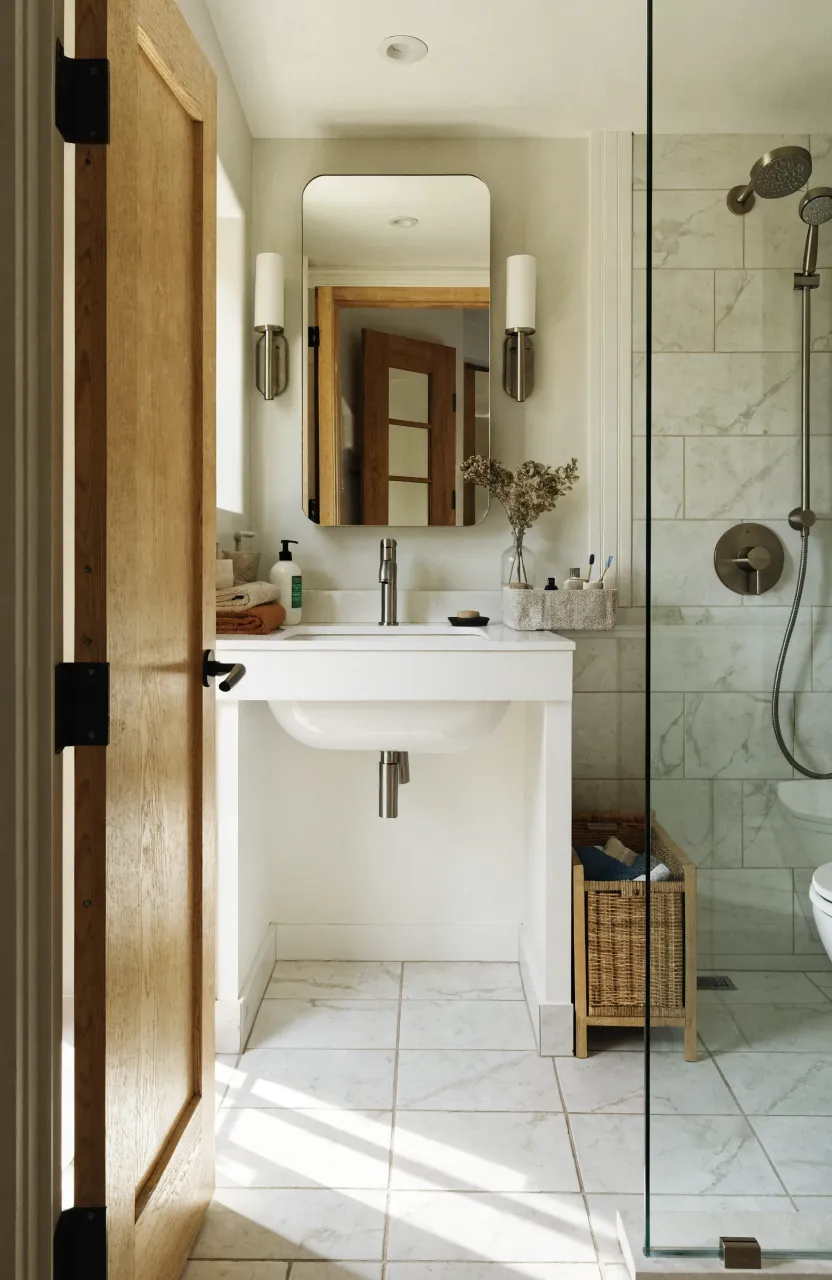
A tiny home bathroom feels tight long before it is truly unusable. The problem is usually not one dramatic mistake. It is the mix of a bulky vanity, visible bottles, towels with no home, one dim light, and a bathroom layout that makes every turn feel like a negotiation.
The best fix is not to decorate over the pressure. Make the room feel easier to move through first, then make it calmer to look at. That order matters. A tiny home bathroom can be compact and still feel open when the floor line, sink zone, storage, mirror, and lighting all stop fighting each other.
Start With The Inches That Make The Room Feel Tight
Before buying anything, stand in the bathroom and notice the exact spots where your body hesitates. Is the toilet too close to the sink? Does the bath mat catch the door? Do towels brush your shoulder? Does the vanity block the only clear floor space?
This quick audit gives you a better plan than a generic tiny bathroom design board. The goal is to protect the few inches that affect movement most: the entry swing, the toilet knee area, the space in front of the sink, and the path from shower to towel.
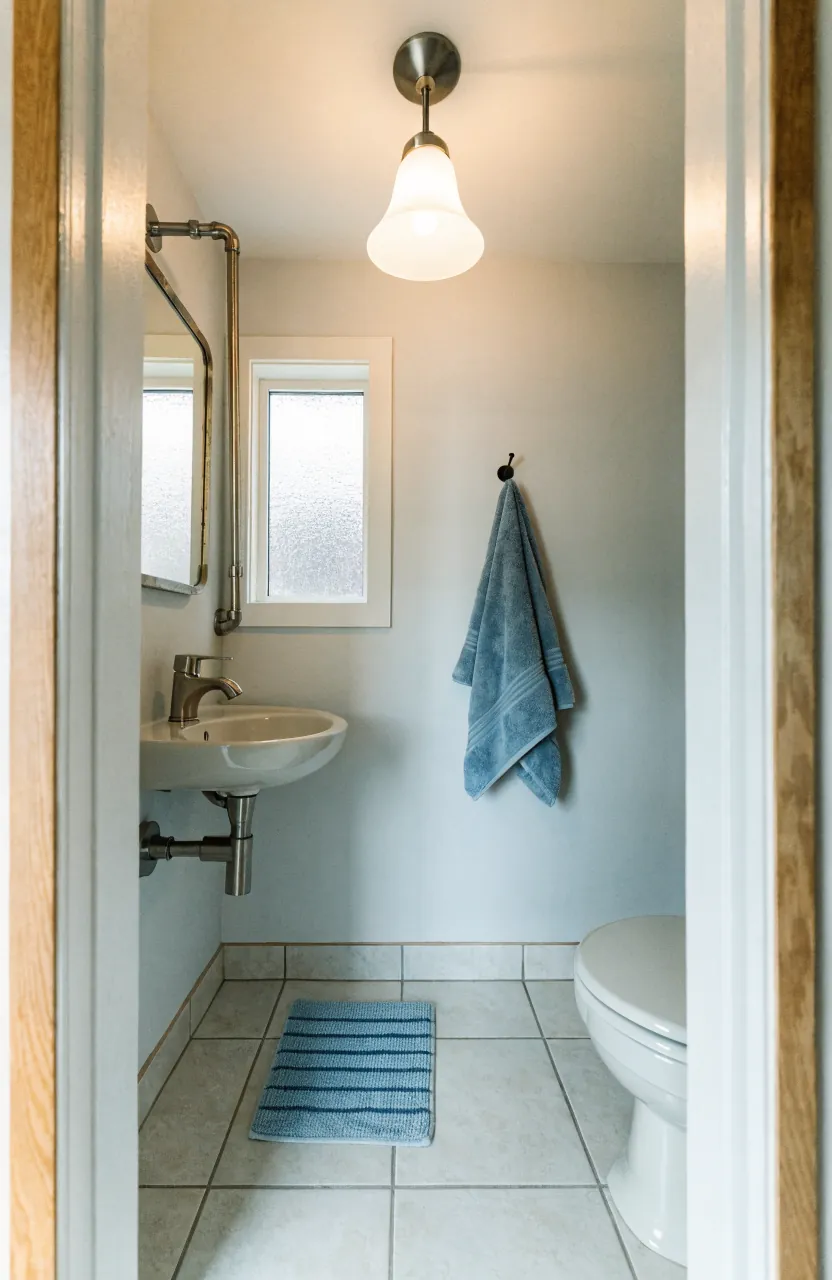
If you are renovating, measure clearances before choosing fixtures. If you are not renovating, remove anything that steals those same clearances: oversized hampers, thick mats, freestanding shelves, extra trash cans, and towel ladders that look pretty but narrow the walkway.
Choose A Vanity That Lets The Floor Keep Breathing
The vanity is often the heaviest visual object in a compact bathroom. A cabinet that runs all the way to the floor can make the room feel packed, even when it gives you storage. A floating vanity, pedestal sink with nearby storage, or shallow wall-mounted sink can make the floor read as one continuous plane.
This does not mean every tiny house bathroom needs a tiny sink. A sink that is too small becomes annoying fast. Instead, look for a compact depth, rounded corners, and a counter shape that leaves elbow room. If you keep a cabinet vanity, choose one with drawers or closed doors so the storage works harder than open cubbies.
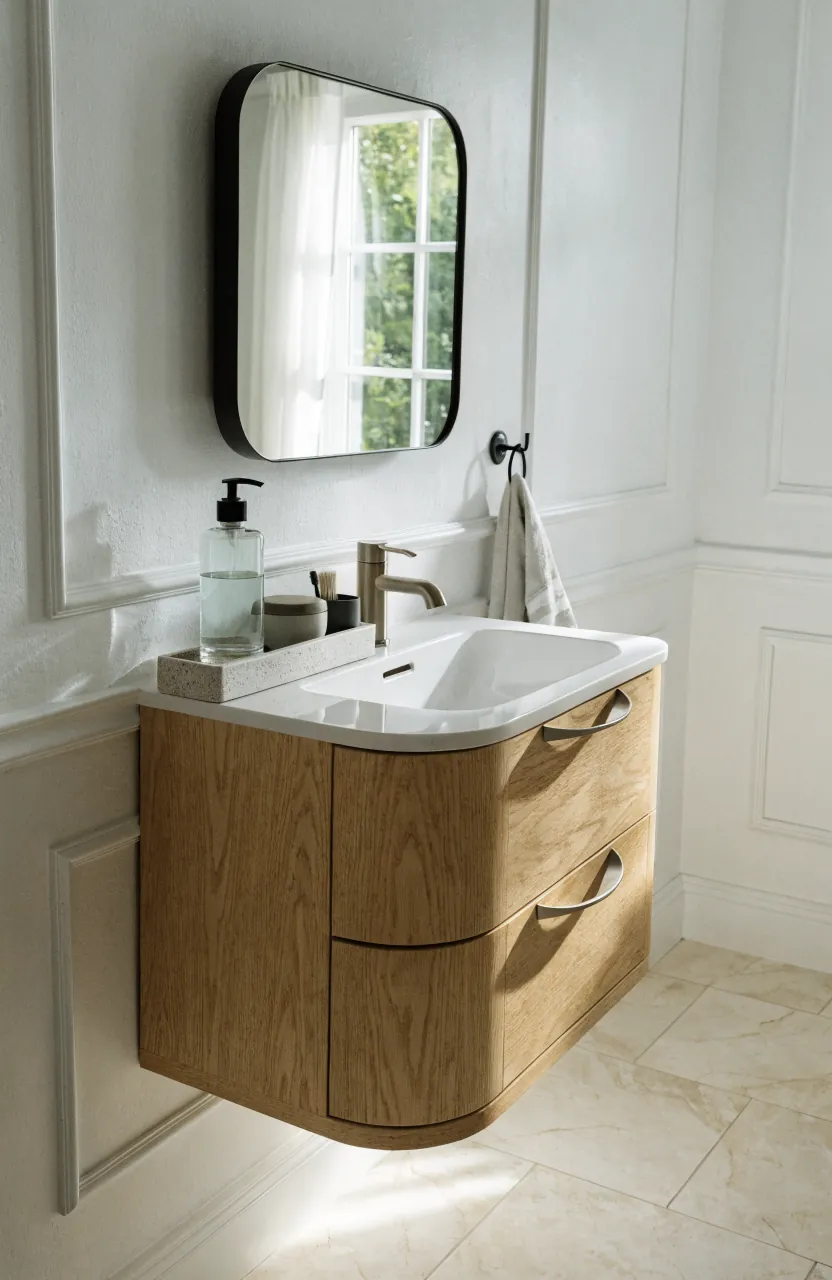
For a less tight bathroom on a smaller budget, change what sits around the vanity first. Use one tray for daily items, move backups somewhere else, and keep the side of the sink clear. The room will not feel bigger if every inch of the counter is technically organized but still visible.
Hide The Small Stuff Before You Add More Decor
Small bathroom decor fails when it tries to compete with clutter. A candle, plant, framed print, or patterned curtain can look good only after the toothbrushes, skincare, cleaning sprays, extra paper, and hair tools have a closed place to go.
Closed bathroom storage is more important in a tiny home bathroom than in a large primary bath because the eye has nowhere to rest. Use a mirrored medicine cabinet, lidded baskets, drawer dividers, a narrow linen cabinet, or opaque bins over the toilet. Open shelves can still work, but reserve them for folded towels, one plant, or matching containers rather than a lineup of packaging.
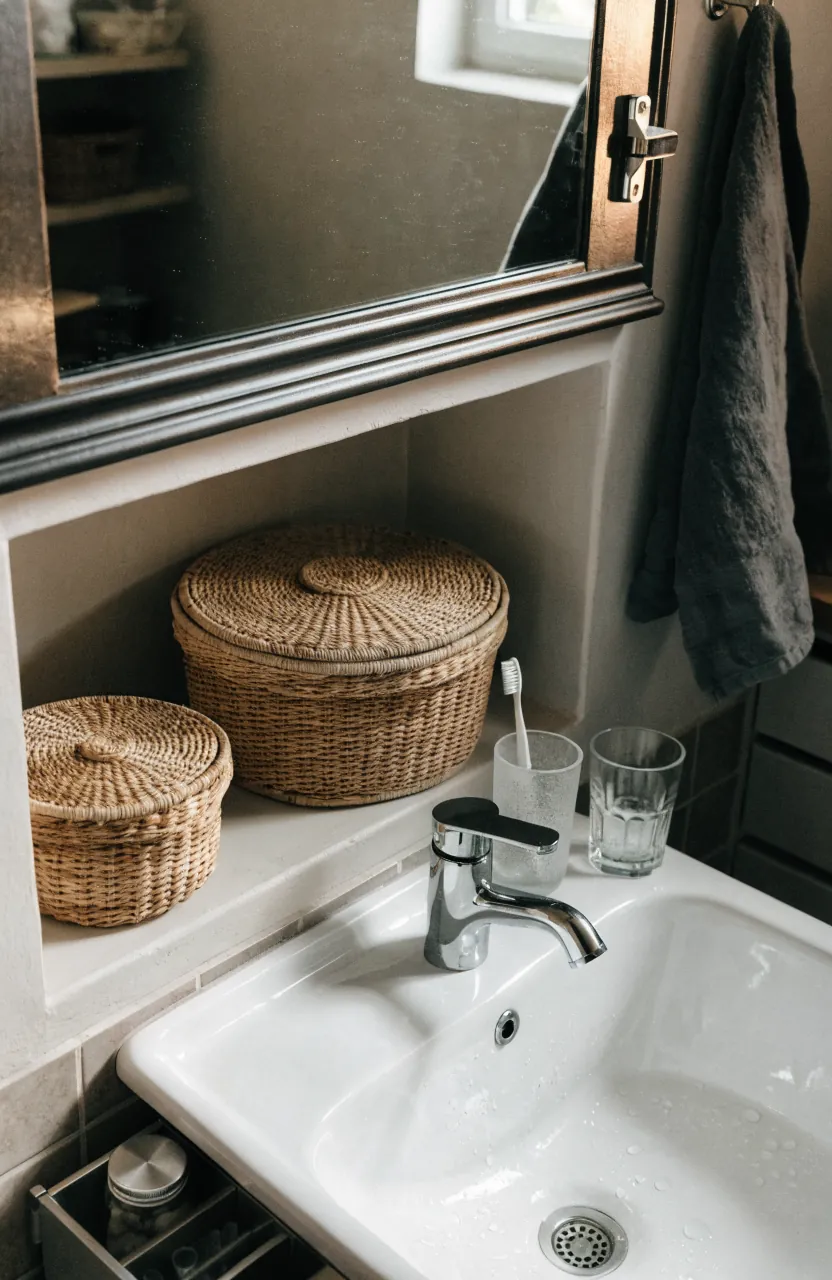
A useful rule is simple: if the label, cord, pump, or cap is not attractive enough to be part of the room, it probably needs to be hidden. This one rule makes bathroom storage decisions easier and keeps small bathroom decor from turning busy.
Use The Toilet Wall And Door Without Crowding The Walkway
The wall above the toilet is valuable, but it can also make a compact bathroom feel boxed in if the unit is too deep. Choose shallow storage, wall shelves with breathing room, or a slim cabinet that keeps supplies close without leaning into your head space.
The back of the door can help too. Hooks are often better than towel bars in a tiny bathroom because they take less horizontal wall space and let towels live where the door already swings. If the door hits a fixture, consider whether a pocket door, barn door, or outswing door is possible in a remodel. If not, keep the door zone free of floor baskets and thick mats.
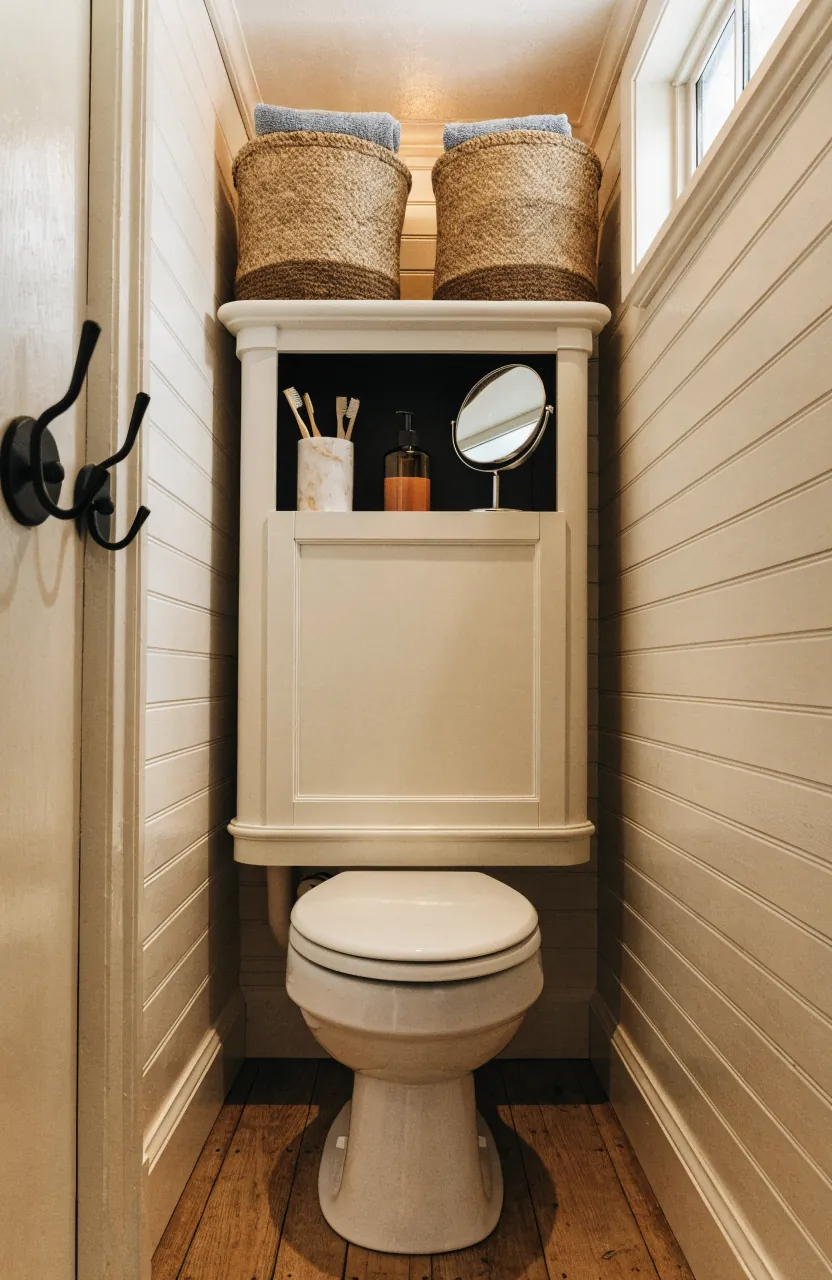
For renters, use freestanding over-toilet shelves only if they are stable and slim. A heavy industrial rack may add storage but make the tiny home bathroom feel tighter. A cleaner cabinet, two matching baskets, or one simple shelf often looks better and works better.
Make Mirror And Bathroom Lighting Work Together
Bad bathroom lighting makes a small room feel smaller because corners go dark and the mirror becomes harsh. One ceiling light in the center of the room is usually not enough. Add task lighting near the mirror when possible, and use bulbs that make the room feel bright without turning the space cold.
A larger mirror can stretch the sink wall, especially when it reflects a window, a light fixture, or a calm surface instead of clutter. If you need storage, a wide medicine cabinet is often better than choosing between a big mirror and practical storage. It gives the same wall more jobs without adding another piece of furniture.
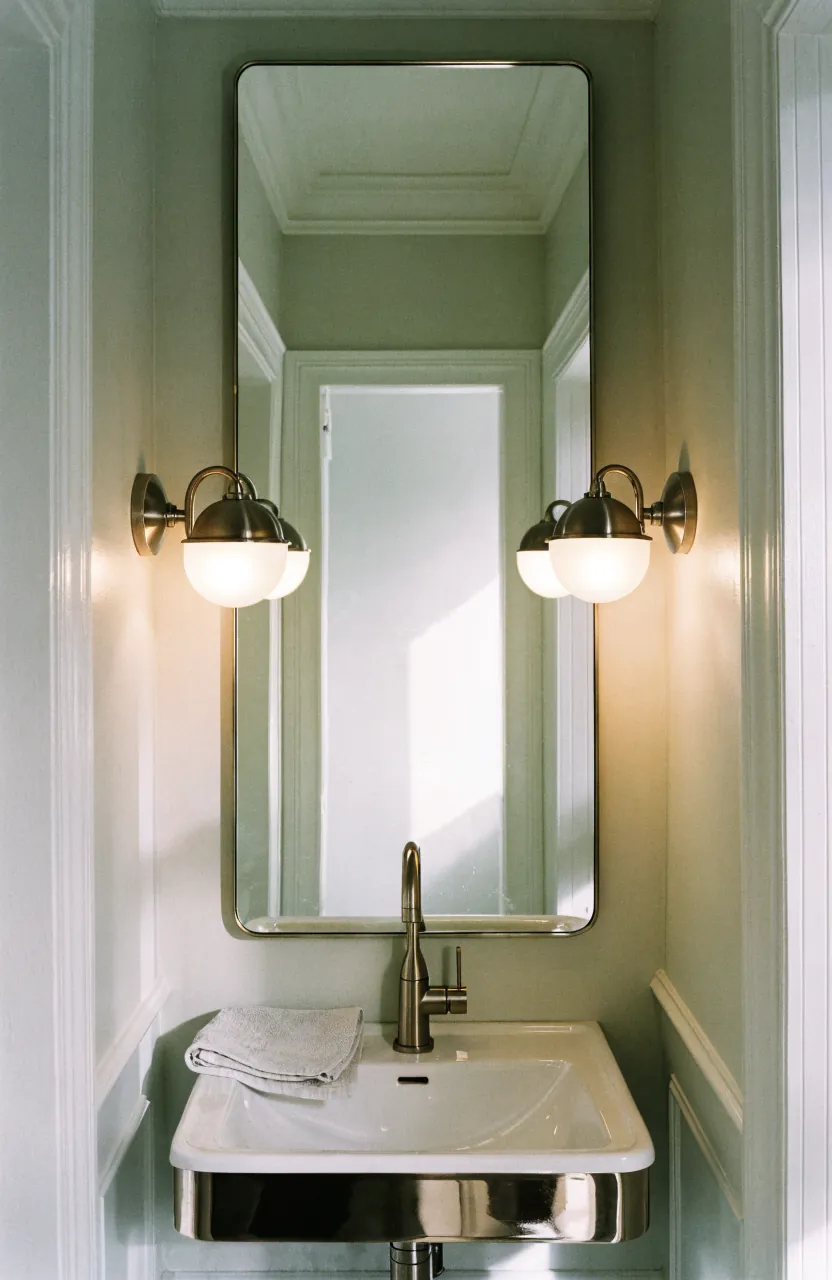
Keep electrical safety in mind. Lights and outlets near wet areas need proper placement and appropriate ratings, so permanent bathroom lighting changes are worth checking with a qualified electrician or local code guidance.
Use Fewer Surface Breaks So The Eye Can Travel
A tiny bathroom can handle color, pattern, and personality. What makes it feel tight is too many visual stops: small busy tile, high-contrast grout, several metal finishes, unmatched baskets, a loud curtain, a busy rug, and a crowded shelf all in the same view.
Choose one stronger moment and quiet the rest. That might be a colorful shower curtain with plain towels, a warm wood vanity with simple white walls, or a patterned floor with a calm wall color. A compact bathroom feels more spacious when the eye can travel across longer, calmer surfaces.
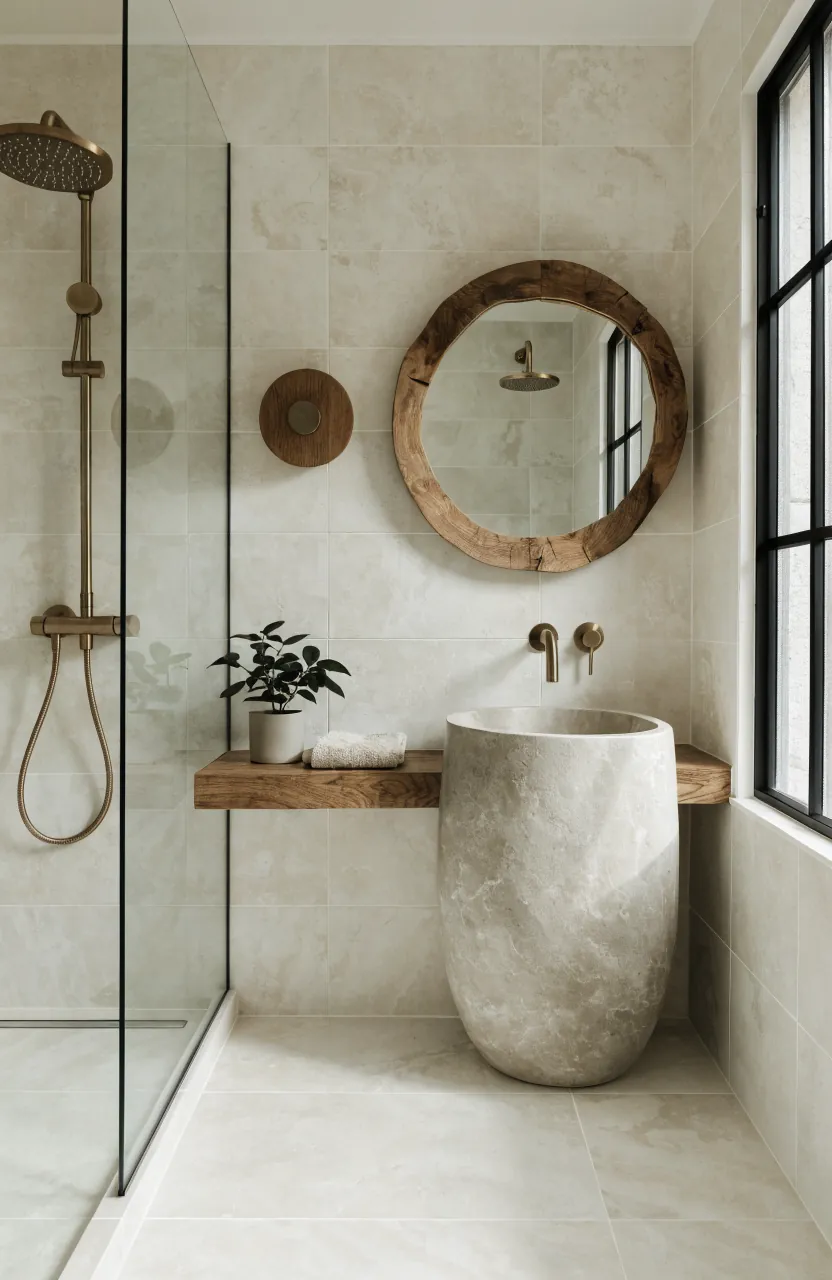
Large-format tile, repeated wall color, clear glass, simple hardware, and matching containers all help because they reduce interruption. In a tiny house bathroom, the less the eye has to count, the less tight the room feels.
Keep The Shower Edge Light
The shower takes up a large share of the visual field. A dark curtain pulled across the room can make the bathroom feel like it ends at the tub. A clear glass panel, a lighter curtain, or a curtain mounted high and kept open when dry can make the shower area feel less like a wall.
If you use a wet bath, keep the floor as simple as possible and give every shower item a wall-mounted home. Bottles on the floor make the room feel improvised and steal the exact space your feet need.
The Less Tight Bathroom Test
After each change, test the bathroom during a normal morning rather than judging it empty. Can you enter without shifting around a mat? Can you wash your face without moving three bottles? Can you reach a towel without turning into a shelf? Does the mirror reflect light instead of clutter?
If the answer is yes, the room is working. The best tiny home bathroom ideas are not the ones that add the most things. They are the ones that make the bathroom layout easier, the bathroom storage quieter, and the room visually lighter every time you use it.