
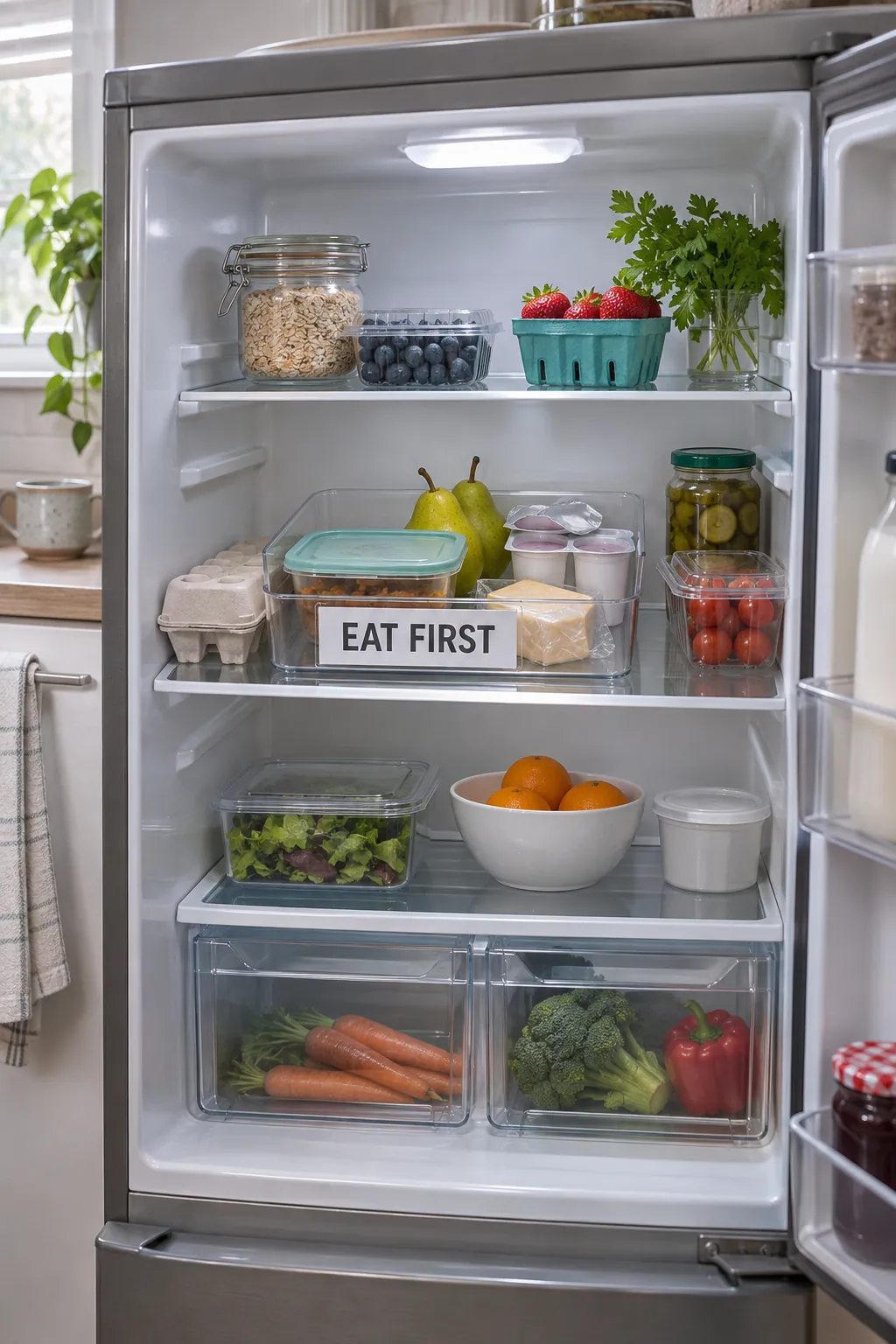
An eat first fridge bin works only when it changes the next meal decision. It should hold a small number of safe, usable foods that need attention soon, sit where every household member can see it, and get cleared on a fixed routine. A large bin filled with unrelated food simply hides the same problem behind a label.
Choose a Small Visible Container
Use a shallow open container that fits at eye level and can be removed with one hand. Clear sides help, but visibility from the front matters more than a matching organizer style. The box should not consume space needed for normal groceries.
Leave room between items so each one can be identified. If food must be stacked in several layers, use a smaller selection and freeze, plan, or discard the rest according to safe food guidance.
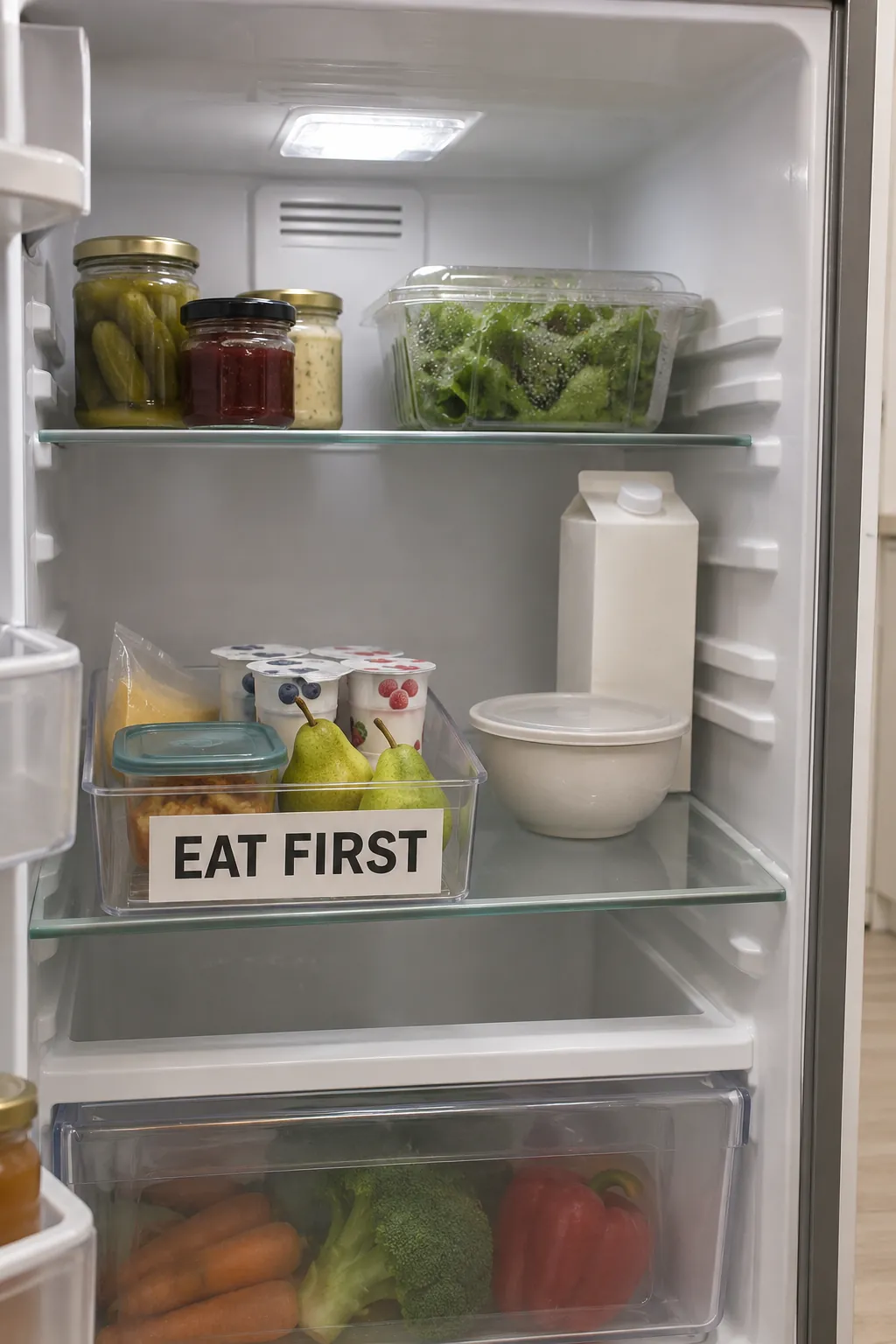
Put Only Actionable Food Inside
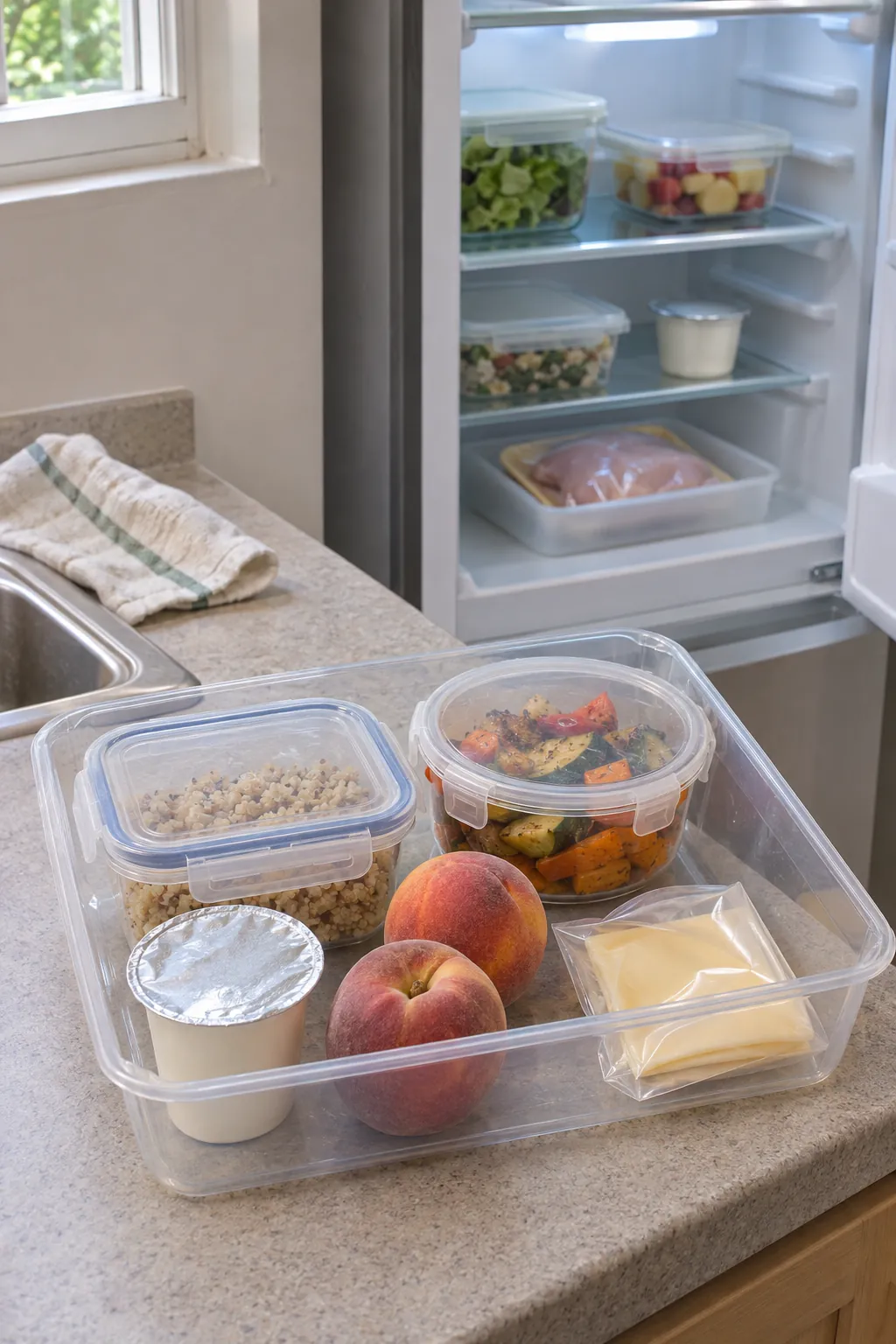
Add leftovers, opened packages, ripe produce, or a small portion that can become part of a meal soon. Keep raw animal products in secure storage at the appropriate lower location rather than moving them into an eye level use first box.
Do not use the box as a place for uncertain food. When you cannot identify an item, do not know how long it has been stored, or notice spoilage signs, follow food safety guidance. A priority box is a planning tool, not a way to extend storage life.
Use Simple Food Date Labels
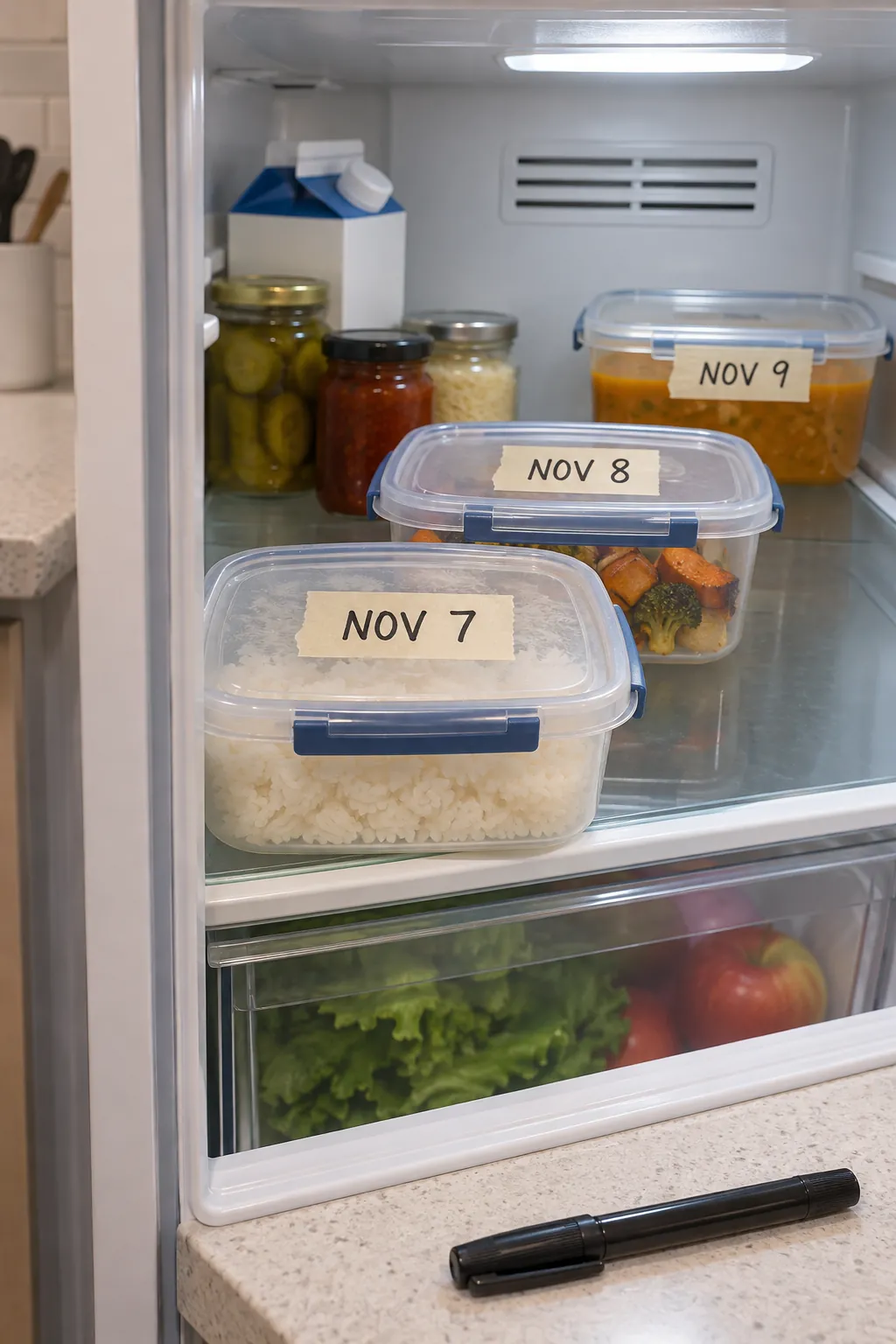
Mark leftovers with the date they were prepared or stored. Use removable tape or labels that stay legible in cold conditions. Keep the note short so labeling takes seconds rather than becoming a separate record keeping project.
A date supports judgment but does not replace safe handling, correct refrigerator temperature, or product instructions. When several foods need attention, place the oldest suitable item at the front and decide how it will be used.
Check the Box Before Planning a Meal
Open the box before choosing lunch, starting dinner, or adding groceries to a shopping list. Pick one item and give it a specific role. Leftover vegetables can join an omelet, cooked grains can support a bowl, and ripe fruit can become breakfast.
A visible item without a plan can remain untouched for days. The useful habit is a short decision: eat it today, freeze it while it is still suitable, include it in a named meal, or handle it according to safety guidance.
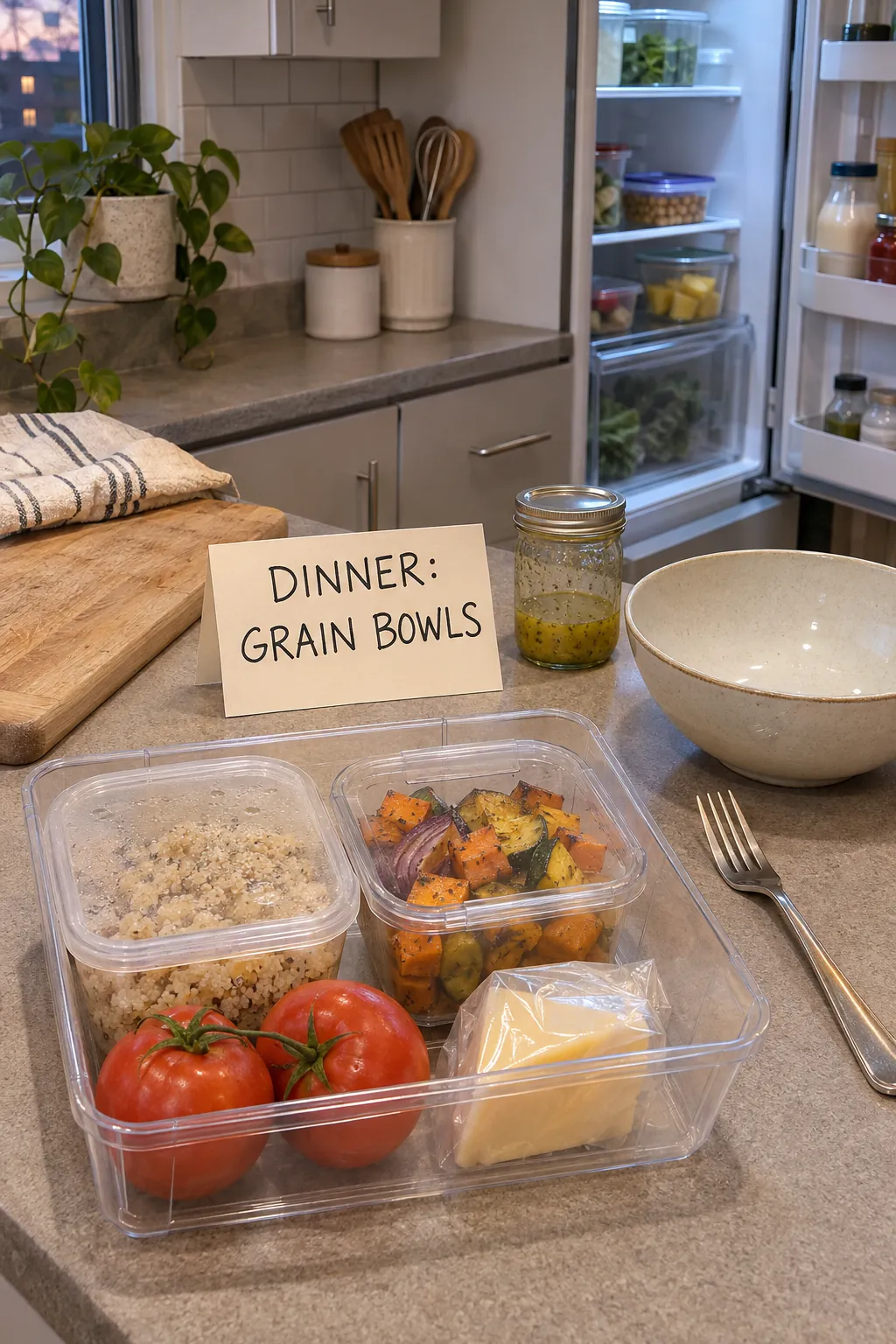
Rotate Food When New Groceries Arrive
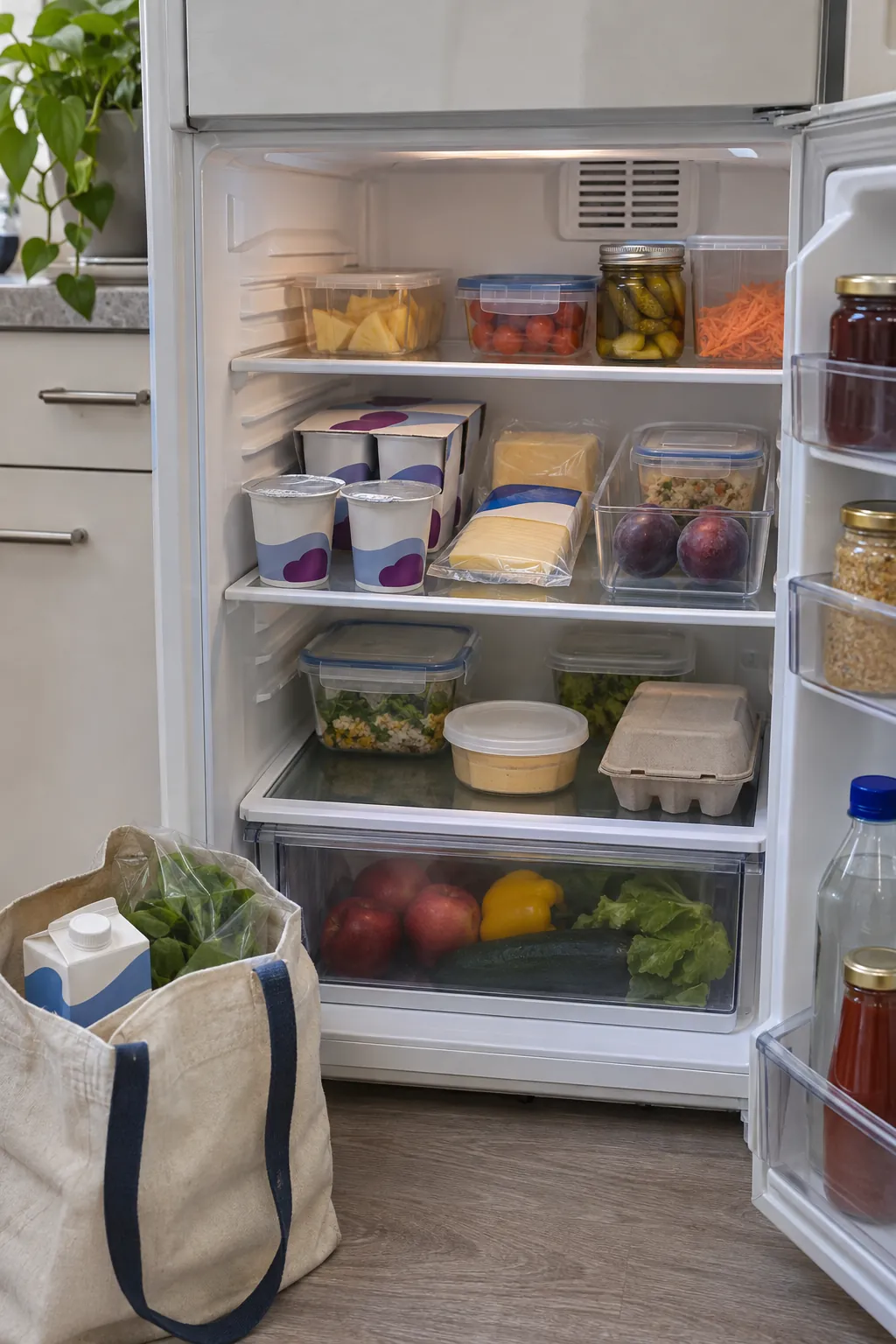
Before putting new groceries away, scan the refrigerator for older food that still needs attention. Move only appropriate items into the eat first fridge bin, then place new products behind older matching products where practical.
This refrigerator food rotation takes a few minutes and exposes duplicate purchases. If the box is already full, plan from it before opening another package. Small household groceries work better when purchases reflect what was actually used.
Reset the Box Once a Week
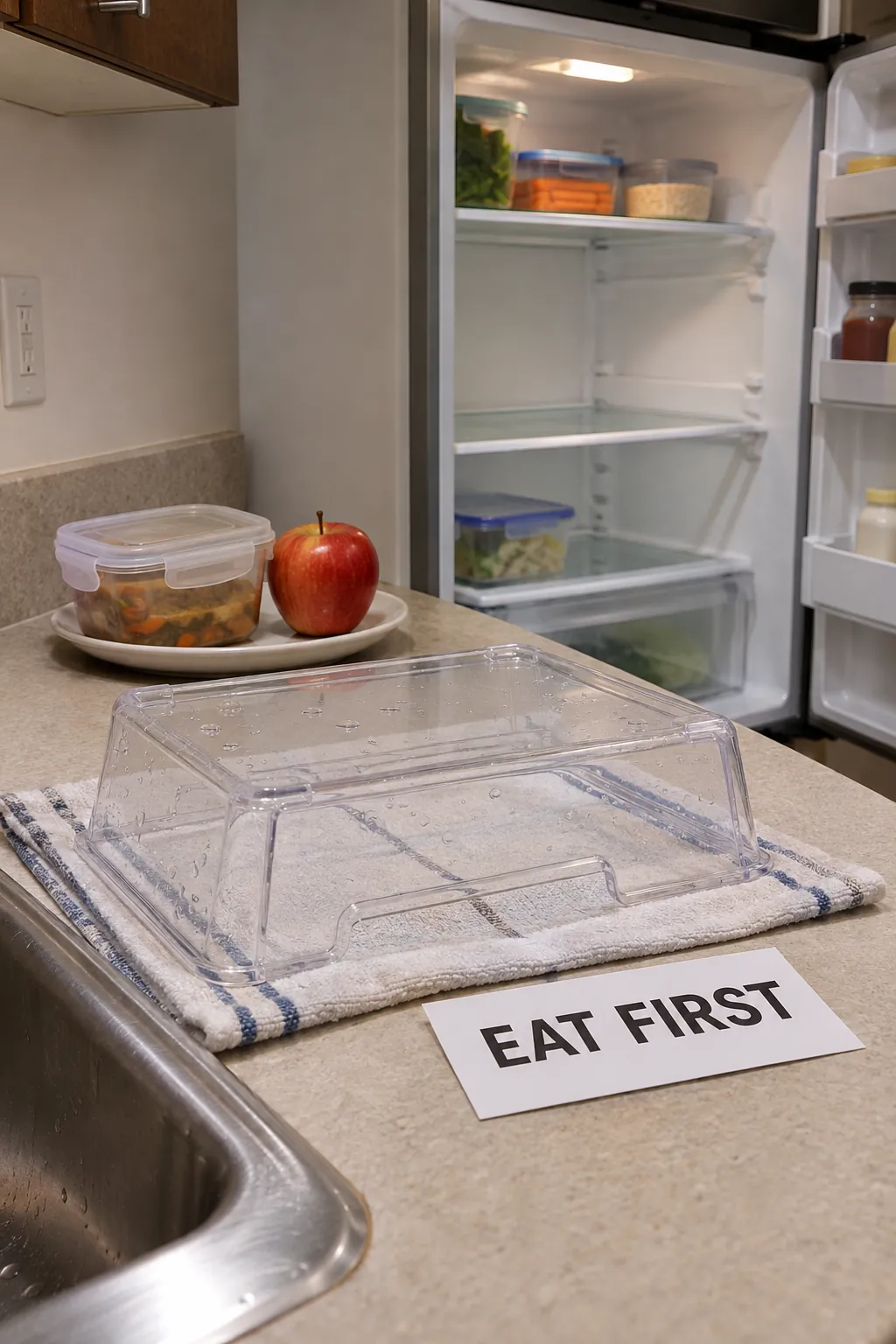
Choose a repeatable moment such as the evening before shopping. Remove the box, review every item, clean the container, and return only food that remains safe and useful. This prevents the use first box from becoming permanent storage.
Notice what repeatedly reaches the reset. That pattern can reveal packages that are too large, recipes that make too many portions, or produce that needs a different storage method. Adjust the next shop or batch size instead of relying on the box to solve excess buying.
Keep the Routine Easier Than Ignoring It
A useful box needs one location, one simple date method, and two habits: check it before meals and reset it before shopping. Avoid detailed inventories unless they genuinely help your household. The physical cue should reduce decisions, not create more administration.
If food waste continues, track only the foods discarded most often for a short period. Buy smaller amounts, shop more frequently when practical, cook fewer portions, or freeze suitable food earlier. The box works best as feedback about buying and cooking, not as extra capacity.