
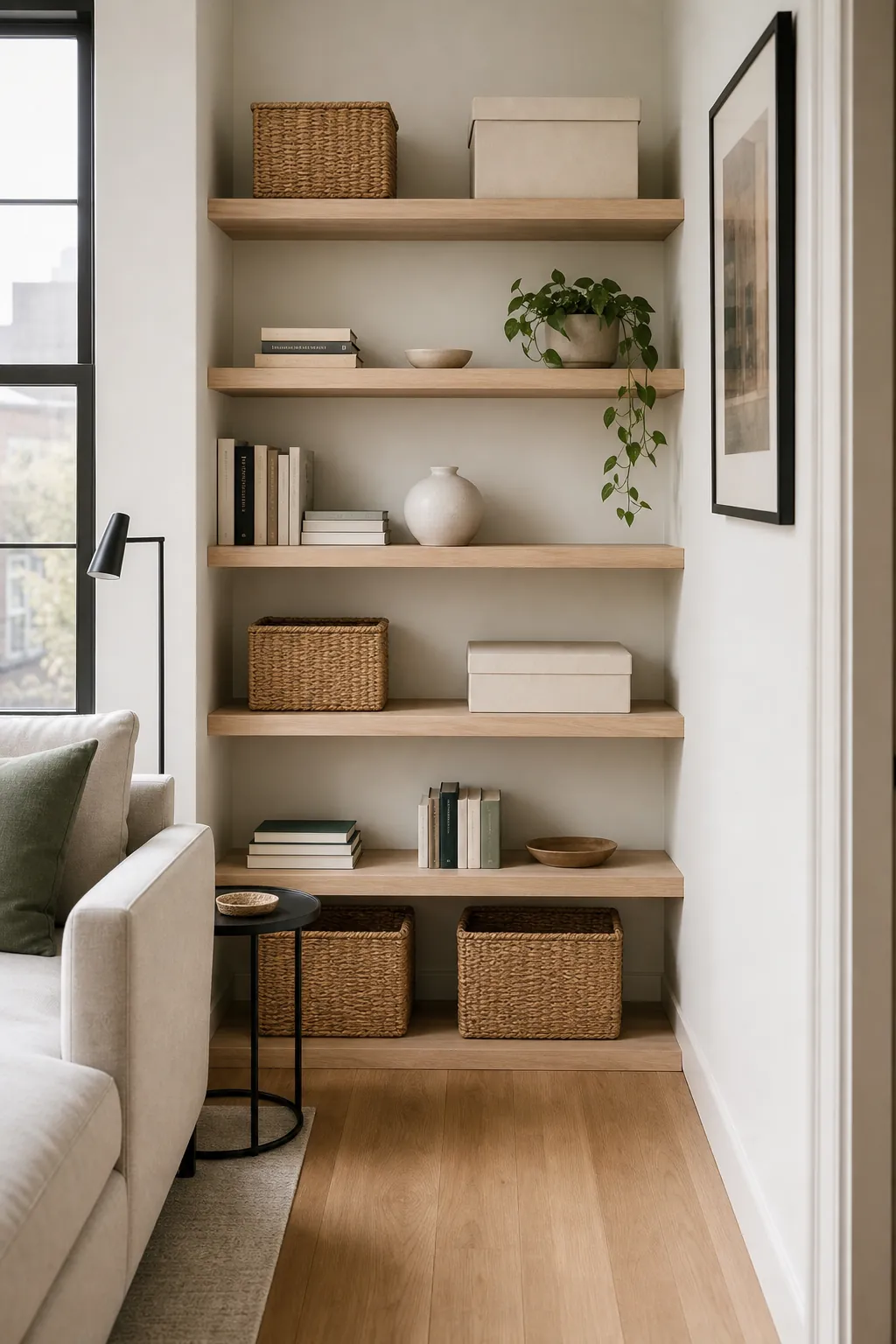
Open storage can make a small room feel lighter, but it is also unforgiving. Every basket edge, book spine, charger, spare candle, and folded blanket is visible at once. The room may be organized, yet still feel busy because the eye has too many small things to read.
The fix is not to hide everything or buy a new shelving unit. The cleaner approach is to treat open storage like a small display area with a job. Keep the items you reach for easy to grab, but reduce the number of shapes, colors, labels, and loose objects that stay visible. That is what turns open storage into clean storage.
The Real Problem Is Visible Noise
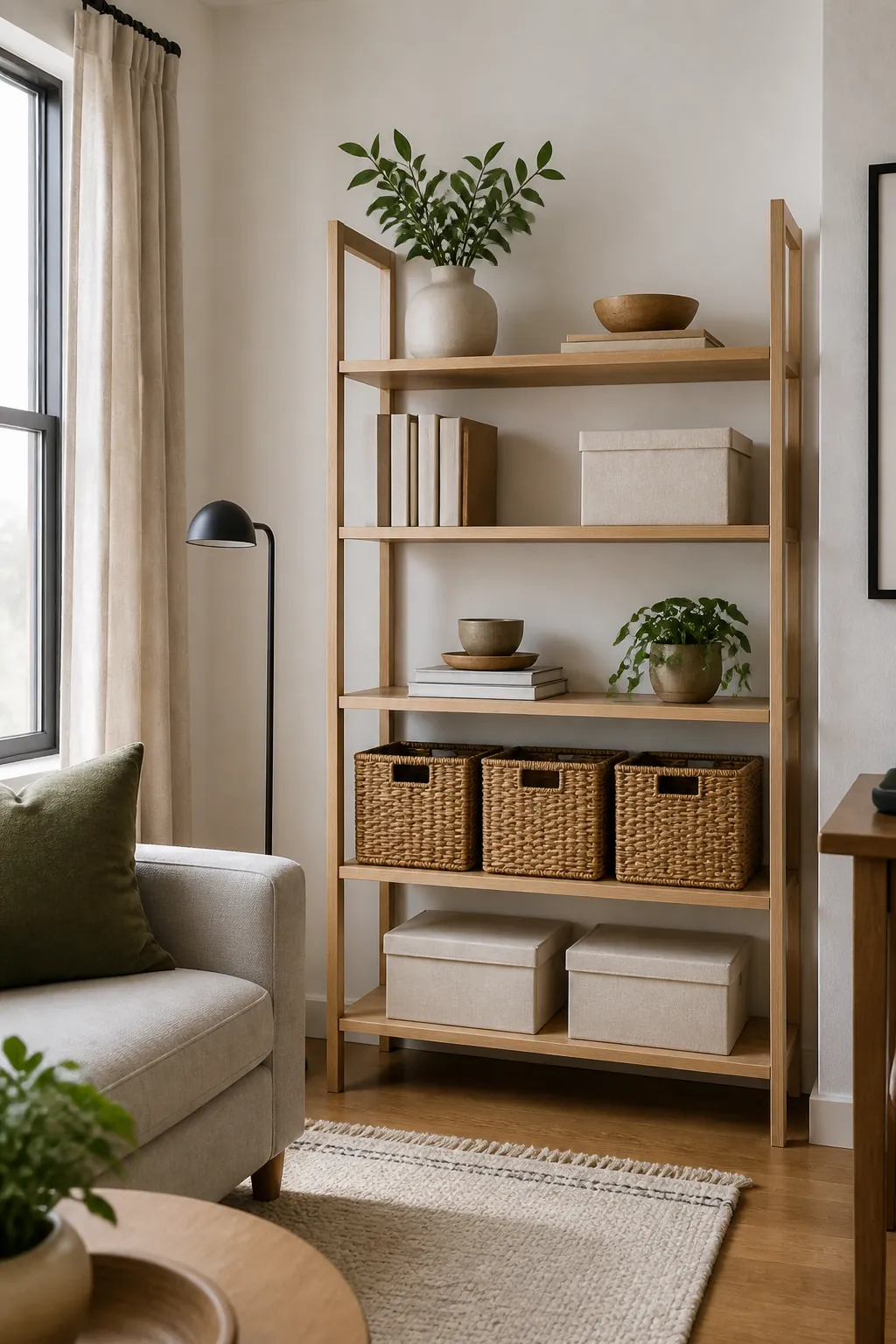
Small room storage fails fast when everything has equal visual weight. A black cable, a bright label, a stack of mixed notebooks, and a half-full clear bin all pull attention. Nothing is technically wrong, but the shelf looks restless.
Start by looking at your open storage from the doorway, not from right in front of the shelf. That is how the room actually reads. Ask one question: what is making my eye stop too many times? Usually it is not one big messy item. It is ten tiny interruptions.
- Too many visible product labels
- Several unrelated colors in one shelf bay
- Small items scattered instead of grouped
- Transparent containers showing messy contents
- Shelves filled edge to edge with no blank space
Once you notice visual noise, shelf organization becomes easier. You are no longer trying to make every object beautiful. You are deciding which objects deserve to be seen.
Pull Everything Off Before You Rearrange
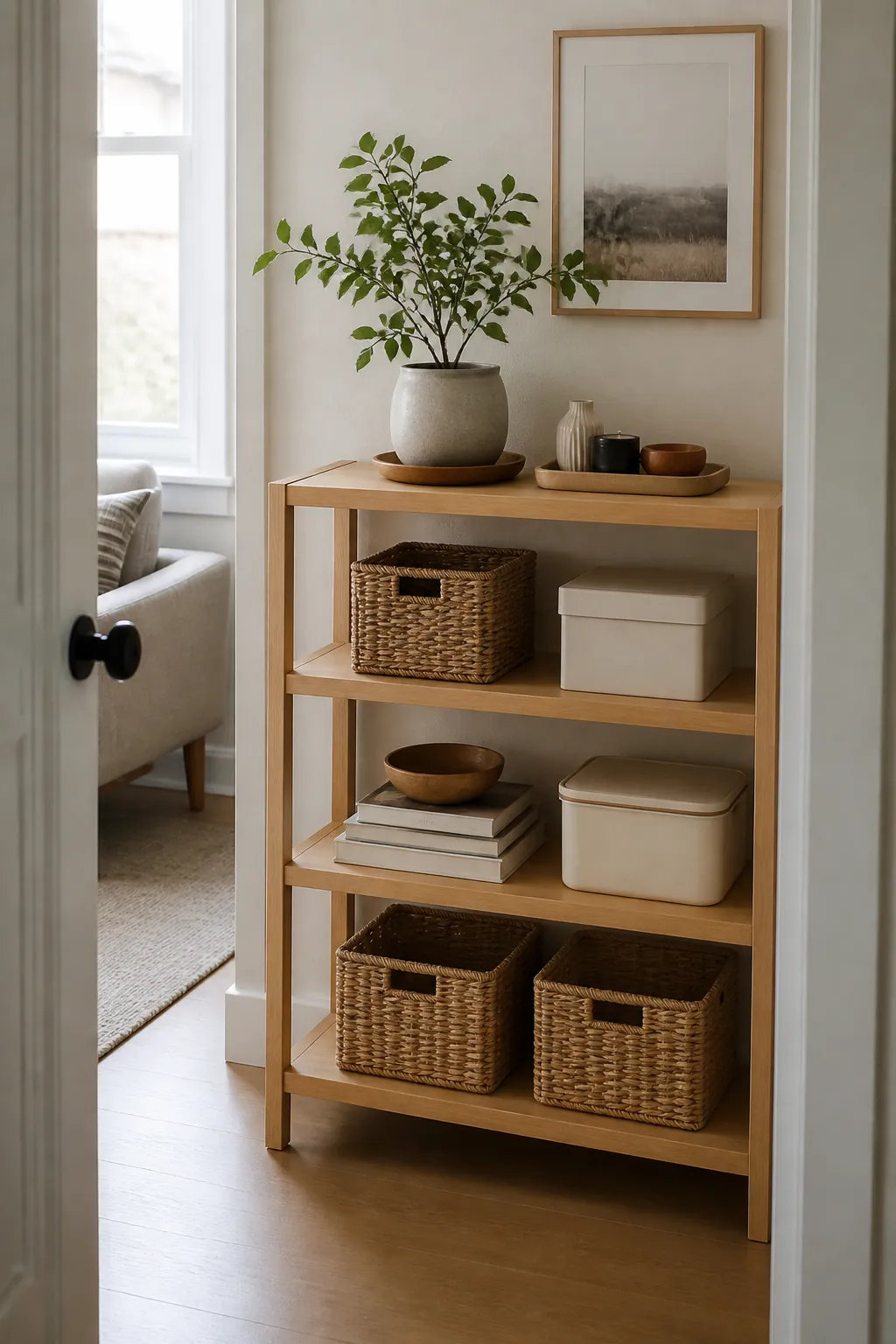
Rearranging clutter on the same shelf usually keeps the same problem. Take everything off first. Wipe the surfaces, then sort items into three groups: visible, contained, and relocated.
The visible group should be small. It can include things with clean shapes, repeated colors, useful daily items, books with quiet spines, ceramics, plants, or a lamp. The contained group is for useful items that look messy in the open: cables, medicine, craft supplies, receipts, extra toiletries, small tools, pet items, or remote controls. The relocated group is for anything that is only on the shelf because there was nowhere else to put it.
This is the step most people skip, but it changes the whole room. Open storage looks cleaner when every exposed item has earned its place visually. If an item is useful but ugly, it belongs in a basket, box, drawer, or lower shelf zone.
Use Matching Baskets for the Messy Categories
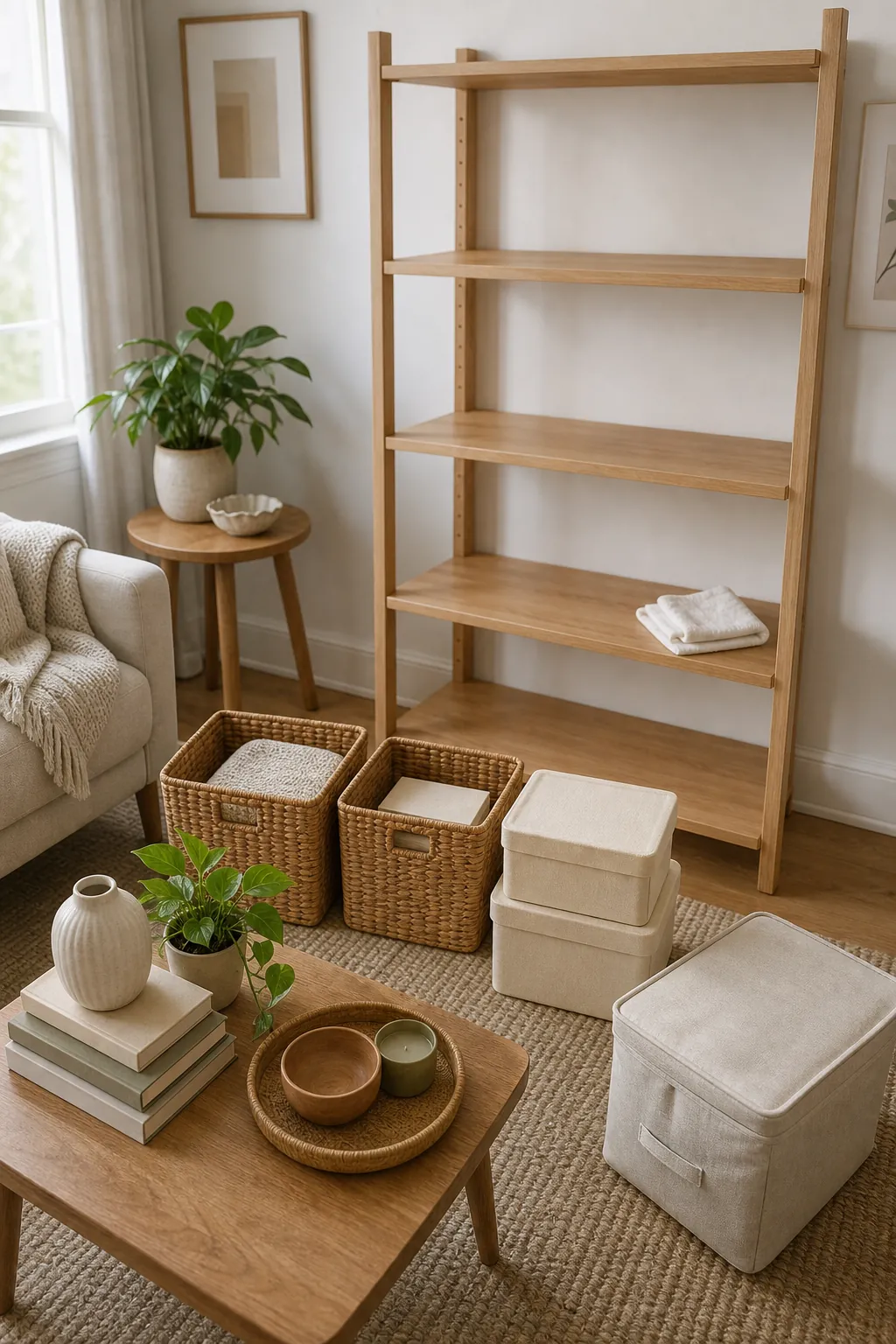
Storage baskets are the quickest way to calm open storage because they turn many small things into one larger shape. A basket full of chargers, tape, receipts, and spare batteries reads as one woven rectangle. The same items loose on a shelf read as clutter.
For a small room, choose fewer basket styles. Two or three matching baskets usually look cleaner than a mix of bins gathered over time. Lidded baskets are best for items that always look chaotic. Open baskets work well for blankets, rolled towels, or items you want to grab daily.
- Woven baskets warm up small home decor and soften hard shelving.
- Canvas bins work well in bedrooms, home offices, and rental shelving.
- Lidded boxes hide visual clutter from paper, cords, medicine, and tools.
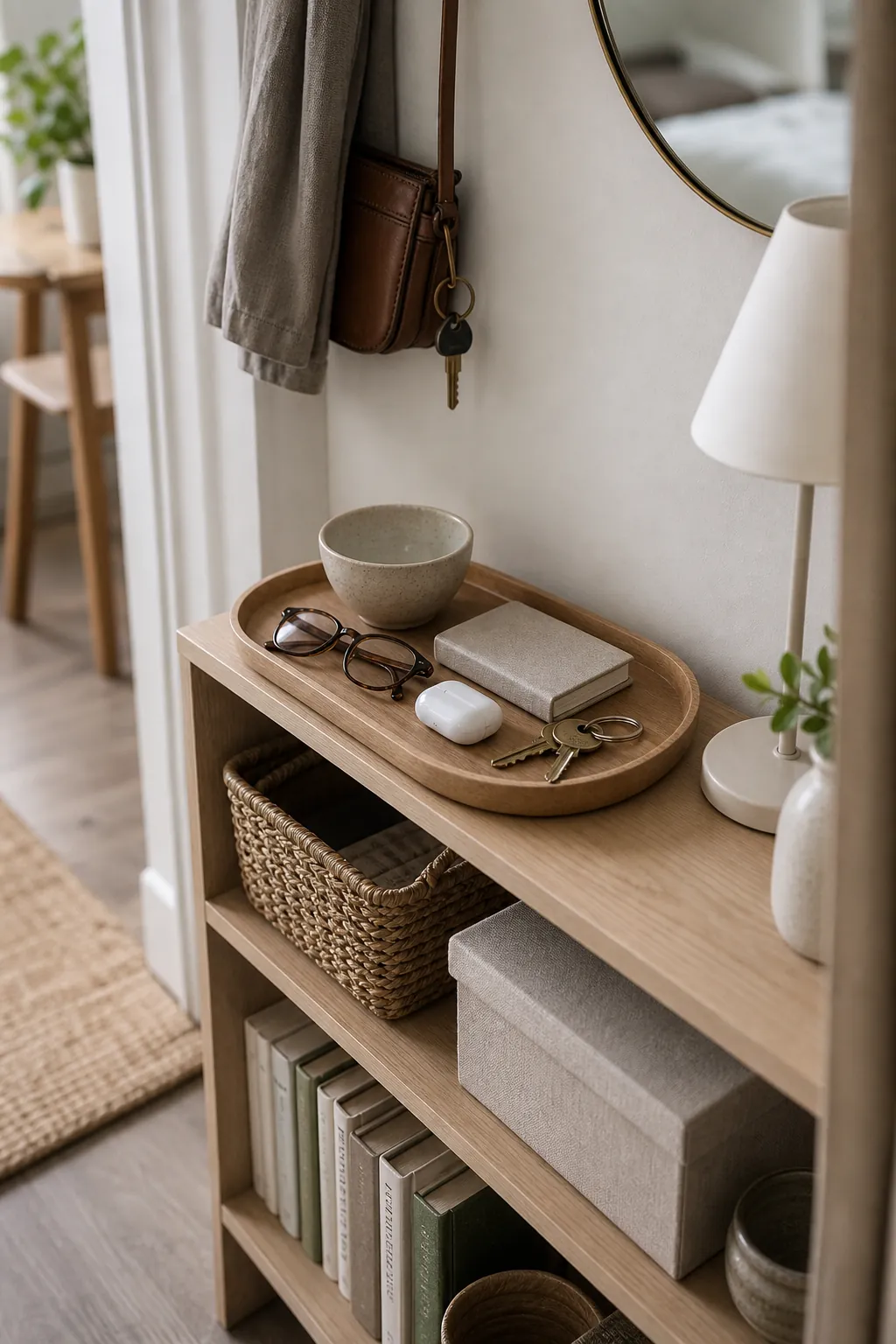
- Tray-style baskets create a landing zone for keys, glasses, and small daily items.
Labels can help, but keep them quiet. A small tag looks better than a bright sticker across the front. The goal is not to make the shelf look like a storage aisle. The goal is a clutter free room that still works hard.
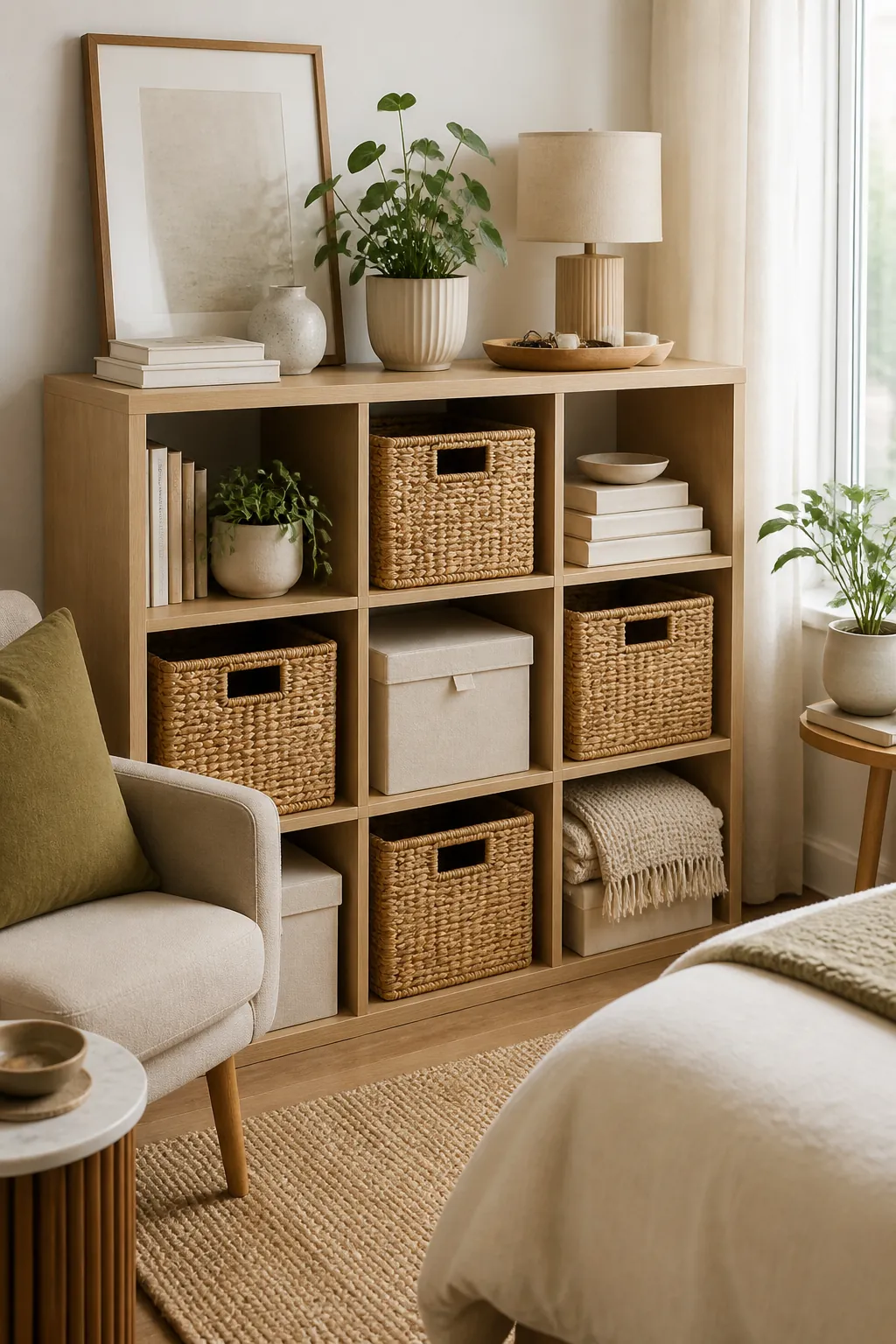
Build One Quiet Color Story
A small space storage system looks cleaner when the colors repeat. You do not need an all-white room. You only need a limited palette on the visible shelves.
Choose one base color, one warm material, and one accent. For example: white shelves, seagrass baskets, and soft green plants. Or light wood, cream boxes, and black metal bookends. When the same tones repeat across the shelf, the eye reads the whole unit as one intentional piece instead of a pile of unrelated storage.
If your shelf currently has strong color everywhere, start by removing packaging and bright labels. Put bold items inside boxes. Turn books so the calmer spines face out, group similar colors together, or place loud items behind a basket. Color control is often more powerful than decluttering because it changes how much effort the room asks from the eye.
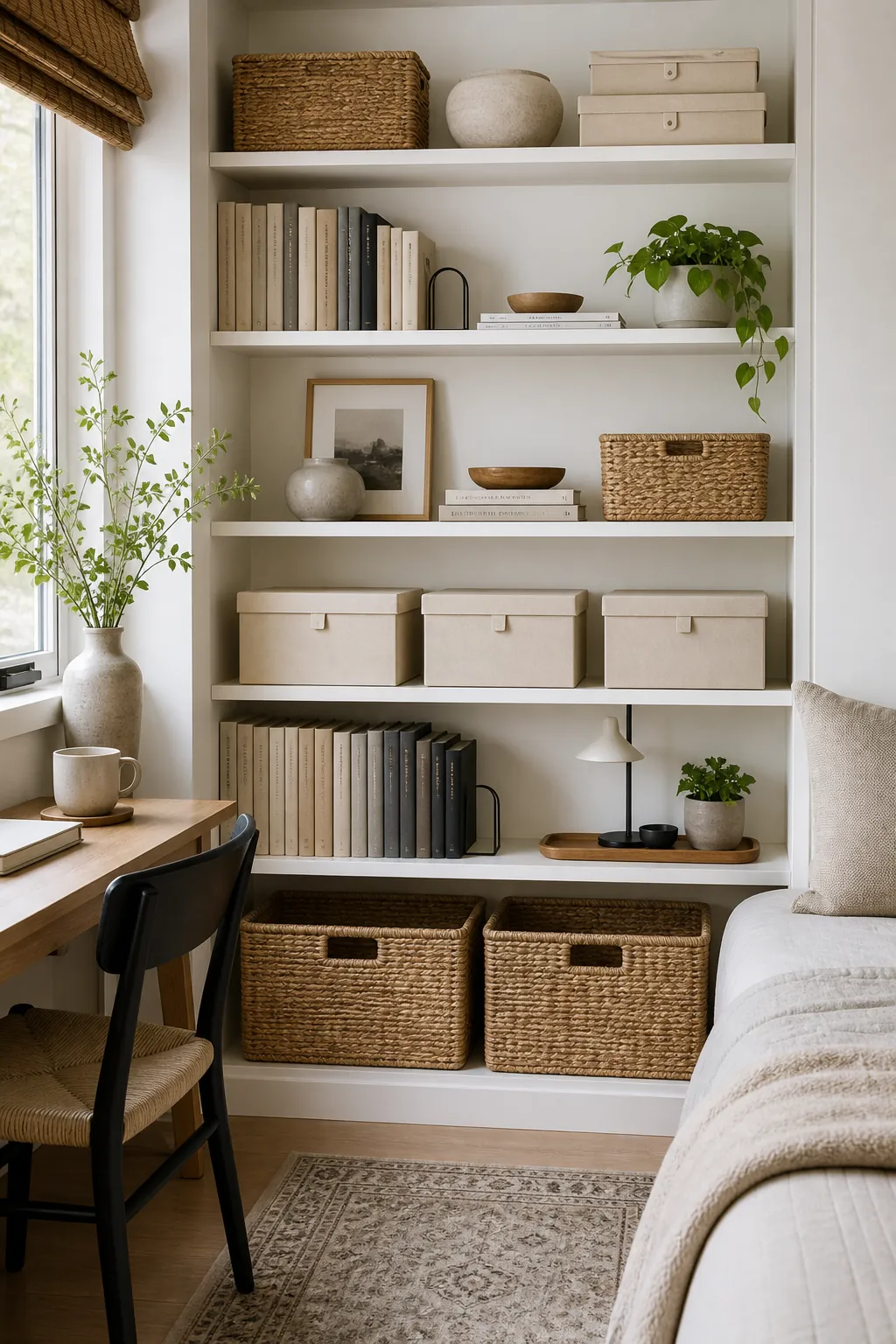
Group Small Objects Into Bigger Shapes
Small loose objects are the main reason open storage looks messy. A candle, a frame, a small bowl, a plant, and three trinkets may all be nice on their own, but together they create too many edges.
Use grouping to make the shelf easier to read. Place small items on a tray. Stack books horizontally under a bowl. Put a few similar vases together instead of spreading them across three shelves. Keep one taller item, one medium item, and one low item in a group so the arrangement has rhythm.
The rule is simple: fewer, larger visual groups look cleaner than many separate pieces. This works especially well in a bedroom, entryway, or living room where the shelf is visible from several angles.
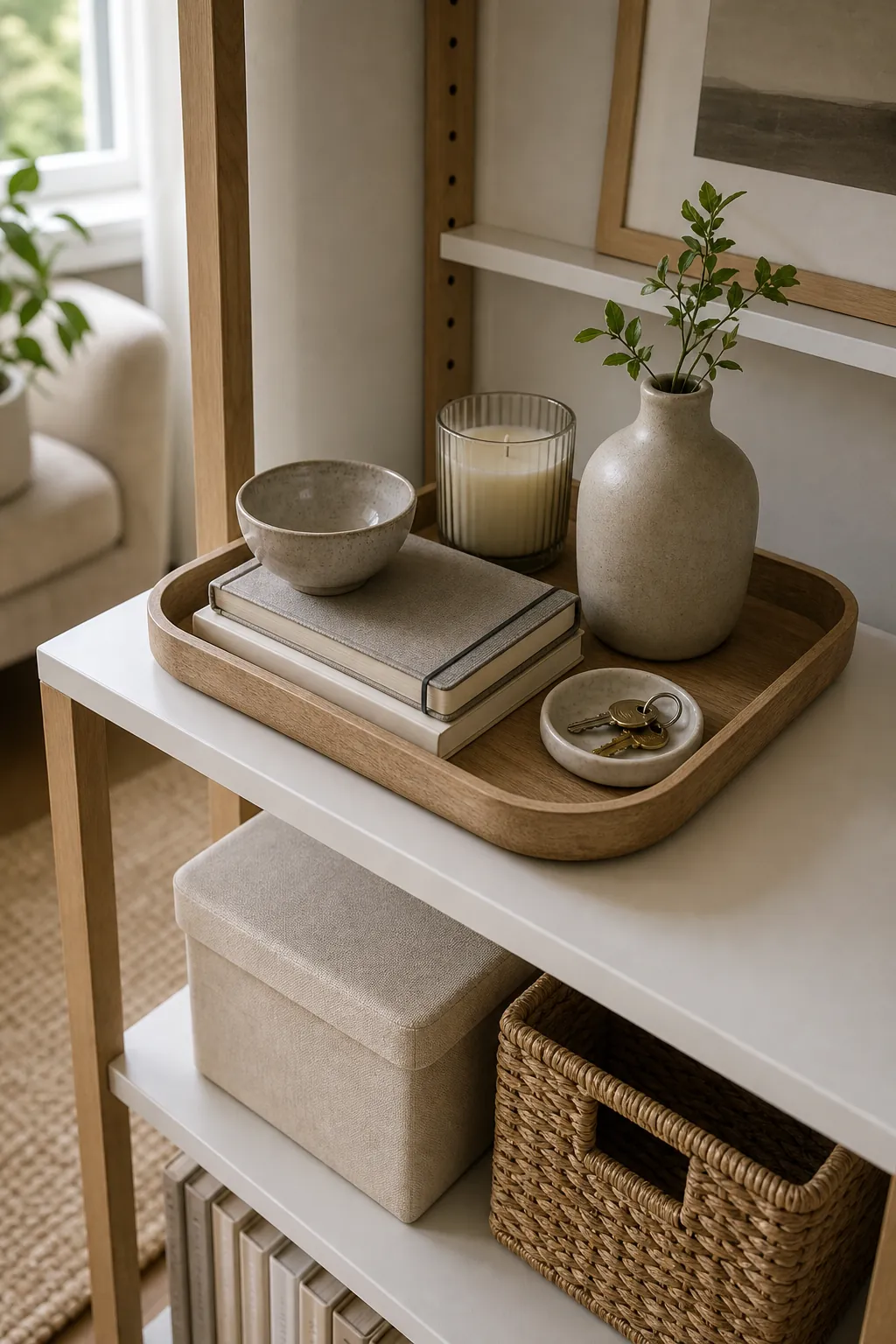
Leave Empty Space Where the Room Needs Rest
Open storage in a small room does not have to use every inch. In fact, a shelf that is completely full often makes the room feel smaller. Blank space gives the eye a pause and makes the useful items look chosen instead of stored by default.
Try leaving at least one open area in each shelf section. It can be a gap beside a basket, space above a low stack of books, or a mostly empty shelf with one lamp or plant. If that feels wasteful, move the practical overflow into covered storage below the shelf, under the bed, inside an ottoman, or in a closet zone.
This is where small room storage becomes design. You are not losing storage. You are trading a little exposed capacity for a room that feels cleaner every time you walk in.
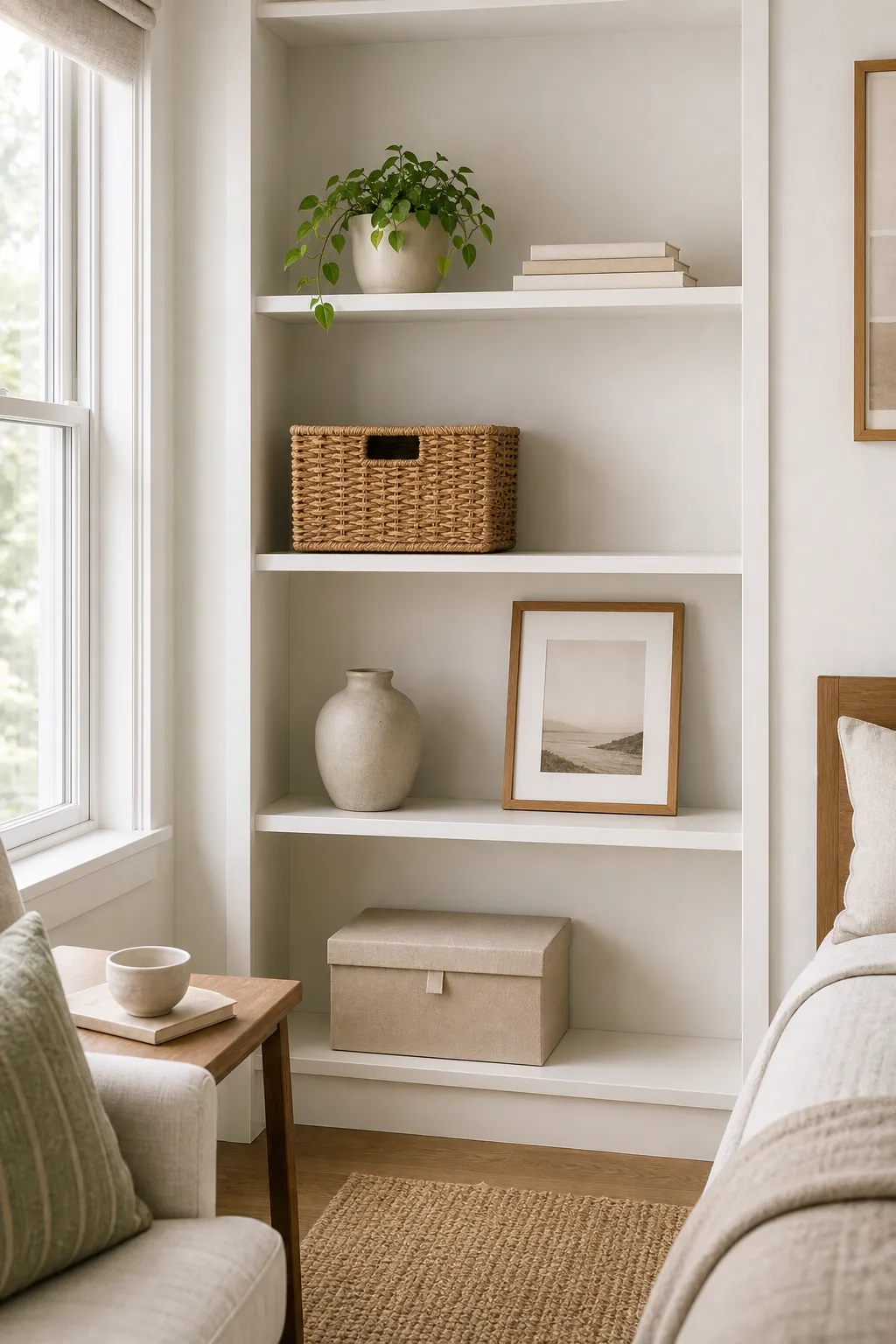
Keep Ugly Essentials Low or Behind a Soft Boundary
Some things are always hard to style: power strips, routers, cleaning bottles, extra cords, gaming controllers, bulky appliances, paperwork, and hobby supplies. They are part of real home organization, but they rarely belong at eye level on open shelves.
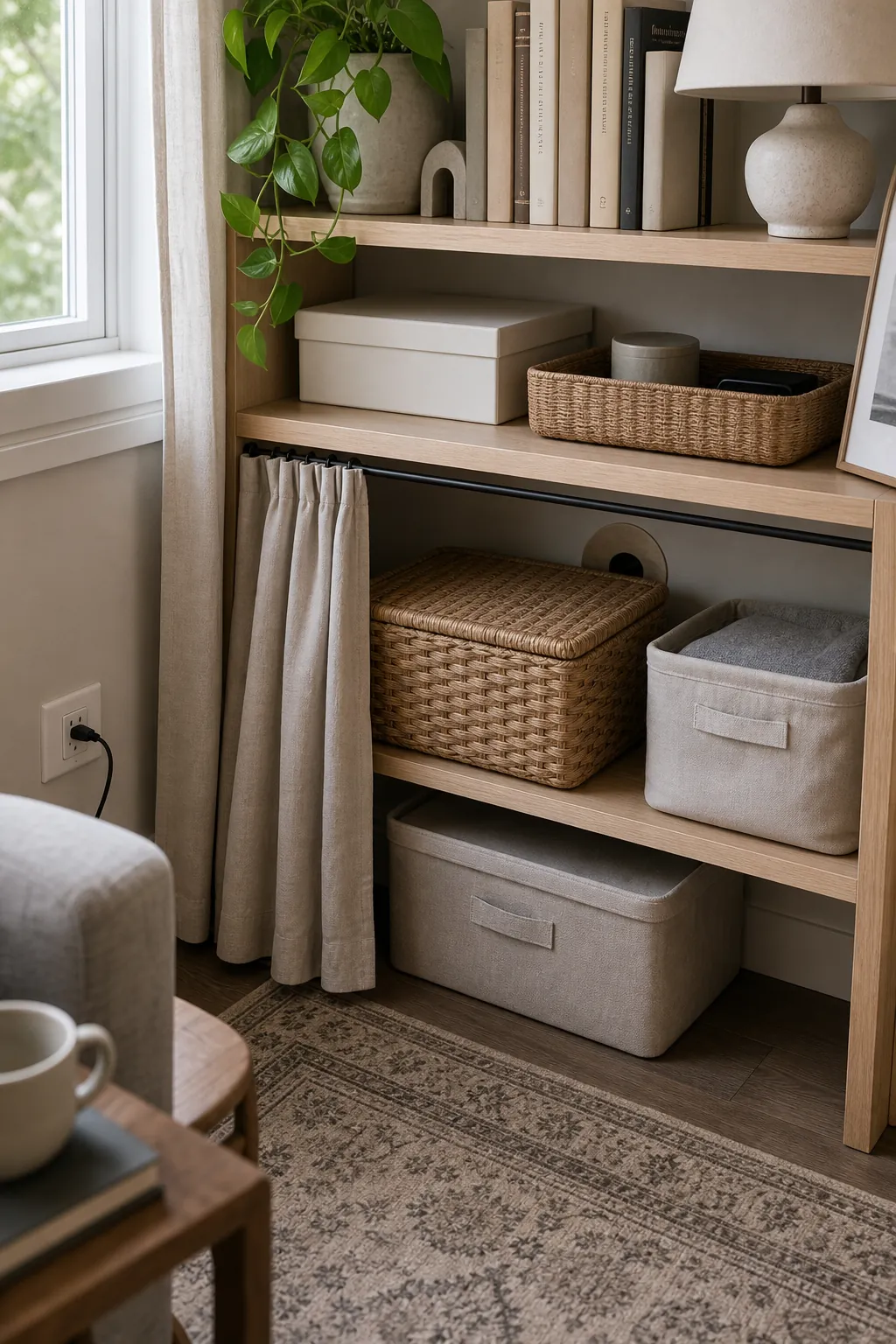
Move the most visually messy essentials lower, deeper, or behind a soft boundary. Use a lidded box on the bottom shelf, a basket under a console, a fabric bin in a cube shelf, or a simple curtain panel on the side of a utility shelf. In a rental, a tension rod or clip-on fabric can hide one busy zone without changing the furniture.
The cleanest open storage is often partly open. Let attractive, simple items stay visible. Give the practical chaos a place to disappear.
Create a Reset Zone for Daily Drop Items
A small room gets messy quickly because daily items have nowhere to land. Keys, glasses, earbuds, receipts, lip balm, mail, and hair ties spread across open shelves because they are used often and put down fast.
Give these items one intentional landing zone. Use a shallow tray, small bowl, or narrow basket near the place where clutter usually starts. The container should be easy to empty and small enough that it cannot become permanent storage.
Then set a five-minute reset rule. At the end of the day, return visible items to their basket, tray, hook, or drawer. You are not deep cleaning. You are protecting the room from small-item creep. Open storage stays cleaner when the reset is easier than the mess.
Use This Quick Shelf Formula
If you want a simple starting point, use this formula for each open shelf section:
- One closed basket or box for useful clutter
- One taller item for height, such as a vase, lamp, or plant
- One low stack, tray, or bowl for smaller pieces
- One visible gap so the shelf can breathe
Repeat the same material or color at least three times across the storage unit. Keep the loudest practical items contained. Let only the best-looking daily essentials stay visible. This is how open storage becomes clean storage without pretending a small home does not need real stuff.
The goal is not a perfect shelf. The goal is a small room that feels easier to live in. When the shelf has fewer visual interruptions, matching storage baskets, useful blank space, and a quick reset habit, the whole room starts to look calmer.