A thrift shop find can look perfect on its own and awkward beside the decorations you already have. The solution usually starts with selecting and grouping, rather than repainting the whole box. Choose a few features to repeat, then let the differences that make each piece interesting remain visible.
Sort for condition before you sort for style
A box of secondhand ornaments can contain lovely pieces and things that should never go back on display. Spread everything on a protected surface and separate intact decorations from items with cracks, loose parts, sharp edges, heavy dirt, or missing supports. Put damaged pieces aside before you decide which colors belong together. For electrical decorations, check the instructions and condition of cords, plugs, sockets, and casings; do not use items with damage or uncertain electrical safety.
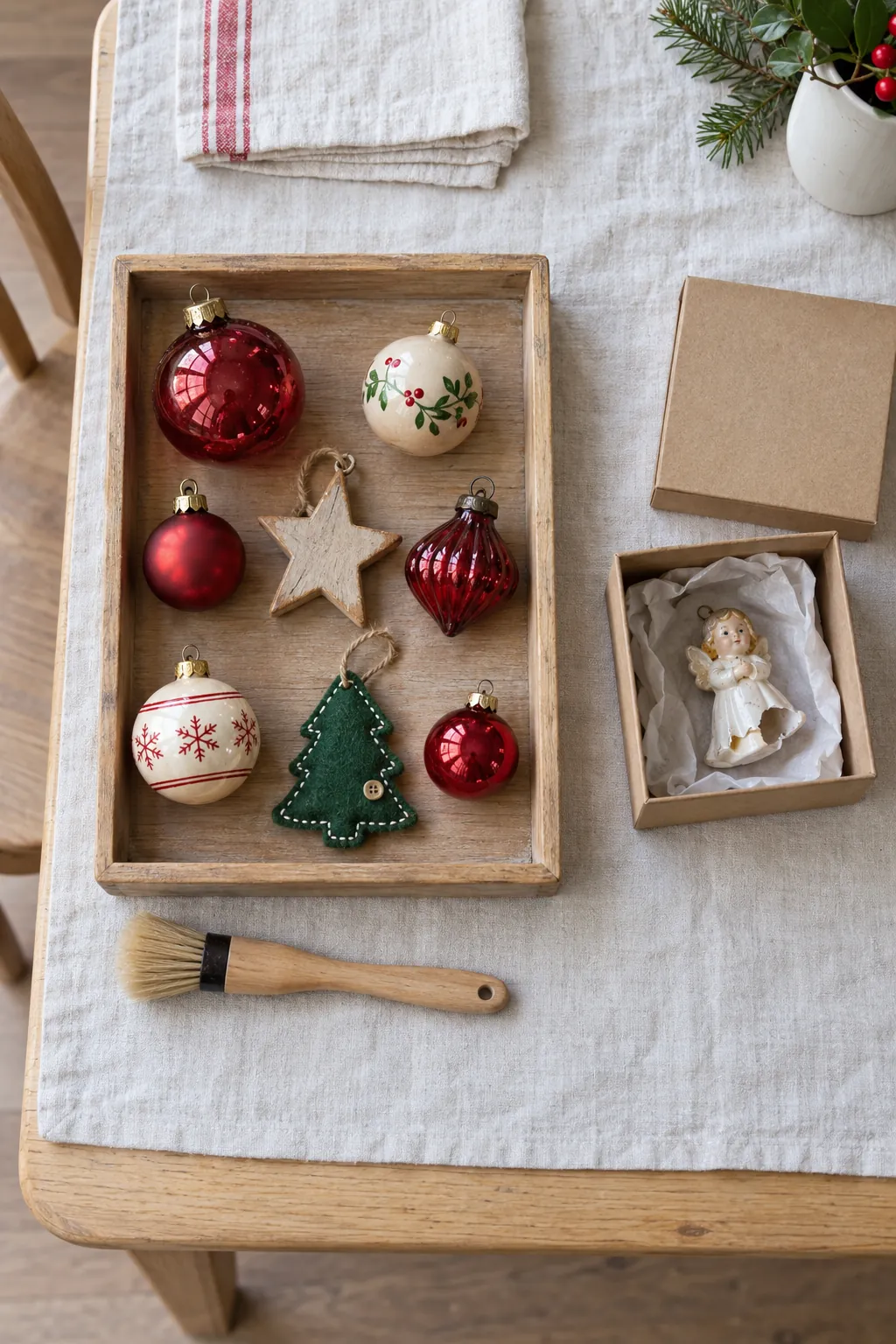
Clean each material with a method suitable for its finish. A dry soft brush may be a better starting point for delicate painted objects than soaking them, and a hidden spot test is useful before introducing moisture or a cleaner. Let everything dry completely before storage or styling. Keep any unknown older paint intact rather than sanding or stripping it just to get a matching color.
Choose a palette from your strongest existing piece
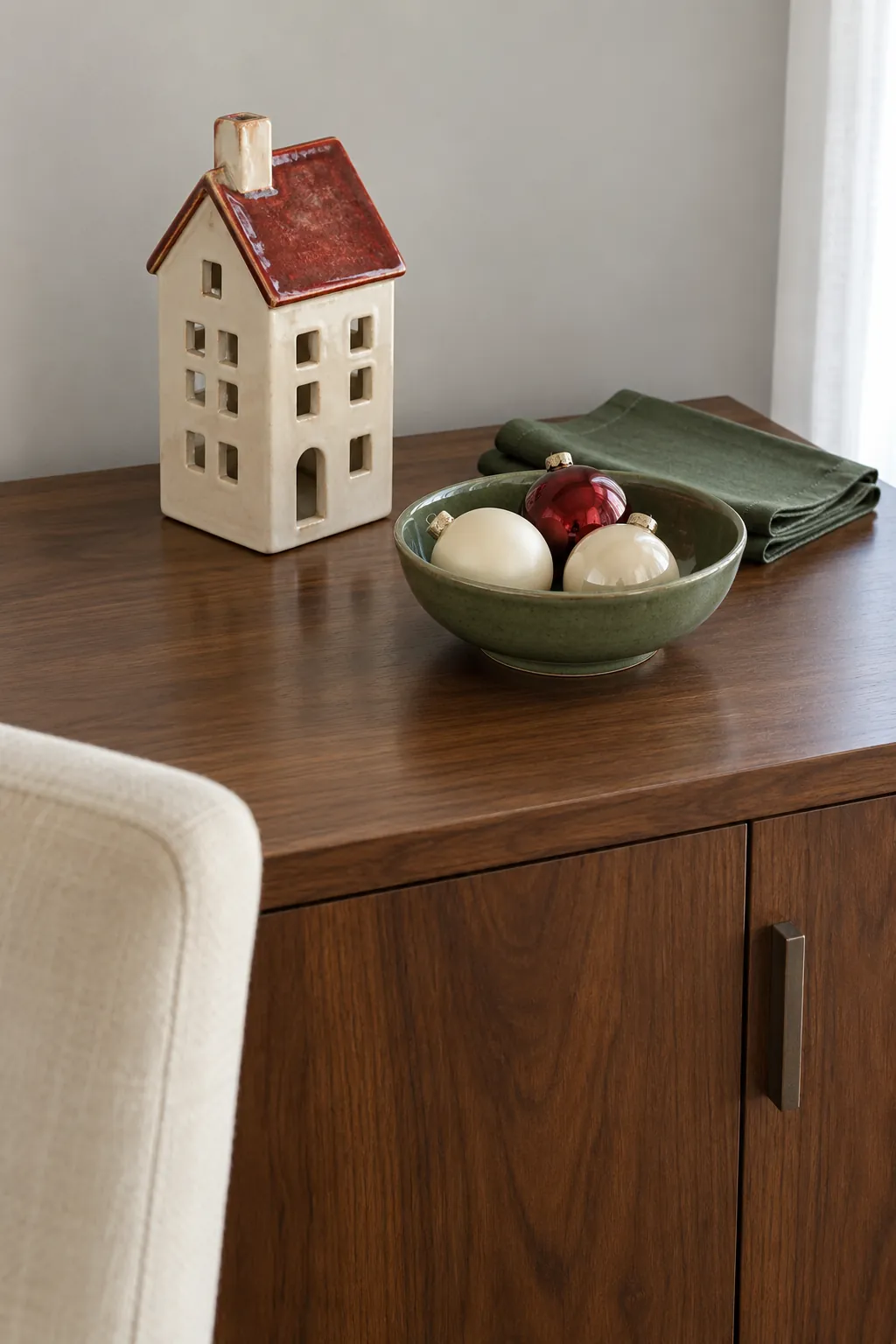
Pick one ornament, figurine, or textile that you already like and use its colors as the starting point. A cream ceramic house with a red roof might suggest cream, red, and green; a silver bauble with blue details might suggest silver, blue, and white. Choose a main color family, a quieter supporting color, and an optional small accent. Hold those choices beside your room finishes so the Christmas color palette works with the furniture as well as the decorations.
Repeat a finish without erasing every difference
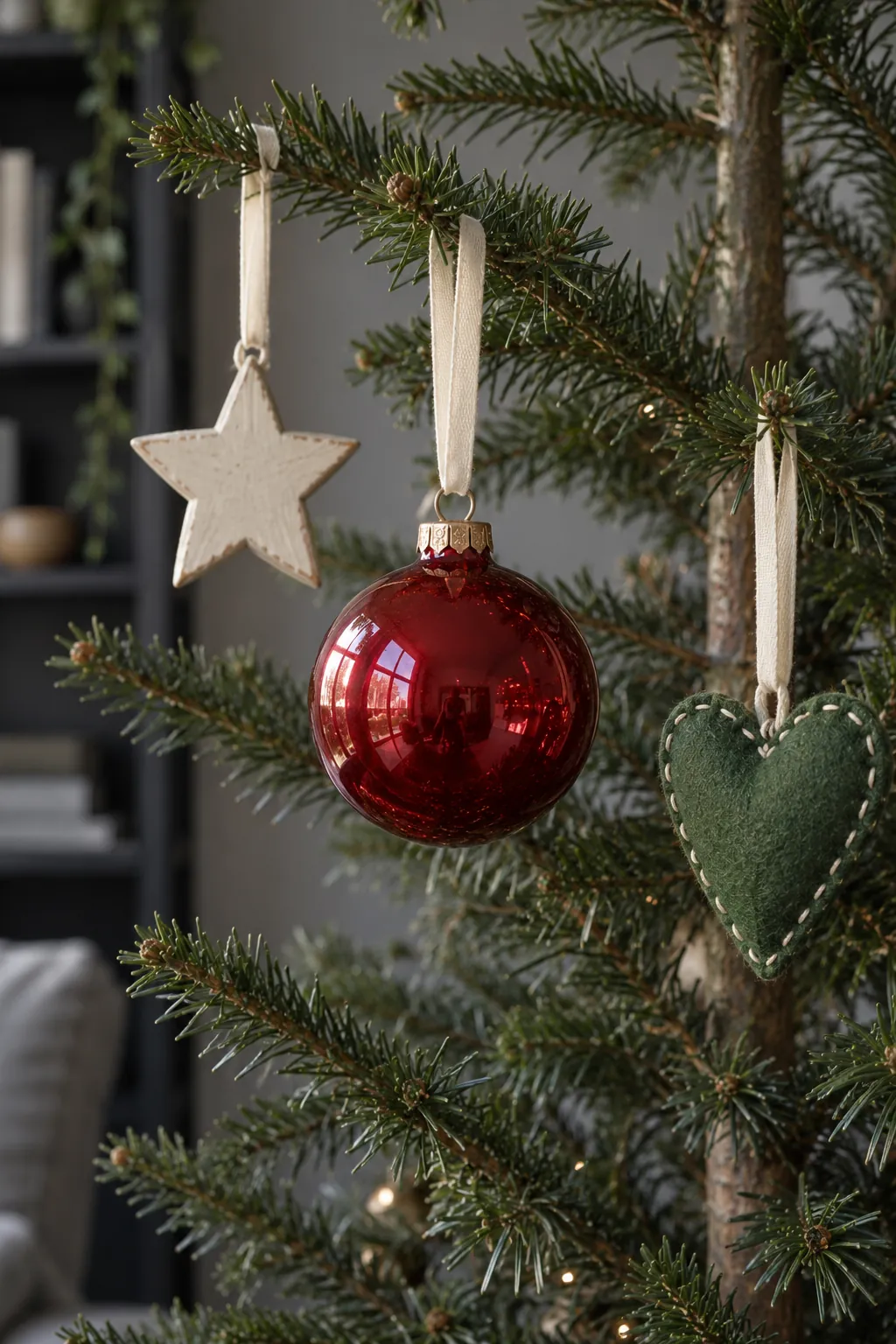
Ornament finish coordination does not require repainting everything. Place shiny pieces near matte ones in small groups so the contrast looks deliberate, then repeat that same relationship in another part of the room. You might pair a glossy red bauble with a cream wooden star on both the tree and a table display.
If a piece is valuable, sentimental, or carries a delicate original finish, leave that finish alone. Try a new hanging ribbon, a removable fabric band, or a different display position before reaching for paint. A shared cream ribbon can connect glass, wood, and fabric objects without making them look newly manufactured.
For a low value craft object you do want to repaint, confirm that the coating is suitable for the surface and follow its preparation, ventilation, drying, and curing instructions. Avoid altering electrical parts, glass caps, moving joints, or anything with an unknown unsafe coating. One thoughtfully changed plain item is more useful than a whole box of ornaments painted badly.
Group different objects by one clear relationship
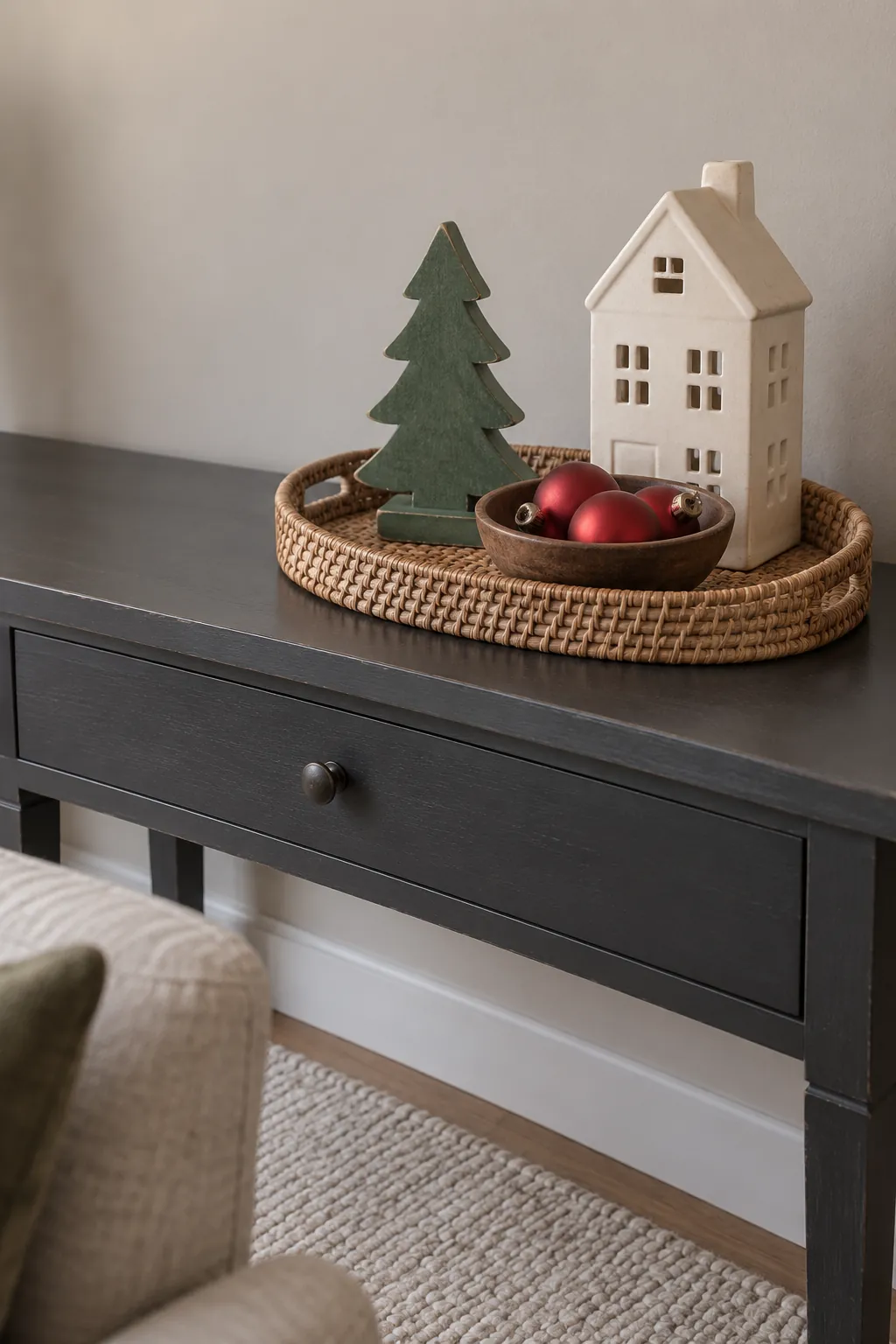
Mismatched holiday decorations feel collected when each display has a visible reason to exist. Group a few objects by color, material, repeated shape, or a small story, such as wooden trees and houses. Choose the relationship first, then remove pieces that make it harder to see.
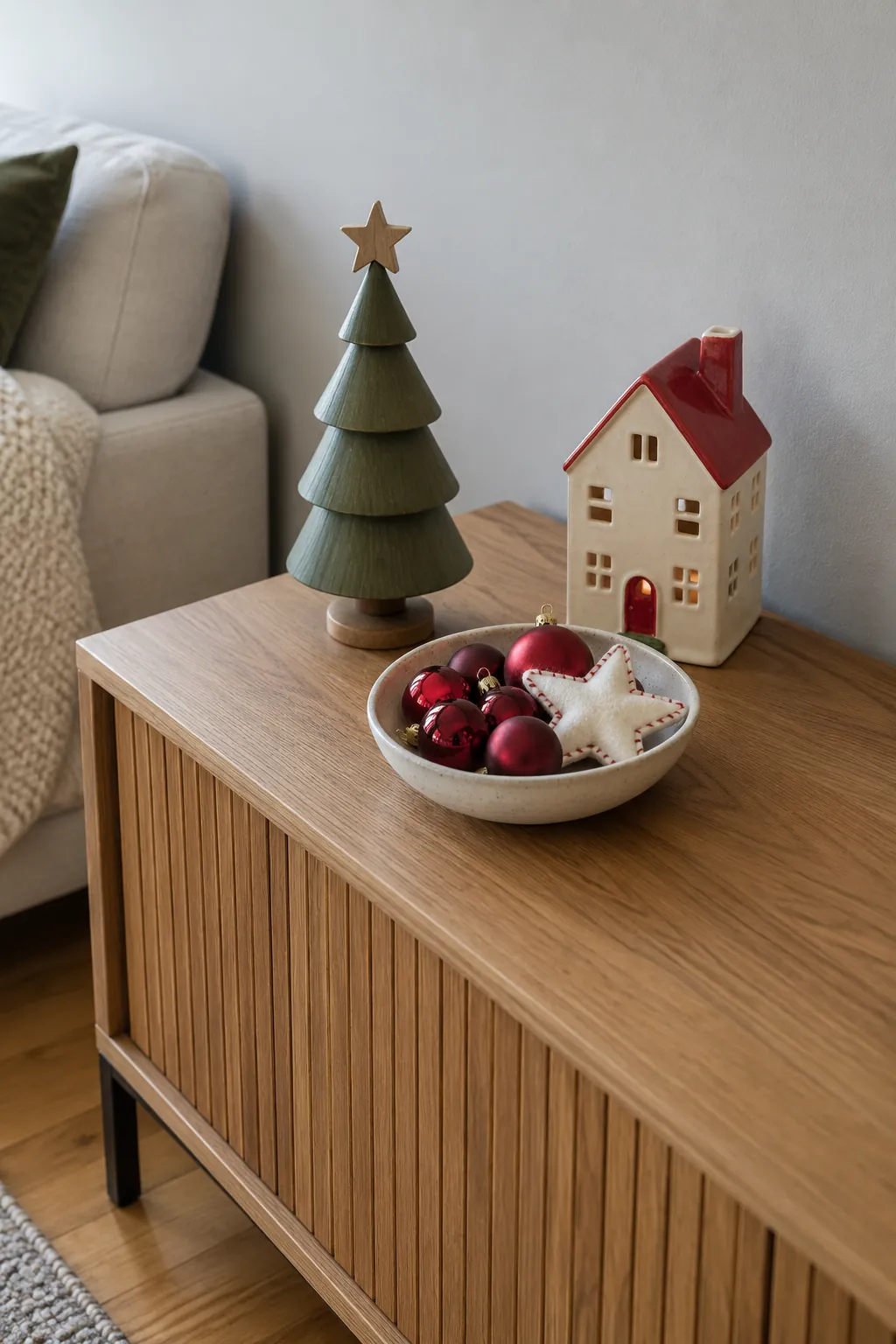
Give each group a clear height difference and leave open space around its outline. A taller ceramic house, a smaller tree, and a shallow bowl of matching baubles can form one scene even when they come from different shops. Keep all pieces on stable supports, with the taller items behind the lower ones, and use a tray when you want to move the group as one arrangement. Do not crowd fragile objects along the front edge of a shelf.
Give a beloved outlier its own small scene
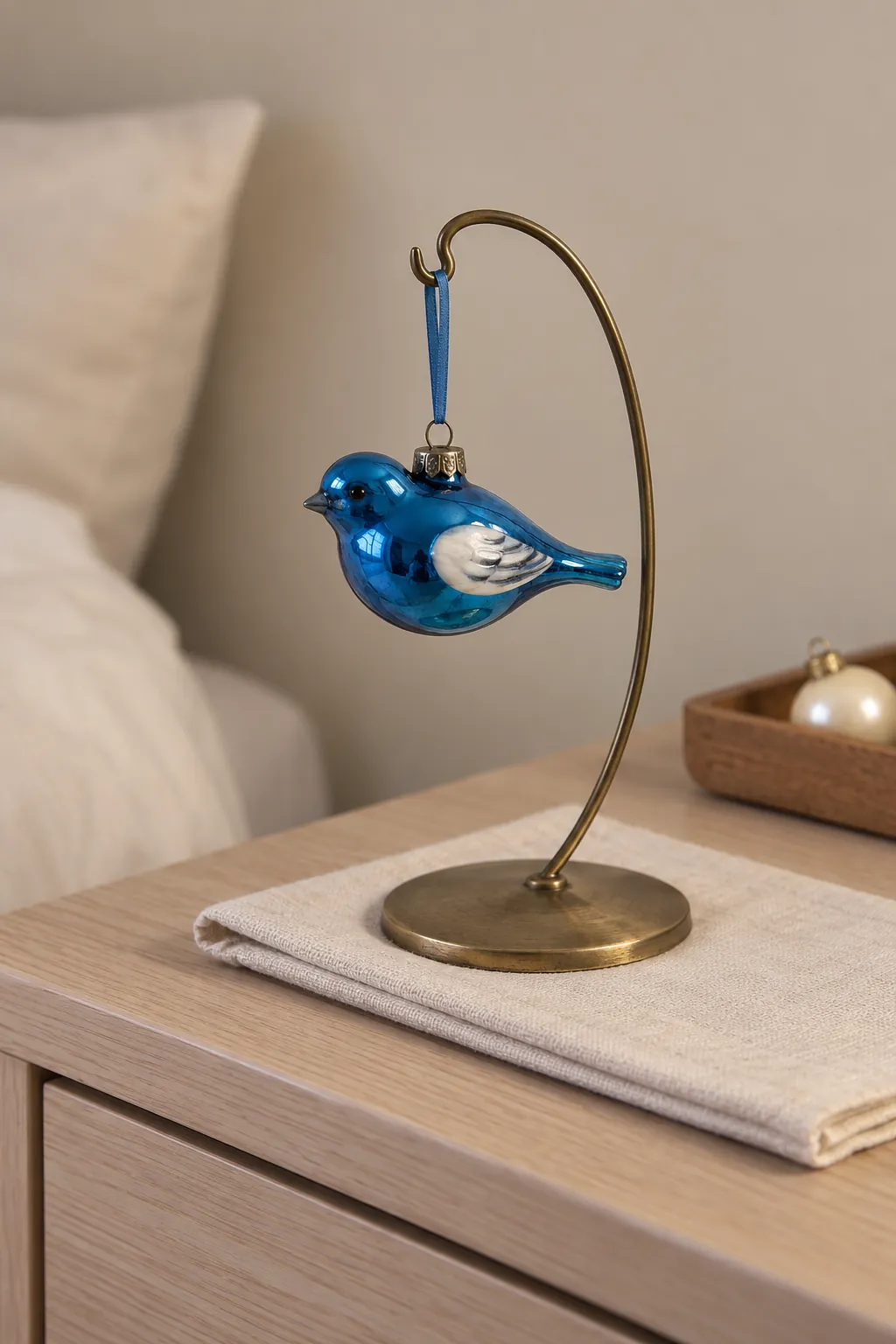
You do not have to force every meaningful decoration into the main palette. Put an unusual inherited ornament on a small freestanding stand, or give a bright figurine a separate shelf where it can be the focal point. Repeat one quiet material from the rest of the room, such as the same wooden tray or cream cloth, to keep that scene connected. This protects the character of vintage Christmas styling instead of reducing every object to the same finish. A small distinct display is often easier to enjoy than an object hidden among a crowd of nearly matching pieces.
Edit the room and store each group together
Walk back to the doorway and look at the displays as part of the room. If the same color appears in several places, you can remove some smaller objects without losing the seasonal feeling. Leave furniture usable and clear the routes people take between doors, seats, and storage. Take away anything that interrupts those routes, even if it matches the palette perfectly.
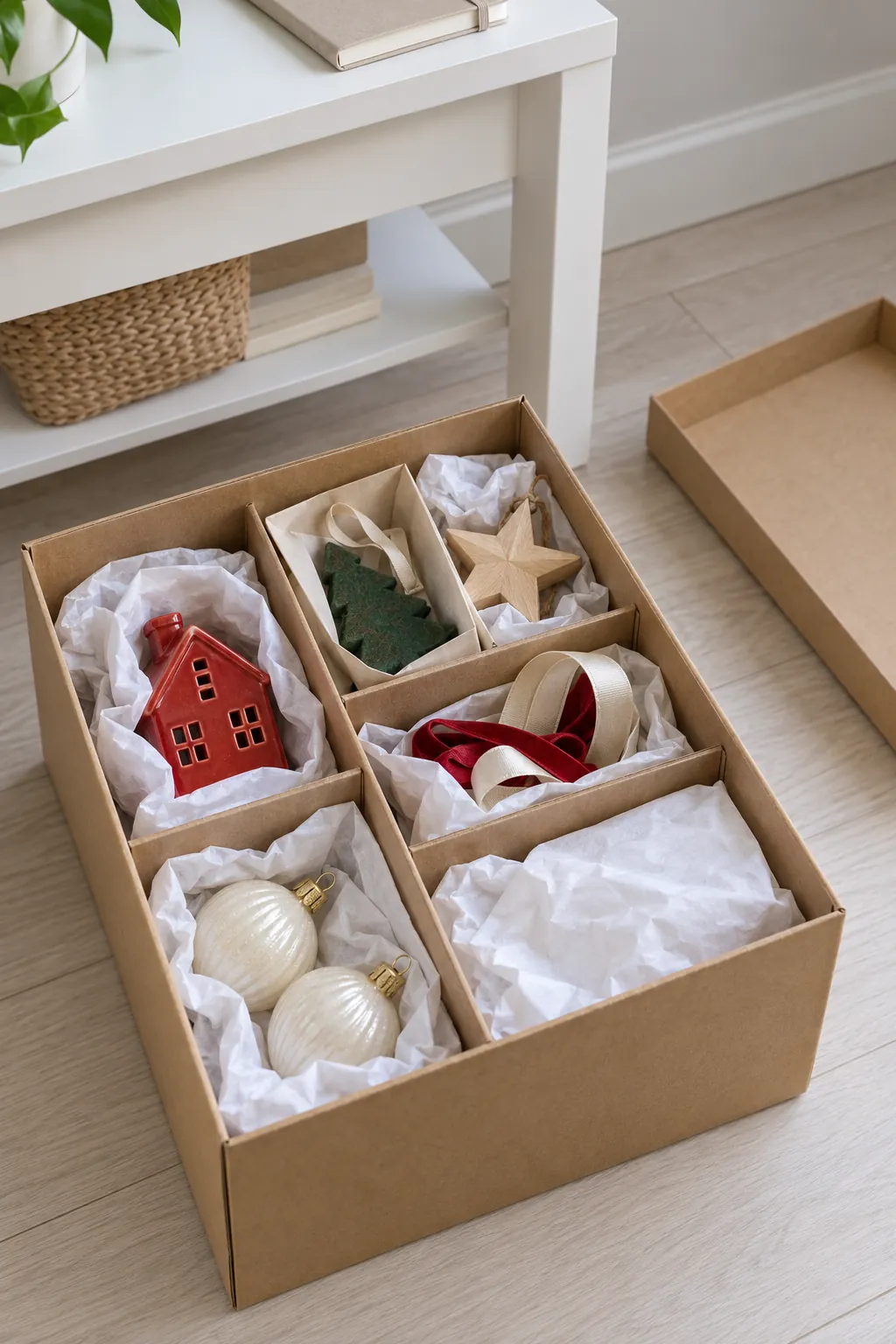
Photograph the groups you want to recreate, then store their pieces together with suitable protection for fragile surfaces. Keep a small note of the shared ribbon, tray, or color that connected each group, and label the storage box rather than marking the ornaments themselves. Separate delicate glass from heavy ceramics and avoid letting painted finishes rub against rough fabric or hardware. Next year, start by placing those familiar groups, then decide whether any newly thrifted piece adds a useful shape, color, or story.