A room can look quiet in a photograph and still be awkward to live in. If opening a drawer means moving a chair, or bedtime begins with clearing the bed, the arrangement is asking you to do extra work. Start with the movements and objects you use every day, then simplify the view around them.
Protect the route through the room
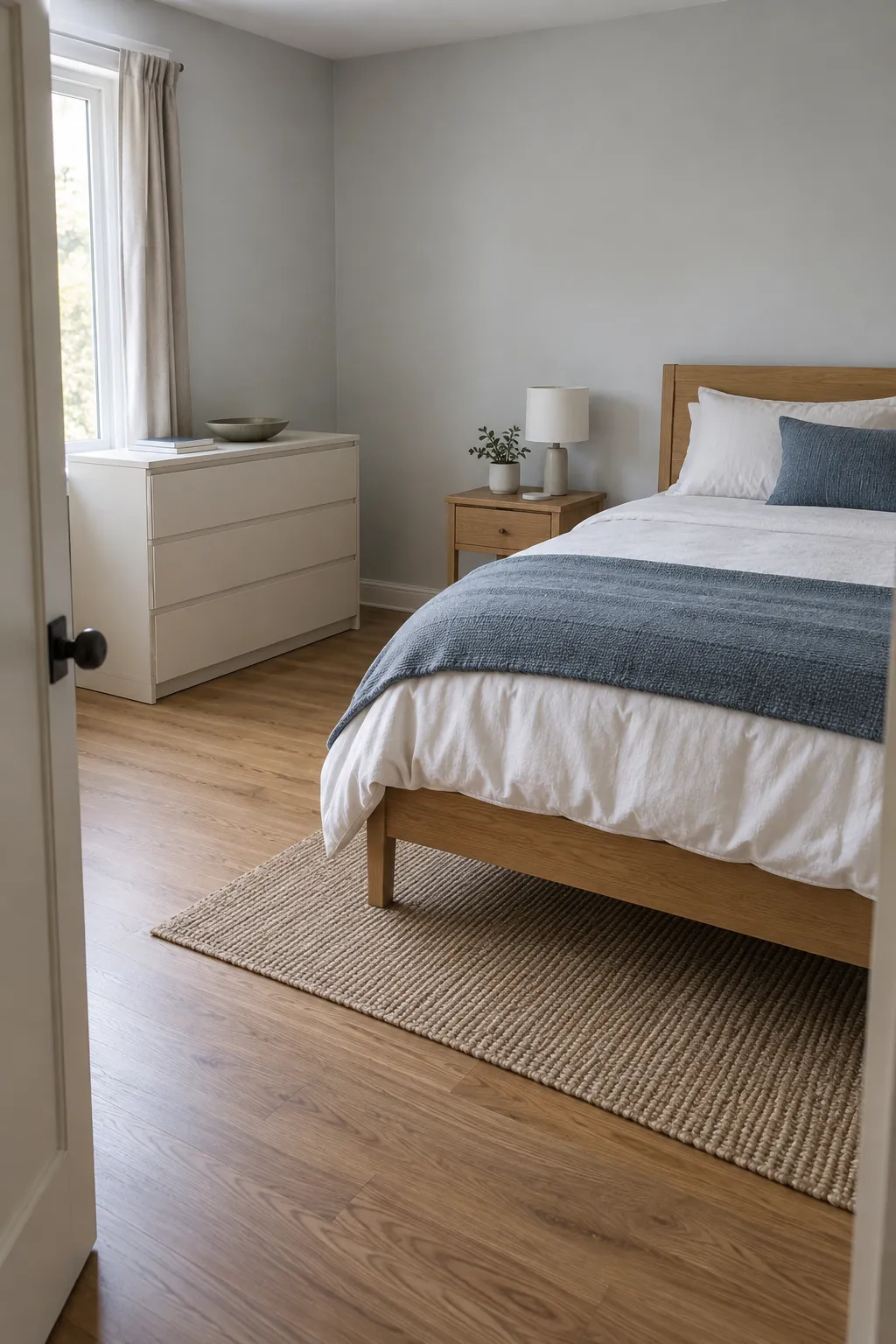
Walk from the door to the bed, window, wardrobe, and desk, opening drawers and doors as you go. Notice the pinch points before moving large furniture. A simple room layout needs room for the furniture to work, including space to pull out a chair and reach storage comfortably.
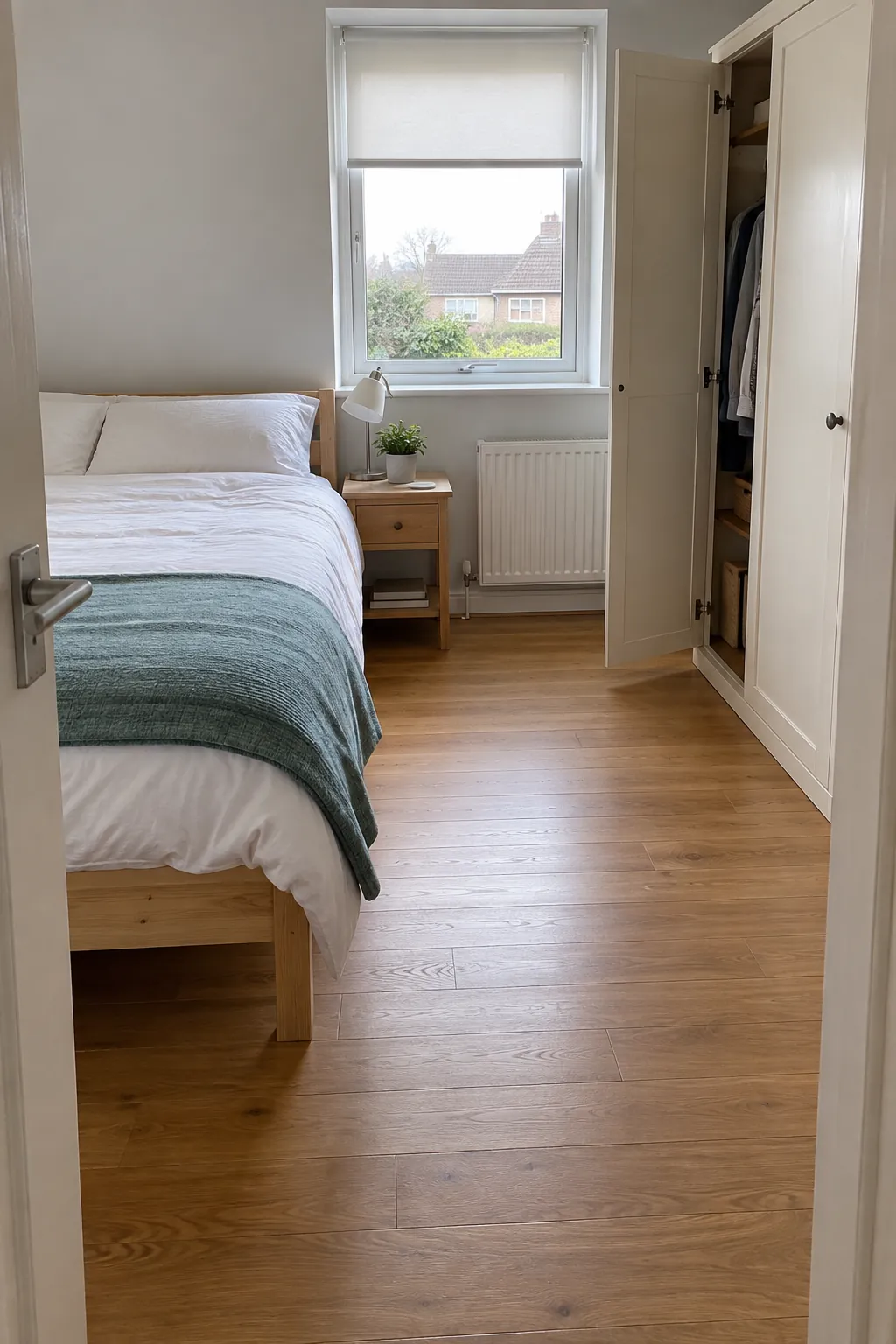
Place the largest necessary piece first and test the remaining routes around it. In a bedroom, that usually means positioning the bed so you can get in, make it, and reach the wardrobe without shuffling other objects. Keep exits, heaters, ventilation, and required access clear, and measure any replacement furniture before deciding that a smaller shape will fit.
Store each daily category where you use it
List the activities the room must support, such as sleeping, dressing, reading, or working. Put the items for each activity together near its usual location. A book beside the bed and stationery beside the desk are easier to return than objects assigned to a distant cupboard simply because it has space.
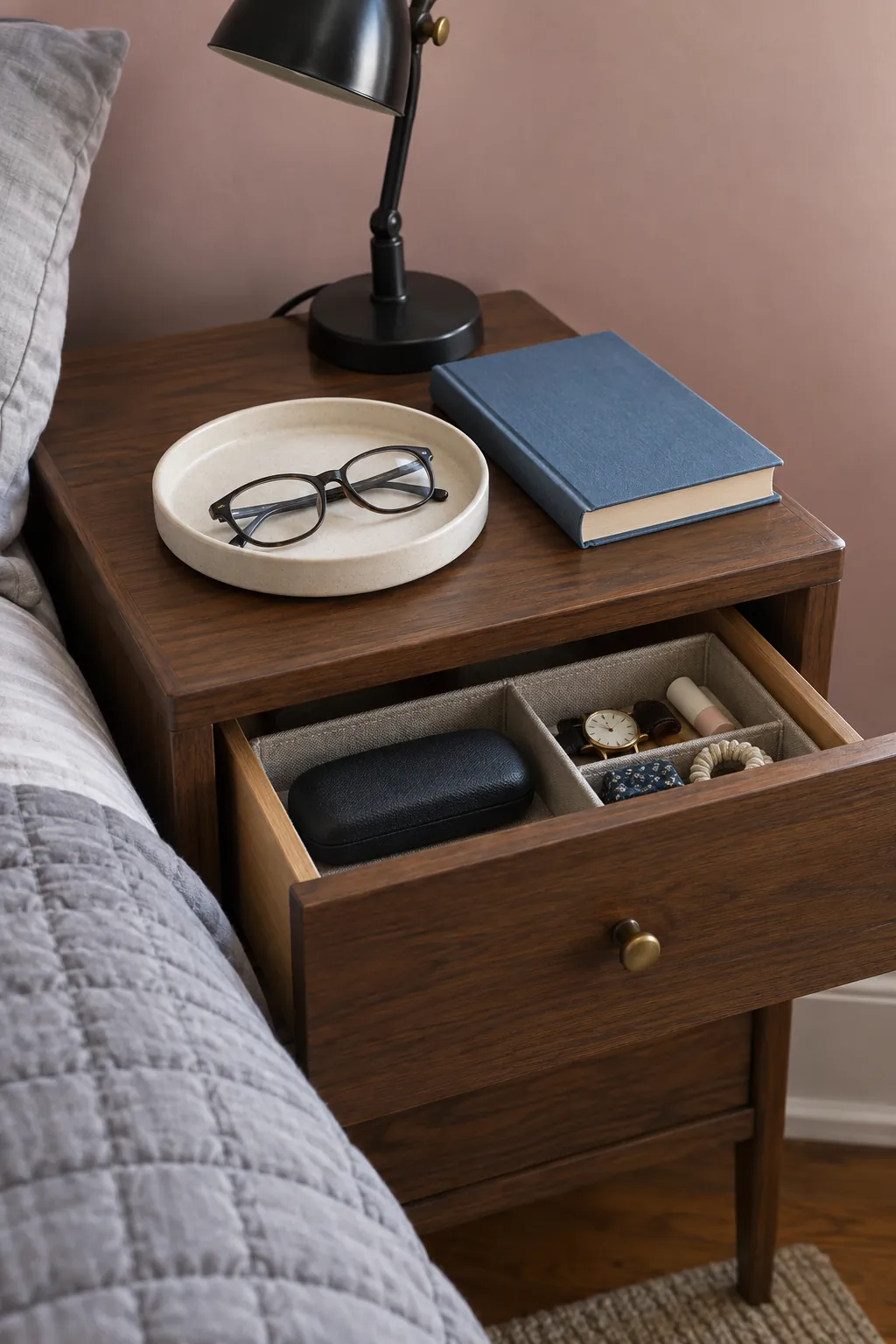
Give small loose items a defined home rather than a general drawer of unrelated things. A shallow bedside tray can hold glasses, while the drawer beneath keeps occasional accessories out of sight. Keep frequently needed belongings within your comfortable reach, even if that means leaving them visible.
Choose hidden storage you can actually open
Closed storage can reduce visual clutter when the contents are already sorted. Measure the opening, internal dimensions, and space needed to pull a container out before choosing hidden storage furniture. A bed drawer that hits the nightstand or an ottoman buried beneath blankets will be inconvenient even when it holds plenty.
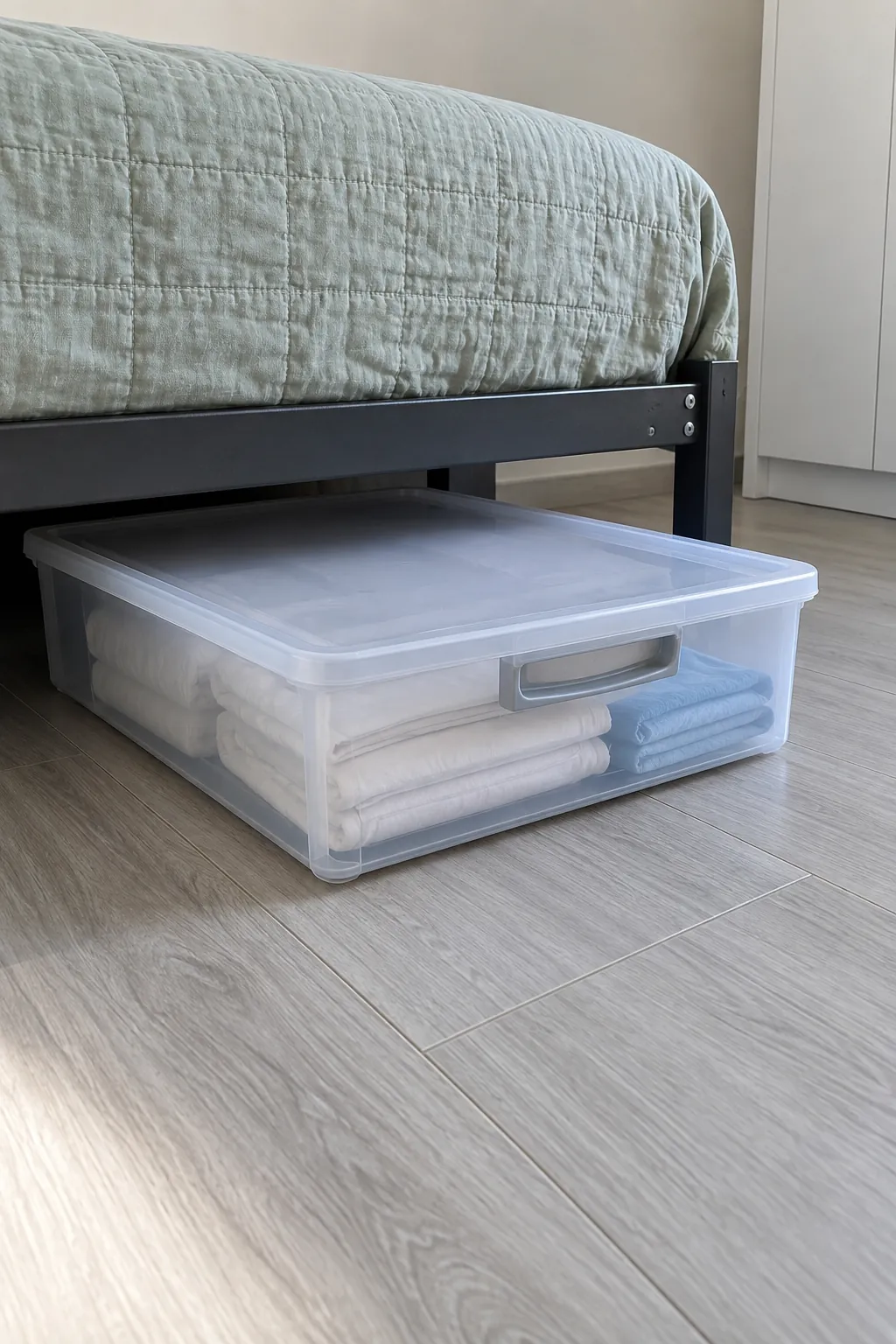
Use storage beneath the bed for clean, dry items you do not need constantly, such as spare bedding, if the bed design and room conditions allow it. Choose containers that fit the clearance and protect their contents from dust, while preserving any ventilation the bed requires. Keep one category in each container and leave enough access to retrieve it without dismantling the room.
Reduce visual noise without hiding every useful object
Look at the room from the doorway and identify the busiest small area. It may be a shelf of loose accessories, mismatched packaging, or cables across a work surface. Contain that category first instead of stripping every wall and surface at once.
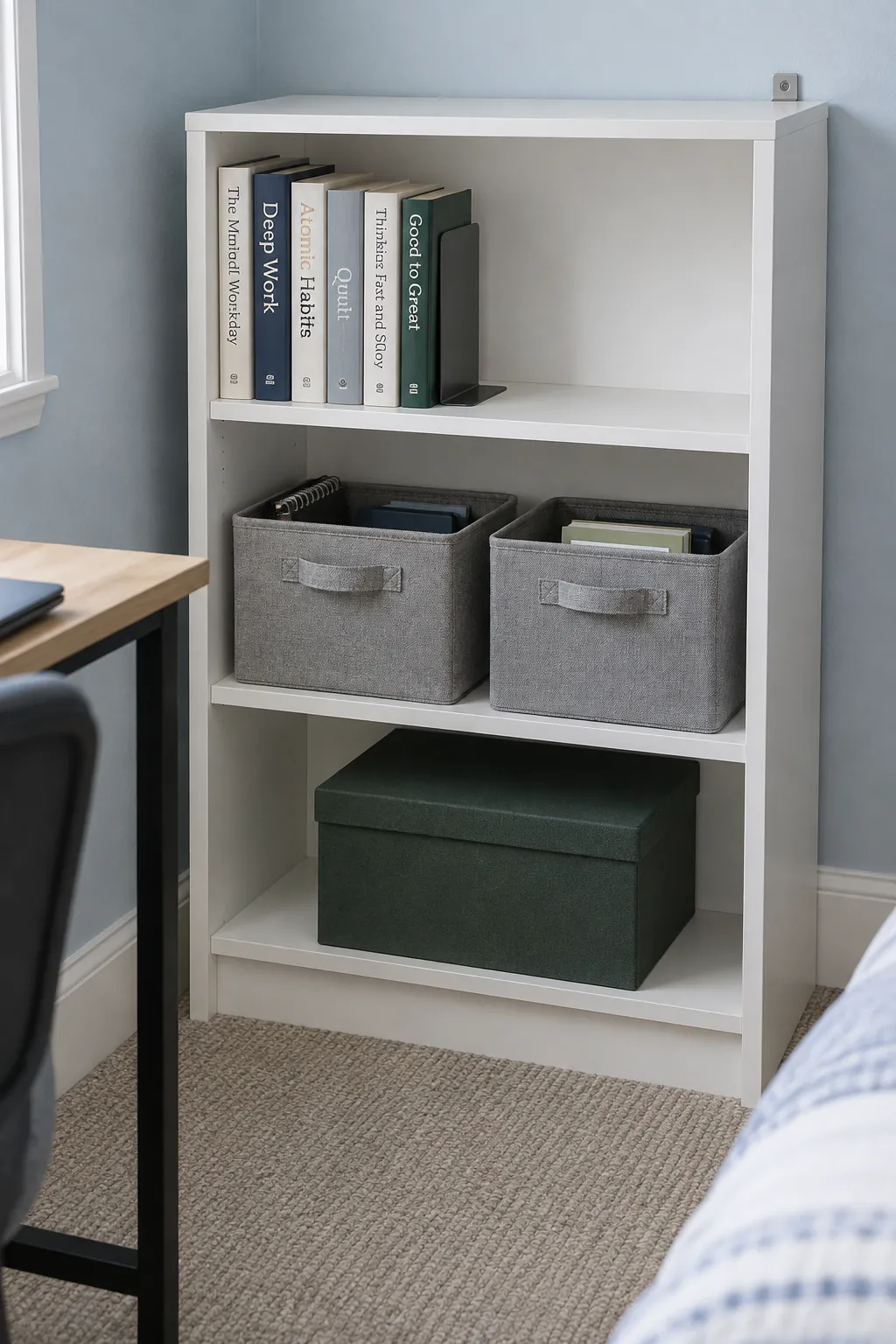
Neutral storage baskets can make an open shelf feel calmer, but their shape and contents matter more than their color. Choose a basket you can lift easily, label it when the contents would otherwise be unclear, and avoid stacking daily supplies under several lids. Route cables with appropriate clips without pinching them, covering power equipment, or ignoring its ventilation instructions.
A visible set of reference books or a hobby in use is not automatically a failure of minimalist room organization. Keep the display deliberate and leave enough surrounding space that each group is easy to understand.
Keep a small amount of decoration you enjoy
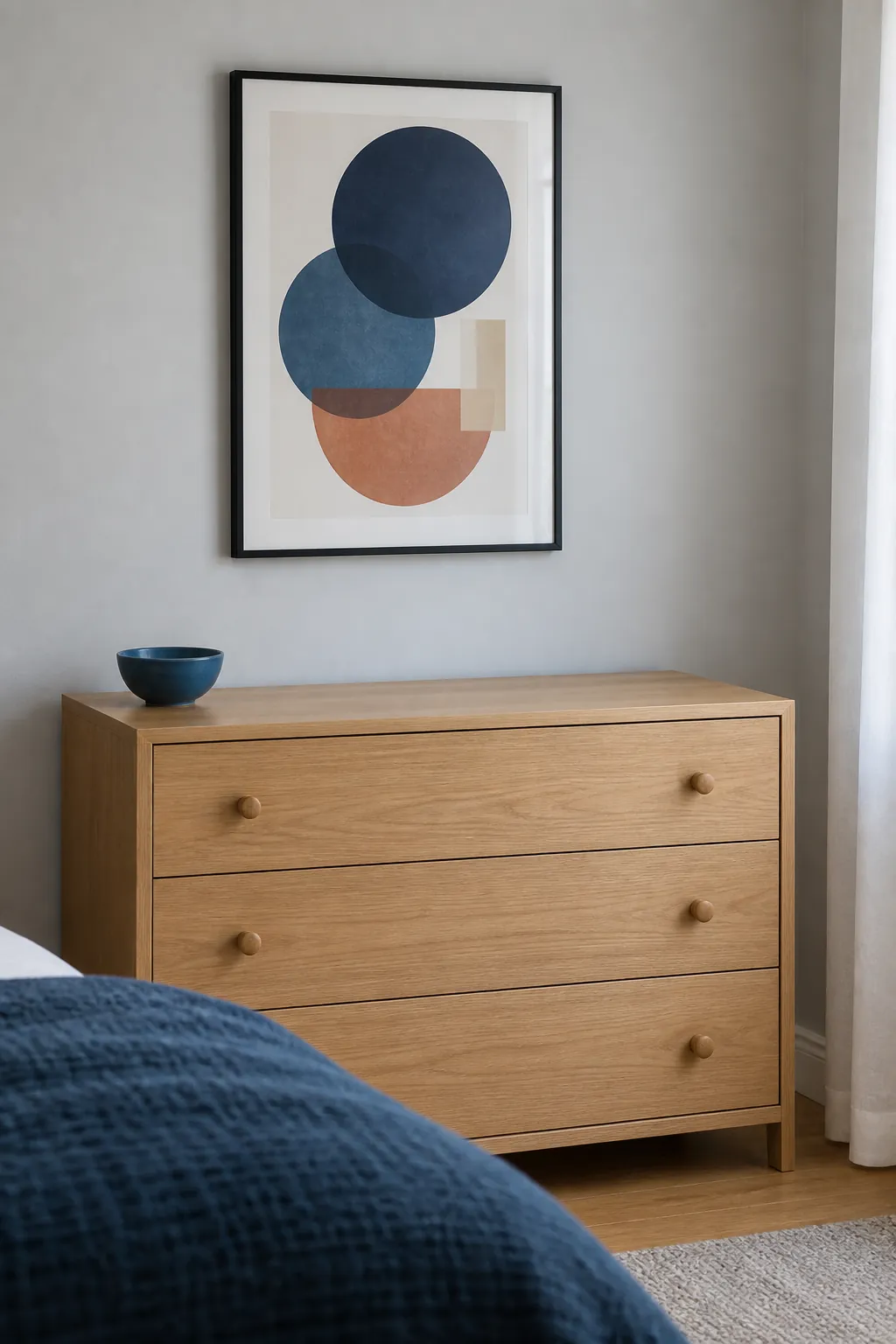
Choose a piece you genuinely like and give it enough room to be seen. A calm room aesthetic can include a colorful print, a textured blanket, or a plant that suits the available light. Repeating a few colors or materials can make these choices feel related without requiring everything to match.
If a display has become hard to dust or use around, reduce its size and see how the room feels for a few days. Store an undecided decorative item safely before making a permanent decision. Minimal decor ideas work best when they preserve your preferences and leave practical surfaces available.
Build the reset around where things land
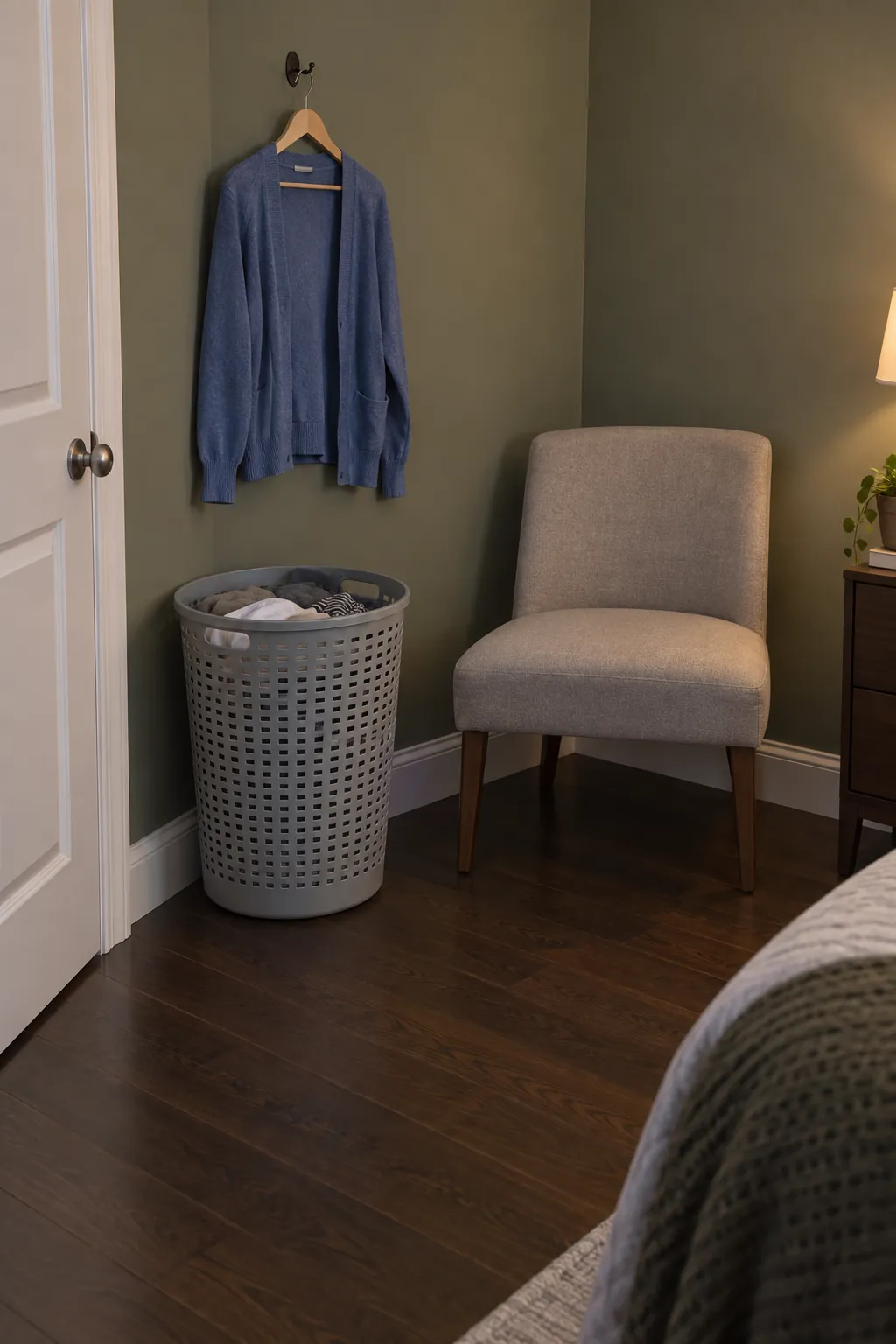
Watch the room during an ordinary week. If worn clothes always land on a chair, give them a suitable hamper or a small separate place for items you plan to wear again. If papers collect beside the desk, create one shallow incoming tray and a regular time to deal with it.
Before bed, return loose items, clear the sleeping surface, and move dirty laundry to its hamper. If the same object repeatedly stays out, reconsider its assigned home rather than treating the repetition as a personal failure. Functional minimalism is working when the room supports your day and the reset is easy enough to repeat.