
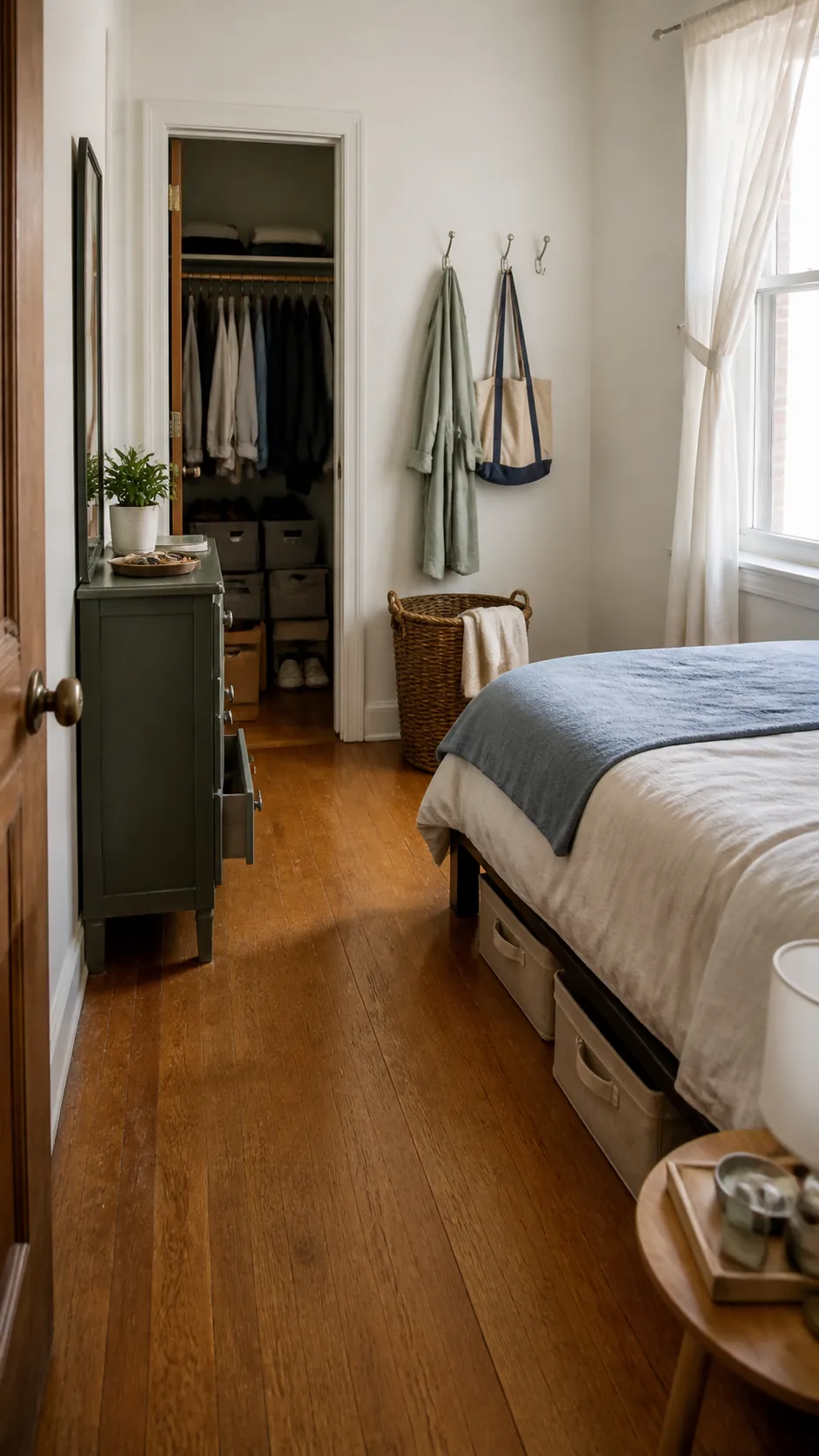
A small bedroom becomes frustrating when every useful surface turns into temporary storage. Buying more bins before deciding what deserves space often makes the room tighter, not calmer. The inexpensive route is to reduce the active clutter, assign storage by frequency of use, and spend only where a container solves a specific problem.
Clear One Working Surface First
Do not empty the entire room if that leaves you trapped among piles. Clear the bed or one section of floor, then keep that space available for sorting. Work through one drawer, shelf, or clothing category at a time so the room remains usable between sessions.
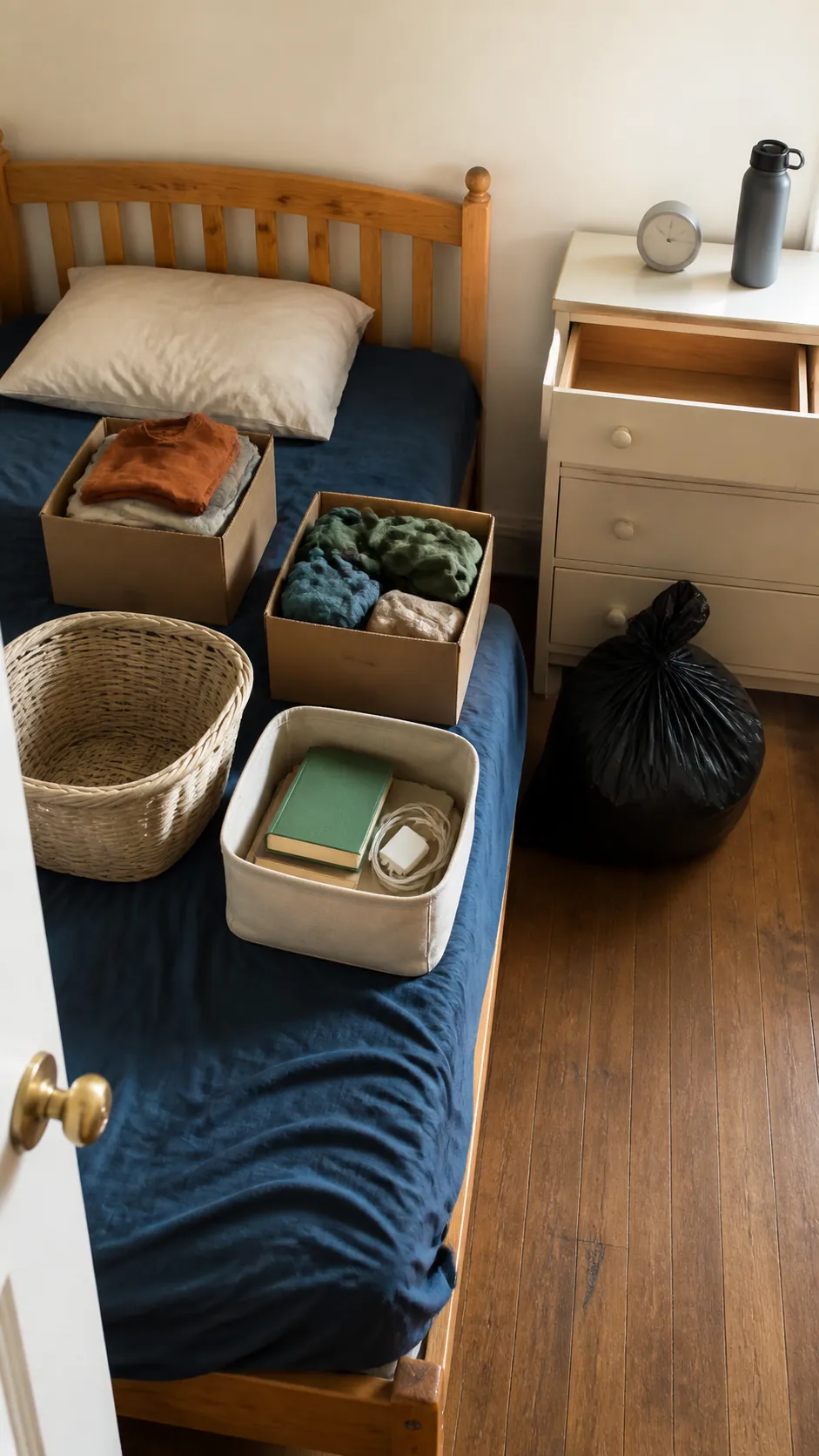
Remove obvious rubbish, laundry, dishes, and items that belong elsewhere before making storage decisions. Keep a donation bag nearby and close it when the session ends. This approach makes a budget bedroom declutter possible in short blocks without turning the whole room upside down.
Store by How Often You Reach for It
Daily clothes, medication, chargers, and grooming items need the easiest positions. Weekly items can live in drawers or closet bins, while seasonal and sentimental belongings can move under the bed or onto a high shelf. Storage works when the effort required to put something away matches how often you use it.
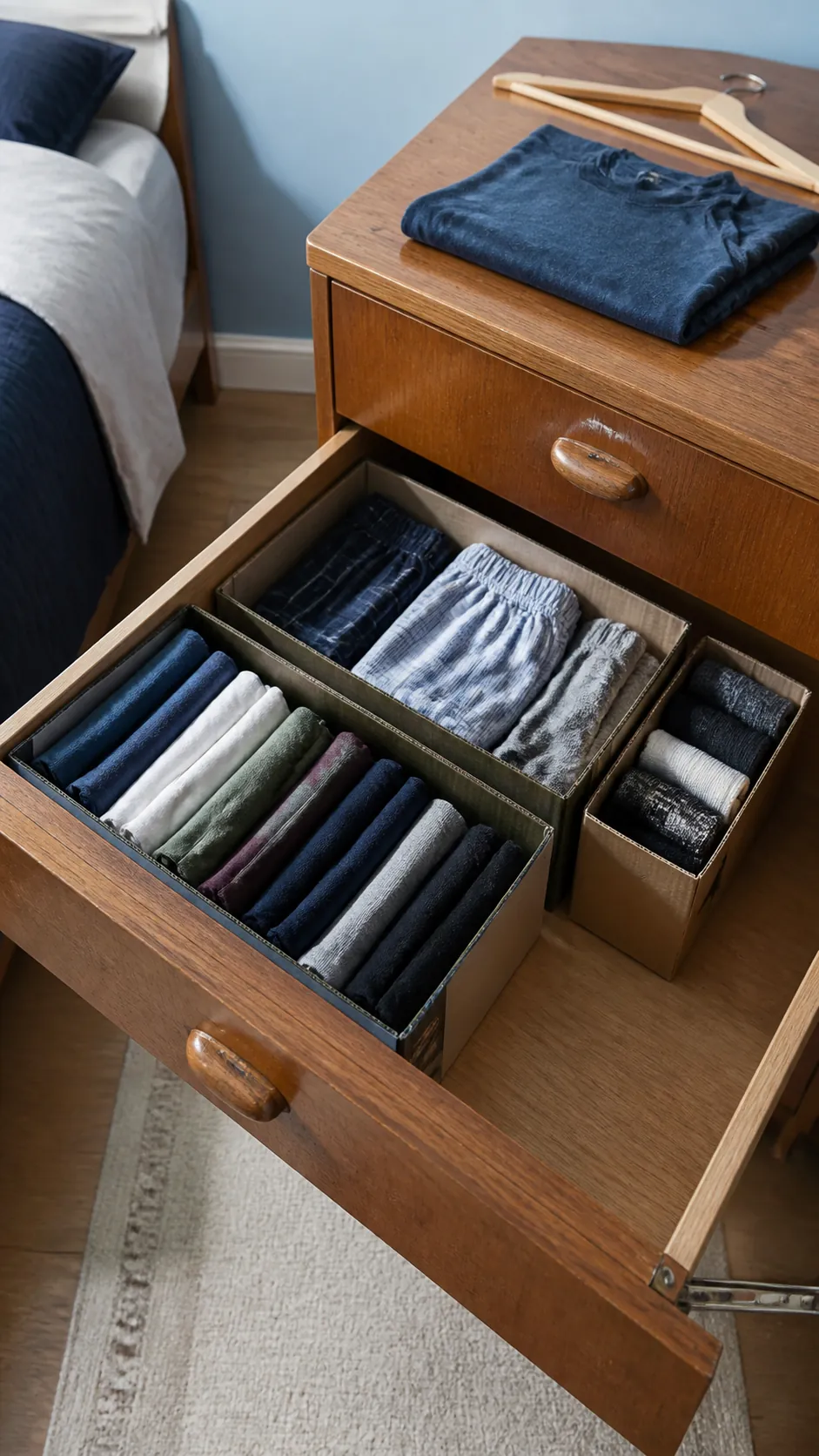
Fold clothing so each item is visible instead of building deep stacks that collapse. Repurpose small boxes as drawer dividers before buying organizers. If an item has no assigned home after sorting, reconsider whether it earns scarce bedroom space.
Use the Space Under the Bed
Measure the lowest clearance beneath the bed before shopping for under bed storage boxes. Choose containers that slide out without lifting and leave room above for uneven rails or slats. Opaque bins hide visual clutter, while a simple label helps you find contents without pulling out every box.
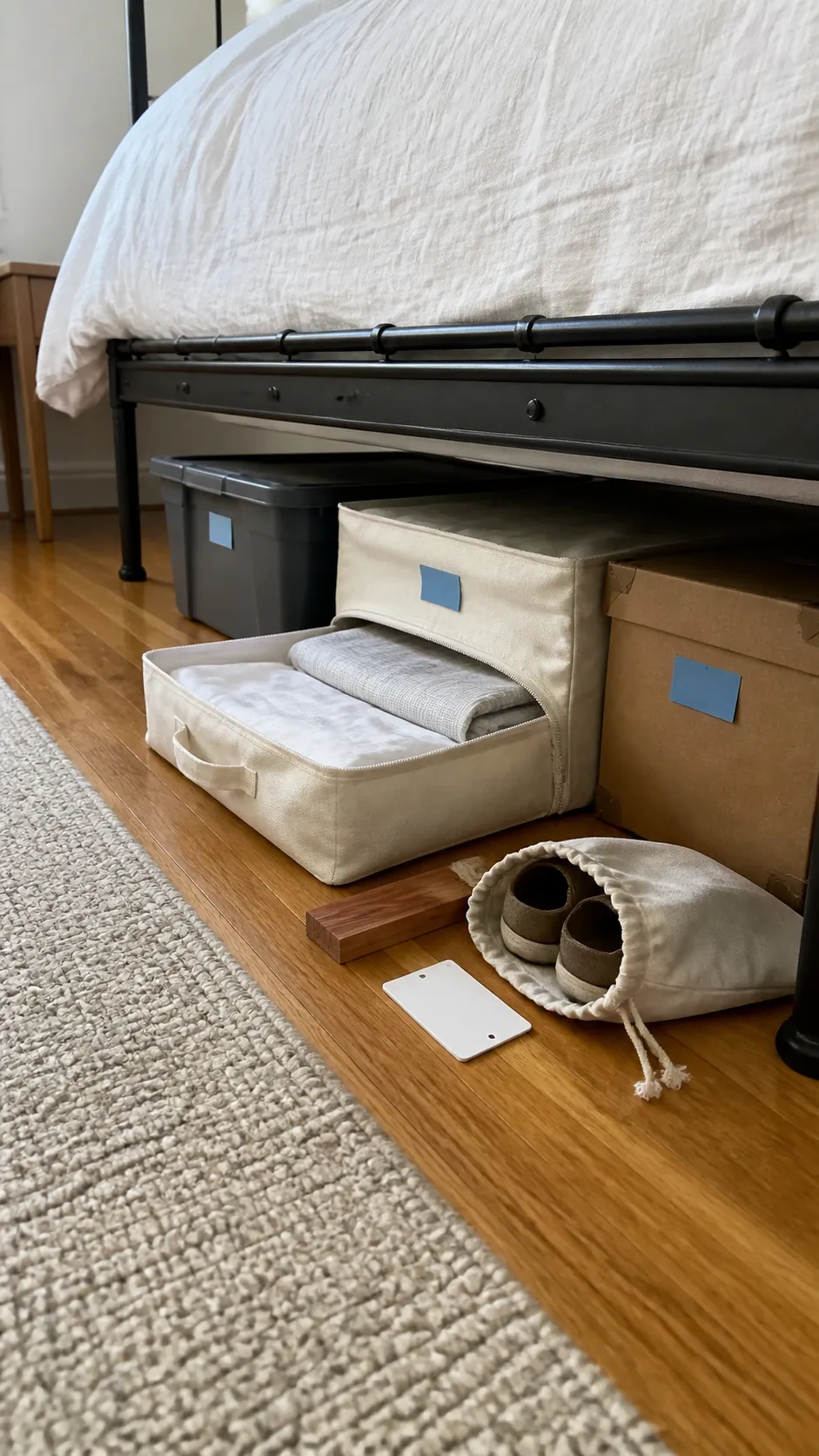
Reserve this less convenient zone for spare sheets, off season clothing, shoes, or keepsakes rather than daily essentials. Use matching containers only when uniform sizes improve the fit; otherwise, boxes you already own may work better. Keep textiles dry and avoid packing the cavity so tightly that air cannot move.
Make the Closet Easier to Scan
Group hanging clothes by type and keep empty hangers together. Add affordable closet bins to a shelf for items that otherwise tumble into mixed piles. A second low rail, thrifted shelf, or narrow shoe rack can improve capacity, but only when it fits the actual wardrobe.
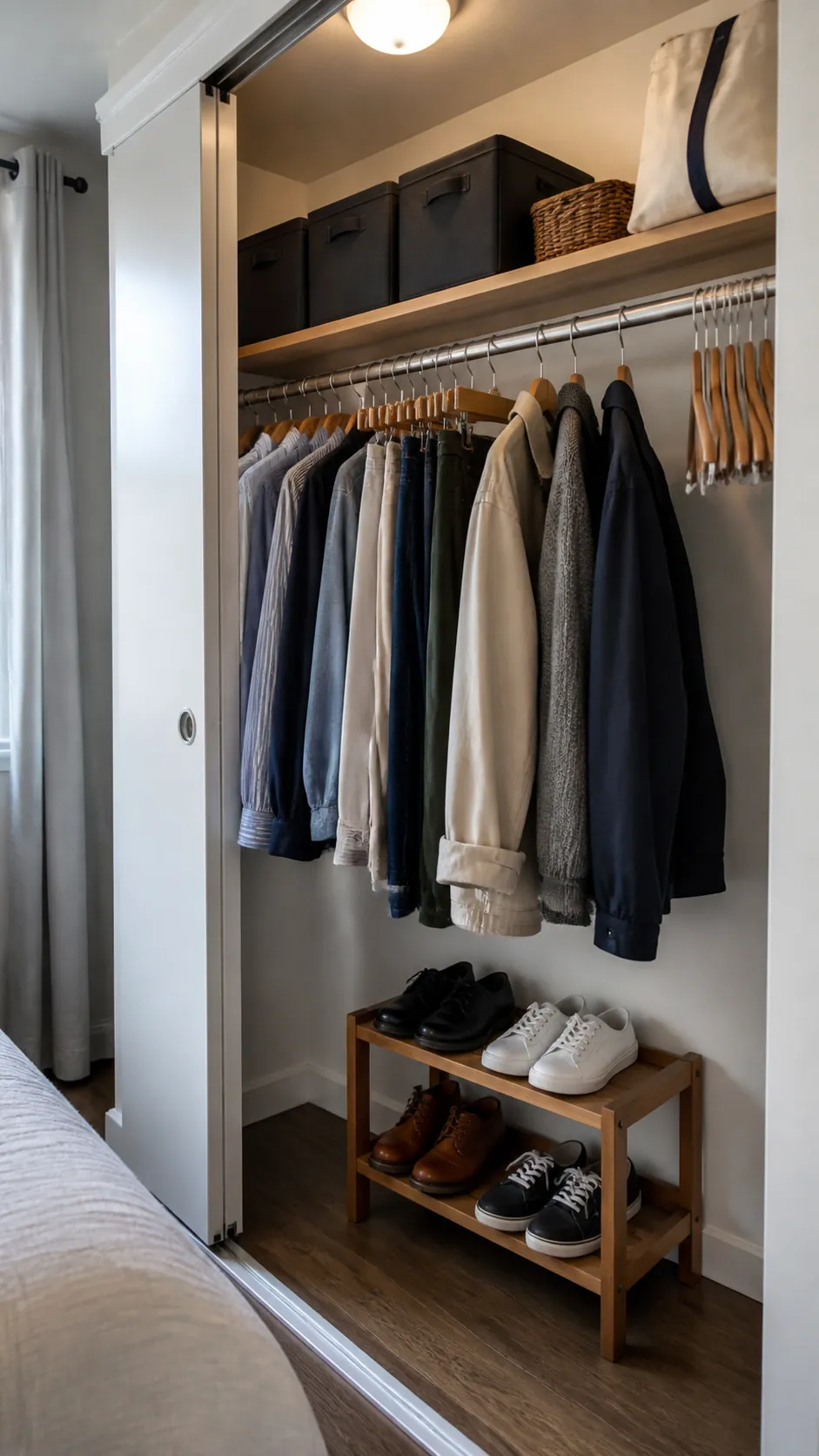
Shop your home and secondhand sources before buying a complete system. A sturdy basket, cleaned shoe box, or thrifted bedroom organizer can solve one category for very little money. Avoid filling every shelf to the front, since visible breathing room makes returning items easier.
Use Doors and Walls Carefully
Wall hooks for clothes can keep tomorrow’s outfit off a chair, while an over door organizer can hold accessories, shoes, or toiletries. In a rental, use hardware approved for the wall type or choose removable options within their weight limits. Keep hooks shallow enough that they do not block doors or narrow walking paths.
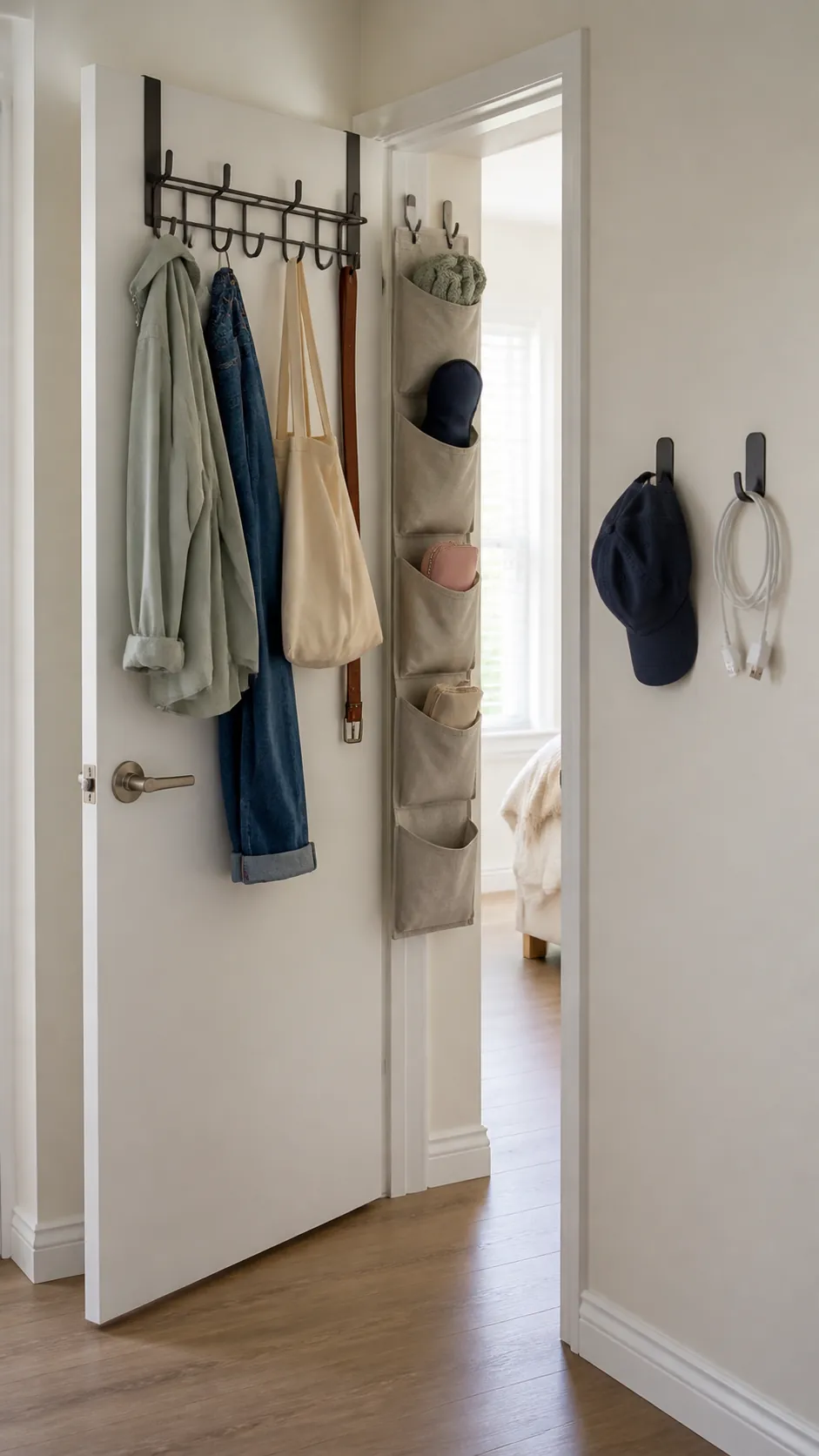
Vertical storage should remove pressure from the floor, not cover every wall. Assign each hook or pocket a purpose and leave some empty capacity. When a system becomes a crowded display, edit the contents before adding another organizer.
Build a Five Minute Reset
Give worn clothing three clear destinations: laundry, ready to wear again, or back in storage. Keep a small tray for daily pocket items and leave the nightstand with enough open space to clean easily. A short evening reset should return the floor, chair, and bed to their normal purpose without requiring a full organizing session.
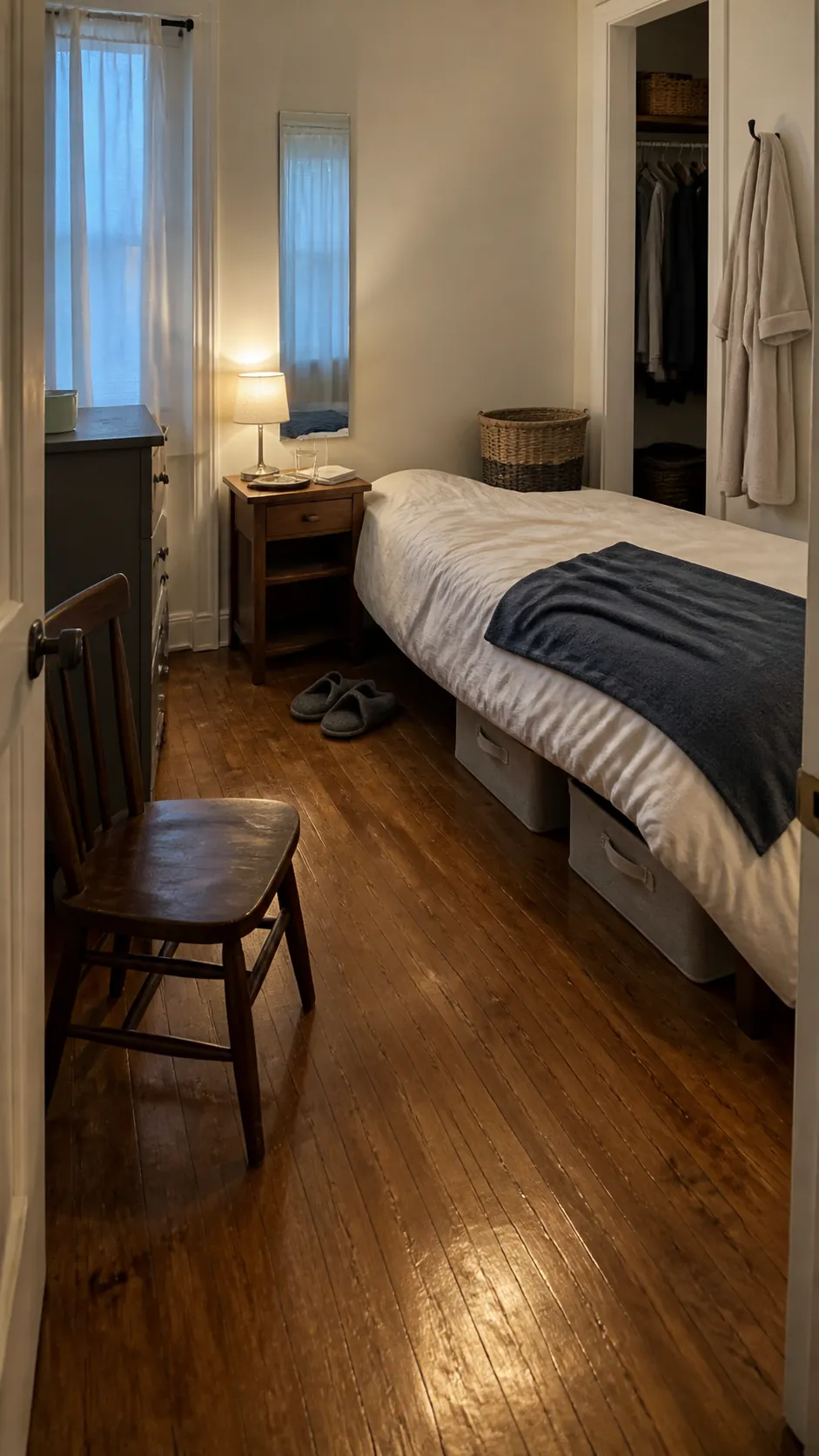
Notice where clutter returns during the next week. If shoes gather by the door, move their storage closer; if folded clothes remain on a chair, make drawer access easier. The room stays organized when each solution supports real habits, not when every container matches.