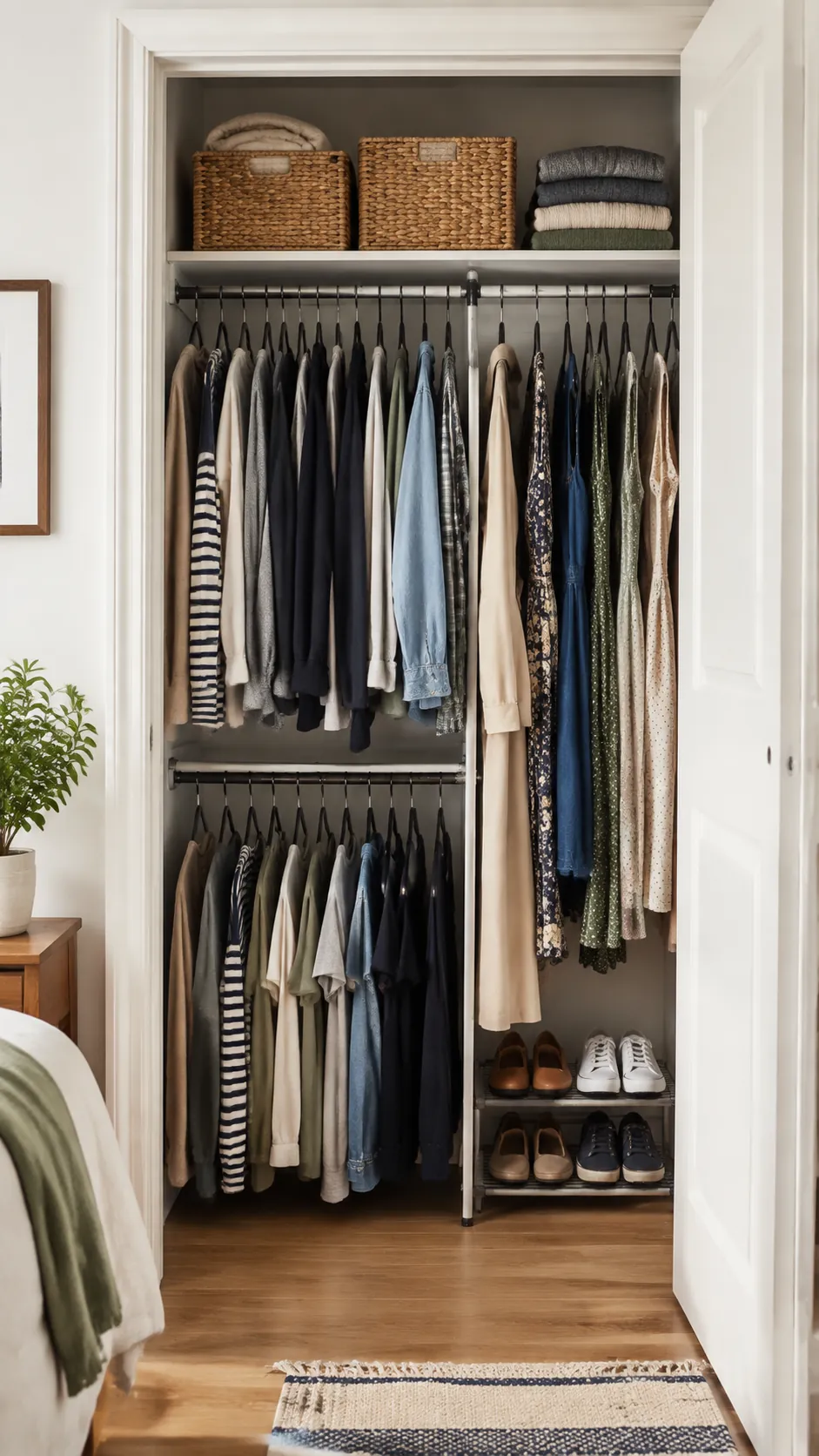
Sharing a cramped closet becomes frustrating when one person slowly occupies the easy reach zones while the other inherits a high shelf and a dark corner. The answer is not squeezing in more organizers. It is giving every inch one clear job, dividing access fairly, and making the daily return of clothes almost effortless.
Measure the usable space before buying anything
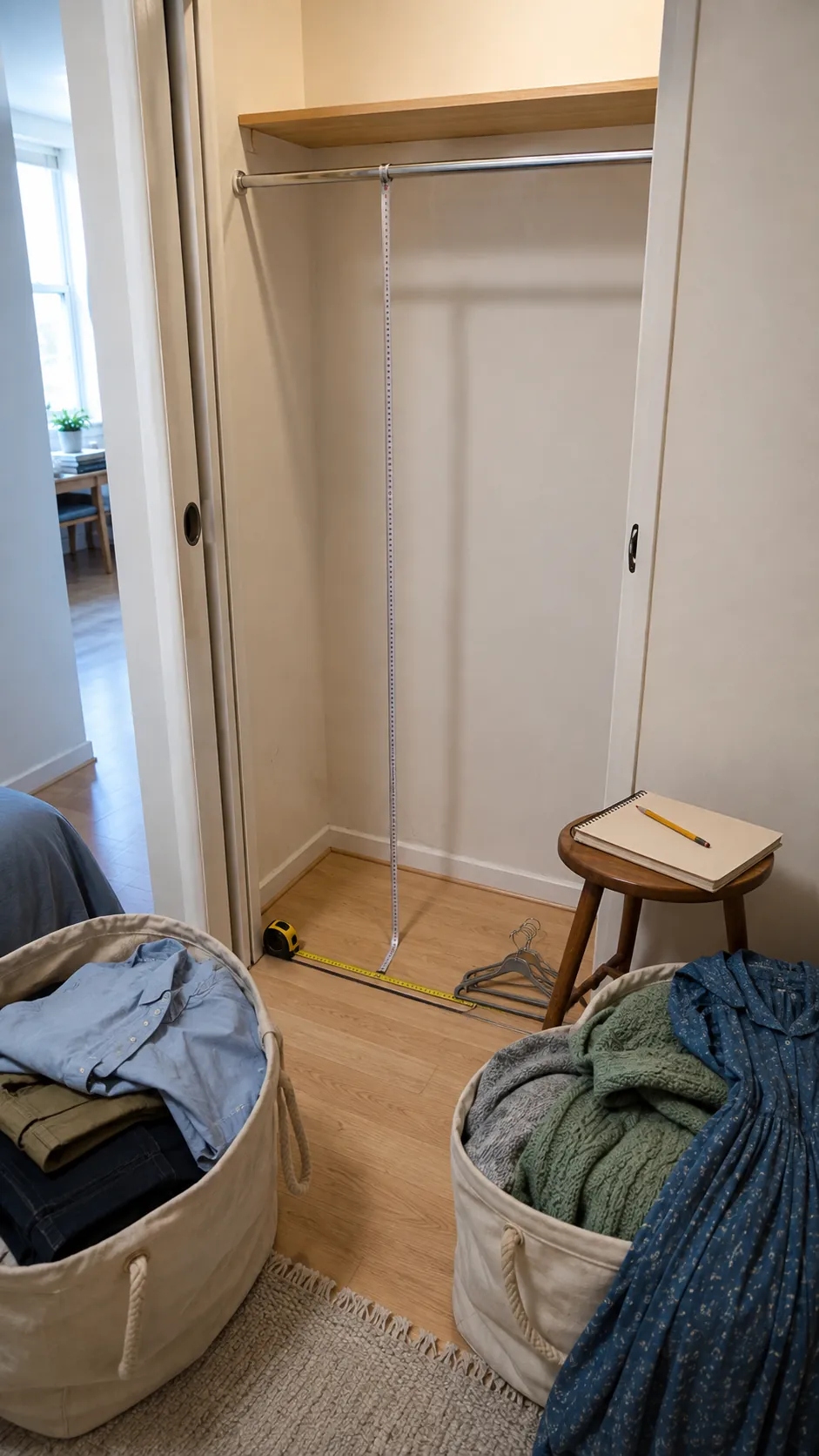
Empty the closet and measure its interior width, depth, door opening, rod height, shelf clearance, and the space below hanging clothes. Record the longest garments each person owns because coats and dresses determine where full height hanging must remain. A simple paper sketch will reveal wasted air above short clothes and awkward corners that a product photo cannot predict.
Edit both wardrobes with the same rules
Each person should sort independently, but both should use the same questions. Keep what fits, feels good, and belongs in the current life you actually live. Move sentimental pieces, repairs, and out of season clothing into clearly limited containers so they do not silently consume prime daily space.
Do not force an equal item count if one wardrobe genuinely contains more work clothing or longer garments. Fairness means equal access and an agreed physical limit, not identical piles. If either person exceeds the assigned zone, reduce that category before taking over the other side.
Divide ownership into visible zones
Give each person a continuous vertical zone instead of scattering belongings across every shelf and rod. A left and right division is usually easier to remember than alternating categories. Use a small closet divider, contrasting hanger colors, or labeled shelf bins to make the boundary obvious without turning the closet into a sign system.
Double the short hanging area
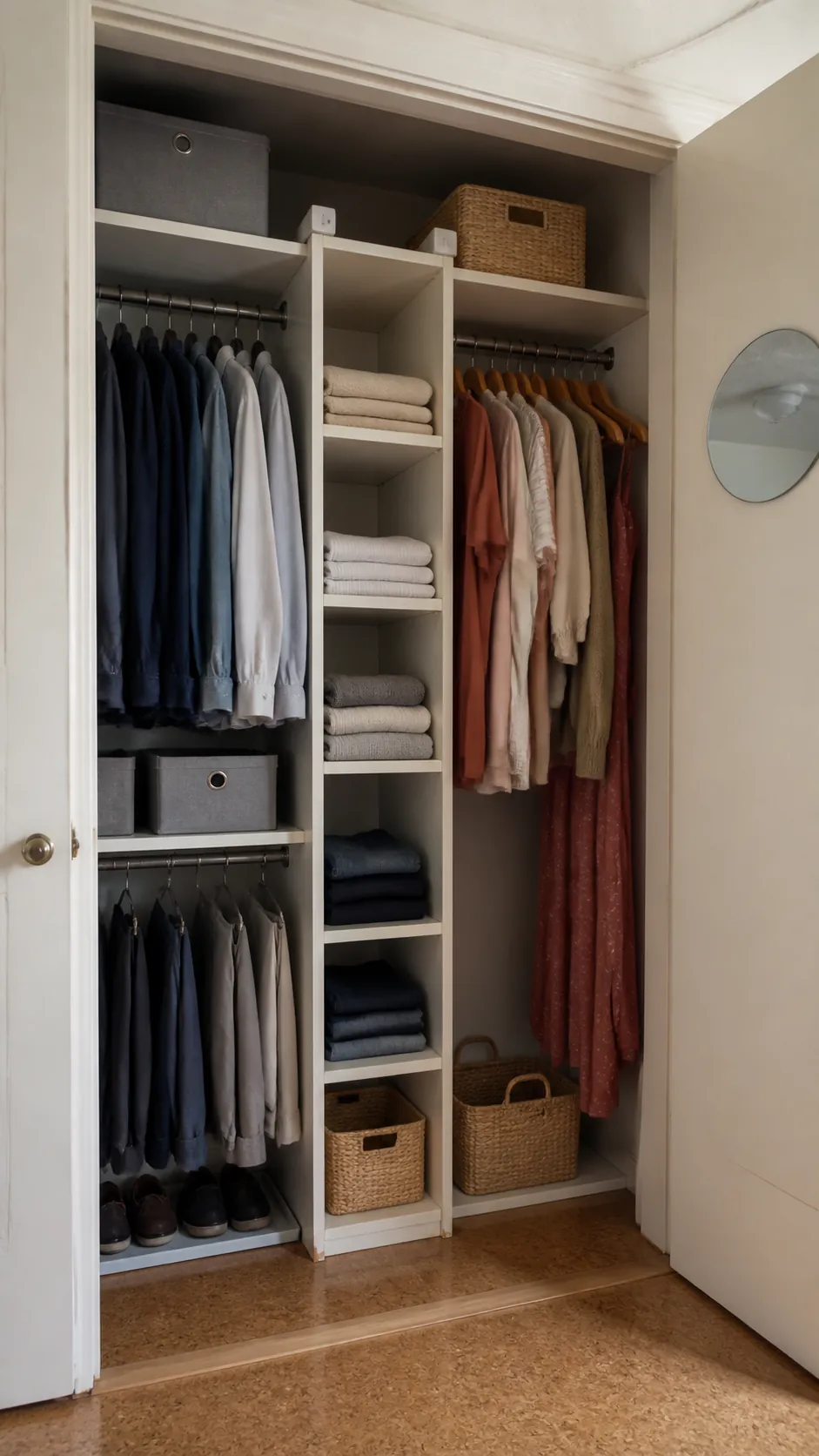
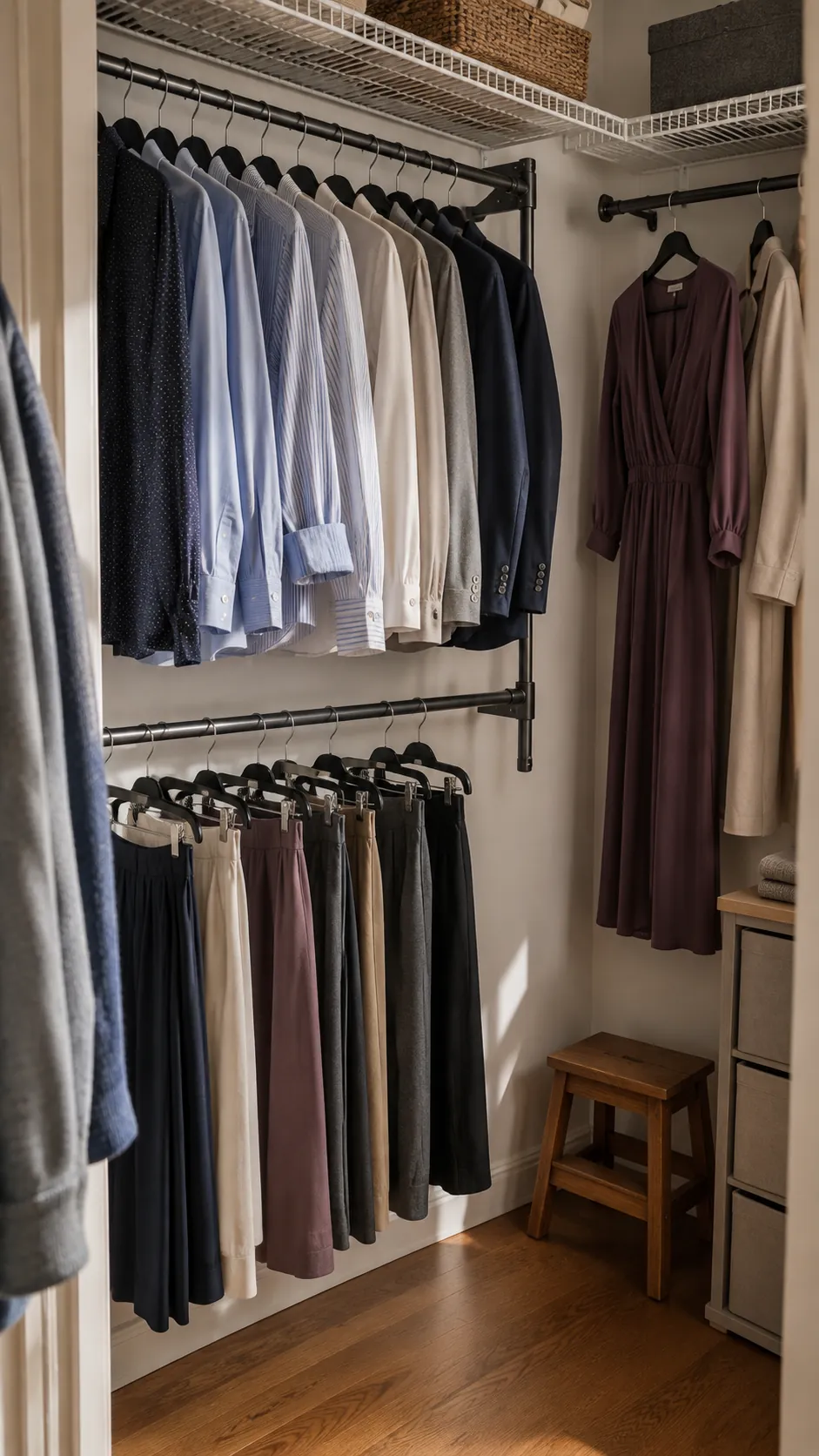
Most shirts, skirts, and folded trousers need far less vertical room than the closet provides. Install a double hanging closet rod only where the lower rail remains comfortable for both people and the upper rail is reachable without a risky stretch. Reserve one narrower full height section for dresses, coats, and long trousers.
Use the top shelf for light contained categories
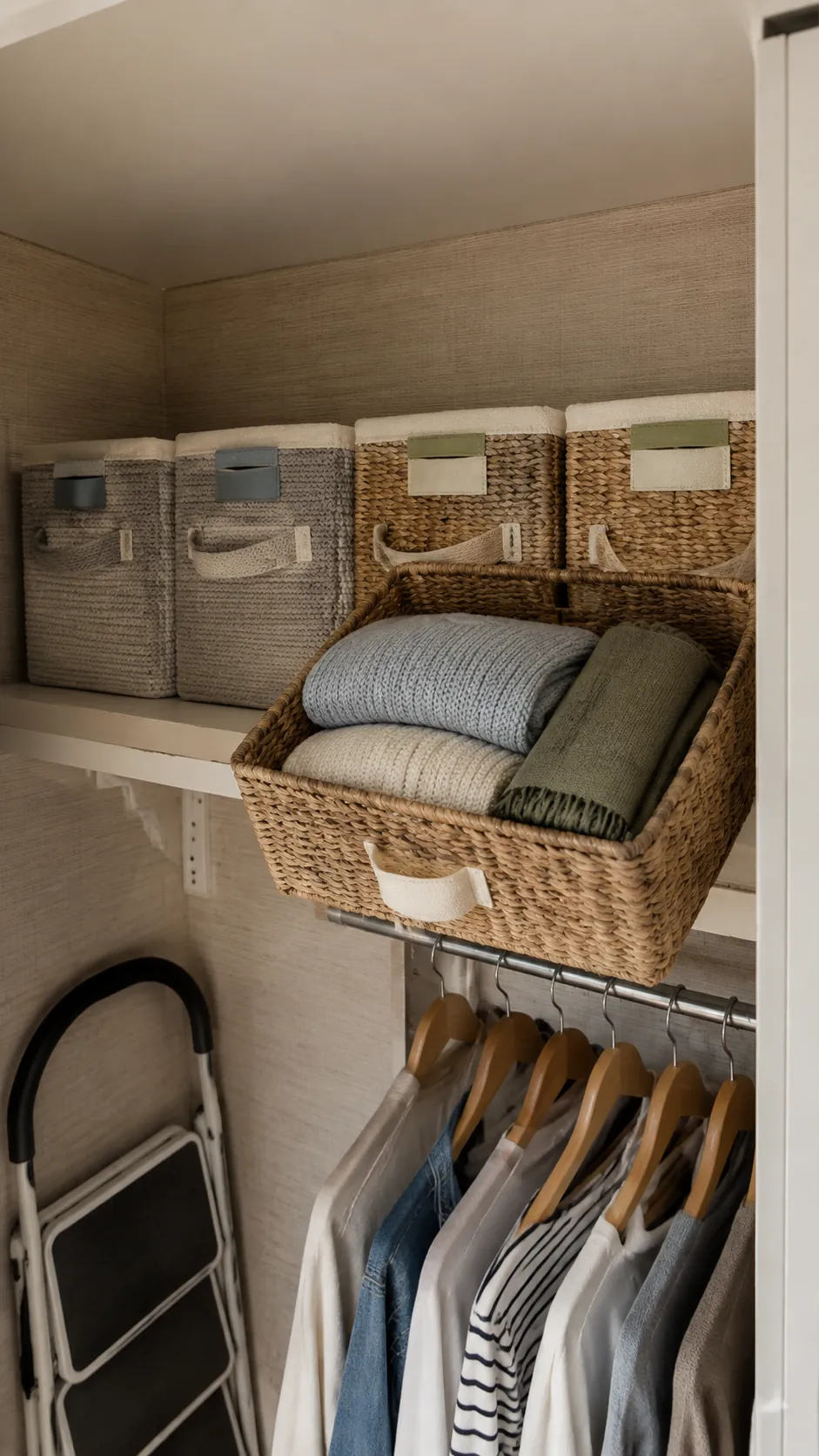
High storage works best for light items that are needed weekly or seasonally, such as sweaters, spare linens, hats, and small bags. Choose shelf bins that can be lifted safely and leave enough finger space above each one. Deep bins become forgotten caves, so place only one category in each container and add a short label at eye level.
Make slim hangers earn their space
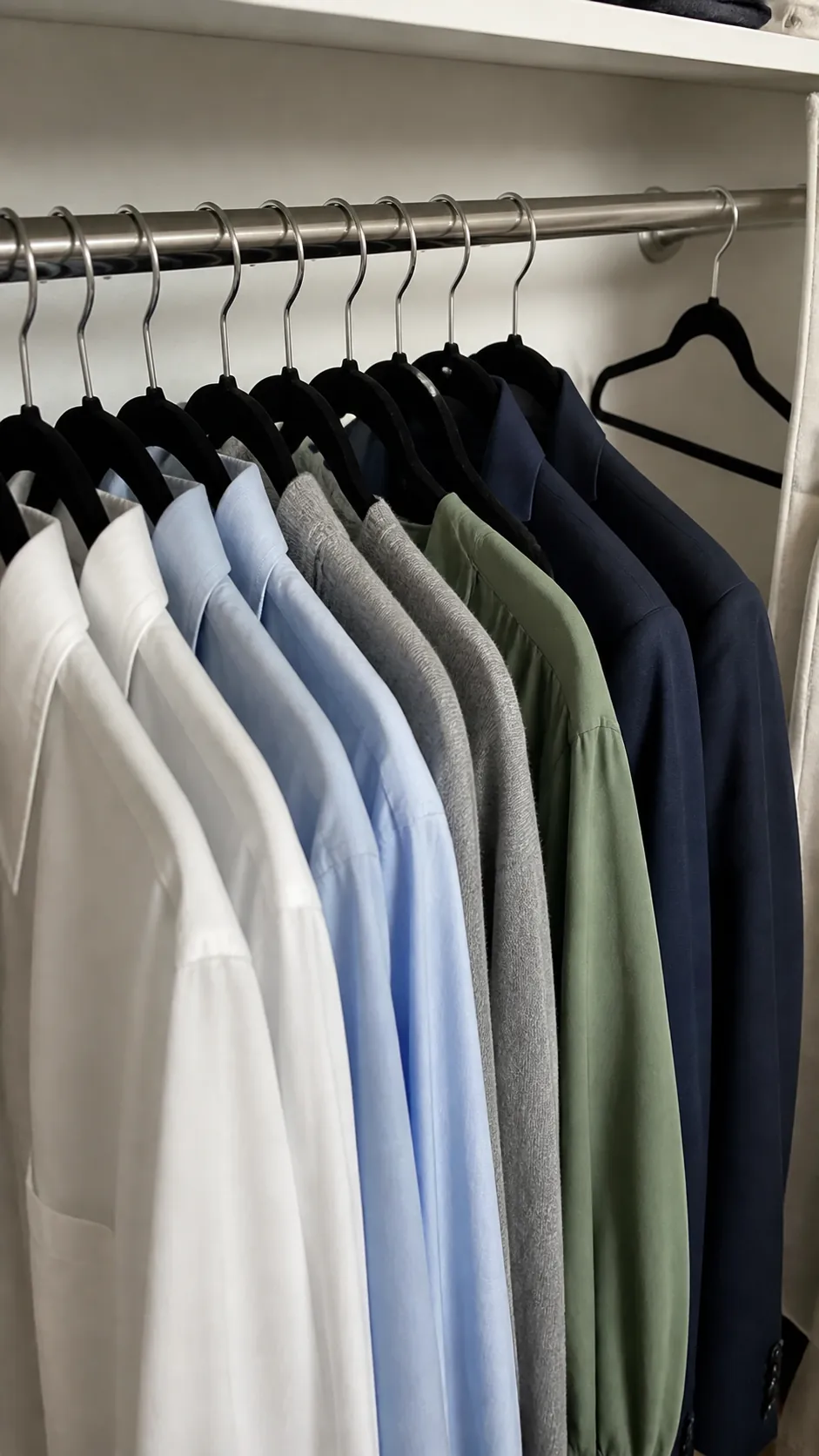
Matching slim hangers reduce visual noise and can recover useful rod width, but overpacking that new capacity defeats the benefit. Leave a little sliding room so garments can be seen without pulling out a whole cluster. Hang clothing by category, then by color within each category, which makes gaps and duplicates easier to notice.
Protect the floor from becoming a drop zone
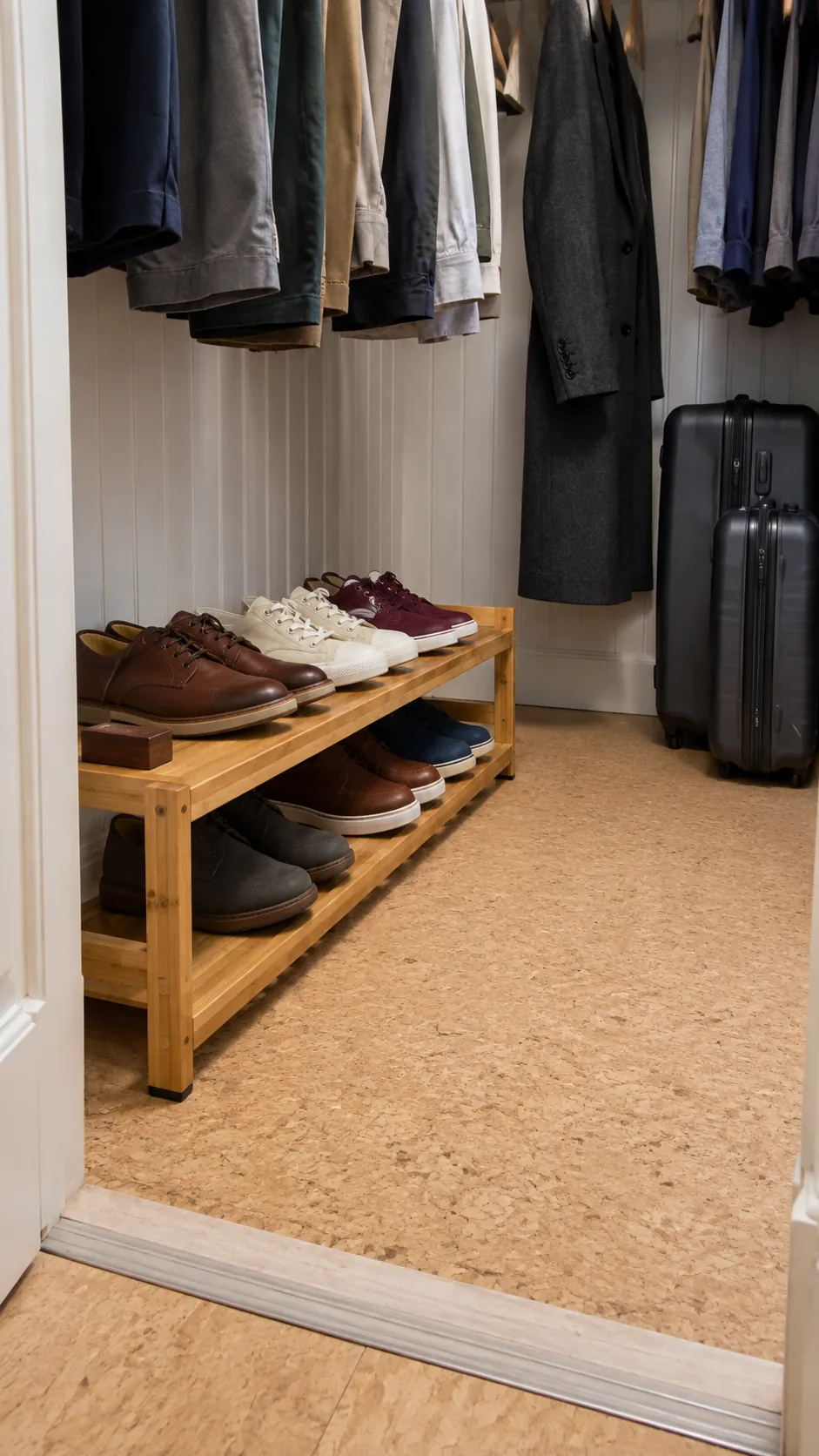
Shoes need a fixed limit because they spread into every open patch. A shallow rack or two low cubbies keeps pairs visible while preserving a clear strip of floor. Store suitcases elsewhere when possible, or nest them and assign them one exact corner so they do not block daily clothing.
Build a reset that takes less than five minutes
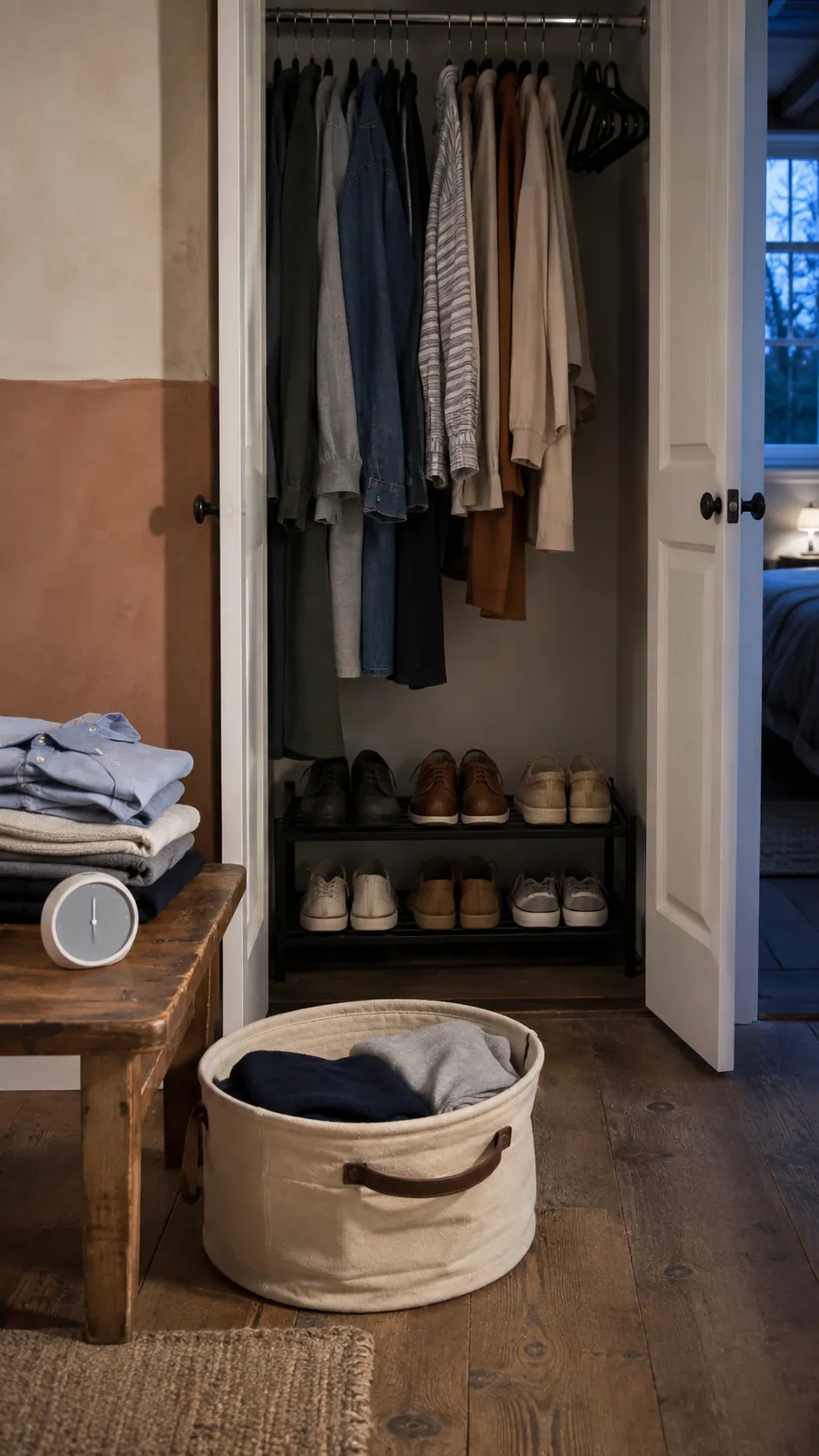
Place one small basket near the closet for clothes that need a decision, then empty it on a set evening each week. Return clean laundry directly to its assigned zone and remove empty hangers before they collect in random clusters. A shared closet organization system survives when both people can reset it quickly, see the same boundaries, and discuss overflow before it becomes a silent takeover.