
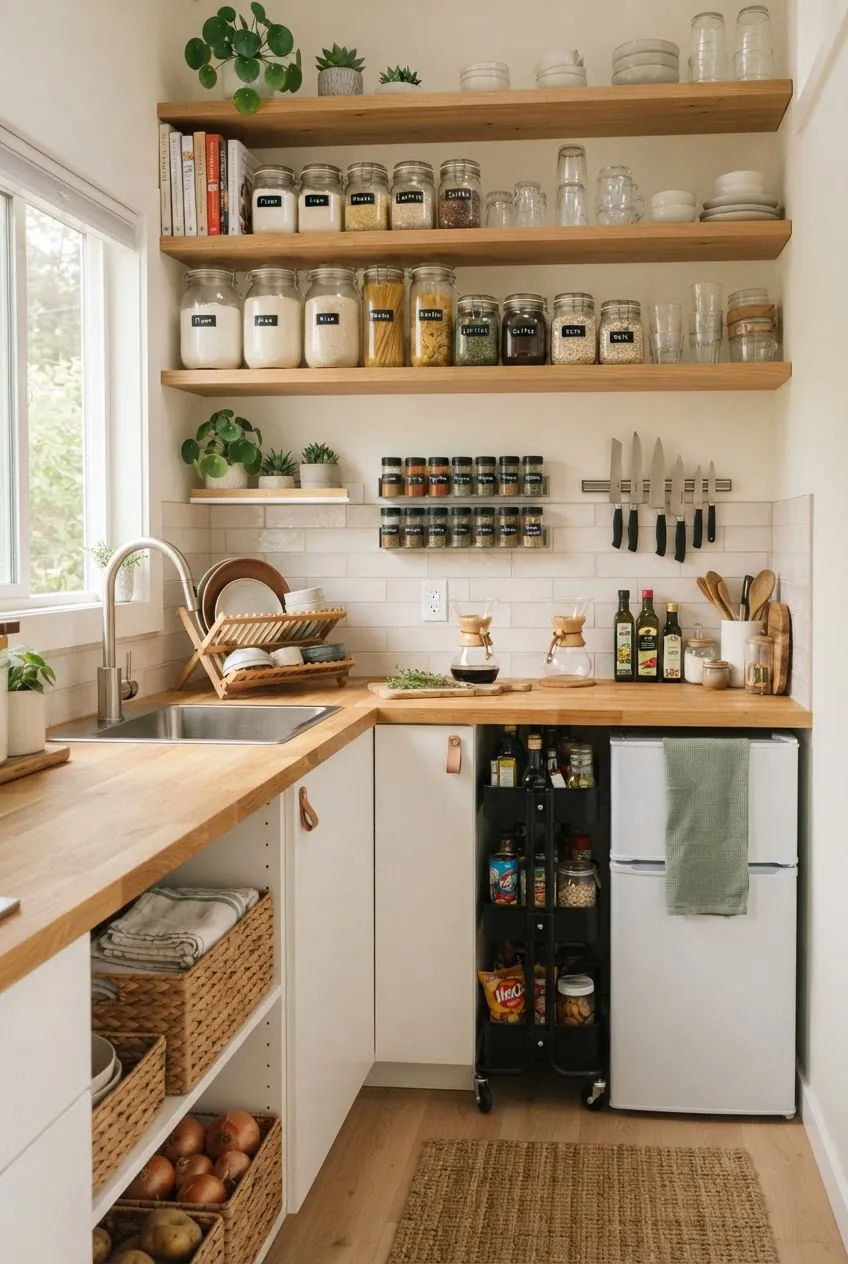
A tiny home kitchen without a pantry can work well, but only if every storage choice earns its space. The goal is not to hide more things. The goal is to make daily cooking easier by giving food, tools, and backup supplies a clear place to live.
The best no-pantry setup usually combines vertical storage, tight cabinet zones, a few clear containers, and one movable overflow spot. That mix keeps your counters usable and prevents the kitchen from turning into a stack of bins.
Start With a Tiny Kitchen Audit
Before buying shelves or baskets, pull out the food and tools you actually use in a normal week. In a tiny home kitchen, prime space should go to the items that support breakfast, coffee, quick lunches, dinner prep, and cleanup. Backup flour, bulk snacks, seasonal appliances, and party dishes can move to less convenient zones.
- Keep daily food between shoulder and knee height.
- Store heavy jars, cans, and liquids low.
- Move duplicates out of the kitchen before adding organizers.
- Use one container size family where possible so shelves do not waste height.
Use Wall Shelves Like a Shallow Pantry
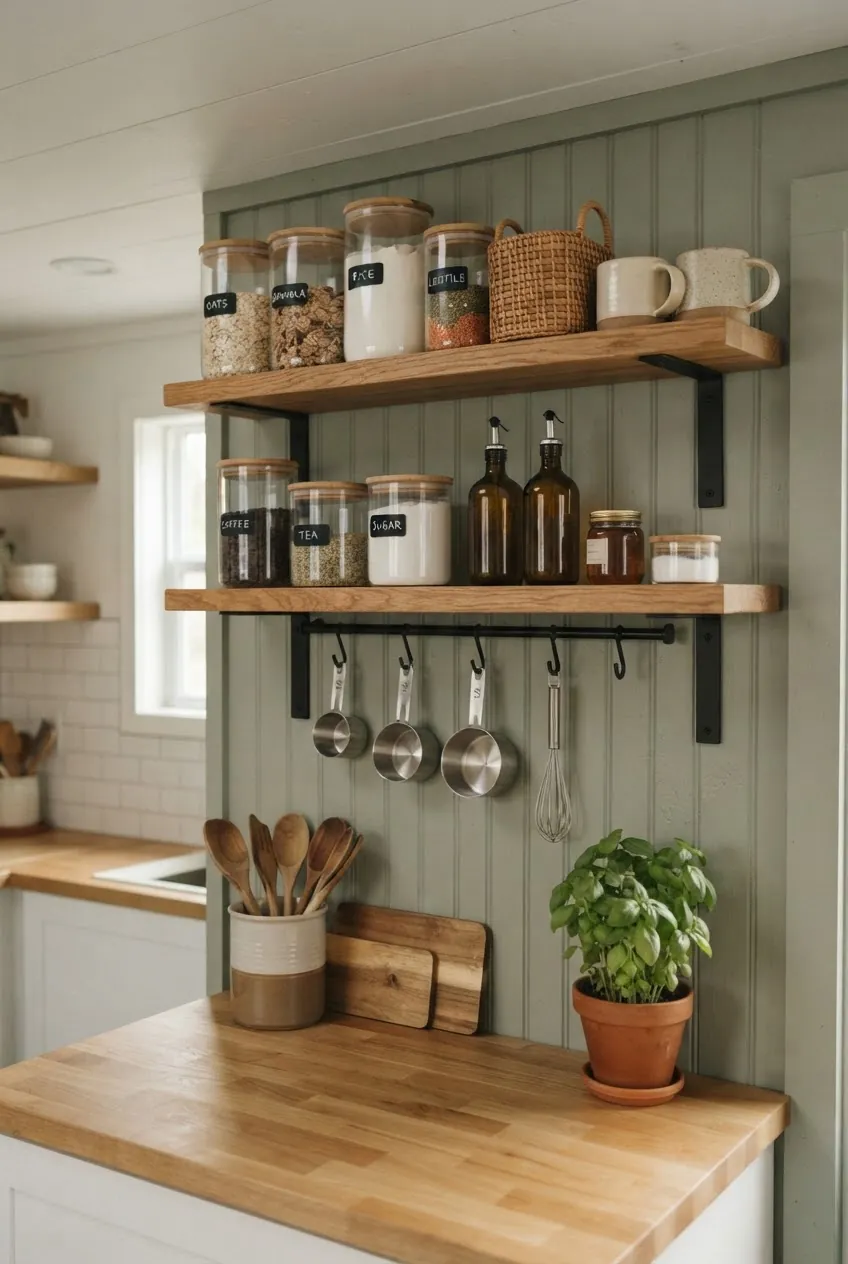
Open shelves are one of the cleanest pantry alternatives because they use wall height instead of floor space. In a compact kitchen, shallow shelves are often better than deep ones. A deep shelf invites forgotten food behind the front row, while a shallow shelf keeps everything visible.
Place your most-used dry goods on the lowest shelf: oats, coffee, rice, tea, pasta, or baking staples. Use the upper shelf for lighter backup items, mugs, or baskets that are easy to lift down. If you add hooks under the shelf, reserve them for light tools such as measuring cups, small strainers, or mugs.
Build a Daily-Use Zone
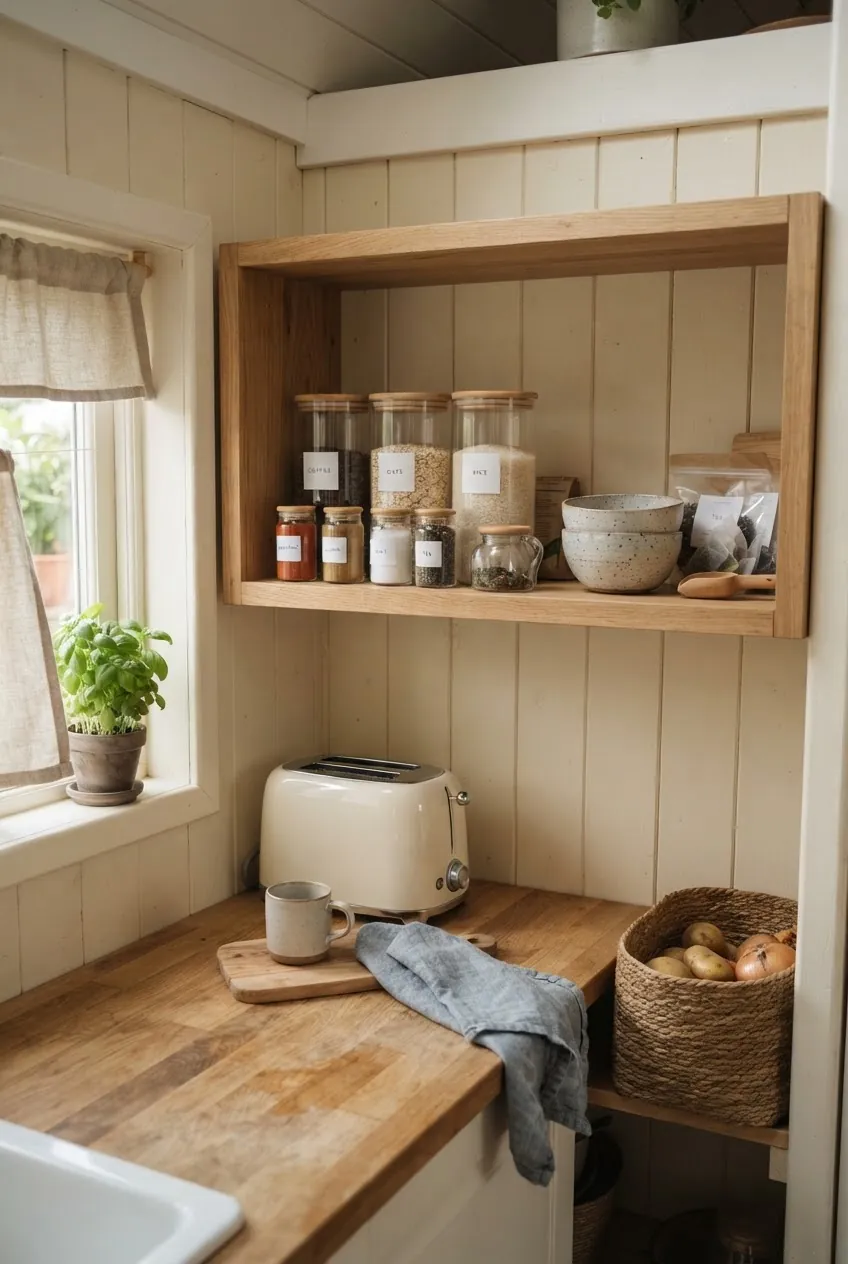
The biggest mistake in a no pantry kitchen is spreading food everywhere. Instead, create a daily-use zone close to the prep counter. This is where the coffee, breakfast staples, cooking oil, salt, pepper, and weeknight grains belong. When these items are grouped together, cooking takes fewer steps and the kitchen resets faster.
Keep this zone intentionally small. If it overflows, that is a sign the kitchen is storing too much food at once or that some items belong in a secondary zone.
Turn Lower Cabinets Into Pantry Zones
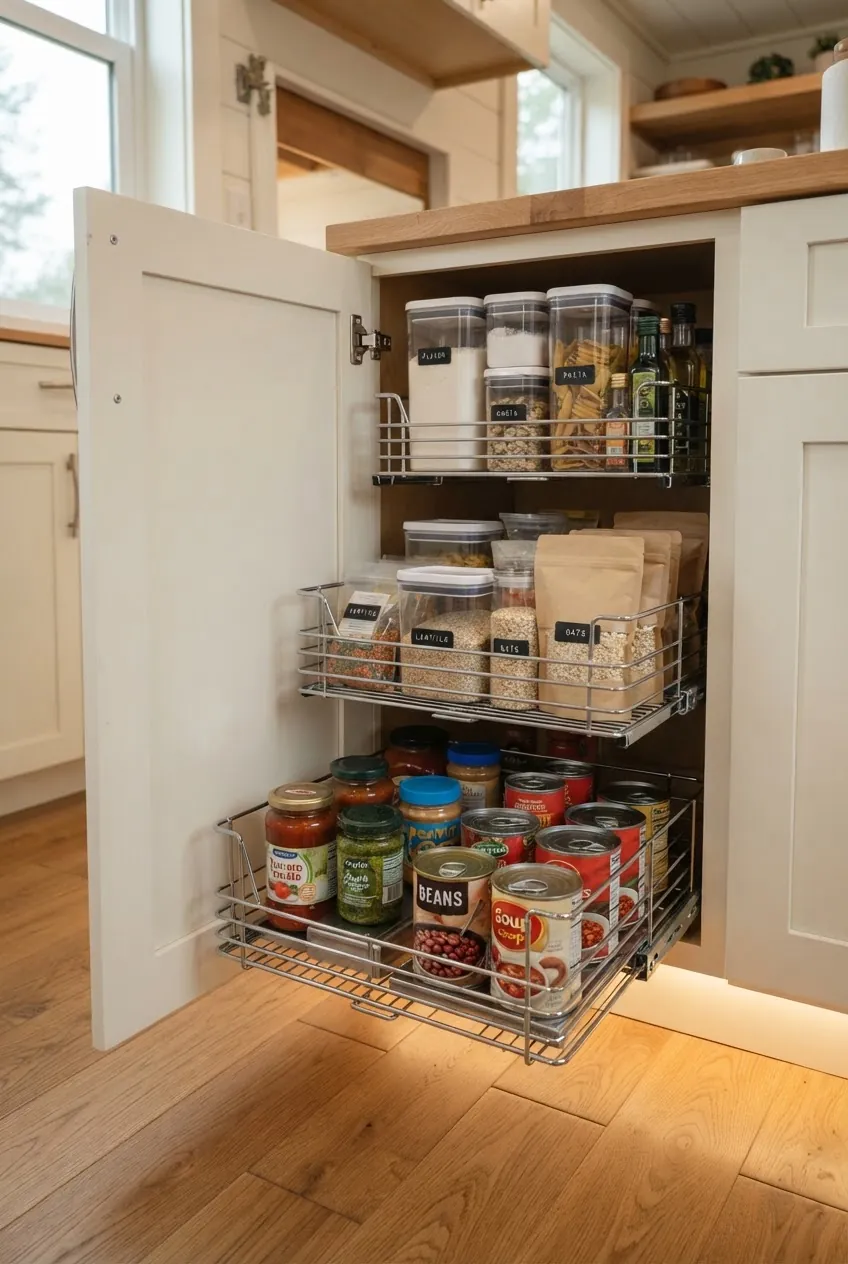
Lower cabinets can become a surprisingly efficient pantry if you stop treating them like one open cave. Add pull-out baskets, low bins, or shelf risers so the back of the cabinet is still reachable. Cans, jars, rice, extra pasta, and unopened packages are better here than on a high wall shelf.
Use broad categories rather than tiny labels: breakfast, dinner staples, snacks, baking, and backup. A tiny home kitchen needs a system you can maintain while tired, not a perfect display that collapses after one grocery trip.
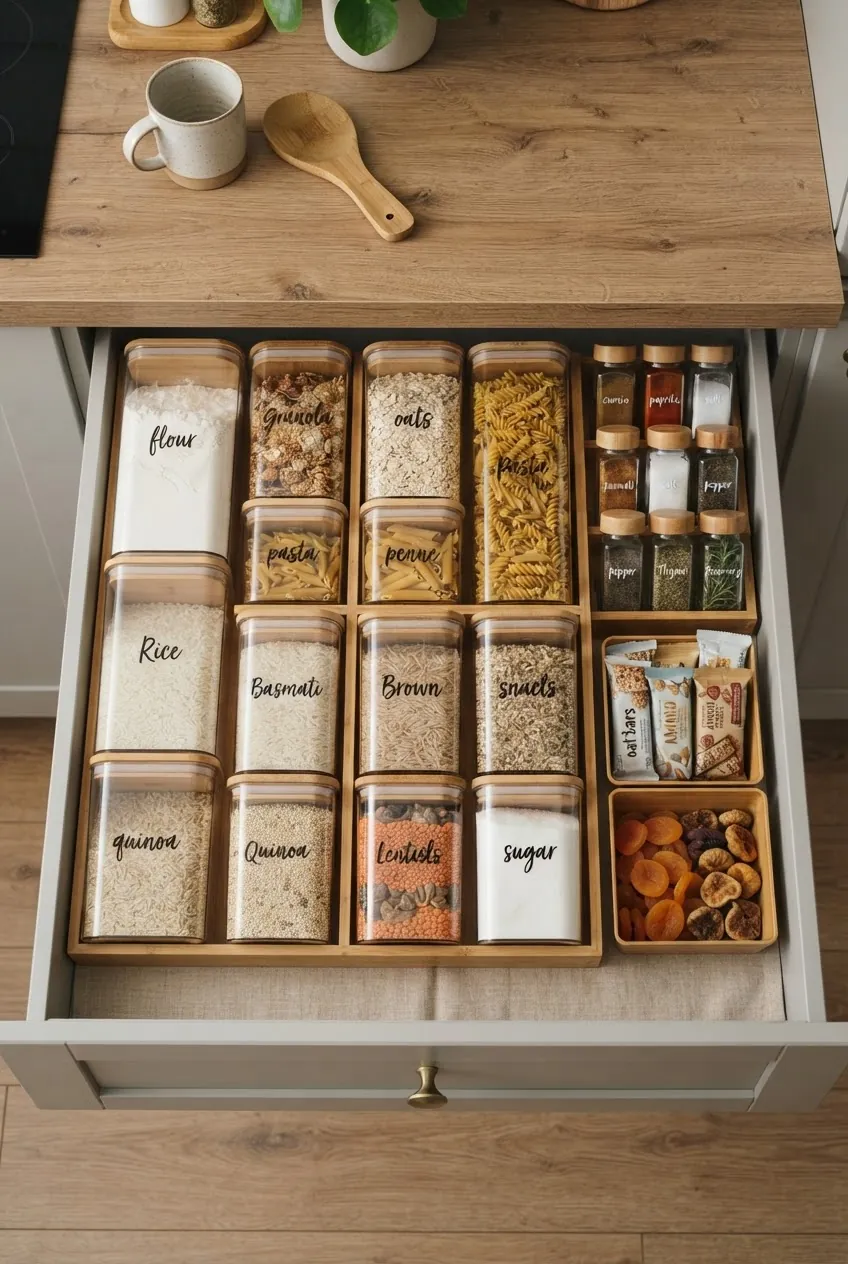
Use Drawers for Small Food and Tools
Drawers are valuable because you can see the whole storage area from above. Use drawer bins for snacks, spice packets, tea, small baking supplies, lids, and lightweight backup items. Decant only the foods that you use often enough to justify the extra step. For everything else, a simple bin is faster and more realistic.
If your drawers are shallow, choose low-profile containers and keep tall bottles elsewhere. If your drawers are deep, use upright bins so bags and boxes do not collapse into each other.
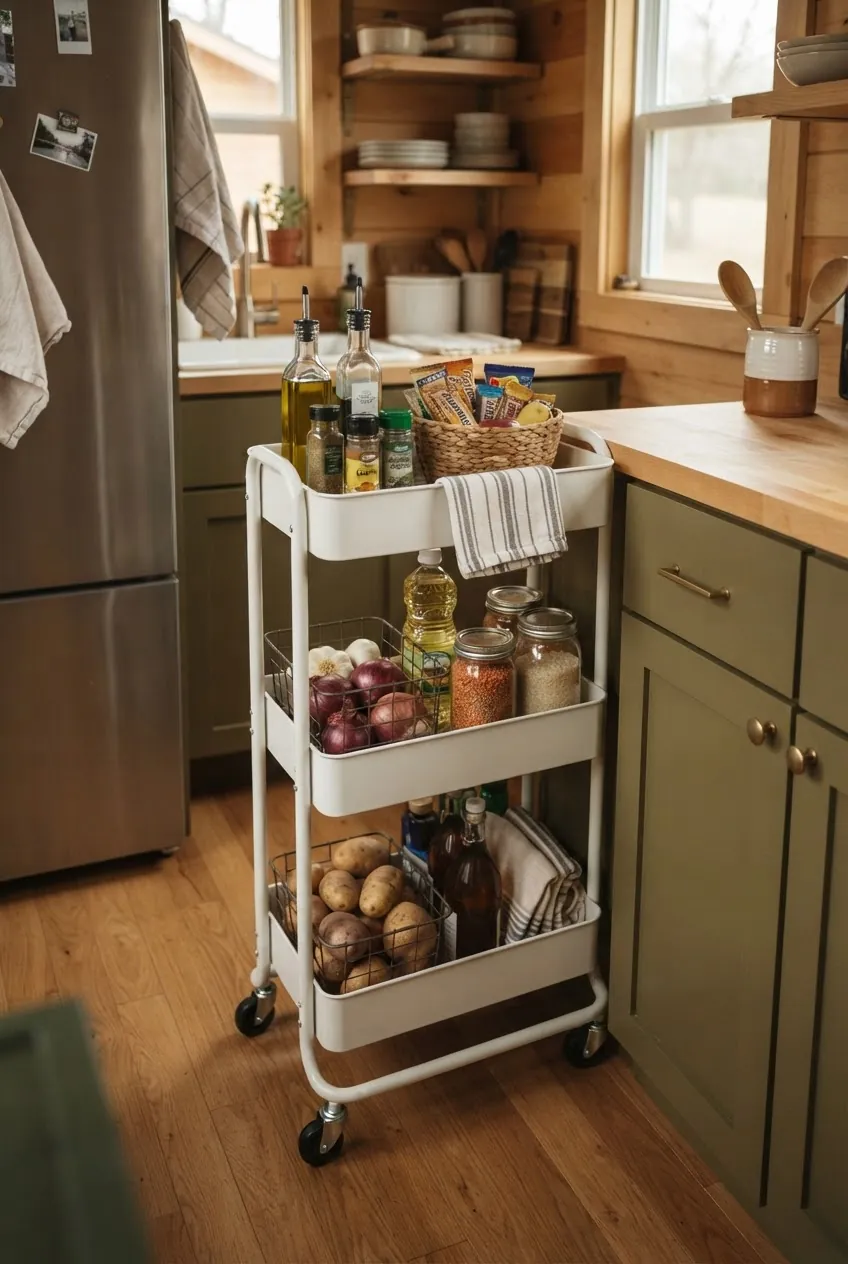
Add One Movable Overflow Spot
A slim rolling cart can solve the awkward gap beside a refrigerator or the empty end of a cabinet run. Use it for produce, tea towels, oils, onions, or the current week’s snacks. The key word is current. A cart should not become a second pantry full of forgotten extras.
Measure the full path before buying a cart. You need enough space to pull it out, turn around, and still open cabinet doors. If the cart blocks the walkway, choose a wall rail, a shallower shelf, or under-cabinet storage instead.
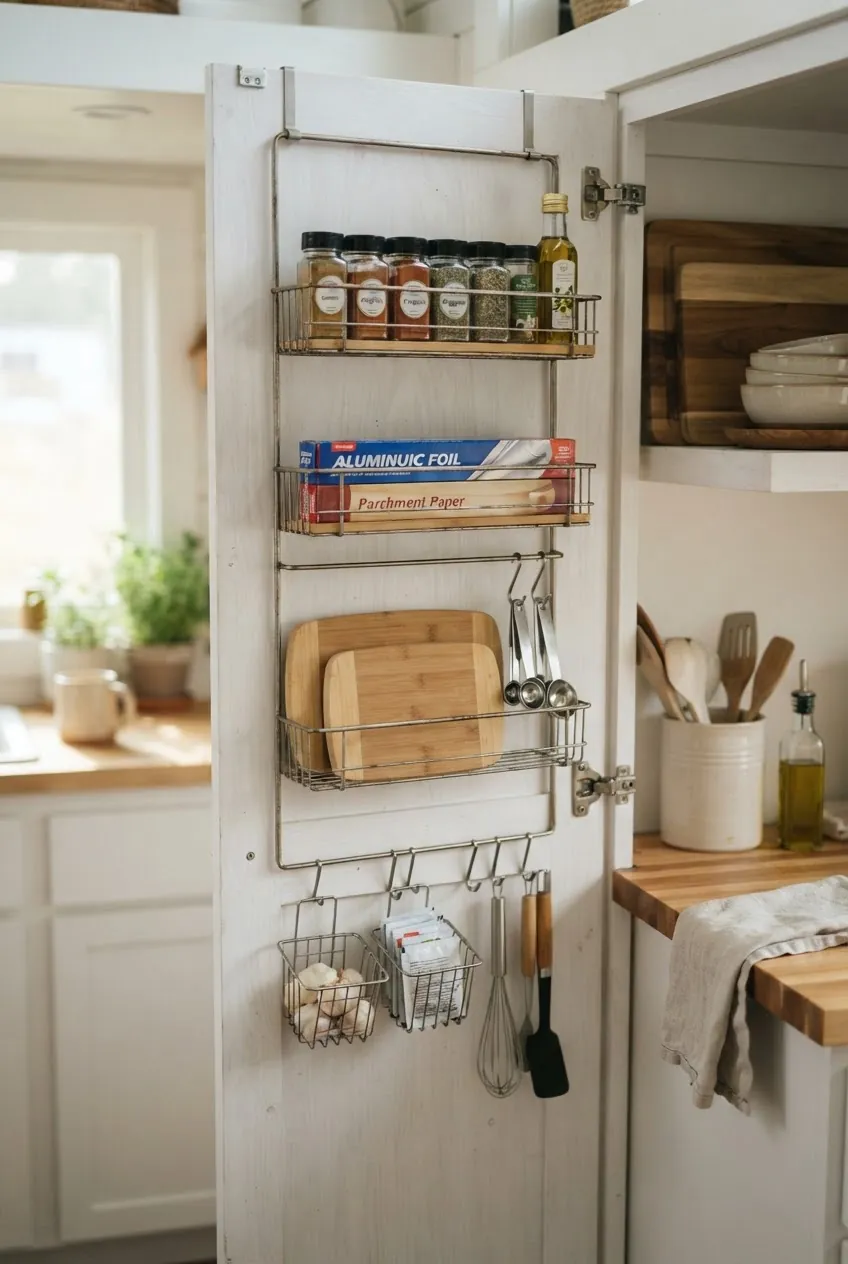
Use Doors and Cabinet Backs Carefully
The back of a cabinet door is useful for spices, wraps, measuring spoons, cutting boards, and other light items. It is not the right place for heavy jars or breakable overflow. Before adding a door rack, check that the shelves still clear the contents when the door closes.
A Simple No-Pantry Layout That Works
- Open shelf: daily dry goods, mugs, coffee, tea, and bowls.
- Lower cabinet: cans, backup grains, oils, and heavier staples.
- Drawer bins: snacks, spices, packets, lids, and small tools.
- Door rack: lightweight wraps, measuring tools, or cutting boards.
- Rolling cart: weekly overflow that needs to move when you cook.
Keep the System From Expanding
Once the kitchen is organized, protect the limits you created. Shop for the storage you actually have, not for a fantasy pantry. A tiny home kitchen can hold a useful amount of food when every shelf has a job, but it will feel cramped again if every grocery trip adds a new overflow pile.
The best pantry alternative is a system you can reset in five minutes: shelves for what you touch daily, cabinets for heavy backups, drawers for small items, and one flexible overflow spot that never becomes permanent clutter.