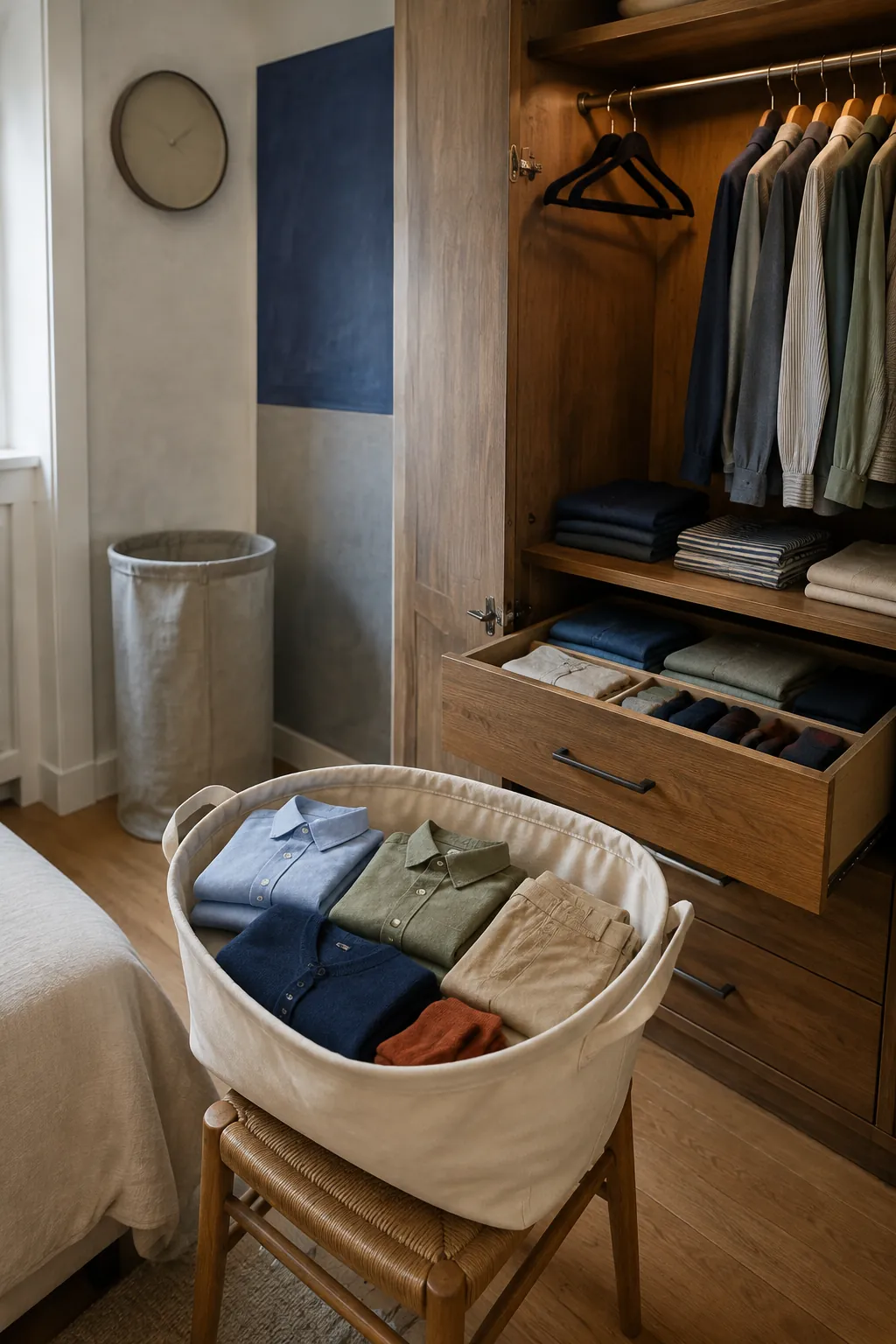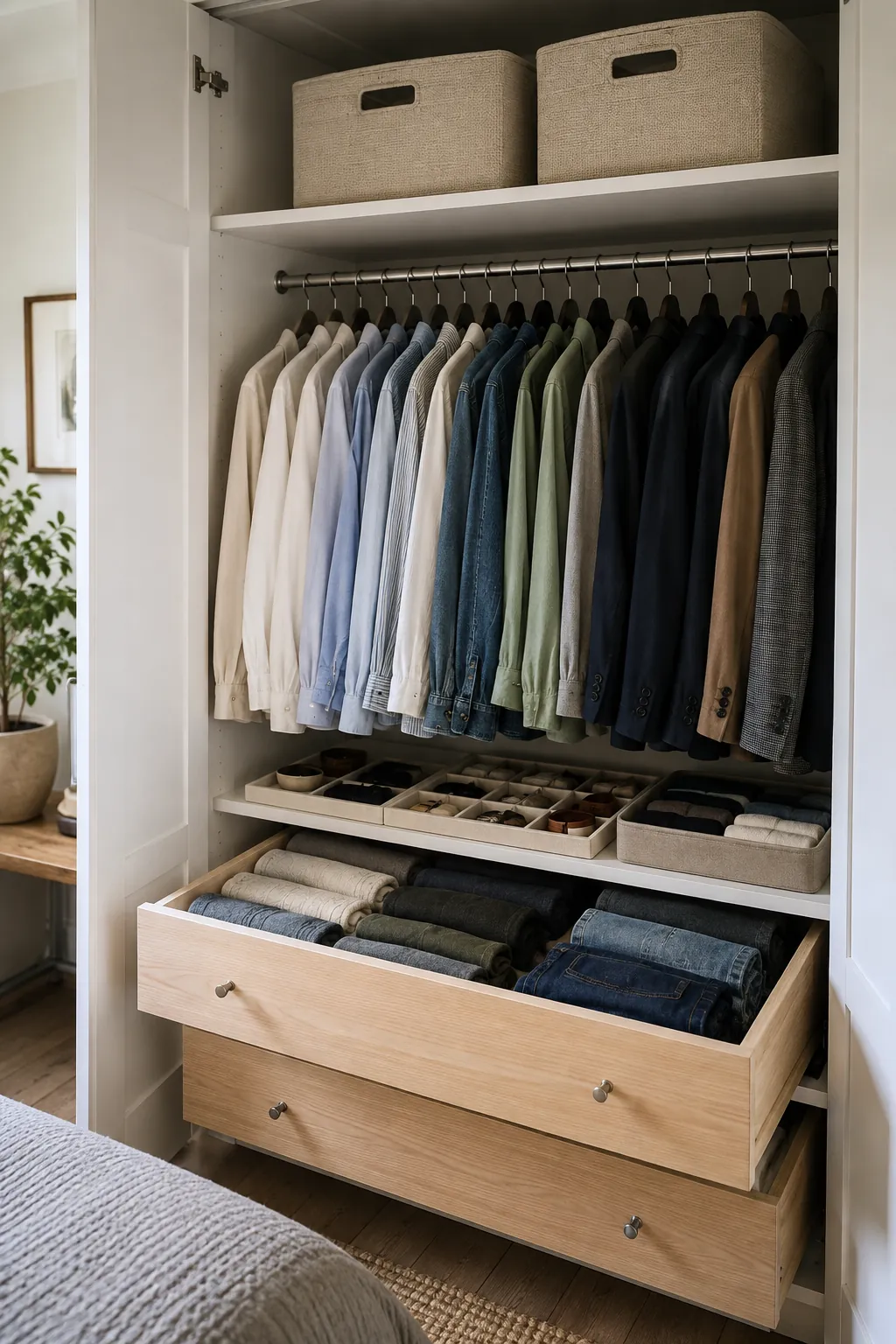
A clothing system fails when clean laundry takes too many decisions to put away or when useful pieces disappear beneath a stack. Efficiency comes from matching each garment to the easiest storage method, keeping the active wardrobe visible, and giving every category a firm capacity.
Define the wardrobe you actually use
Pull out one category at a time rather than covering the floor with everything. Keep pieces that fit your current body, schedule, climate, and laundry habits. Move repairs into a small dated basket and remove anything that has waited there too long, because an organizing system cannot compensate for clothing you avoid.
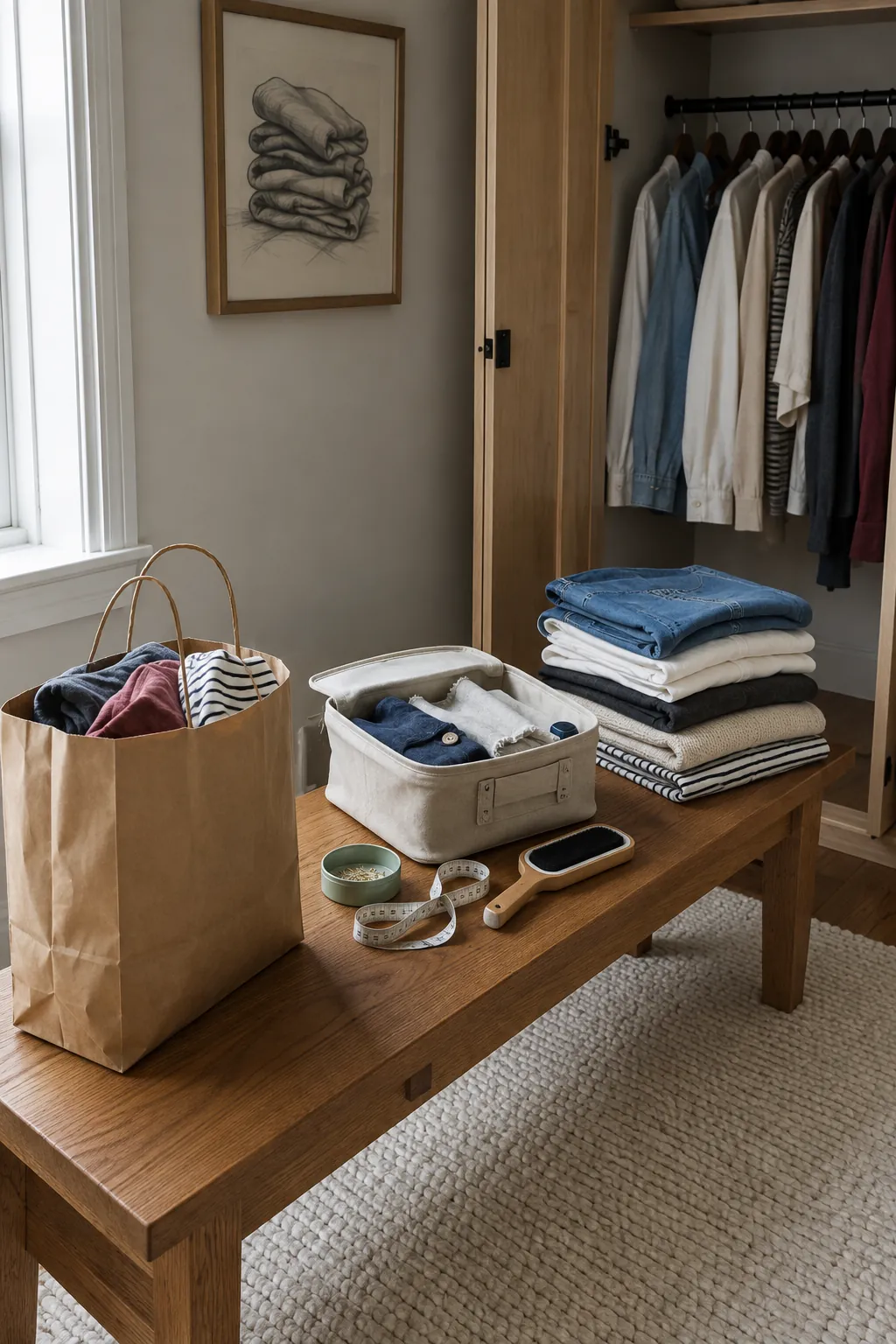
Assign storage by fabric and frequency
Hang garments that wrinkle, need structure, or are easiest to identify by silhouette. Fold knitwear, casual shirts, sleepwear, and exercise clothes so hangers do not stretch them. Place the most frequently worn categories between waist and eye level, then send occasional pieces higher or lower.
Create visible sections on the hanging rod
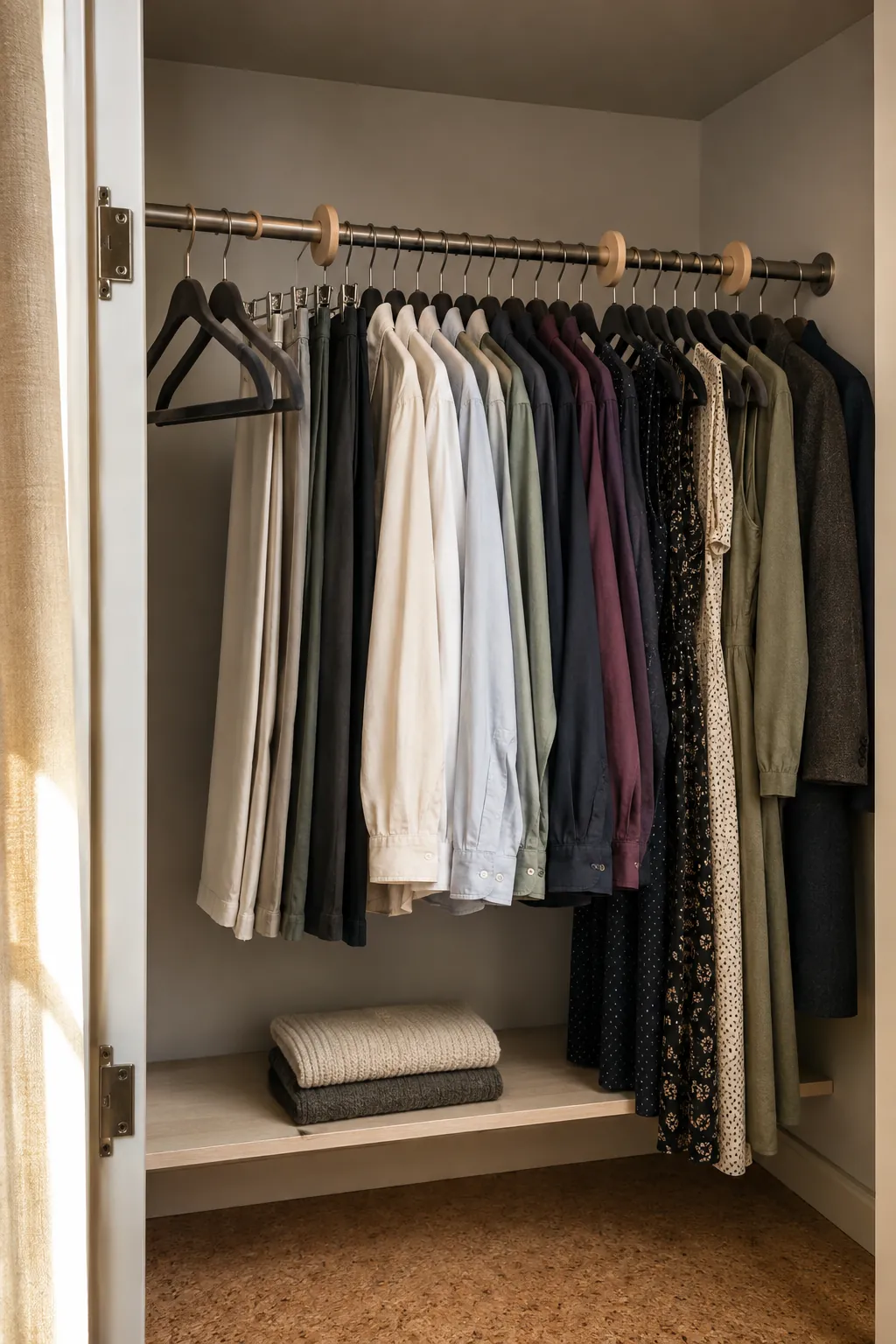
Group the rail by garment type before arranging color within each type. This lets you compare similar pieces and find a shirt without scanning every dress and jacket. Slim hanger organization can recover width, but leave enough space to slide clothes and keep one or two hooks empty for quick returns.
File fold clothes so every piece stays visible
Stacking shirts creates a front and a forgotten back. File folding clothes turns each item upright, so the whole drawer can be scanned without lifting anything. Fold to the drawer height, avoid packing rows tightly, and shorten the row with a divider when garments begin to slump.
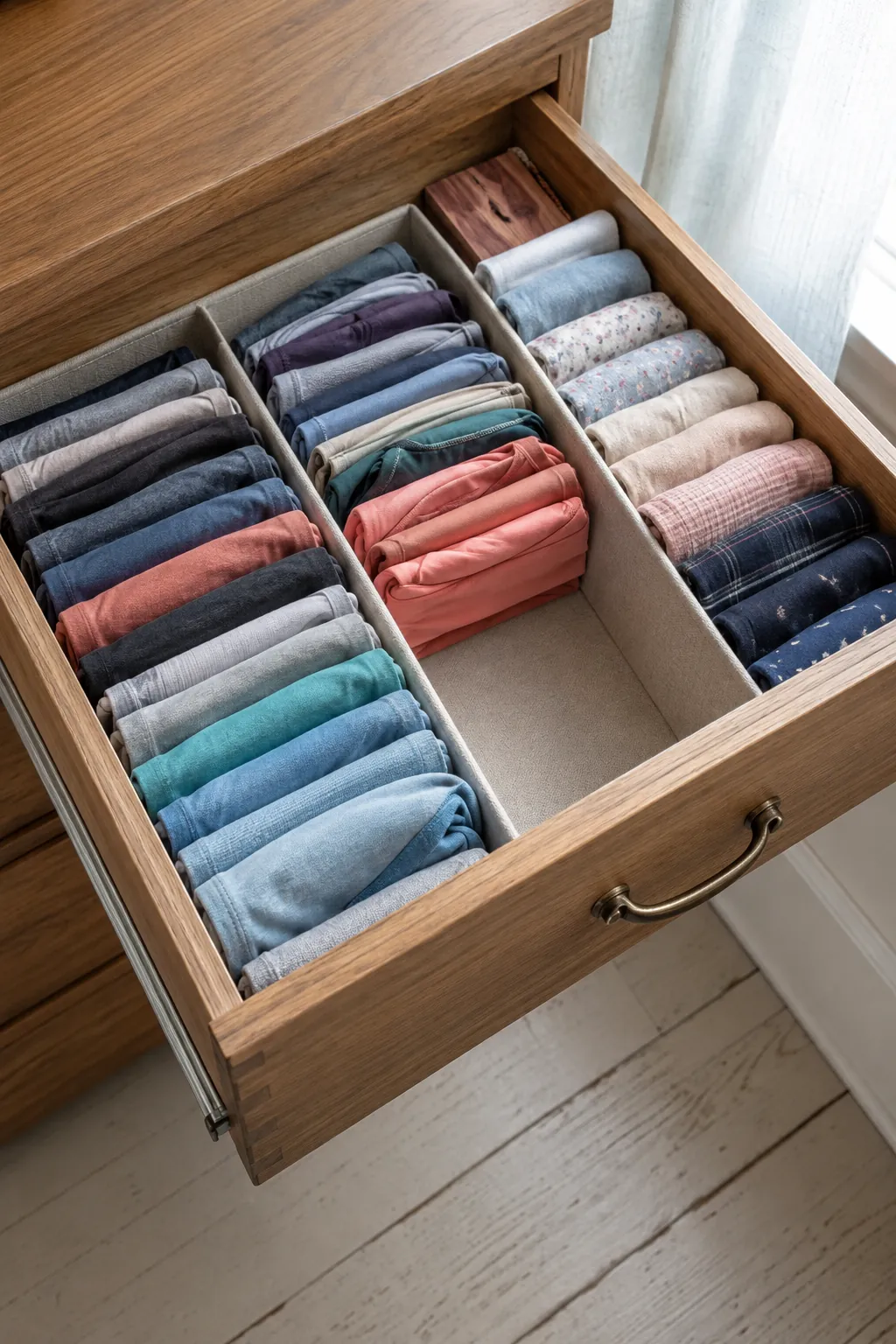
Use dividers for categories that spread
Socks, underwear, belts, and small accessories lose their boundaries quickly. Adjustable drawer divider ideas work when each compartment holds one category and has room for a hand to retrieve it. Avoid tiny cells for every object because the extra folding and sorting burden will make laundry slower.
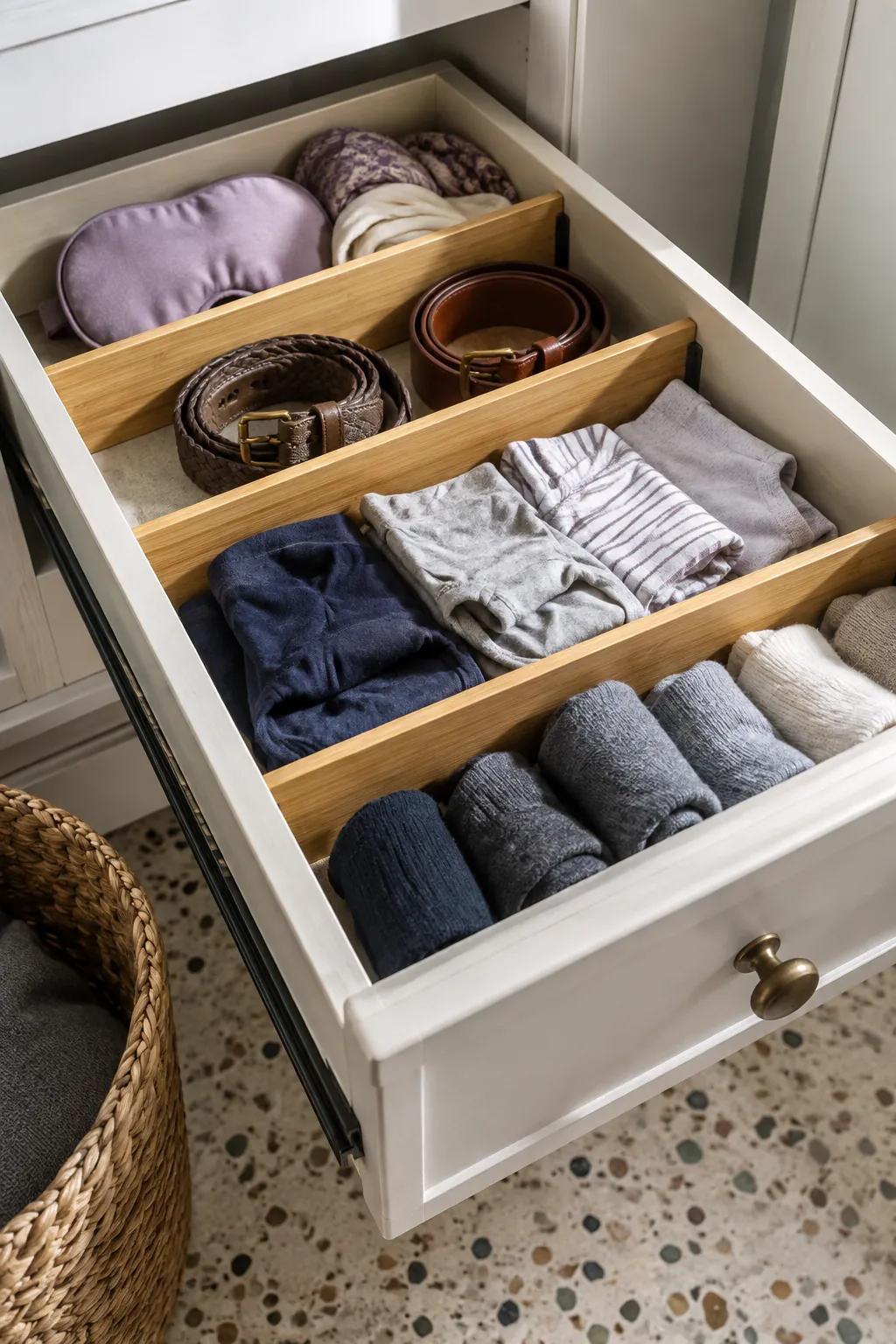
Rotate seasons without rebuilding everything
A seasonal clothing rotation should remove only what is truly unusable for the coming months. Keep flexible layers in the main wardrobe and place extreme weather items in breathable labeled bins. Before storing them, wash and repair each piece, then set one calendar reminder to review the containers when the weather changes.
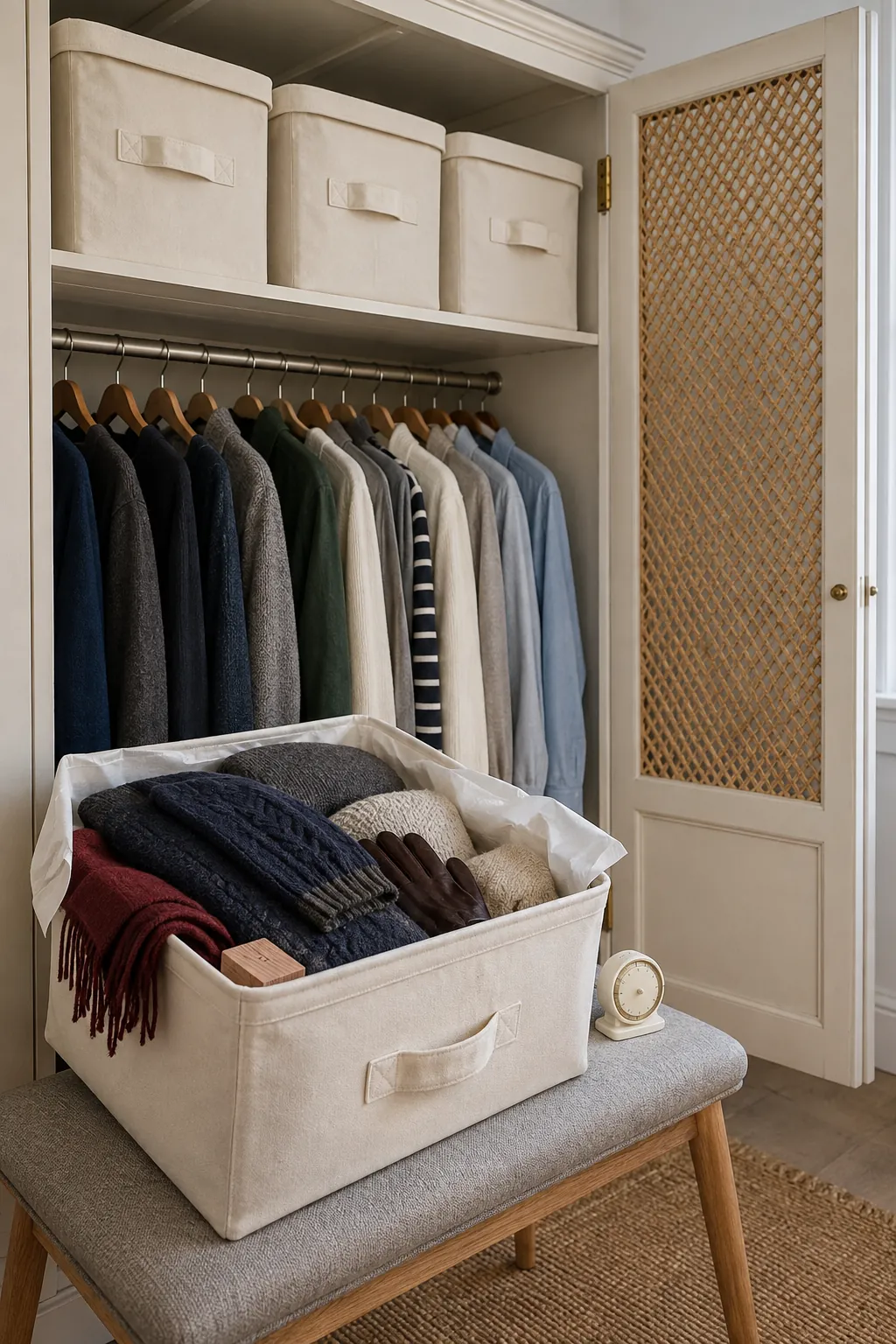
Make laundry return the final design test
Carry one load of clean laundry to the wardrobe and notice every point where you hesitate. Categories that require moving another bin, refolding several items, or opening multiple containers need a simpler home. The best clothing organization system is the one that lets you return the full load quickly while every useful garment stays easy to see.