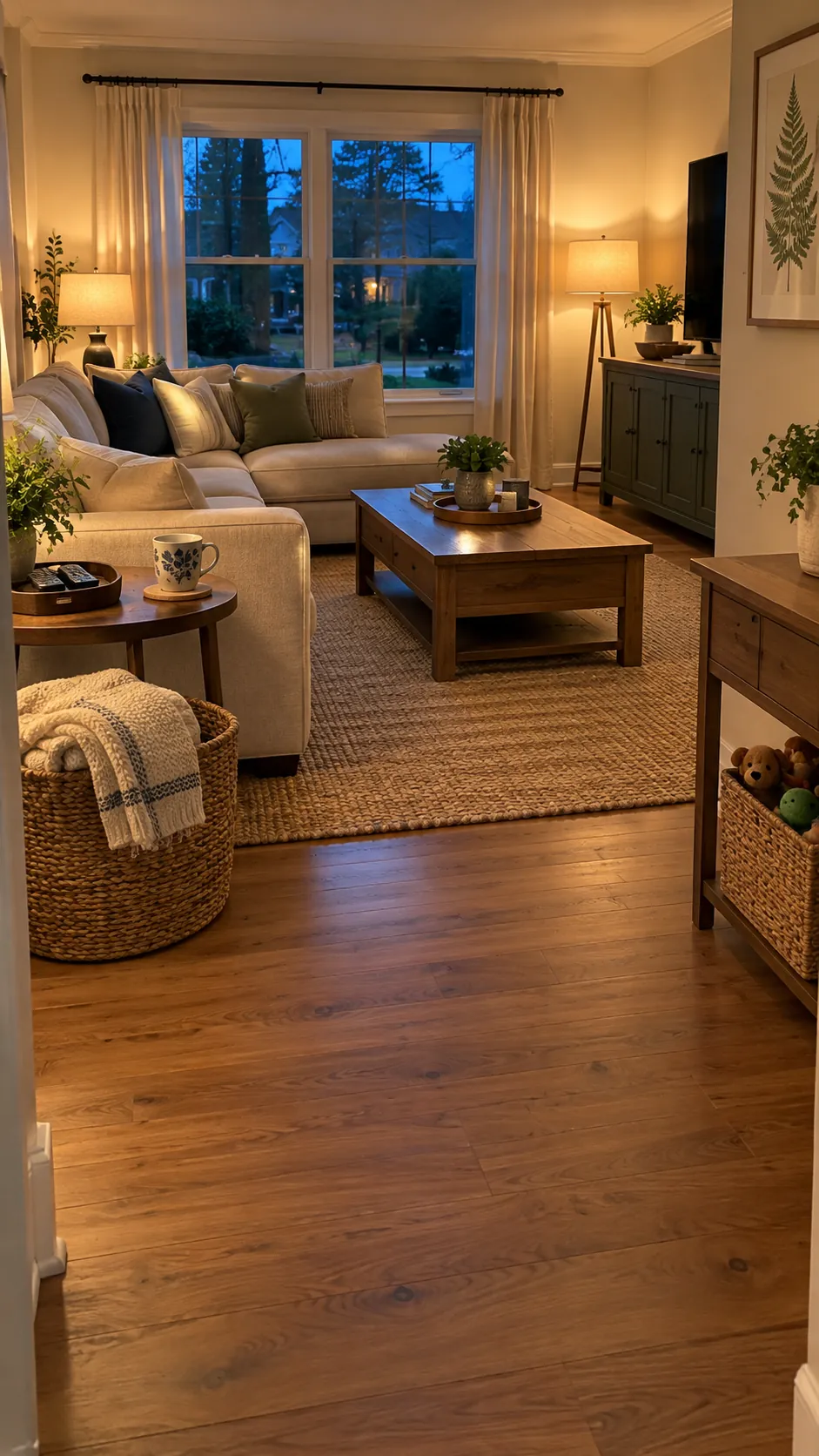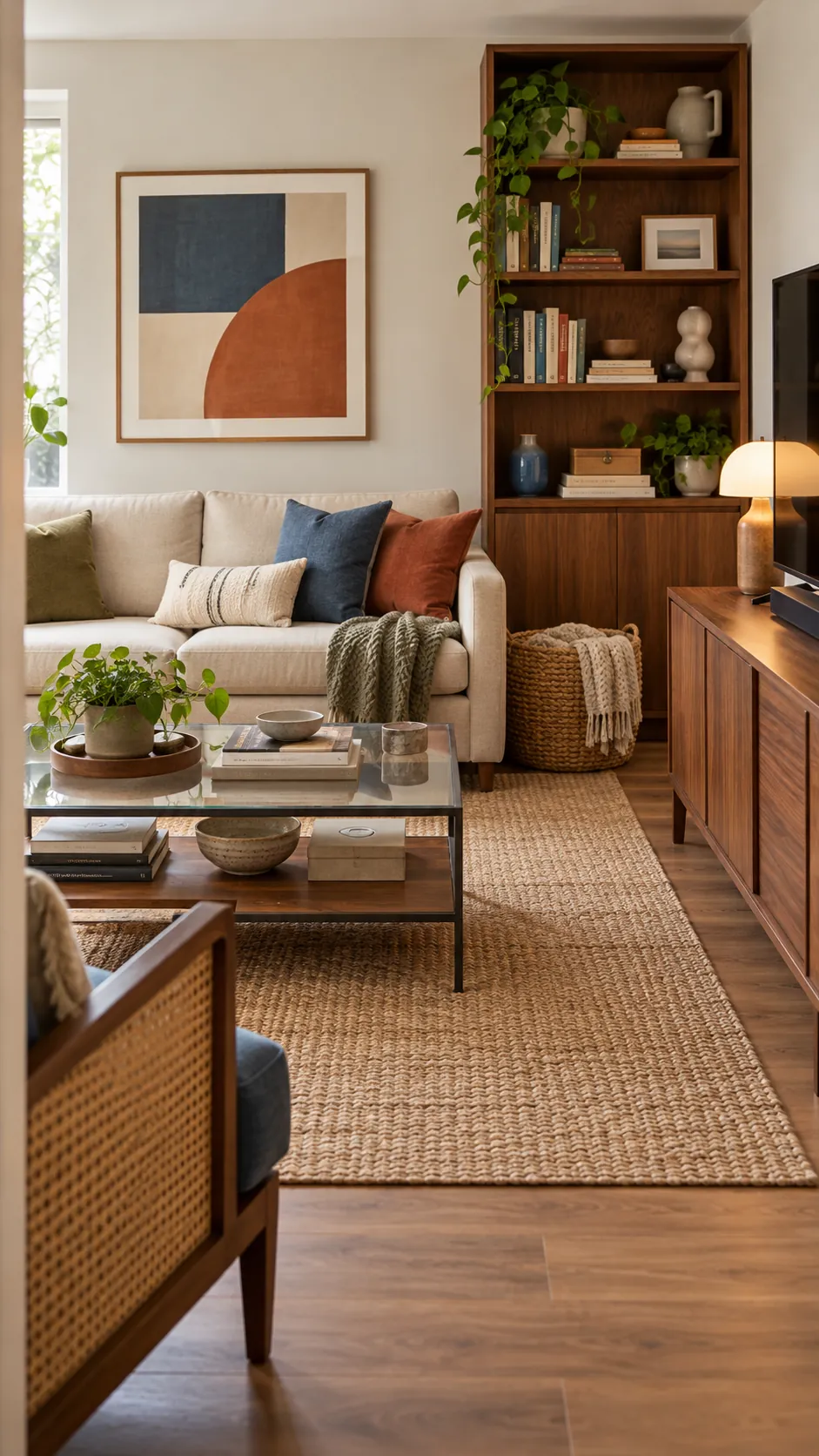
Living room clutter often comes from useful objects that have no reliable home. Remotes, chargers, blankets, toys, books, and decor gather on the same surfaces until the room feels both busy and unfinished. The fix is not to hide everything. It is to separate what supports daily life from what deserves to be displayed, then give each group a clear limit.
Edit the room before buying storage
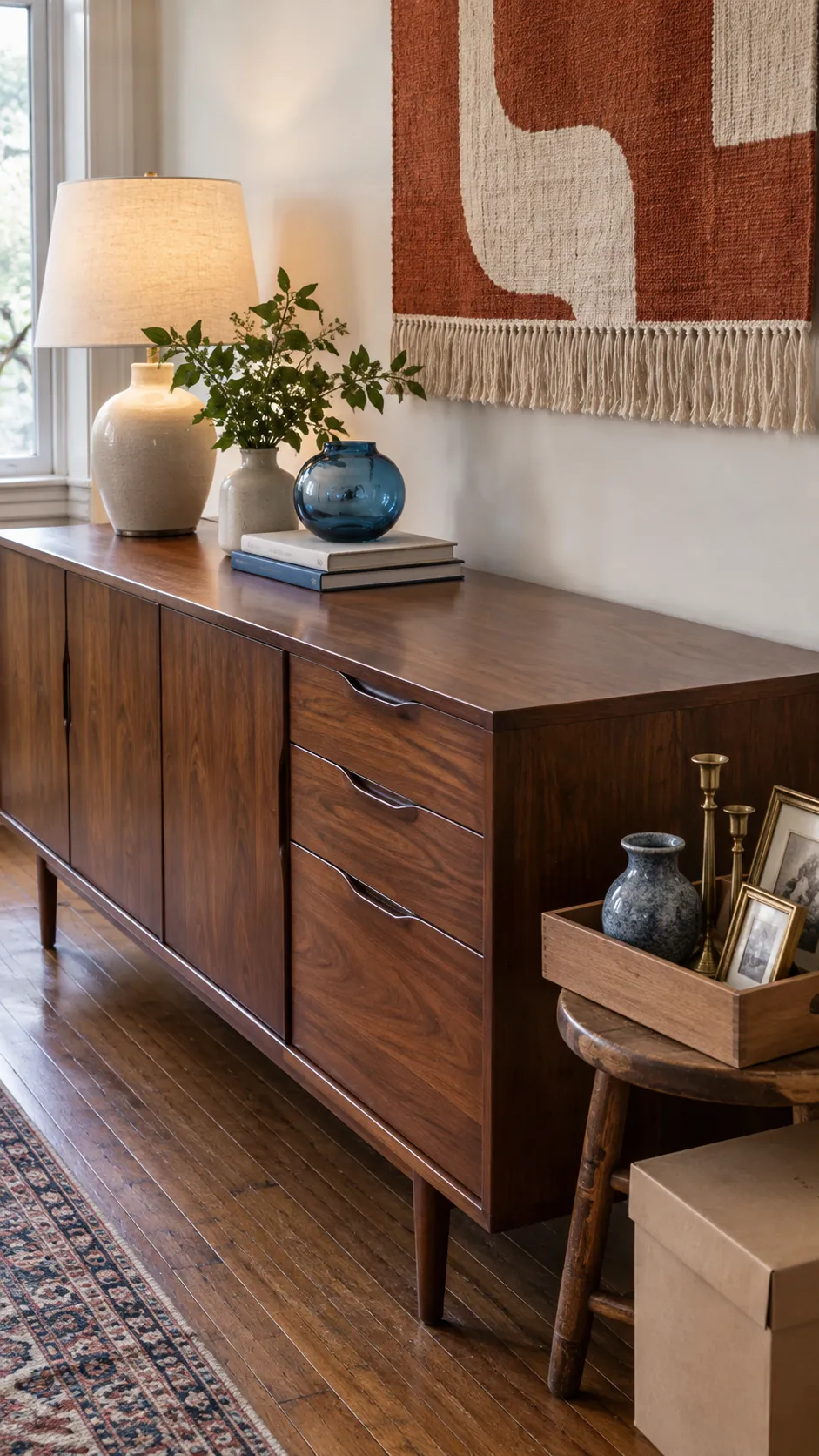
Remove every small decorative object and gather it in one place. Return only pieces that have personal meaning, useful function, or a strong visual role. If several items do the same job, keep the best one and move the rest to another room, donate them, or store them for rotation.
Keep furniture surfaces partly open during this first pass. Empty space is not a decorating failure. It lets the eye understand the objects that remain and gives daily items a temporary landing place without immediate overflow.
Give daily items the easiest homes
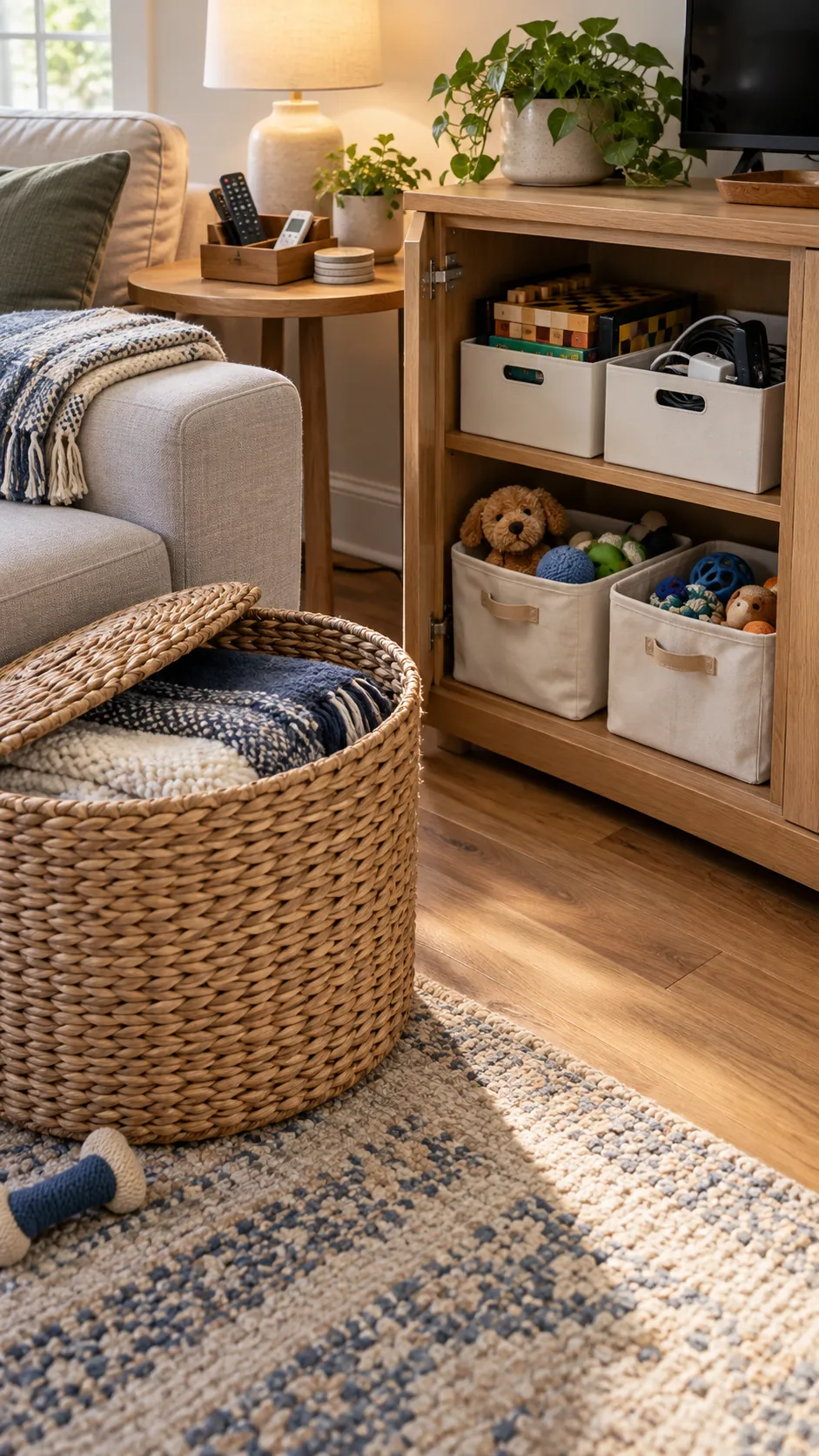
Storage works when putting an item away requires less effort than leaving it out. Place a lidded basket beside the sofa for blankets, a small tray near the main seat for remotes, and a closed cabinet near the activity that creates the clutter. Children and pets need low containers they can reach without help.
Use one container for each clear category. A single large basket holding cables, games, papers, and toys becomes another clutter pile. Smaller boxes inside hidden living room storage keep categories separate and make the contents easy to return after use.
Keep the coffee table useful
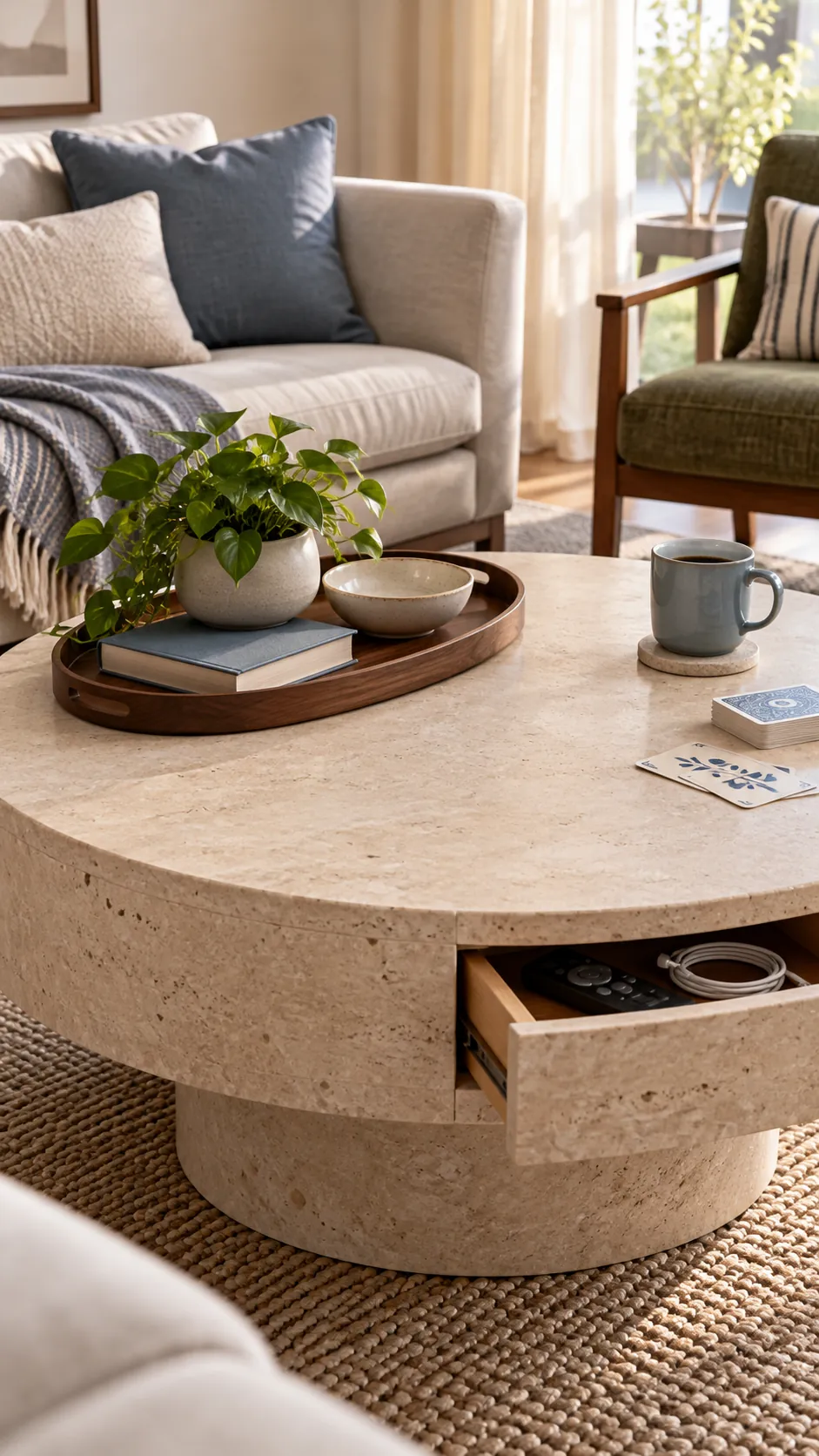
A clutter free coffee table needs a defined working area. Group one or two decorative objects on a tray so they move together when the table is needed for snacks, games, or a laptop. Leave the remaining surface open and remove anything that belongs elsewhere at the end of the day.
Choose low objects that do not block conversation or the television view. A small plant, one book, and a bowl can be enough. If loose items return every evening, add a shallow drawer, shelf, or nearby basket instead of building a taller decorative arrangement.
Style the media console around the screen
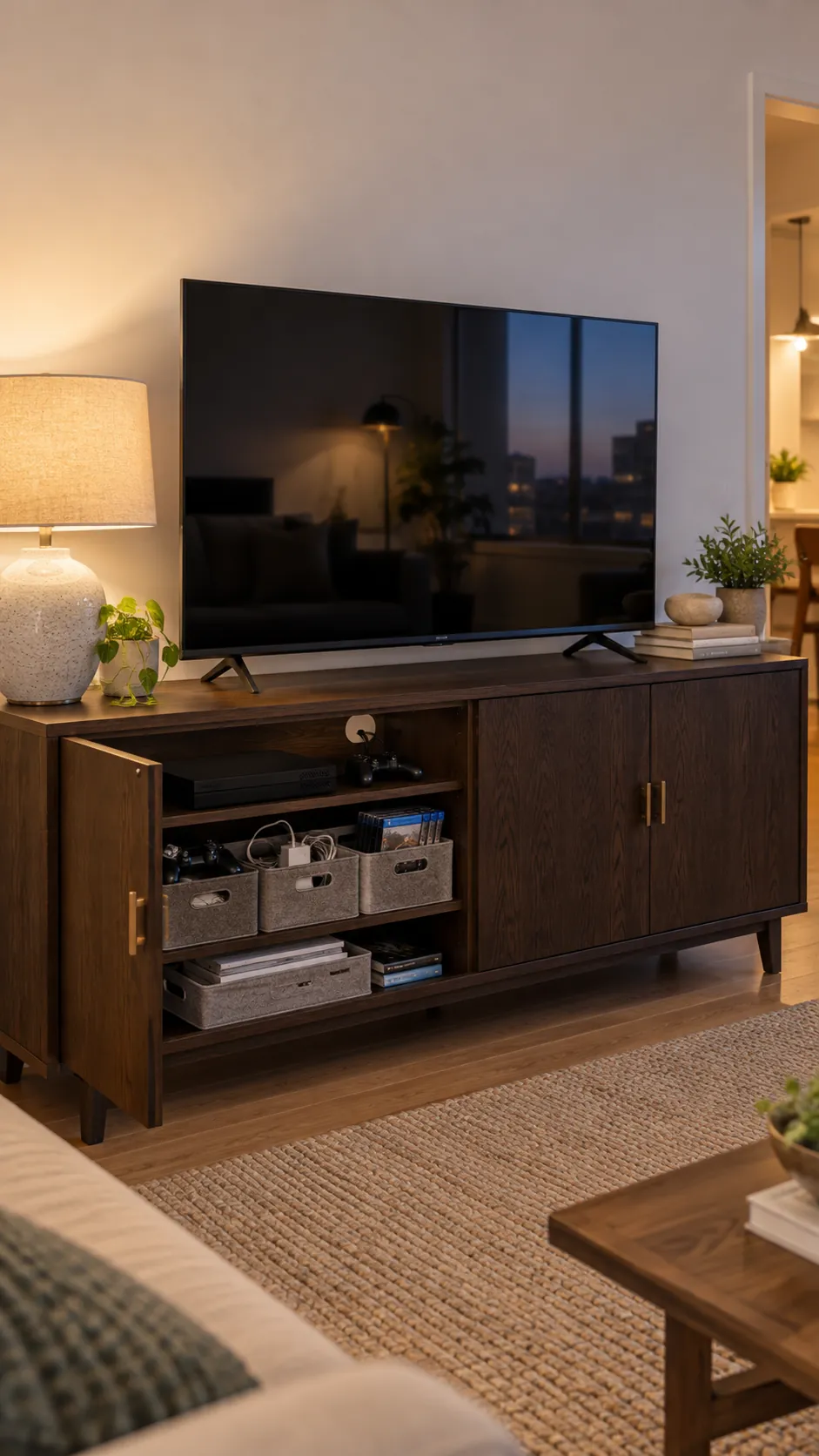
A styled media console should support the screen rather than compete with it. Hide cables and equipment first, then place a small group at one end and one lower object at the other. Keep the center clear if the television stands on the console, and avoid objects that rise into the picture.
Closed doors are useful for games, spare controls, chargers, and instruction papers. Use boxes or trays inside the cabinet so small items do not spread across every shelf. This structure makes a quick reset possible without turning the cabinet into an overfilled hiding place.
Group shelf decor with space between
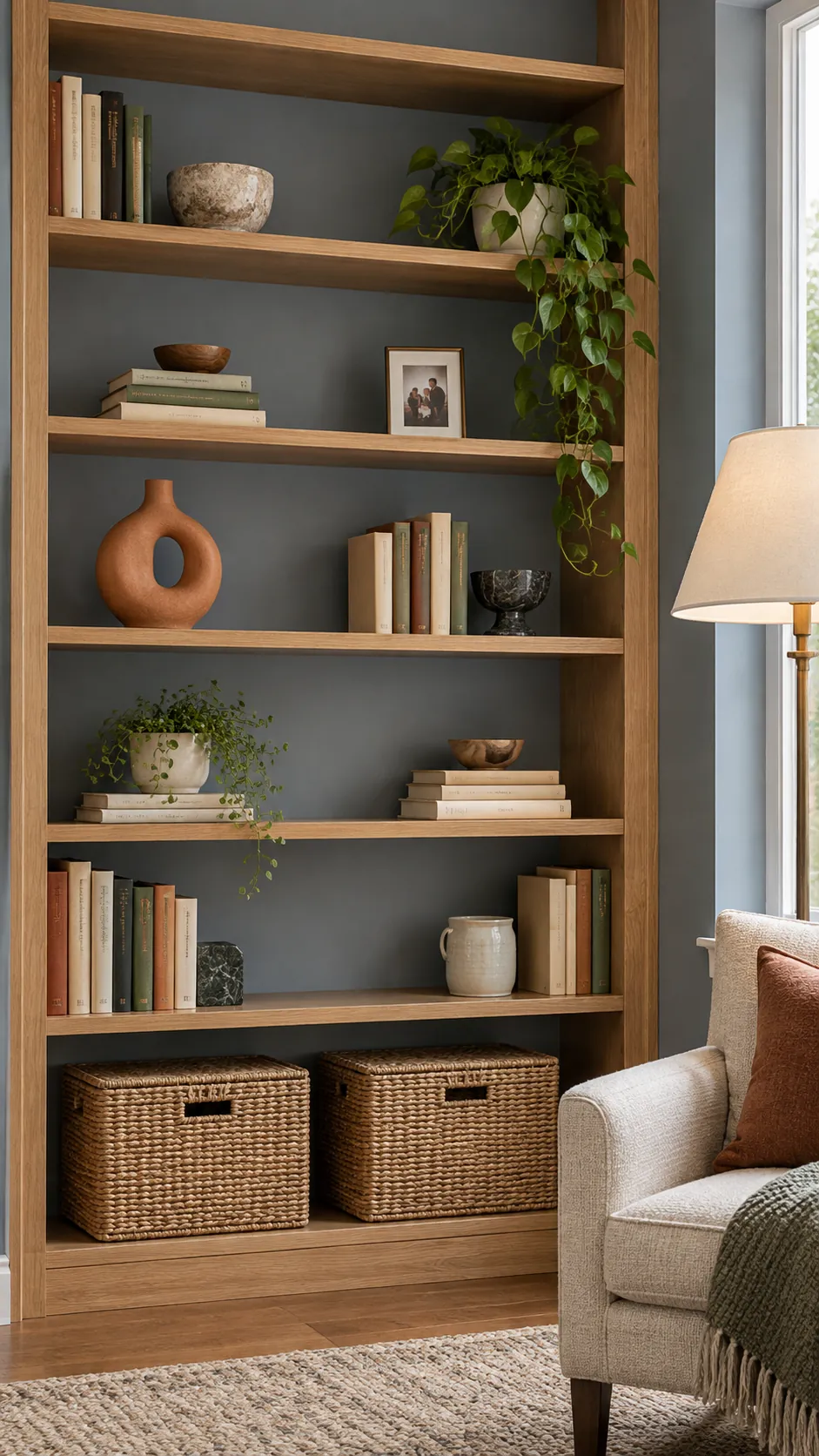
Shelf decor grouping works best when objects vary in height, shape, and purpose. Combine a short stack of books with one sculptural piece, or place a plant beside a small framed photograph. Keep related items close enough to read as one group, then leave a visible gap before the next group.
Do not fill every shelf to the same density. Put heavier books and baskets lower, lighter decor near eye level, and rarely used objects higher. Repeat one or two colors across the unit so the display feels connected without making every shelf identical.
Use a short reset to protect the system
A room stays organized when the final reset is easy to see and finish. Return remotes to the tray, fold or basket the blankets, clear cups and papers, and put toys in their assigned container. Move objects that repeatedly land in the wrong place closer to where they are used.
Review the displays when cleaning them begins to feel tedious. A shelf that takes too long to dust probably holds too much. Keep a small rotation box outside the living room so seasonal pieces can change without expanding the total amount of minimal living room accessories on view.