
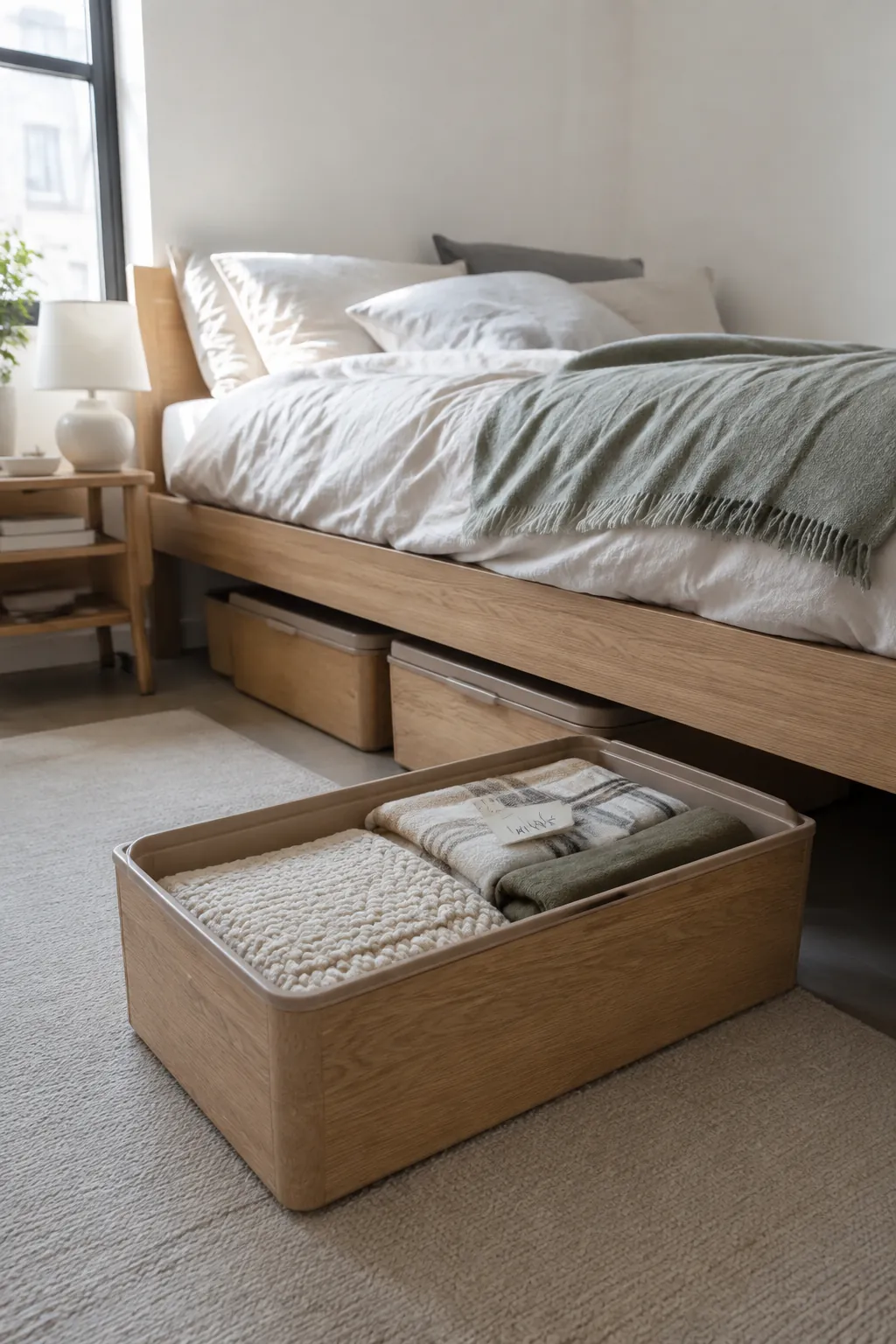
The space below a bed can rescue a crowded bedroom, but only when every container fits, protects its contents, and comes out without a wrestling match. The common failure is buying bins first and discovering later that they scrape the frame, gather dust, or hide things so completely that nobody remembers what is inside. A reliable setup begins with clearance, access, and cleaning, then assigns the space to belongings that truly benefit from being stored there.
Measure the usable space before choosing containers
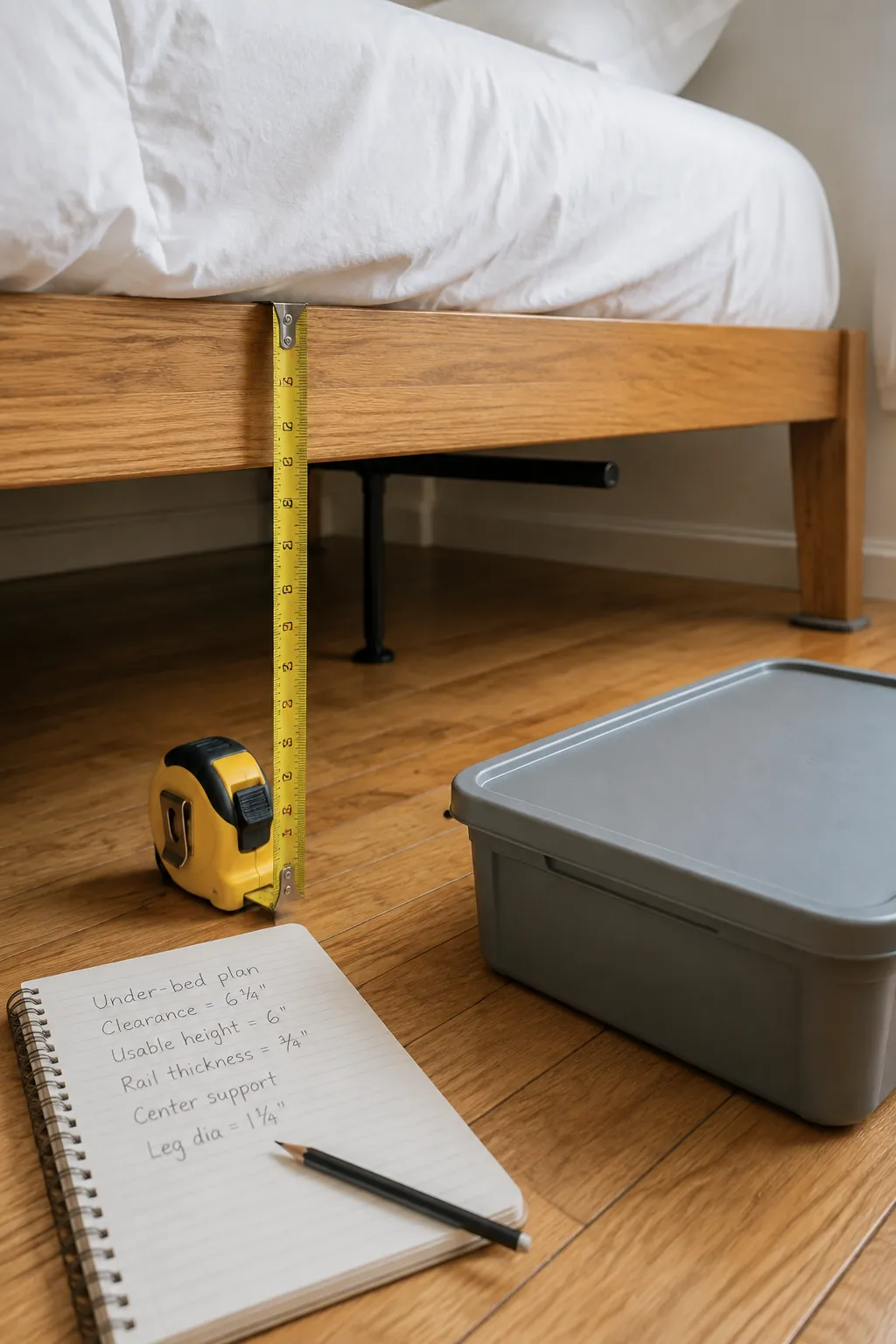
Measure from the floor to the lowest fixed part of the bed frame, then subtract about one inch so a loaded container can pass underneath without catching. Check the middle and every corner because support rails, slats, and an uneven floor can reduce the clearance. Record the available width on each side and leave a clear lane near the head of the bed for outlets, vents, or bedside furniture. This small survey prevents the expensive mistake of ordering under bed storage bins by their advertised capacity instead of their true external dimensions.
Decide what deserves this low access zone
Under the bed is best for items used monthly or seasonally, not objects needed every morning. Spare bedding, winter sweaters, guest towels, keepsakes, and off season shoes are good candidates because retrieving them occasionally is reasonable. Heavy books, leaking toiletries, food, damp textiles, and anything delicate enough to be damaged by pressure belong elsewhere. If you have not used an item through its last relevant season, decide whether to donate it before giving it valuable small bedroom storage space.
Compress soft goods without trapping trouble
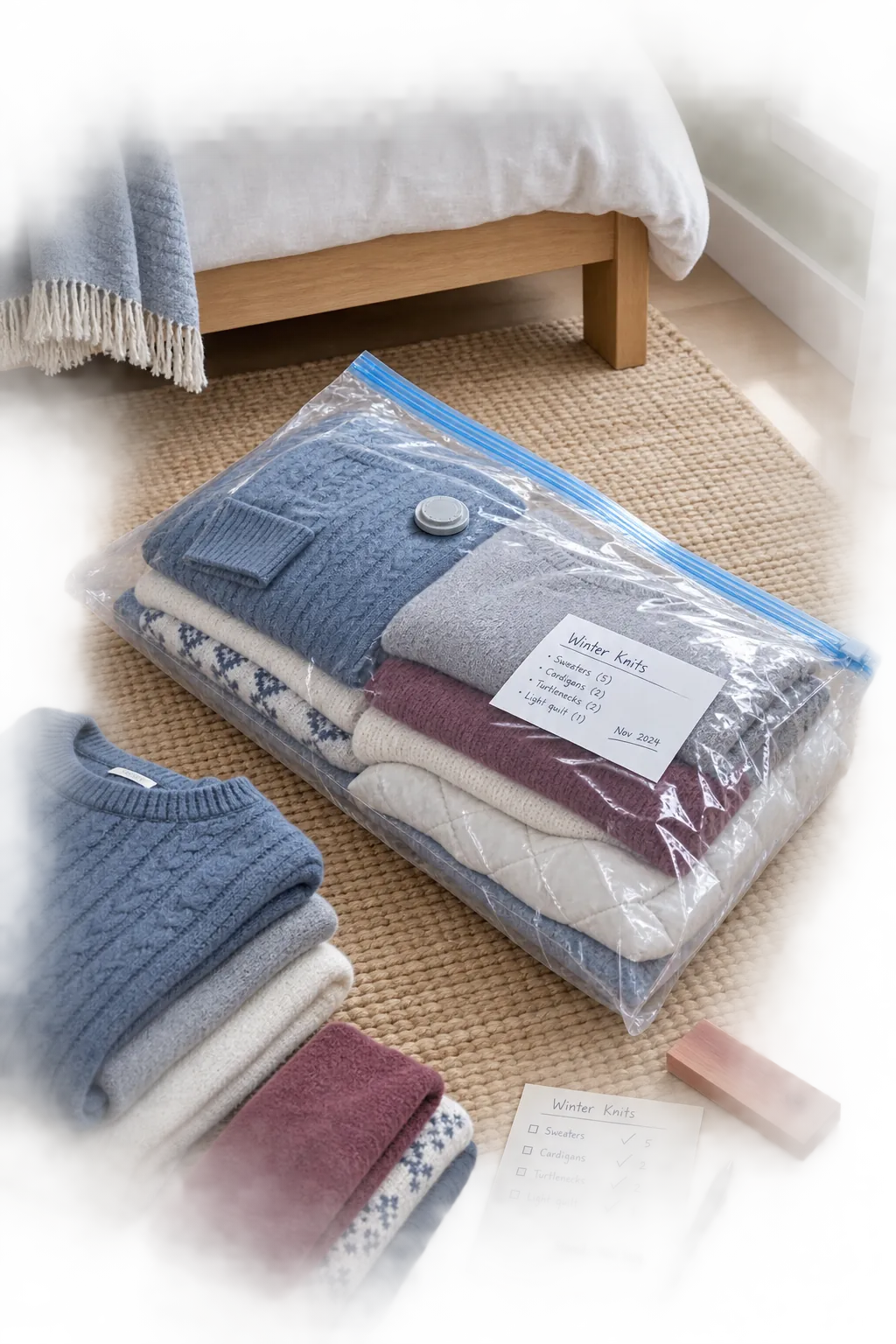
Vacuum bag storage works well for clean, completely dry quilts and bulky synthetic clothing that can recover after compression. Fold each category together, add a paper inventory card where it remains visible, and stop compressing before zippers, seams, or insulation are strained. Wool, down, leather, and heirloom fabrics need breathable storage because long compression can distort fibers and hold unnoticed moisture. Recheck sealed bags after a day, since a bag that slowly expands is easier to reseal before it disappears beneath the bed.
Use rolling containers for the things you retrieve most
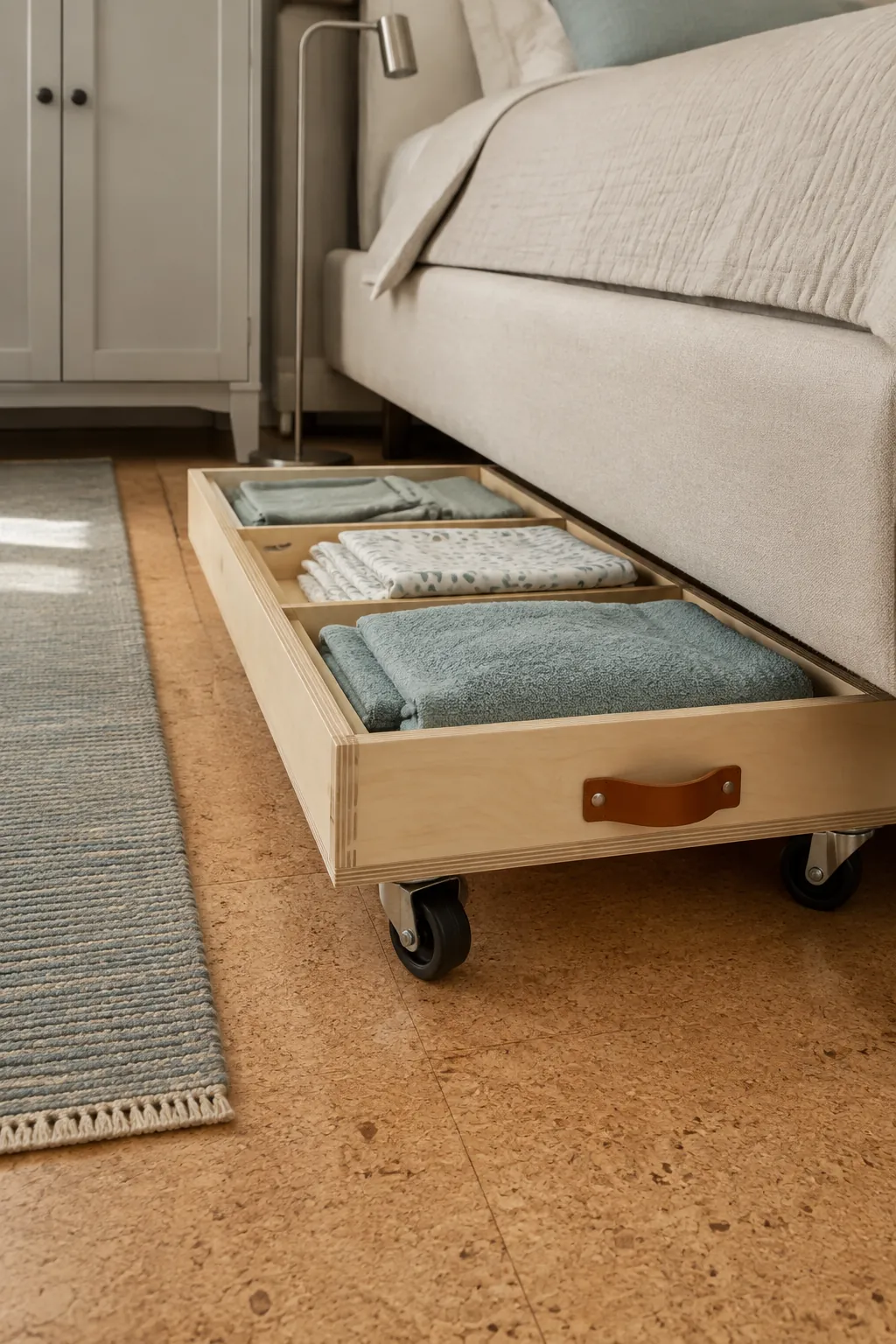
A rolling under bed organizer reduces strain and keeps a full bin from dragging grit across the floor. Choose broad, low wheels that track straight, and test whether the handle remains reachable when the container is fully inserted. Place the most frequently used category on the easiest side of the bed rather than filling both sides according to symmetry. On a rug, a rigid tray or shallow drawer usually moves more predictably than a flexible fabric bag.
Give shoes a washable compartment
Under bed shoe storage should separate worn soles from linens and clothing. Clean and dry every pair before storage, then use divided containers or individual washable bags so shoes do not collapse against one another. Position everyday pairs near the foot of the bed and reserve deeper spaces for special occasion or off season footwear. A clear lid makes selection faster, but a simple label is still useful when the room is dim.
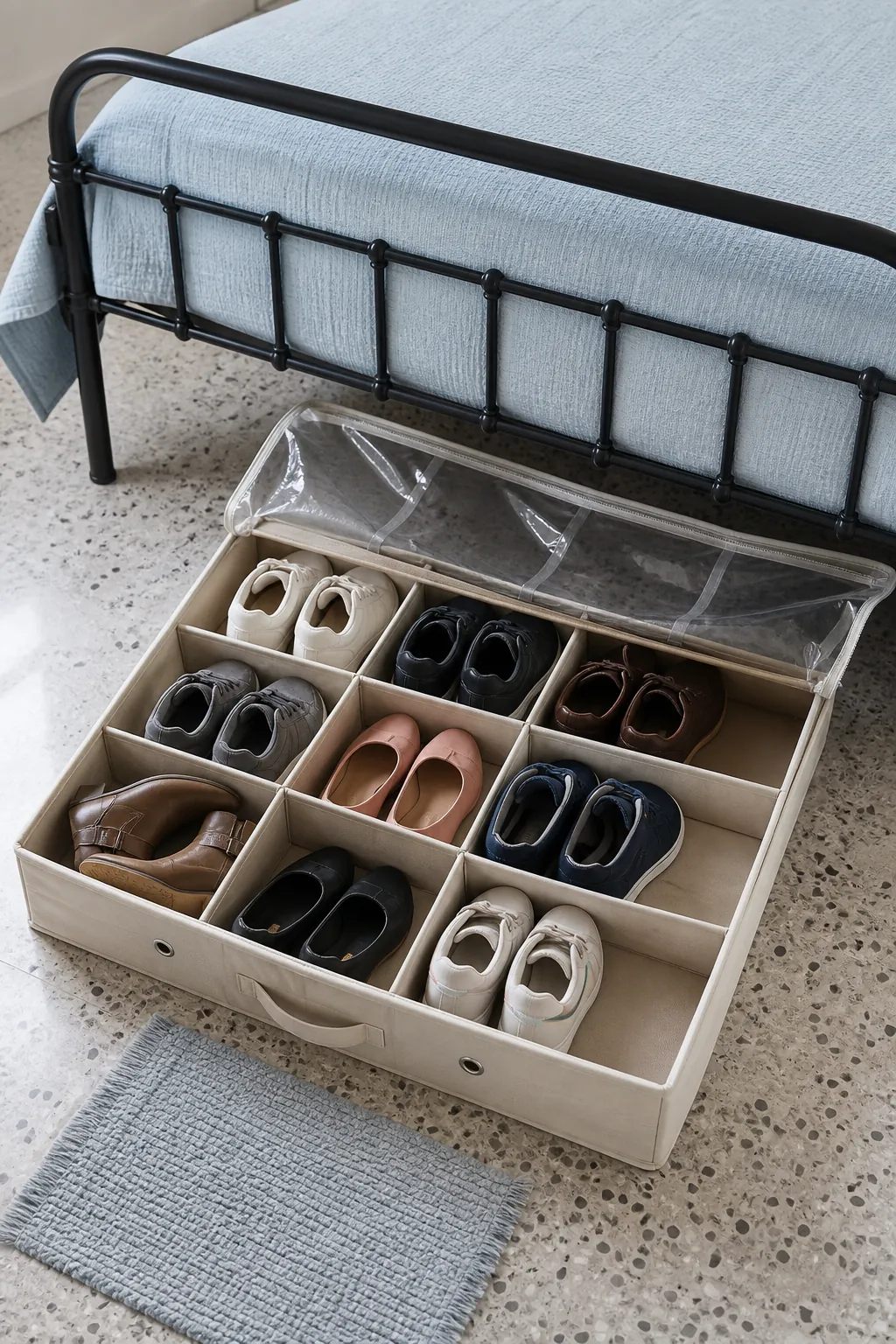
Close the gaps that invite dust and hair
Indexed discussions about bed drawers repeatedly describe clean sheets becoming dusty because open tops and frame gaps allow hair and lint to fall inside. For dust proof bed storage, use fitted lids or fully closing fabric cases rather than open baskets. A loose drawer front is not a seal, so protect textiles inside smaller lidded containers if the built in drawer has exposed gaps. Keep a narrow cleaning channel beside the bins so a vacuum attachment can reach the floor without unloading the entire bed.
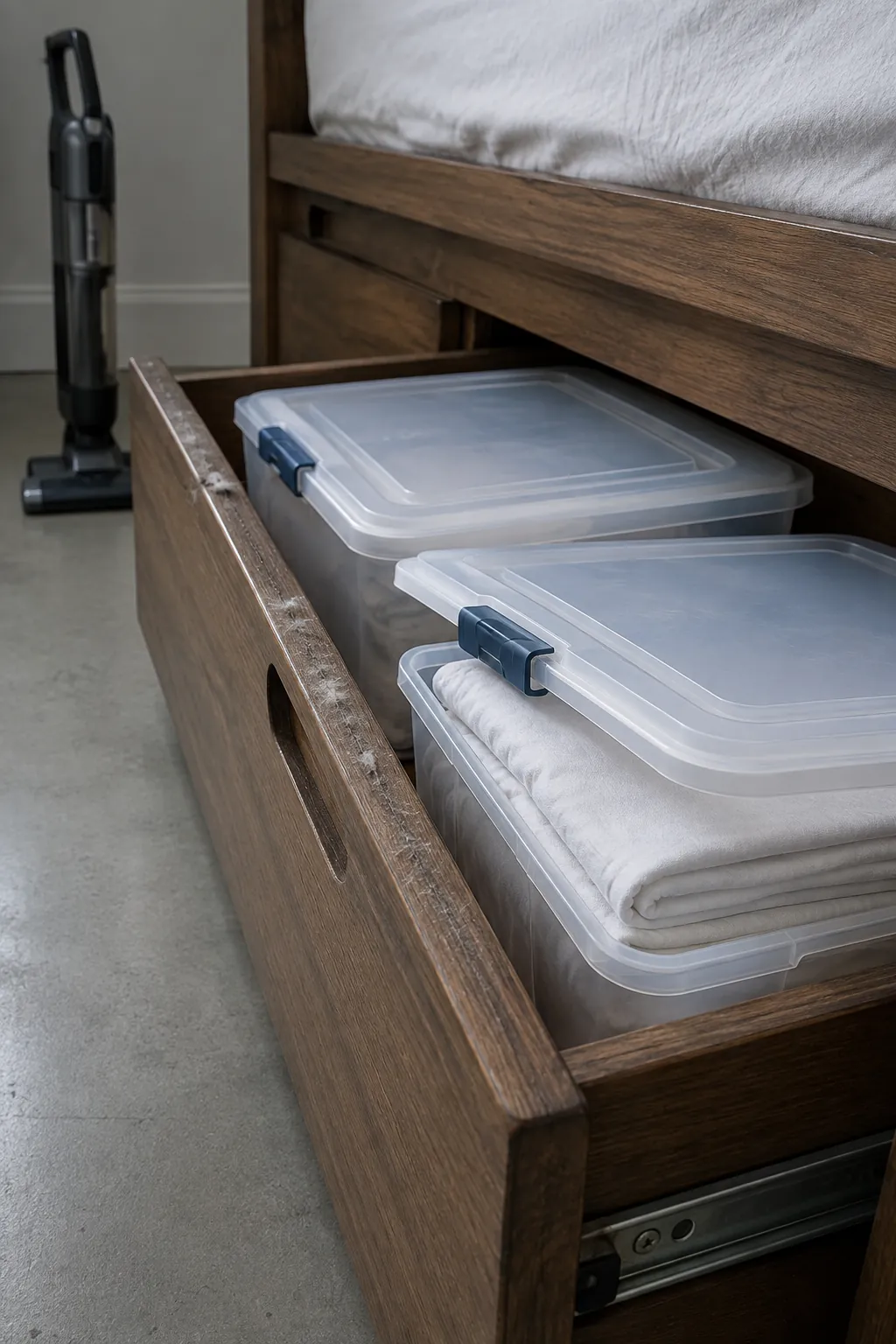
Label for retrieval rather than appearance
Labeled storage containers work when labels describe both category and timing. A label such as guest bedding, queen, washed August is more useful than linens because it answers the questions that arise during retrieval. Put the label on the short end that faces outward, and repeat it on top if containers sometimes change positions. Keep one simple note on your phone listing each zone so family members can return items without opening every bin.
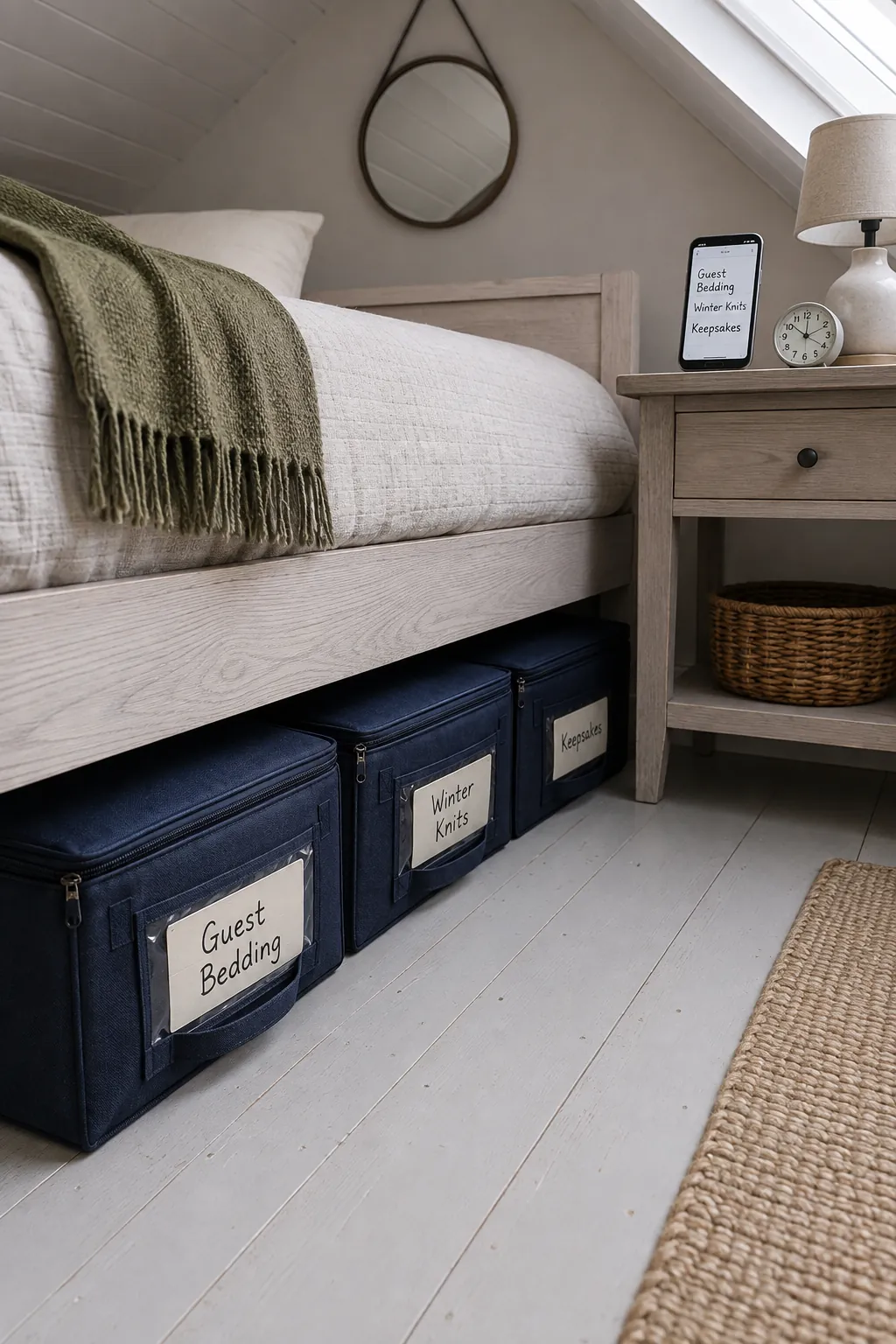
Build a short seasonal reset into the system
Twice a year, pull out every container, vacuum the floor and bed slats, inspect for moisture or pests, and confirm that each label still matches the contents. Move the coming season toward the accessible edge and place the outgoing season farther back. Wipe rigid bins and wash fabric cases only according to their care instructions, then let everything dry fully before returning it. The goal is not to fill every inch; it is to create storage that stays clean, visible, and easy enough to maintain that the space never becomes a hidden pile again.