
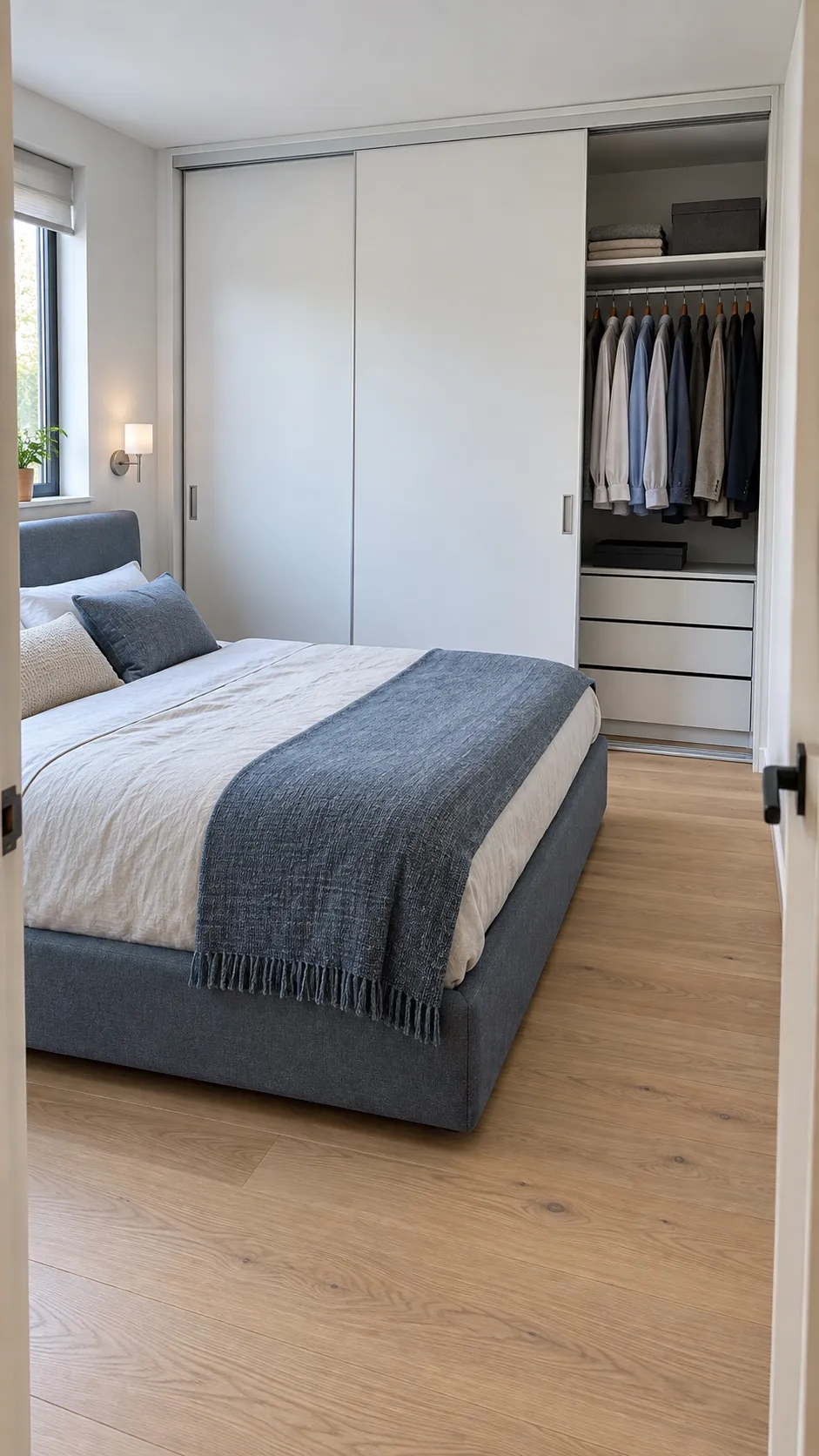
A sliding closet door removes the swing arc, but it does not remove the working space the closet needs. You still need room to stand, reach both door panels, pull drawers, and carry clothes past the bed. The best bed position protects that complete zone before it tries to make the room look balanced.
Measure the Closet Working Zone First
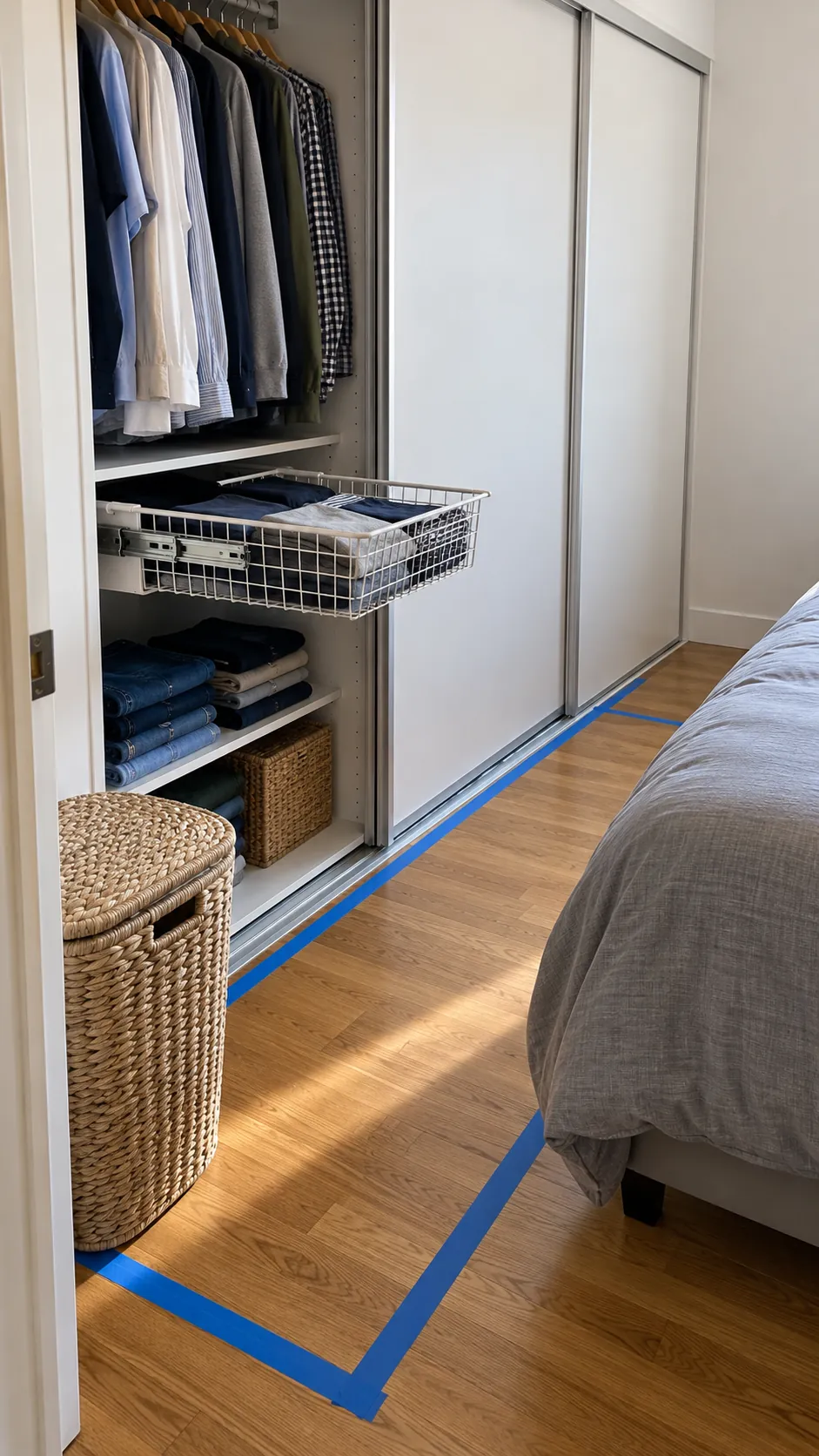
Open each panel to its widest usable position and note which half of the closet becomes accessible. Measure from the closet face to the closest bed edge, then include the depth of any internal drawer that opens toward the room. A narrow passage may work for walking but still fail when you carry a laundry basket or bend to reach a lower shelf.
Use removable tape to mark the mattress, frame, and wardrobe access zone on the floor. Walk the route at normal speed and reach into both sides of the closet. This simple test reveals conflicts that a floor plan can hide.
Place the Headboard on the Wall Beside the Closet
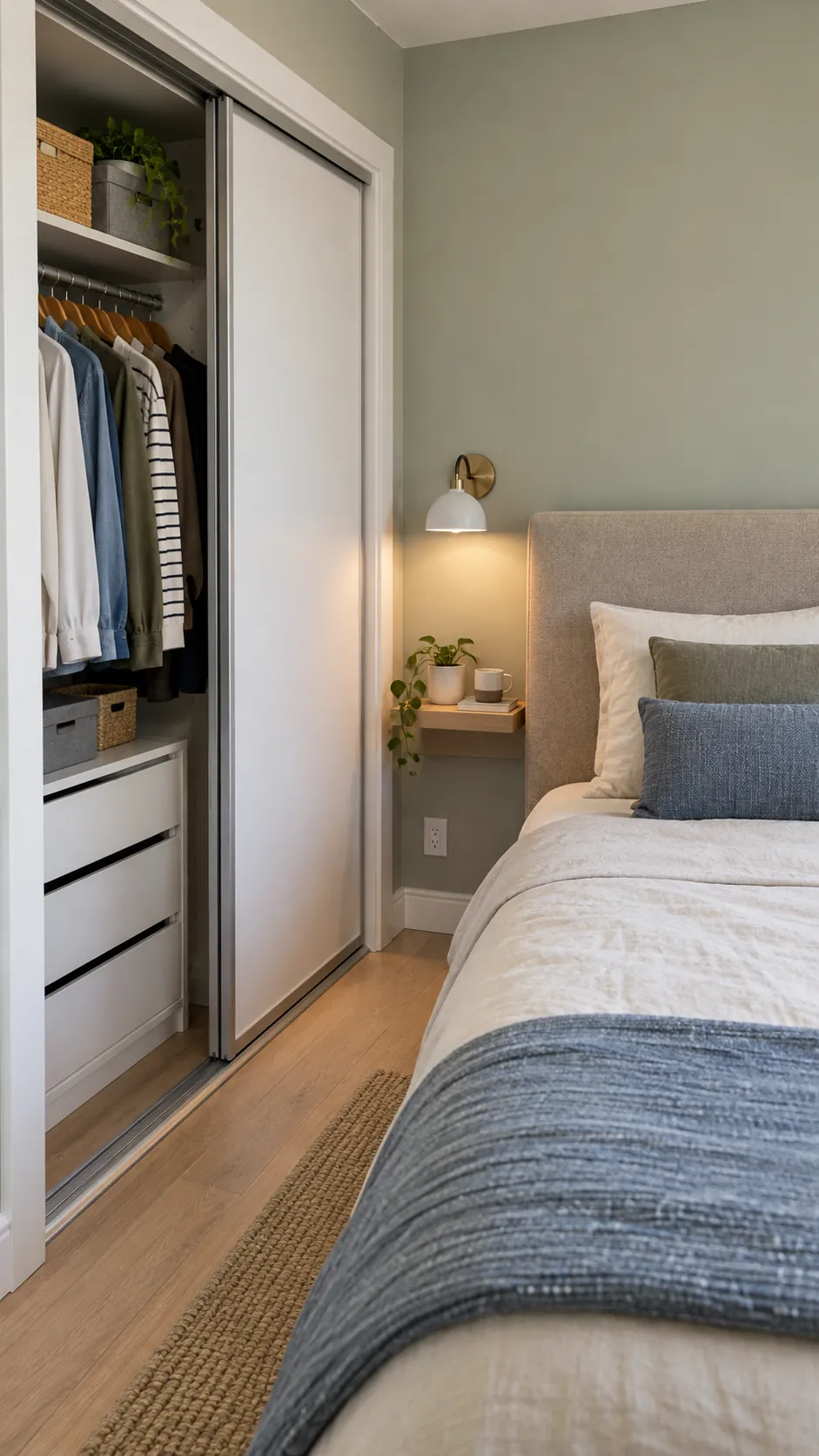
A headboard on the wall beside the closet often creates the clearest approach because the bed projects away from the door panels instead of running across them. Leave a small buffer between the headboard corner and the closet trim so bedding does not catch in the track. Keep the accessible bed side aligned with the room entrance when possible.
Run the Bed Parallel With a Deliberate Offset
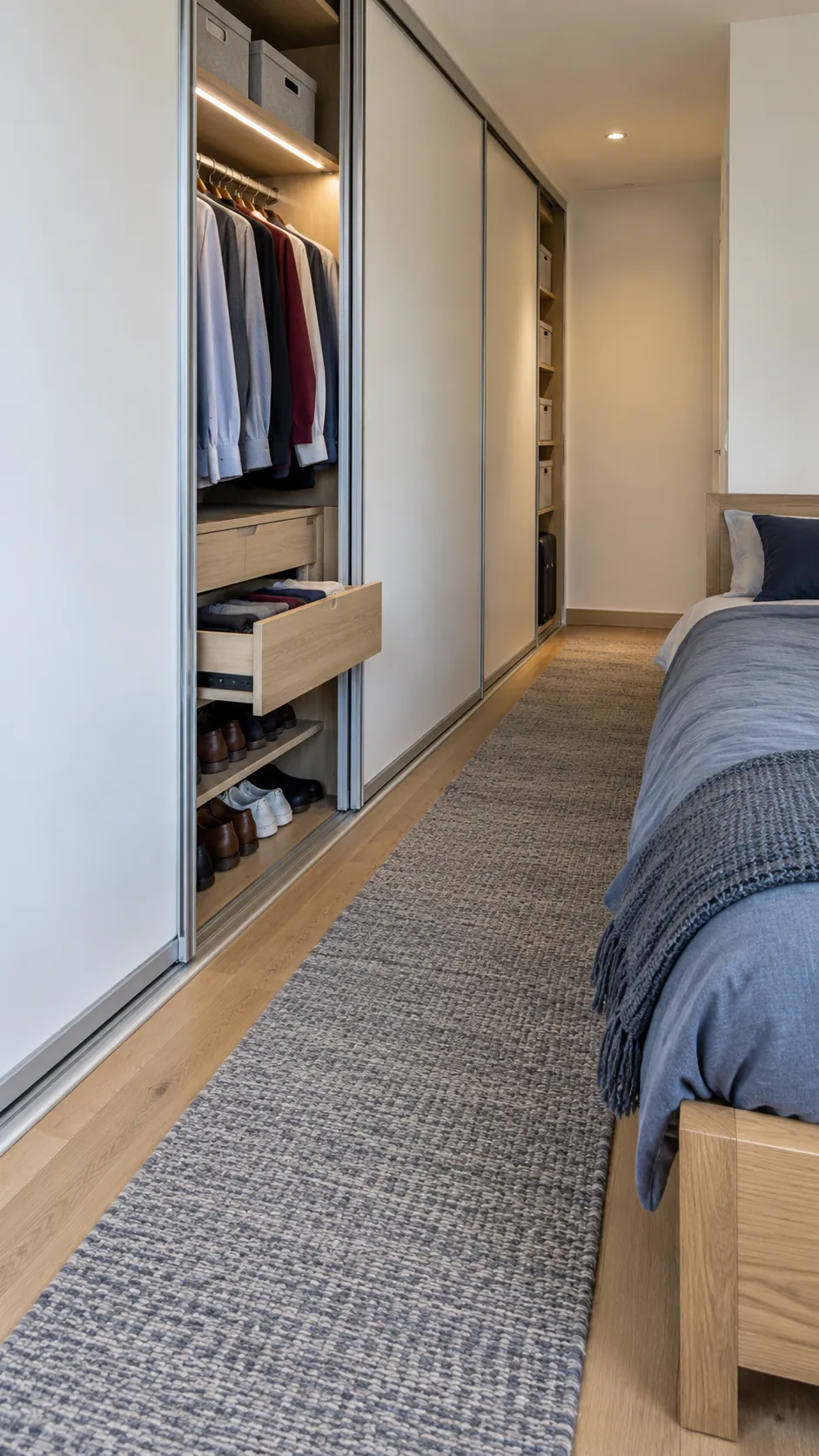
A parallel arrangement can work when the room is long enough to preserve one continuous lane along the closet. The bed does not need to sit exactly opposite the wardrobe center. Shift it toward the less useful closet end so the panel opening for daily clothes receives the widest standing area.
Choose the offset according to how the doors overlap. If the left panel must move right to expose your main hanging section, keep the left approach clear. Place rarely used storage behind the tighter end rather than forcing the same clearance across the entire closet face.
Push One Long Side Into a Corner
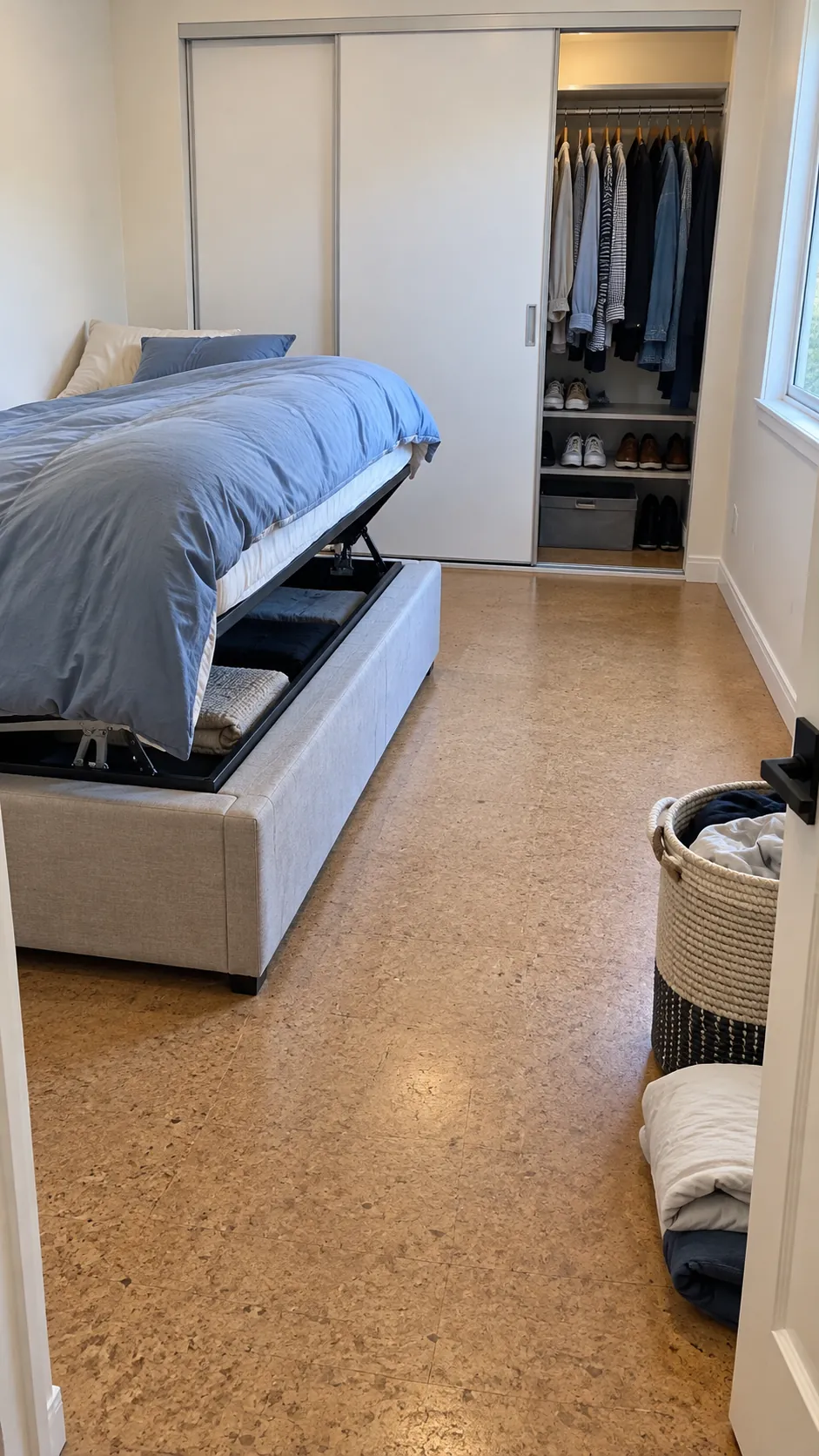
Putting one long side against a wall can return a useful strip of floor to the closet route. This is often the practical choice when a centered bed leaves two passages that are both too narrow. Keep the open side easy to reach and use a frame that lets you change bedding without moving the whole mattress.
The tradeoff is uneven access for two sleepers. A corner arrangement works best for one person or when both people accept climbing in from the same side. Do not let a desire for visual symmetry erase the clearance needed for daily wardrobe access.
Use a Centered Bed Only When Both Routes Work
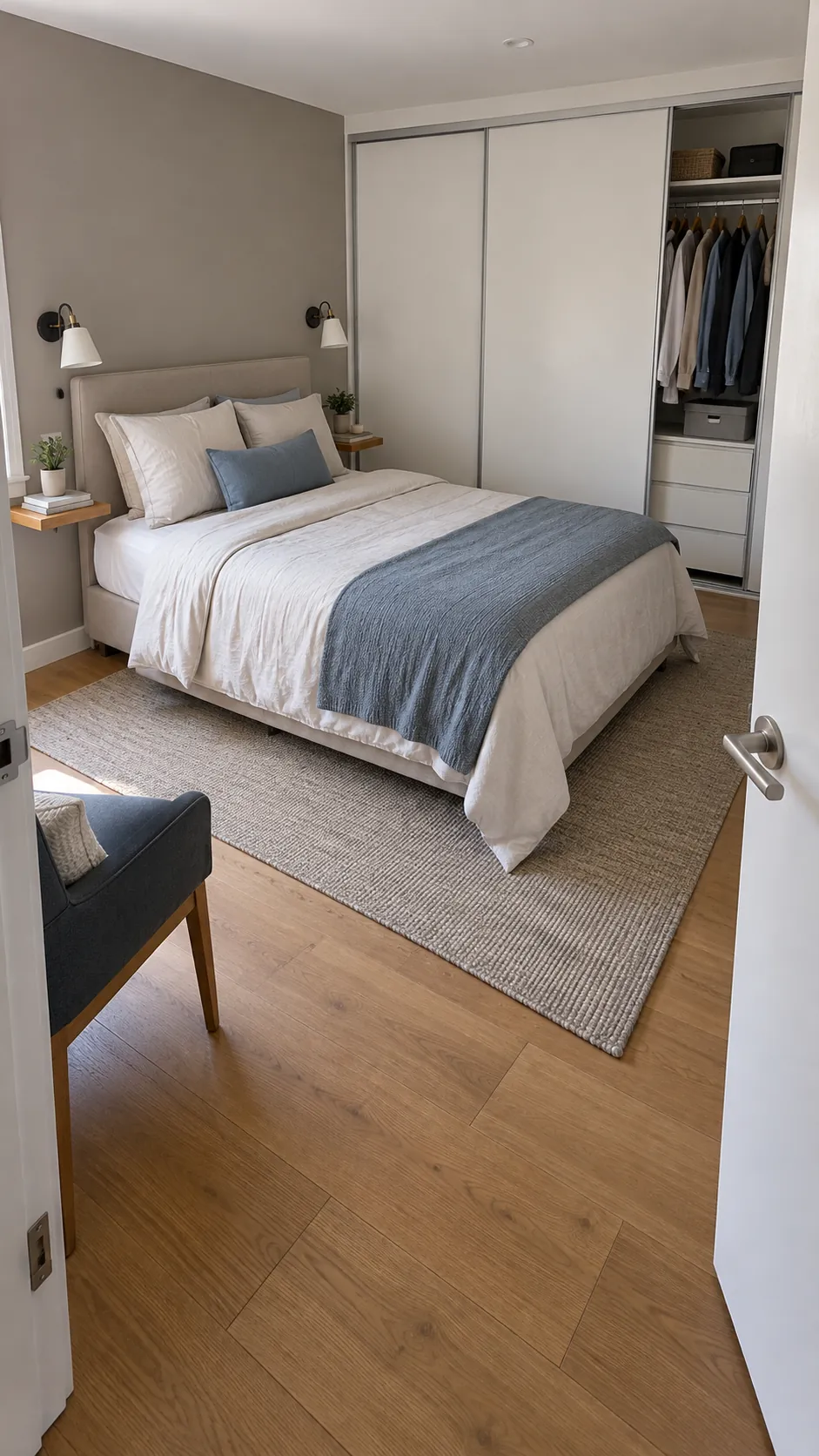
A centered bed feels orderly, but it is successful only when the closet lane and both bed sides remain useful. Test the room with actual bedside items rather than empty floor. A floating shelf or wall light may preserve access where a conventional nightstand would block the wardrobe.
Check the entrance door at the same time. A centered mattress that clears the closet may still create an awkward turn at the doorway. The route from entrance to pillow and the route from entrance to closet should not compete for the same narrow patch of floor.
Test the Layout With Everyday Objects
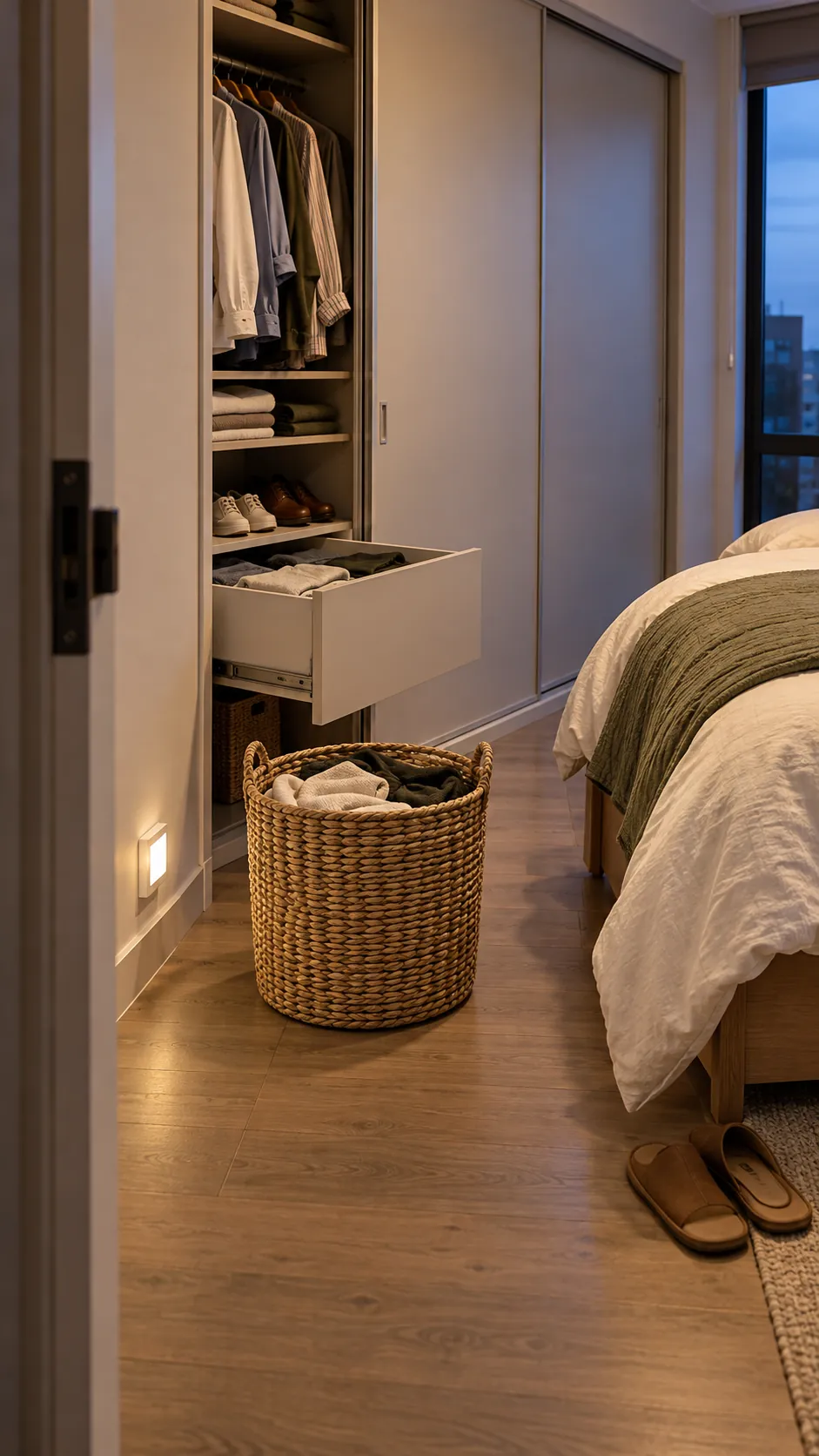
Make the final decision with the bedding on, the laundry basket in hand, and the closet drawers open. Slide both panels several times and retrieve something from the lowest shelf. Sit on the bed edge, walk to the doorway in low light, and confirm that no sharp frame corner interrupts the route.
The most effective compact bedroom layout is not the one with the largest patch of empty floor. It is the one that lets the closet, bed, entrance, and storage work without a daily sequence of moving furniture.