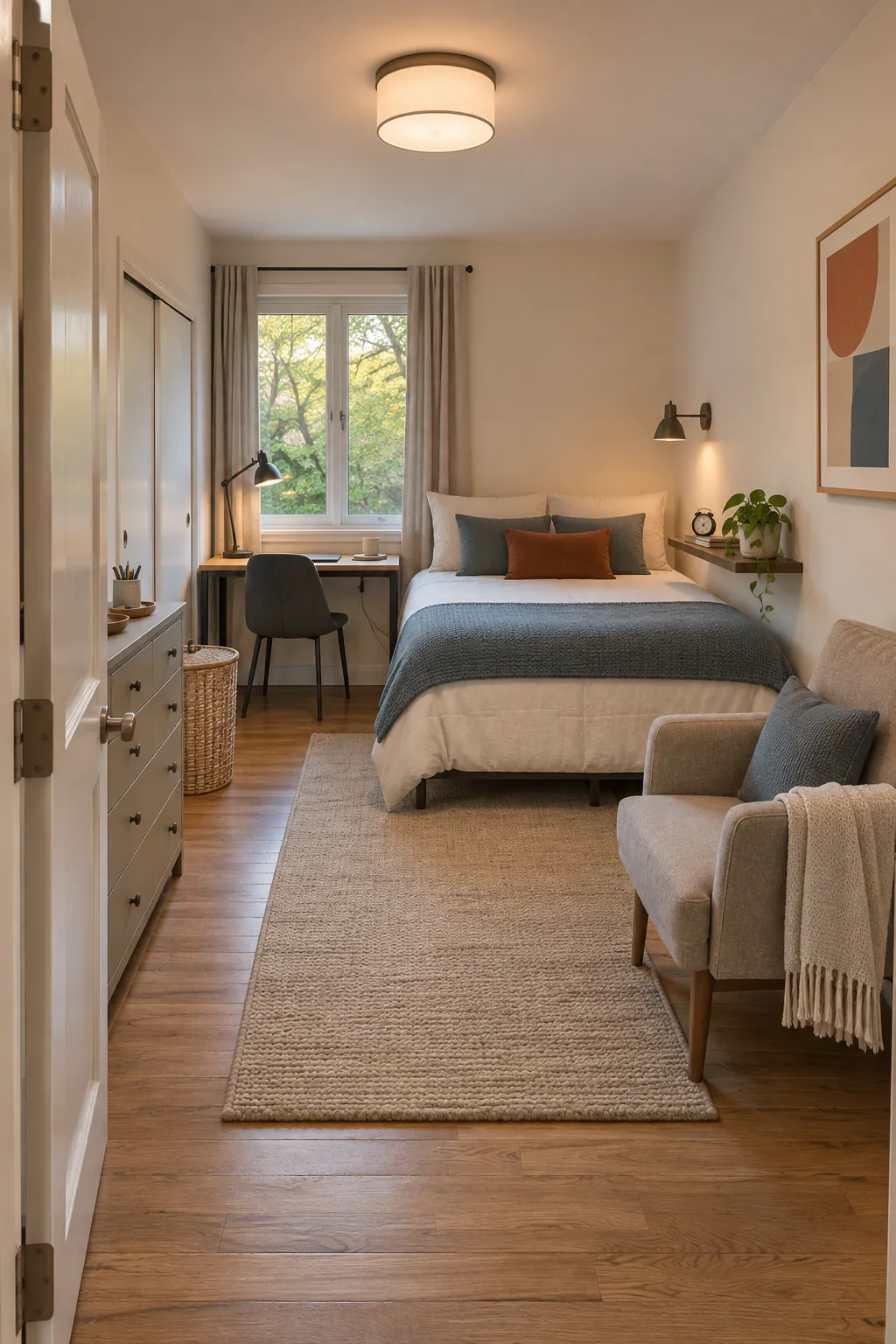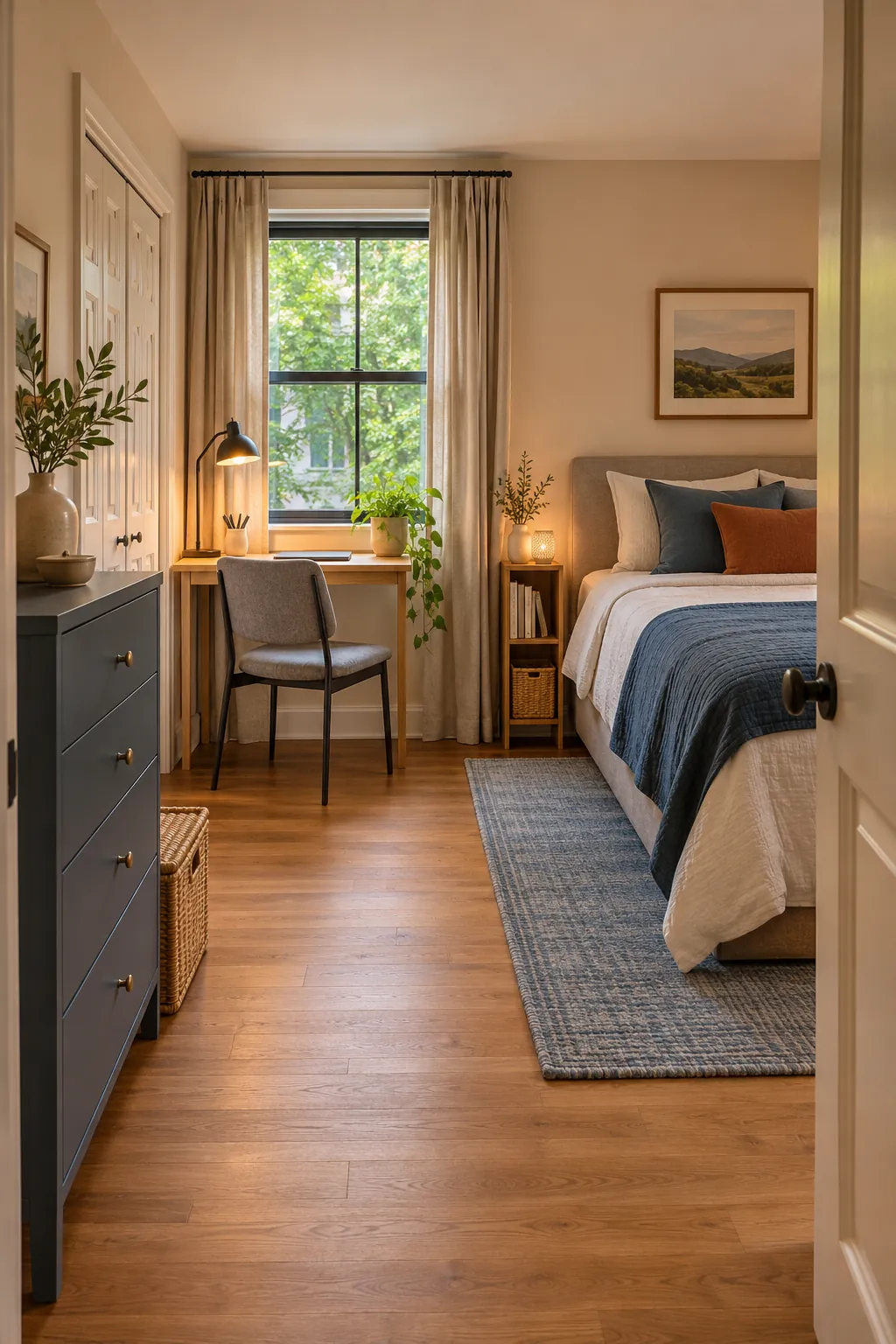
Rearranging a small bedroom works when you solve the room’s daily friction, not when you simply rotate every piece. Notice what blocks movement, where clutter gathers, and which surfaces you rarely use. Then rebuild the layout around the activities that matter.
Remove clutter before judging the layout
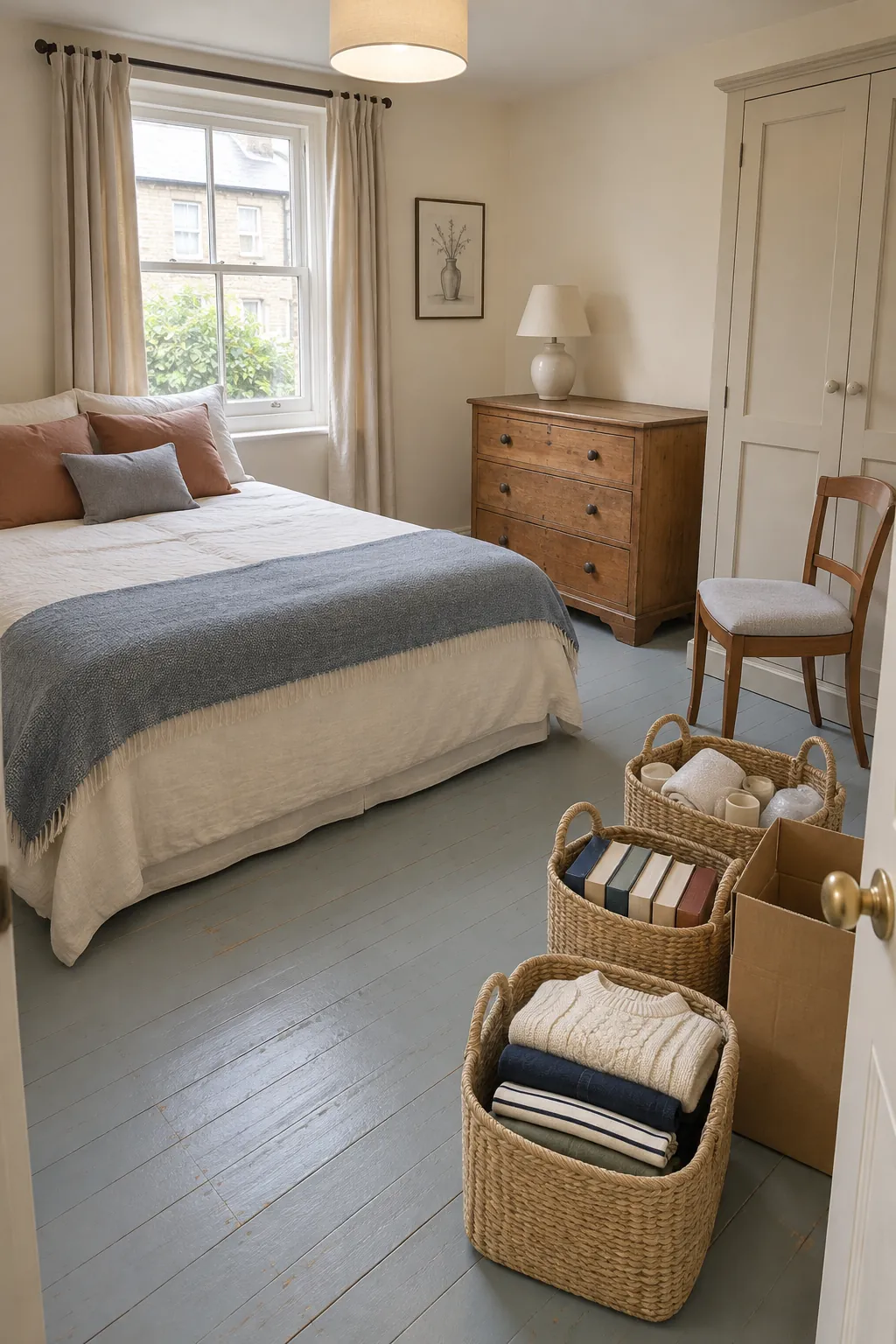
Clear the floor, bed, and furniture tops before moving anything heavy. Put away what belongs in the room, relocate what belongs elsewhere, and set aside items you no longer use. This shows whether the true problem is furniture placement, storage capacity, or too many possessions competing for limited space.
Measure the fixed obstacles
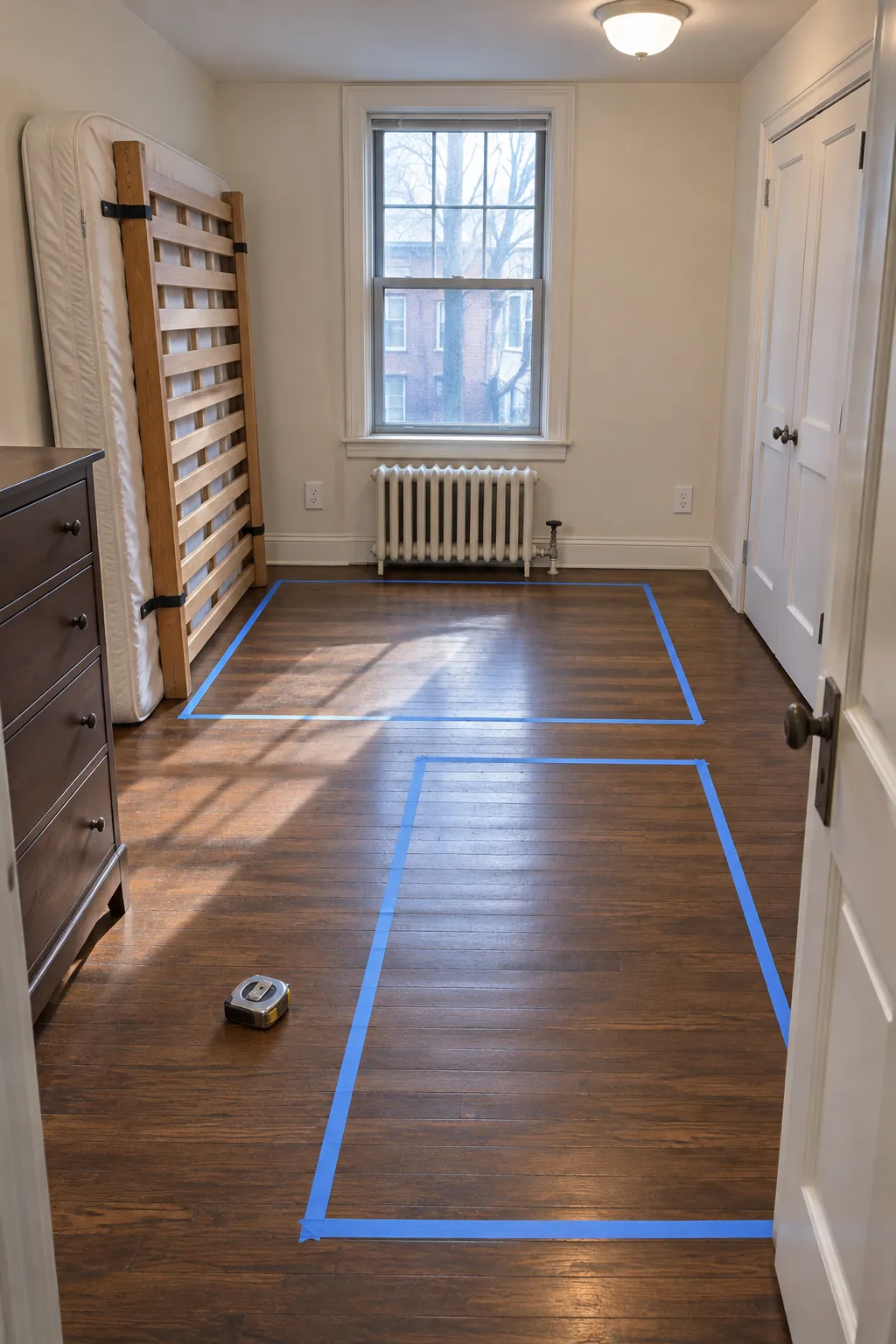
Record the wall lengths, window sill, heater, outlets, door swings, and closet opening. Measure the actual furniture frame rather than the mattress or desktop alone. Use removable tape to mark two possible footprints so you can compare the remaining walking space before lifting anything.
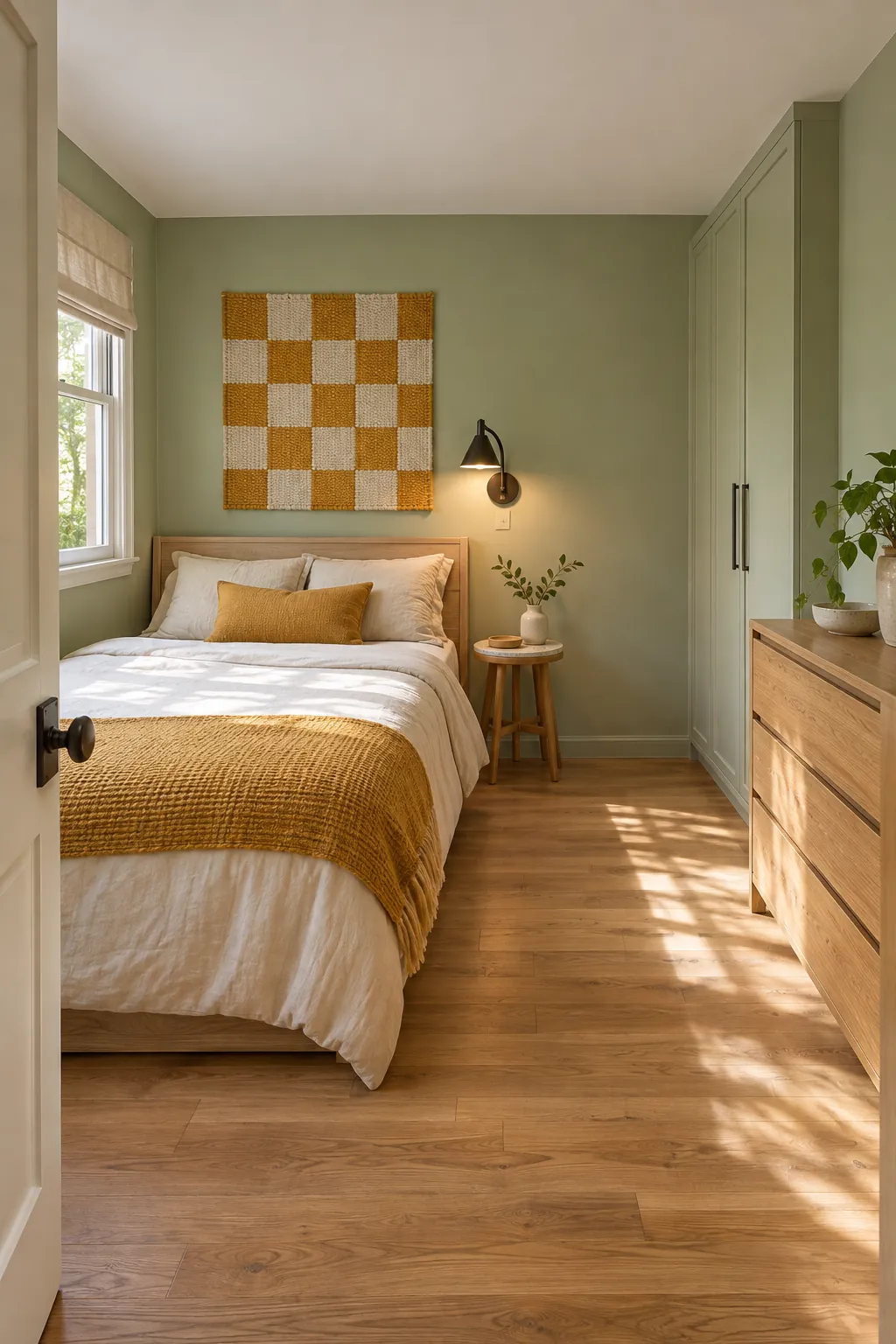
Move the bed for more space
Place the bed first because it controls the largest part of the floor plan. Test the wall that gives the clearest route to the door and closet, even if it creates an uneven bedside arrangement. Keep enough access for the sleeper and for changing bedding, then place smaller pieces around that decision.
Separate the desk from the sleep zone
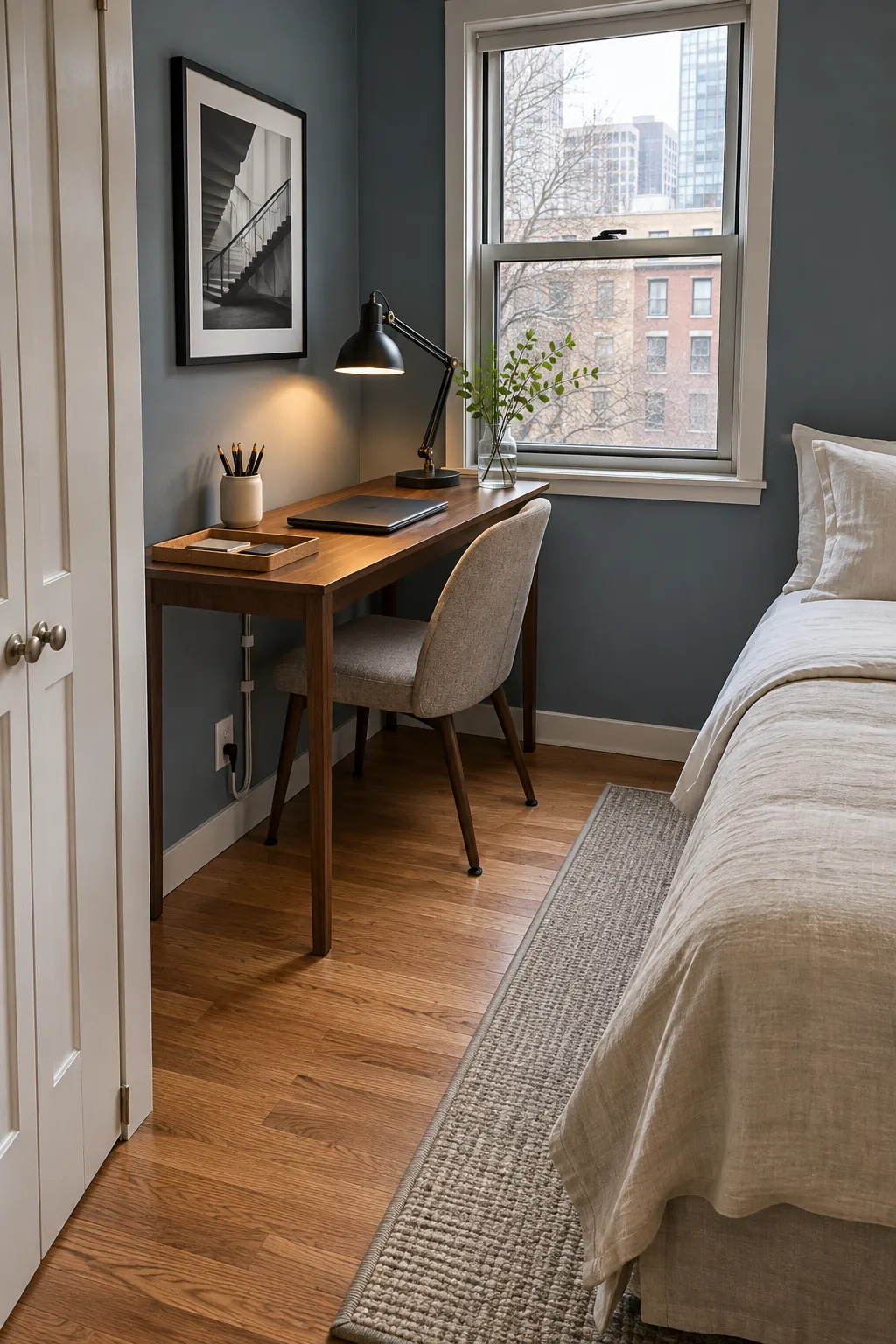
Place a compact desk near useful daylight when screen glare and window access allow it. Turn the chair toward the work surface instead of the bed, and keep office supplies within one contained area. A visible gap between desk and bedding makes both zones feel more deliberate.
Replace bulky nightstands
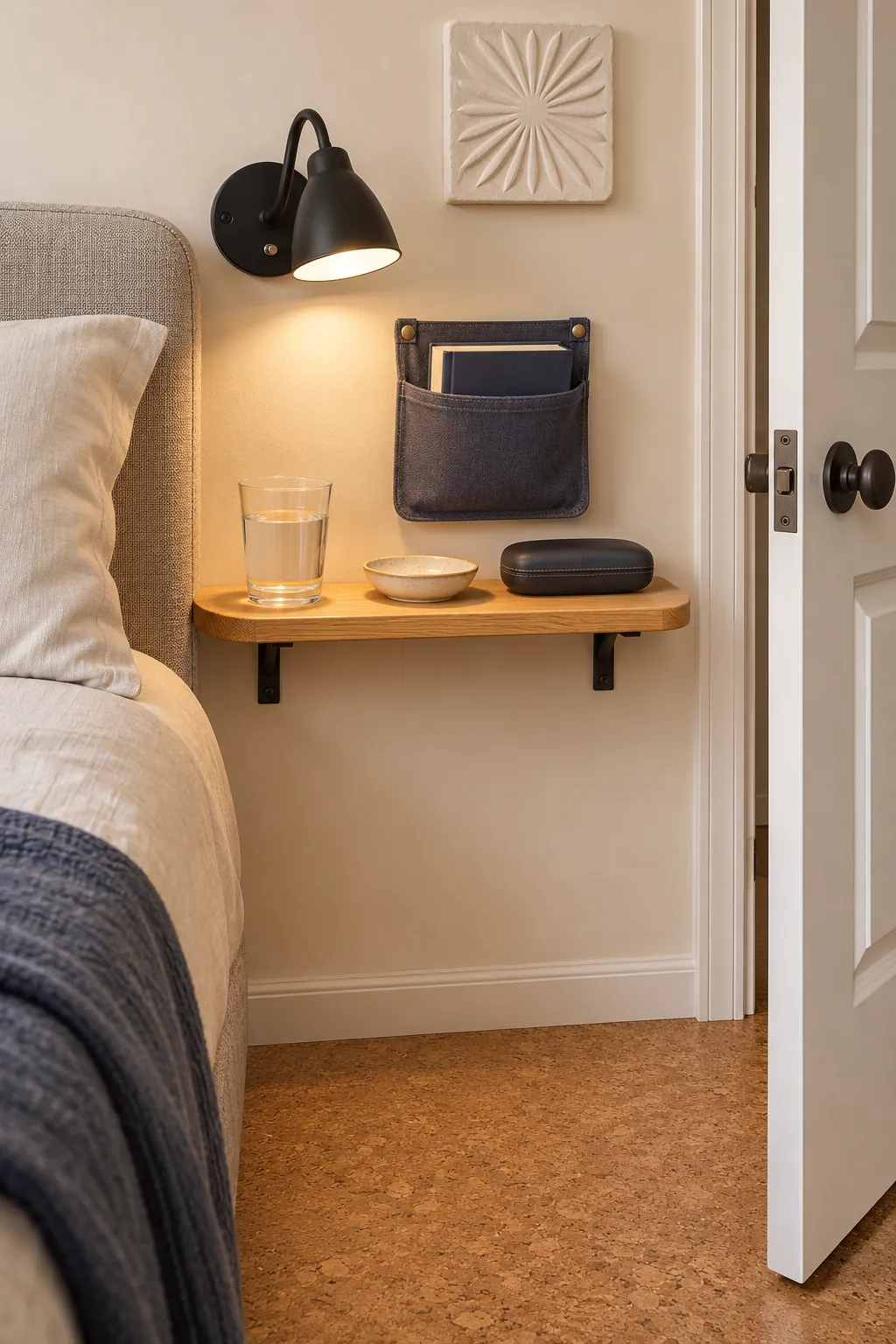
A full nightstand is not essential when the bed sits close to a wall or doorway. Try a narrow shelf, compact stool, wall pocket, or small drawer unit that stays within the bed width. Mounting the reading light can free the surface for water, glasses, and a phone.
Test the compact bedroom layout
Live with the new arrangement before adding decoration or buying storage. Open every door and drawer, make the bed, sit at the desk, and walk through the room in low light. If one route still catches your shoulder or collects clothes, adjust the smallest piece first instead of restarting the whole plan.