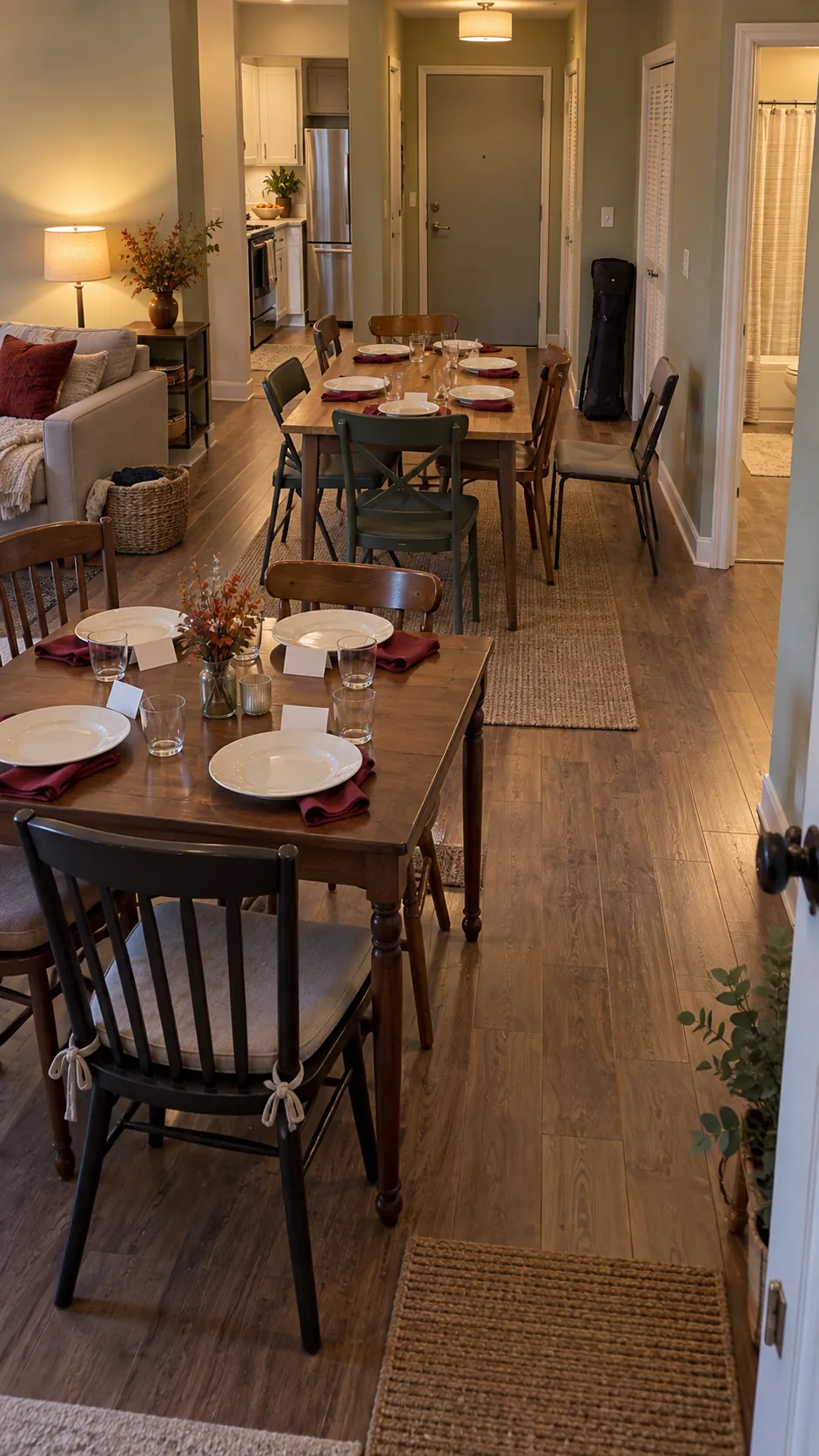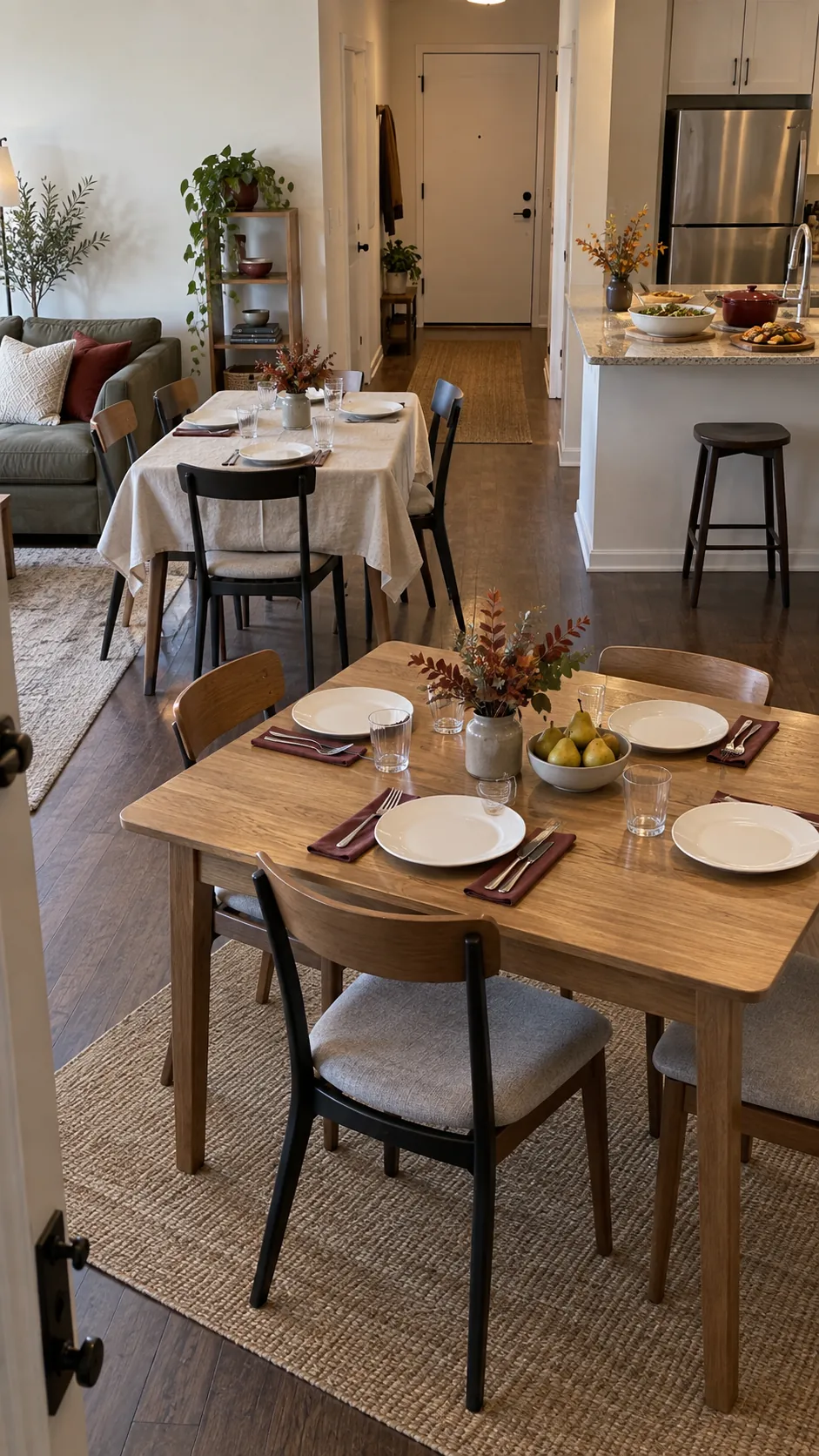
The extra guests are easy to invite and much harder to place once someone pulls a chair away from the table. A table that seats four on an ordinary week can become a pinch point for plates, knees, and the route from the kitchen. The useful question is whether your room can hold a larger dining footprint for one evening, or whether two comfortable groups of four will work better.
Start with the furniture you actually own. Measure the open floor, test every chair while someone is seated, and decide where serving dishes will wait. That short rehearsal will tell you more than a product listing that promises eight seats.
Measure the occupied footprint, not just the tabletop
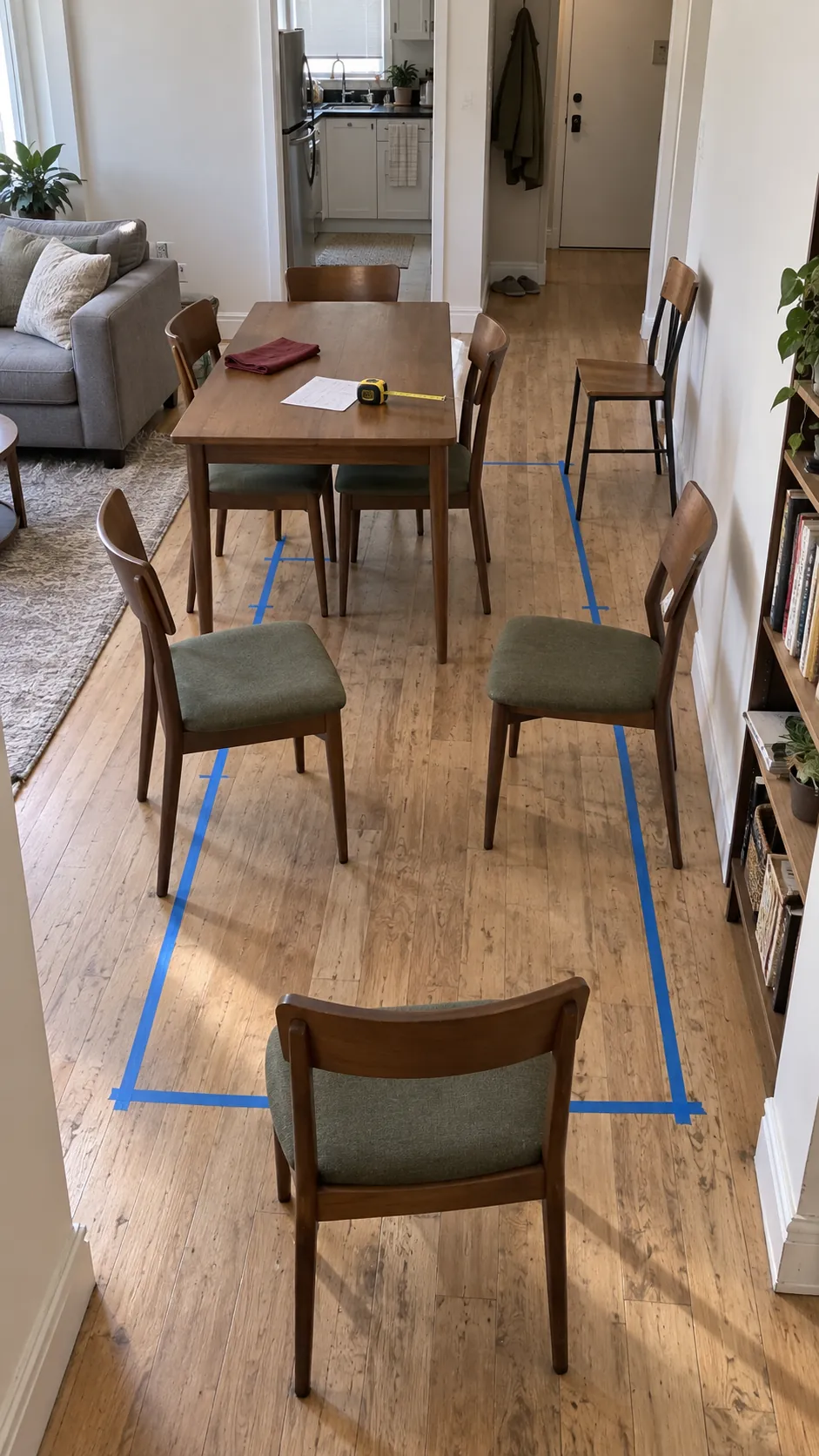
Mark the proposed table edges on the floor with painter tape or folded paper. Pull each existing chair back to the point where a guest could stand, then walk from the kitchen to the bathroom and entry. If that route disappears, a longer table will create a problem even if the tabletop itself fits.
Allow actual elbow room for plates and cutlery rather than counting every inch along an edge as a seat. Table legs, a pedestal base, a radiator, and a wall can each remove a place that looks available in a floor plan. Measure the particular chairs you plan to use, since a wide upholstered chair consumes a different amount of edge than a slim folding chair.
A Reddit floor plan discussion about seating eight raised the same practical distinction: the drawn table looked plausible until chairs were shown pulled out and a walking path was added. Treat that as a prompt to test your own room, not as a universal clearance rule. Your goal is a route people can use while others remain seated.
See whether the four person table can safely expand
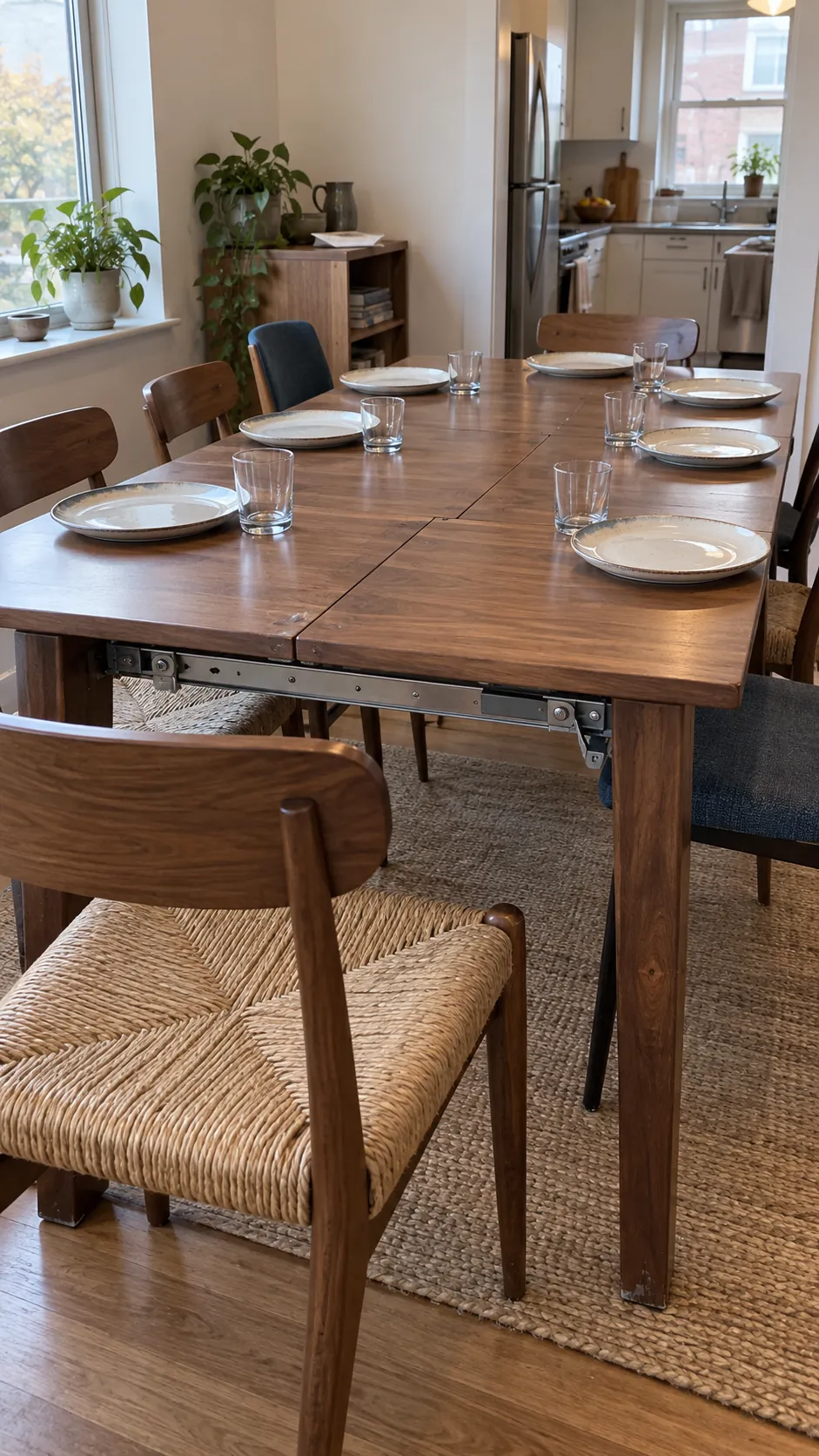
Look for manufacturer leaves, a supported drop leaf, or an extension mechanism made for your table. Open it completely, check that the locks engage, and press gently at the corners to find any rocking. A loose board laid across the top is a serving hazard, especially with hot dishes and guests leaning on the edge.
If the table extends, set eight empty plates before calling it an eight seat plan. Check that no diner has a table leg between their knees and that the end seats have room to stand. An extension can solve surface length while leaving the apartment circulation problem untouched.
Owners in small apartment discussions often value tables with leaves because they return to a smaller everyday footprint. That is useful when you already own one or need a long term dining piece. Buying a new table solely for one holiday is less compelling if the opened version blocks the only passage through the room.
Use two tables when one long table consumes the room
Keep the original table for four and set a sturdy folding or borrowed table in the living area for four more. Similar tabletop heights help, but the tables do not need to touch. Separate zones often preserve a passage that a single long rectangle would swallow.
Place the second group where they can hear and see the first without seating anyone in the kitchen work lane. A compact rectangular table usually works better than a tiny coffee table for a full plated meal. Test all four chairs around it, including the two closest to the wall, before you decide that four more places exist.
The social tradeoff is real: eight people cannot share one continuous conversation as easily across two surfaces. Seat a familiar mix at each table, then invite people to move around after dinner. A Thanksgiving discussion about limited seats describes using another table and eating in waves; use waves only if your guests are comfortable with separate meal times.
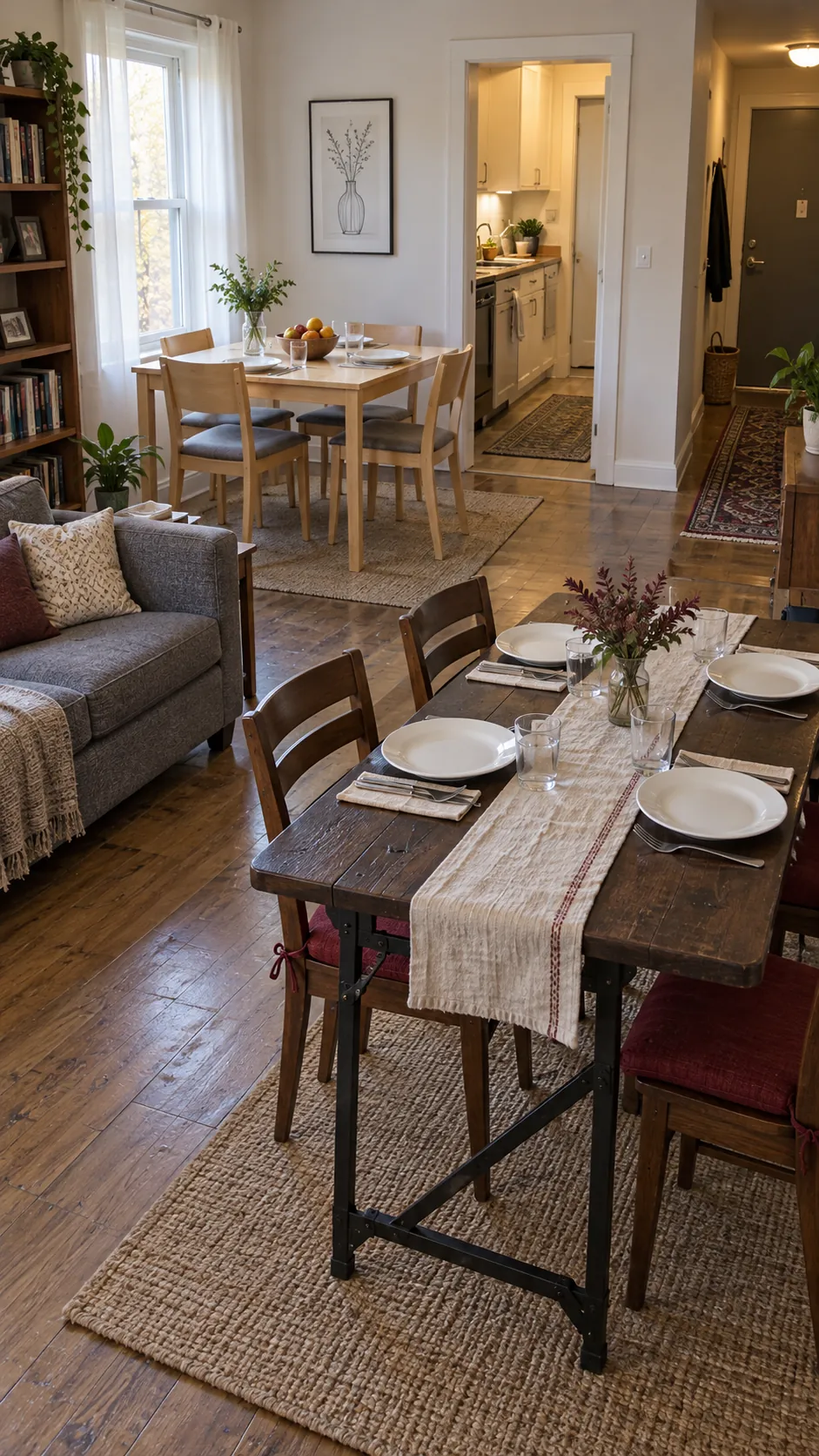
Find four useful chairs before decorating anything
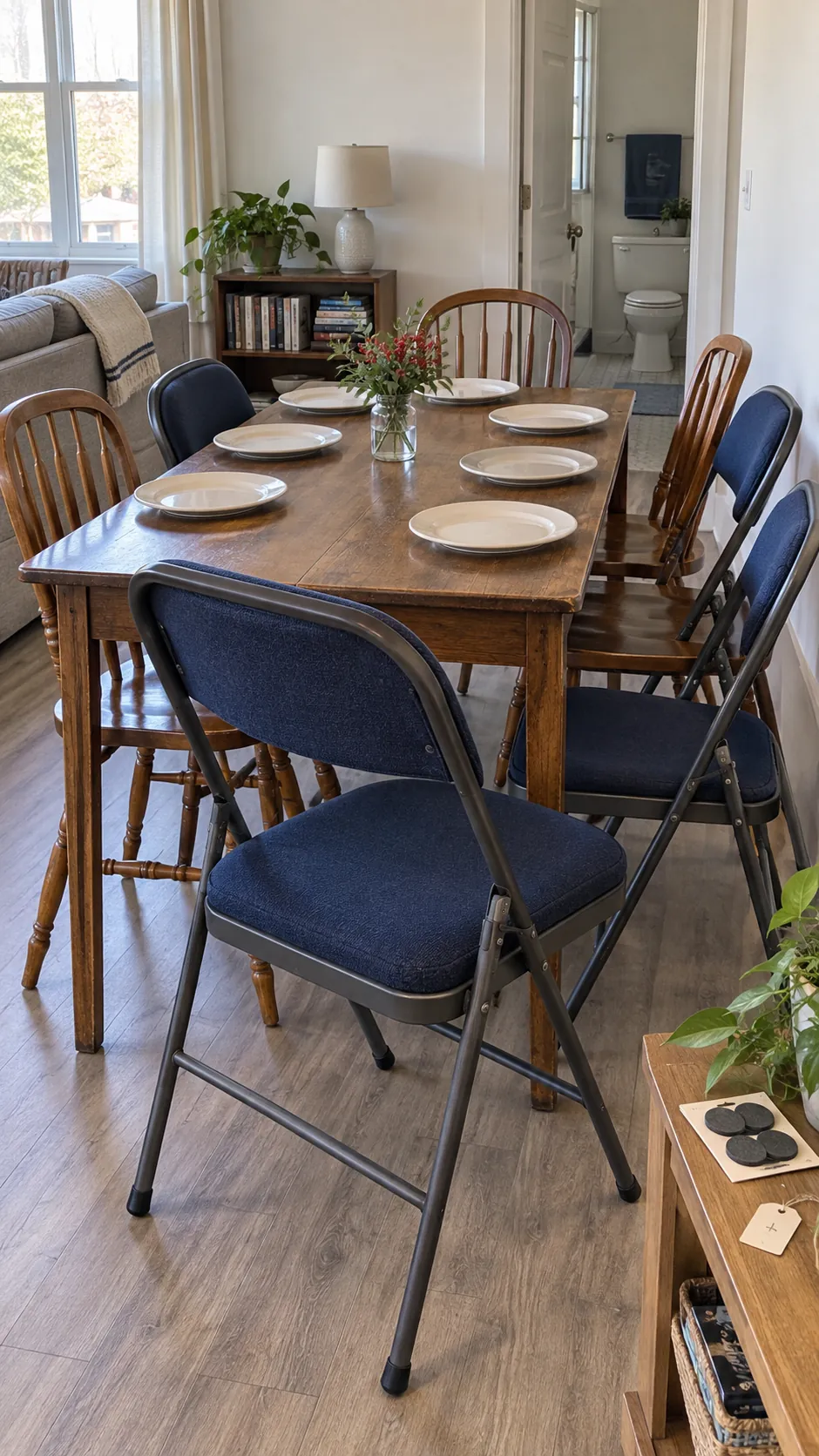
Borrow or rent chairs with stable legs and a seat height close to your existing dining chairs. Set them at the table with plates in place. A stool that tucks under a counter may save storage space but can be tiring for a long meal if it lacks a back or sits too high.
Mixing chair styles is fine when the sitting experience is comparable. Put taller or wider chairs where they do not crowd a doorway, and reserve the easiest seats for guests who may need arm support or more room to get up. Ask guests about access needs privately instead of assuming that a bench or floor cushion is acceptable.
Check the floor beneath folding chairs and add the appropriate non slip feet if needed. Do not stack spare chairs in a route to the bathroom or exit. Once the chair plan works, a simple shared napkin color makes the mixed pieces feel intentional without hiding the practical layout.
Move the food service away from the eight place settings
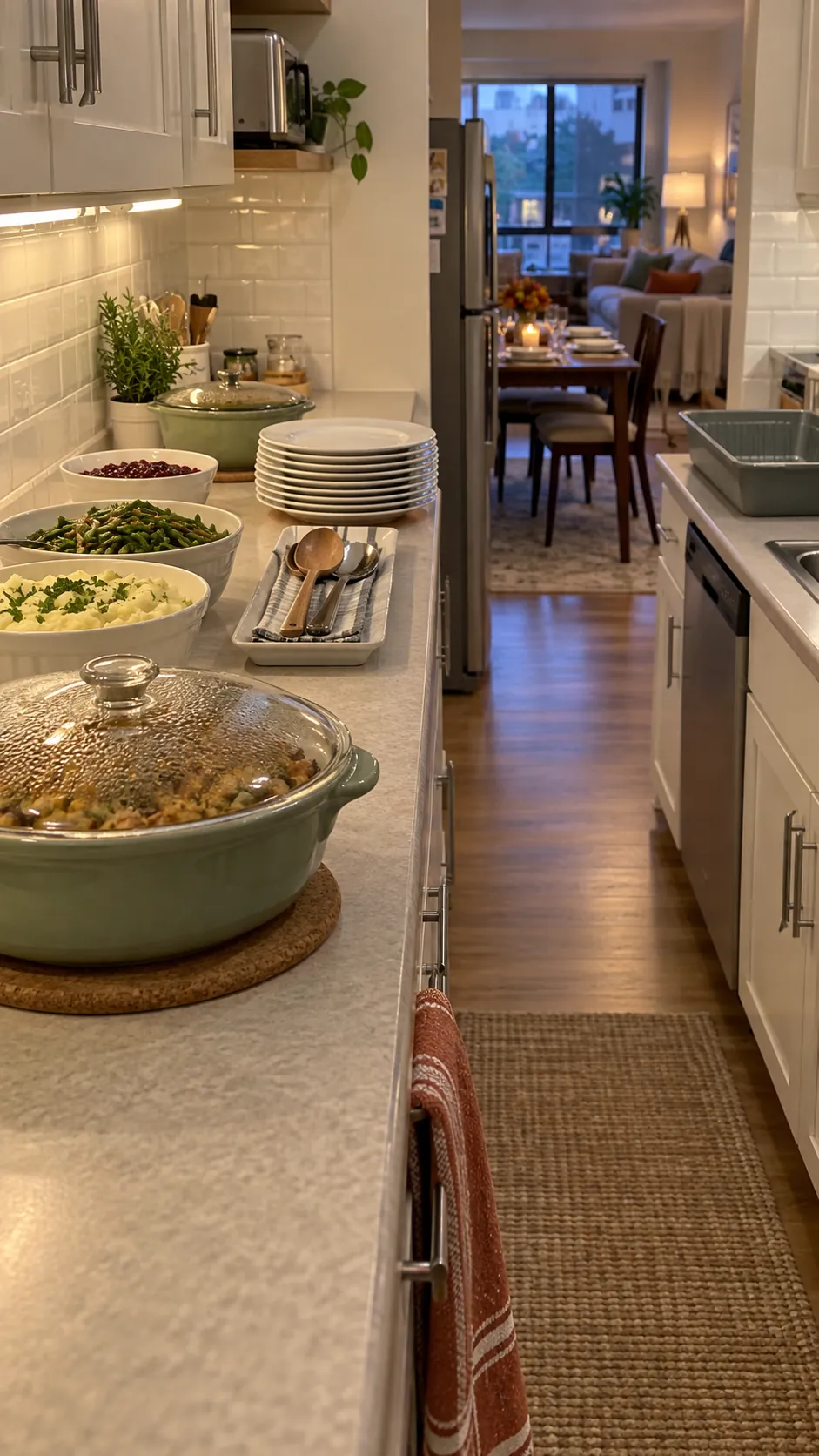
Eight plates, glasses, and serving bowls demand much more space than eight empty chairs. Use a cleared kitchen counter, sideboard, or sturdy cart for the main dishes, then bring plates to the tables. Keep hot pans on heat safe surfaces away from chair backs and sleeves.
Decide where used dishes will go before the meal begins. A shallow tray near the sink can keep the counter from becoming a second pile that blocks serving. If the kitchen is narrow, let guests take seats while one person plates food, or invite a few people at a time to the serving station.
A buffet layout works only when its queue does not cross the route between the seating zones. Move decorative objects, mail, and small appliances first. The reclaimed surface matters more than a centerpiece when a compact dining layout has to carry a complete holiday meal.
Do one full rehearsal and give every guest a clear place
Set out all eight plates, pull out every chair, and walk the route from stove to sink, tables, bathroom, and front door. Sit briefly in the tightest place. If a person must ask two others to move before standing, shift furniture or use a second seating zone.
Put simple name cards where they help balance the two groups and protect the most accessible chairs for the people who need them. Tell guests in advance if dinner uses separate tables or staggered seating. That small explanation prevents a guest from discovering at serving time that their place is a stool beside the kitchen prep area.
After the meal, fold borrowed furniture and return the apartment to its normal walking routes. The strongest holiday setup is one that functions while guests are seated and disappears without leaving a storage problem. If your rehearsal still feels cramped, serve fewer people at one sitting rather than force an unsafe eight seat arrangement.