
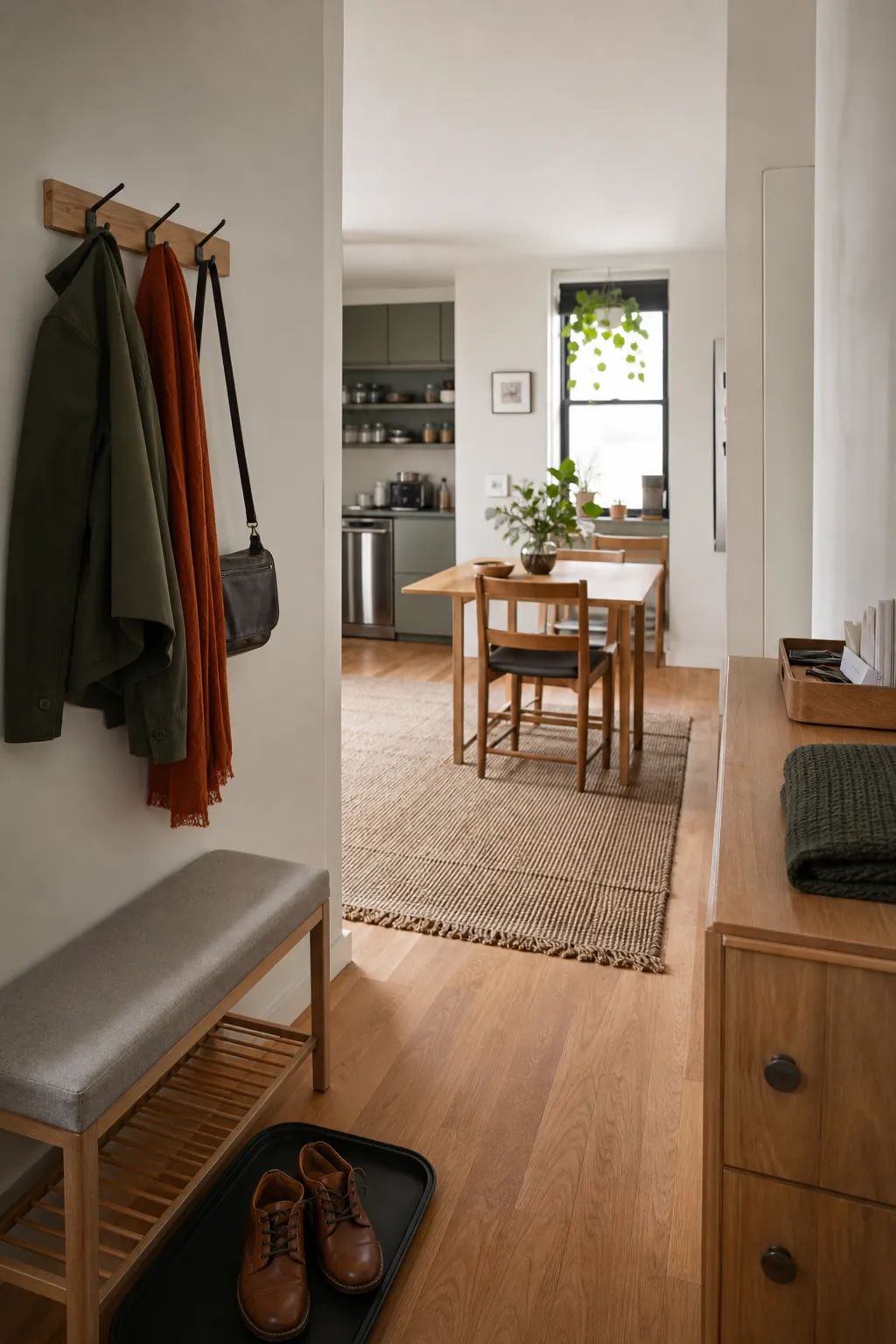
A small home rarely becomes cluttered because someone forgot to buy the right basket. Clutter spreads because everyday objects land faster than they can be returned: mail pauses on the counter, a sweater waits on a chair, and soon every clear surface is doing unpaid storage work.
The fix is not a heroic weekend purge. It is a clutter-control system that makes the next right action shorter than putting something down “for now.” When high-traffic items have close, easy homes—and each category has a firm space limit—a tiny room can recover quickly after a busy day.
Find the routes where clutter actually travels
Before buying small-space storage, watch your home for two ordinary days. Note what enters, where it first lands, and where it should eventually go. Most daily clutter follows a few routes: shoes and bags from the entry, dishes through the kitchen, clothes between bedroom and bathroom, and papers between the door and a work surface.
Mark the first visible pile in each route. That location is evidence that storage is too far away, too full, or too awkward. A hook beside the door beats a perfect coat closet across the room. An open tray for keys beats a drawer that catches. Build around real movement, not an imaginary tidier version of your day.
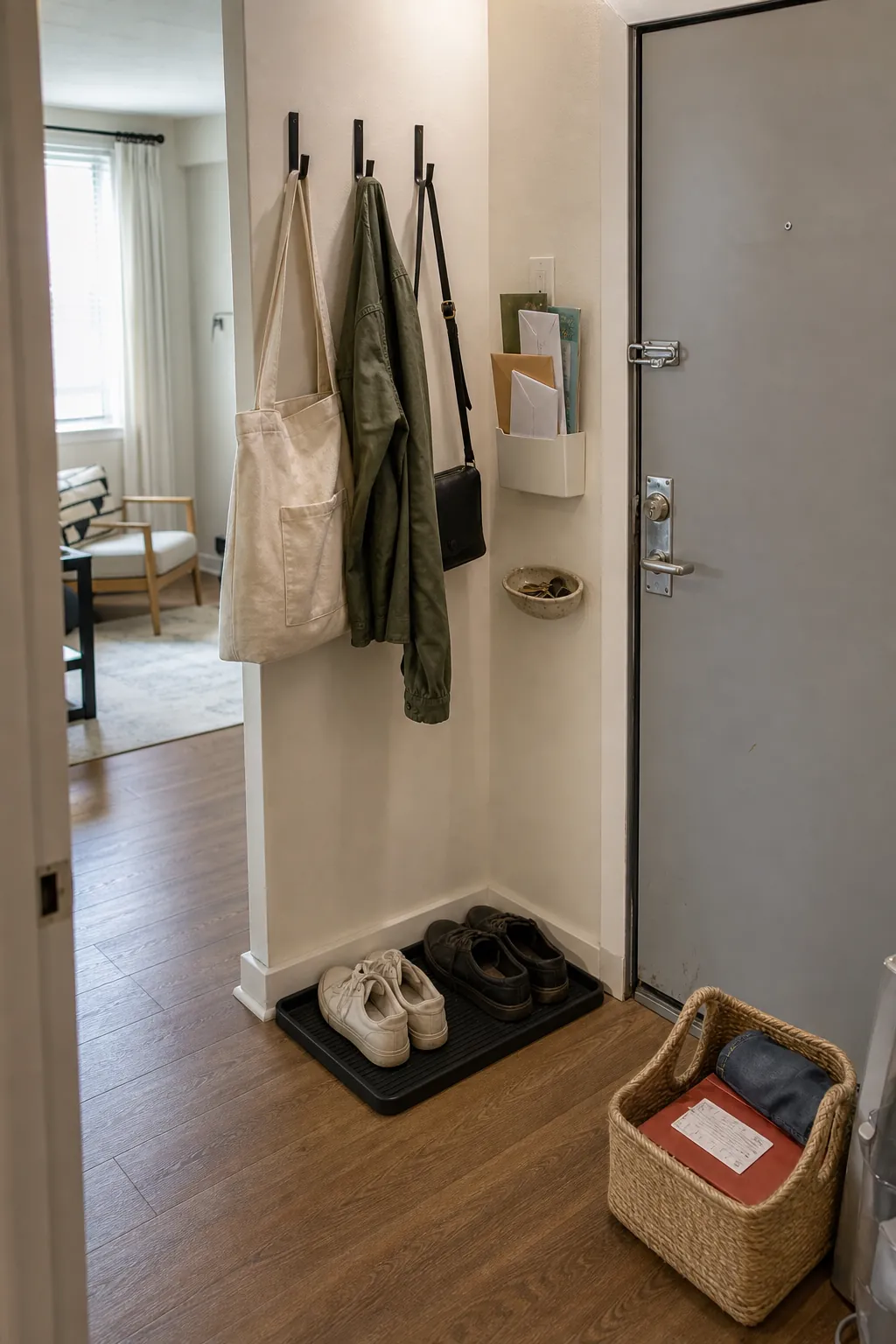
Give every arrival a one-step landing zone
A landing zone is a small, bounded place for items that enter together. Near the door, that might be three hooks, a narrow shoe tray, a shallow key dish, and one vertical file for incoming paper. In the kitchen, it could be a washable tray holding the two appliances used daily while everything else lives behind a door.
The crucial word is bounded. A whole console becomes a pile; a tray has an edge. One hook per bag creates a limit; a row of twelve hooks invites overflow. Choose the smallest container that holds a normal week, then treat its boundary as a decision rule. When it is full, process what is there before adding another organizer.
Separate active items from inventory
Small home organization breaks down when today’s essentials share prime space with backups, seasonal gear, and “someday” supplies. Keep the active version nearest the point of use: one open lotion, one roll of kitchen towels, the current pair of everyday shoes. Put replenishment stock higher, lower, or farther away in one labeled reserve zone.
This prevents three half-used products from crowding a bathroom counter and makes overbuying visible. It also answers, “Do I need more storage or less stuff?” If regularly used items fit once backups are separated, the problem was zoning. If the active category still cannot fit, the category needs editing or a more functional container.
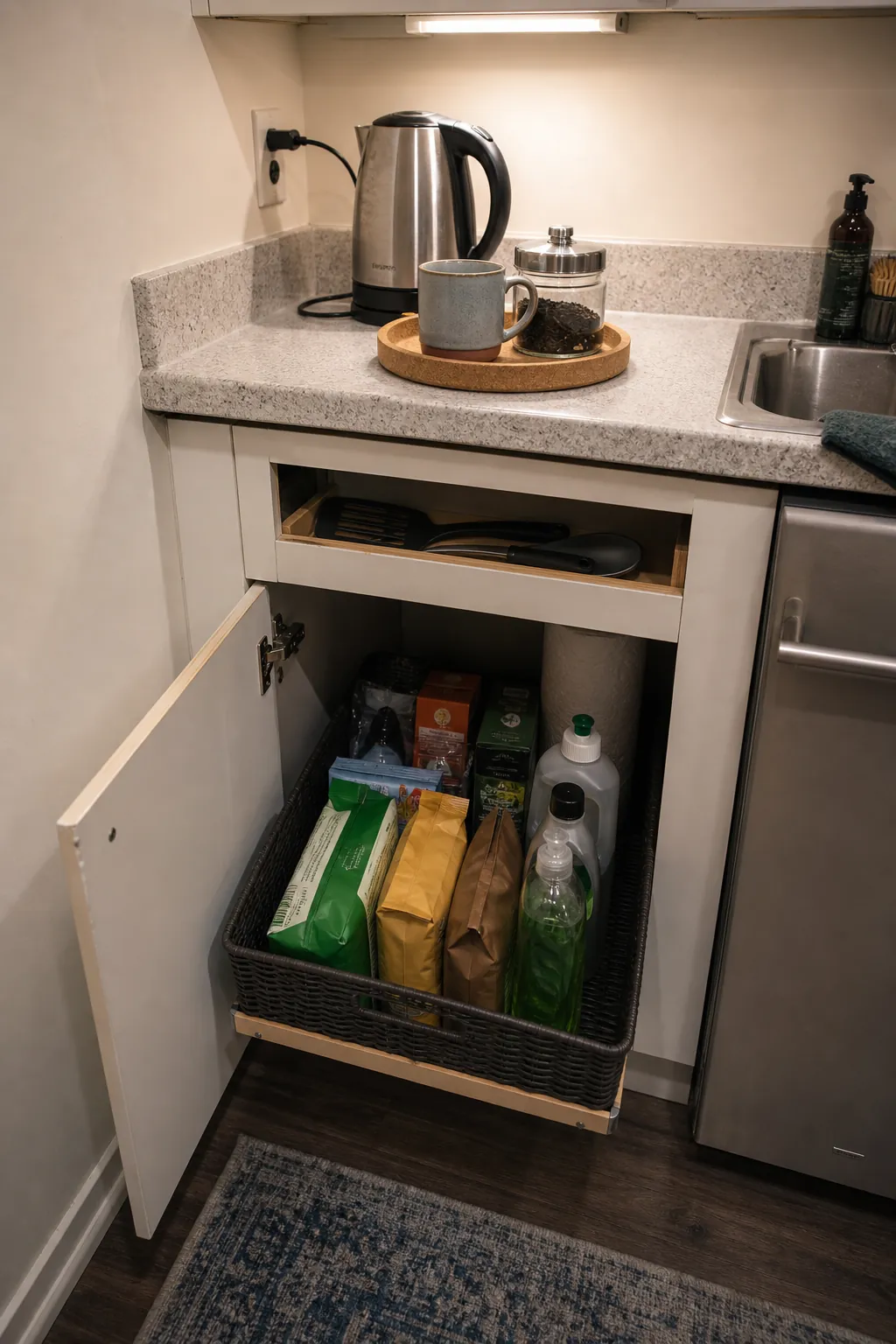
Use the container as a limit, not a hiding place
Decluttering becomes clearer when the space decides the quantity. Pick the shelf, drawer, bin, or rail that a category may occupy. Put favorites in first. When the container is comfortably usable—not crammed—the category is complete. The remaining items compete for no available home, which turns a vague emotional decision into a practical one.
Leave breathing room. A drawer that closes only after pushing and rearranging is already over capacity. Aim for enough space to remove one object without disturbing five others. This matters in apartment organization because high-friction storage trains you to leave things out.
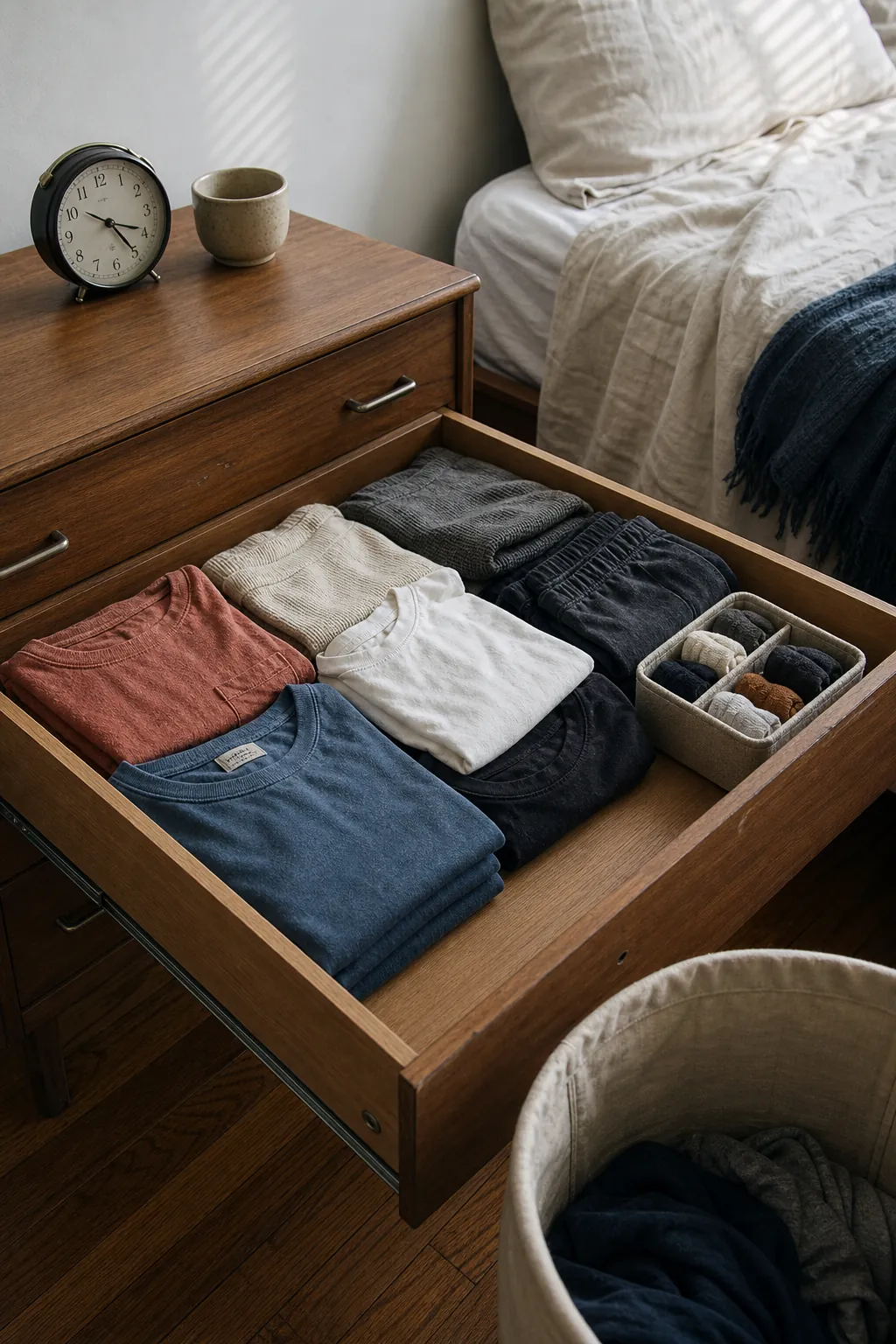
Protect the surfaces that make the home function
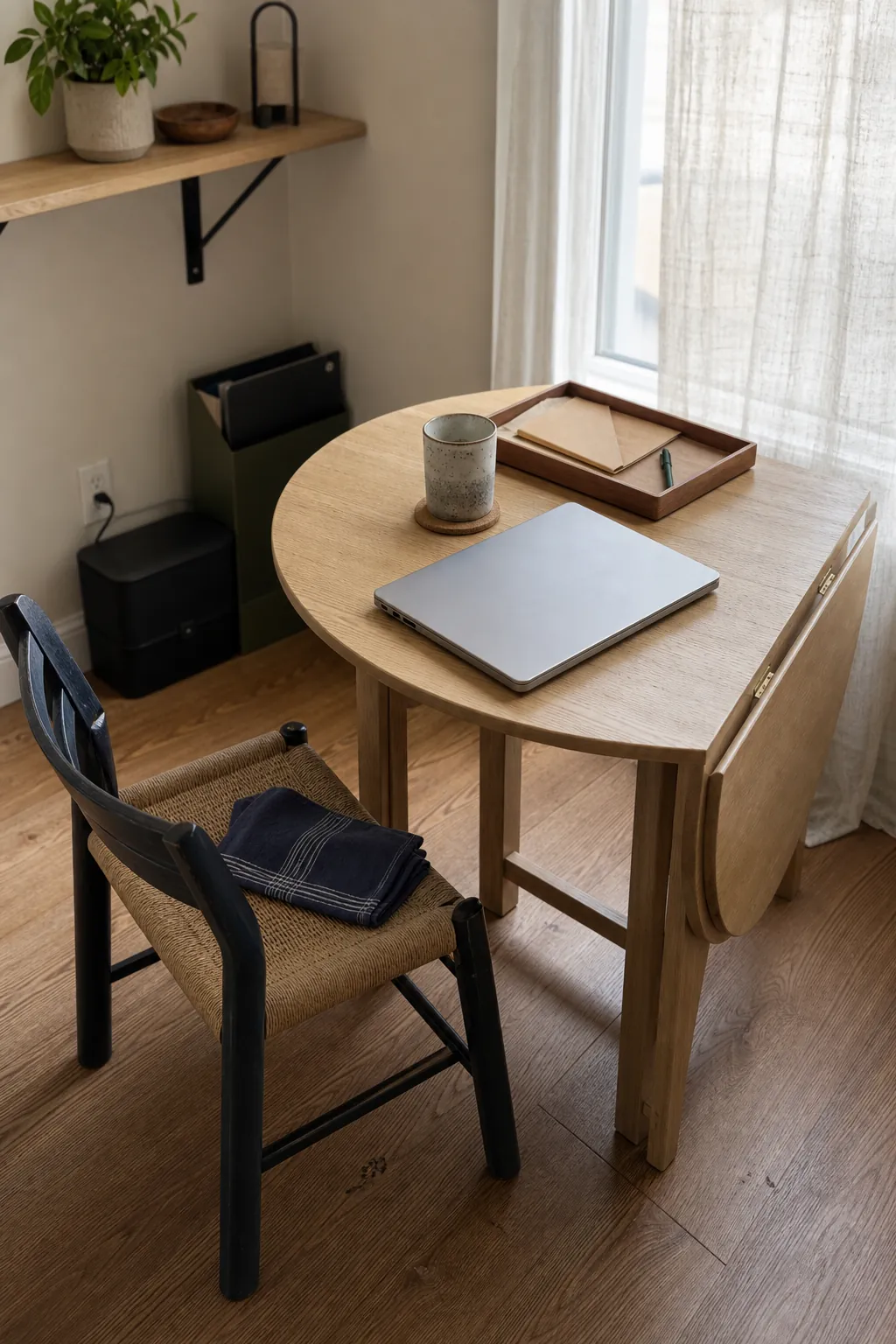
Not every surface needs to be empty, but every small home needs protected work zones. Choose the kitchen preparation area, dining spot, bedside surface, and desk space you rely on. Define what may live there permanently, then remove everything else at the end of use.
If a table repeatedly attracts unrelated objects, give those objects a nearby destination rather than decorating the table to block them. Place a paper sorter where mail lands, a return basket near the exit, or a lidded cable box beside the desk. The goal is enough open space to cook, eat, sleep, and work without first relocating a pile.
Create an exit lane so decluttered items leave
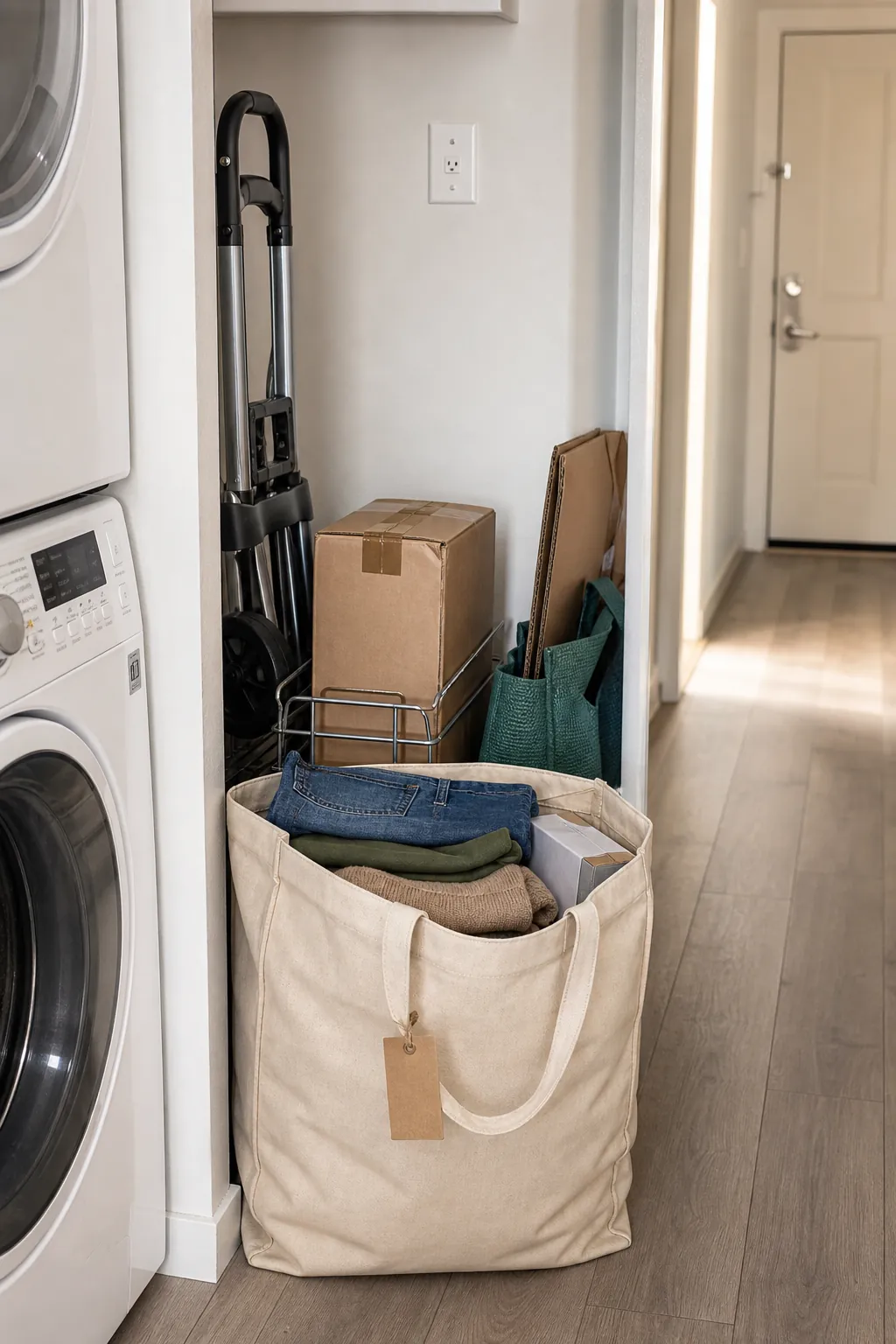
Donation bags, returns, recycling, and borrowed items often become a new clutter category. Give outgoing objects one modest exit lane near the door: a handled bag for donations, a slim return bin, and a calendar reminder for the next errand. Nothing should graduate to a hallway pile.
Set a deadline and size limit. When the donation bag is full, it goes to the collection point within 48 hours. If returning a low-value item costs more time than it is worth, make a deliberate keep, donate, or discard decision. Decluttering is not complete when an item leaves a drawer; it is complete when it leaves the home.
Run a ten-minute closing shift
A daily home reset works when it restores function instead of chasing perfection. Set a ten-minute timer and follow the same route: take trash and dishes first, return items to landing zones, reset protected surfaces, and prepare one thing for tomorrow. Stop when the timer ends.
- Minutes 1–3: collect rubbish, recycling, cups, and plates.
- Minutes 4–7: return shoes, bags, clothes, papers, and daily products.
- Minutes 8–9: clear the kitchen prep area and main table or desk.
- Minute 10: place one outgoing item in the exit lane and set up the morning.
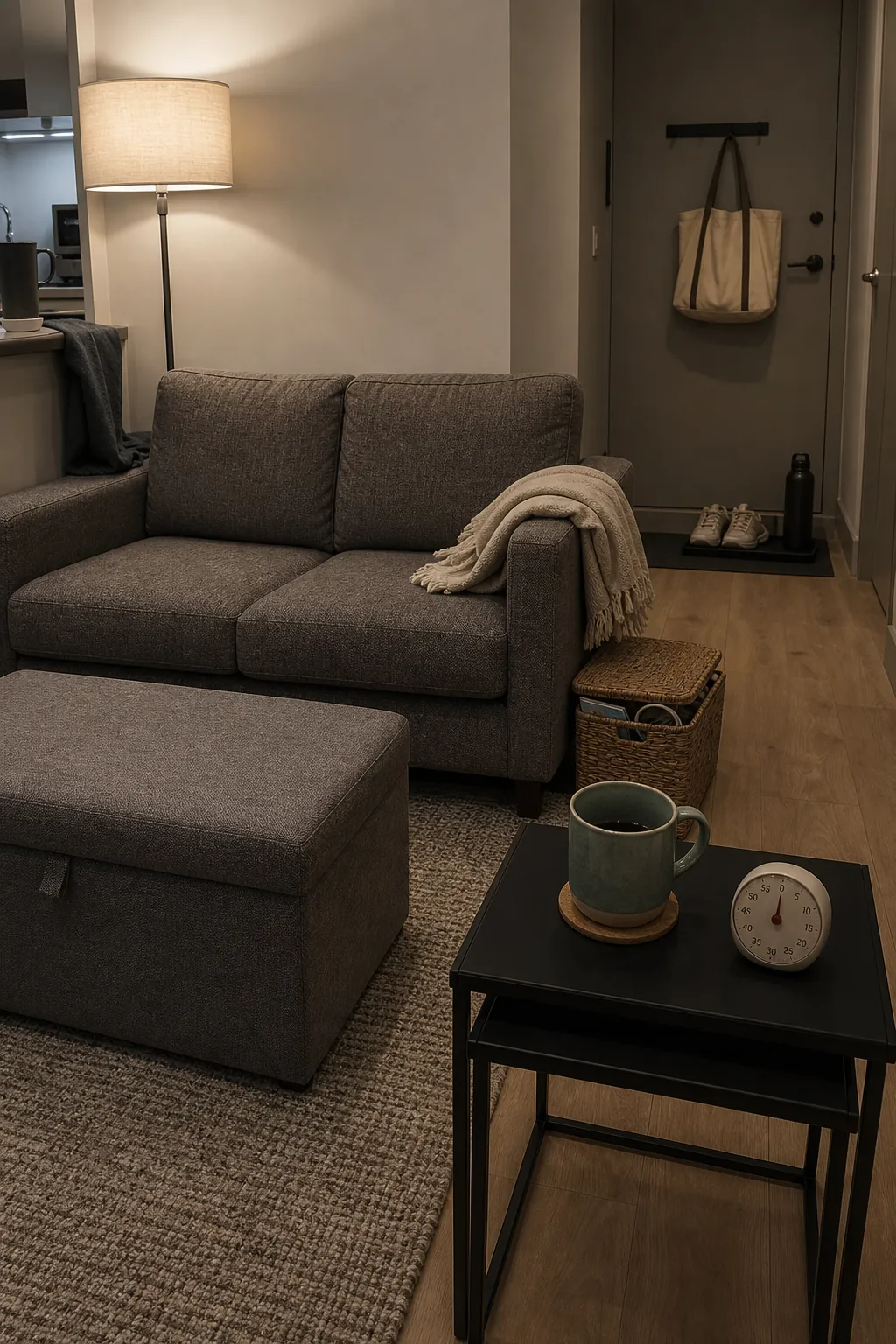
If ten minutes cannot restore the basic zones after several days of honest effort, do not make the routine longer. Treat that as a capacity signal. Choose the most congested category, reduce it until its container works, and try again. A sustainable cleaning routine gets easier as the system improves.
Stop new clutter at the threshold
Clutter control fails when the outgoing stream is smaller than the incoming one. Unsubscribe from paper mail, pause nonessential subscriptions, decline promotional objects, and keep a 24-hour list for household purchases. Before buying storage, name the exact category, measure its allowed space, and decide what will leave if the container does not improve access.
The best small-space storage is not the organizer that holds the greatest number of things. It is the one that lets you put away what you genuinely use in a single motion. Then clutter stops spreading—not because the home never gets messy, but because it has a reliable way back.