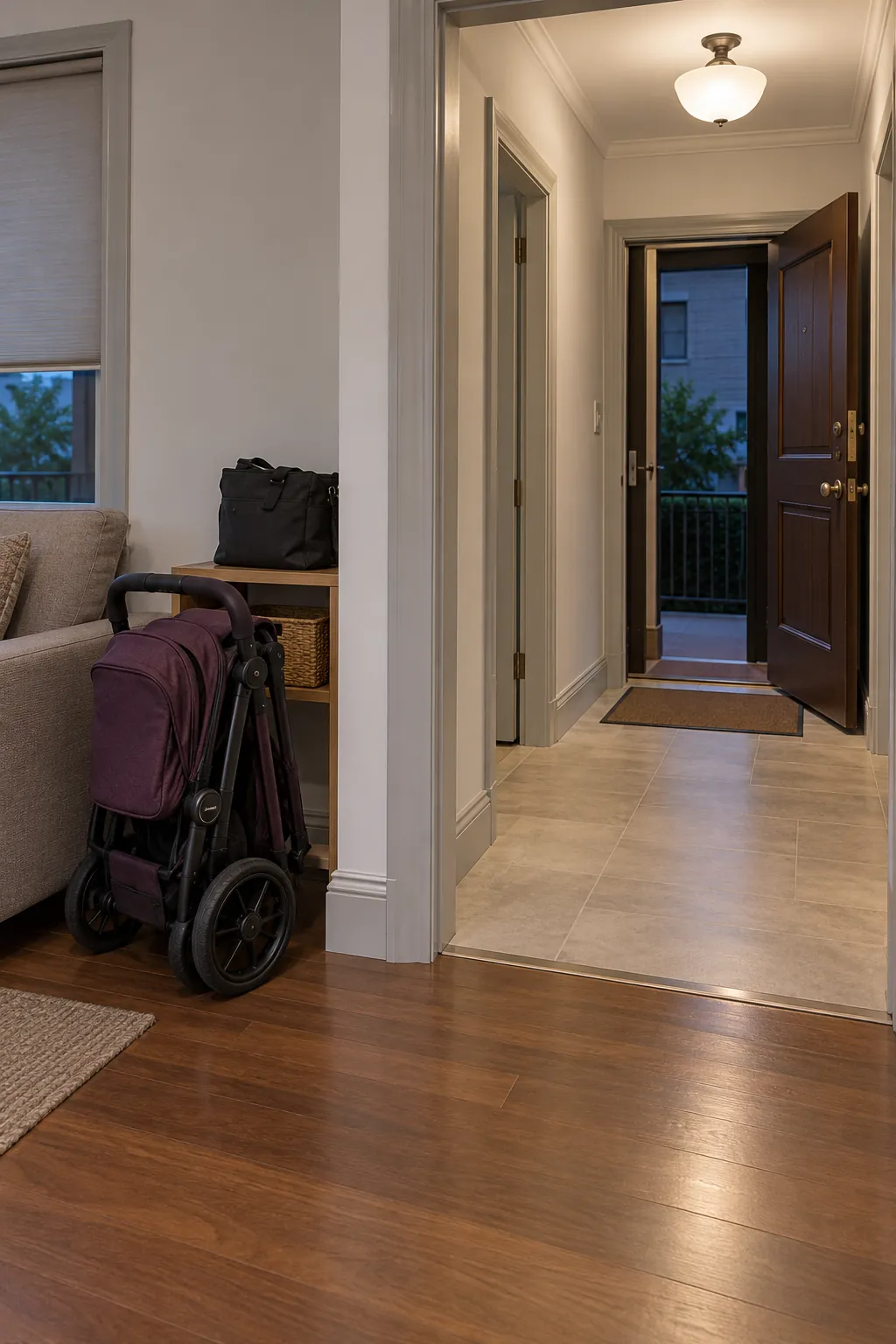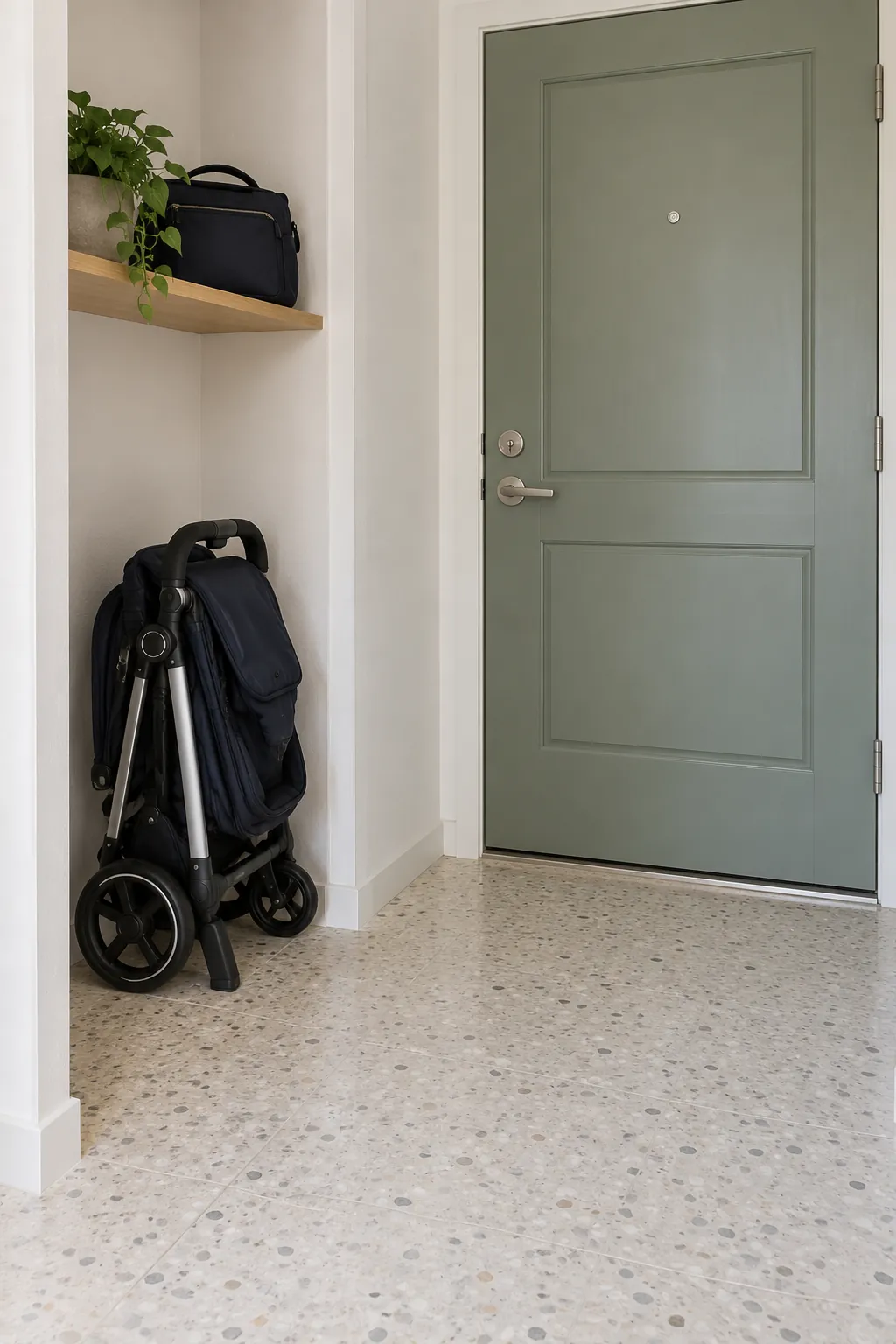
A stroller can be compact when folded and still make leaving home awkward. Wheels project beyond the frame, handles catch coats, and a narrow gap may disappear as soon as the front door opens. The useful storage spot is the one that keeps the exit clear and lets you retrieve the stroller without moving half the entrance.
Start with a dry indoor location inside your own apartment. Keep shared corridors, stairs, landings, and required exit routes clear, and follow the building’s rules. A parking place that depends on moving the stroller before someone can open the door is not a workable everyday solution.
Measure the folded stroller and the route to it
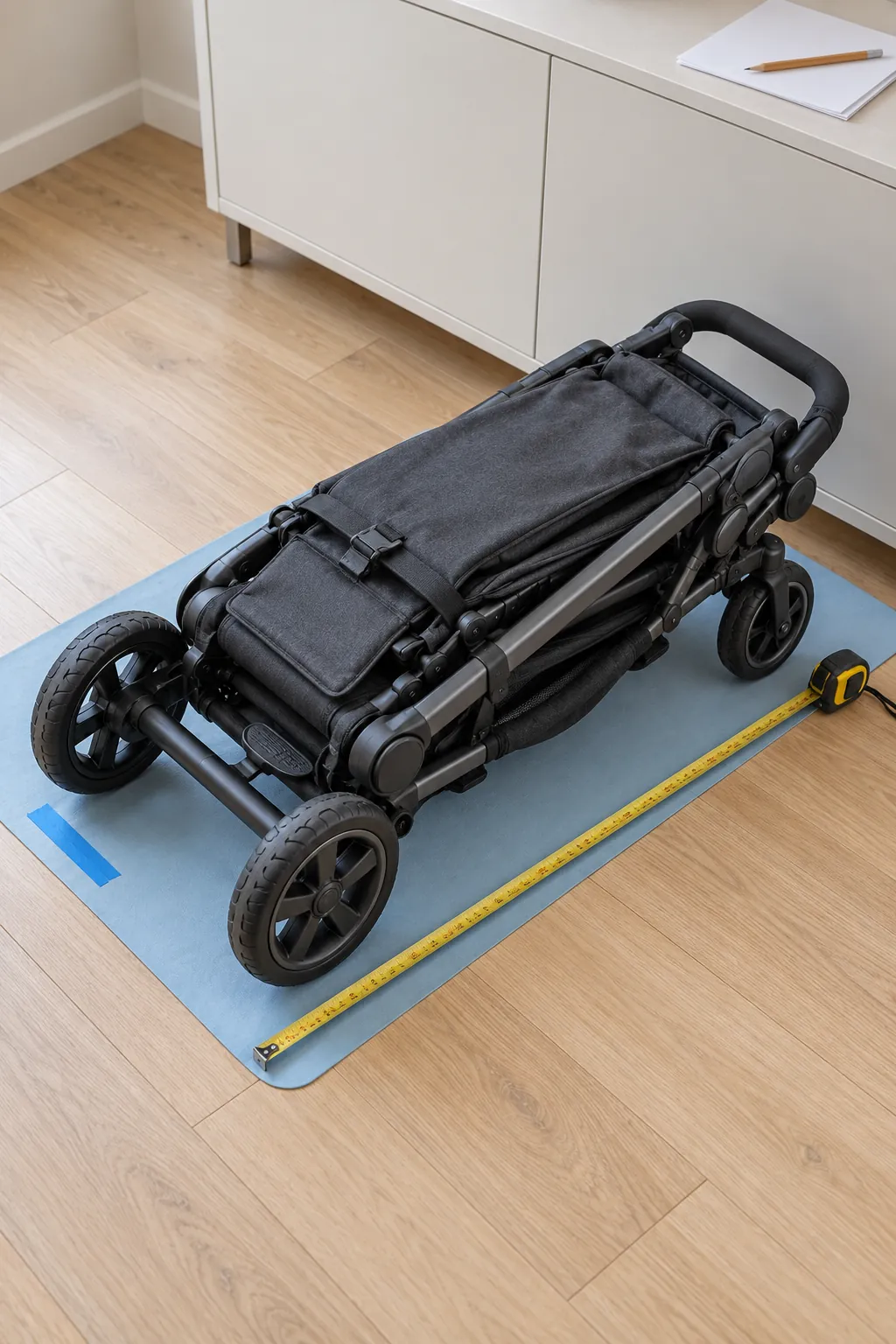
Fold the empty stroller exactly as its manual instructs and engage the storage latch. Measure the widest, deepest, and tallest points in the storage position, including wheels, handles, cup holders, and any parts that remain attached. Record those dimensions before measuring a closet or buying an organizer. A product listing may describe the frame without every accessory you actually use.
Next, open the front door fully and check the space its handle needs. Test the narrowest turn between the entrance and the proposed parking spot, not just the final footprint. Painter’s tape can mark a trial footprint on a compatible floor, but a real empty stroller test is more useful than a flat rectangle when handles and wheels project at different heights. Remove the tape after testing and keep your building’s required clearance throughout the route.
Choose a parking spot beyond the door swing
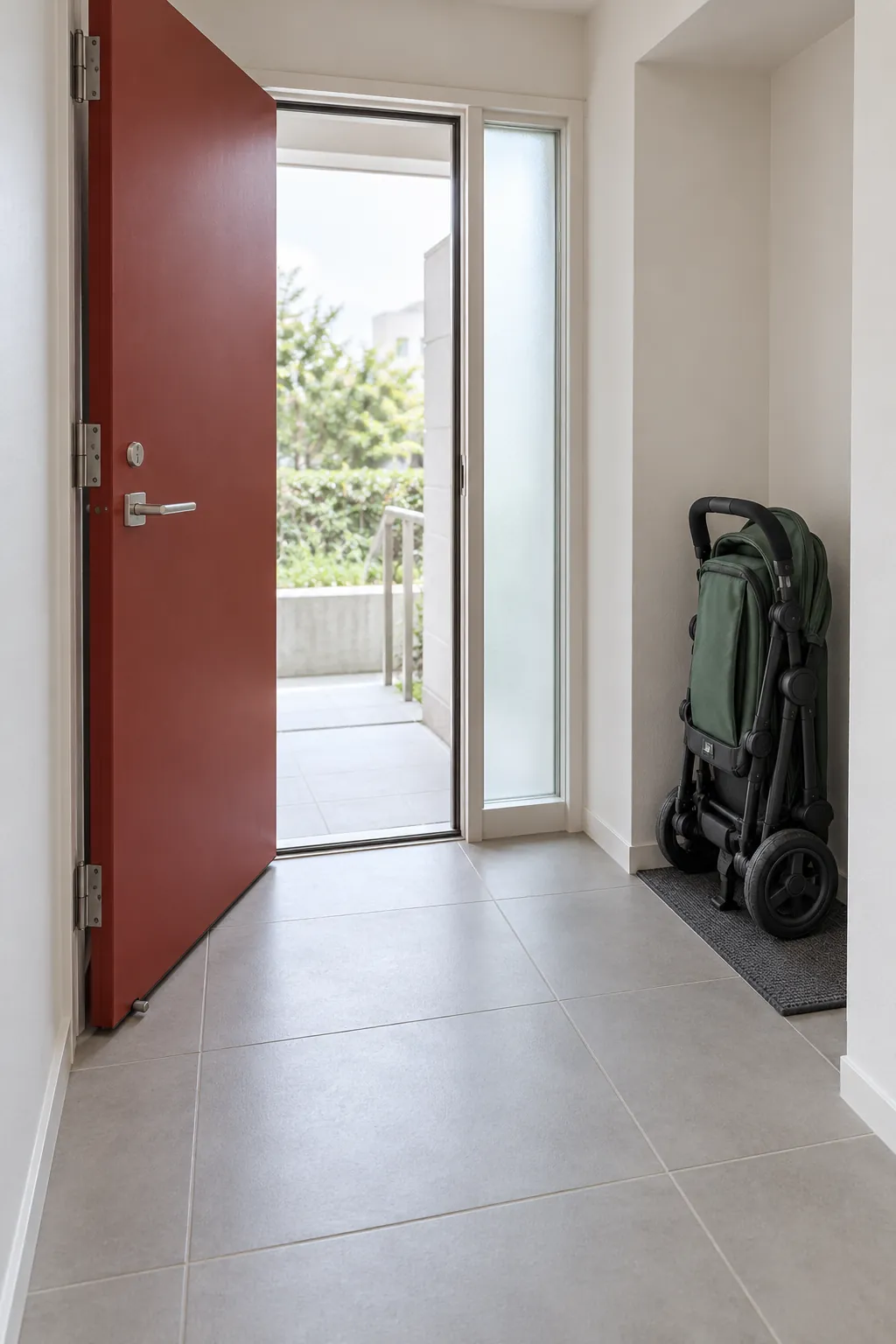
An alcove beside the entrance works only when the stroller stays completely outside the door’s travel and the required walking route. A shallow wall pocket may fit the folded frame while leaving wheels in the passage, so inspect the space at floor level. If the hall has no usable recess, move the parking spot into the nearest room.
A corner of the living room can be more convenient than a crowded entry closet because you can reach it without opening another door. Place a washable wheel mat on a suitable hard floor and keep it clear of radiator heat, damp walls, and household traffic. Avoid balancing the folded stroller behind a door or leaning it where a child can pull it over.
Use an upright storage position only if the manufacturer permits it and the model stands securely that way. Otherwise, store it in the approved supported position, even if that means using more floor area. A smaller visual footprint does not justify an unstable arrangement.
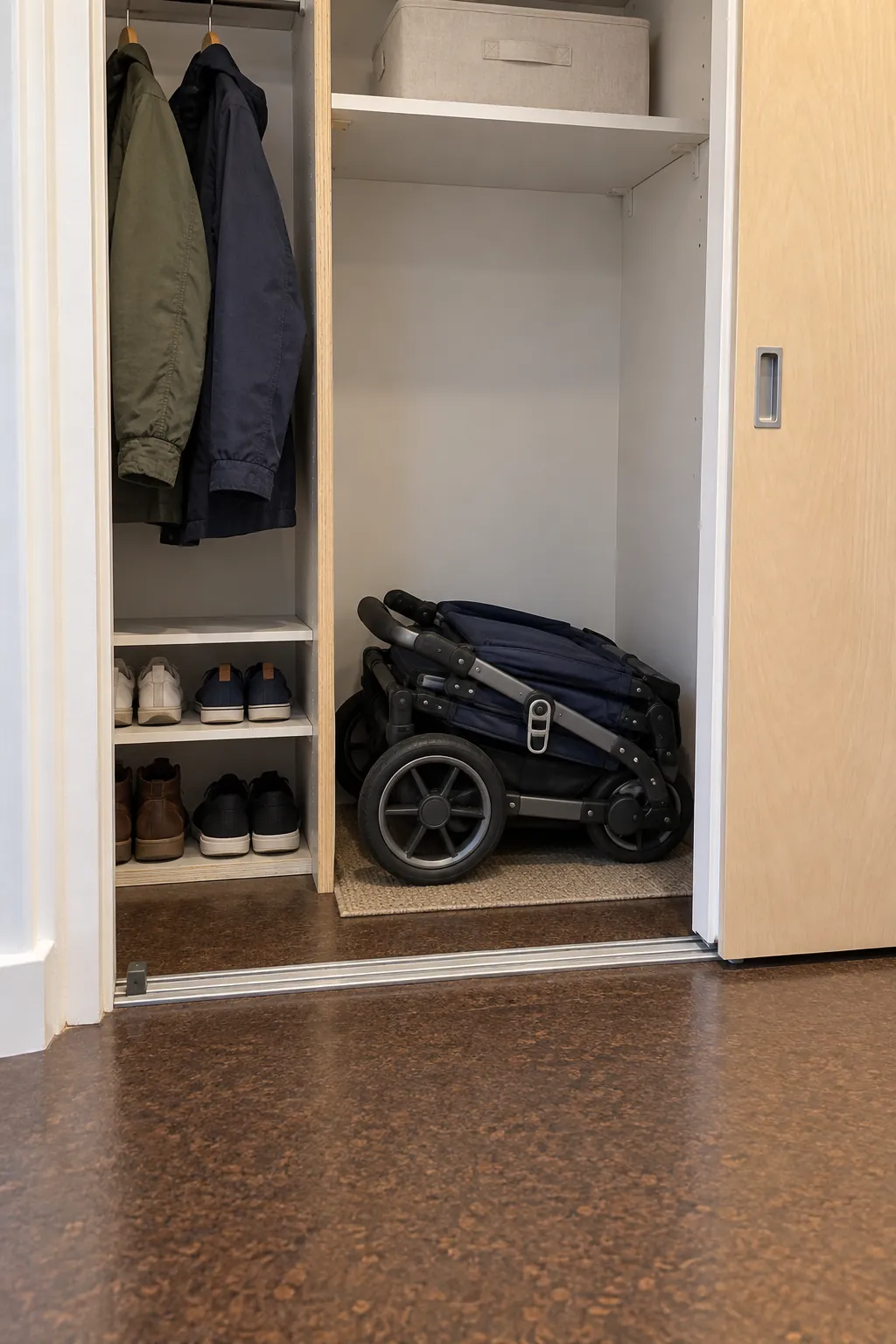
Make a closet slot reachable without unloading it
For folded stroller storage in a closet, reserve one complete slot from the opening to the back wall. Move low baskets and trailing coats out of that route, and check that the closet door can close without pressing on the frame or fabric. Keep the stroller on the floor in its approved orientation rather than lifting it onto a high shelf. Remove wheels or a seat unit only when the manual permits it and the extra steps are realistic for your routine. Wall hanging needs explicit manufacturer approval for the stroller and suitable rated hardware fixed to the correct structure; ordinary adhesive hooks are not a substitute. A dry closet with enough access space is useful, but a damp enclosed cupboard is not an improvement over a clear room corner.
Give wet wheels and fabric time to dry
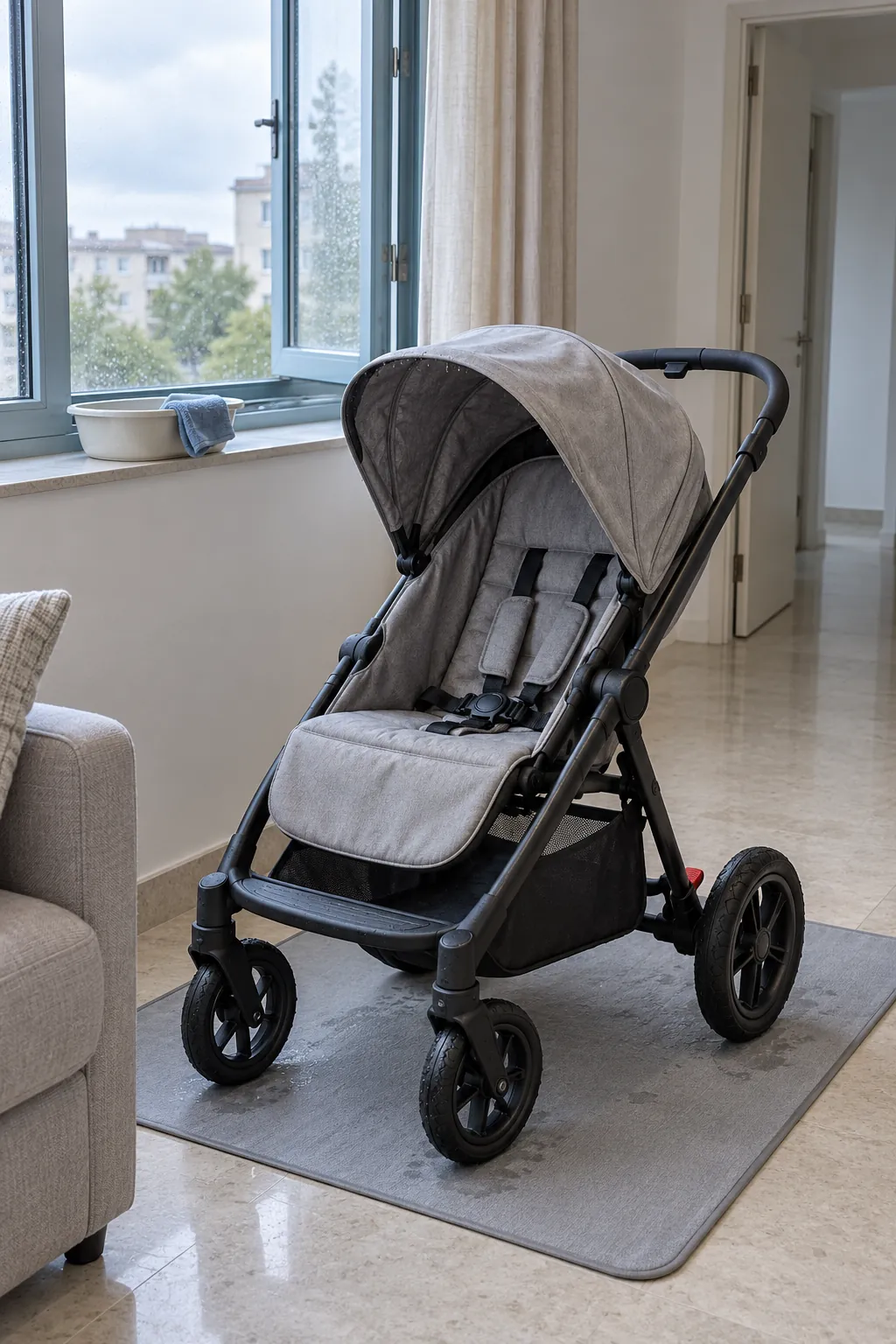
A rainy walk creates a different storage problem from a dry trip. Wipe wheels and frame with the cleaning method allowed by the manufacturer, then let wet fabric and removable covers dry fully before enclosing the stroller. Use a washable mat to protect a suitable floor, and empty any collected water instead of leaving wheels standing in it.
Drying may require the stroller to remain open temporarily in a ventilated room, with the brake set and the exit still clear. Keep it away from direct heaters and follow the manual’s instructions for fabrics and moving parts. A plastic bag over a damp stroller can trap moisture, while a balcony or outdoor cupboard can expose it to weather and persistent humidity. If you find mold, stop using the affected item until you have checked the manufacturer’s cleaning or replacement guidance.
Store the bag and accessories beside the parking space
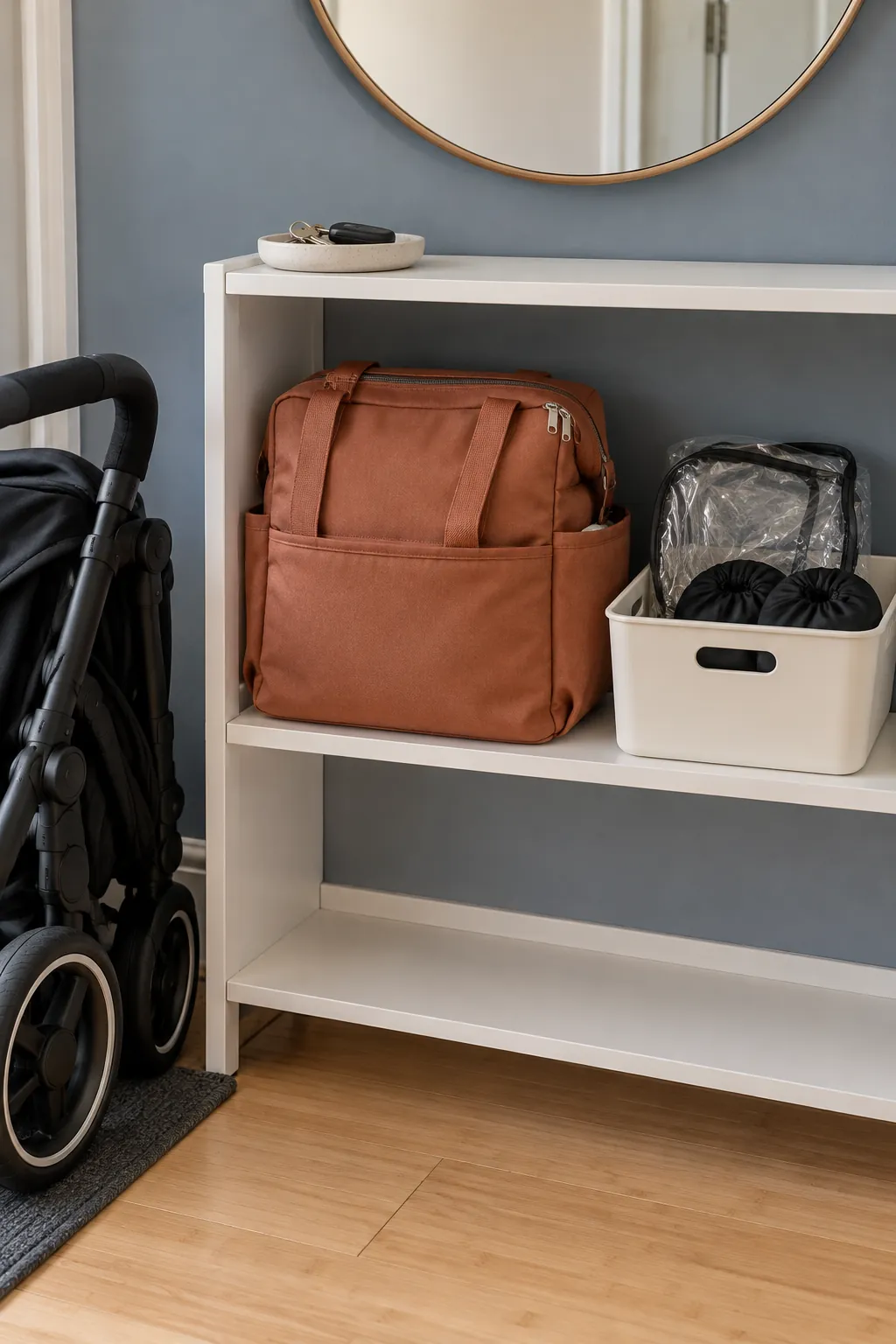
Apartment entrance organization becomes harder when the folded stroller also carries a full changing bag, shopping, and rain gear. Remove items that interfere with folding or make the frame unbalanced, following the stroller’s instructions. Give the daily bag a separate shelf or secure storage spot near the exit.
A small washable bin can hold dry wheel covers, the rain cover, and accessories you actually use. Put wet items somewhere they can dry before returning them to that bin. Keep straps and loose items out of children’s reach, and do not hang extra weight from the handle unless the manufacturer allows the specific accessory and load.
For a stroller used every day, aim to retrieve the frame and bag without moving unrelated storage. An occasional travel stroller can live farther from the door if its storage position remains dry and accessible. Separating these routines stops the entrance from becoming permanent storage for every piece of family equipment.
Test the complete arrival and departure routine
Practice with an empty stroller before relying on the new arrangement during a busy outing. Check that you can enter, close the door, secure the stroller, and reach the storage spot without placing bags in the passage. Keep children away from hinges and moving parts when folding or opening, and use an appropriate safe place for your child while you handle the equipment. Then reverse the process with the bag you normally carry and check the lift, building doors, or stairs that form part of your real route. Ask management about any designated stroller room before using shared space, including access hours and storage rules. Keep the arrangement only if the exit stays clear throughout the routine, not merely after everything has been put away.