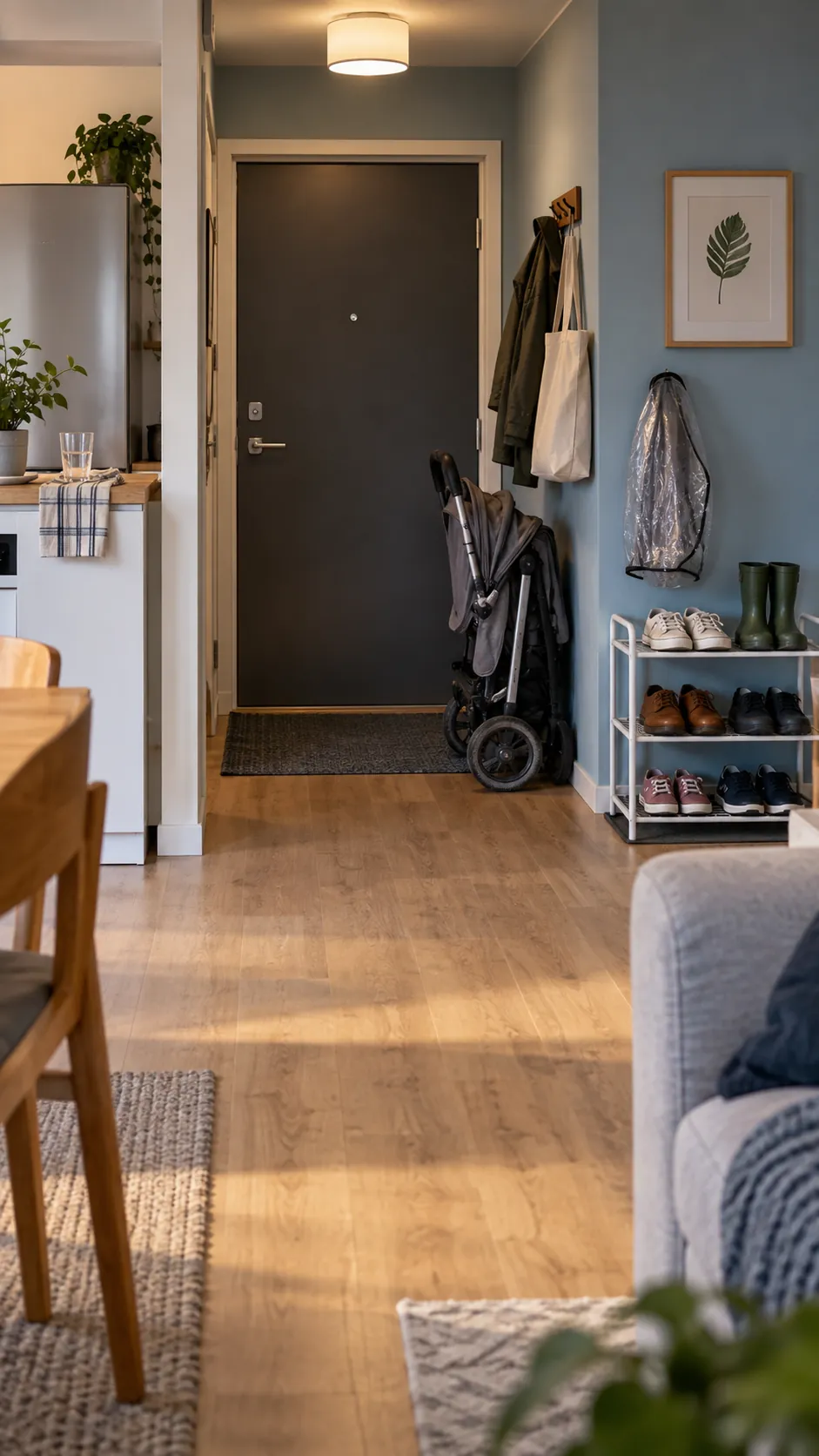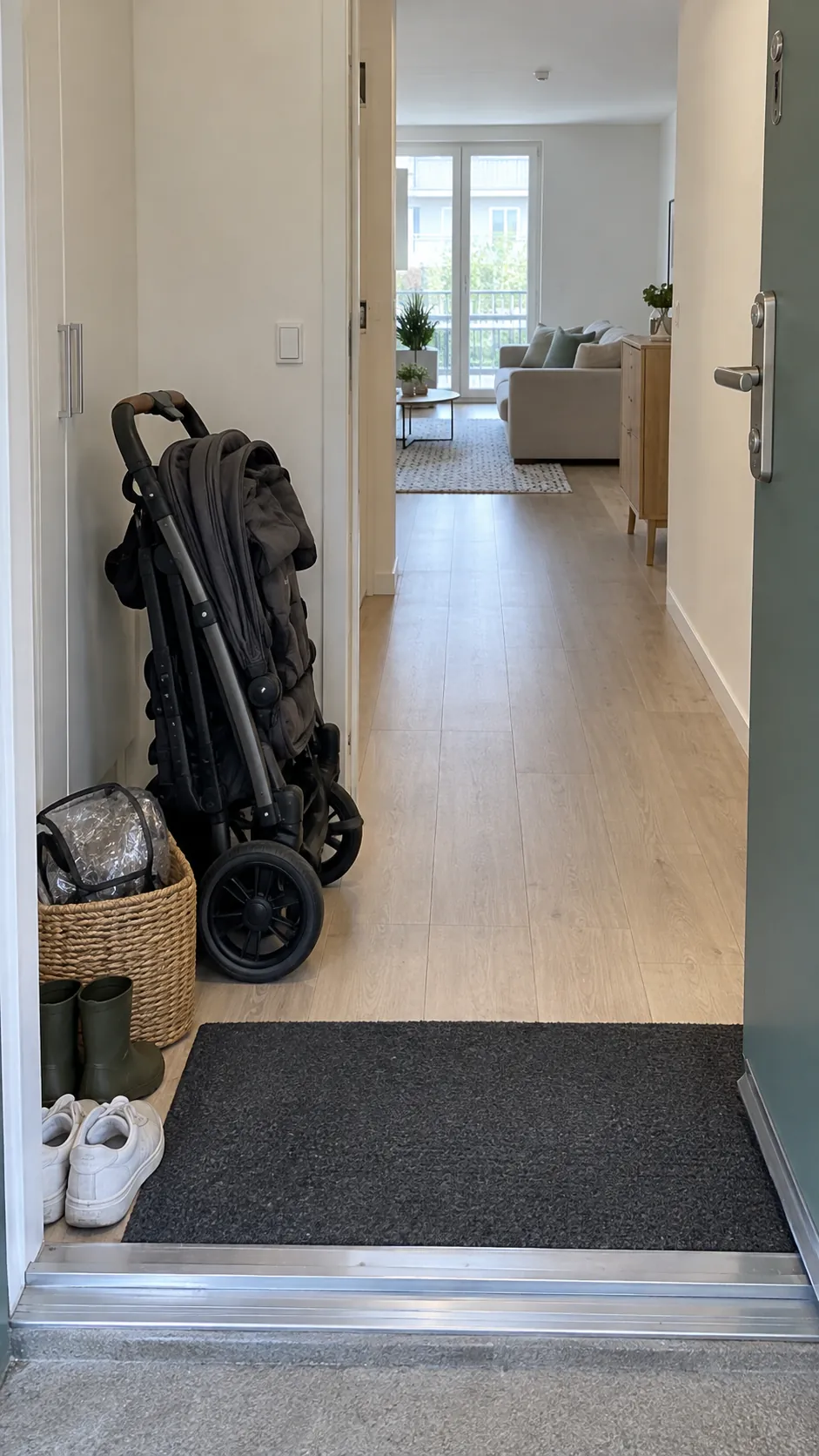
A stroller is easiest to live with when it has a place near the door and a route that still works on a rainy day. Before buying a hook or moving furniture, fold the stroller as you normally would, park it where you want it to live, and walk through the entrance with a bag in each hand. If the door cannot open fully or you have to turn sideways to pass, choose another spot.
Think of storage as a daily routine, not just a footprint. The best setup gives muddy wheels a landing place, keeps the stroller dry, and lets you put it away while caring for a child. These options move from the simplest entryway solution to choices for apartments with almost no spare floor space.
Measure the folded stroller and the clear walking route
Measure the stroller in its actual storage position, including the wheels, handle, and anything that protrudes when folded. Then measure the usable corner with the door open, rather than the wall length alone. Mark the proposed footprint on the floor with paper or painter tape and try your normal trip from the door to the kitchen or living room.
Keep access to the door, electrical panels, and any building exit route clear. A narrow hallway may look spacious in a photo but feel blocked when someone carries groceries or a child. If a stroller only fits by taking over the shared corridor outside your unit, check building rules and find a location inside the apartment instead.
Make a compact entryway parking spot
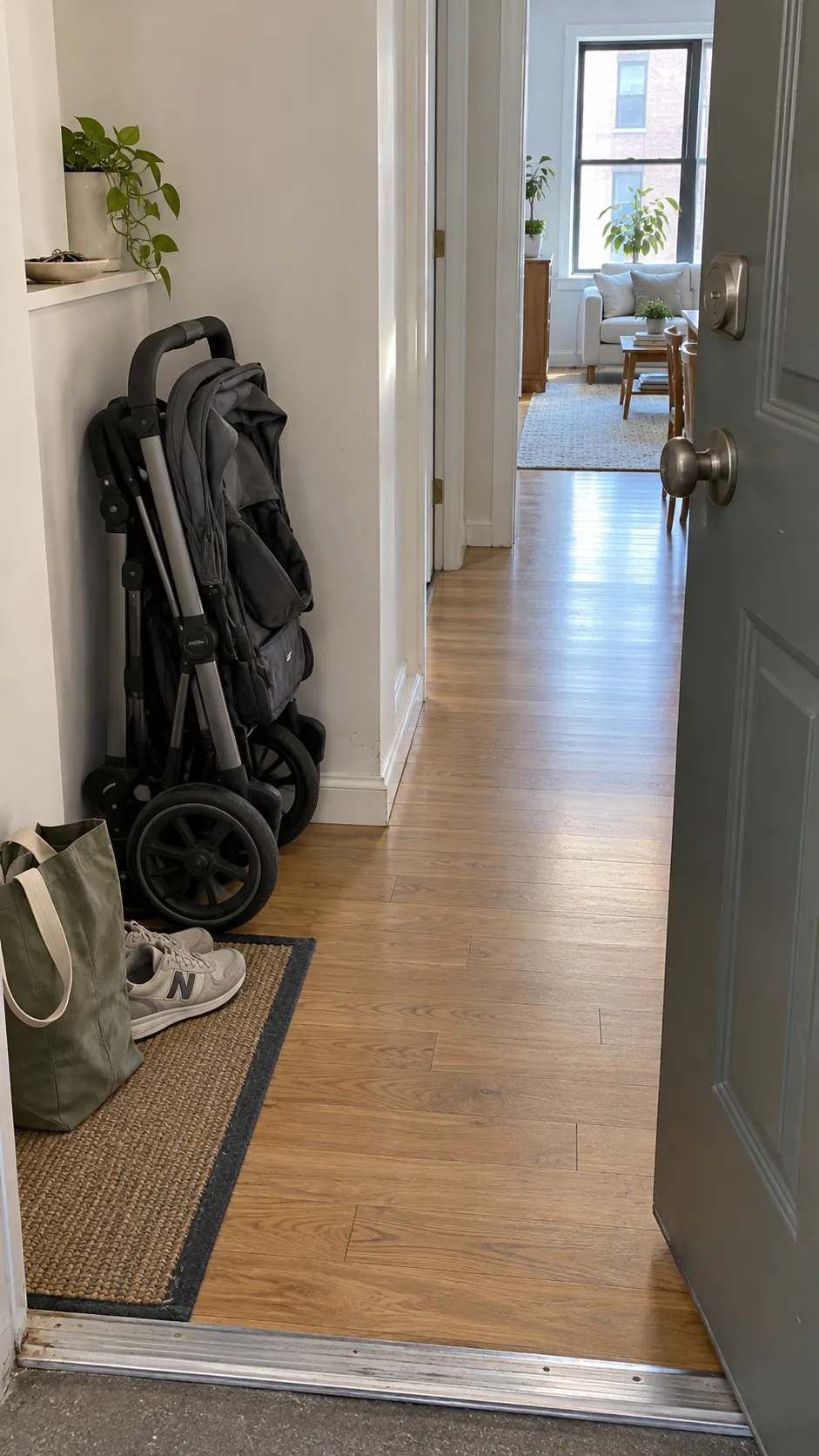
For a stroller used most days, a shallow parking spot by the entrance usually beats a distant closet. Stand the folded frame in the quietest corner, with its brake set if the maker recommends it for storage. A washable boot tray or firm floor mat catches grit and water before the wheels touch your floor.
Put a small basket above or beside the stroller for the rain cover and everyday accessories, but avoid loading the handle until the parked stroller becomes unstable. If the entry has a bench, leave enough room to sit and remove shoes. The stroller should have its own marked place rather than becoming another item in a pile of bags.
Use a closet or recessed nook when the entry is narrow
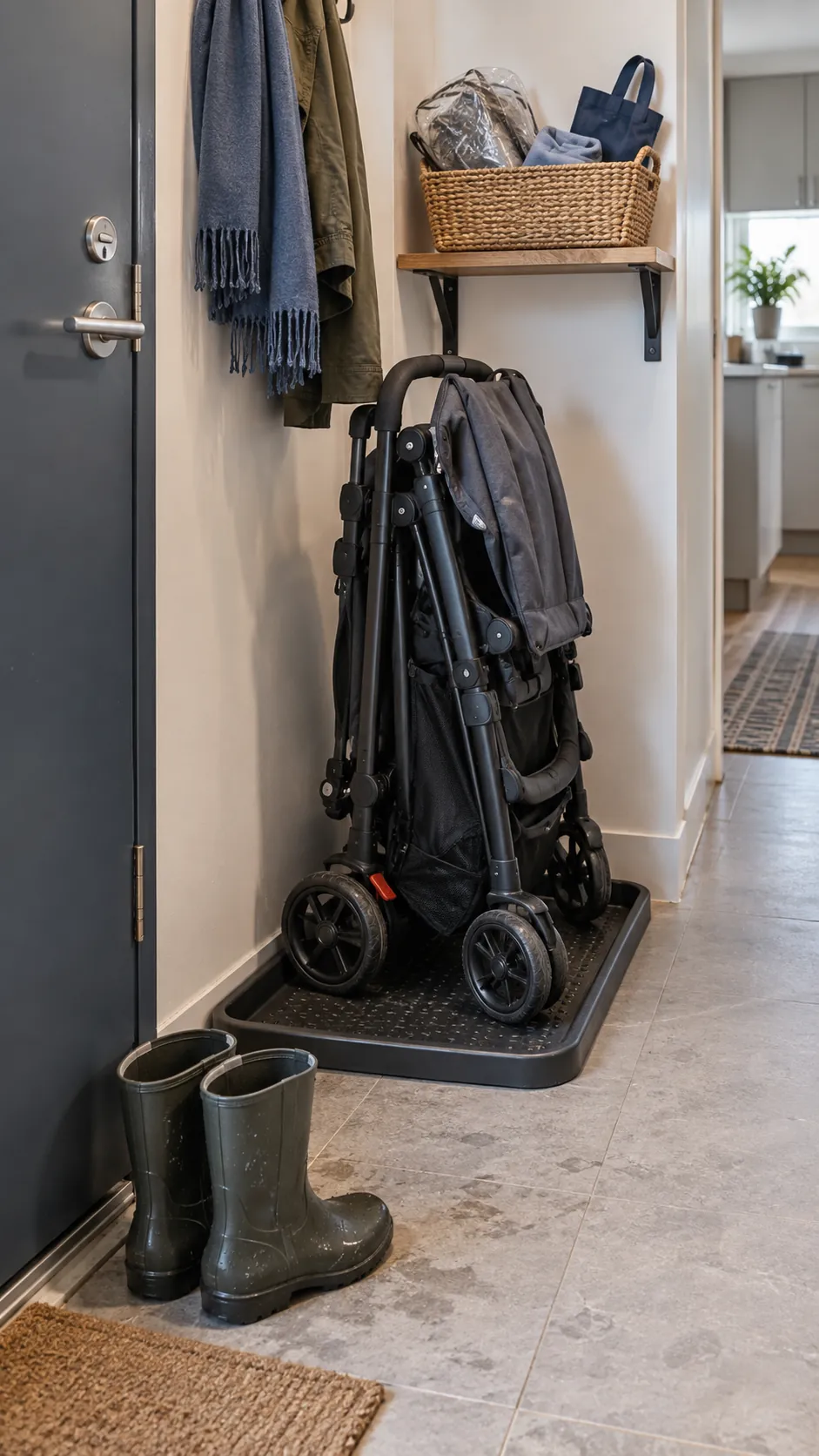
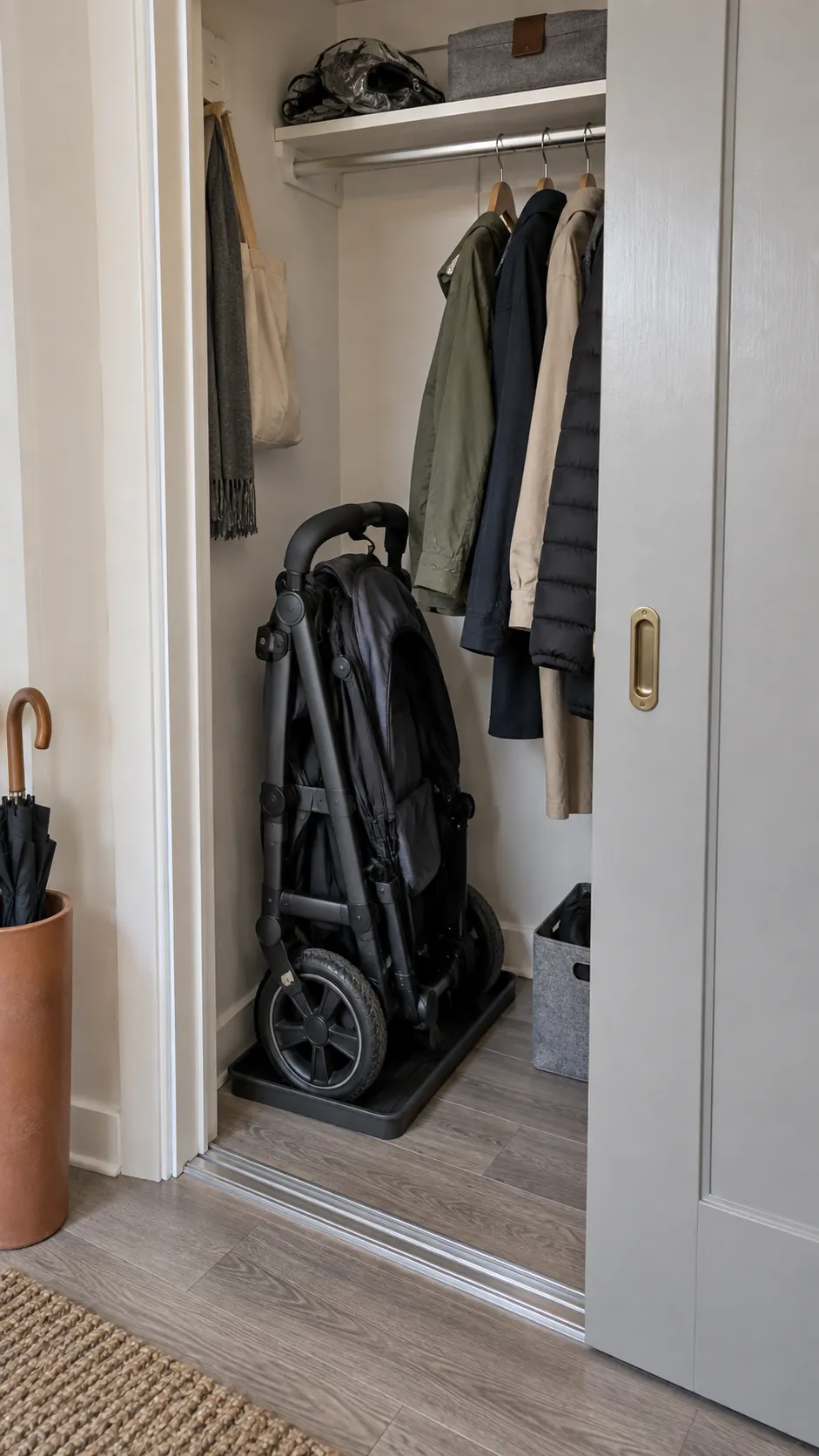
A hall closet can work if the stroller folds small enough and you can lift or roll it into place without moving everything else first. Take the folded measurements to the closet, including the opening width and any shelf or hanging rail that limits access. Try the motion with the stroller you own before changing closet fittings.
Shift coats to a short rail or upper hooks only if that leaves a clean, reachable bay for the frame. Keep the wheels on a removable tray and let damp fabric dry before closing the door. In an apartment with stairs, an under stairs recess may be useful, provided it is private space and does not cover utilities or an exit path.
Consider a wall hook only for a suitable frame and wall
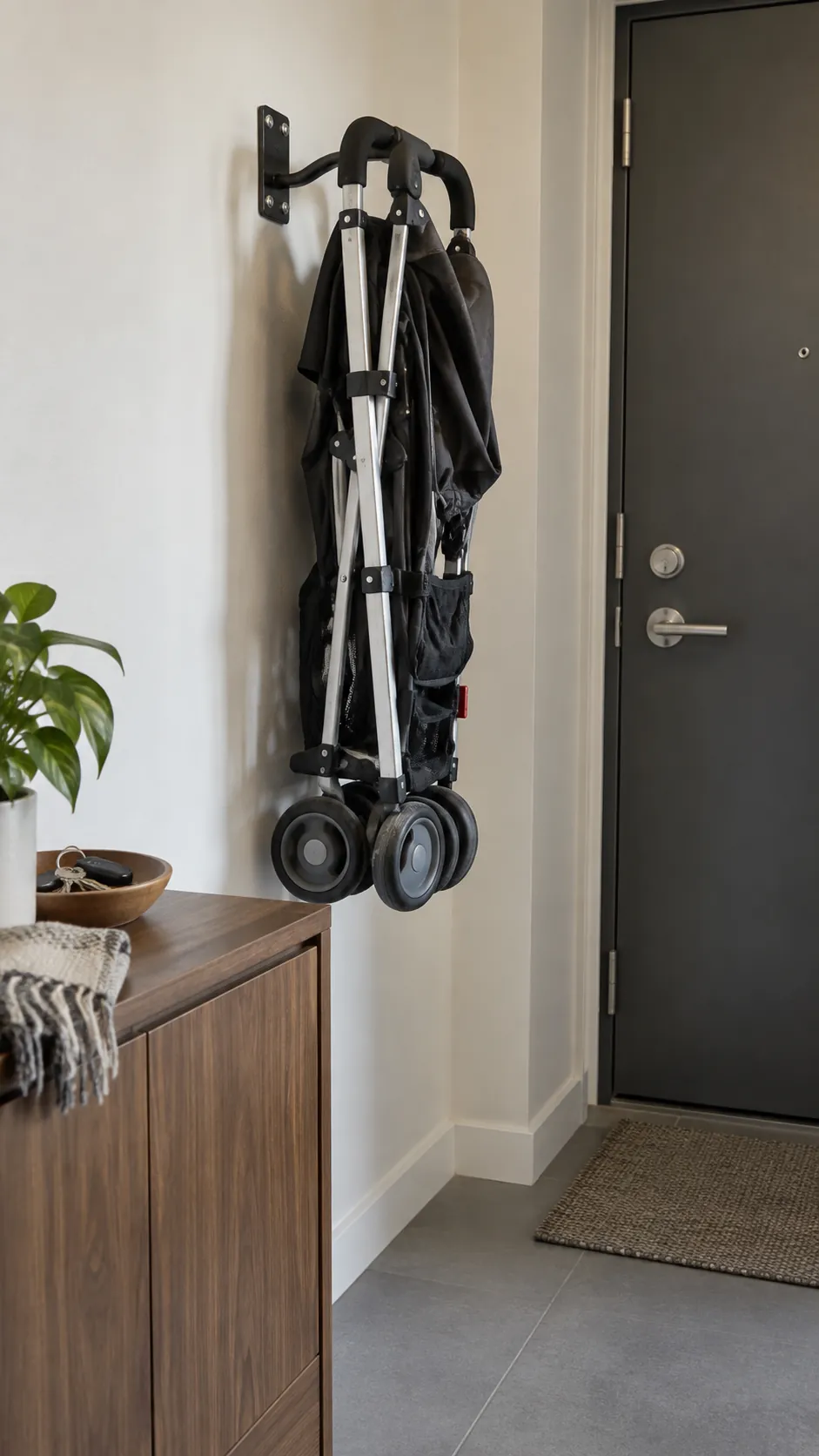
Wall storage can release floor space, but the folded stroller may be heavy and awkward to raise, especially when you are also holding a child. Check the stroller maker’s storage guidance, the weight of the complete folded frame, the hook rating, and the wall construction. A hook must be installed in a suitable structural support with hardware appropriate to that wall; an adhesive hook is not a substitute.
Ask the landlord before drilling if your lease requires it. Mounting the stroller behind a door is only useful if neither door nor stroller collides during normal use. Keep the lowest part out of a child’s reach where possible, and make sure the hanging position cannot drop onto a person or block the entry.
Keep wet wheels and fabric from becoming a storage problem
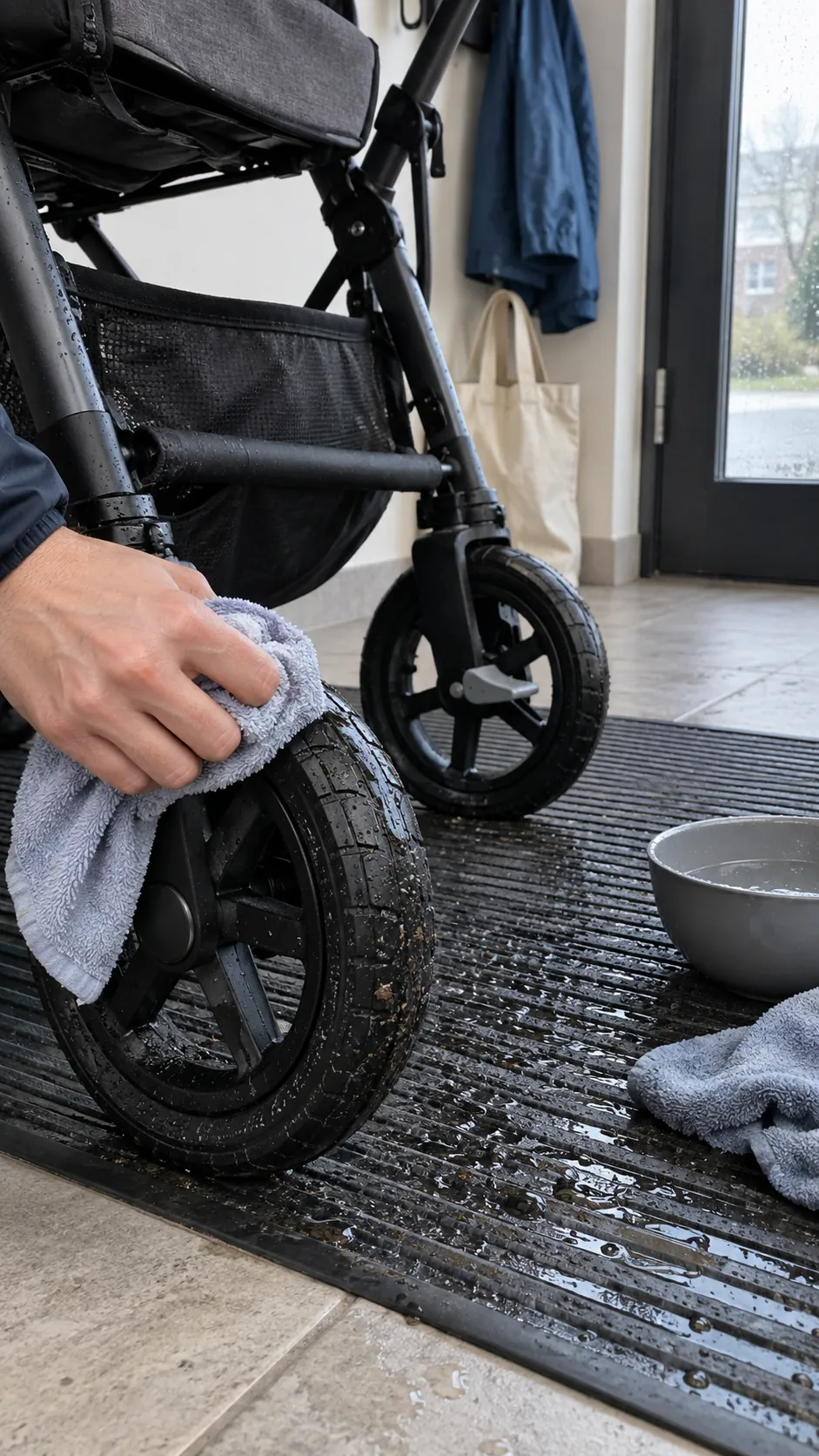
After a wet walk, brush off grit and wipe the wheels at the door. Leave the stroller open or loosely folded until the seat and cover feel dry, following the care instructions for your model. A sealed cover around a damp stroller can trap moisture, so use a breathable storage arrangement only after everything has dried.
Balcony storage is a last choice for many apartment households because rain, sun, temperature swings, and building rules can make it unsuitable. A cover does not repair a damp stroller or guarantee protection from weather. If an outdoor or shared storage space is permitted, check it regularly for moisture and security, and avoid placing a child safety product somewhere you cannot keep clean and dry.
Choose a setup you can use every day
Try your preferred storage spot for a week before buying anything permanent. Notice whether you can fold the stroller quickly, reach the rain cover, and bring it out without moving furniture. If the routine feels hard after one trip, it will be harder on a tired evening with a sleeping child.
If you are still choosing a stroller, compare folded dimensions, whether it stands on its own, and the weight you would actually lift in your building. A compact fold helps only when it fits your doorway, closet, and daily route. Let the shape of your apartment and the way you travel decide the storage plan.