
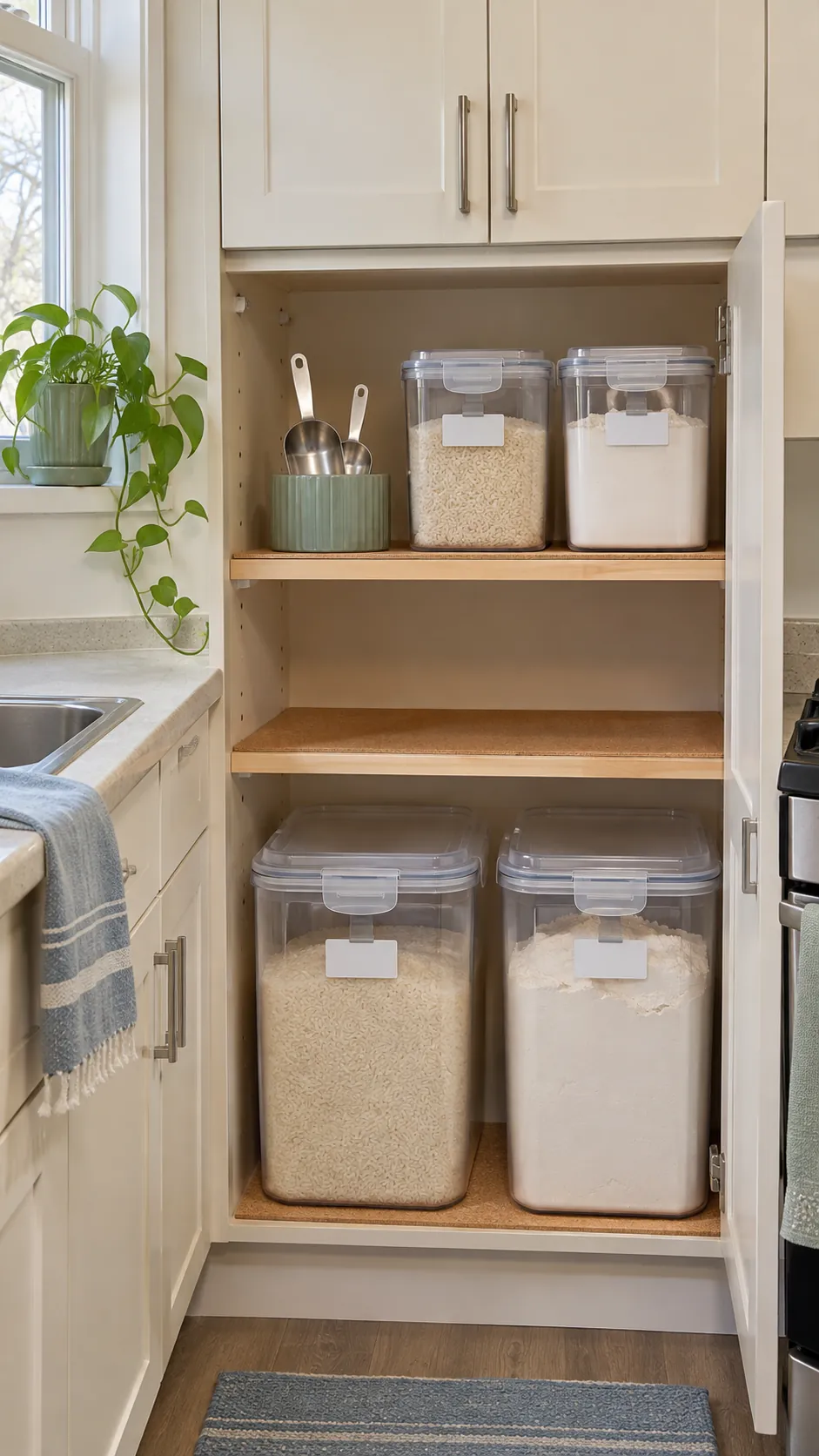
A large bag saves money only when the food stays dry, clean, easy to reach, and easy to finish. In a small apartment, the storage plan must also respect shelf strength, limited floor space, and the fact that flour behaves differently from white rice.
The most practical setup uses a sealed reserve container plus a smaller working container. The reserve protects most of the purchase. The working container stays near the preparation area, so daily cooking does not expose the whole supply to air, crumbs, or wet utensils.
Buy an Amount Your Apartment Can Protect
Measure the storage zone before choosing the bag size. Record the clear width, depth, height, and door opening. Also check whether the shelf is designed to carry a dense load. Rice and flour become surprisingly heavy when one container holds many packages at once.
Estimate how quickly your household uses each ingredient. A lower unit price is not useful when the purchase occupies an entire cabinet or remains open longer than you can maintain its quality. Begin with the smallest bulk size that delivers a real saving and still fits one protected location.
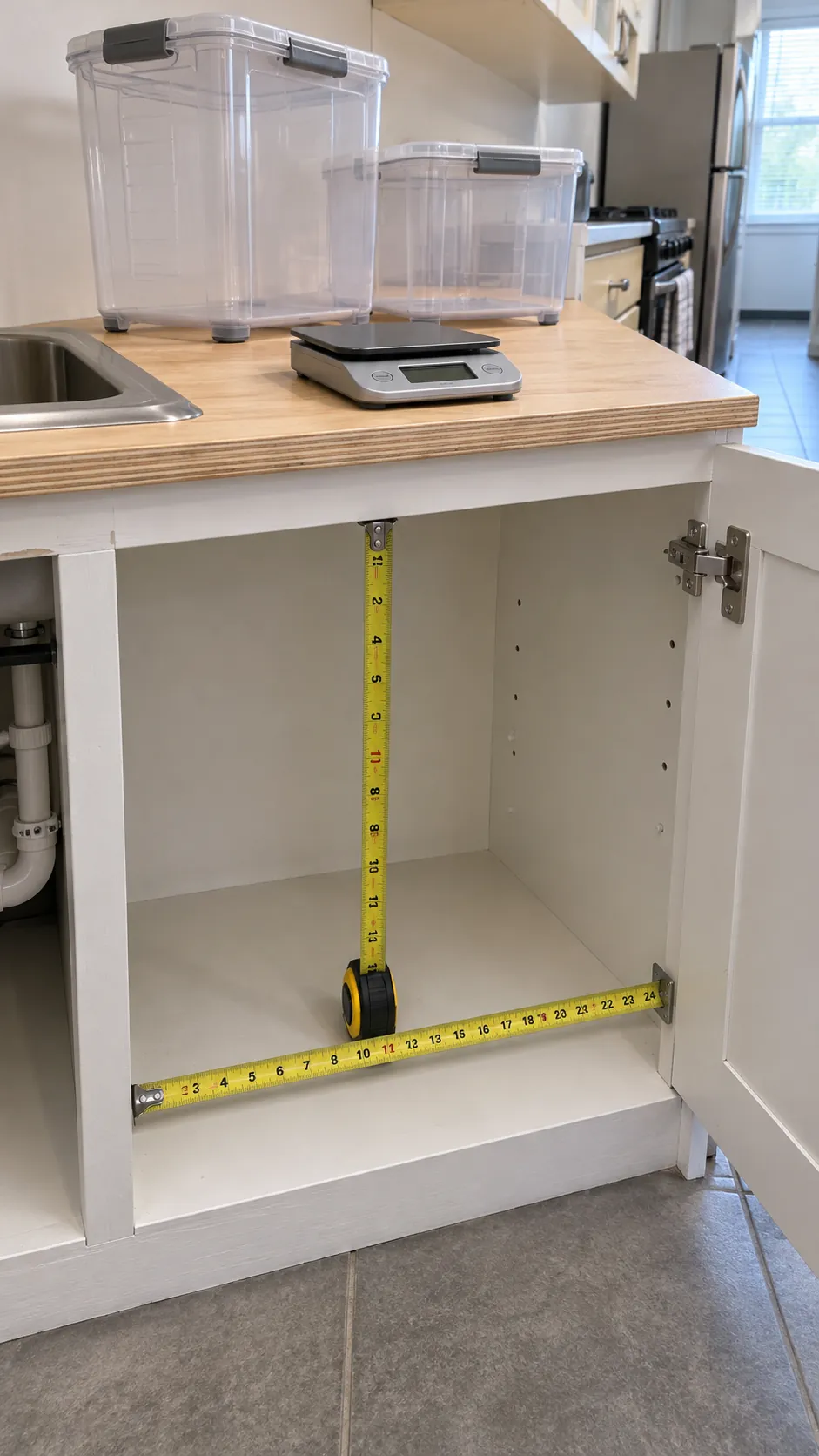
Choose Food Grade Containers That Seal
Use containers intended for food contact, with lids that close across the whole rim. A tight seal helps control humidity and limits the spread of pantry pests. A decorative bin with a loose lid may organize a bag, but it does not provide the same barrier.
Square or rectangular containers usually make better use of a narrow cabinet than round pails. Wide openings are useful for flour because a scoop can enter without pushing powder over the edge. Rice can work well with a smaller pour opening, provided the closure remains easy to clean.
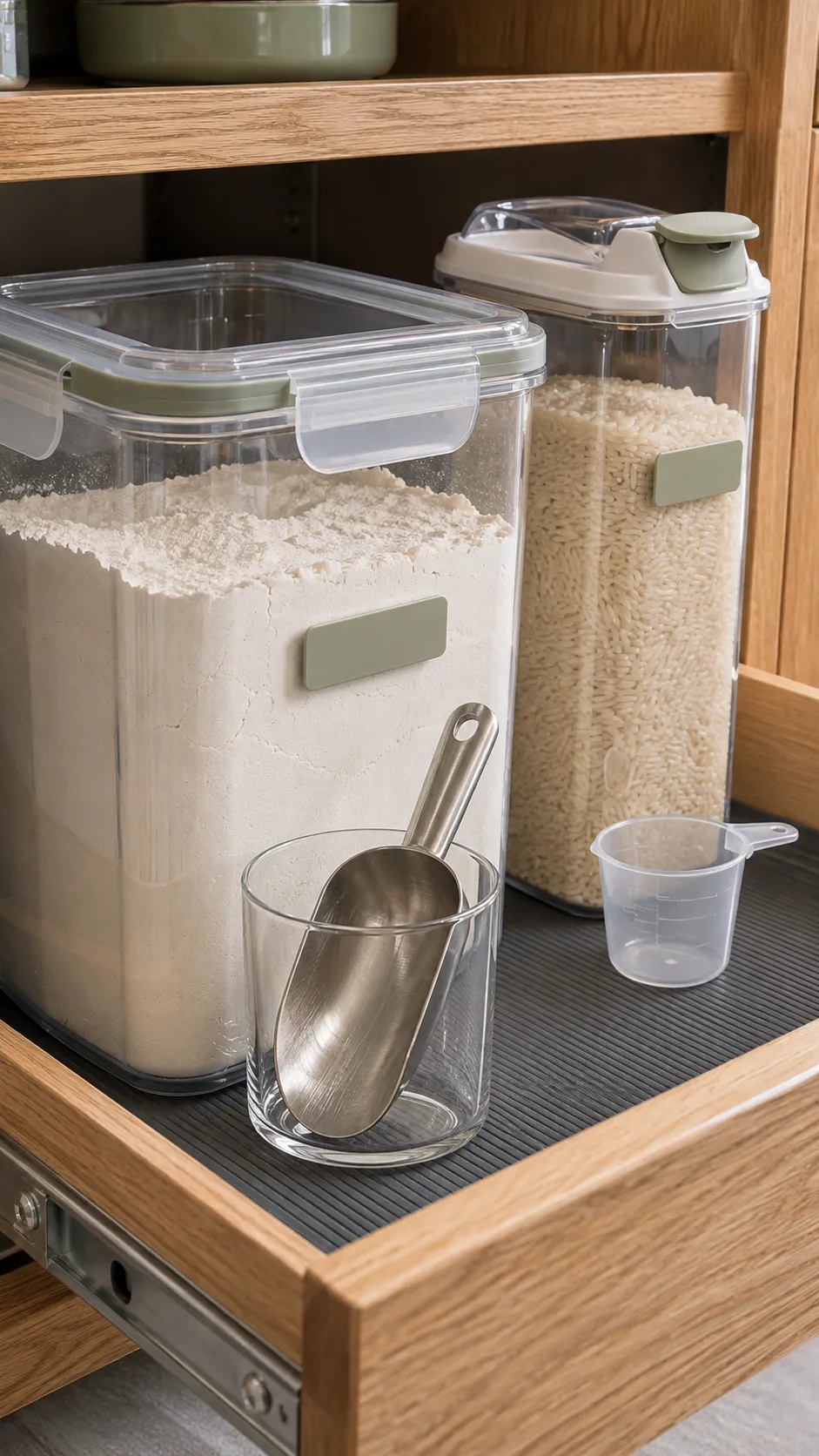
Keep a Small Working Supply Near the Counter
A small working container reduces the number of times you open the reserve. Fill it with an amount that you can lift, scoop, and clean comfortably. Place it near the rice cooker or baking area, but away from steam, splashes, and direct heat.
Refill only when the working container is nearly empty. Do not pour new food over an older layer. Finish the remaining ingredient, wash the container when needed, and let every surface dry before adding more. Use a completely dry scoop each time.
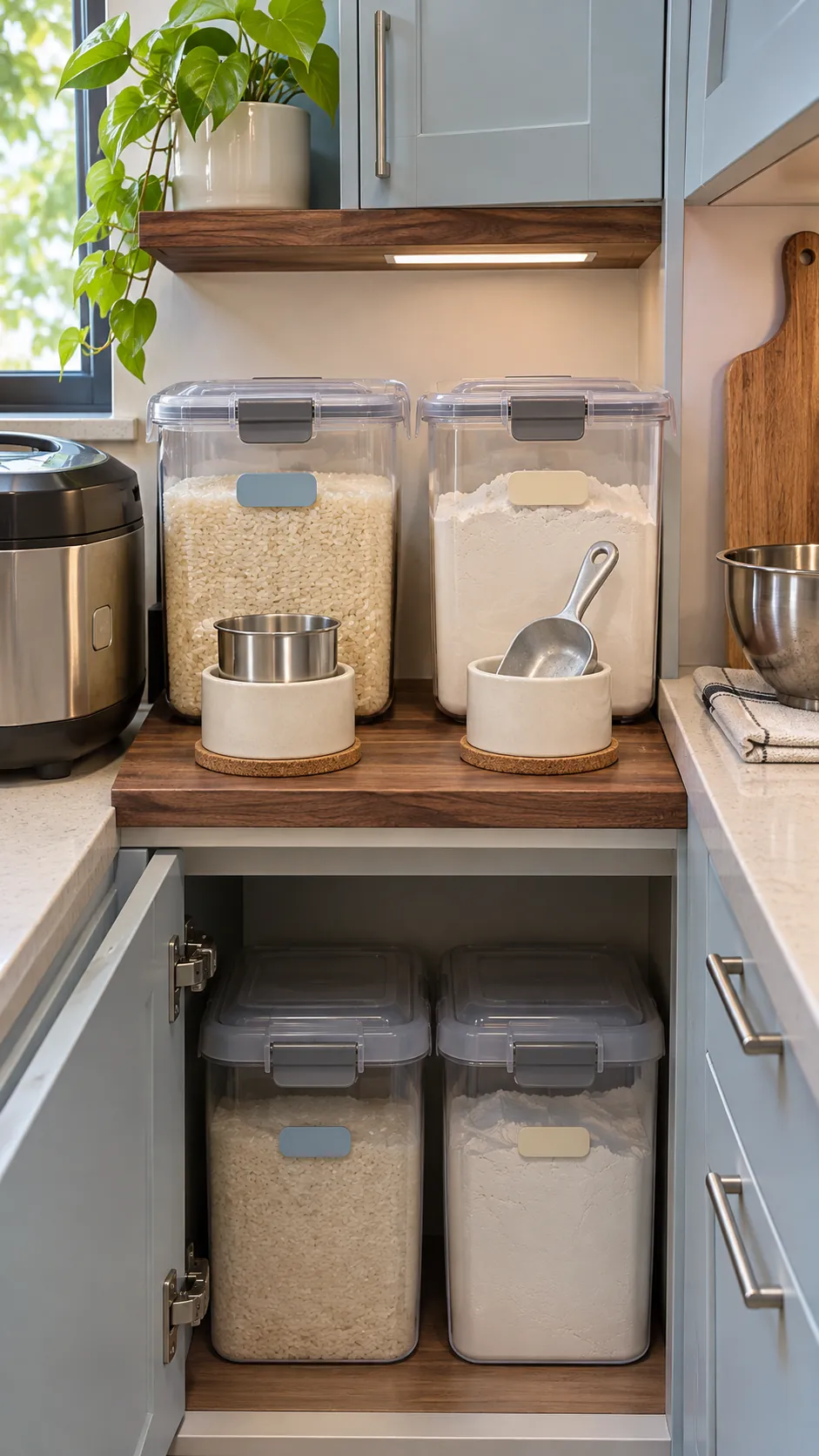
Store Heavy Reserves Low and Off the Floor
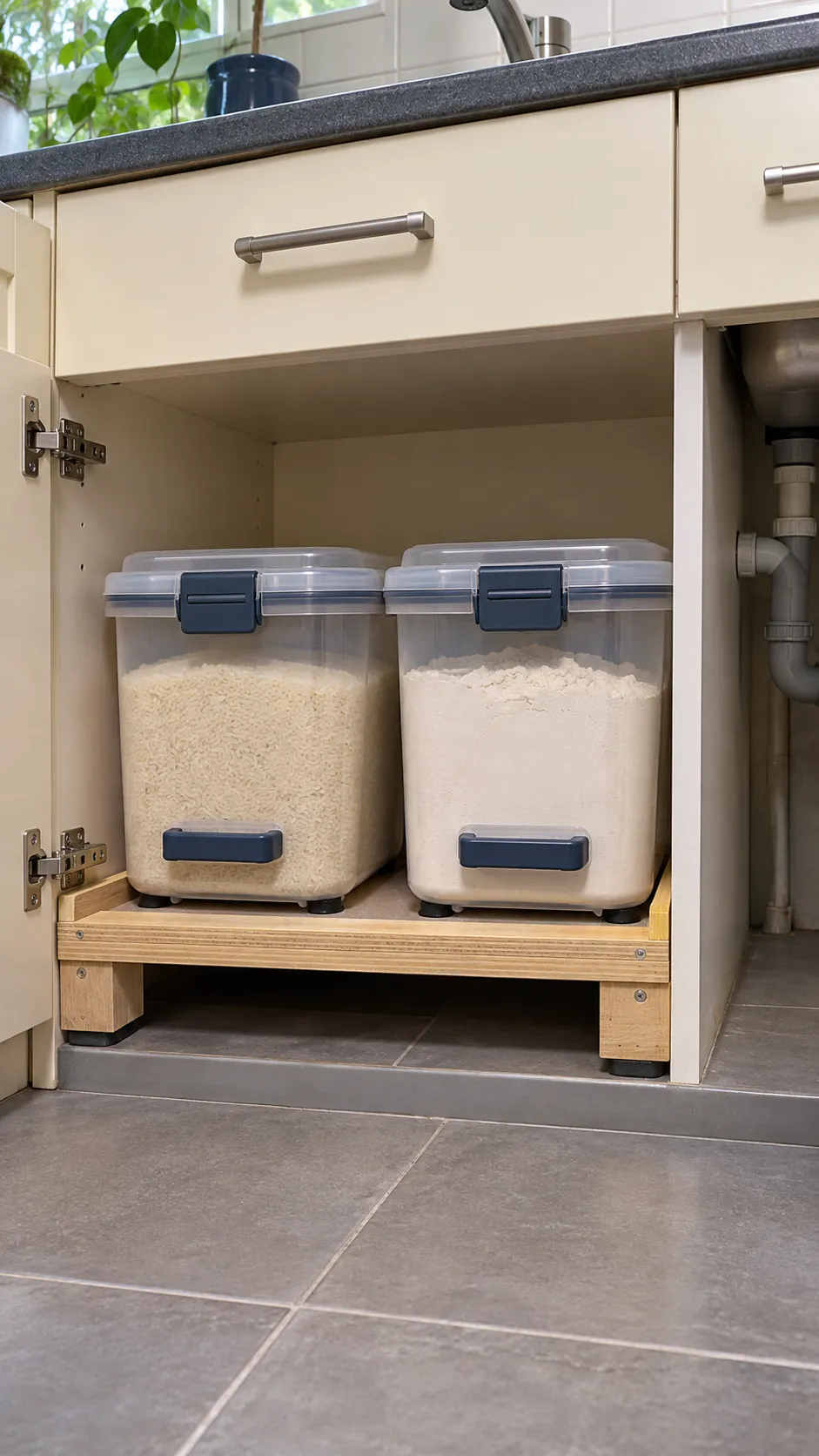
Place the heaviest container on a strong low shelf or in a stable deep drawer. This position reduces lifting risk and keeps a dense container from loading a weak upper shelf. Leave finger space around the sides and enough room for the lid to open.
Do not rest food directly on an apartment floor, especially near plumbing, exterior doors, or cleaning products. A short sturdy platform or cabinet base creates separation from small spills and makes inspection easier. Never block an appliance vent, water shutoff, or required access panel.
Treat Whole Grain Flour and Brown Rice Differently
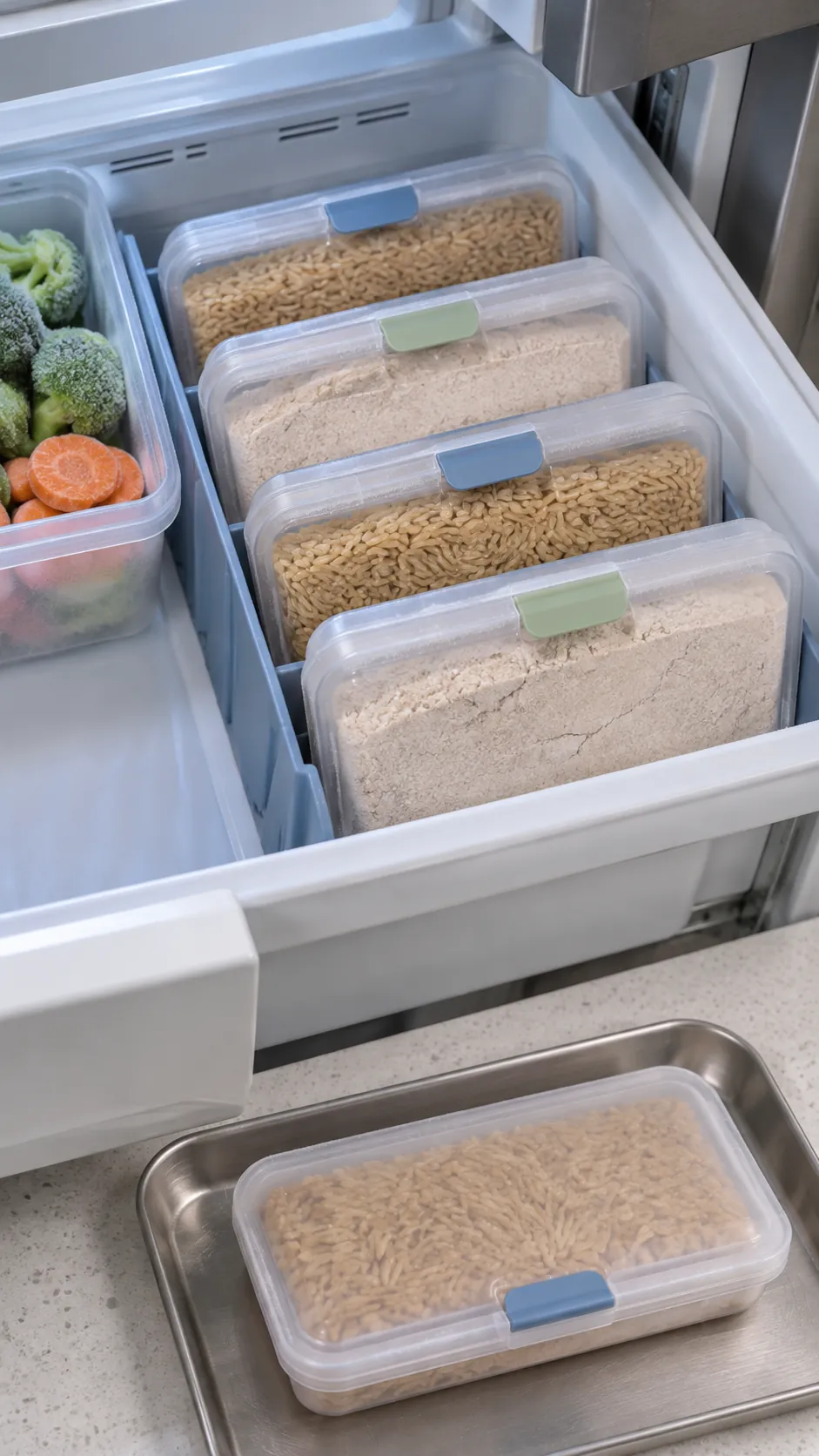
Whole grain flour and brown rice contain oils that can lose quality faster than refined white flour and white rice. If you use them slowly, a refrigerator or freezer may be a better storage zone than a warm cabinet. Follow the package guidance and make sure the ingredient is protected from moisture and food odors.
Divide a large purchase into smaller sealed portions before cold storage. Bring out only the amount you need, and keep the package closed while it returns to room temperature so condensation forms on the outside rather than on the food. Label each portion with the ingredient and purchase date.
Preserve Labels and Inspect Every Refill
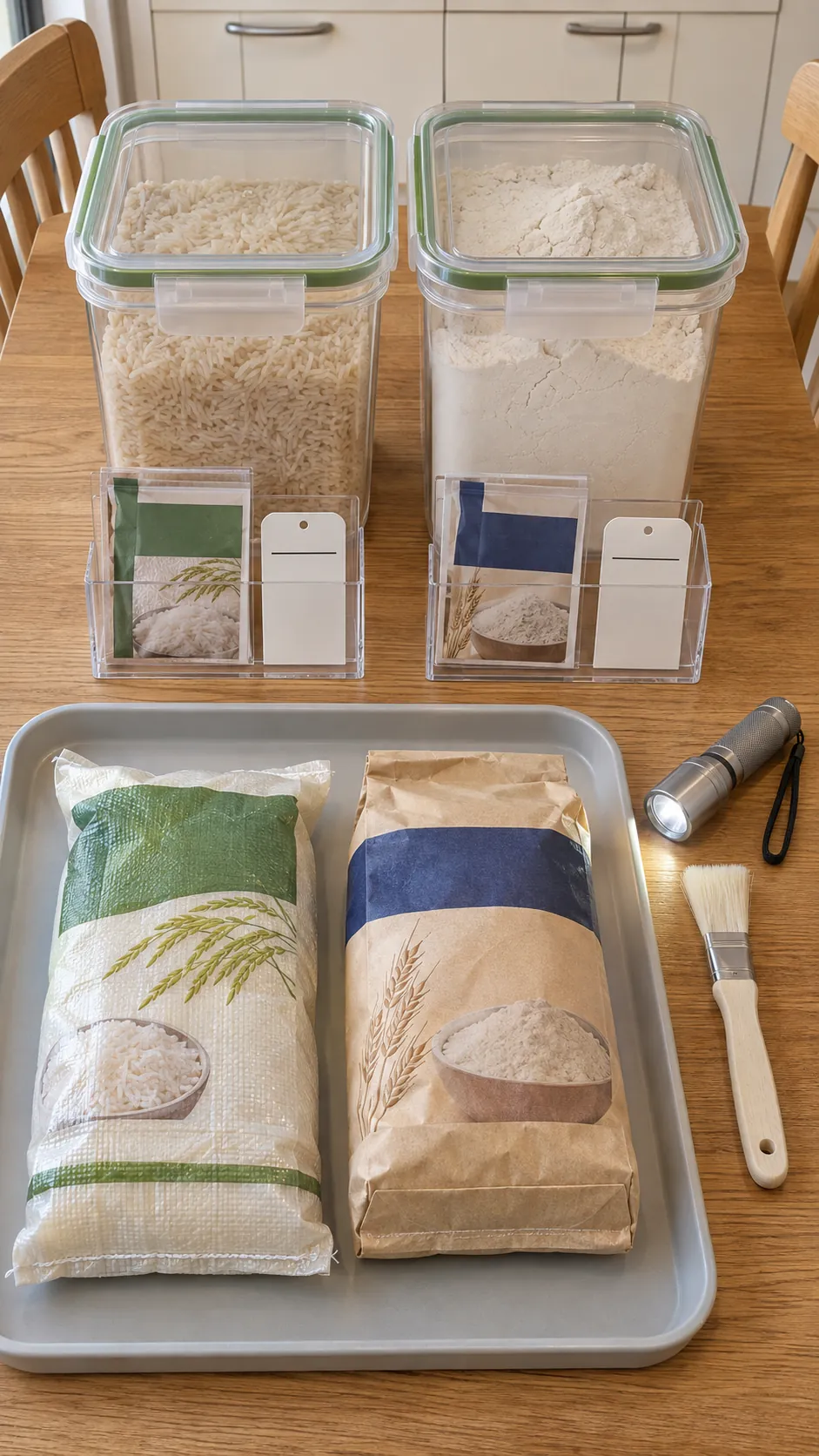
Keep the product name, purchase date, allergy information, and any preparation notes with the container. A removable card or a photo of the original package works well. This information is useful when similar flours look alike or when a product recall occurs.
Before a new bag joins the storage area, inspect the package and the nearby shelf. Look for damage, moisture, unusual odor, webbing, or insects. If you find a problem, isolate the product and follow local food safety guidance rather than mixing it with the existing supply.
Make the System Easy to Maintain
A compact pantry supply works when each container has one stable home, one matching dry scoop, and a clear refill routine. Keep the reserve sealed, wipe spills promptly, and check the storage zone whenever you refill the working container.
If the reserve blocks access or takes months longer to use than expected, buy a smaller amount next time. Bulk buying should reduce cost and shopping effort without turning limited kitchen space into a long term warehouse.