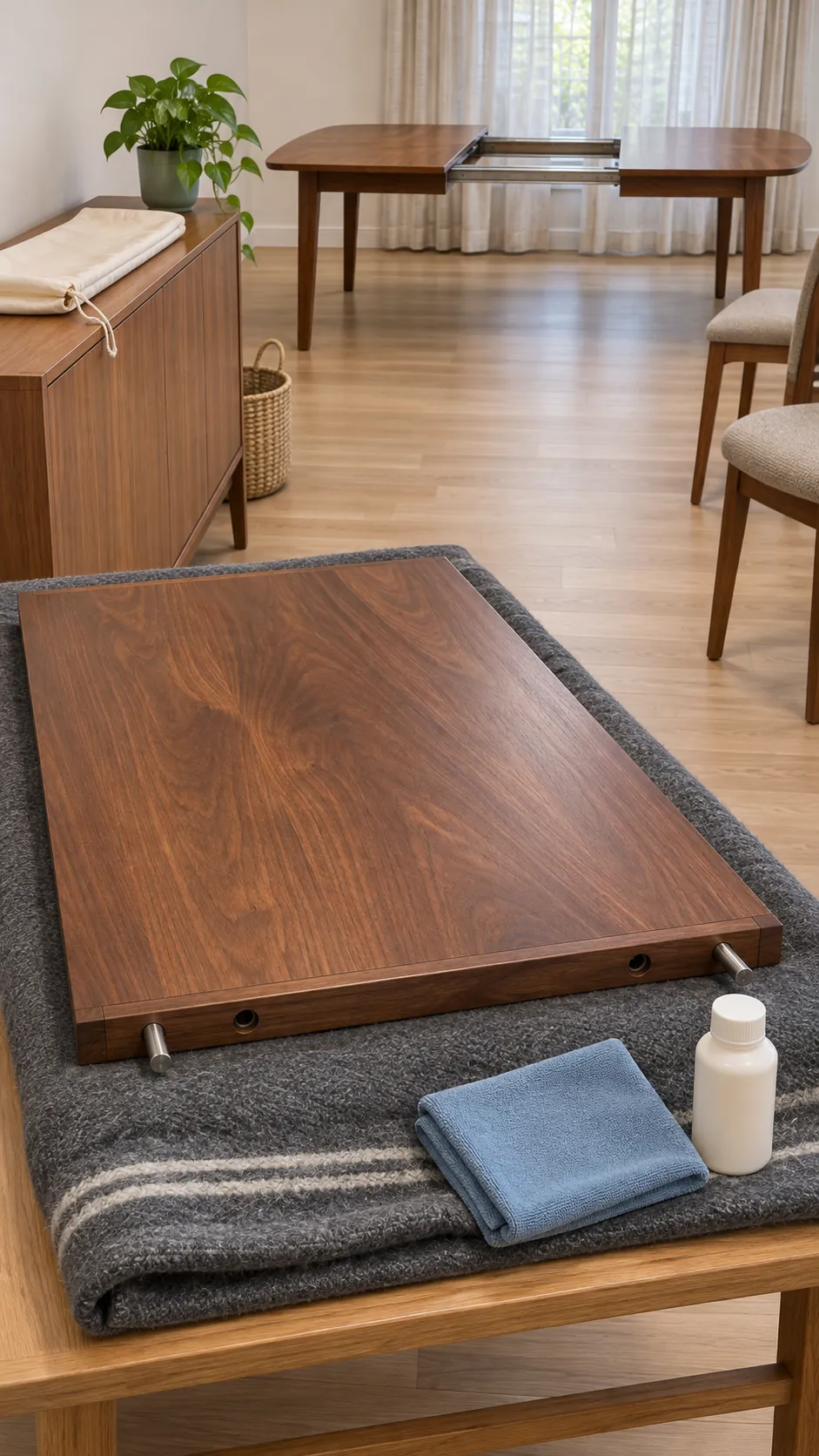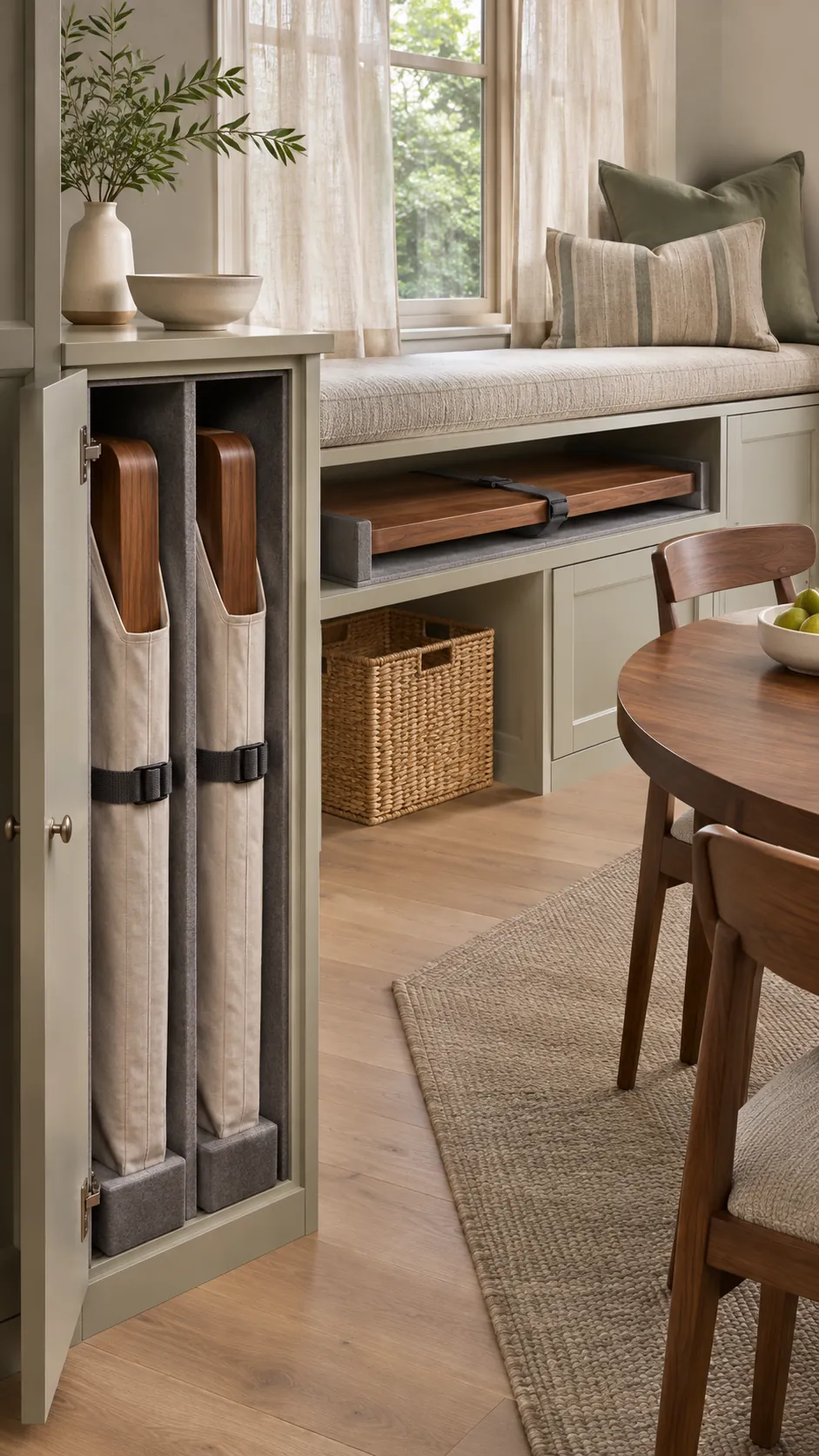
A dining table leaf is easy to underestimate until it needs a home. The panel is broad, finished on at least one face, and often heavy enough that an awkward storage spot creates damage or discourages use. A good solution protects the surface while keeping the leaf accessible.
Start with the table maker’s care instructions because panel construction determines whether flat or vertical storage is acceptable. Then choose a dry location, support the leaf evenly, and prevent contact with hard edges. The smallest storage idea is not useful if it bends the panel or makes retrieval unsafe.
Measure the leaf and the route
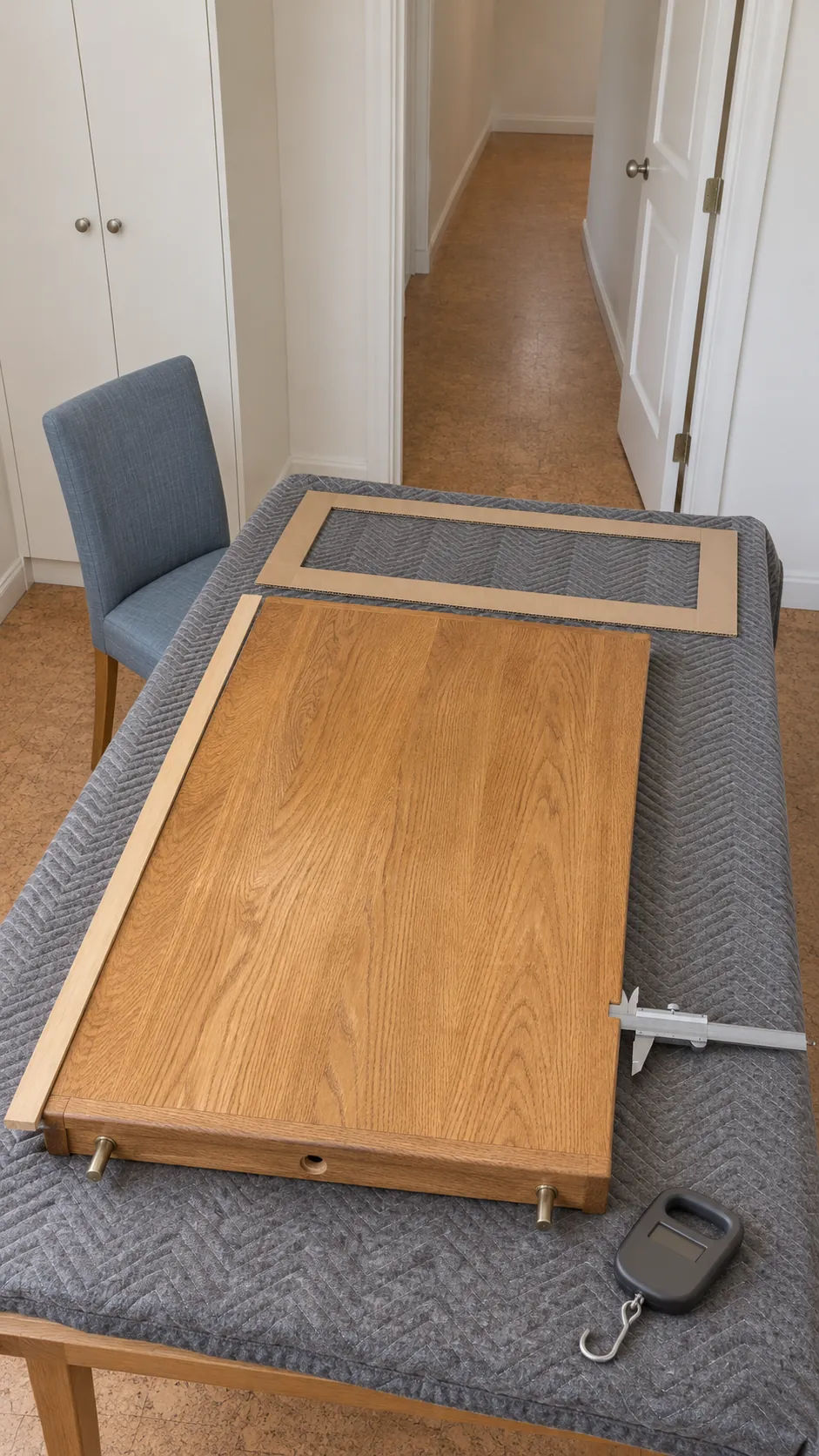
Record the panel length, width, thickness, and weight. Include alignment pins, aprons, or hardware that projects beyond the main rectangle. Measure the storage opening as well as the path from the table, including doors, corridor turns, and the space needed to change your grip.
Plan for fingers and padding rather than matching the opening exactly. A tight slot can scrape an edge every time the leaf moves. If the panel is difficult for one person to carry, choose a location that allows two people to approach it without twisting.
Use supported vertical storage when allowed
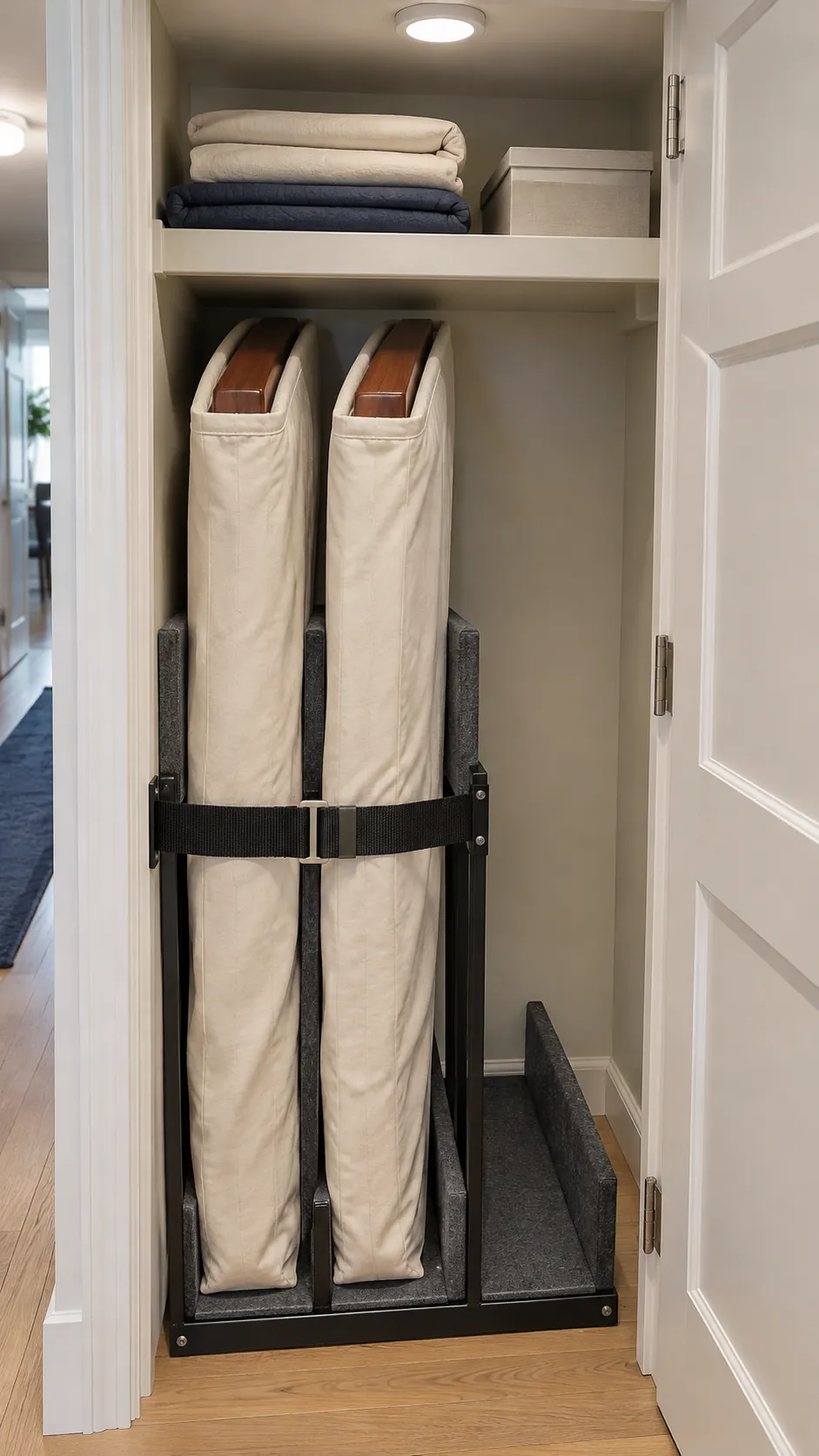
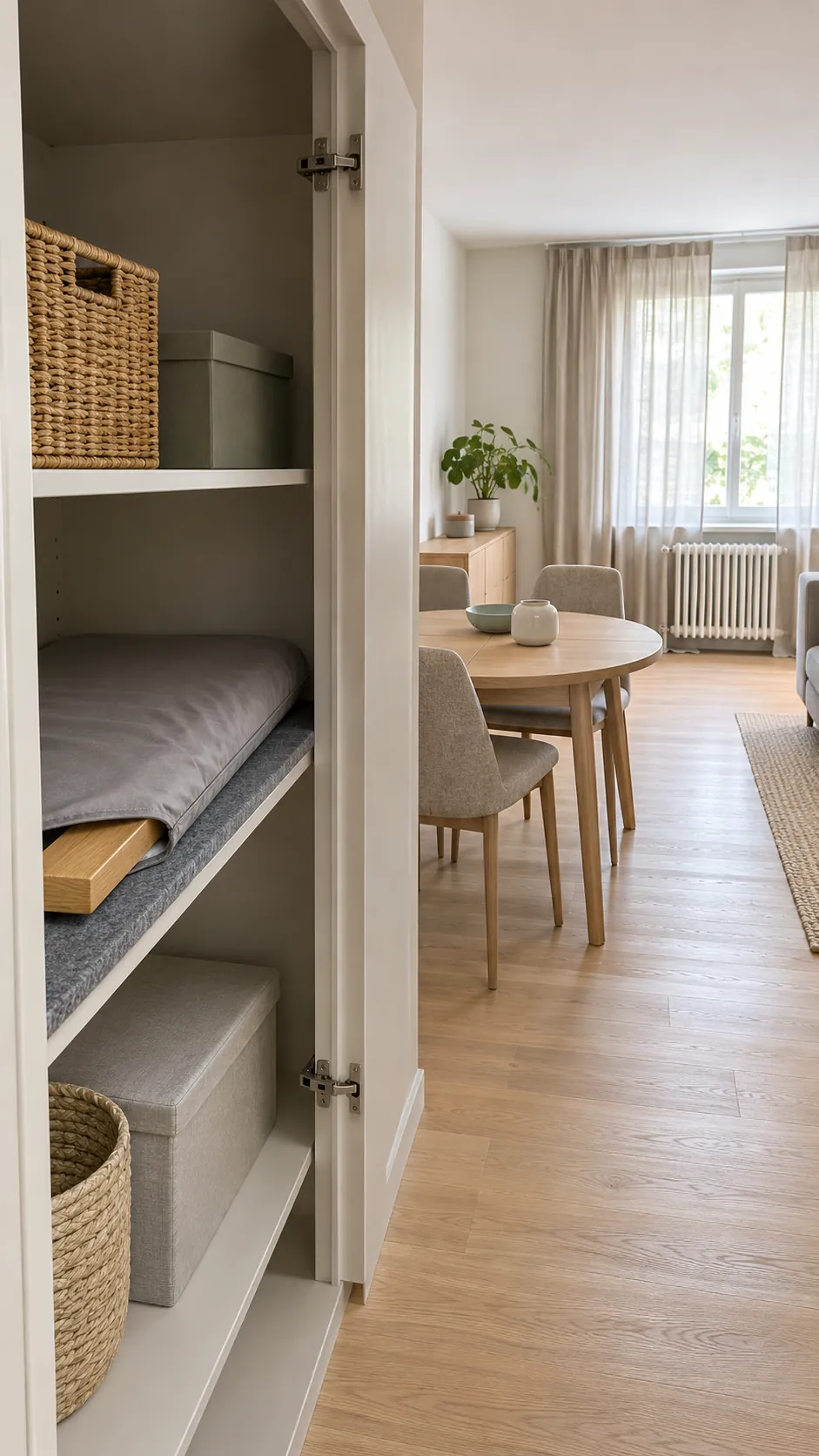
Vertical panel storage uses little floor width and can fit inside a shallow closet or cabinet. The lower edge needs continuous padded support, and side pads should keep the finished faces away from walls. A retaining strap can prevent a panel from tipping when the door opens.
Do not lean the leaf on one corner or against a damp wall. Uneven pressure can stress joints and damage the finish. Use this method only when the maker permits vertical storage, especially for veneered, framed, or composite panels.
Create a safe flat storage shelf
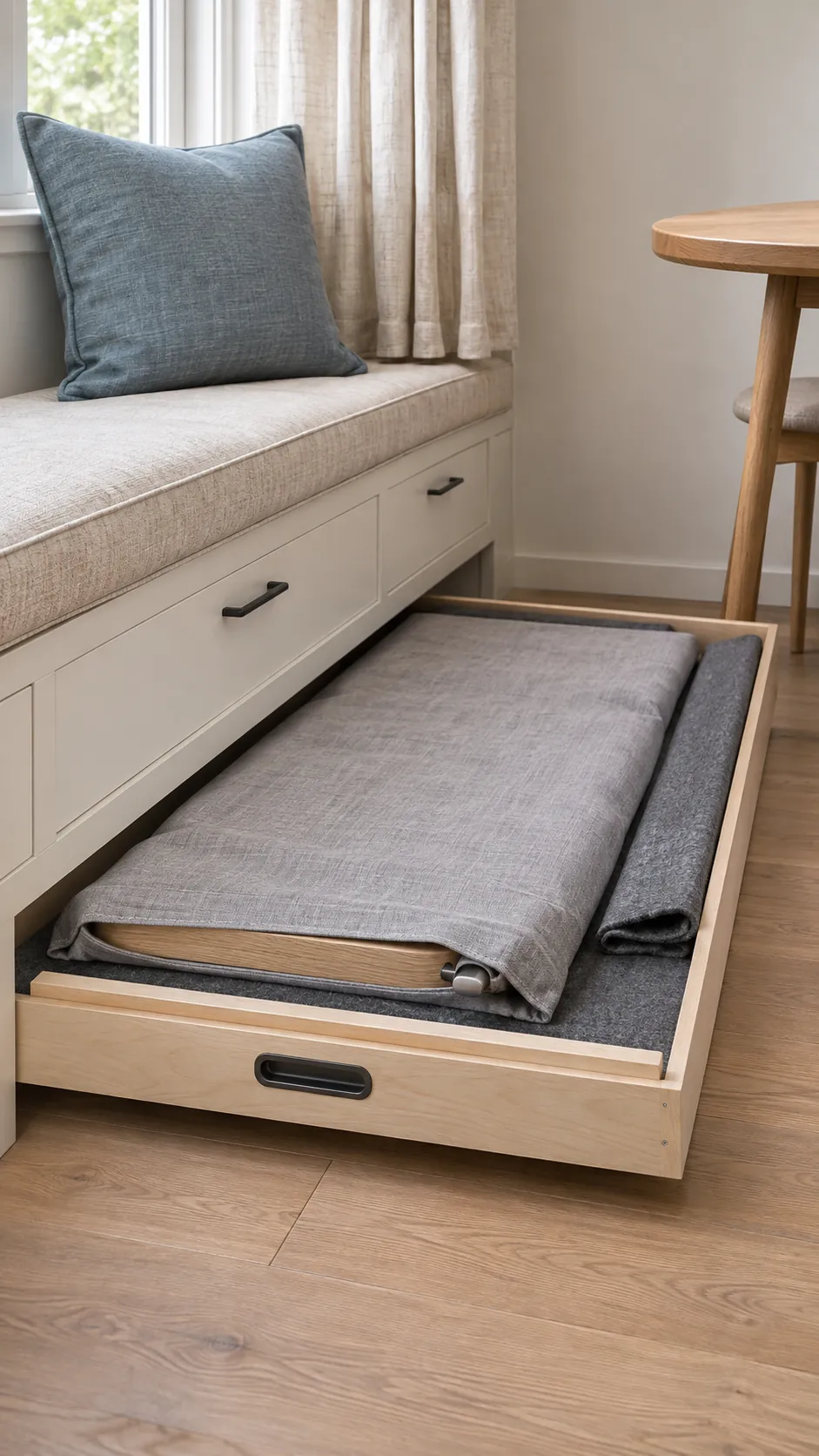
Flat storage works well when the panel receives even support across its area. A dedicated shelf beneath a bed platform, inside a low cabinet, or above a sturdy wardrobe can use otherwise quiet space. Check the shelf load rating and make sure the leaf cannot sag between widely spaced rails.
Place a clean breathable cover around the panel, then use smooth felt separators if several leaves share the shelf. Nothing heavy should sit on top. Leave enough clearance to slide the leaf without dragging its finished edge across the shelf face.
Protect the finish without trapping moisture
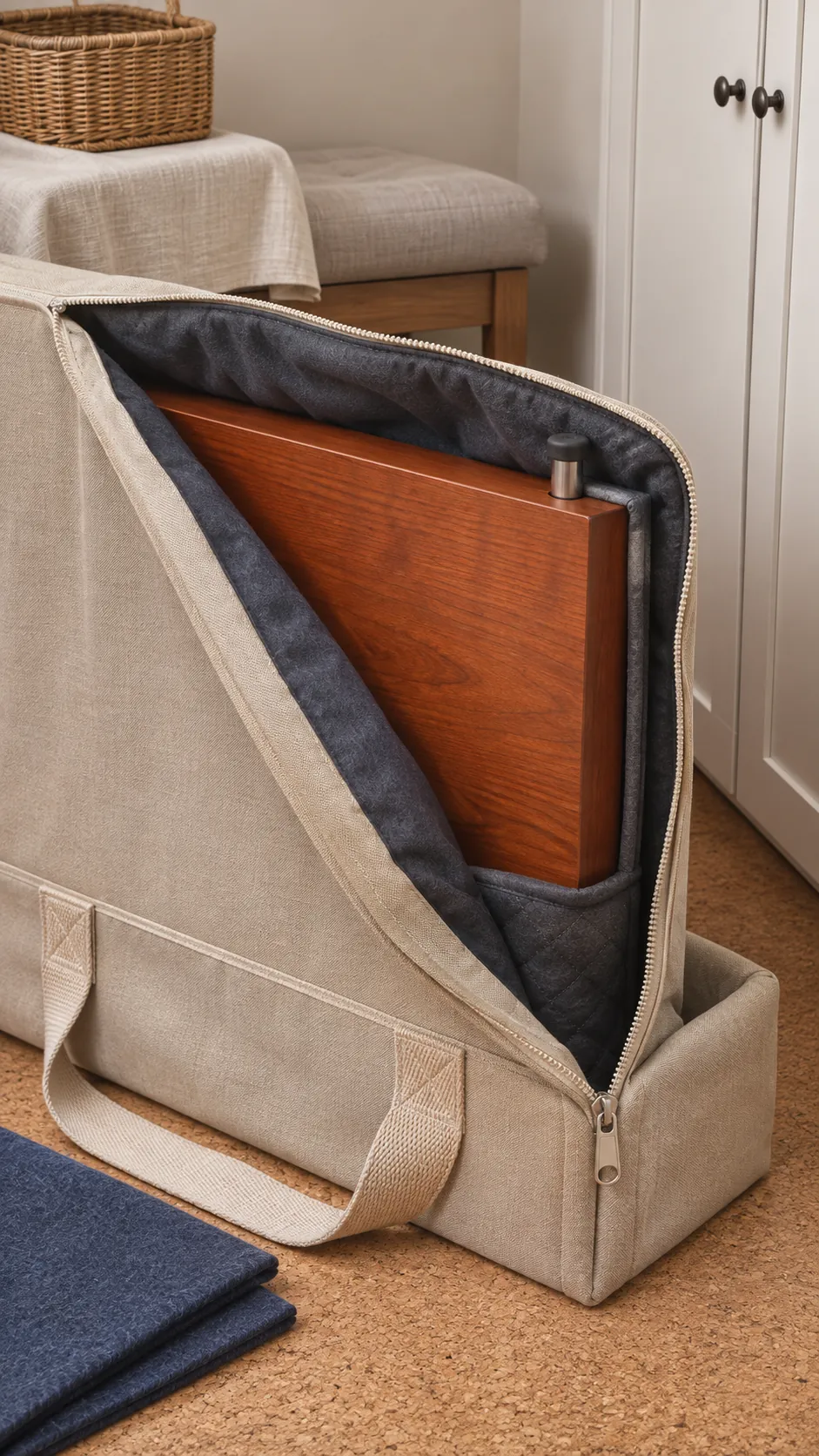
A fitted table leaf storage bag prevents dust and minor scuffs while making the panel easier to identify. Choose soft, breathable fabric with a secure closure and reinforced handles rated for the real weight. Place padding at corners and around any exposed pins.
Avoid sealing wood inside thin plastic for long periods because trapped moisture can affect the finish. Keep tape, rough cardboard, and printed paper away from the surface. Use colourfast materials and inspect every seam that touches the leaf.
Avoid heat, dampness, and direct sun
Store leaves in conditions similar to the dining table whenever possible. A dry interior closet is usually safer than a balcony box, damp basement, hot loft, or space beside a radiator. Large changes in temperature and humidity can move wood and make leaf alignment less reliable.
Direct sunlight can also change the colour of exposed wood. If the main table receives strong sun while the leaf remains dark, their tones may diverge. Use curtains or reposition the table to reduce the difference rather than placing the stored panel in sunlight.
Inspect and handle the leaves regularly
Check stored leaves every few months and before a gathering. Look for moisture, pests, fabric transfer, loose hardware, pressure marks, or a panel that no longer lies flat. Clean according to the table maker’s instructions and let any approved cleaner dry before the cover returns.
Clear the route before carrying a leaf, remove jewellery that could scratch it, and use two people when the weight or size makes control uncertain. Hold the panel with both hands instead of pulling on alignment pins. A compact apartment can store extension leaves safely when the location supports the whole panel, stays dry, and permits a calm lift from storage to table.