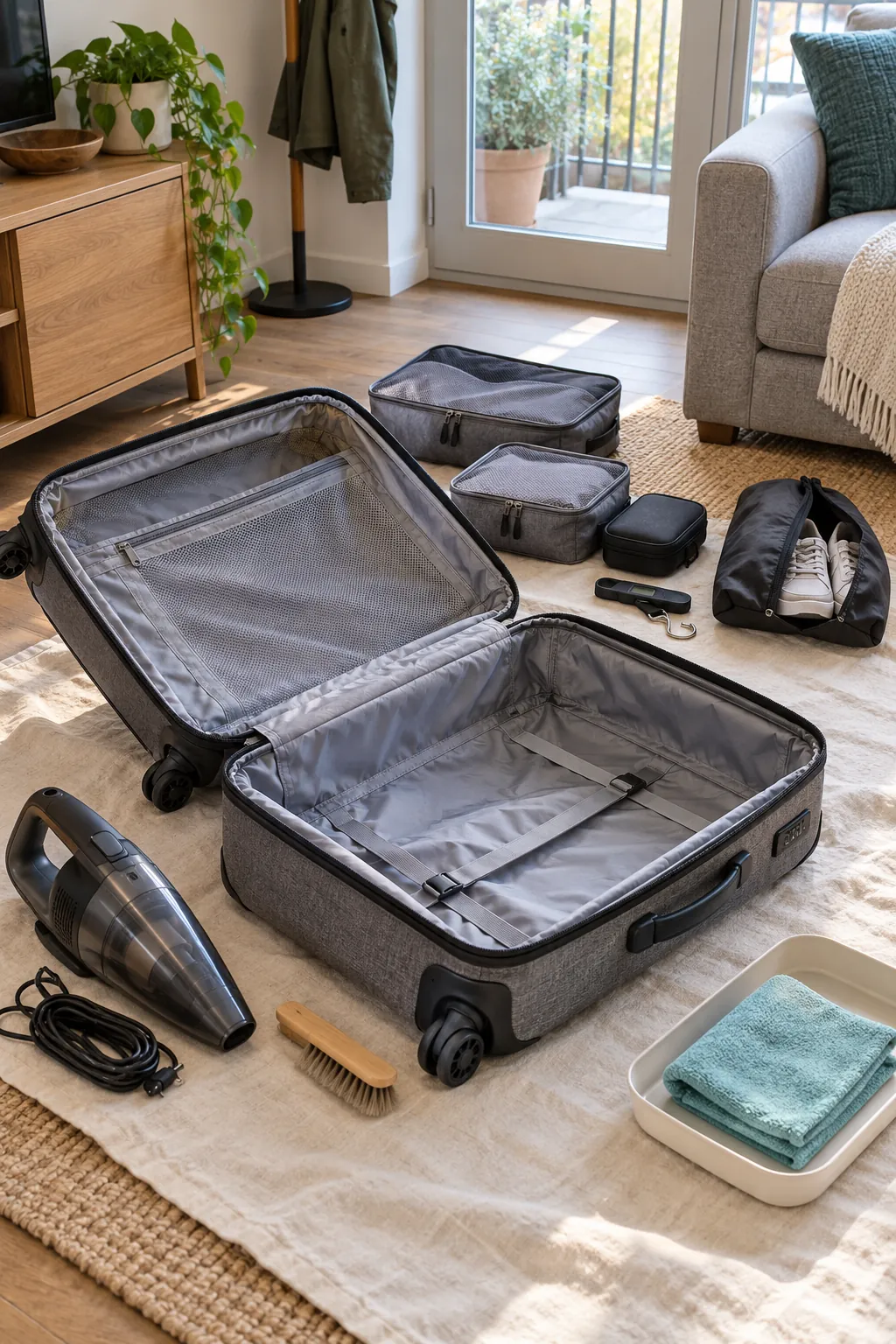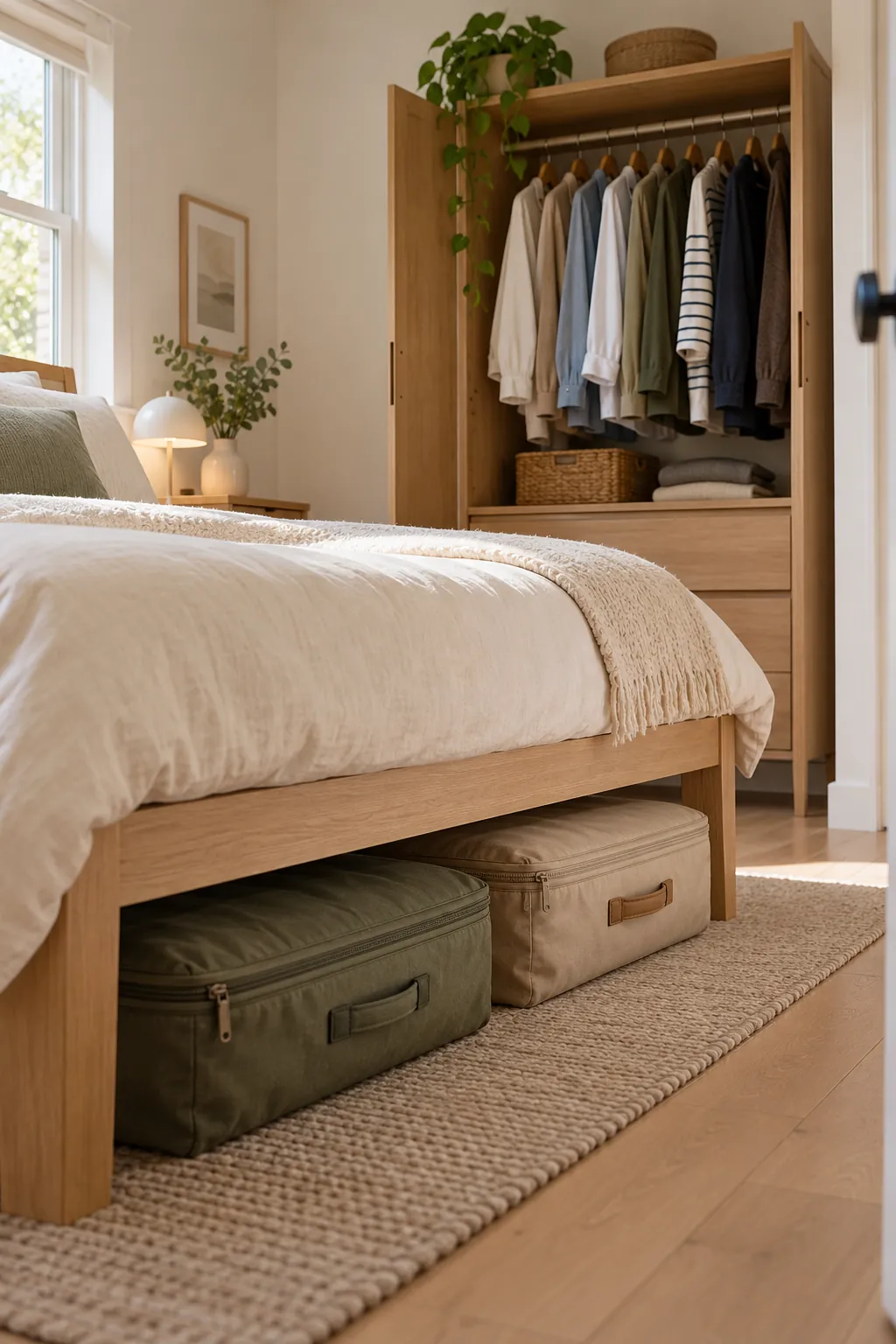
A suitcase can consume the most useful part of a small home while doing nothing for most of the year. The usual advice to put it in a closet simply moves the problem into the place needed for clothes, linens, and daily supplies. A better plan starts with the case itself, then matches its size and travel frequency to a space that would otherwise sit empty.
Measure Every Case and Every Possible Gap
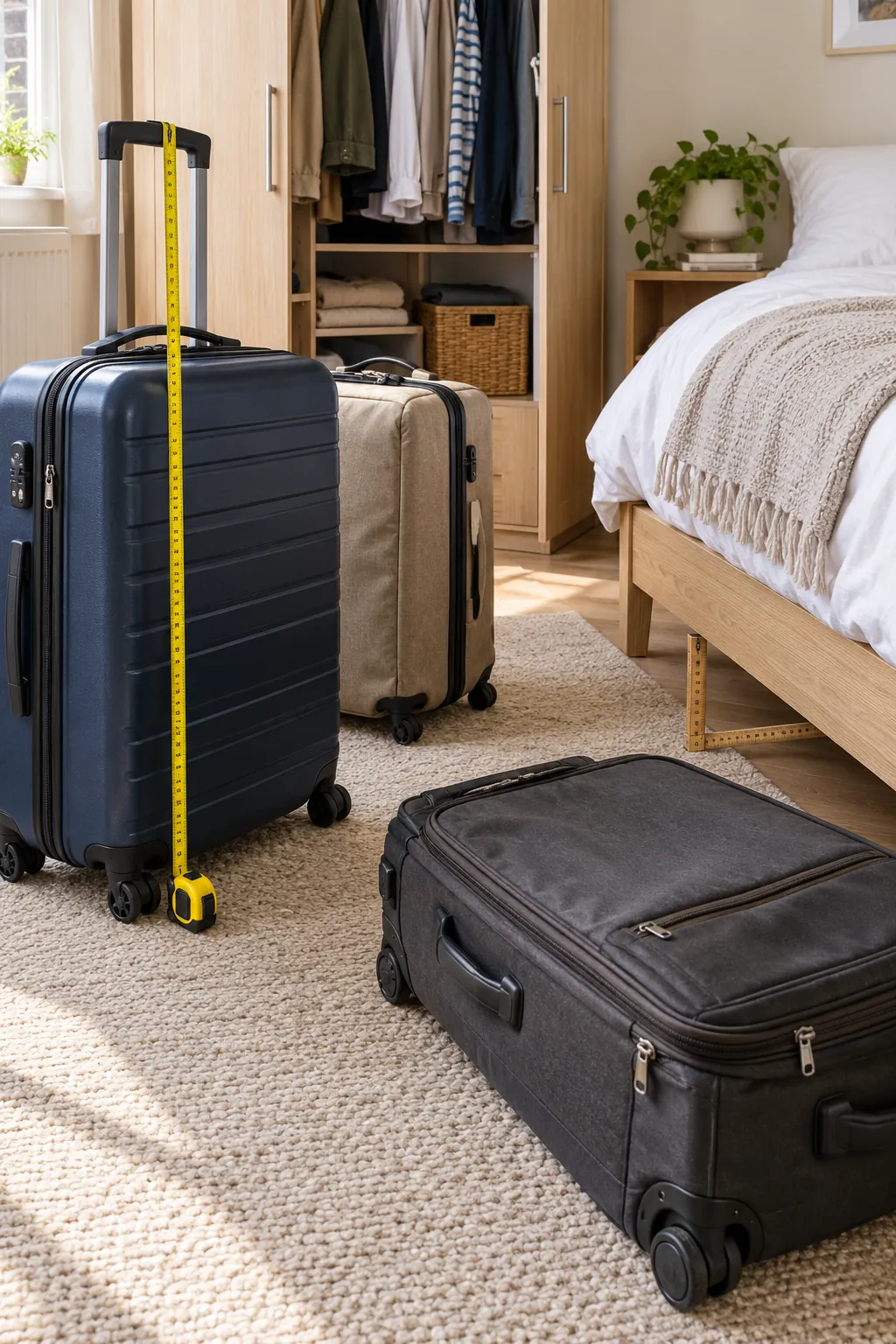
Measure the height, width, and depth of each suitcase with wheels and handles included. Then measure the clear opening under the bed, the top of a wardrobe, the depth behind a sofa, and any gap beside a cabinet. A case that is only slightly too tall can jam under a bed or scrape a wall, so use the smallest clear measurement rather than the advertised furniture size.
Write the measurements on a removable tag inside each case. This turns future furniture shopping into a quick fit check and prevents hopeful purchases that waste money. It also shows whether a bulky case is earning its footprint or whether a compact travel gear setup would suit the apartment better.
Nest Luggage Without Creating a Mystery Box
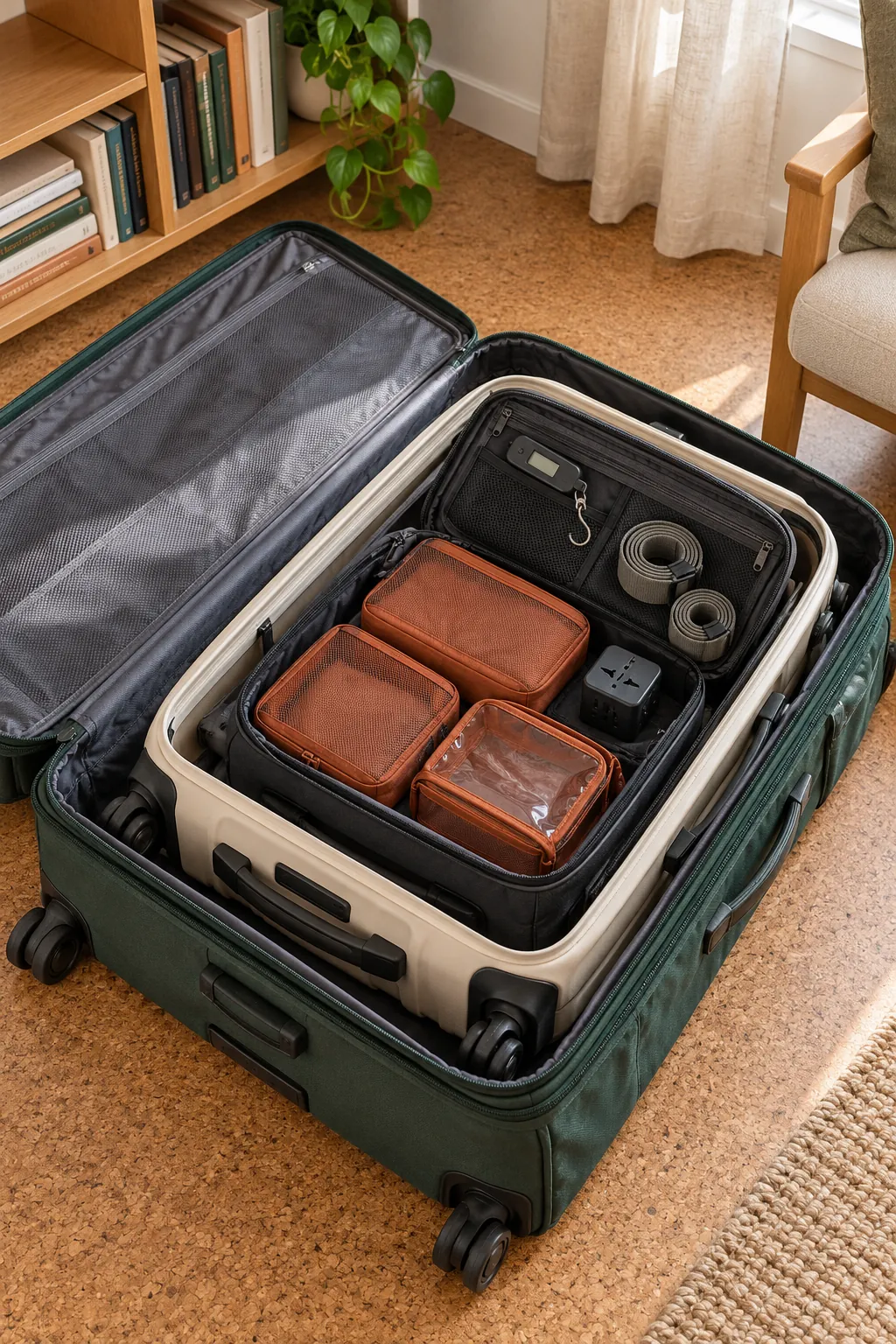
Place smaller cases inside the largest case only when each piece is dry and clean. Remove loose straps, open expandable sections, and turn wheels so they do not press into the lining. Put packing cubes, luggage scales, adapters, and travel pouches inside the smallest case so the complete travel kit stays together.
A simple paper inventory near the zipper prevents forgotten items from disappearing for months. Avoid filling luggage with unrelated household overflow, because that creates an unpacking job just before a trip. Nested luggage storage works best when every object inside has a travel purpose.
Claim the Space Under the Bed Carefully
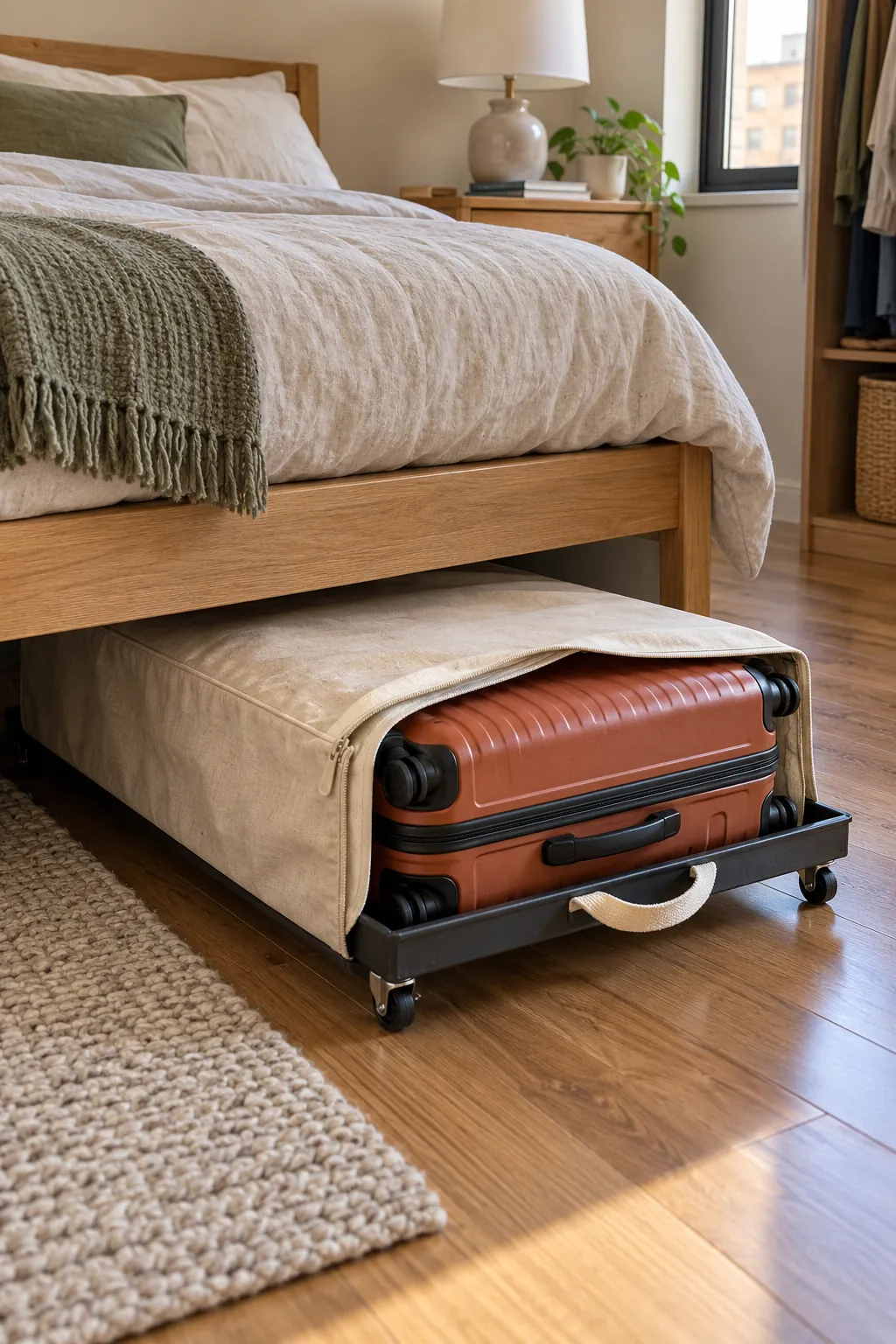
Under bed suitcase storage is ideal when the case clears the frame without force and can slide out from the side you can actually reach. A washable cotton cover or a large zippered storage bag keeps dust out while letting trapped moisture escape. Hard plastic wrapping can hold condensation against a suitcase after humid travel, so let every case air fully before storage.
If the wheels catch on a rug, place the covered case on a shallow rolling platform made for under bed storage. Do not raise a bed until you have checked stability, mattress height, and the furniture maker’s guidance. A few extra centimeters are useful only when the bed remains comfortable and secure.
Use Furniture That Hides the Shape
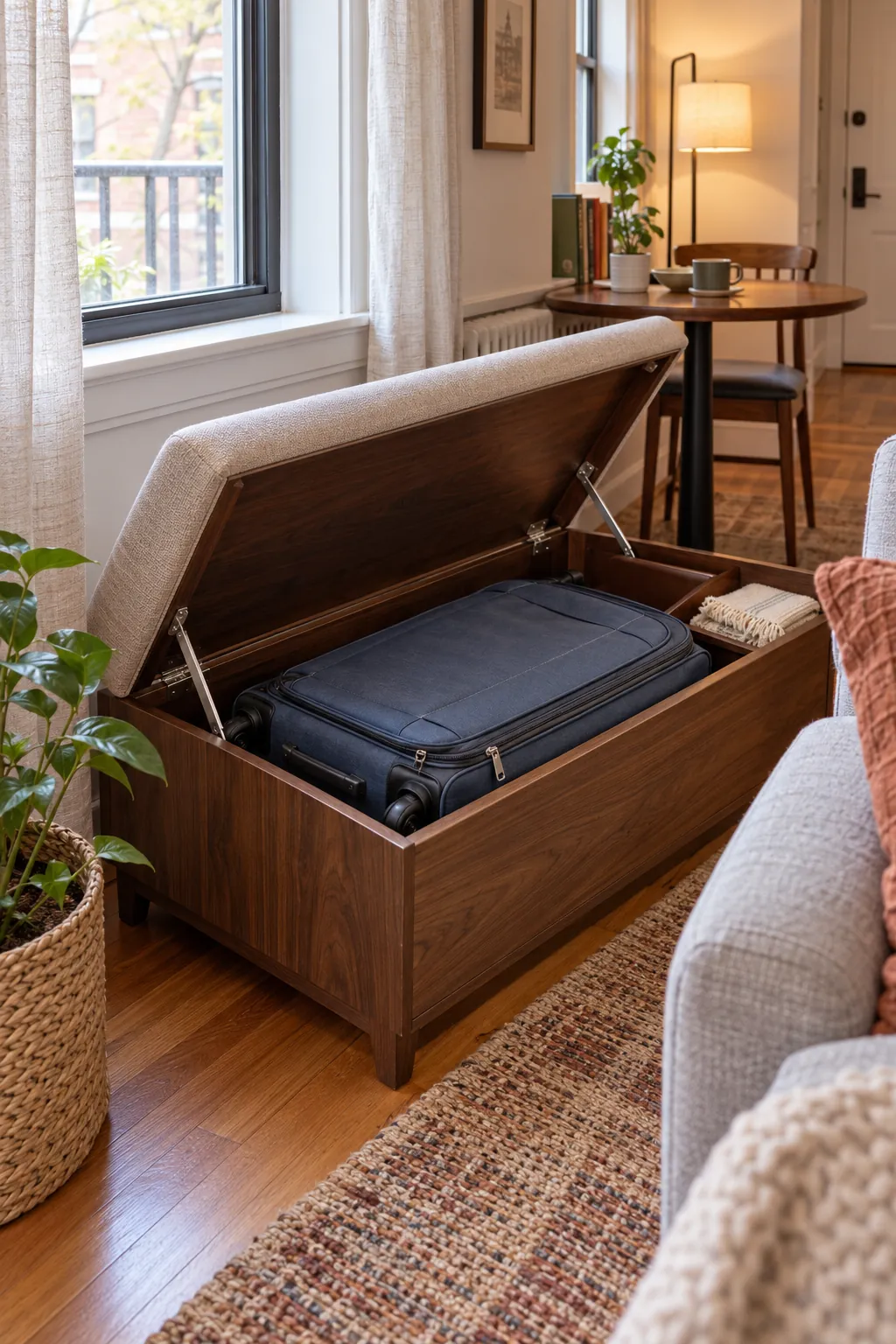
A deep bench, lift top daybed, platform bed, or storage sofa can hold luggage without making the room feel like a travel depot. Check the interior opening as well as the cavity because hinges and support rails often reduce usable space. Put frequently used seating ahead of rarely opened storage so the furniture earns its floor area every day.
Another option is a sturdy console with a fabric skirt or fitted doors, provided the case fits behind it without blocking ventilation or electrical outlets. Keep heavy luggage low to reduce lifting strain. Furniture storage is most convincing when the case disappears from normal sight and can still be removed without moving half the room.
Turn an Awkward Vertical Gap Into a Luggage Bay
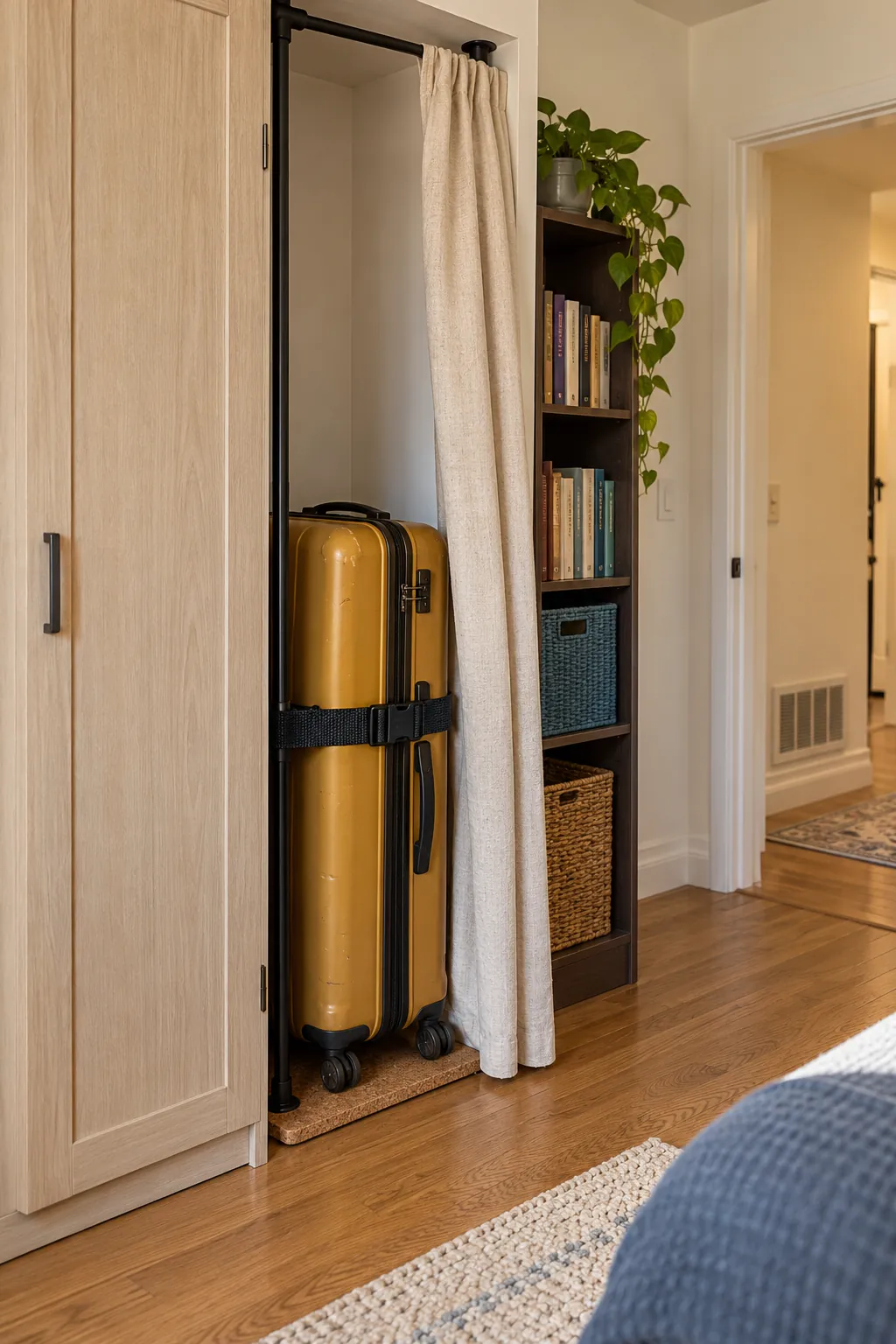
The narrow space beside a wardrobe, bookcase, or refrigerator can work when it is wide enough for a case and safely separated from heat and moving doors. Stand hard shell luggage on a washable mat, secure loose handles, and add a freestanding tension pole or furniture strap only when the product is rated for that use. Renters should avoid fastening heavy cases high on a wall.
A decorative curtain on a pressure rod can soften the view without drilling, but it must not block a heater, return vent, or appliance access. Leave enough finger space to pull the suitcase forward. This approach makes awkward item storage useful while preserving the apartment closet space for things used every week.
Make Returning Home Part of the Storage System
Empty every pocket when you return, vacuum crumbs, wipe the shell or fabric according to its care label, and let the case dry with the zipper open. Restock only stable travel essentials such as packing cubes and an empty toiletry pouch. Remove food, batteries, liquids, medicines, and documents before the suitcase goes away.
Store the least used case deepest and keep the next trip’s case easiest to reach. Review the collection once a year and release damaged or redundant pieces that no longer match how you travel. Limited closet organization becomes much easier when luggage has a measured home, a clear purpose, and a repeatable return routine.