
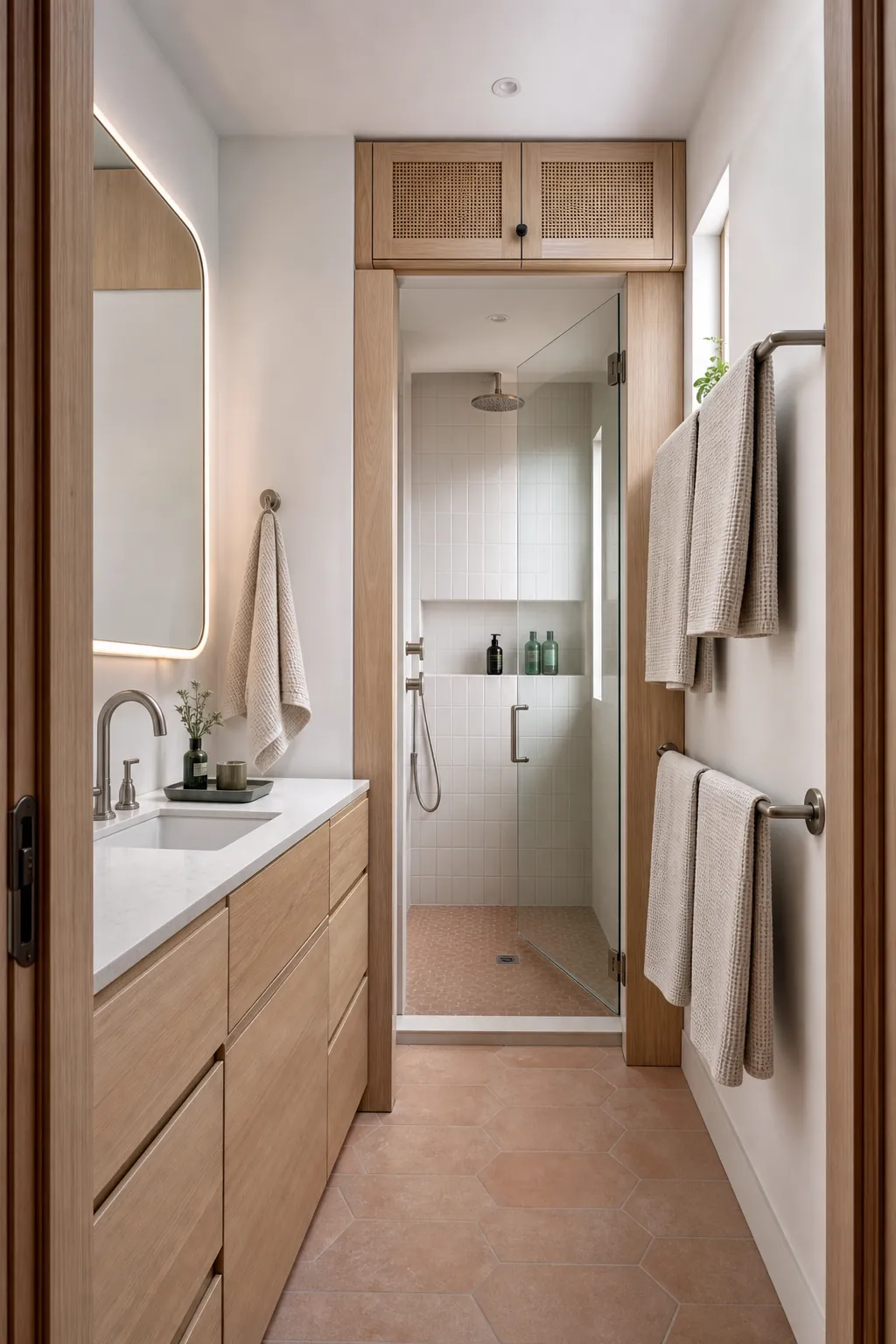
In a tiny home, towel storage and toiletry storage are often treated as one problem: find an empty wall and put shelves on it. That usually creates a crowded bathroom while damp towels stay bunched up and backup products disappear behind the daily ones.
A better system separates items by what they need. Fresh towels need a dry reserve, used towels need moving air, and daily toiletries need a short path from hand to storage. Backups, medicines, and cleaning chemicals have different requirements again. Once those zones are clear, a compact bathroom becomes much easier to reset.
Start With a Three-Zone Bathroom Map

Mark the direct-spray zone, the general humidity zone, and the driest storage available. Shampoo can live in a small shower niche. Toothpaste and face wash belong beside the basin. Fresh towels and paper goods should be farther from spray, ideally inside ventilated closed storage.
This map also tells you what should leave the bathroom. Heat and moisture can damage many medicines, so follow the storage instructions on the packaging or ask a pharmacist; a cool, dry, secure location elsewhere is often more appropriate. Hair tools should be fully cool and dry before storage, and household chemicals need safe separation and child-resistant storage where relevant.
Give Damp Towels Their Own Air Space

A hook is compact, but a heavy bath towel folded onto itself can stay damp at the center. Use individual bars, a slim multi-rail rack with gaps, or a properly specified heated rail in the dry zone. Towels should hang fully spread and avoid touching the wall or floor.
Ventilation is part of towel storage. Run a correctly ducted exhaust fan after showers and leave the door open when privacy and conditions allow. If the bathroom is especially humid, move the drying rack into a better-ventilated living zone temporarily rather than packing wet fabric into a cabinet.
Keep Fresh Towels in a Small Dry Reserve

Store only the towels the household actually cycles through. A small ventilated cabinet above the door, a shallow linen drawer, or a dry cubby just outside the bathroom can hold the fresh reserve. File-fold or roll towels only when it lets each one come out without removing the stack above it.
Do not fill the cabinet tightly. Airflow and easy retrieval are more valuable than squeezing in one extra bath sheet. Seasonal beach towels and guest sets can live under a bed or in another dry compartment until needed.
Limit Daily Toiletries to One Reachable Tray
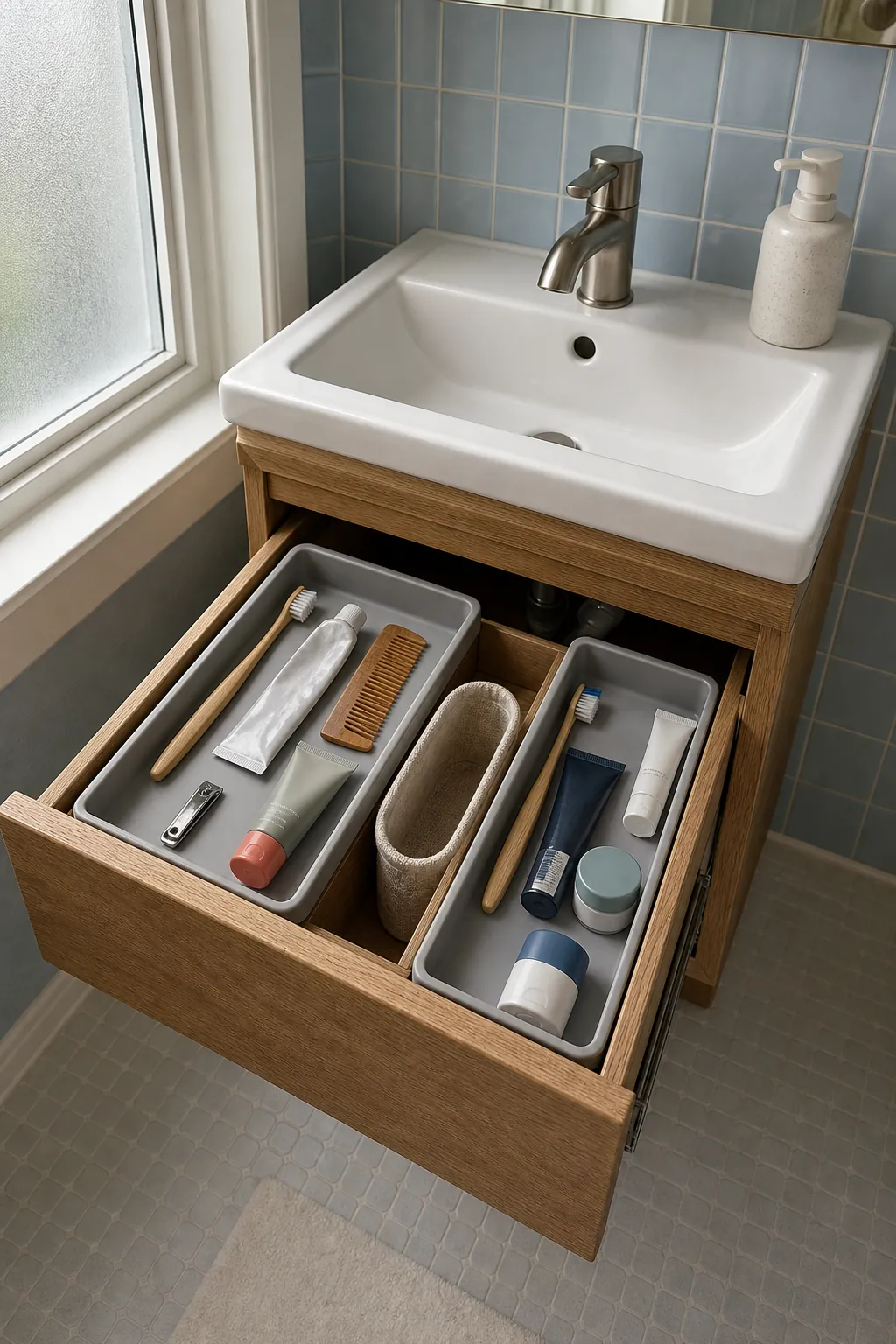
Most counter clutter comes from mixing daily products with occasional ones. Give each resident one shallow tray, drawer section, or small carry caddy for the morning and evening routine. Everything should be visible in one layer and return with a single motion.
Check the tray monthly. Remove empty containers, move duplicates to the reserve, and question products that have not been used. The physical limit is what protects the basin from becoming permanent storage.
Put Shower Products in a One-Row Caddy
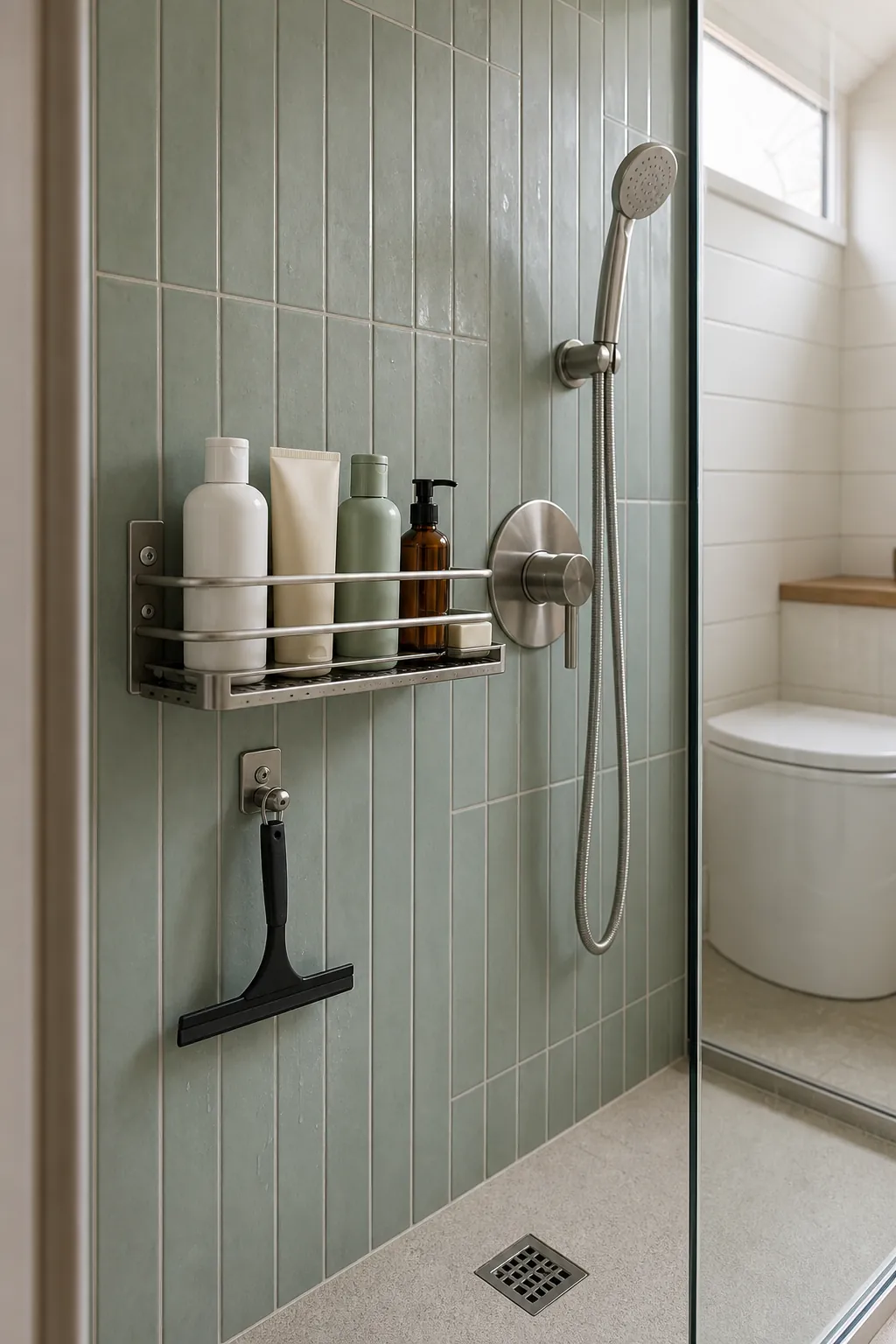
A small draining niche or securely mounted caddy keeps products off the shower floor, where bottles interfere with cleaning and stay wet. Measure your tallest regular bottle before installation and place the shelf where it is reachable without standing directly under cold water.
Keep only the active shampoo, conditioner, cleanser, and soap in the shower. A one-row limit makes residue easier to see and wipe. Store razors according to their care guidance and avoid metal containers that can leave rust marks in a wet corner.
Build Backup Storage Around Retrieval
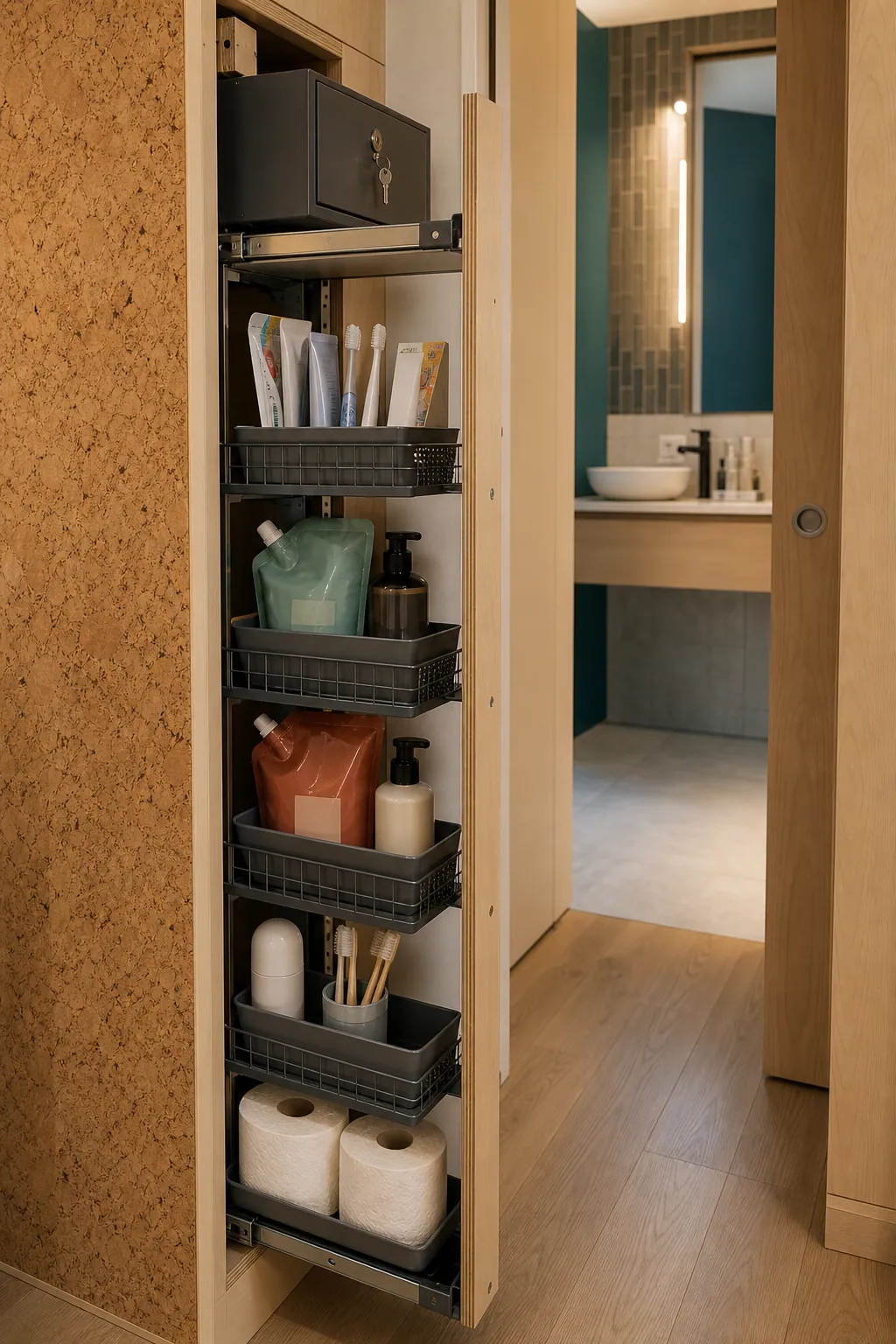
Backups do not need prime bathroom space. A slim pull-out outside the wet zone, a bin in a nearby wardrobe, or a divided under-bed drawer can hold one refill per category. Store products upright where possible, contain small leaks with a removable tray, and keep labels visible.
Use categories that match real habits—oral care, hair, shower refills, guest supplies—not vague bins labeled “miscellaneous.” When the daily tray empties, pull one replacement forward and add it to the shopping list. That small rotation prevents both stockouts and forgotten overbuying.
Make the Reset Smaller Than the Mess
The best tiny bathroom storage system takes less effort than leaving an item out. Towels should reach their rail in one step. Daily toiletries should drop into an open drawer or caddy without rearranging anything. Fresh towels should come out one at a time.
Set one five-minute weekly check: empty the counter, wipe the caddies, move dry laundry, check refills, and make sure the exhaust grille is clear. If the same bottle, towel, or basket keeps landing in the wrong place, do not blame the routine. Move its storage closer or reduce what that space is expected to hold.
A compact bathroom does not need to store every bathroom-related possession. It needs to support the next shower, the next morning, and a small dry reserve. That narrower job is what keeps a tiny home bathroom organized.