
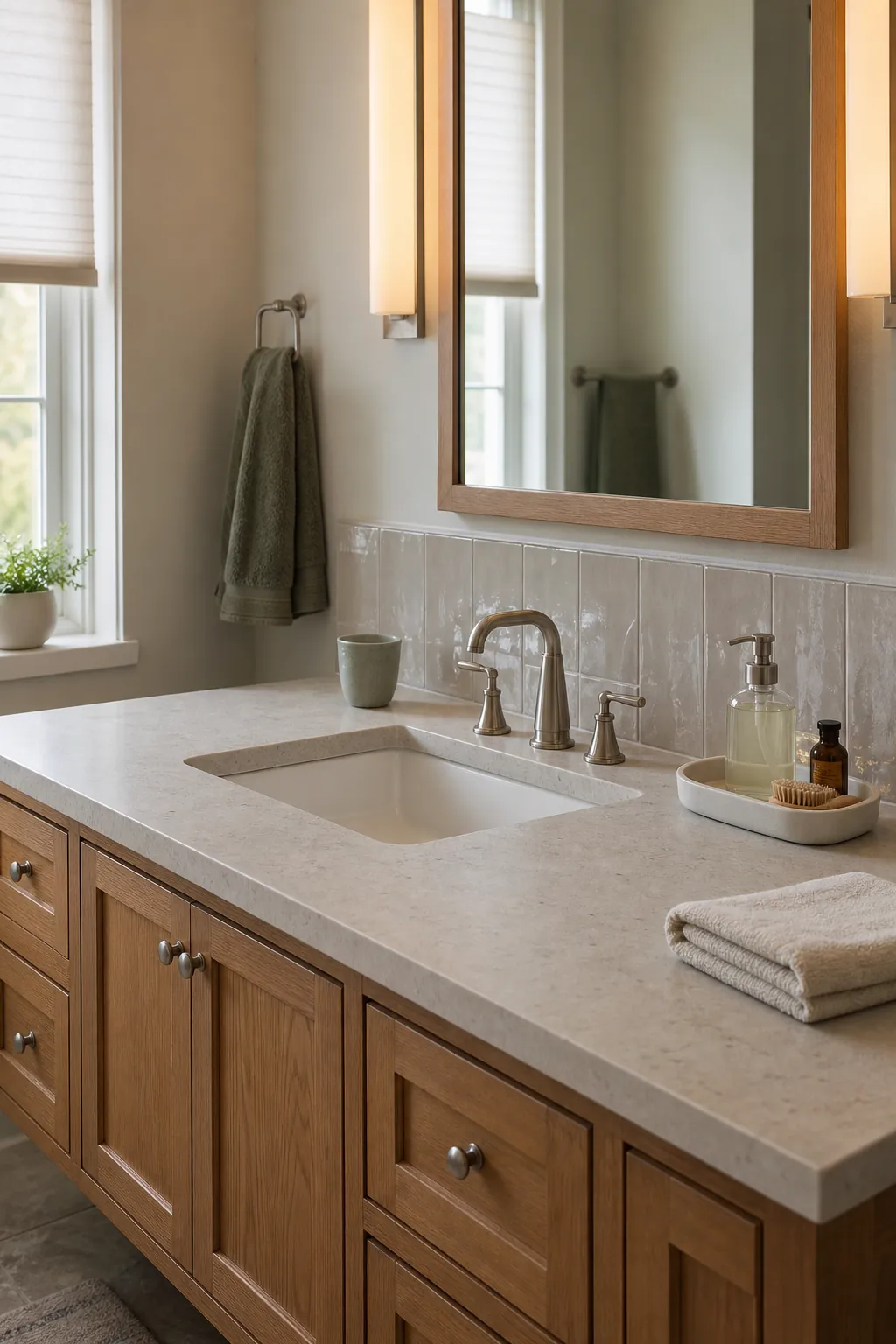
A bathroom counter is not hard to style because it is small. It is hard to style because it is a wet working surface. Soap drips, toothbrushes need air, skin-care bottles migrate toward the faucet, and anything without a precise home becomes part of an expanding ring around the sink.
The answer is not to buy enough organizers to hold everything you own. A useful vanity styling plan decides what deserves counter space, protects the splash zone, groups the few things that remain, and makes the daily reset easy enough to repeat. Start with function, then use material, color, and shape to make that function look intentional.
Start With a Clear Working Ring
Remove everything and clean the counter before deciding what returns. The first space to protect is a clear ring around the basin and faucet. You need room to wash your hands, set down a damp cloth, turn handles, and wipe water before it dries into spots.
Do not treat every unused inch as storage. Negative space is part of the bathroom counter decor because it makes the sink look deliberate and keeps cleaning from becoming an obstacle course. On a narrow vanity, even a hand-width of clear surface on each usable side can change how calm the whole bathroom feels.
Keep Only True Daily Essentials Out
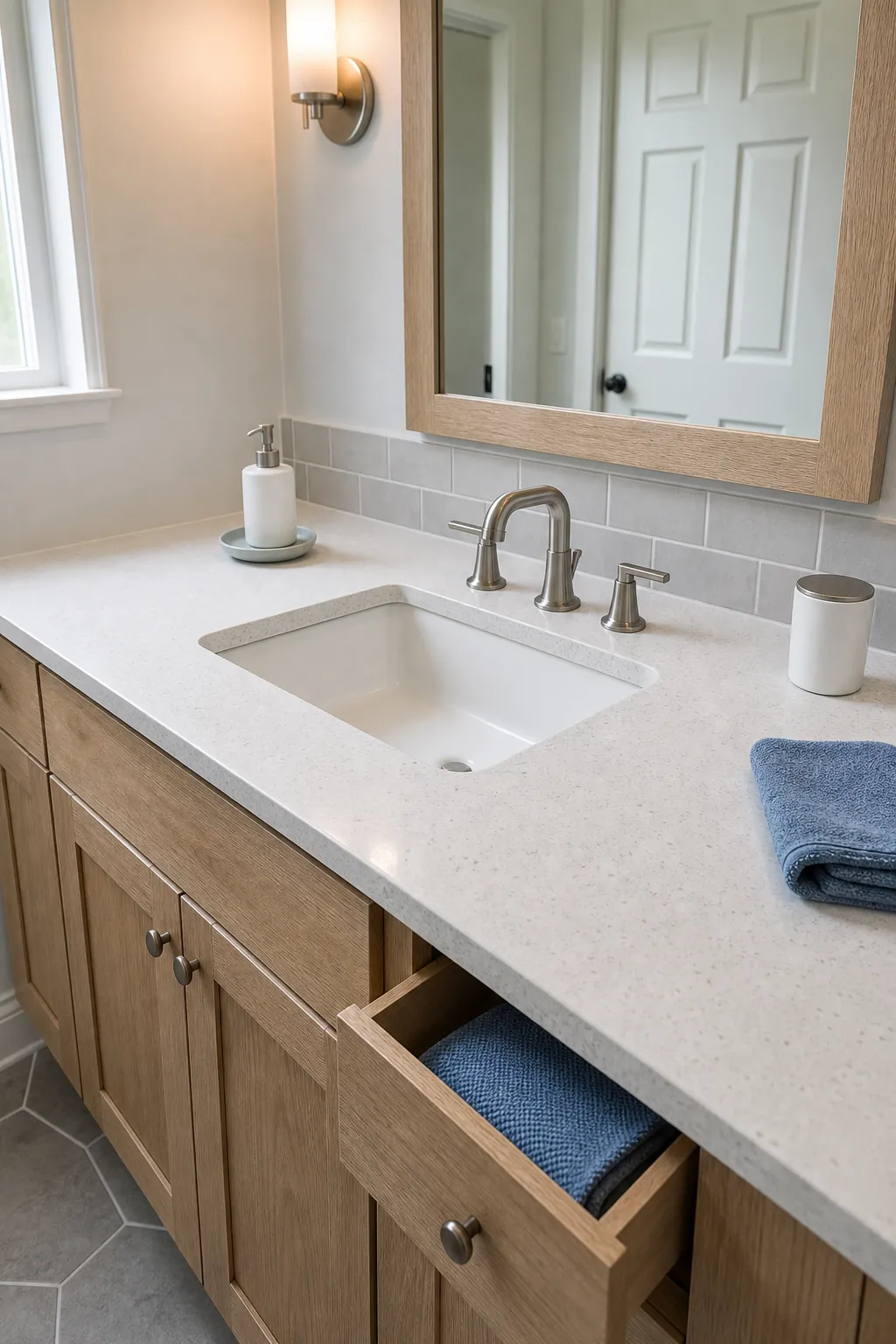
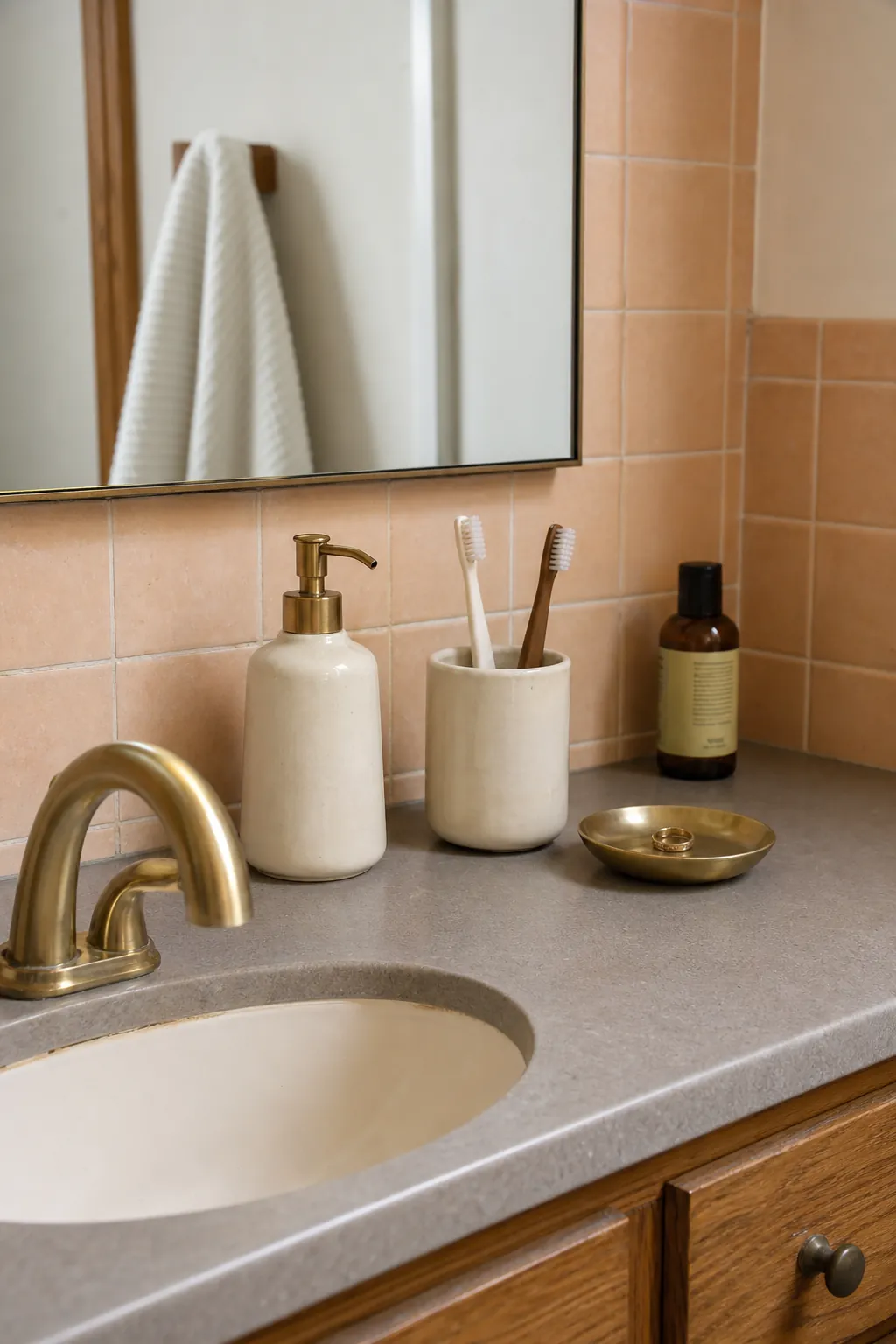
Ask a stricter question than “Do I use this?” Ask, “Do I use this here every day?” Hand soap usually qualifies. A toothbrush may qualify if there is no medicine cabinet. Backup lotion, occasional masks, nail polish, extra razors, and half-finished products usually belong in a drawer, bin, or personal caddy.
Give every remaining object a specific home. “On the counter” is not specific enough; “the left slot of the shallow tray” is. This small distinction stops products from drifting toward the sink and makes it obvious when something needs to be put away.
Respect the Splash Zone
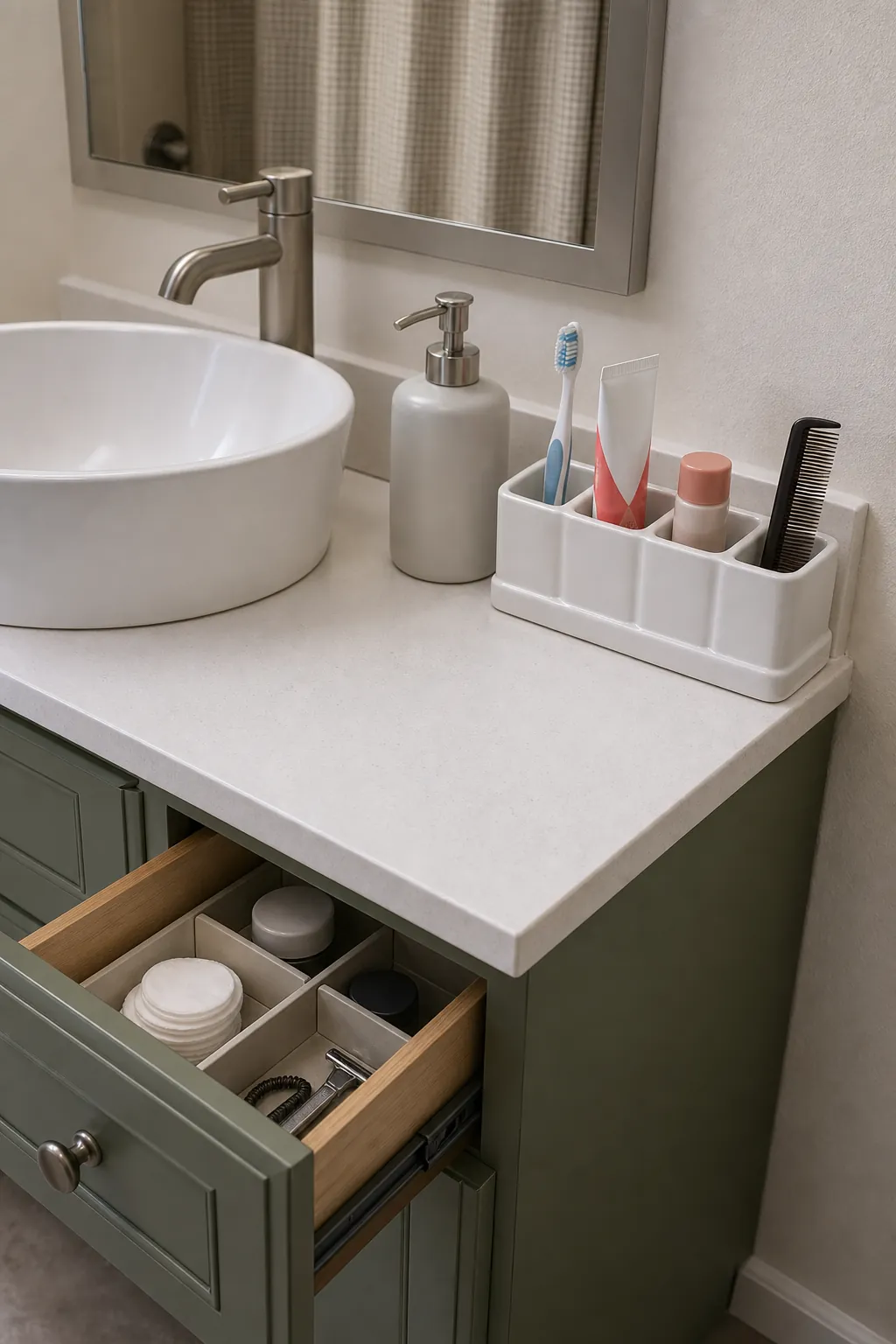
Move paper boxes, jewelry, charging bases, and porous decor away from the faucet. Water collects behind bottles and beneath trays, where it can soften labels, stain stone, and turn an otherwise clean bathroom into a maintenance problem.
Choose bathroom accessories with washable bottoms and a little breathing room. A soap pump can sit close enough to reach with wet hands, but the styling group should begin beyond the heaviest splash area. Leave space to slide a cloth behind the faucet without lifting five objects first.
Use One Tray as a Boundary
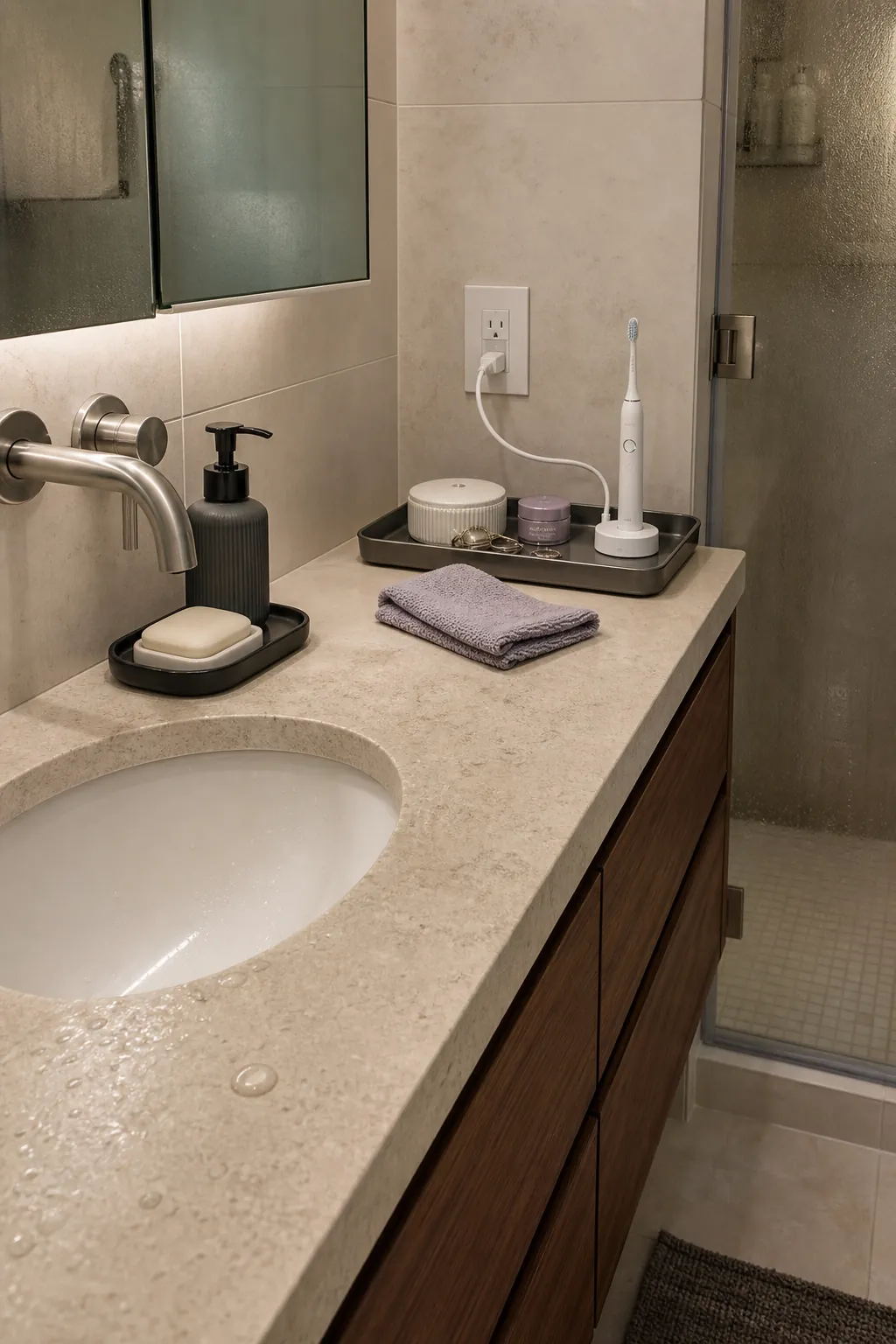
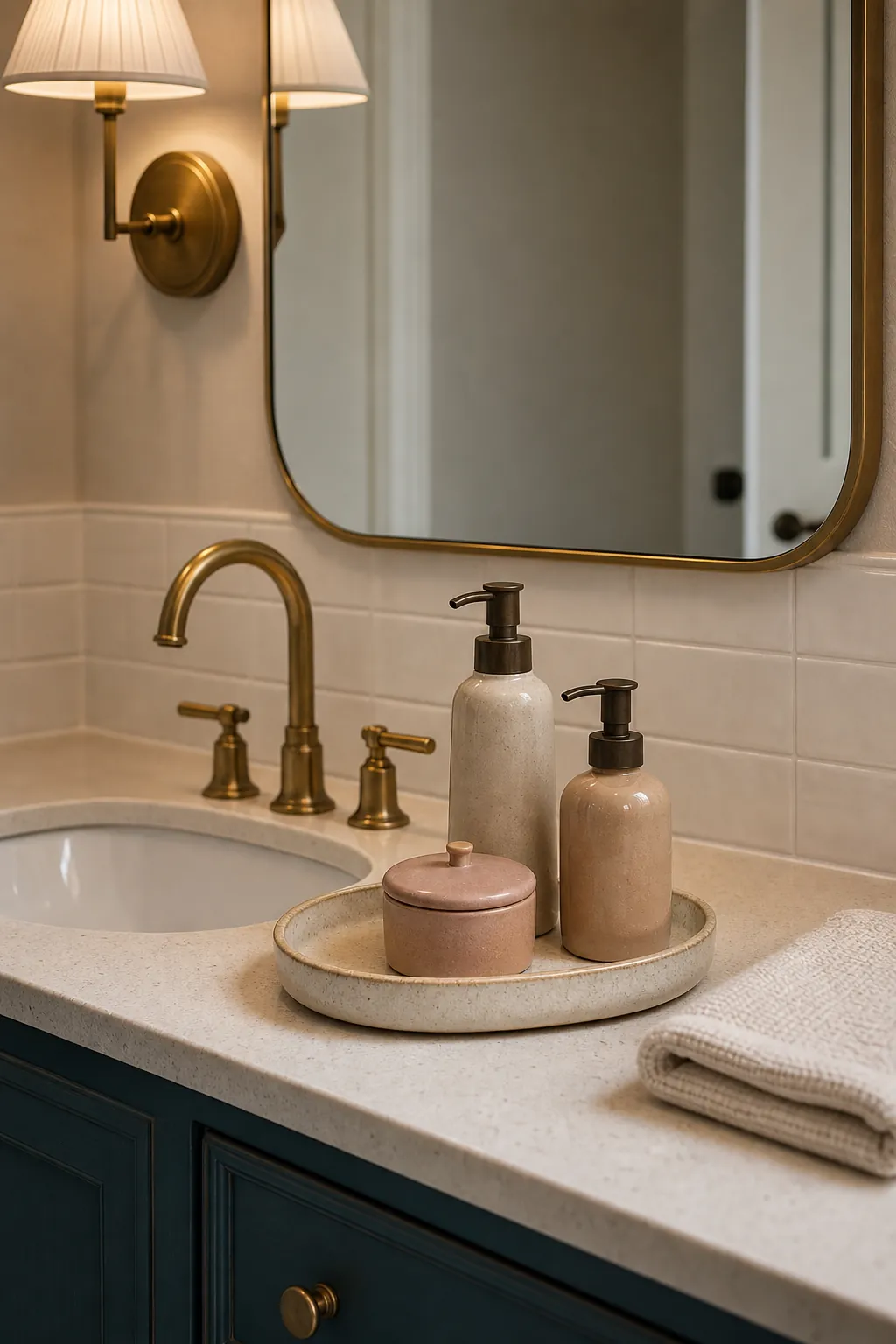
A tray works because it creates a visible limit. It turns three unrelated bottles into one contained composition and lets you lift the entire group when cleaning. The tray should be sized for the essentials, not for every product that might appear later.
Choose a material that tolerates humidity and supports the rest of the vanity styling. Glazed ceramic, sealed stone, metal, and washable resin are easier near a sink than raw rattan or unfinished wood. Add height variation with a soap pump, a shorter jar, and one low dish, then stop before the tray becomes a miniature shelf.
Build Low-to-High Layers Away From the Faucet
Arrange the sink styling so the tallest object sits toward the wall or outer edge, not beside the faucet where it blocks movement. A simple low-to-high line—dish, jar, bottle—gives the counter rhythm while preserving a clear sightline to the mirror.
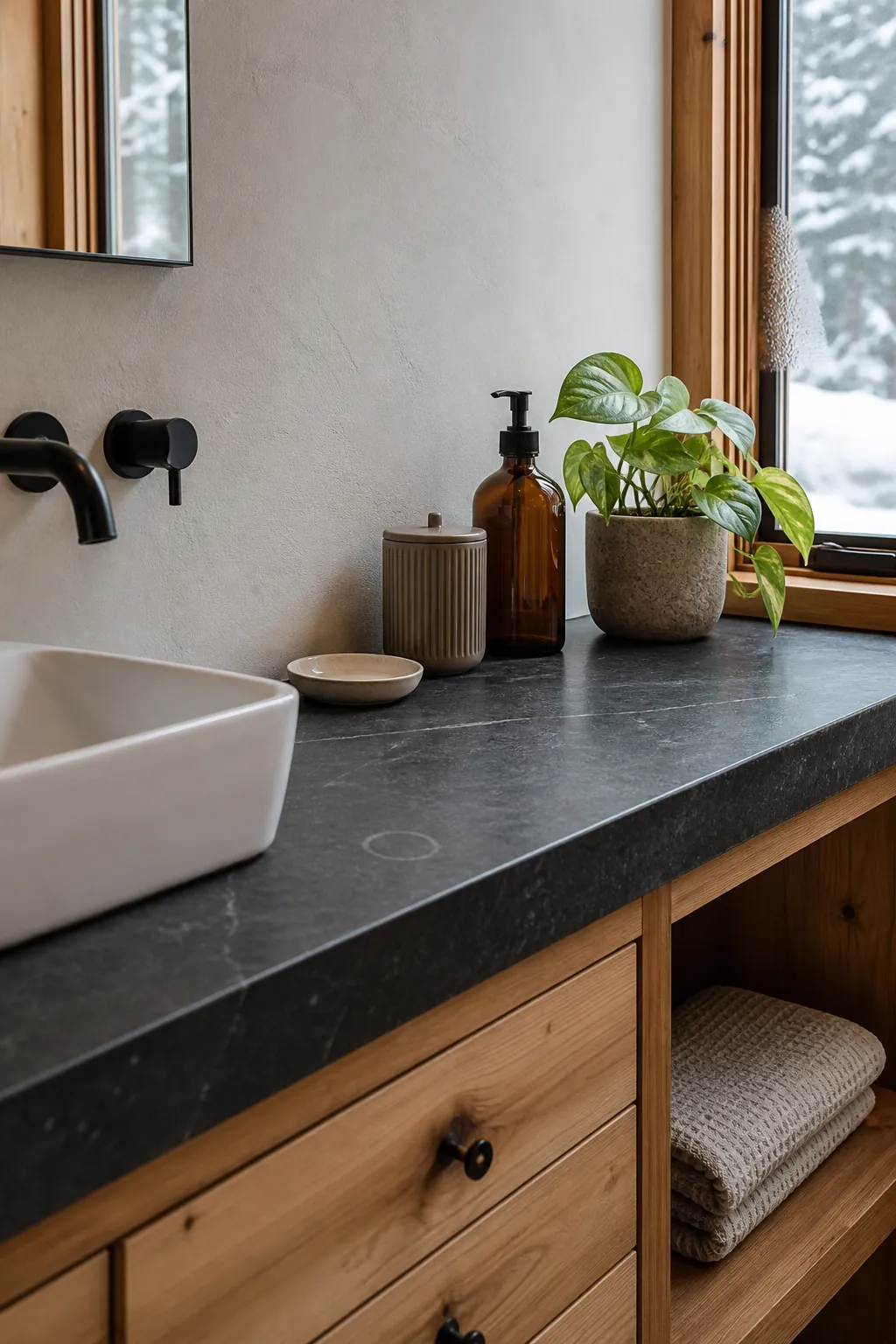
Use a plant only if the room has suitable light and you genuinely want to maintain it. A small moisture-tolerant plant can soften stone and tile, but a struggling plant adds visual noise. On a dark counter, a folded hand towel or tactile ceramic cup can provide the same softening effect with less upkeep.
Reduce Label Noise Without Hiding Function
A counter can feel cluttered even when it holds only a few objects if every bottle has a different color, cap, and oversized label. Move refillable basics such as hand soap into one durable dispenser, but do not decant products when safety information, expiration dates, or identification matter.
Matching does not mean every accessory must come from a set. Repeat one or two cues—perhaps brushed metal with the faucet and a cream ceramic near the tile—while varying shape slightly. The result looks collected, and everyone can still tell which object is soap and which is a toothbrush cup.
Give Shared Counters Separate Landing Zones
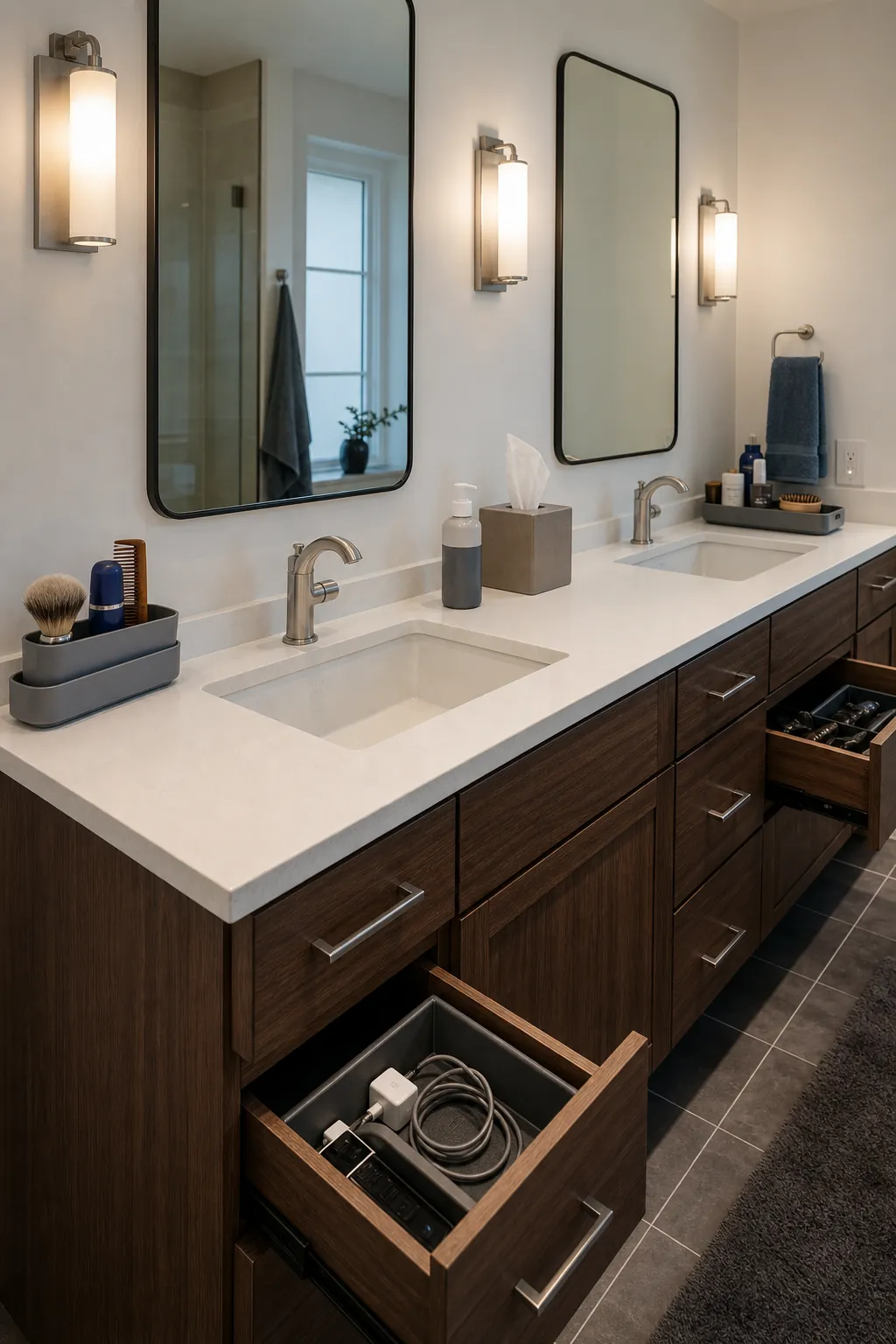
On a double vanity, the empty space between sinks often becomes a dumping ground. Give each person a small defined zone or portable caddy, then reserve the center for one shared object such as hand soap, tissues, or a low tray. The system should reflect how the bathroom is actually used, not an idealized photo.
Keep chargers and hair tools out of the wet center. A drawer organizer, heat-safe holder, or under-counter docking point is better than a web of cords around the basins. When each person can lift or put away one container, the bathroom storage system asks for fewer decisions.
Make the Reset Easier Than the Mess
The best sink styling survives a weekday morning. Store backups near their point of use, keep a cleaning cloth within reach, and leave enough clear counter to wipe splashes in seconds. If an item repeatedly stays out, either give it a better counter home or change the storage behind the scenes.
Do not judge the result by how empty it looks in a photograph. Judge it by whether the faucet is easy to use, the counter dries quickly, essentials return to their places, and everyone sharing the room can maintain it. A clean bathroom is usually the result of fewer decisions, not more decor.