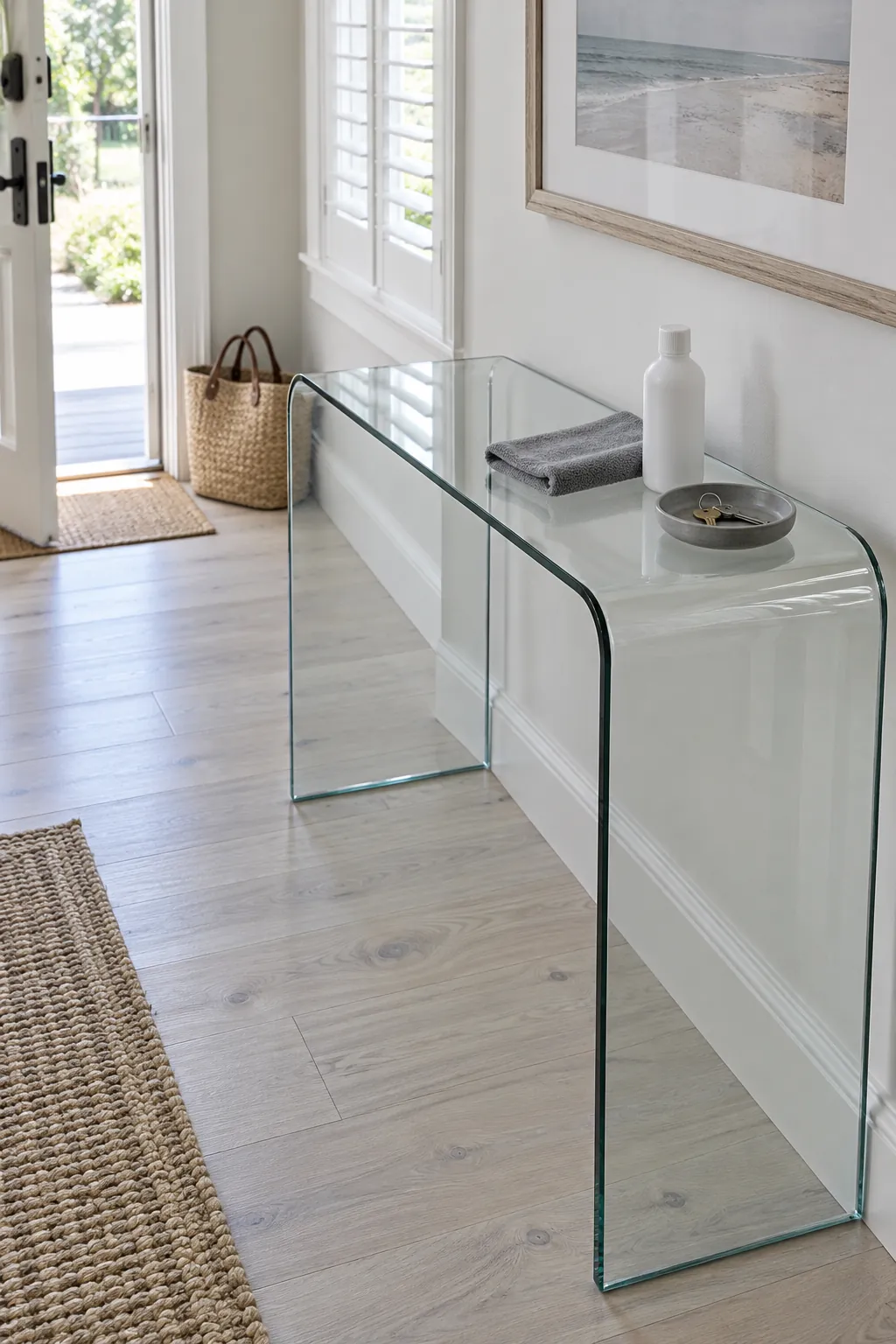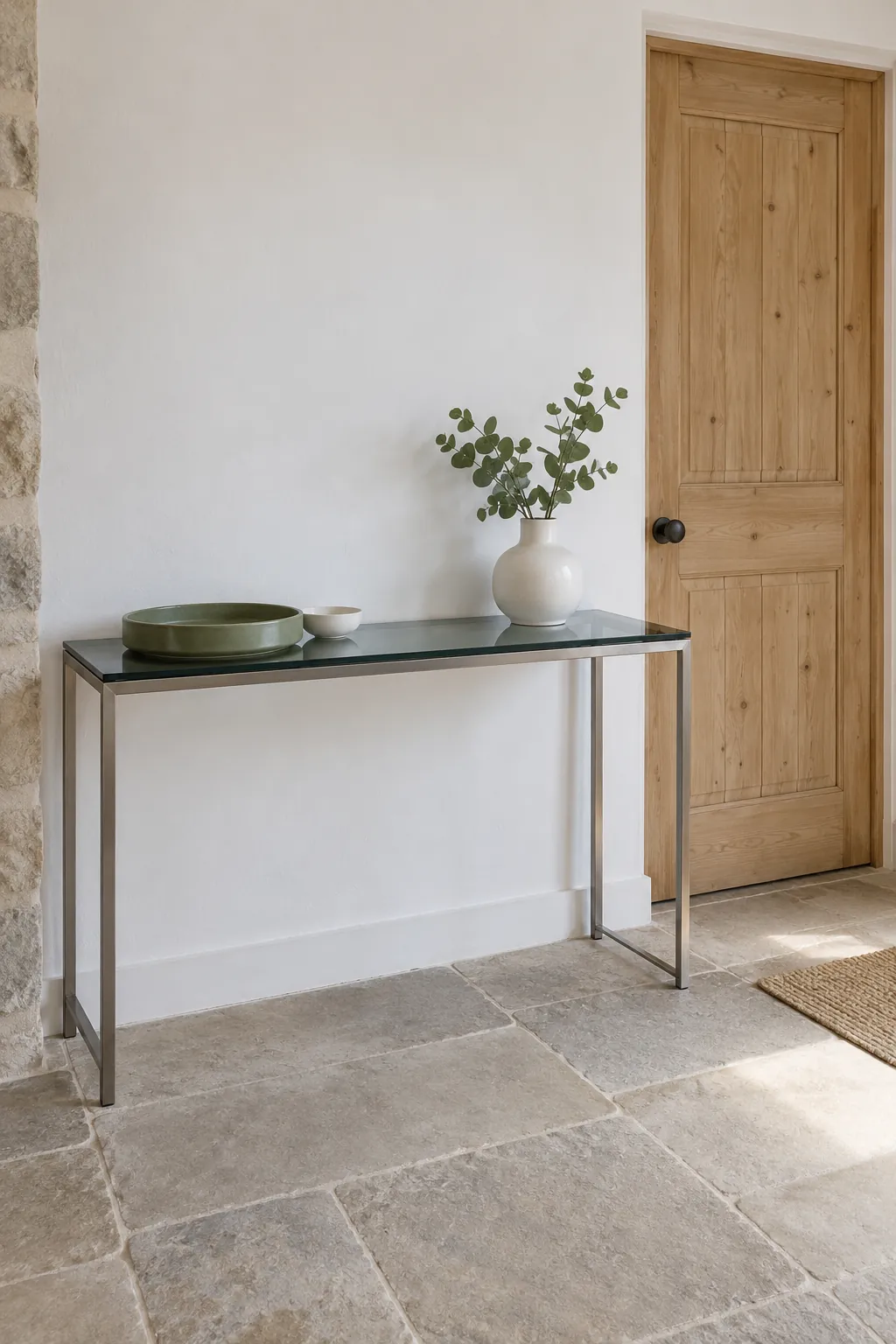
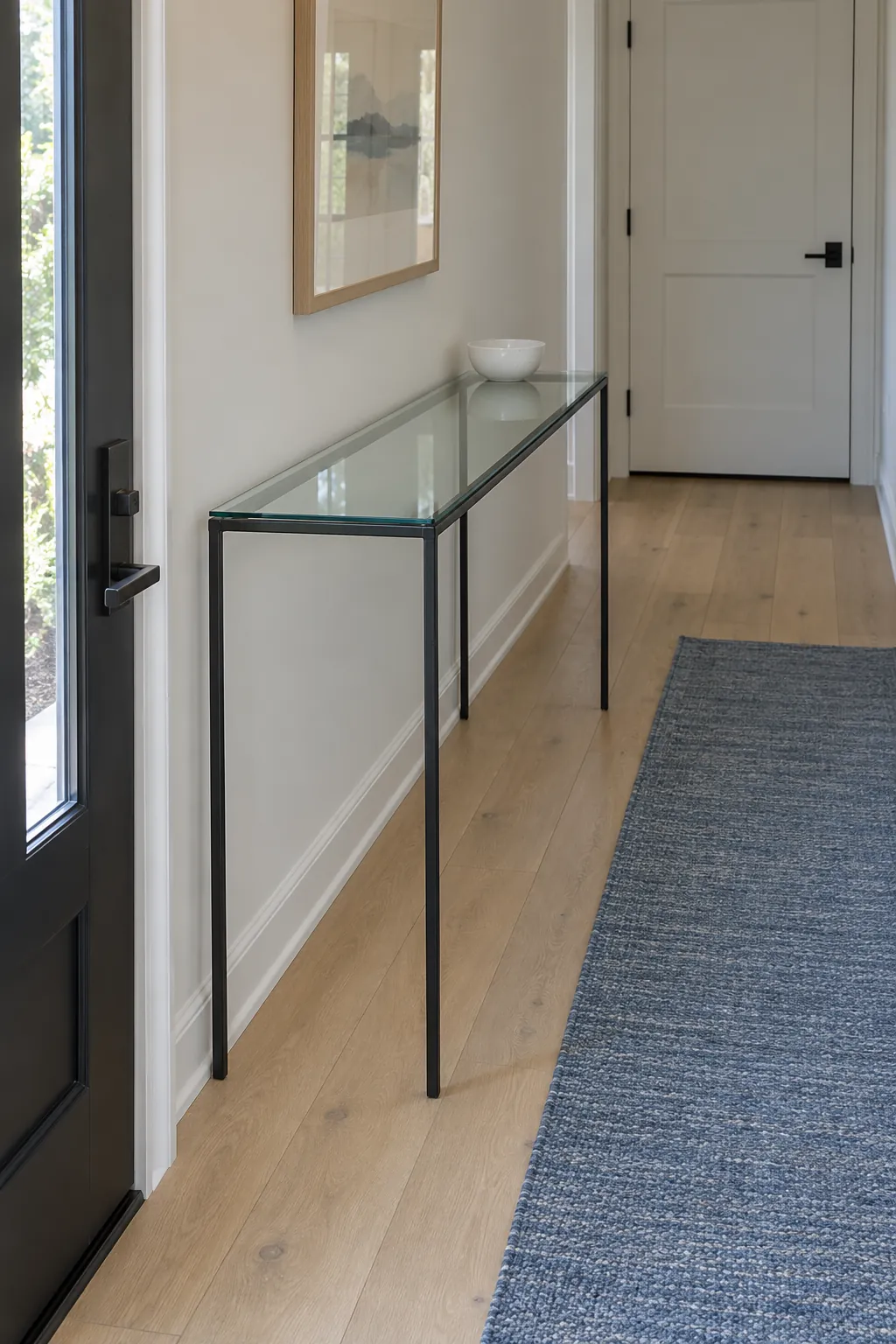
A glass top makes a small entrance feel open, but it also puts the floor, cords, and storage on display. Adding more decoration rarely fixes that problem. Start by deciding what you want to see through the table, then give the objects on top a clear job.
Start with the view through the glass
Clear the tabletop and the floor beneath it before you choose any accessories. A transparent top lets the eye read the table legs, the skirting board, the rug edge, and whatever sits behind the console as one composition. Stand at the doorway and then look from the side, because a tidy front view can hide an awkward overlap.
Notice the strongest line below the glass. A rug that stops halfway under the table can create a distracting stripe, while a fully visible patch of floor gives the furniture room to breathe. Move the rug or console only when the change keeps the walking route clear; the goal is a calmer view, not a perfectly centered arrangement.
Give small everyday objects one opaque landing place
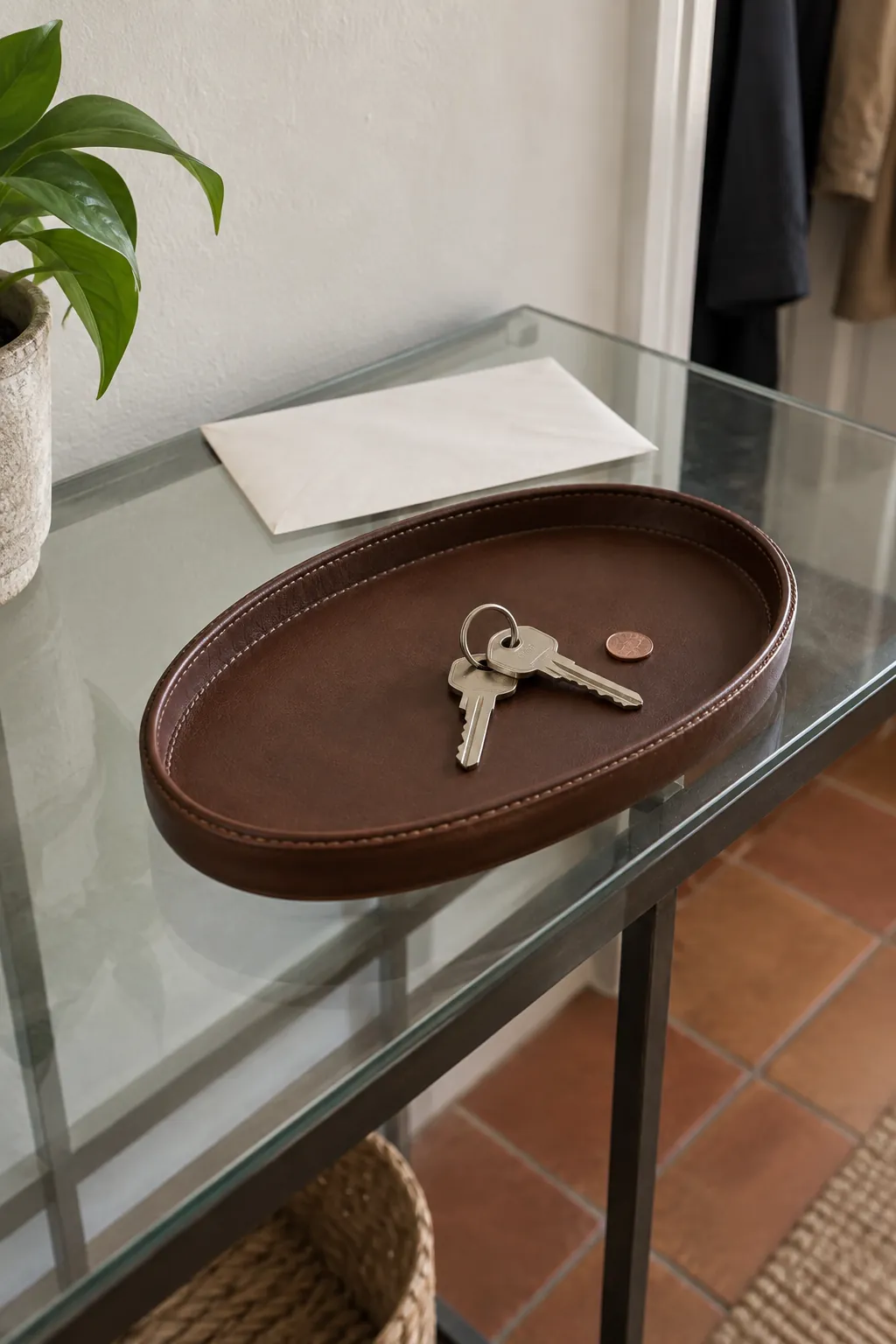
A shallow opaque tray makes keys and loose change read as one shape rather than several floating objects. Choose a base that hides the underside of the contents, since a clear tray leaves the same visual problem in place. Felt or soft pads underneath can protect the glass, but check that the tray sits flat and cannot rock.
Place the tray where you naturally unload your pockets, leaving room to set down a bag without knocking a vase. One useful container is often enough for minimal console styling. If mail keeps piling up, move the paper storage to a drawer or another shelf instead of buying a larger tray that turns the entire surface into a catchall.
Build height without covering the whole surface
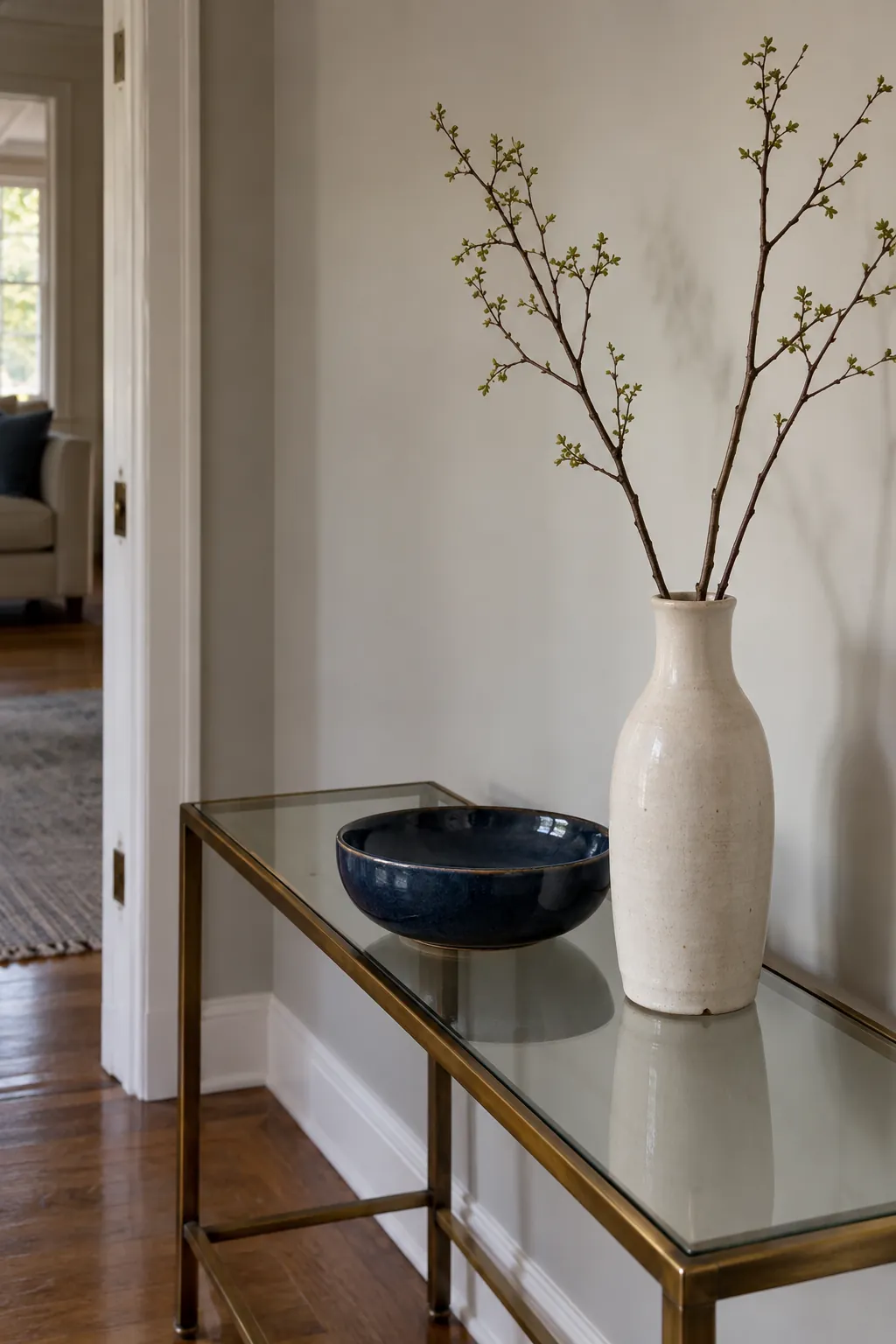
A tall object gives a glass tabletop vignette a clear focal point, especially when the table itself nearly disappears against the wall. Try a ceramic vase with a few branches, then add a low bowl nearby so the heights differ. Keep the branch spread inside the usable space and away from a door swing.
Leave a visible interval between the objects rather than lining up a row of small decorations. Matte pottery adds contrast to reflective glass without needing a bright color. Check the weight and stability of anything tall, and follow the table maker’s load guidance rather than assuming a delicate top can support a heavy vessel.
Use the space below for storage only when it earns its place
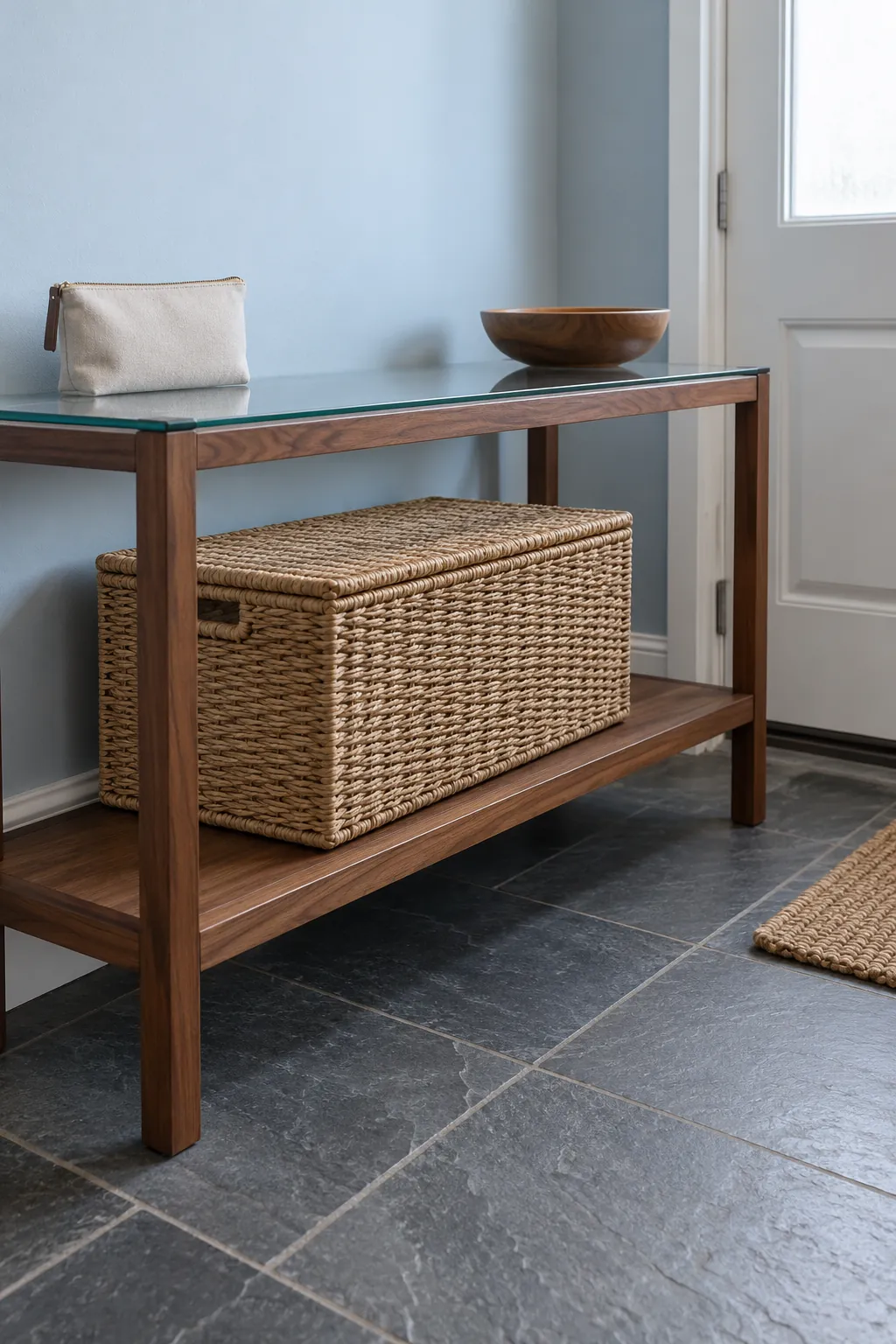
Closed baskets can give the base visual weight and conceal items that would otherwise show through the top. Measure their height, depth, and handles before choosing them, and leave enough clearance to pull them out without striking the glass. A basket belongs on a shelf or the floor, never suspended from a glass edge.
Use one generous basket for scarves or a pair for separate household needs when the frame has room. Open wire bins reveal their contents, so they usually increase visual noise in this setting. If you do not need storage there, an empty lower area is a complete styling choice and often suits a narrow entryway better.
Plan the wall and lamp as part of the same view
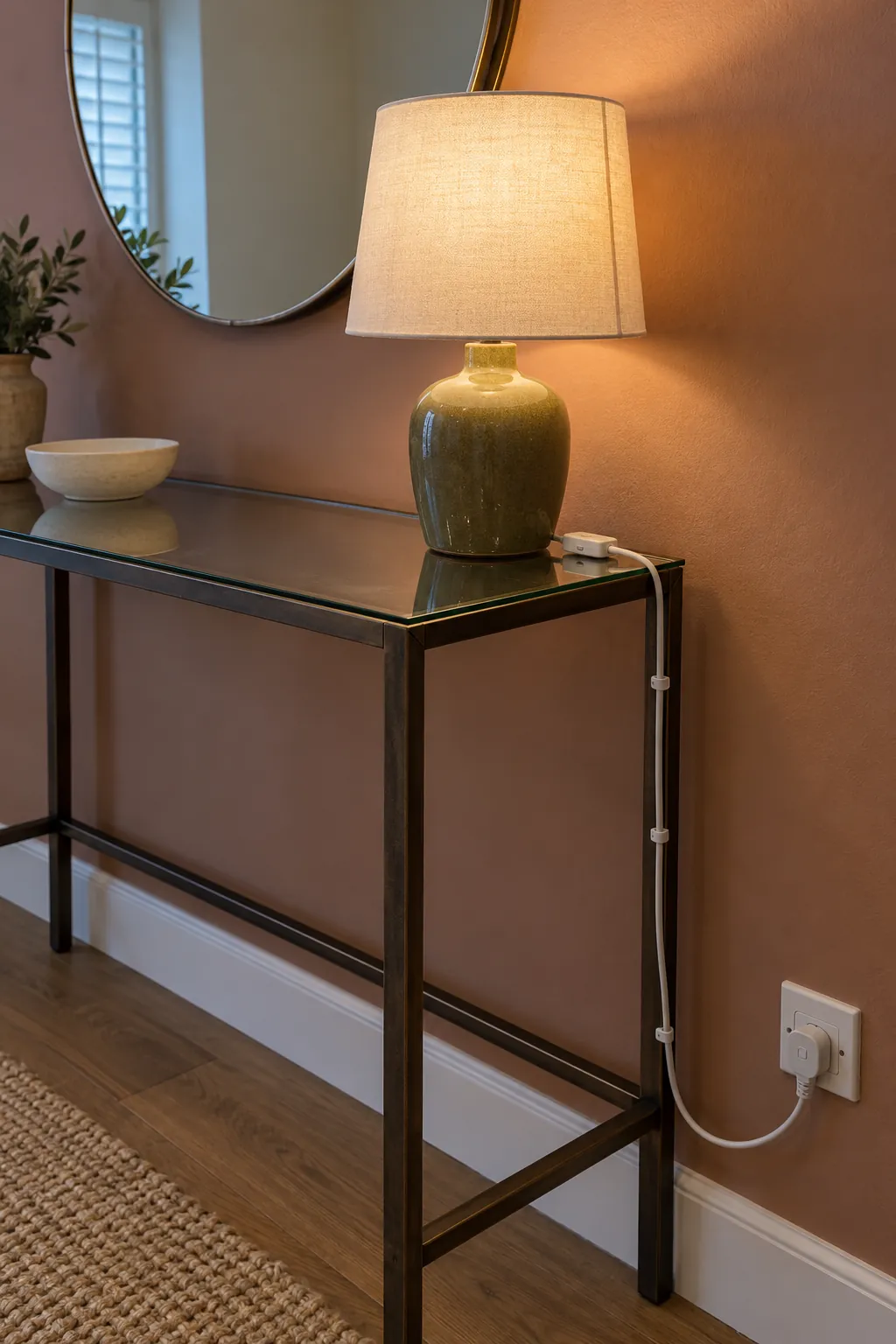
A mirror can brighten the entryway, but its reflection also doubles whatever is opposite the console. Look into it from the door before deciding on its position, and mount it with hardware suitable for its weight and your wall. Keep a useful existing mirror when it reflects a calm view rather than replacing it just to match the table.
If the console needs a lamp, choose a stable base and a shade that stays clear of passing shoulders. Route its cord along the back leg with suitable removable clips, leaving the plug and switch accessible. A cord stretched diagonally across the open space is especially noticeable through glass, and rugs should not hide electrical leads.
Finish with a daily use and cleaning check
Walk through the entryway carrying the things you normally bring home. Your entryway accessory arrangement should leave a reliable landing space and should not narrow the path or put fragile pieces beside a swinging bag. If an object has to be moved every time you use the tray, simplify the arrangement.
Clean the top and its underside with products approved for the glass and the frame, using a soft cloth and drying away streaks. Avoid spraying cleaner into joints or onto finishes that require a different treatment. Return only the pieces that serve a purpose or hold your attention, then check the view from the door again: the space underneath should look intentional too.