
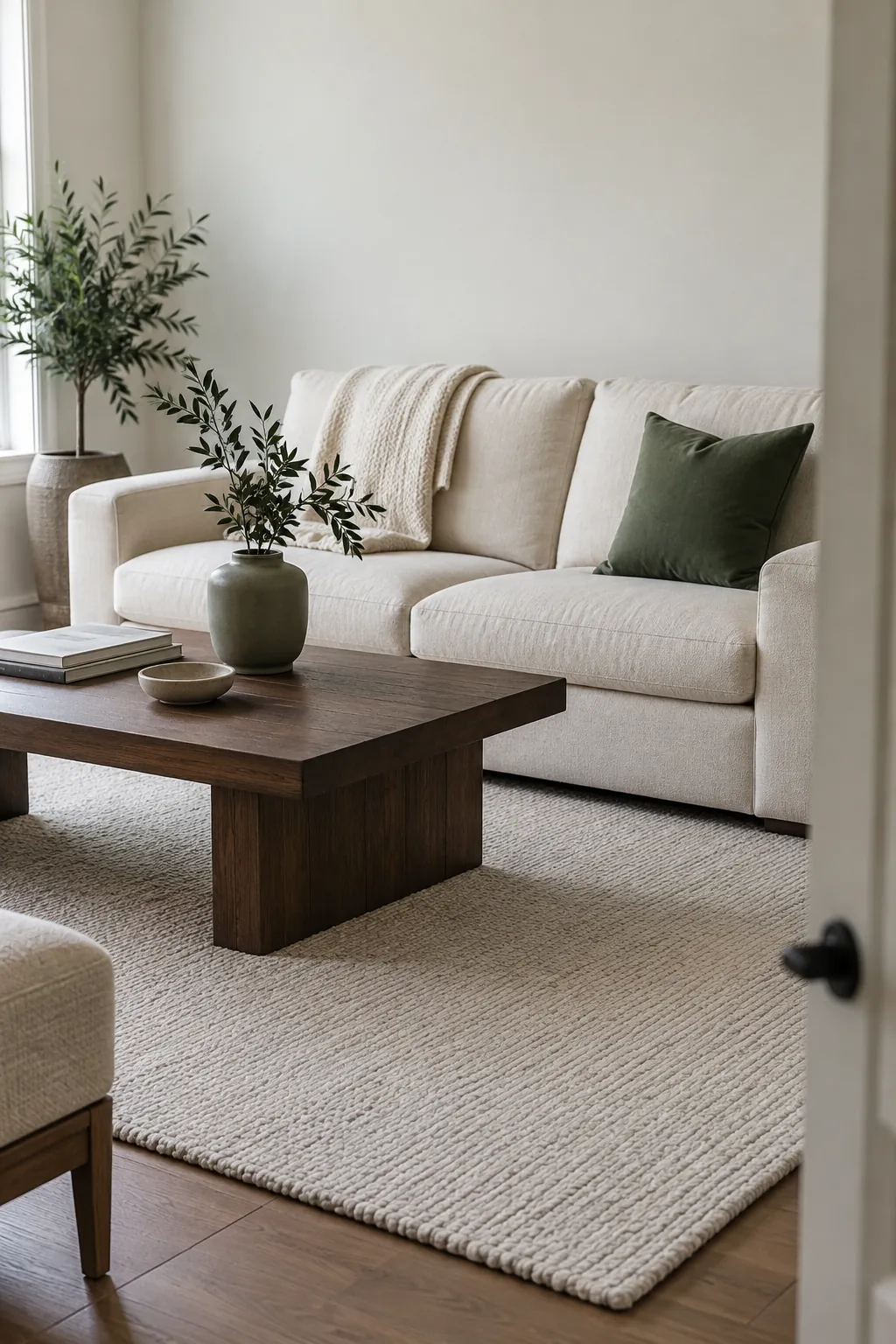
A bright cushion can look like a deliberate choice or a stray object, depending on what surrounds it. Give one green piece a clear role, then make a few quiet connections across the room. You can test the colour with textiles before committing to a larger purchase.
Give the green a clear job
A green accent works best when it has a visible role: a chair that anchors a corner, cushions that lift a neutral sofa or a rug that connects the seating. Start with one of those jobs rather than buying several small objects at once. That choice gives the colour a reason to be in the room.
Use the room’s existing finishes as the starting point. Olive and sage often sit comfortably with warm timber and beige, while deeper emerald can give pale upholstery a stronger contrast. These are starting directions rather than fixed rules, so compare the actual fabric or finish beside your sofa and floor.
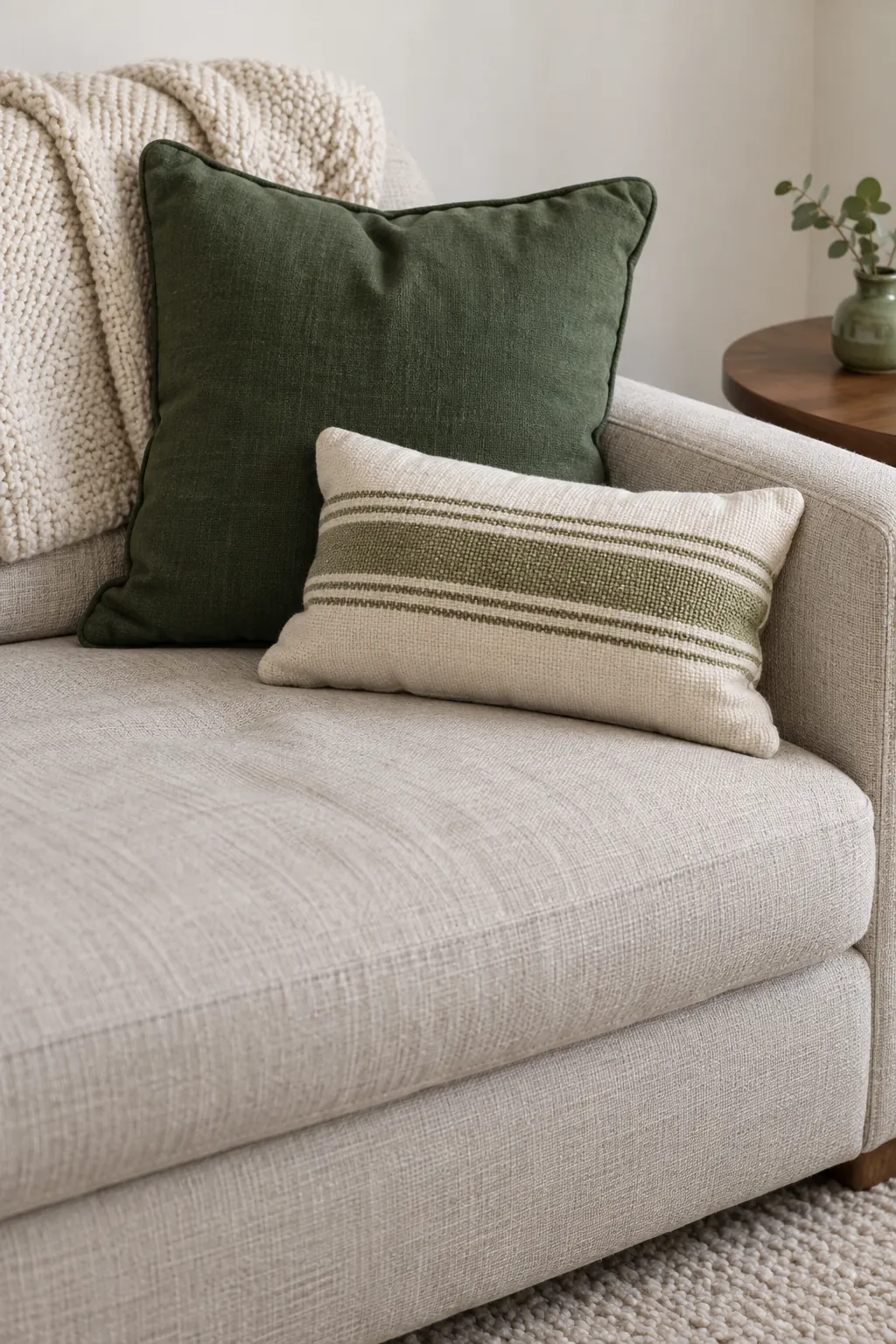
Use cushions to test the colour before a larger purchase
Green throw pillow decor lets you try a colour at a manageable scale. Put one plain green cushion beside a patterned cushion that contains a related green, then leave part of the sofa visible. Vary the shape or texture so the arrangement feels collected rather than bought as a matching pack.
If the new cushion looks disconnected, try moving a small related green object into the same view. It could be a ceramic vase on a nearby table or a green detail already present in the rug. Choose cushion covers with care instructions suited to the room’s use, especially where pets or children share the sofa.
Let a green chair stand apart from the sofa
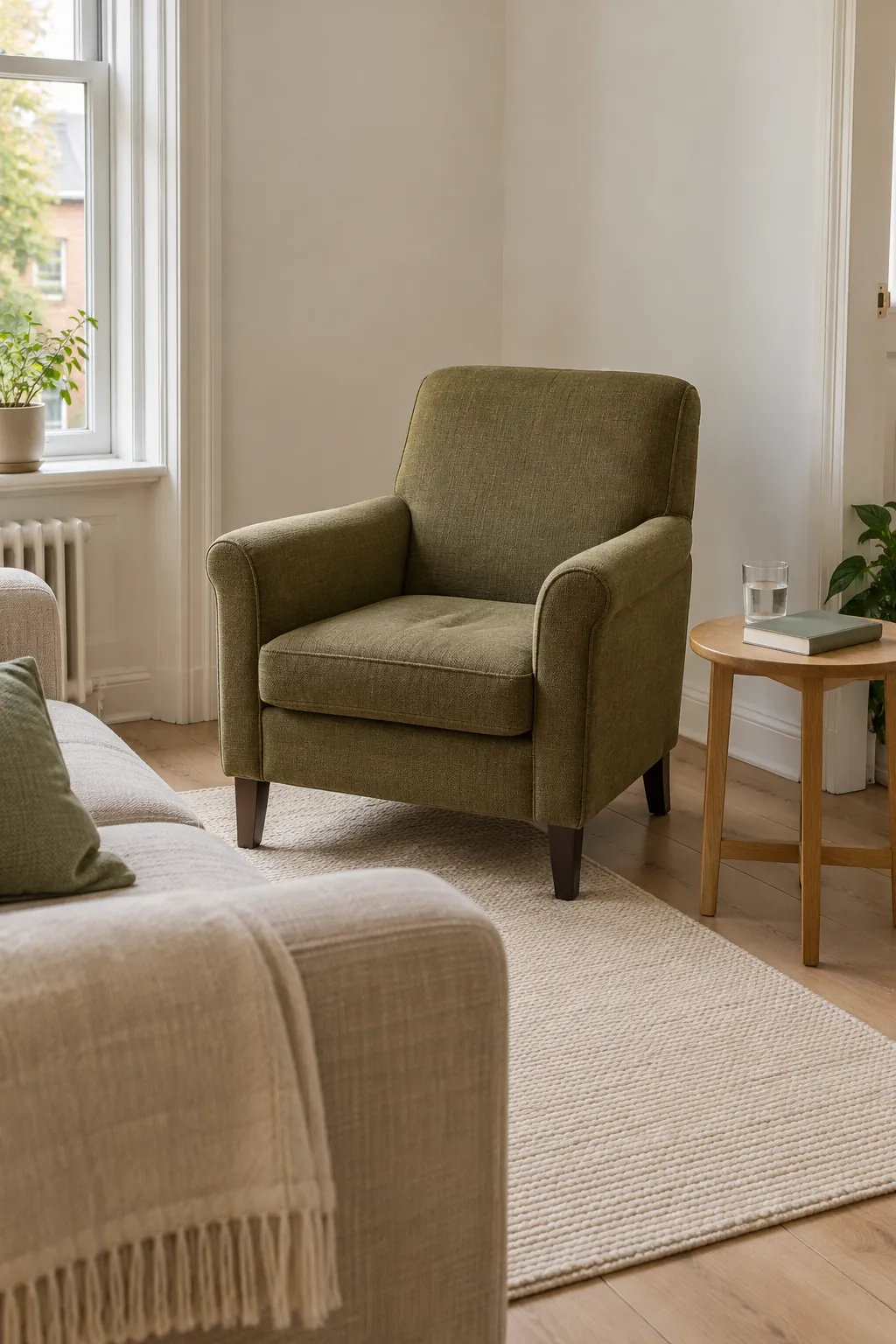
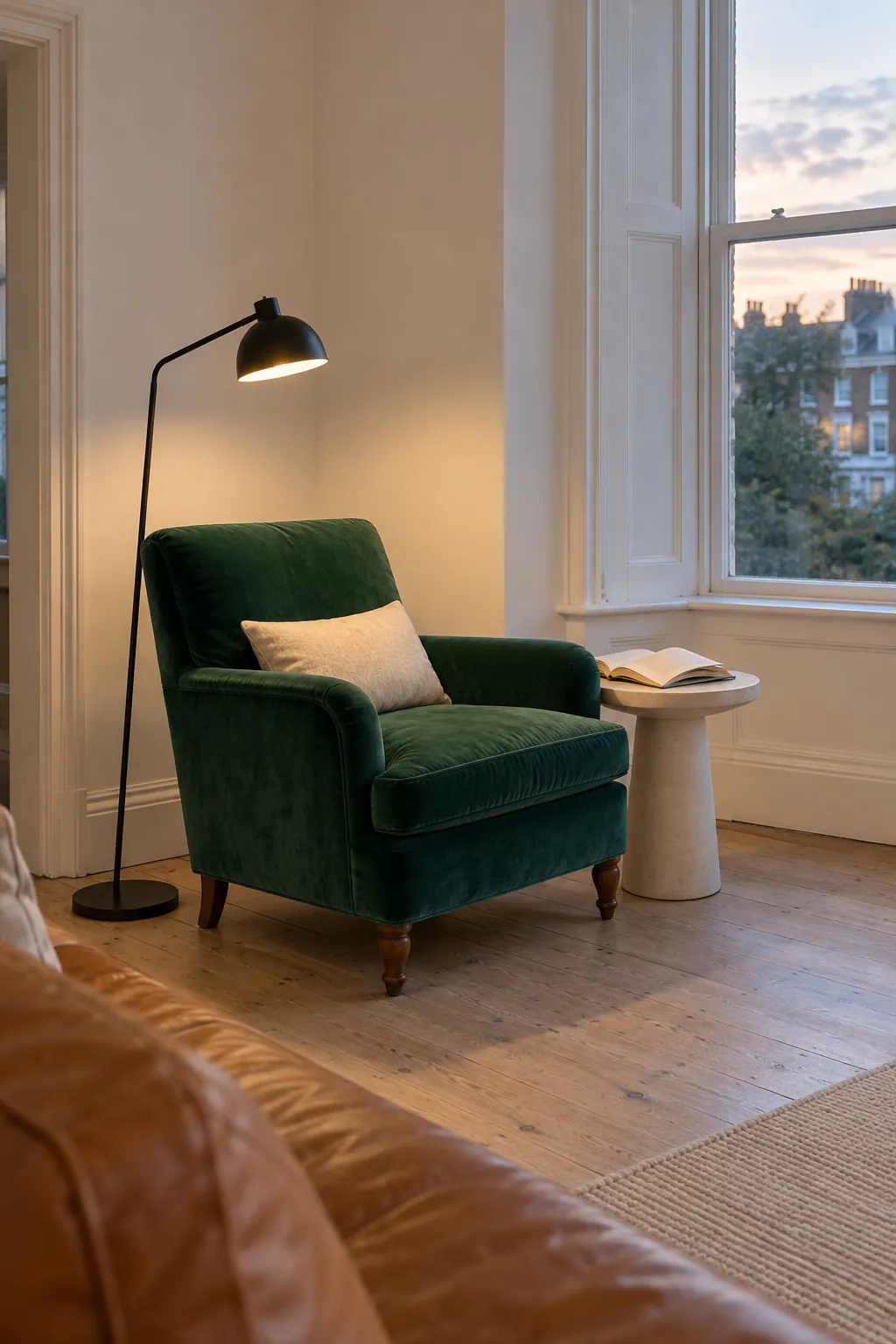
An emerald green accent chair can be the room’s strongest colour feature without requiring a green sofa. Pair it with quieter upholstery and enough space around it to read as a separate seat. The chair’s shape, size and comfort still matter more than its colour.
Measure the chair footprint and the route around it before buying. Angle it toward the conversation area or place it beside a useful lamp, rather than facing it away simply for a photograph. If the sofa and chair already look too similar, change the cushion texture or add a contrasting throw before replacing a useful piece of furniture.
Use a rug to connect the green to the room
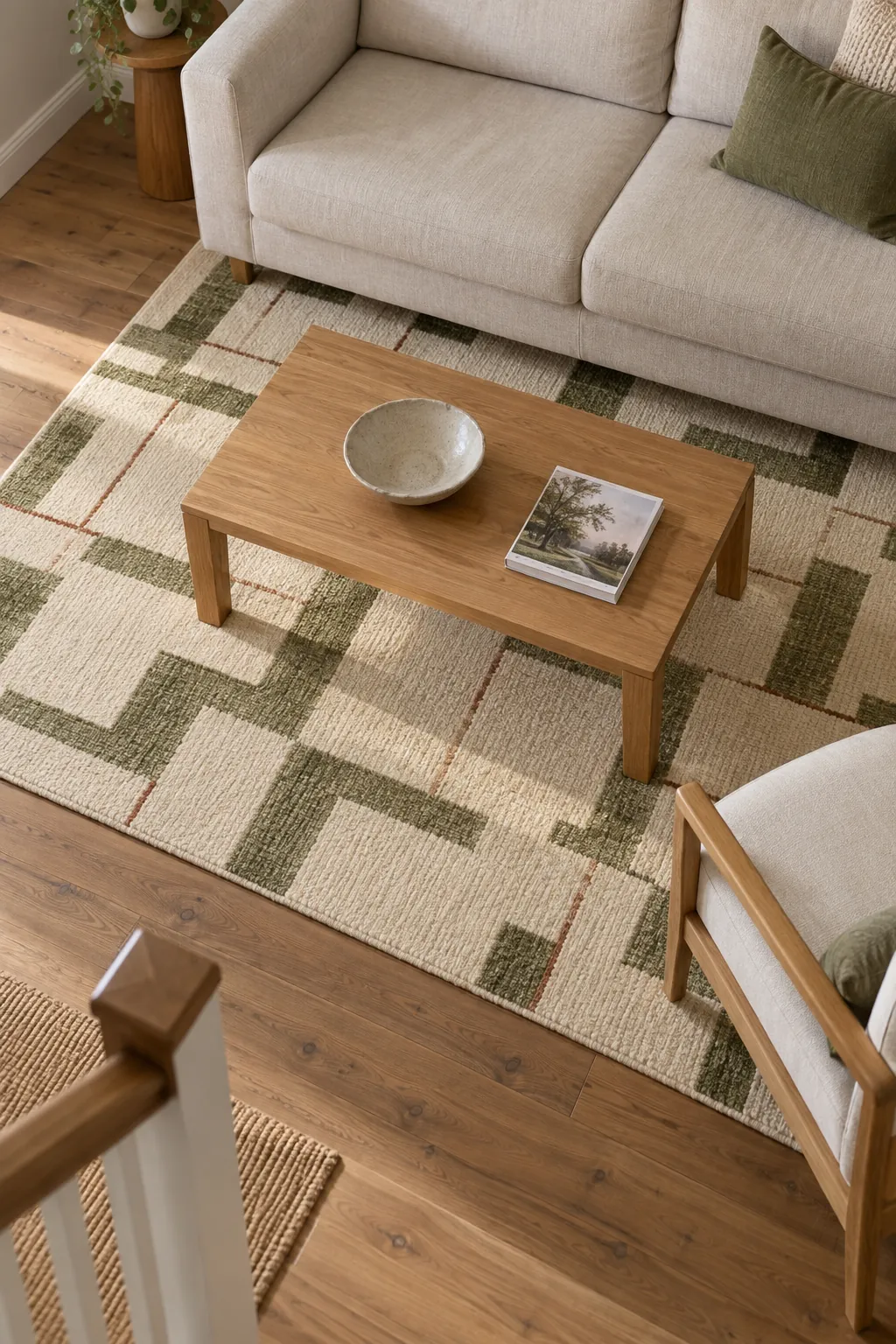
Green rugs and textiles can tie a chair, cushion or artwork to the neutral furniture around them. A patterned rug with a small green element is often easier to build around than a large solid green rug. Pick up one secondary colour from the pattern and let the rest of the room remain quieter.
Check the rug’s dimensions in the actual seating layout. A small floating rectangle can make separate pieces feel less connected, even when the colours agree. Use the manufacturer’s guidance for floor protection and an appropriate underlay, then consider how the material handles vacuuming and daily foot traffic.
Choose art with a specific green connection
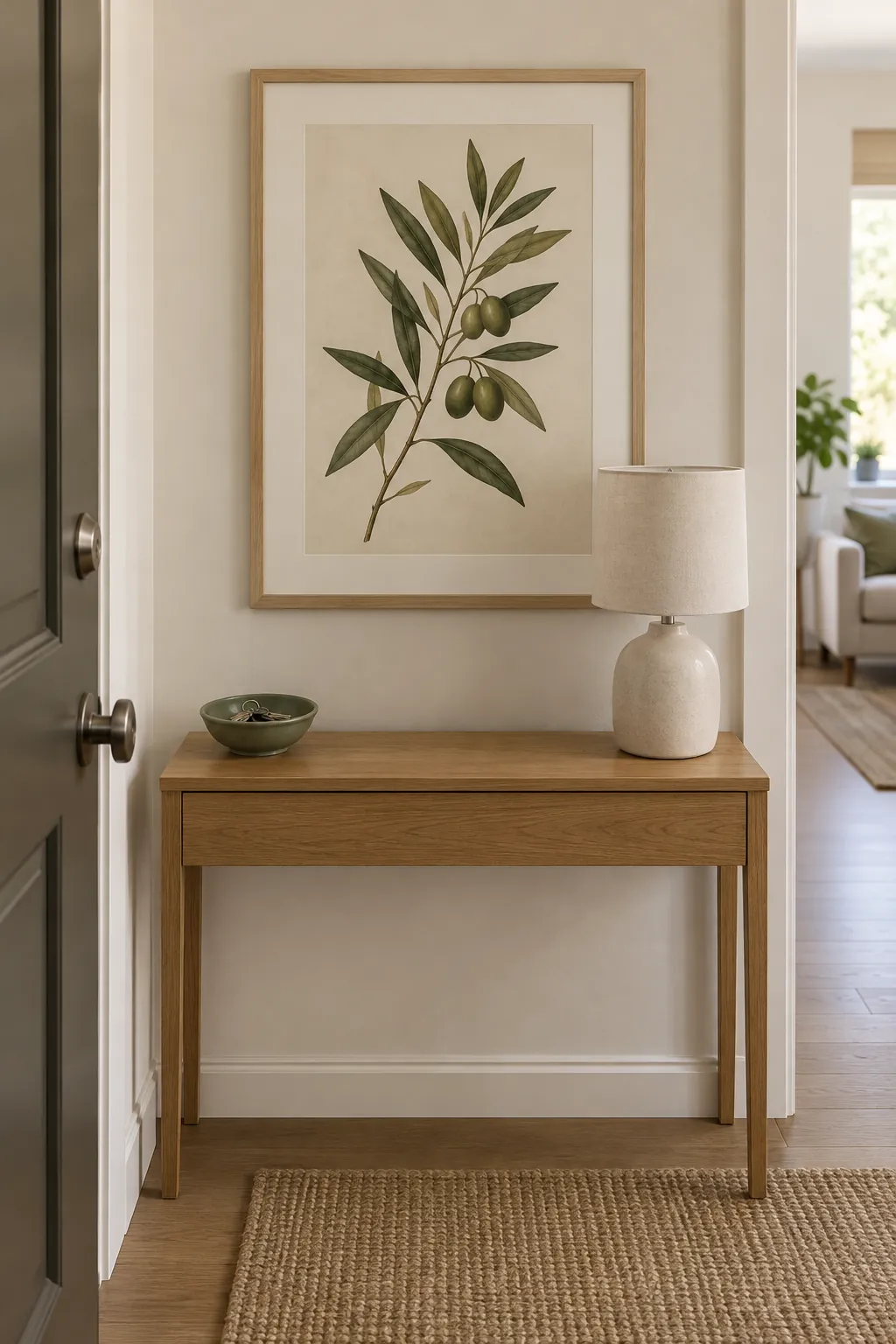
For green wall art ideas, look for a botanical study, an abstract colour block print or a textile piece that contains the green you want to repeat. The subject and scale should fit the wall and the room, rather than acting only as a colour sample. An artwork does not need to be mostly green to help connect the palette.
Choose its position from the furniture and sightline below it. A small piece can work on a narrow wall beside a chair, while a broad empty wall may need a larger composition or a carefully grouped set. Follow the fixing guidance for the frame, wall material and weight; decorative colour is not a reason to use an unsuitable attachment.
Make small accessories useful and leave space around them
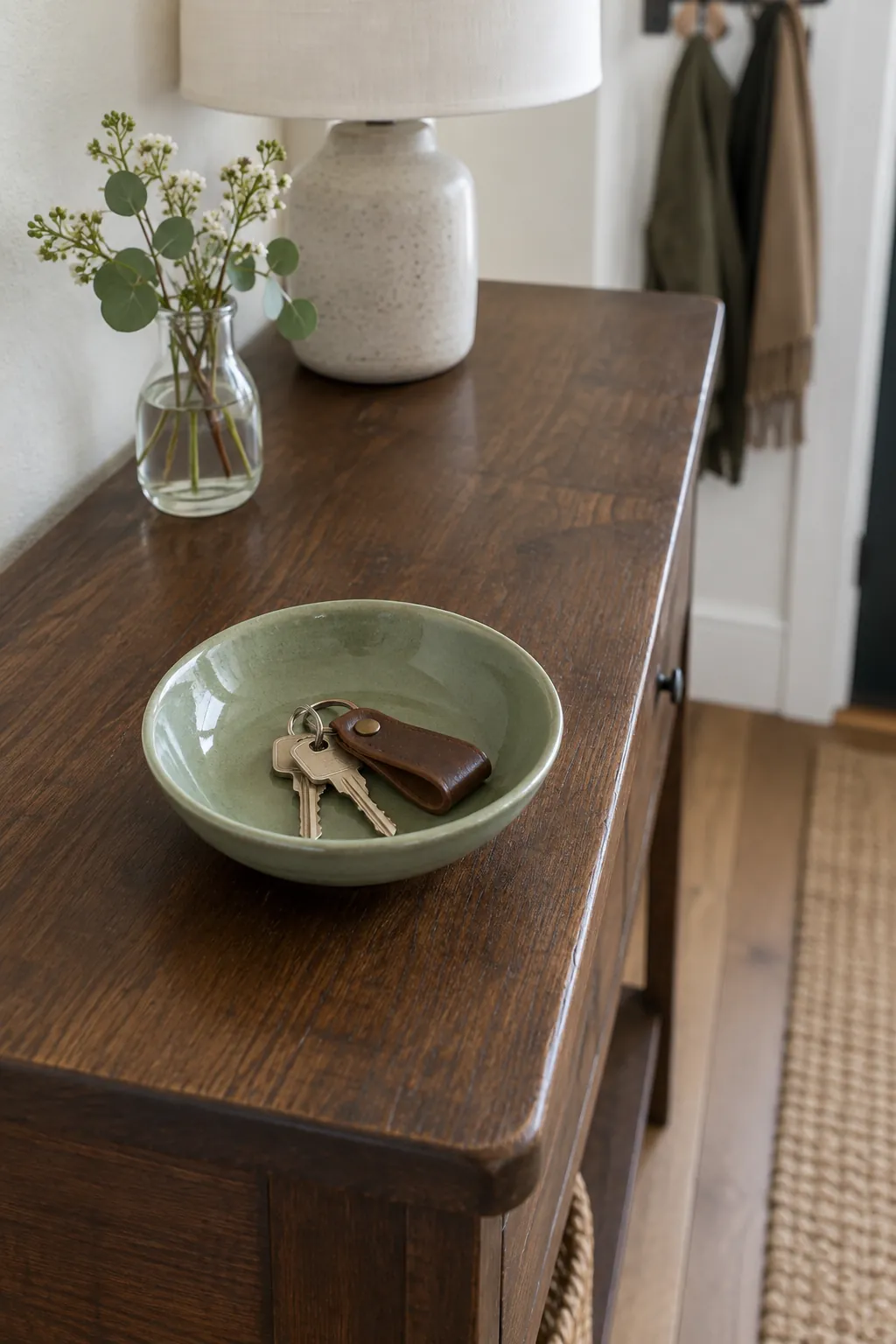
Sage green home accessories are easiest to live with when they also serve a purpose. A ceramic bowl can hold keys, a table lamp can light a reading area and a small vase can carry fresh stems. Choose one or two useful items instead of filling every surface with green ornaments.
Put a coloured item beside a different material, such as a glazed bowl on timber or a linen shade near stone. That contrast adds interest without introducing another strong colour. Leave clear space for the surface’s daily job, and keep plants where their actual light and care needs can be met.
Repeat the colour with room to breathe
A green and neutral living room does not need an exact shade match on every object. A deeper green chair, a quieter sage cushion and a little green in the rug can feel connected when their undertones sit comfortably together. Spread those touches through one visible area instead of putting all of them in a single corner.
Look from the doorway after each addition. If the colour disappears, increase the size of one accent; if it takes over, remove a repeated accessory before adding another neutral object. The balance depends on the visible surface area and contrast, so a numerical decorating ratio is a rough aid rather than a measurement you must achieve.
Check the room in daily use
Leave your first green accent in place through daylight and your usual evening lighting before committing to more. Notice whether the shade changes beside the floor, whether the cushion is comfortable and whether a new chair blocks a route. A successful accent should belong to the room when it is being used.
If the arrangement feels too matching, alter one material or shape while keeping the useful pieces. If it feels scattered, give the main green object one quiet connection elsewhere in the view. Stop adding when the colour has a clear place and the room still works for the people who live there.