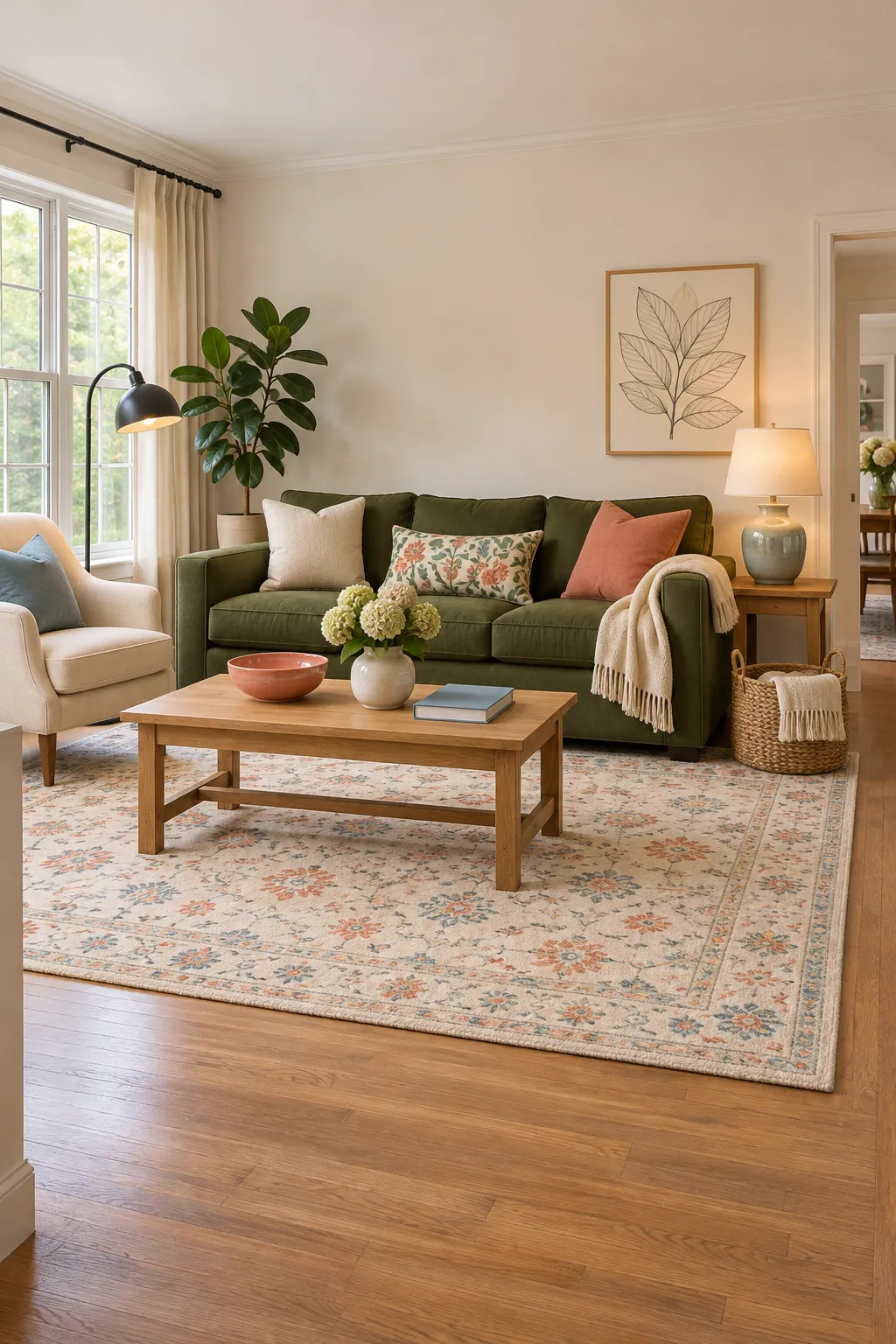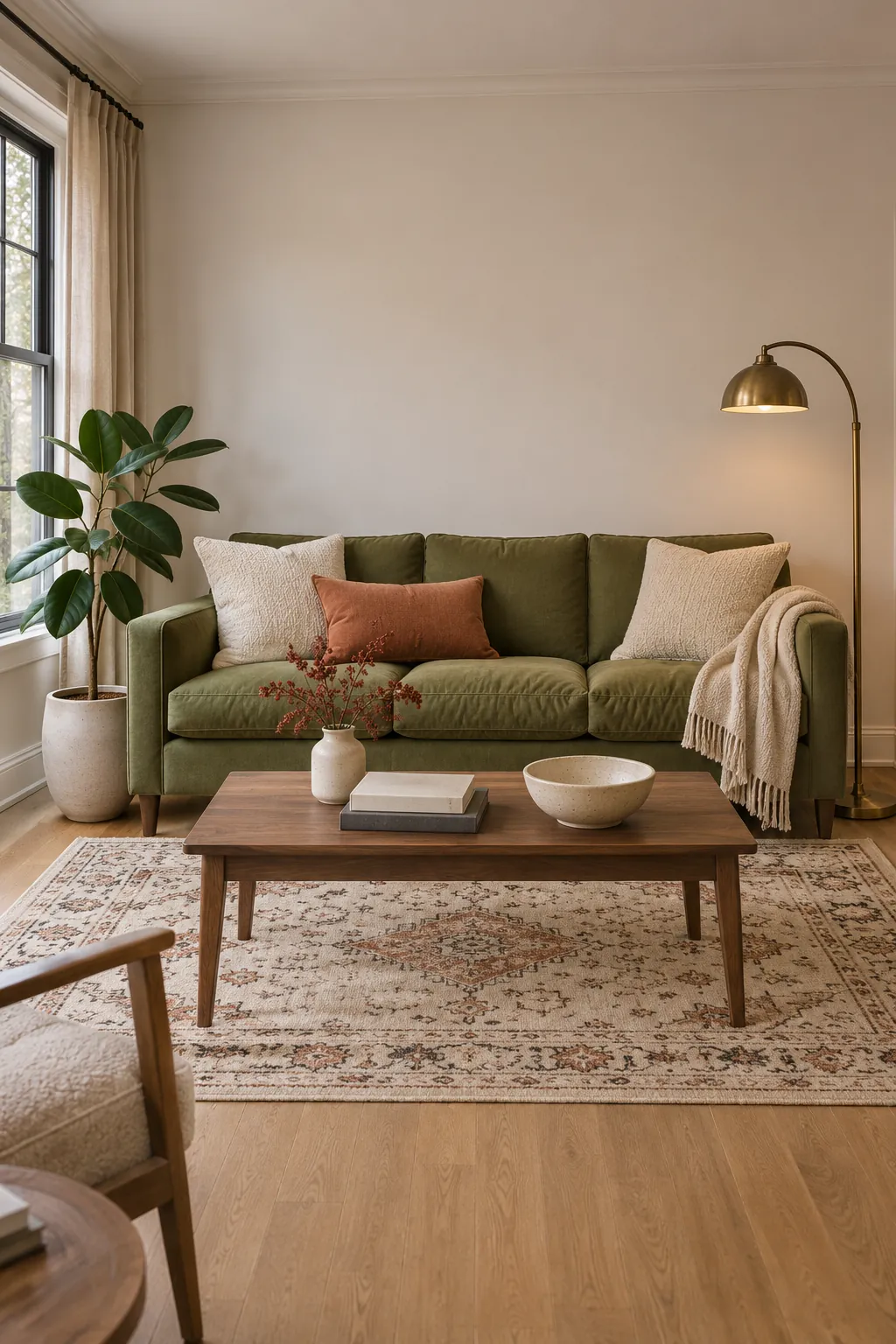
A green couch already gives the room a strong point of view. The hard part is deciding which other colors should support it without making the space feel busy, dark, or too carefully matched. Start with the fixed finishes in the room, then build one connected palette through the rug, pillows, curtains, wood, and lighting.
Choose a Clear Color Direction First
Look closely at the couch in daylight and name its undertone. Sage usually leans gray, olive carries yellow or brown, emerald feels cool and saturated, while forest green often reads deep and slightly blue. This distinction matters because two green couches can react very differently to the same cream rug or rust pillow.
Choose two supporting neutrals and one accent color before you shop. Warm white, oatmeal, and walnut create a relaxed natural palette, while soft white, charcoal, and dusty blue feel cleaner and more modern. Terracotta, muted pink, ochre, burgundy, and deep teal can all work as accents, but one should lead while the others stay quiet.
Anchor the Couch With the Right Rug
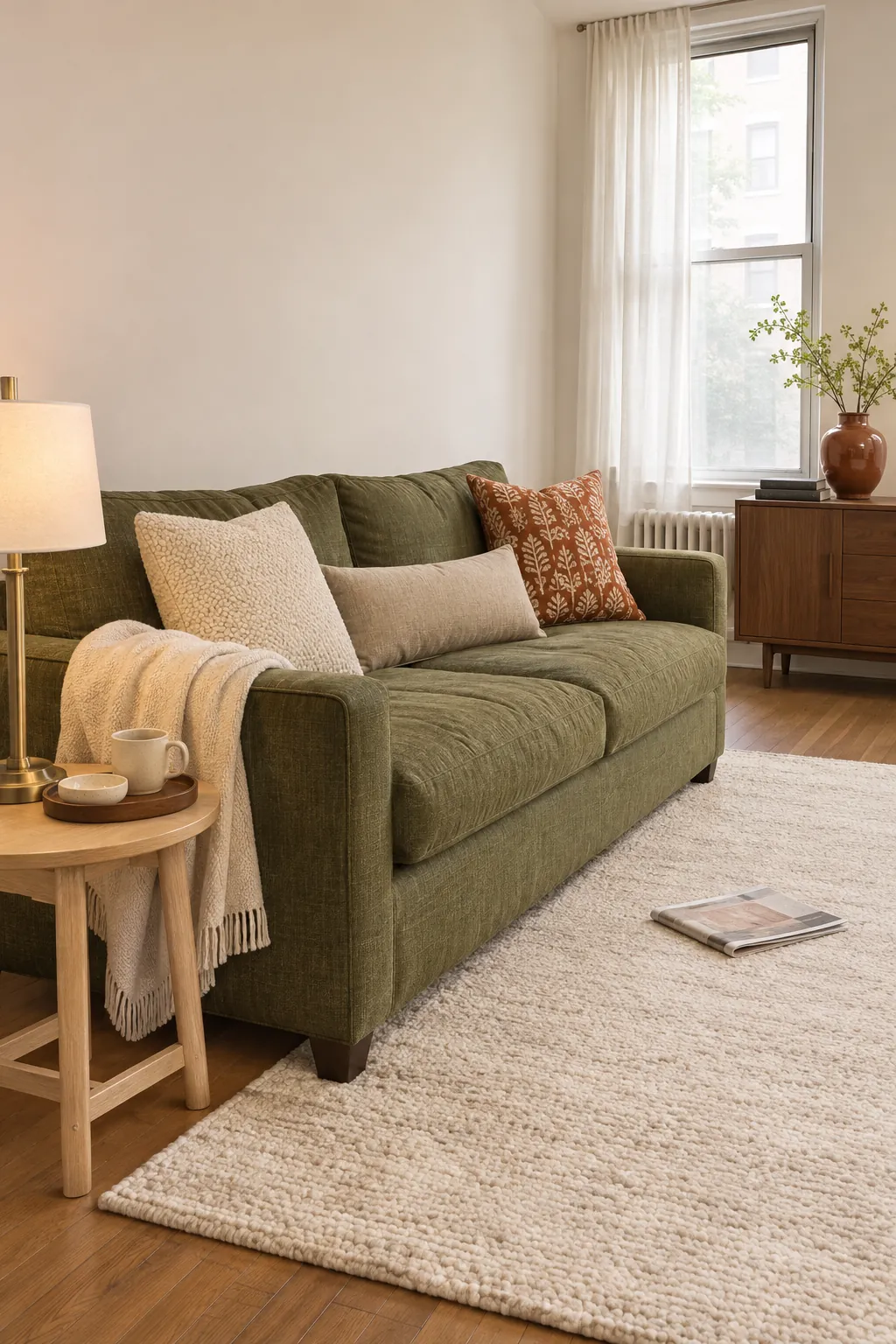
The rug is the easiest place to connect the couch to the rest of the room. A patterned rug can repeat a small amount of green and introduce cream, rust, blue, or tan for pillows and accessories to echo. A natural beige rug works when the couch is vivid or the room already has several colors, but visible texture keeps it from feeling flat.
Size is as important as color. At minimum, place the front legs of the couch and nearby chairs on the rug so the seating reads as one group. If the rug floats several inches in front of the furniture, even a beautiful green sofa living room can look disconnected.
Layer Pillows Without Making Them Match
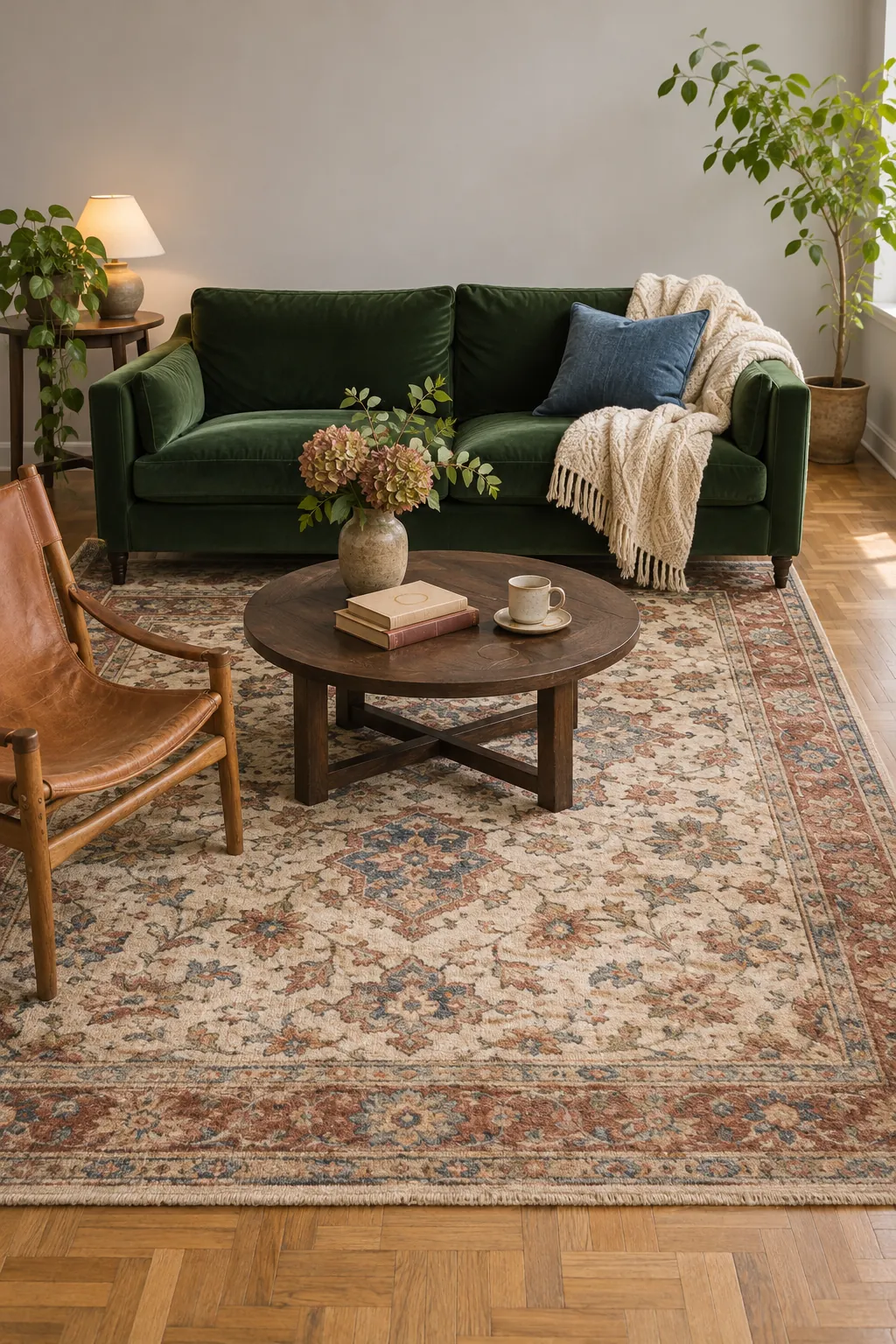
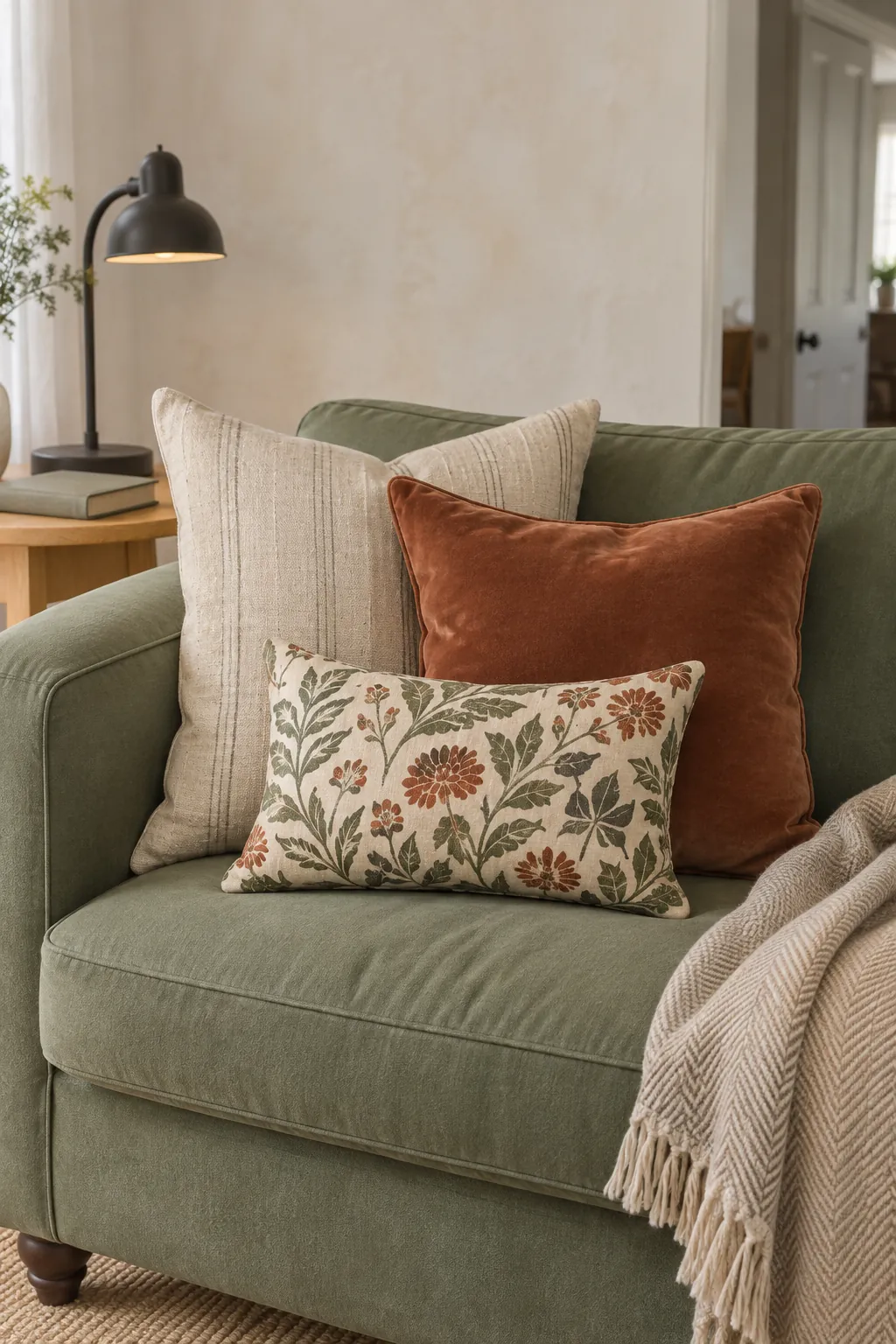
Throw pillows for a green couch should connect the palette rather than repeat the sofa exactly. Begin with one patterned pillow that includes the couch color and at least one shade from the rug. Add a solid or softly woven pillow in that secondary shade, then use cream, flax, or warm gray to give the eye a resting place.
Vary the scale and texture. A larger linen pillow, a smaller velvet cushion, and one restrained pattern feel more collected than several identical squares. On a compact couch, two or three pillows usually preserve comfortable seating and keep the upholstery visible.
Use Curtains to Control Light and Contrast
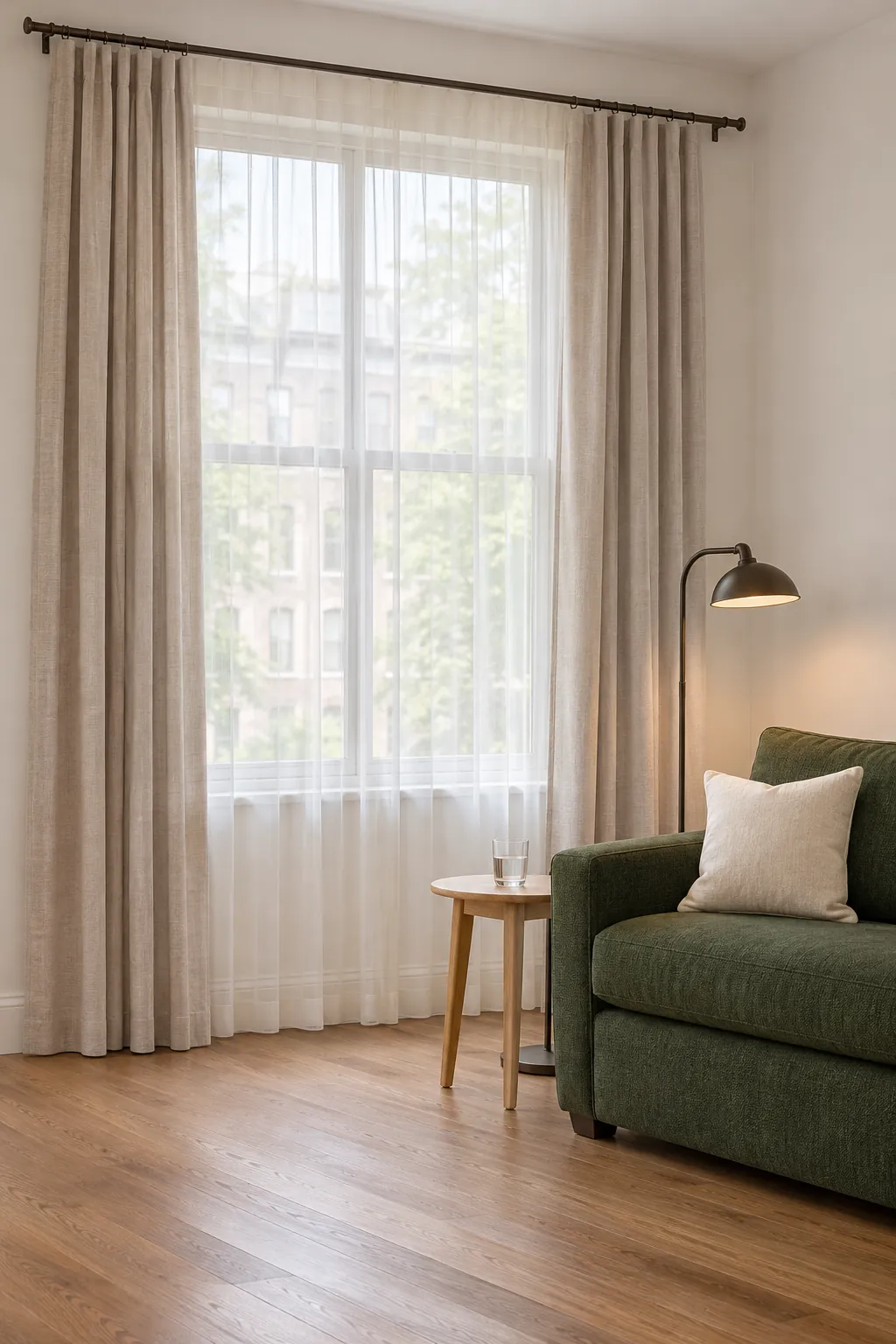
Curtains with a green sofa do not need to match the upholstery. Warm white, natural linen, mushroom, or pale taupe curtains soften the color and keep daylight clear. In a moody room, a deeper tonal curtain can work, but choose a noticeably lighter or darker value than the couch so the two surfaces remain distinct.
Hang the rod above the window and extend it past the frame. This lets the fabric stack beside the glass instead of blocking light, which is especially useful when forest or emerald upholstery already absorbs visual light. Before buying, hold a fabric sample beside the couch in morning and evening conditions because artificial bulbs can shift beige toward yellow and green toward blue.
Balance Green With Wood and Metal
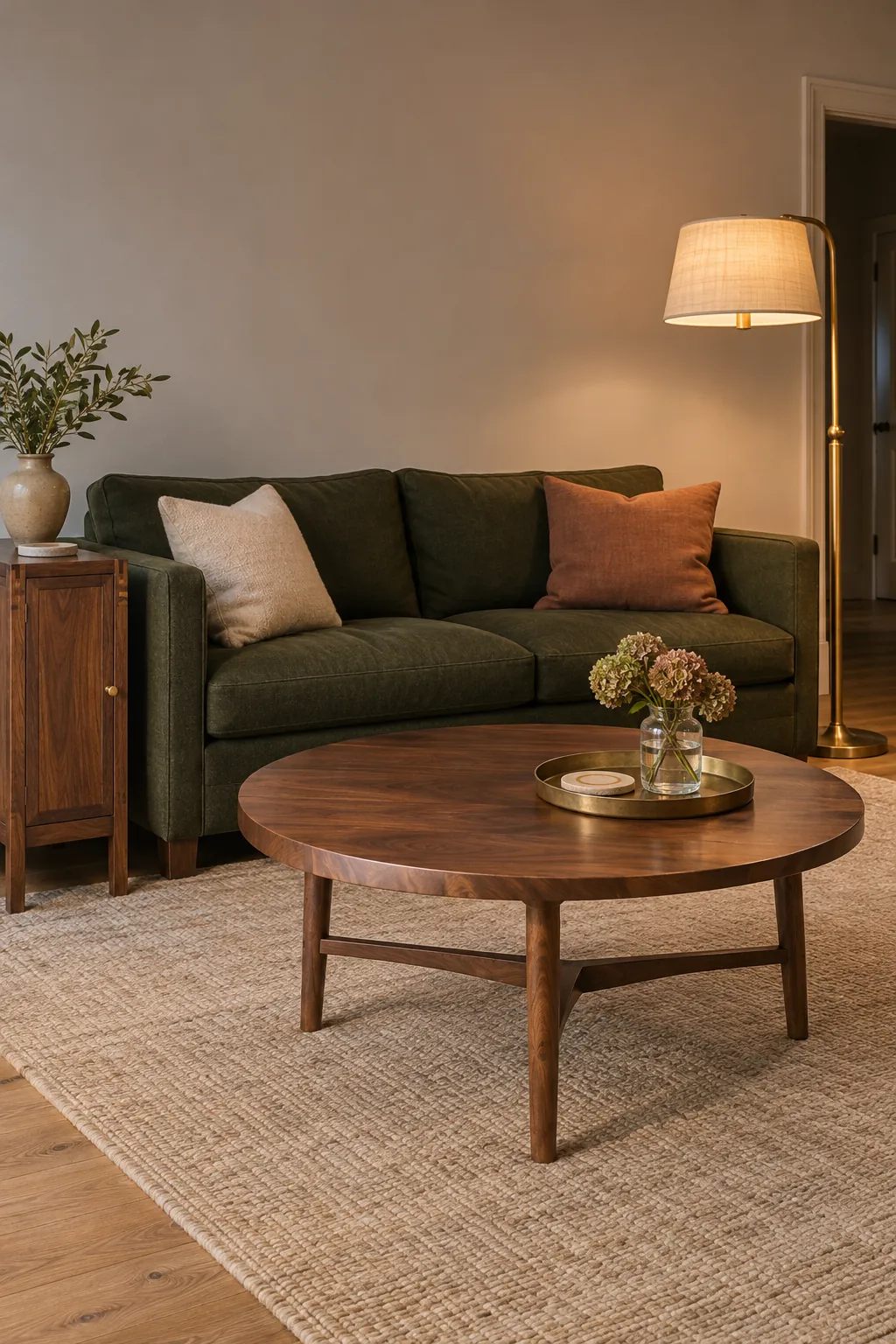
Wood furniture with a green sofa often feels natural because both colors have an earthy visual weight. Light oak keeps sage and bright greens airy, while walnut adds warmth to olive, forest, and emerald upholstery. Very red wood can compete with cool green, so repeat that wood tone in at least two places and keep the remaining palette restrained.
Metal changes the mood in a smaller dose. Aged brass adds warmth and suits velvet, black metal gives a modern green living room sharper structure, and brushed nickel works with cooler gray green upholstery. Use one main metal finish across the lamp, table, and small details rather than mixing every finish in equal amounts.
Finish the Room With Repeated Details
A room feels intentional when each important color appears more than once. Repeat the rug accent in a pillow, a book cover, or a small ceramic piece. Echo the couch green with one living plant or a modest decorative object, but avoid filling every corner with the same shade.
Give the couch enough visual company through a floor lamp, side table, and correctly scaled coffee table. Add wall interest that relates to the whole palette, not only to the sofa. Then remove one or two accessories and check the room from the doorway, because a strong green couch looks best when it remains the clear focal point rather than one item in a crowd.