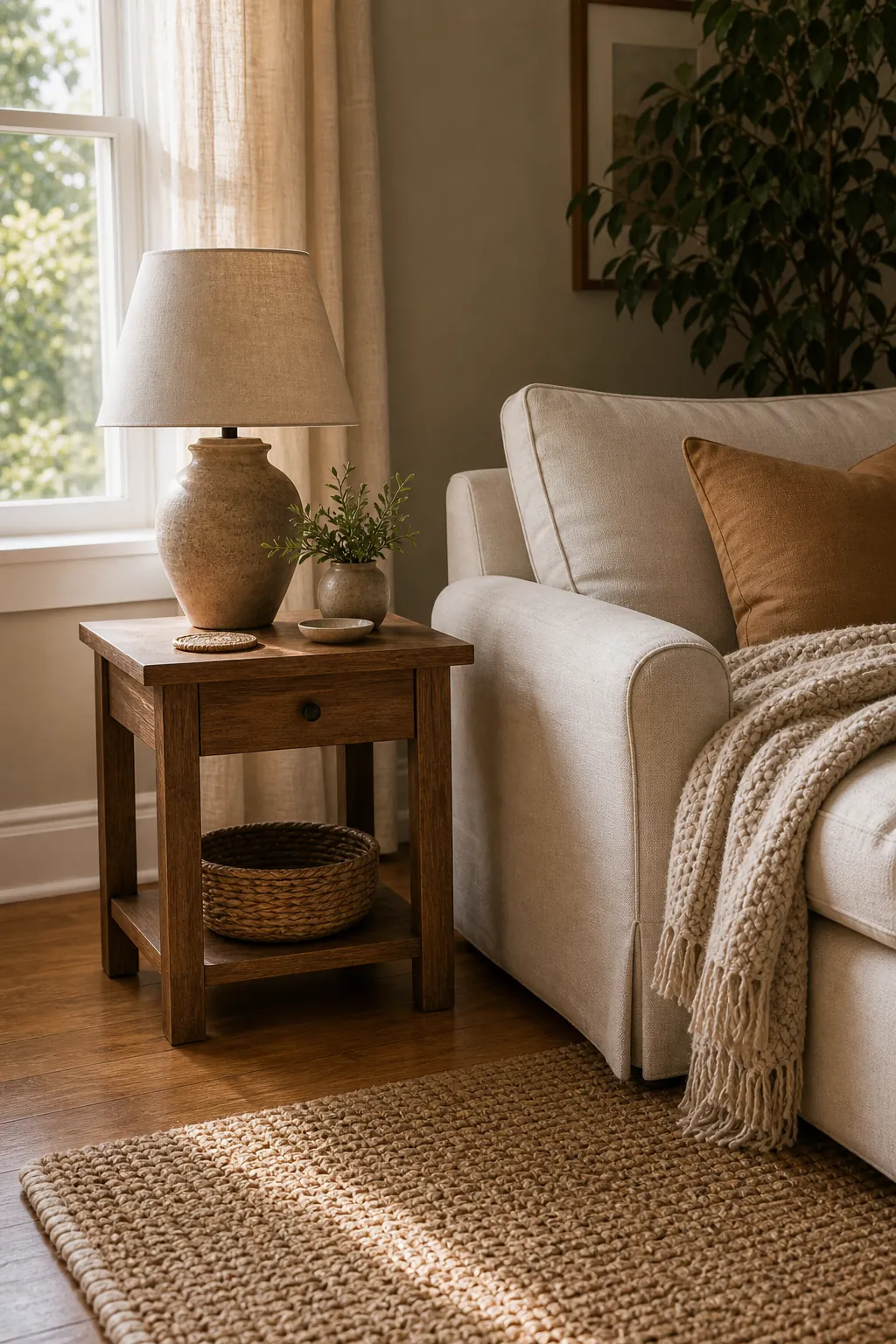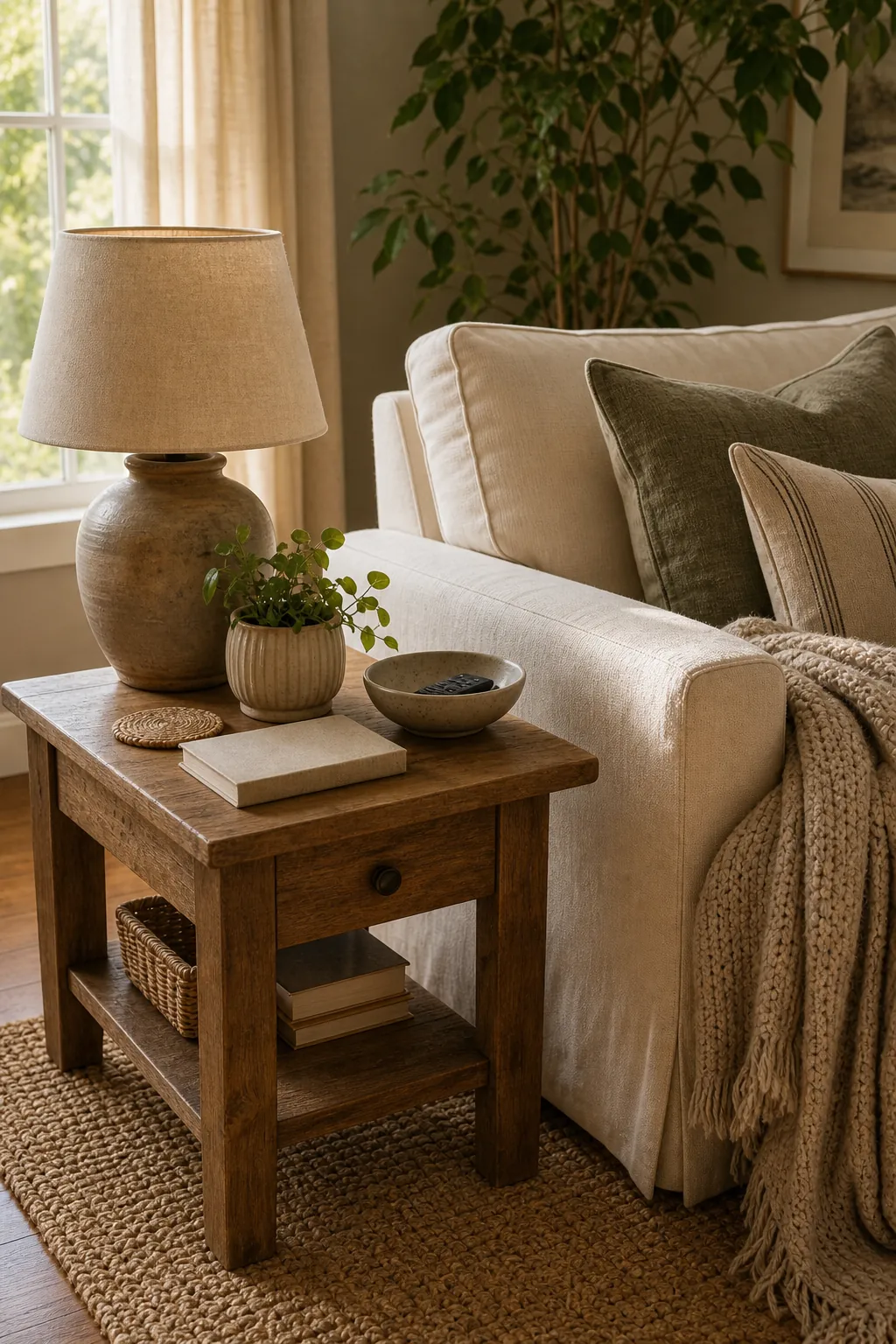
A side table next to a couch has to do more than hold a lamp. It is the small landing place that makes a sofa seat feel useful: somewhere for a drink, a book, reading light, a remote, and one soft decorative detail. When it is styled well, the whole living room corner feels calmer.
The mistake is treating a sofa side table like a tiny display shelf. A good table needs breathing room. Choose a few objects that support the seat first, then add decor only where it still leaves the table usable.
Match the Table Height to the Sofa Arm
The easiest way to make side table decor look intentional is to start with scale. The tabletop should sit close to the height of the sofa arm, or just a little lower. If it is too tall, the lamp feels top-heavy. If it is too low, reaching for a mug or book feels awkward.
Keep the table close enough to use from the seat, but leave a little room for fabric and movement. Practical spacing is part of the styling, because a pretty corner that is uncomfortable will always feel wrong.
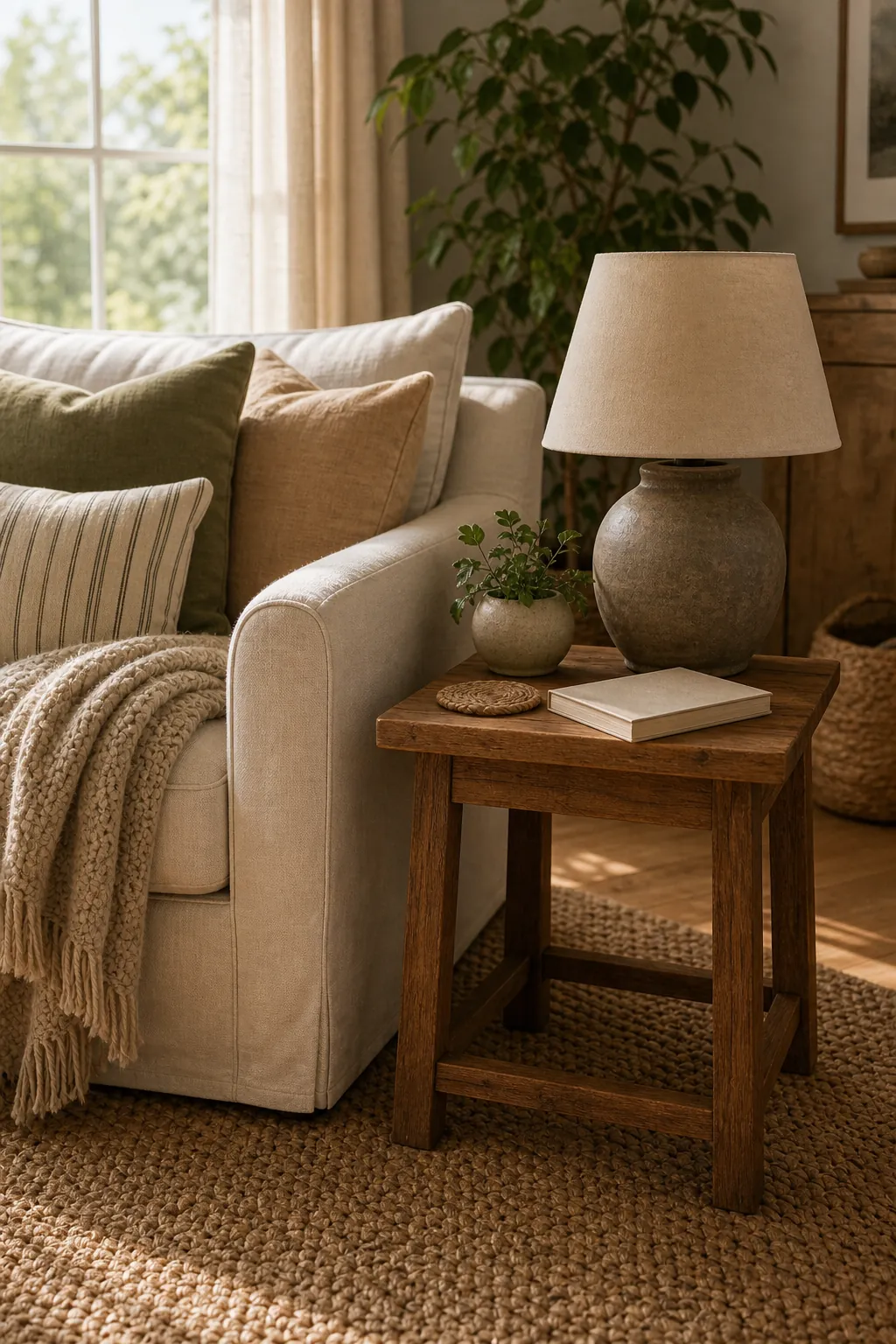
Let the Lamp Set the Mood
A lamp is usually the visual anchor for a side table next to a couch. Pick one that is tall enough to balance the sofa but not so large that it steals the whole corner. Ceramic, wood, linen, and woven shades work especially well when the living room already leans warm and neutral.
Use warm bulbs and keep the shade soft. The lamp should make the corner feel usable in the evening, not make the table look like a showroom prop.
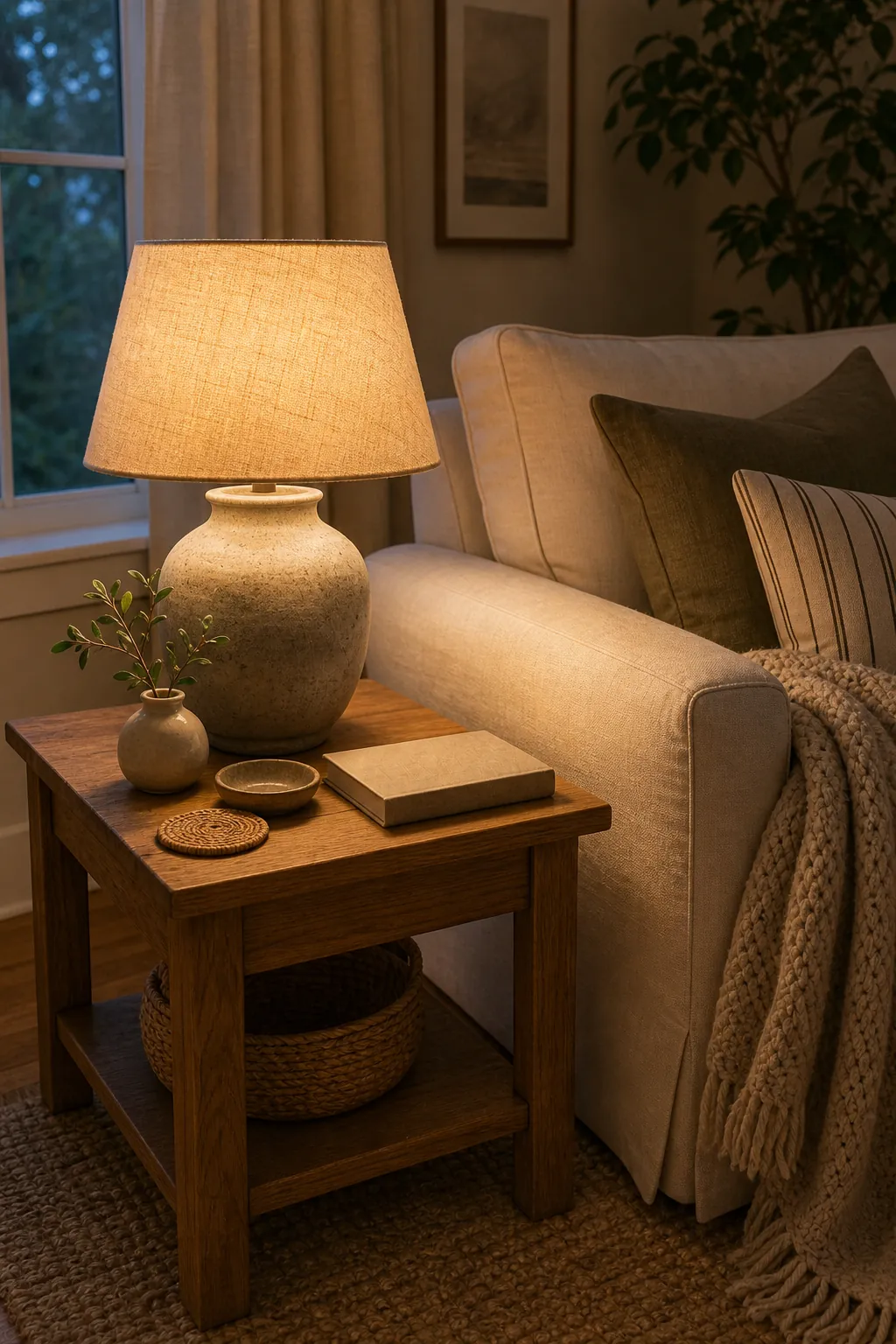
Group the Small Things
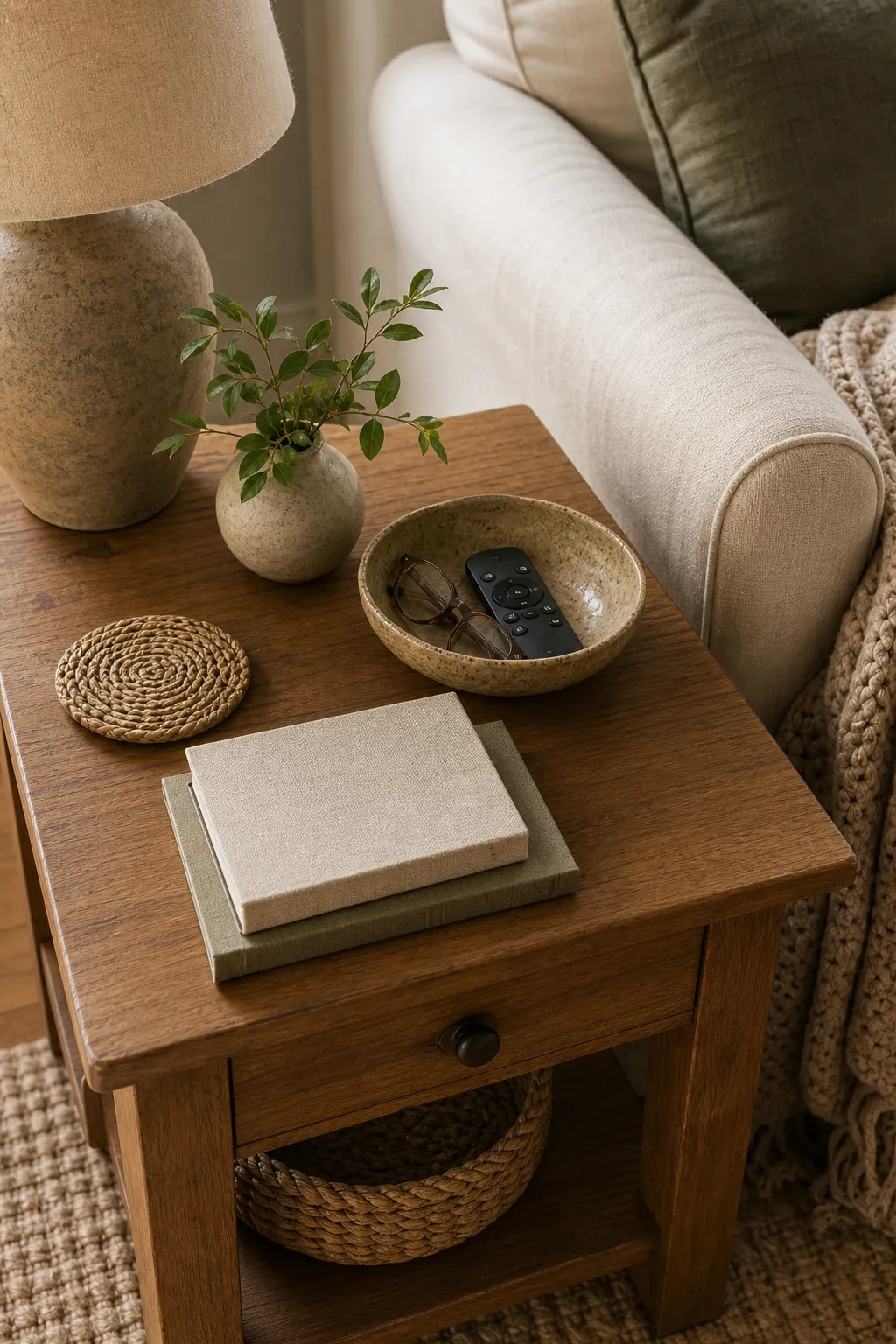
Remotes, glasses, lip balm, and chargers are the details that make a side table messy fast. Instead of pretending they will disappear, give them a home. A shallow ceramic bowl or small tray keeps practical items from scattering across the table.
This is where side table decor borrows a useful rule from coffee table decor: group small things so the surface still reads as one calm arrangement. One bowl can make everyday clutter look intentional.
Add One Plant, Not a Whole Garden
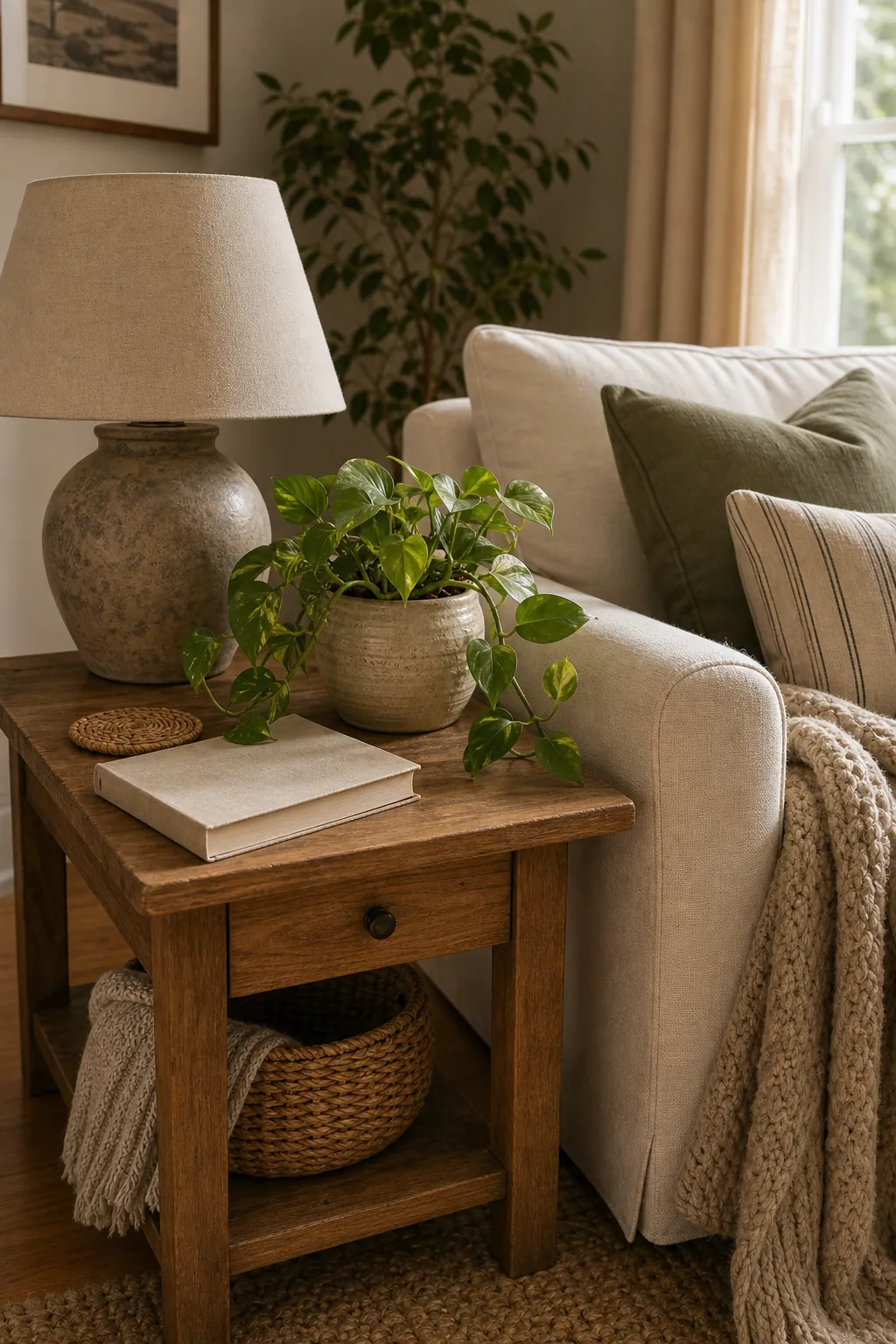
Plant decor can soften the hard lines of a side table, but scale matters. A small pothos, peperomia, fern, or clipped greenery stem is usually enough. The plant should add life without blocking the lamp, crowding the coaster, or brushing against the person sitting on the couch.
If the room already has a tall plant nearby, use the side table plant as an echo. Repeating green in two places makes the corner feel connected without making it cluttered.
Connect It to the Coffee Table and Rug
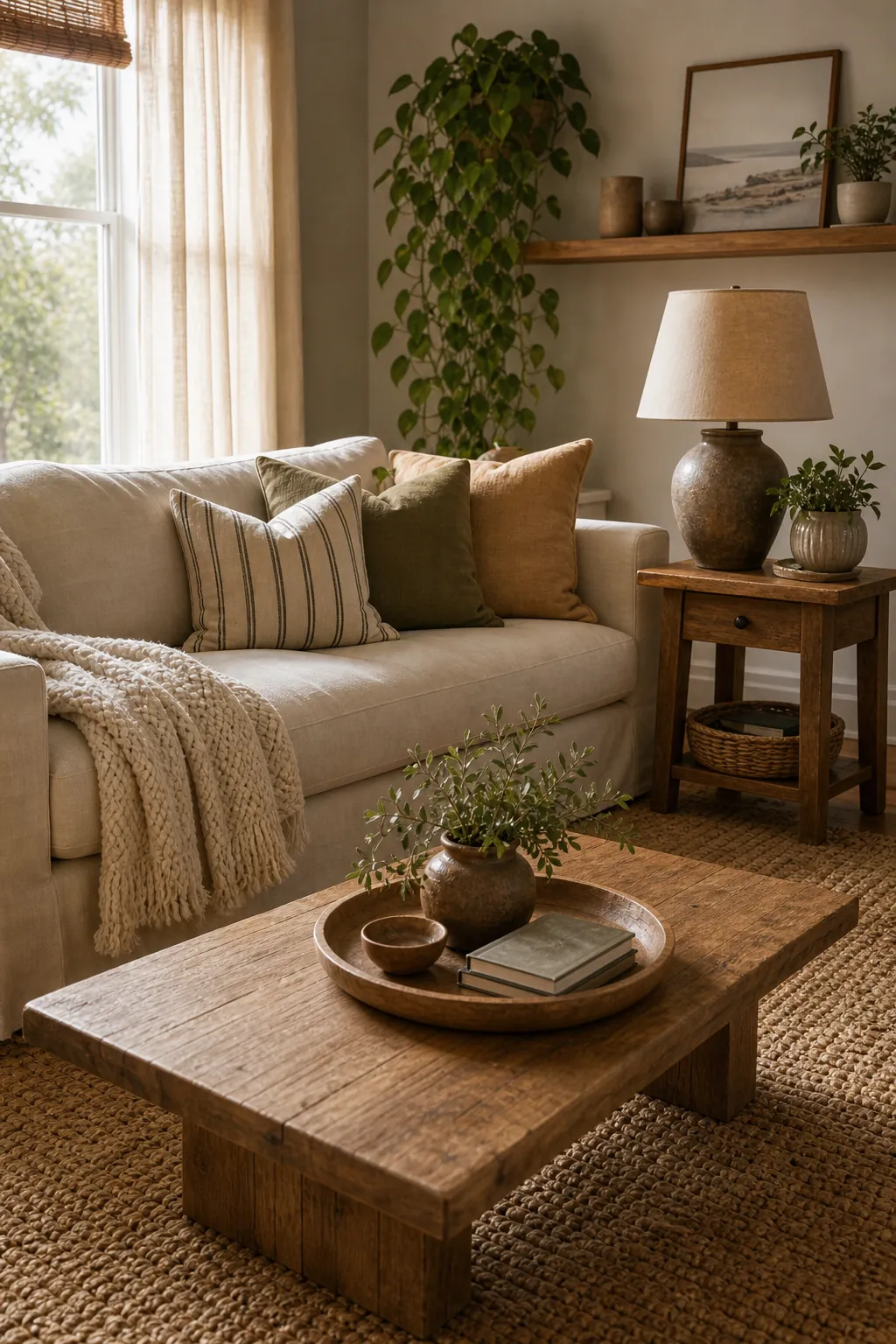
A side table can look random when it does not repeat anything from the rest of the living room. Pull one material from the coffee table, rug, pillow, or basket and repeat it in the side table corner. Wood, ceramic, woven fiber, and muted green are easy repeats.
You do not need a matching furniture set. In fact, a room usually feels warmer when the pieces are related but not identical. The connection should be quiet enough that the living room feels collected, not coordinated by a catalog.
Leave Some Empty Space
The final step is editing. If the side table already has a lamp, bowl, coaster, and plant, it probably does not need a stack of candles, picture frames, and extra vases. Empty space is what lets the useful pieces breathe.
Stand back and check whether someone could actually set down a mug. If the answer is no, remove one thing. A well-styled sofa side table should make the corner easier to live in.