
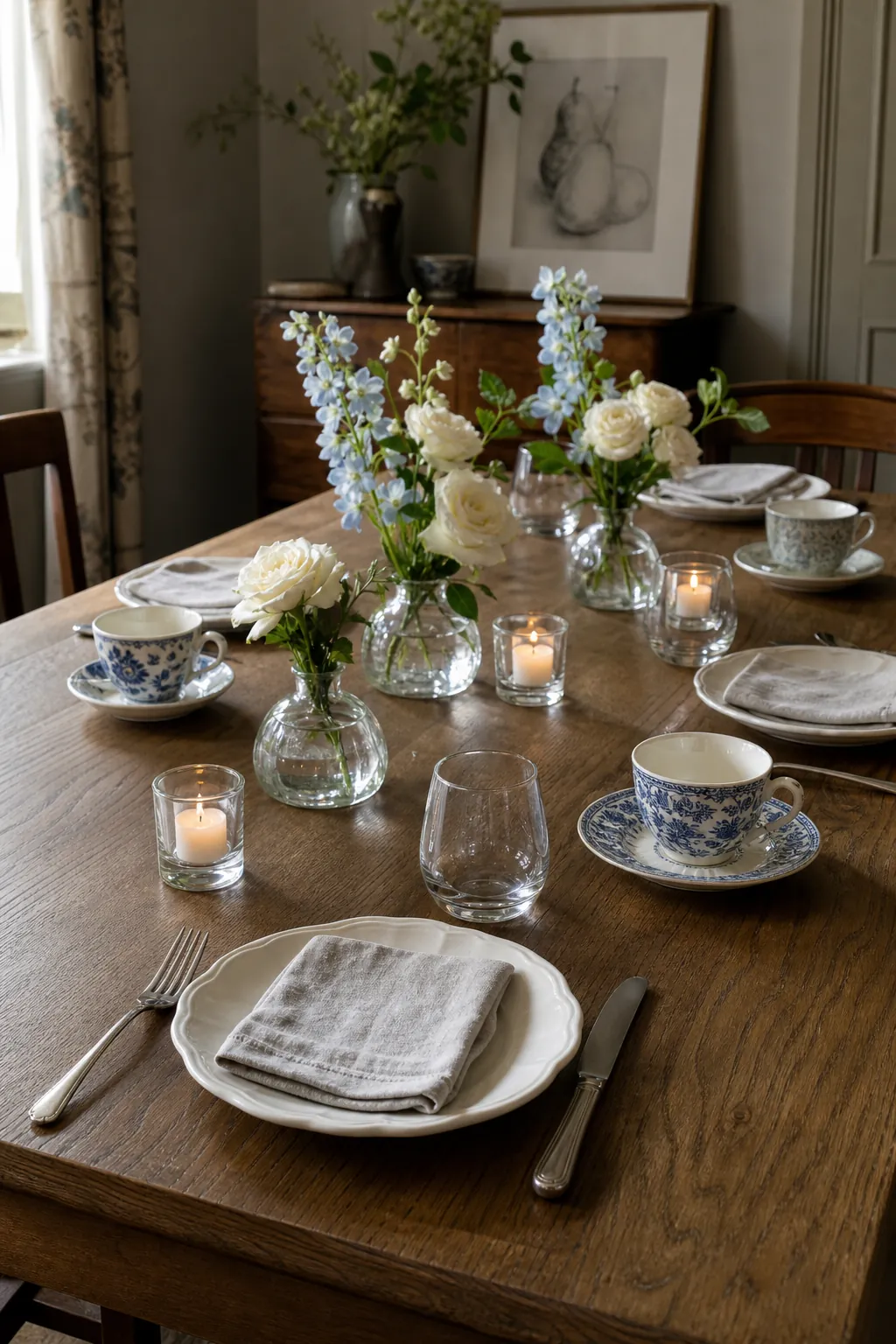
A table filled with teacups, flowers, and candles can look charming in a photograph and strangely cluttered in real life. The difference is not expensive china or a florist-made centerpiece. It is visual hierarchy: one clear palette, a low line of flowers, candlelight with breathing room, and teacups that feel intentionally repeated rather than randomly collected.
The easiest way to get there is to style the table in layers. Build the useful layer first, add flowers where they will not interrupt conversation, and treat candles as small points of light rather than a wall of flame. This method works with matching cups, vintage teacups, thrifted pieces, or the everyday dinnerware already in your cupboard.
Choose one quiet color story before placing anything
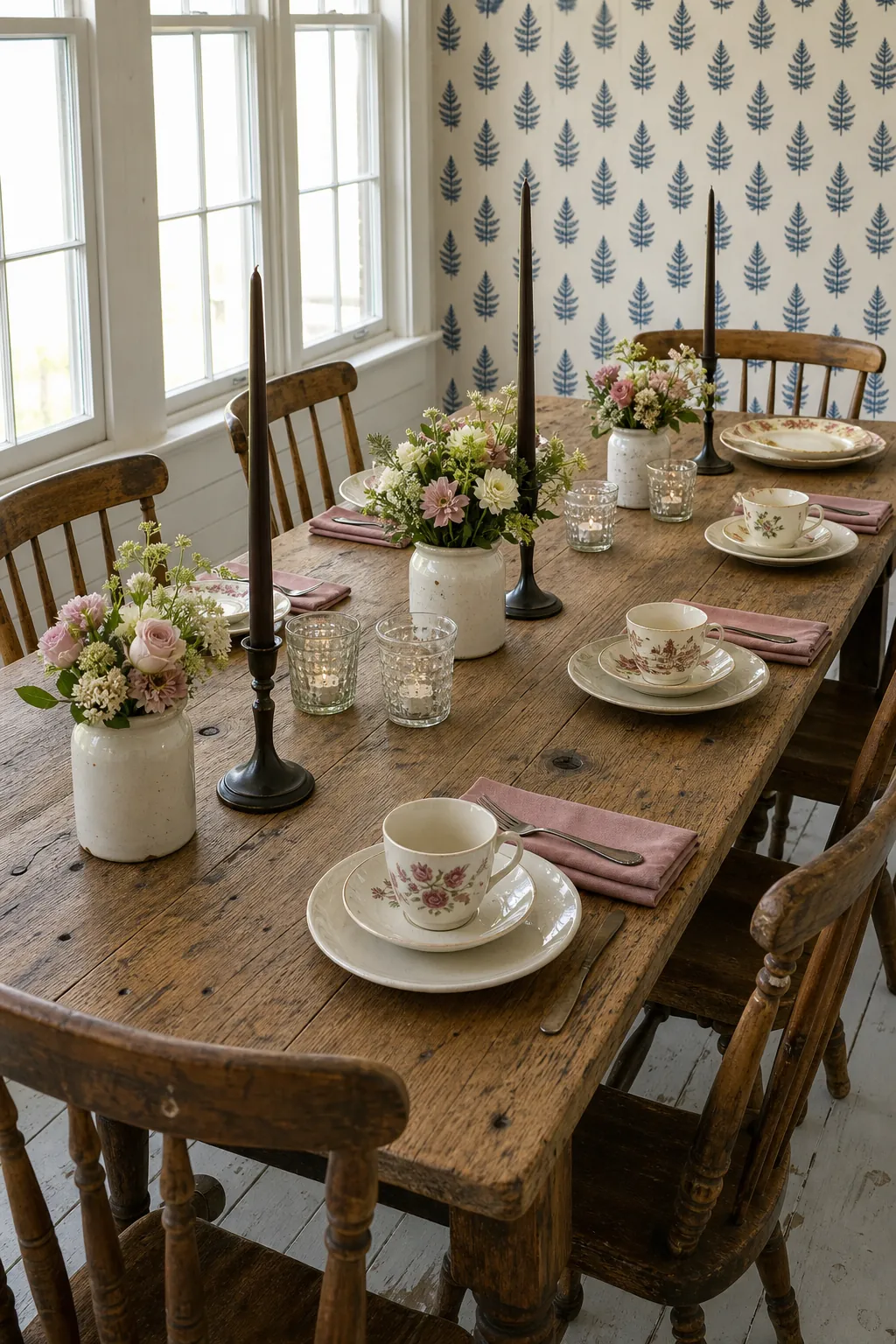
Begin with the teacup that has the strongest pattern. Pull one main color and one supporting neutral from it. A blue floral cup might lead to dusty blue napkins, white flowers, clear glass, and warm ivory candles. A rose-patterned cup might suggest muted pink blooms, cream linen, and aged brass. You do not need to match every object; you need to limit how many unrelated colors compete for attention.
If the table already has beautiful wood grain, leave part of it visible. If the surface is busy or damaged, use a plain runner instead of a full patterned cloth. This gives small pieces of teacup decor a calm background and prevents pretty details from disappearing into visual noise.
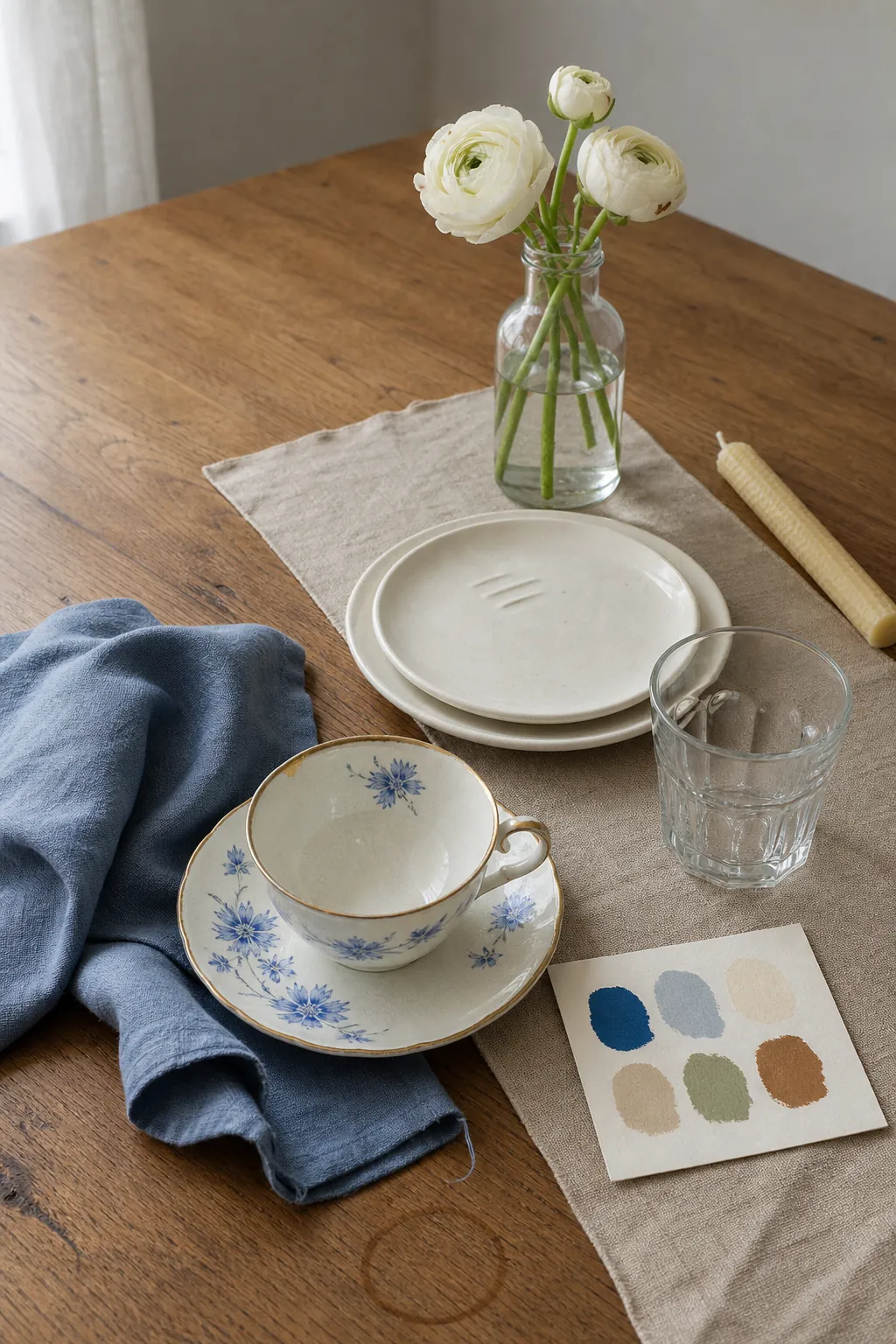
Build each place setting from the plate outward
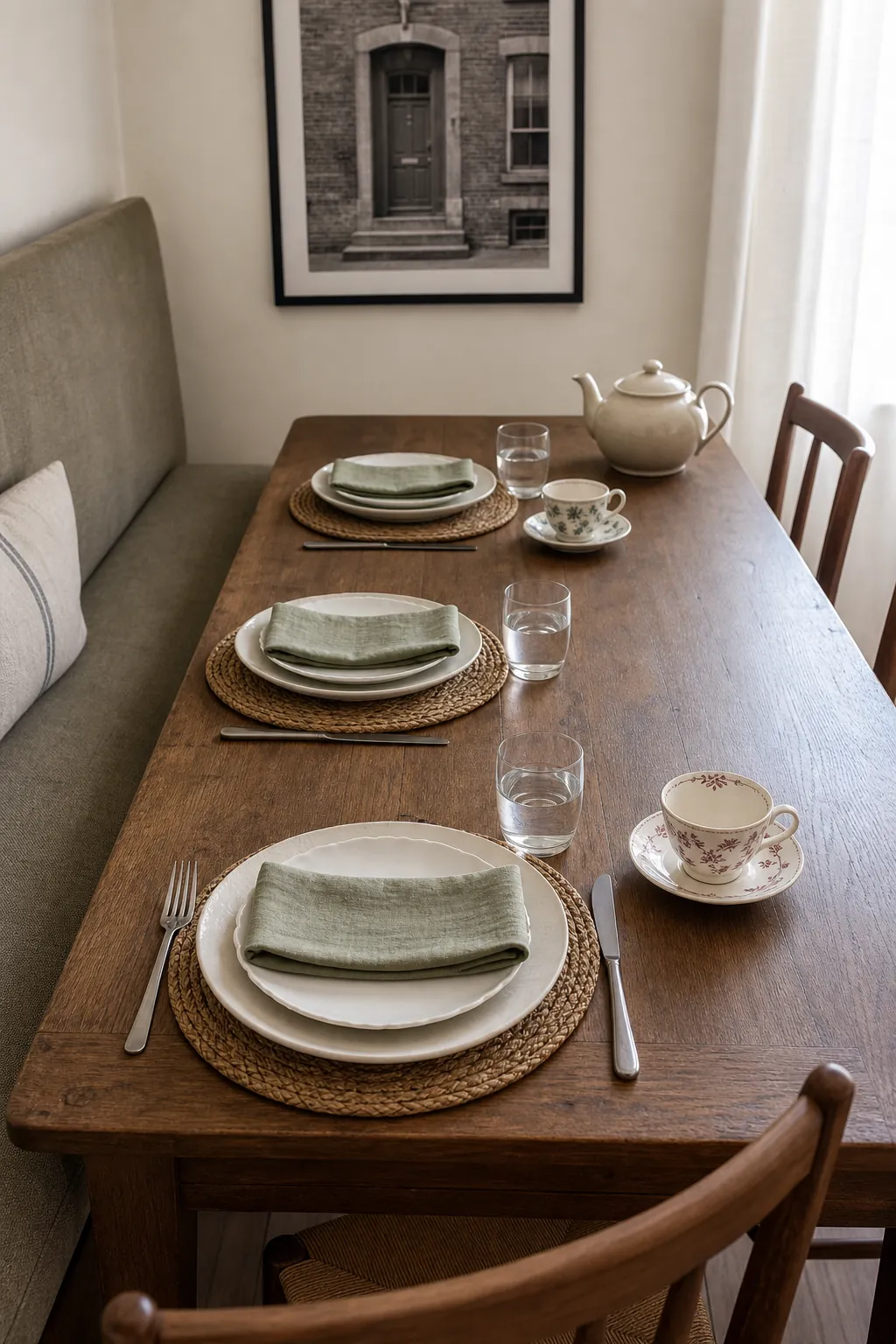
Set the functional pieces before the centerpiece. Place the dinner plate, cutlery, glass, napkin, and teacup as though a guest will sit down in five minutes. This quickly reveals how much central space is actually available. It also stops the common mistake of creating a beautiful centerpiece and then squeezing plates around it.
- Keep the teacup and saucer close enough to reach without crossing over a candle.
- Repeat one detail at every seat, such as the same napkin fold or a single flower sprig.
- Mix vintage teacups by shape or color family, not by trying to make every pattern identical.
- Leave a clear landing area for serving dishes, a teapot, or shared plates.
For mismatched dinnerware, repetition creates order. The cups can all be different if the napkins, glassware, or chargers repeat consistently. One repeated element is enough to make variation look deliberate.
Arrange flowers as a low rhythm, not one bulky bouquet
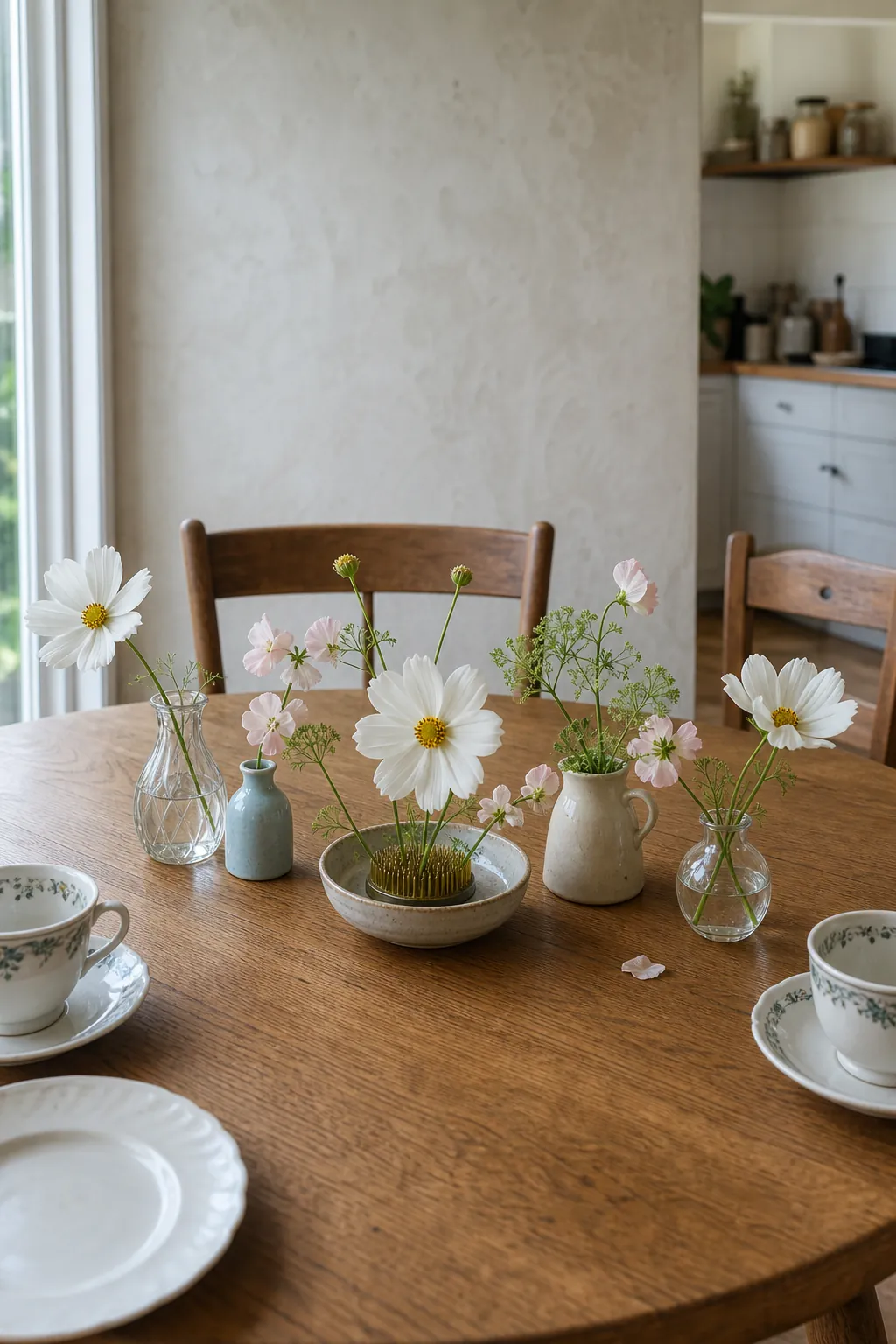
Fresh flowers look more relaxed—and often cost less—when divided among bud vases, small creamers, or a low bowl. Use an odd number of vessels on a long table and vary their fullness without making them all the same height. A few open blooms, several airy stems, and a little greenery create movement without turning the center into a solid hedge.
Sit in a chair and look across the table before you finish. You should be able to see another guest’s face without leaning around a vase. If the arrangement blocks the view, shorten the stems or move the tallest piece to a sideboard. Save strongly scented flowers for another room; fragrance should not compete with tea or food.
Use candlelight in protected pockets
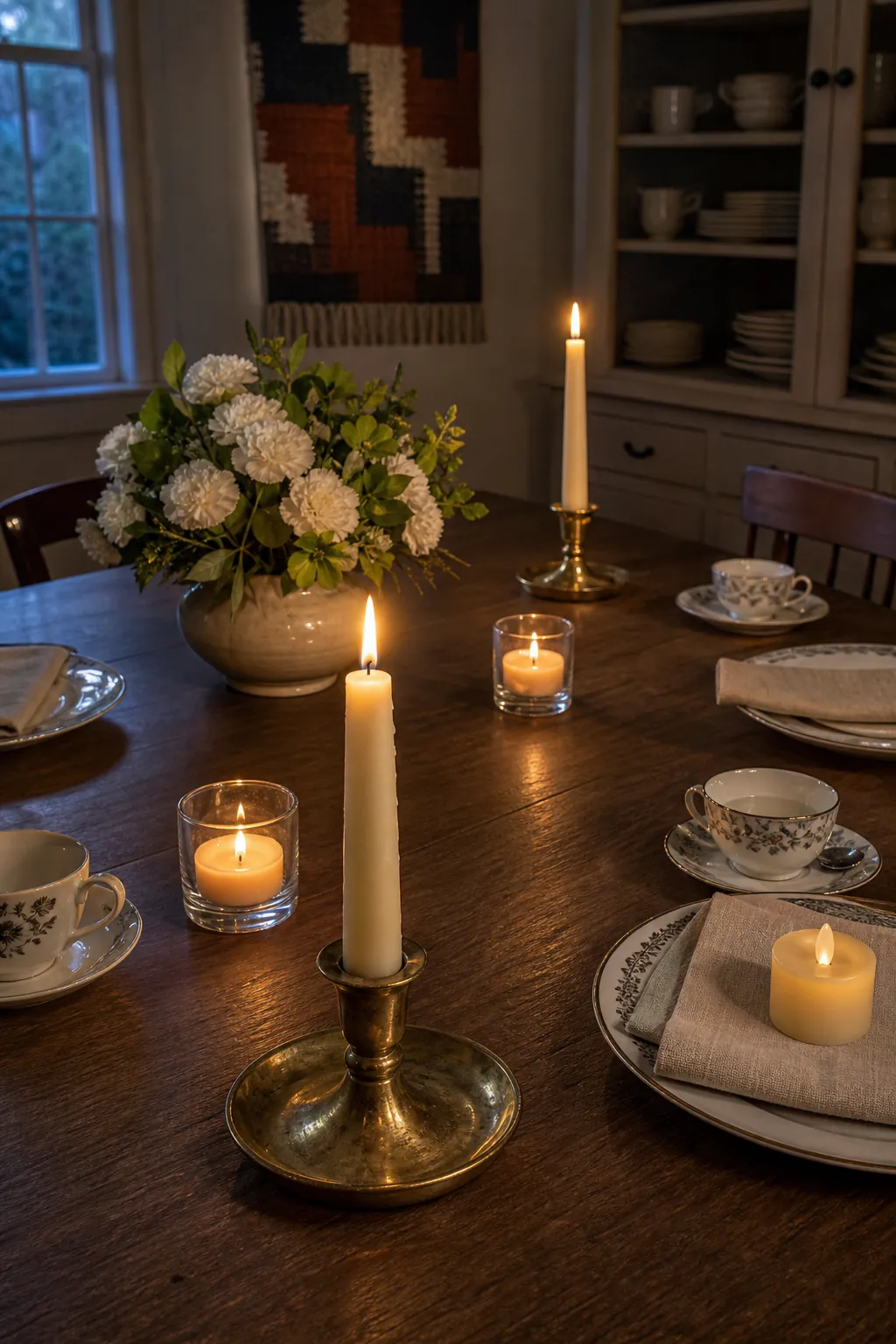
Candles should add glow without making guests nervous. Choose sturdy holders on a stable, uncluttered surface and keep flames well away from petals, foliage, sleeves, paper place cards, and table linens. The National Fire Protection Association recommends keeping candles at least 12 inches from anything that can burn. If that distance is not realistic on your table, use quality flameless candles.
Unscented tapers are graceful for a meal, while votives in substantial glass holders suit a smaller table. Do not create a continuous row of tall candlesticks. Instead, place two or three small candle groups between flower clusters, preserving open space around every flame. Light them shortly before guests arrive, never leave them unattended, and extinguish them before leaving the room.
Create three height bands and repeat them down the table
A polished table usually has three readable levels: the low layer of plates and teacups, a middle layer of flowers and votives, and a few narrow vertical accents such as tapers. The trick is restraint. The tallest pieces should be slim enough to see around, while most of the decoration stays below seated eye level.
On a rectangular table, arrange loose clusters rather than lining everything up at identical intervals. Try a bud vase with one votive, then a small open gap, then a teacup holding a single bloom beside another candle. On a round table, keep one compact cluster in the center so every place setting retains elbow room. The objects should relate to the shape of the table instead of fighting it.
Edit the finished table from a guest’s chair
The final step is subtraction. Sit at every place and check the view, reach, and available surface. Can a guest lift the teacup without brushing a flower? Is there room for a small plate? Does any candle sit in the path of a sleeve? Can people across the table make eye contact?
Remove the first object that feels unnecessary, then look again. A good table setting does not display everything you own. It creates a gentle frame for conversation, tea, and food. When the cups are easy to use, the flowers sit low, and the candlelight has safe breathing room, the table feels generous rather than decorated.