
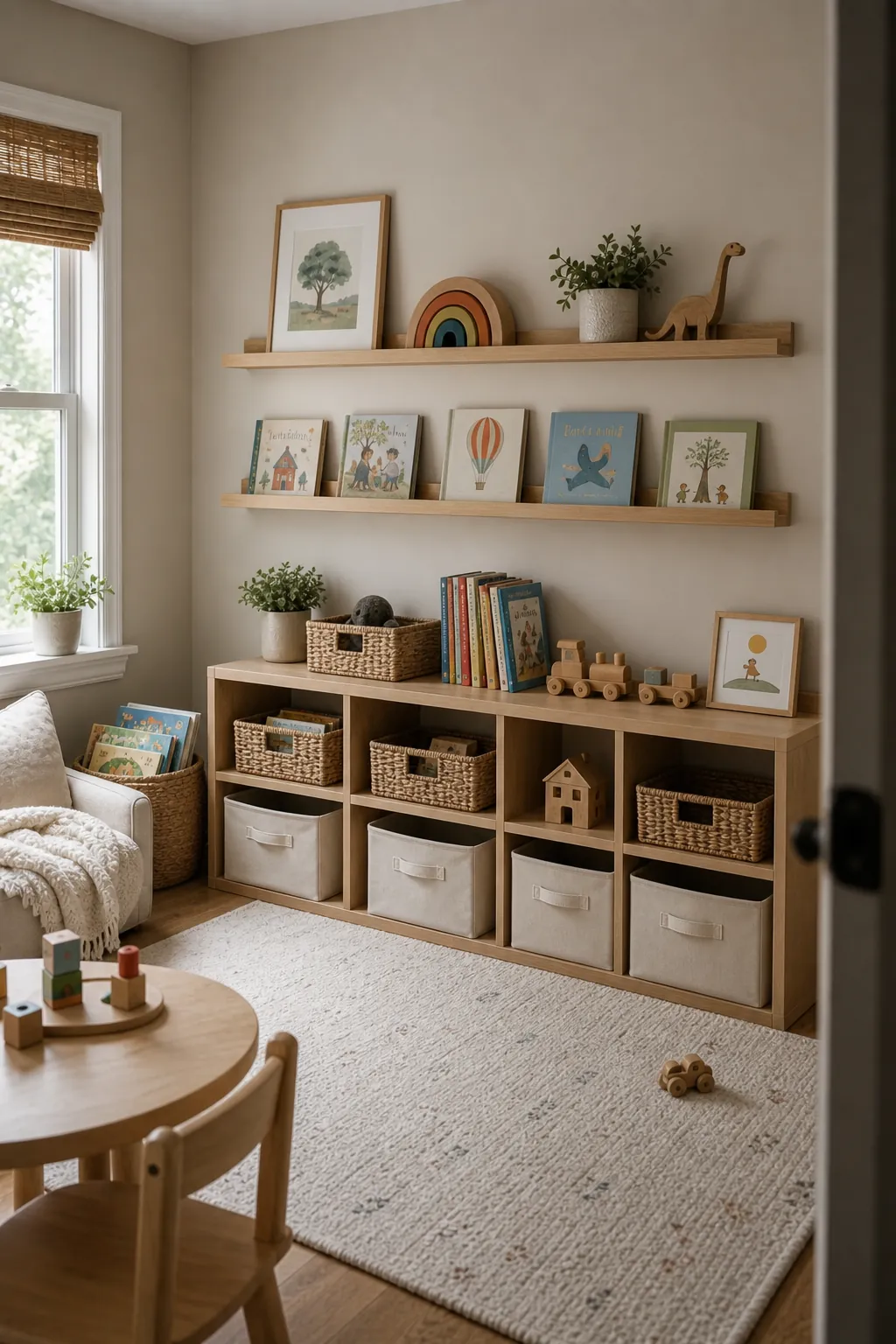
Kids room shelves are easy to overfill because everything feels useful, cute, or sentimental. Then the shelf stops helping the room and starts broadcasting every tiny toy at once. The fix is not to hide all personality. The fix is to give each shelf a job, leave breathing room, and make cleanup obvious.
Good shelf styling in a kids room should do three things at the same time: show favorite items, store the messy pieces, and keep the room calm enough to reset quickly. If a shelf looks good only when an adult arranges it every night, it is not really working.
Edit the Shelf Before You Style It
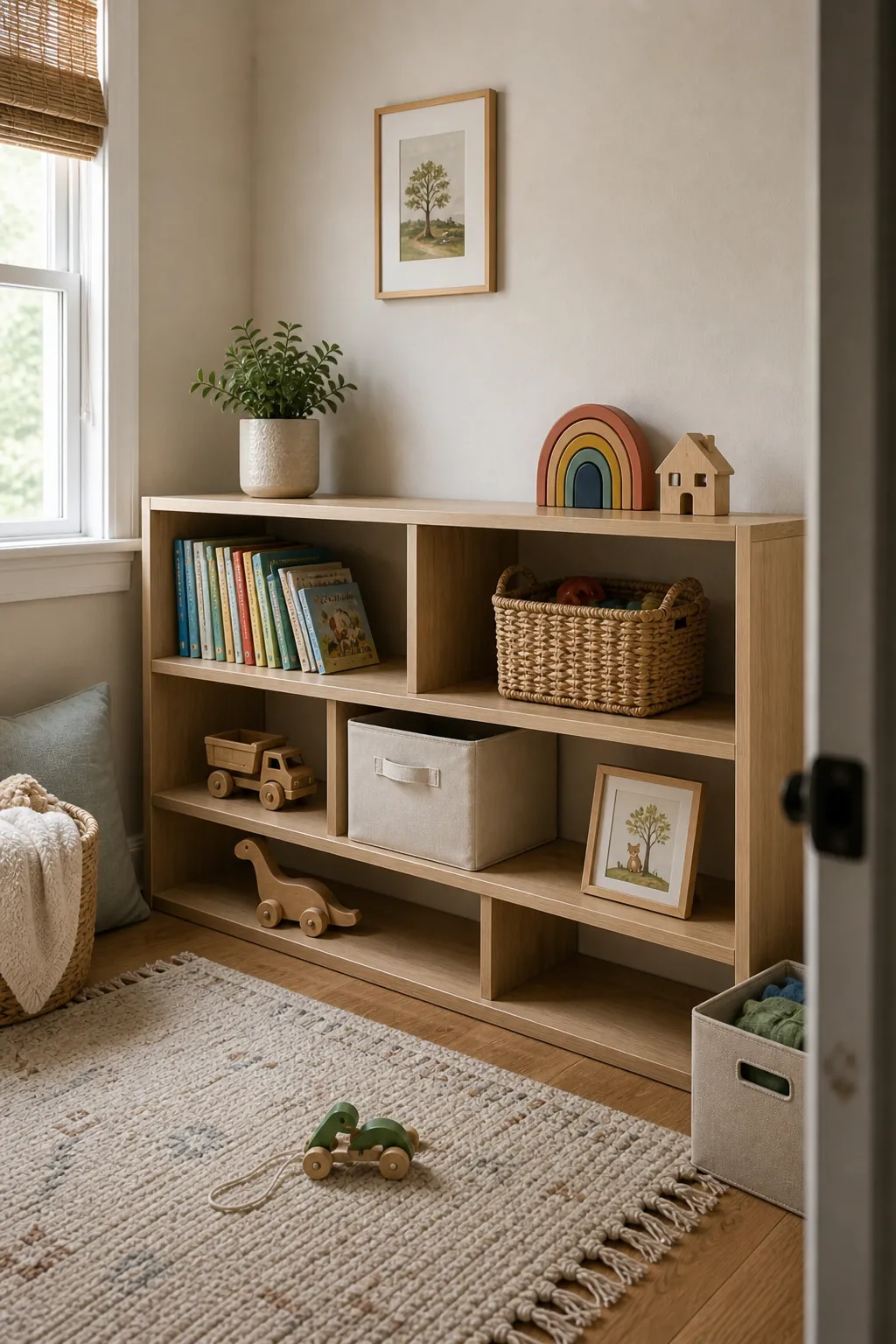
Start by taking everything off the shelf. Put back only the books, toys, baskets, and decor that your child uses often or genuinely loves. Shelves get cluttered when they become a parking spot for every small object with no home.
A simple rule helps: each shelf should hold one main category. Picture books on one shelf, building toys in one basket, soft toys in one cubby, art supplies in one lidded bin. When categories are mixed, the shelf looks busy even if the total number of items is not high.
Face a Few Books Forward
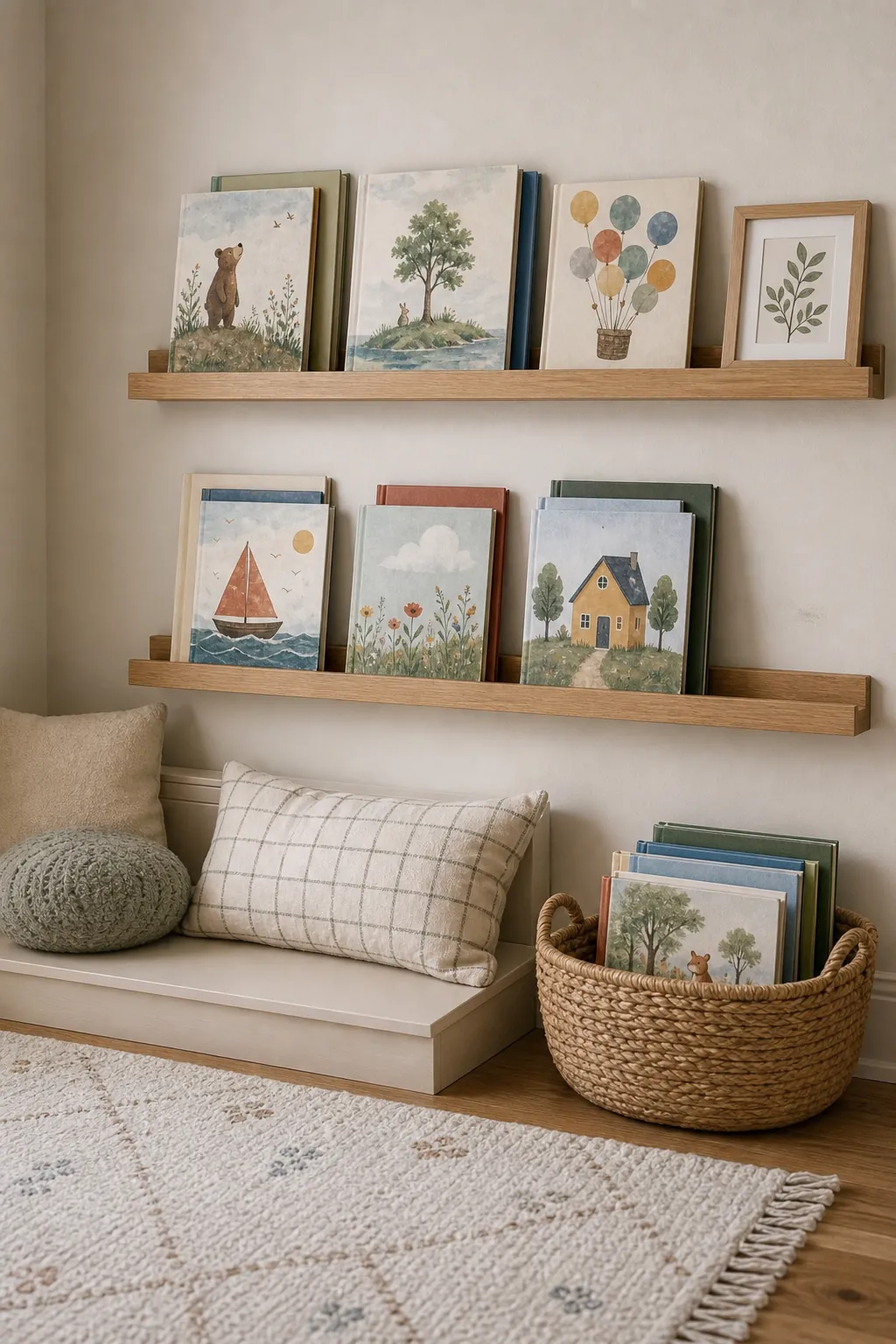
Books add color, but rows of thin spines can look noisy. Turn a few favorite covers forward and keep the rest in a tidy row or basket. Forward-facing books work especially well on wall shelves and picture ledges because they create a simple focal point without adding more decor.
For a cleaner look, limit each ledge to three or four books. Let the covers overlap slightly and keep the tallest book at the back. This keeps kids room shelves playful while still giving the eye a place to rest.
Use Baskets for Mixed Small Toys
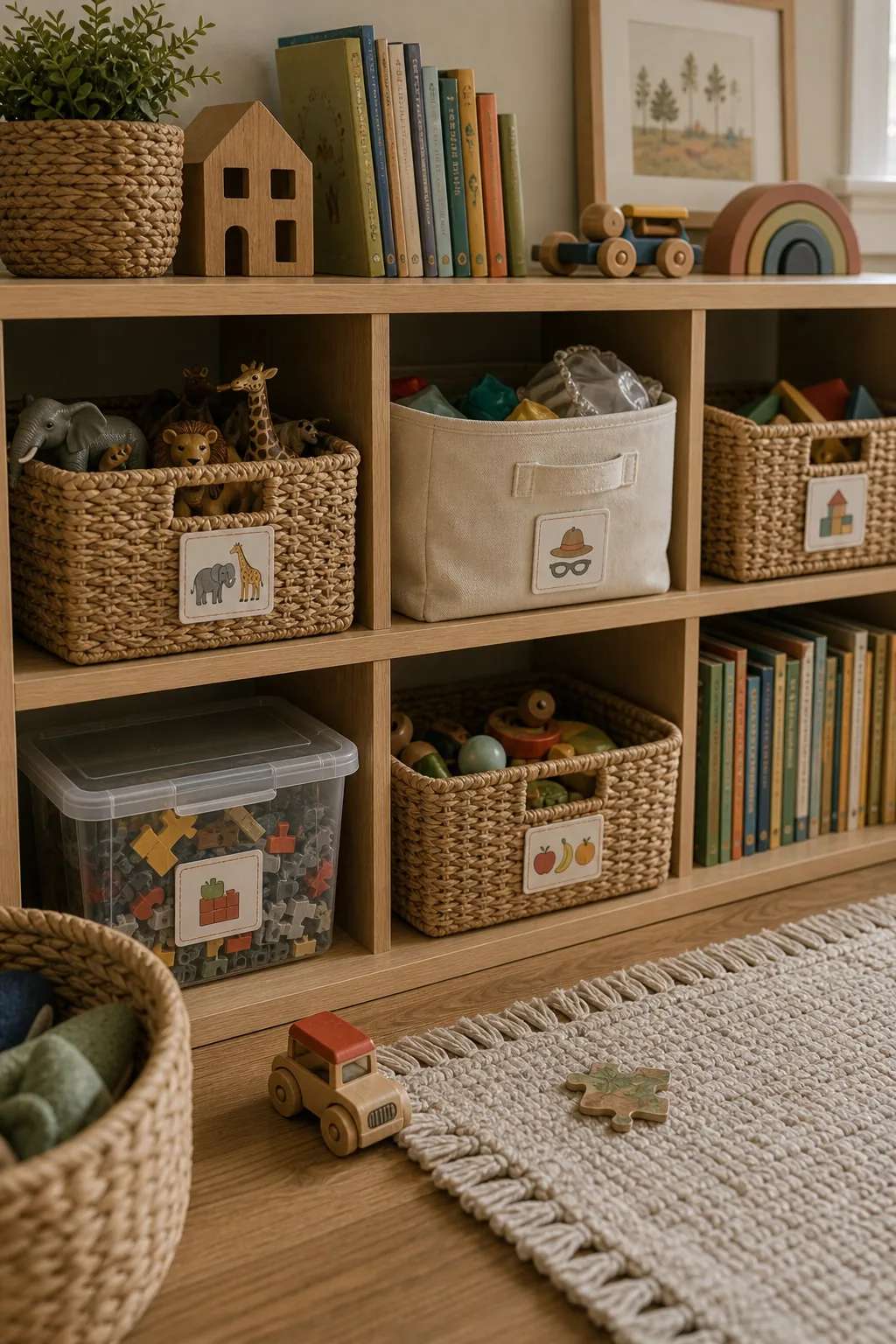
Loose animals, blocks, cars, puzzle pieces, doll clothes, and pretend food can make open shelves look messy fast. Baskets and bins give those pieces a boundary. They also make cleanup easier because children do not need to arrange every item perfectly; they only need to return it to the right container.
- Woven baskets soften the shelf and hide visual noise.
- Canvas bins work well for lightweight toys and dress-up pieces.
- Clear lidded boxes are best for tiny sets that need all their parts.
- Picture labels help younger children clean up without reading.
Keep Wall Shelves Shallow and Simple
Wall shelves can make a kids bedroom feel styled, but deep shelves collect random things. Shallow ledges, peg rails, or slim floating shelves are easier to keep neat because they can only hold a few items. Use them for books, small framed art, one keepsake, or a tiny plant in a safe spot.
If the shelf hangs above a desk, dresser, or reading corner, treat it as a small display zone instead of storage overflow. The storage can live below in drawers, bins, or cubbies, while the wall shelf stays light.
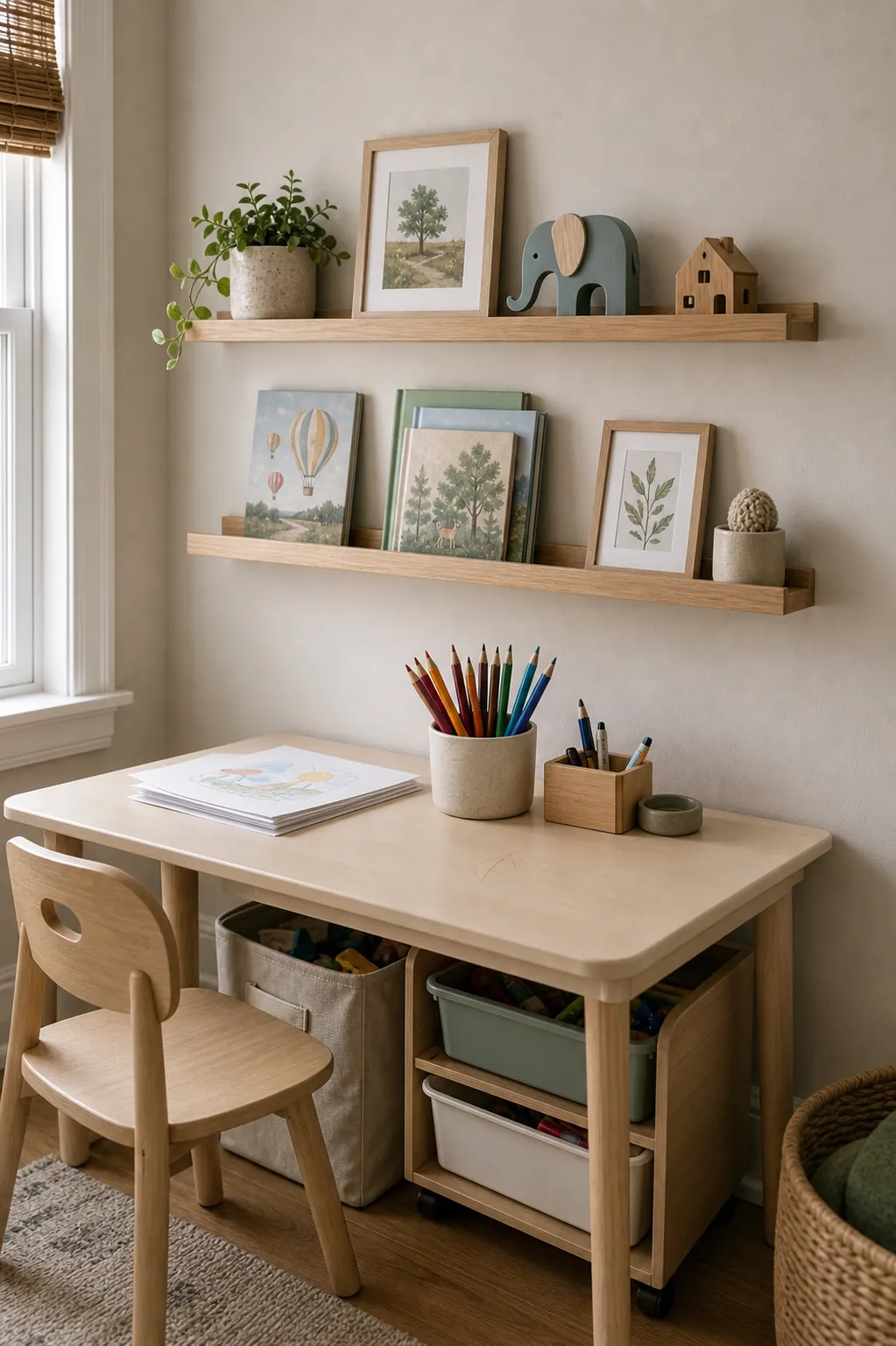
Rotate Toys Instead of Displaying Everything
A shelf can feel clutter free when it shows fewer choices at one time. Keep a small group of current favorites on the shelf and store the rest in a closet, under-bed bin, or labeled storage box. Every few weeks, swap pieces in and out.
Toy rotation helps the room look calmer, but it also helps children notice what is available. A shelf with ten clear options usually gets more focused play than a shelf with fifty mixed items competing for attention.
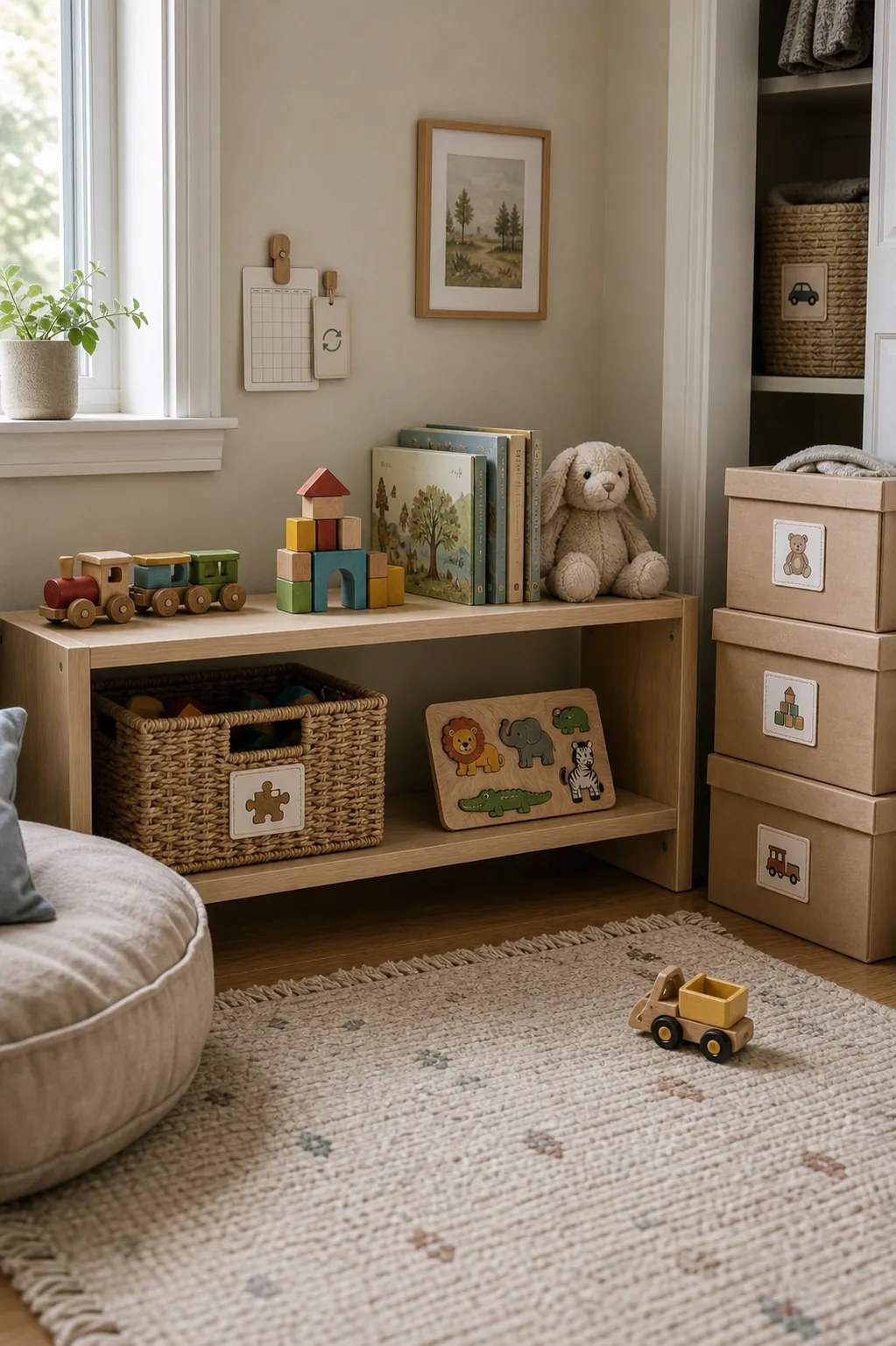
Leave Empty Space on Purpose
Empty space is what makes shelf styling look intentional. It separates the useful pieces from the decorative pieces and keeps the shelf from feeling like a storage wall. You do not need a lot of it. Even a few inches between a basket, a book stack, and a small keepsake can change the whole room.
End by looking at the shelf from the doorway. If the first thing you notice is a jumble of small shapes, remove something. If you notice the books, baskets, and one or two favorite details, the shelf is doing its job.
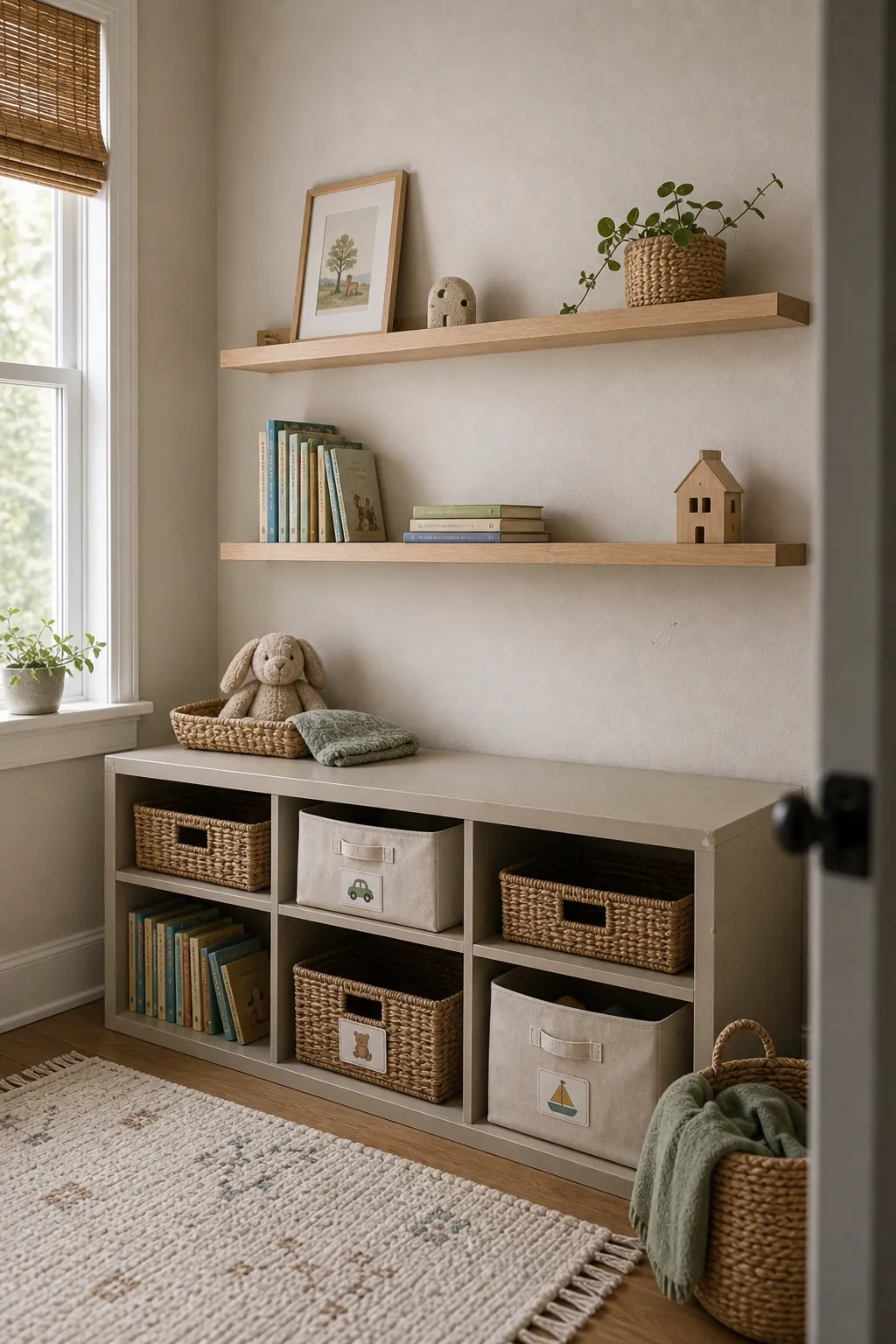
Kids room shelf styling is less about making a perfect display and more about making the room easier to live in. Edit first, group the small pieces, face a few books forward, and leave space where the eye can rest. The shelves will still look like they belong to a child, but they will stop making the whole room feel cluttered.