
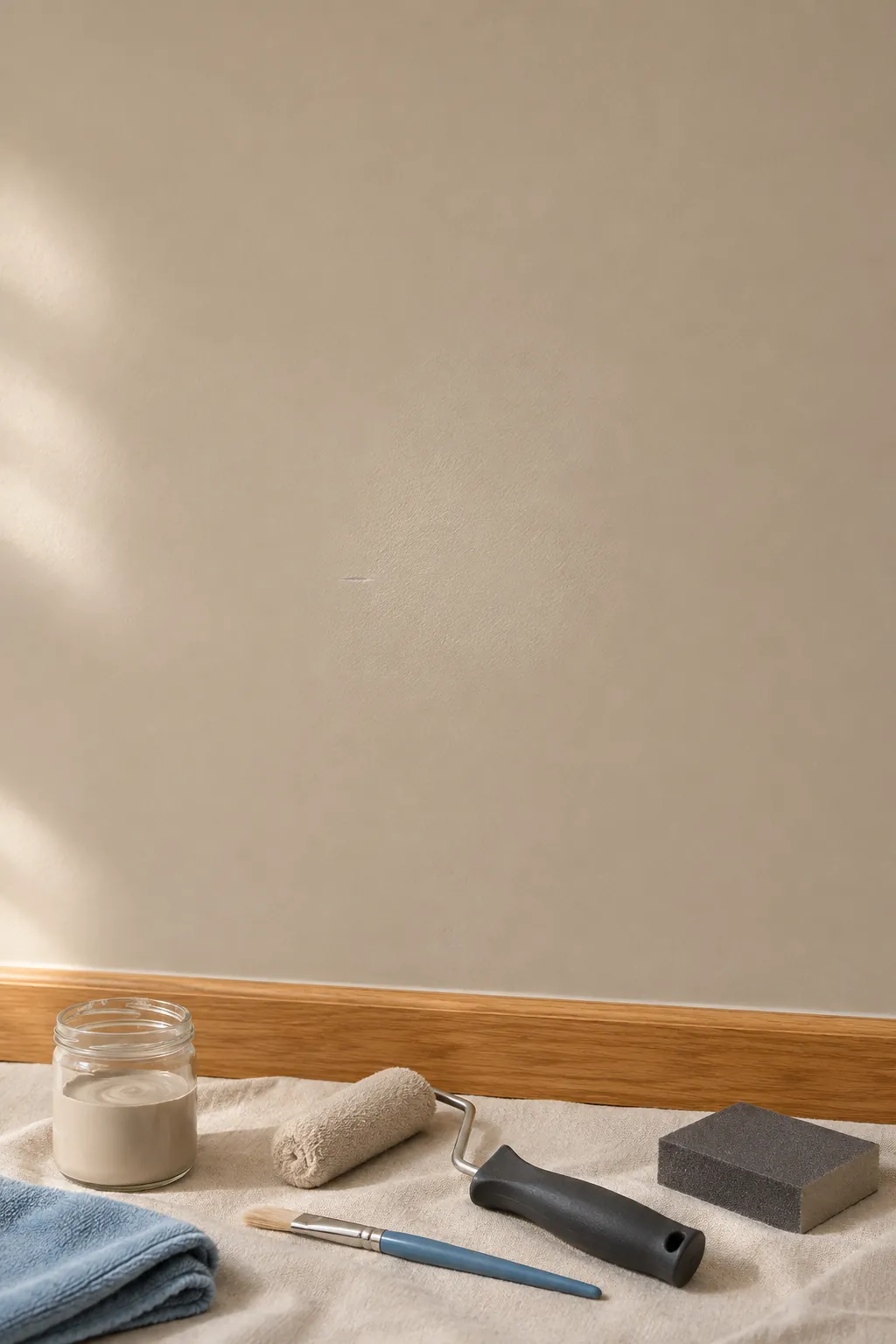
A small paint repair can become more noticeable than the original scuff when its color, sheen, or texture differs from the aged wall. The safest approach is to test every variable before you enlarge the visible area.
Use the exact original paint when it is still usable, but do not assume that guarantees a match. Sunlight, cleaning, wear, and changes inside a stored can can make a touch up flash after drying.
Clean the mark before you reach for paint
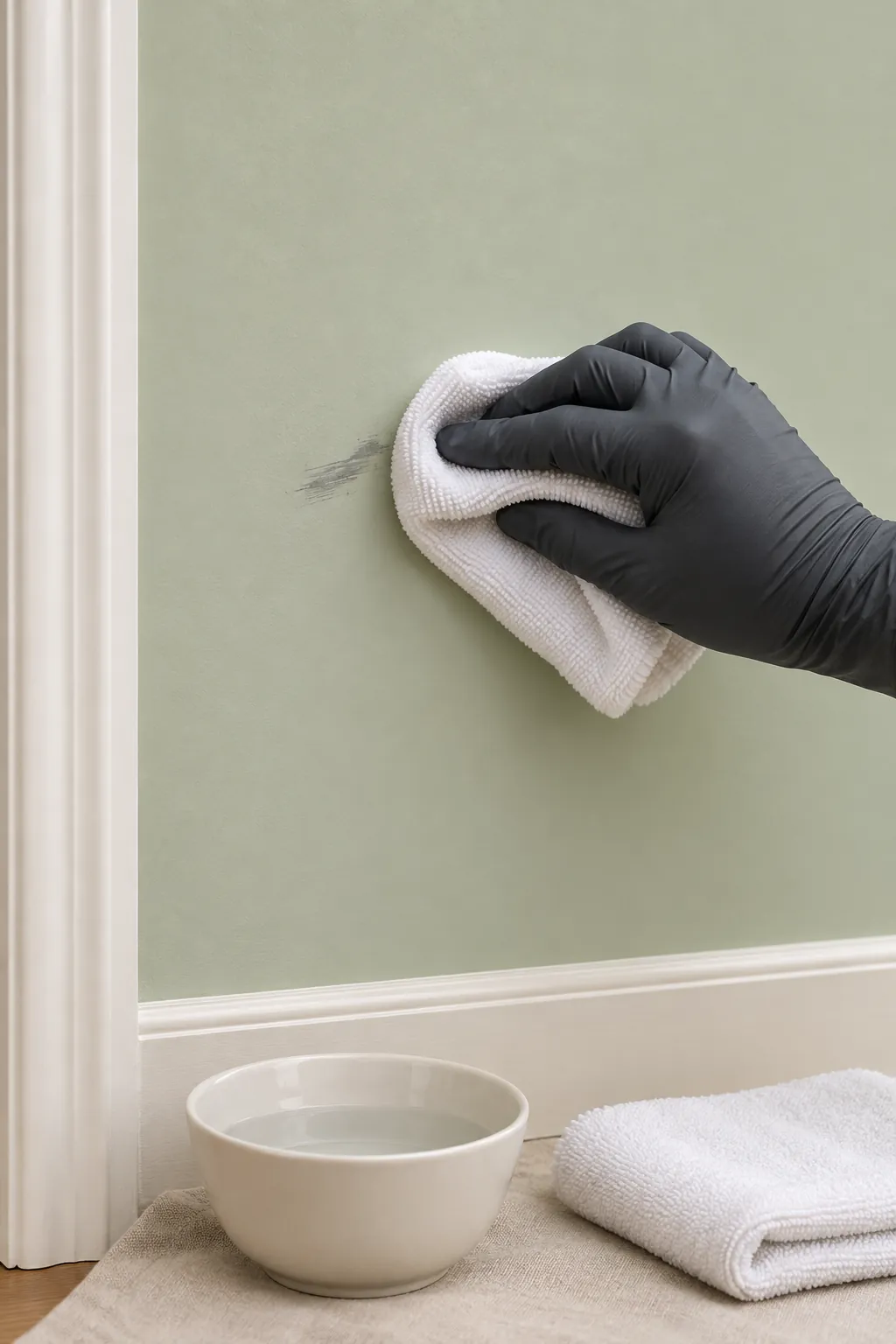
Dust and surface marks can look like missing paint. Wipe the area gently with a clean damp cloth and a mild method suitable for the finish, then let it dry. Stop if the color transfers to the cloth or the sheen begins to change.
Inspect the clean area in daylight. If the coating is intact, further rubbing may do more harm than good. Paint only when the wall has a true chip, repaired dent, or stain that cleaning cannot solve.
Confirm the paint product and sheen
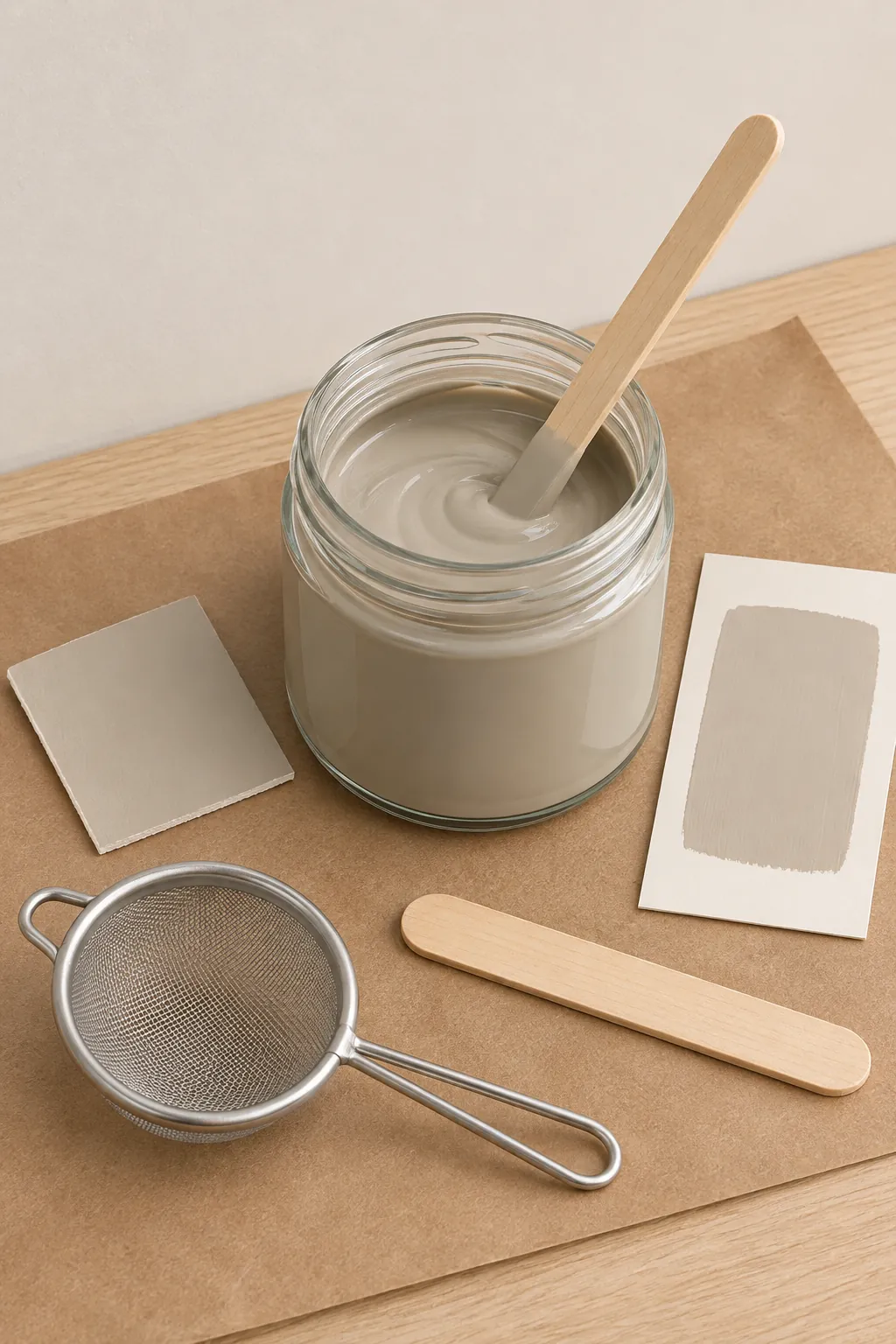
Match the brand, product line, color formula, and sheen, not only the color name. Different paint lines can reflect light differently even when their wet color looks identical. Stir leftover paint thoroughly and discard it when it smells wrong, contains persistent lumps, or has separated beyond recovery.
When the original product is unknown, take a sound sample to a paint supplier for the closest current wall match. Compare samples after they dry because wet paint is not a reliable guide. Expect aged walls to remain difficult to match exactly.
Repair and prime damaged substrate first
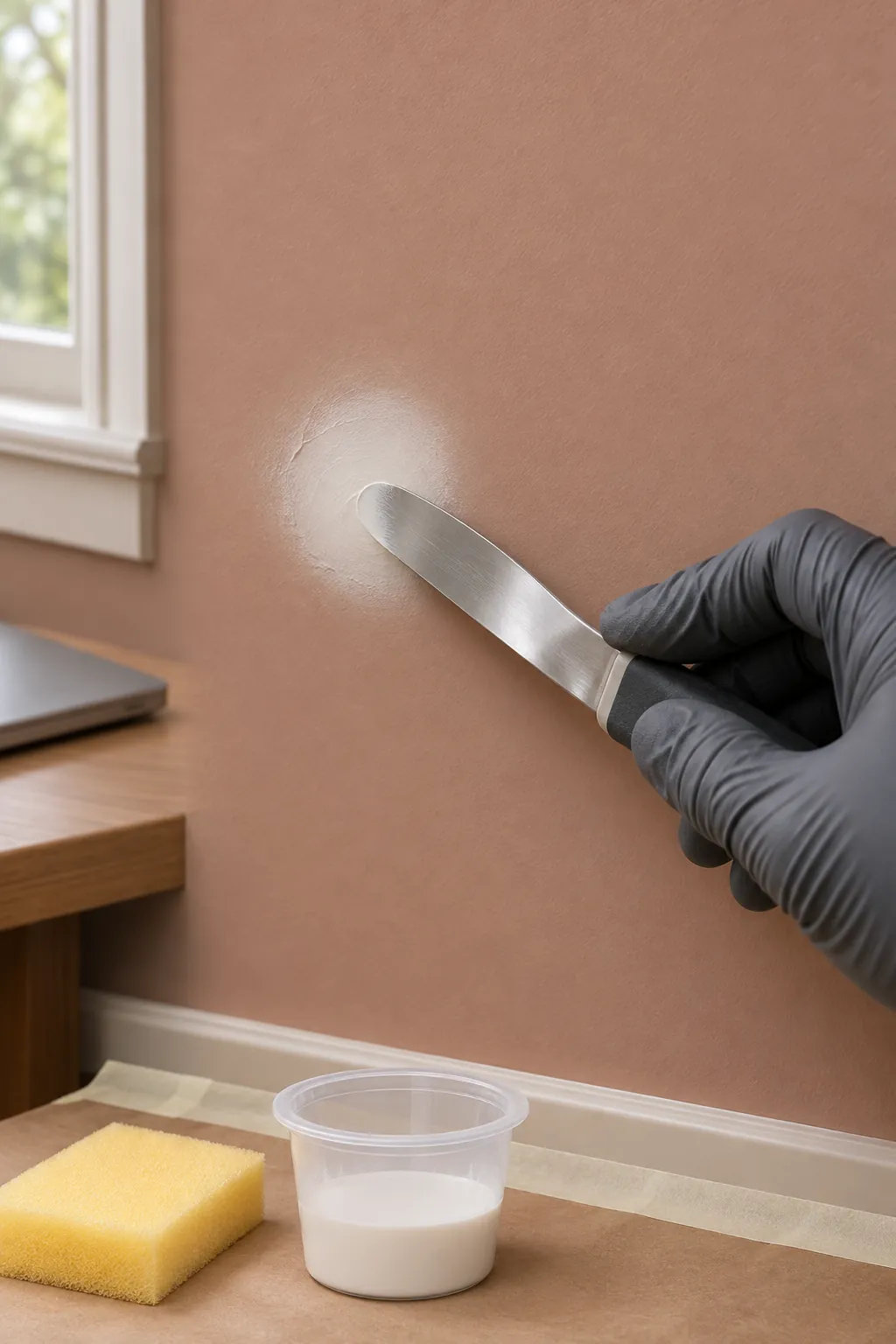
Remove loose material, fill a dent with a thin patch, and feather it until your fingers cannot feel the edge. Sand lightly after it dries and remove all dust. A raised patch will remain visible under matching paint.
Seal bare compound or drywall paper with a suitable primer. Porous repairs absorb finish paint and create a dull shape called flashing. Keep the primed area compact but fully cover the exposed substrate.
Test the touch up where it will not show
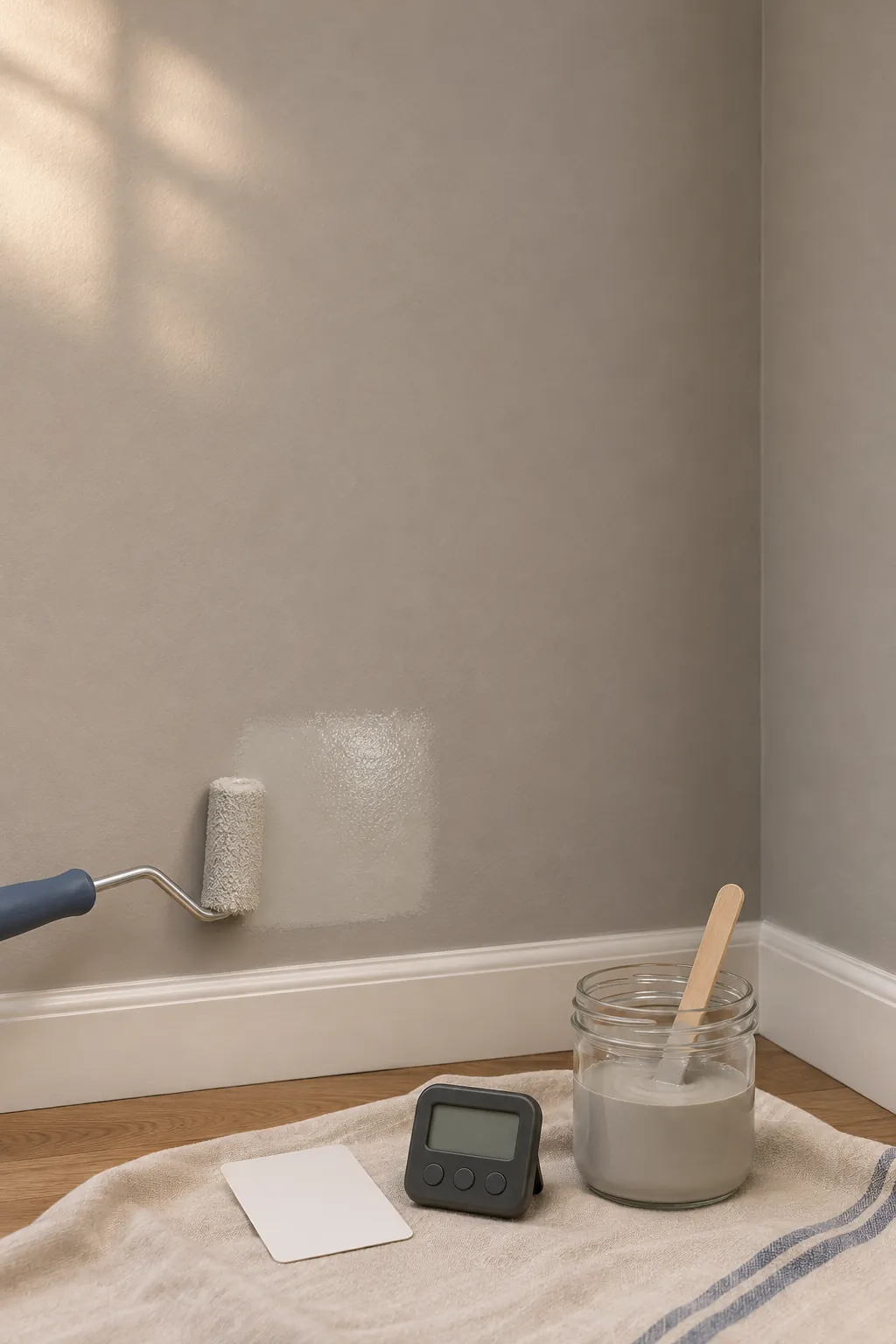
Apply a small sample behind furniture or near a low corner using the tool you plan to use on the repair. Let it dry for the full stated time. Judge color, sheen, and texture from several angles in daylight and evening light.
Do not alter paint with water unless the product instructions explicitly permit it. A casual dilution can change coverage, sheen, and durability. If the dry test remains obvious, move to a complete wall coat rather than building a larger patch.
Match the existing application texture
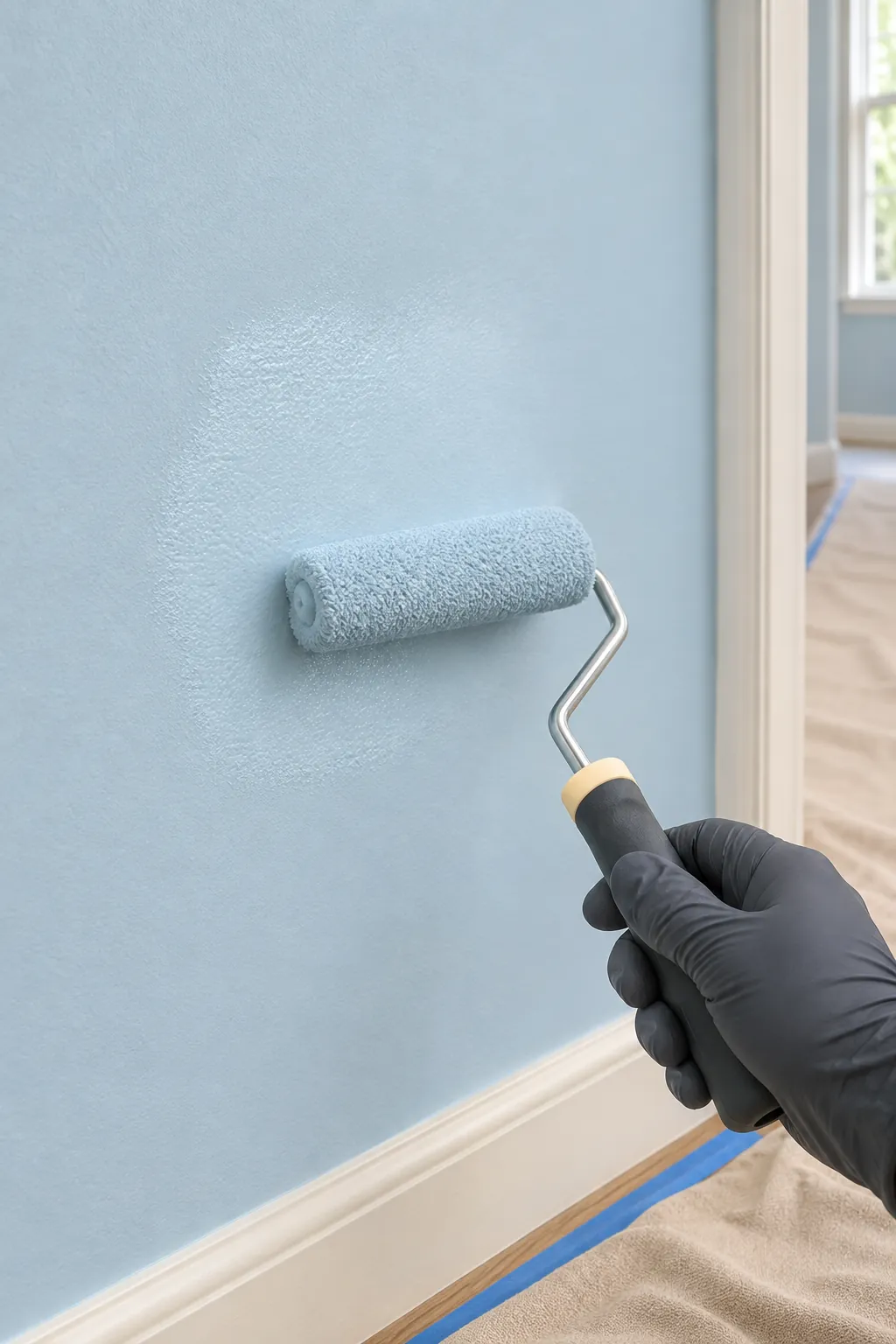
Use a small roller with a nap similar to the original wall when the surrounding finish was rolled. A brush can leave a smoother or more directional texture that catches light. Load the tool lightly and cover the repair without creating a thick center.
Reduce pressure as you move beyond the repair so the wet edge becomes thin and irregular. Do not keep working paint after it begins to set. Let it dry before deciding whether one controlled second application is needed.
Repaint to natural breaks when the patch remains
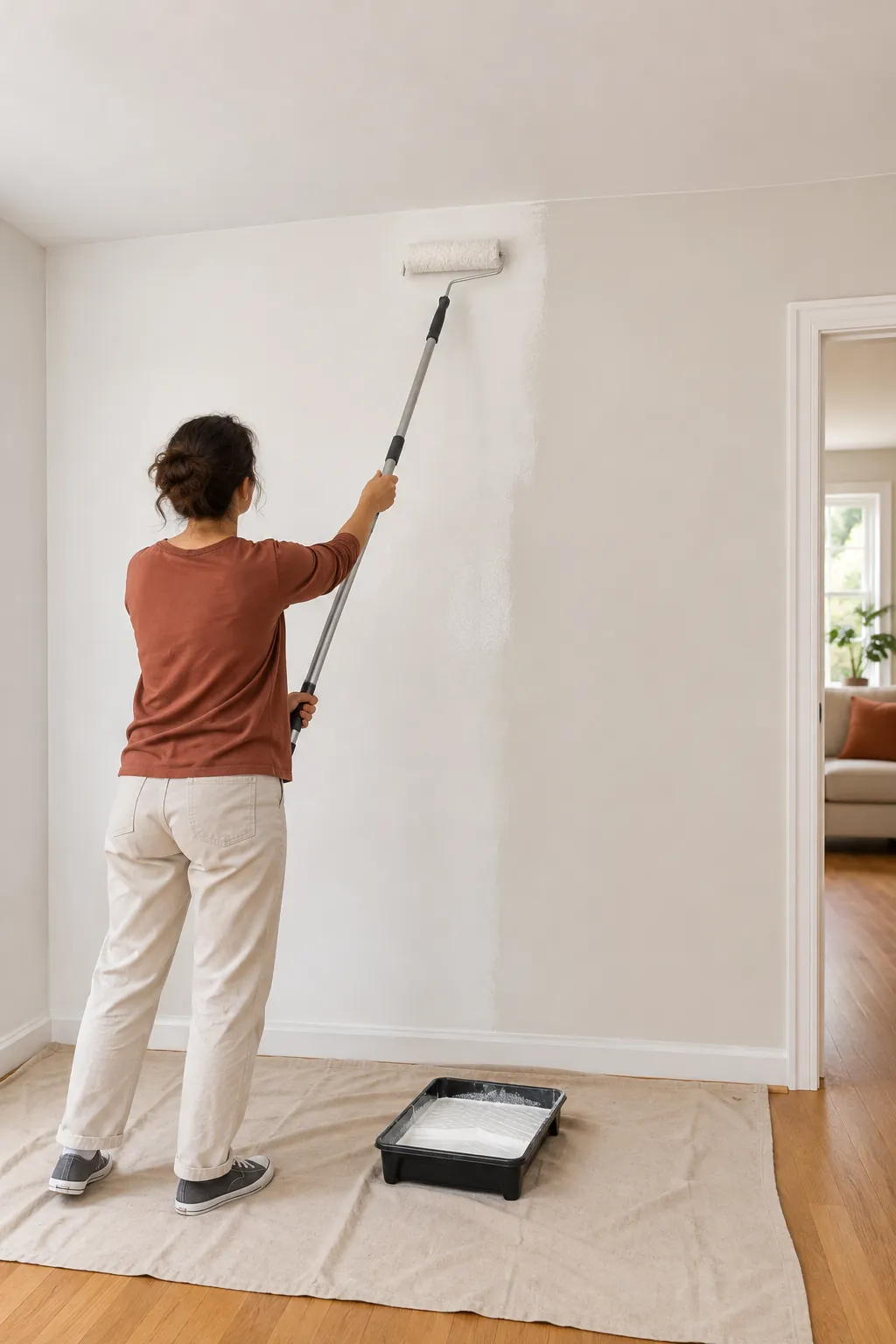
Higher sheen paint, deep colors, spray applied finishes, and aged walls often refuse to touch up invisibly. Repaint the complete wall from corner to corner when the dry patch still differs. Doorways and inside corners provide clean stopping points.
Use one mixed batch, the correct roller cover, and a continuous wet edge across the wall. Let the finish dry fully before inspecting it. A uniform full wall coat is not a failed touch up; it is the reliable correction when small area matching has reached its limit.