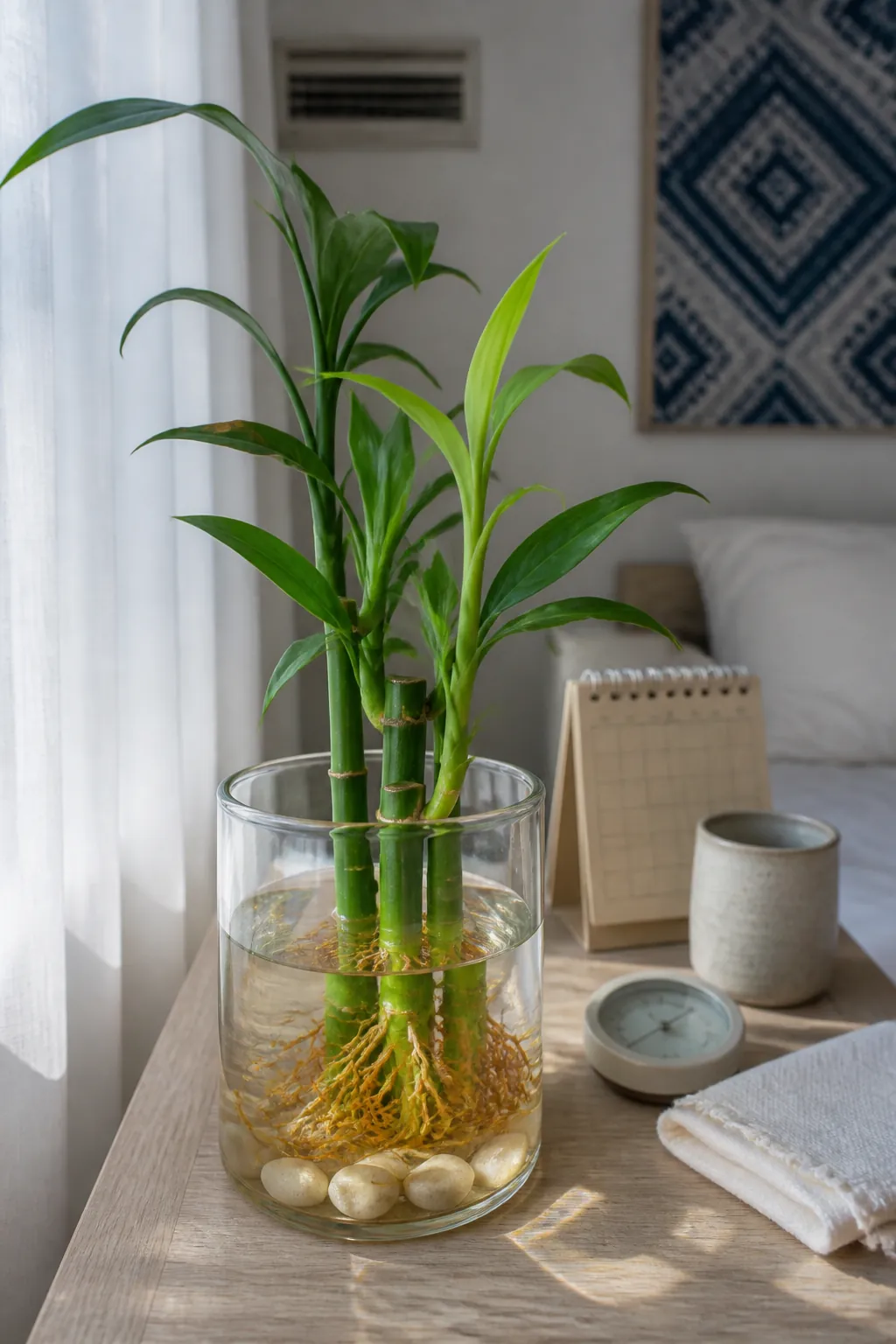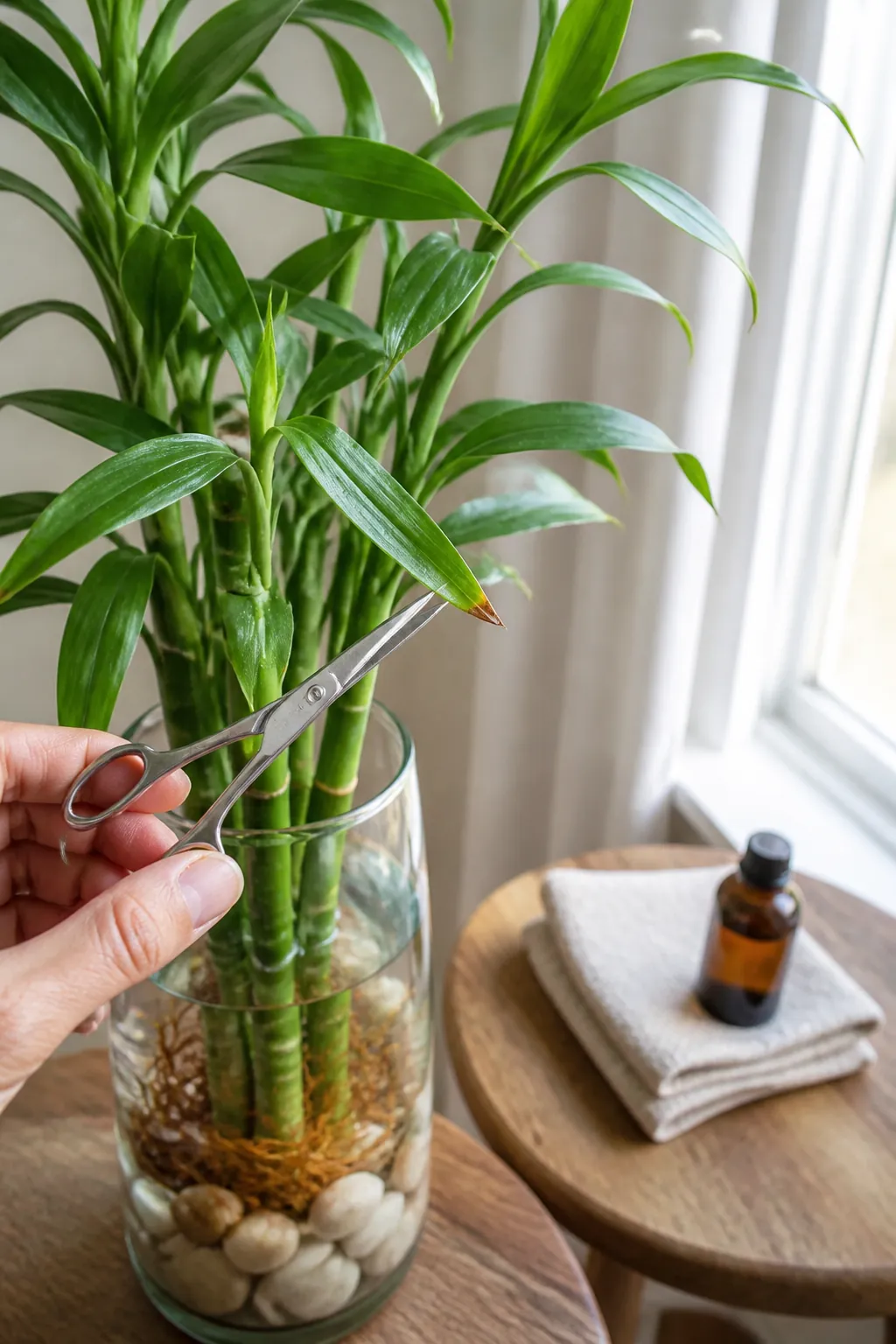
Trimming can make a tired bamboo plant look cleaner in minutes, but the cut itself is only half the job. Brown tips often return when the plant is still reacting to harsh water, dry air, direct sun, poor drainage, or an unhealthy root zone. The safest approach is to remove only tissue that cannot recover, preserve as much healthy green leaf as possible, and correct the stress that caused the damage.
Identify Which Bamboo Plant You Have
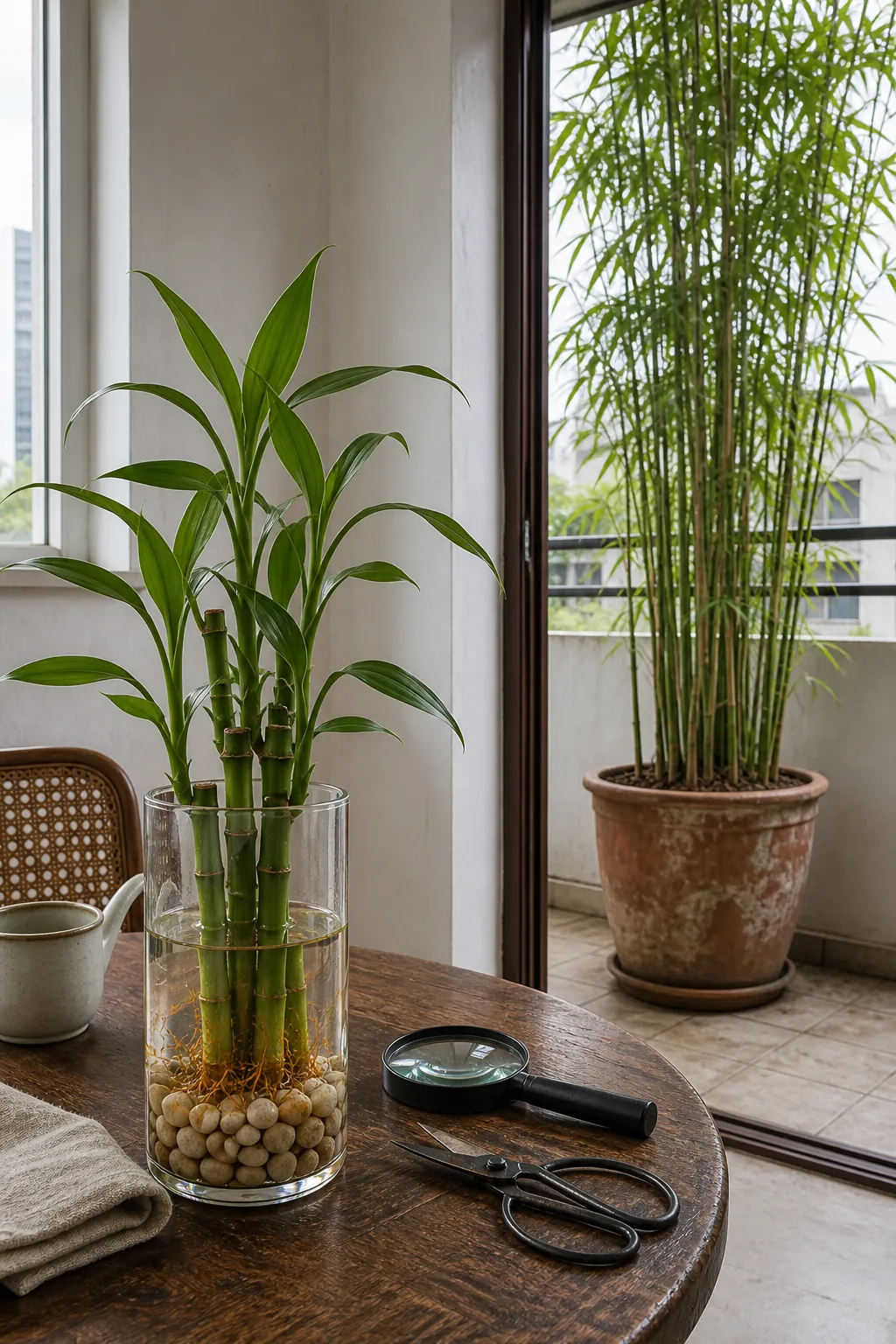
Before reaching for scissors, decide whether you have lucky bamboo or true bamboo. Lucky bamboo is Dracaena sanderiana, a tropical houseplant with fleshy green stems and narrow leaves that often grows in water or potting mix. True bamboo is a grass with hollow or solid canes, branches, and many slender leaves, and it usually grows outdoors or in a large container.
This distinction changes what you should cut. On lucky bamboo, grooming usually means trimming brown leaf tips, removing a fully damaged leaf, or shortening a leafy shoot above a node. On true bamboo, maintenance can also include removing weak canes at soil level, thinning crowded growth, and lifting lower foliage to reveal attractive canes. Never treat a lucky bamboo stem like an outdoor bamboo cane unless you intend to propagate or reshape it.
Prepare Clean and Sharp Tools
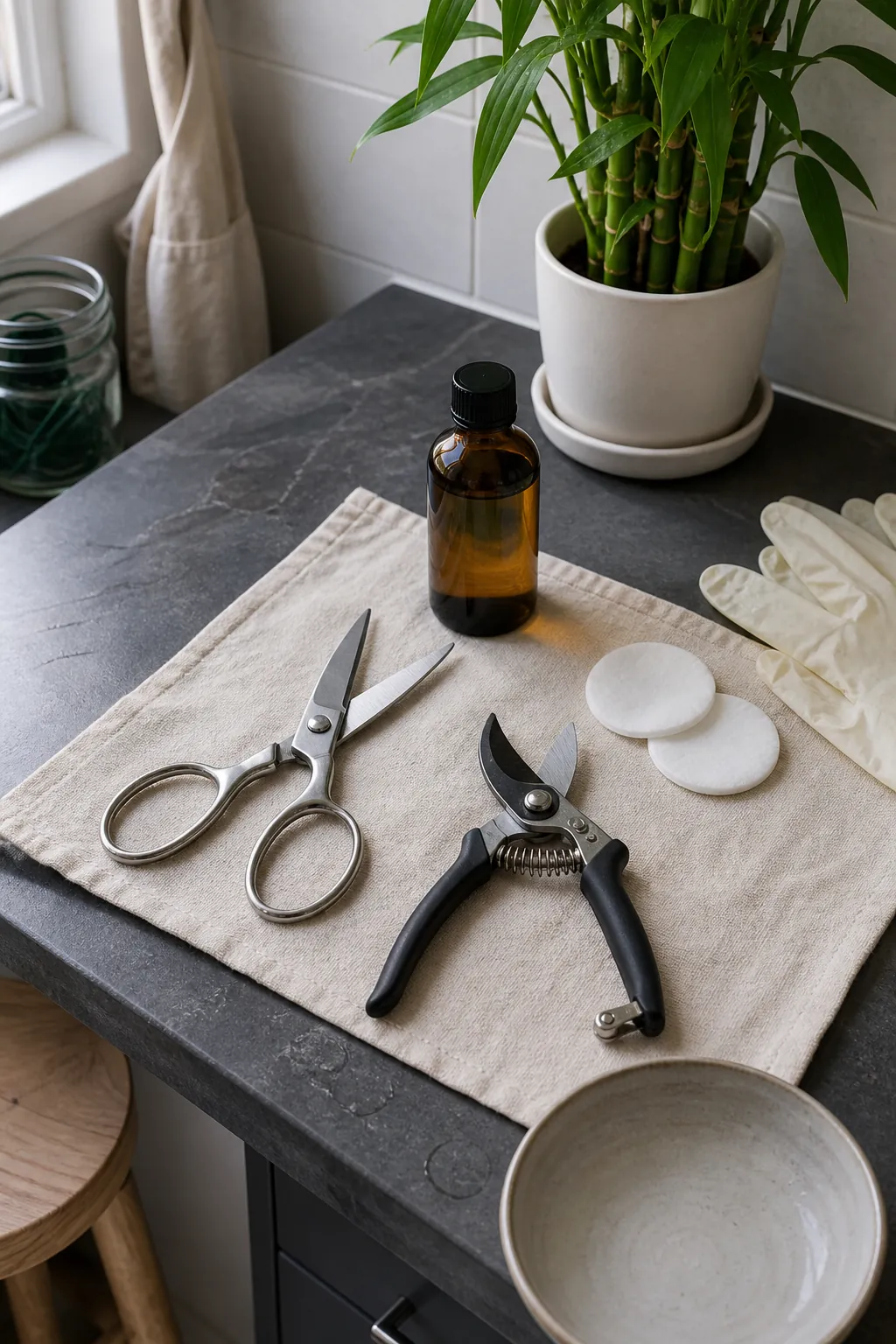
Use small sharp scissors for narrow leaves and clean pruning shears for thicker shoots or canes. Wipe the blades with rubbing alcohol, then let them dry before making the first cut. Dull blades crush tissue and leave ragged edges that dry unevenly, while dirty blades can move pests or pathogens from one plant to another.
Set the plant on a stable surface in bright natural light so you can distinguish brown tissue from shadows and natural color variation. Keep a clean cloth nearby for sap and collect every clipping as you work. Lucky bamboo can irritate skin and is toxic if eaten by pets, so gloves are sensible and all cut pieces should go straight into a secure waste container.
Trim Brown Leaf Tips Without Chasing Green Tissue
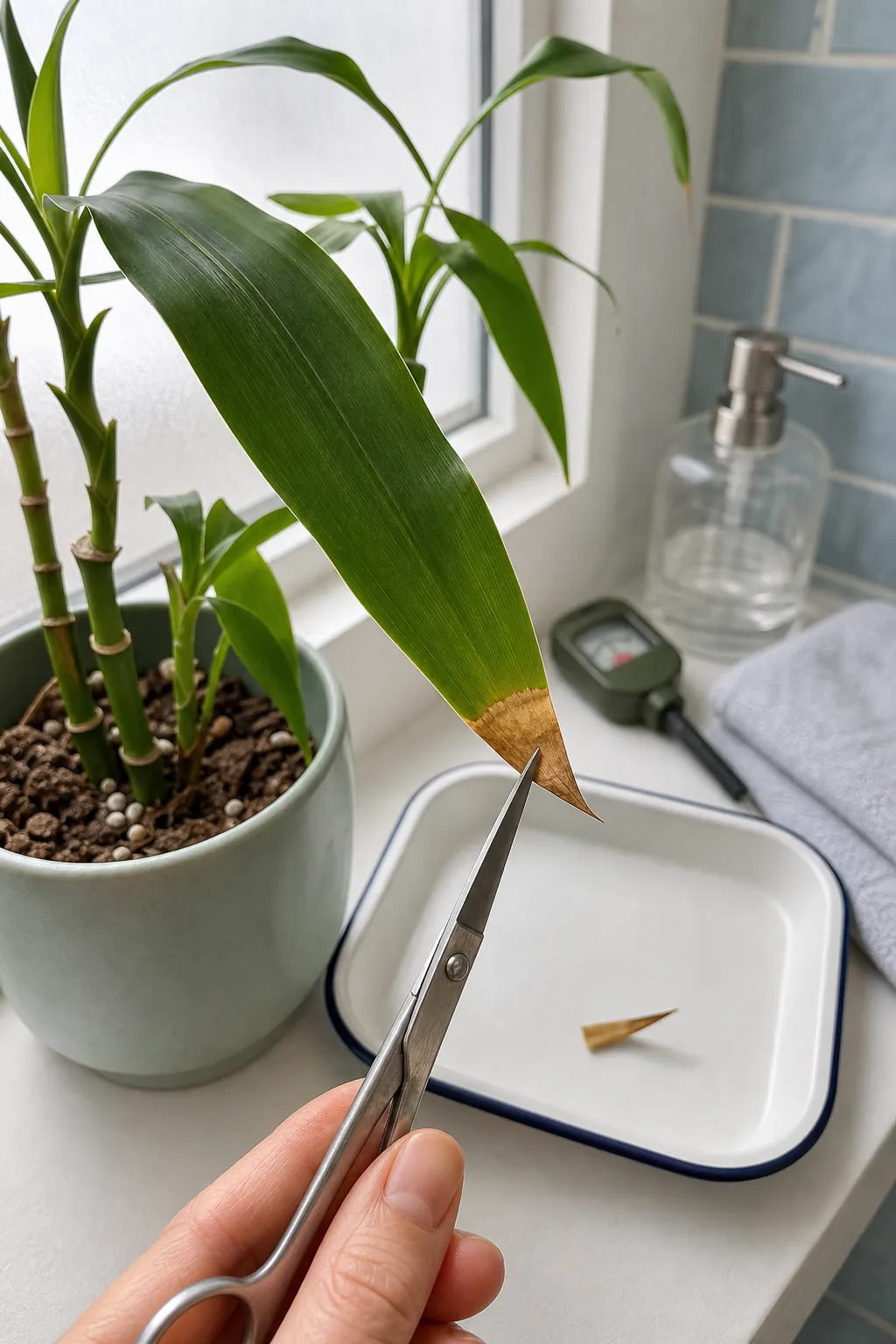
For a leaf with a crisp brown tip and a healthy green base, follow the natural pointed outline of the leaf. Cut through the dead brown section while leaving a very narrow brown margin between the blade and healthy tissue. That small margin matters because cutting into green tissue creates a fresh wound that can dry brown again, making it look as though the original problem immediately returned.
Make one smooth cut on each side of the tip rather than repeatedly nibbling at the edge. Do not try to create a perfectly sharp point if that requires removing a large amount of healthy leaf. Cosmetic trimming hides old damage, but it does not cure the cause of brown leaf tips. Check water quality, humidity, light exposure, and watering habits after the plant is groomed.
Remove a Fully Damaged Leaf at Its Base
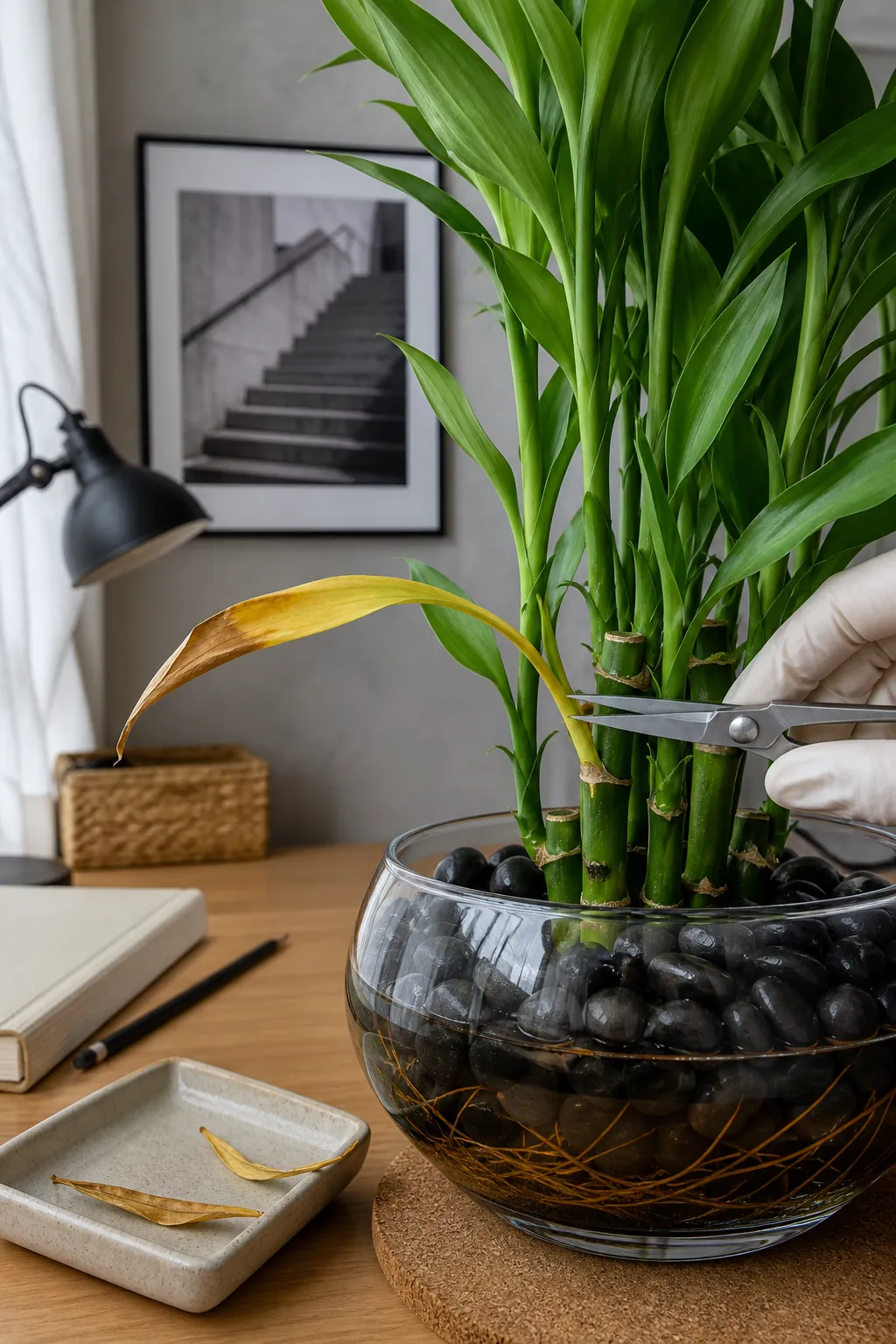
A leaf that is mostly yellow, brown, brittle, or badly torn will not turn green again. Trace it to the point where it meets the shoot, then cut the leaf close to that attachment without nicking the stem or neighboring leaves. If the leaf slips away with gentle pressure because it is already dry, support the shoot with your other hand so you do not peel healthy tissue.
Do not strip many green lower leaves simply to force a tidy silhouette. Green leaves still produce energy, and removing too much foliage can slow recovery. A useful limit is to stop when the plant still has a generous crown of healthy leaves and return another day if more grooming seems necessary. When yellowing affects several leaves at once, investigate the roots and growing conditions before cutting more.
Shorten an Overgrown Lucky Bamboo Shoot
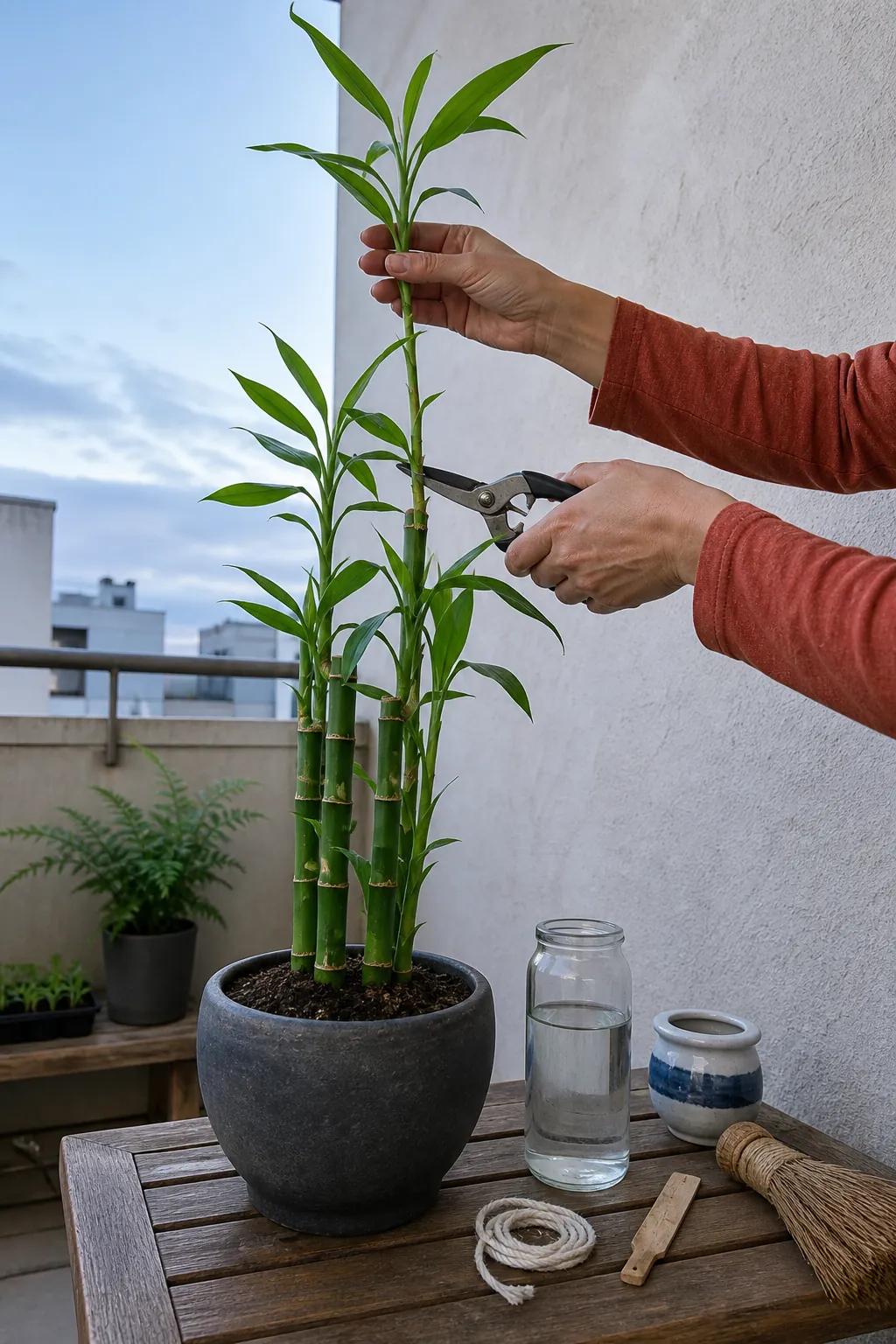
When a leafy side shoot becomes tall, sparse, or top heavy, follow it down to a visible node on the green cane. Cut the shoot cleanly a short distance above that node, leaving the main cane intact. New growth commonly develops below the cut, so choose the cut position according to the shape you want rather than trimming at random.
The removed healthy top can often become a cutting. Place it in clean chlorine free water with at least one node positioned to root, and keep the leaves above the water. For the parent plant, avoid wax, glue, or household sealants on a small shoot cut. A clean cut, stable warmth, and bright indirect light support recovery better than aggressive feeding.
Thin and Groom True Bamboo Carefully
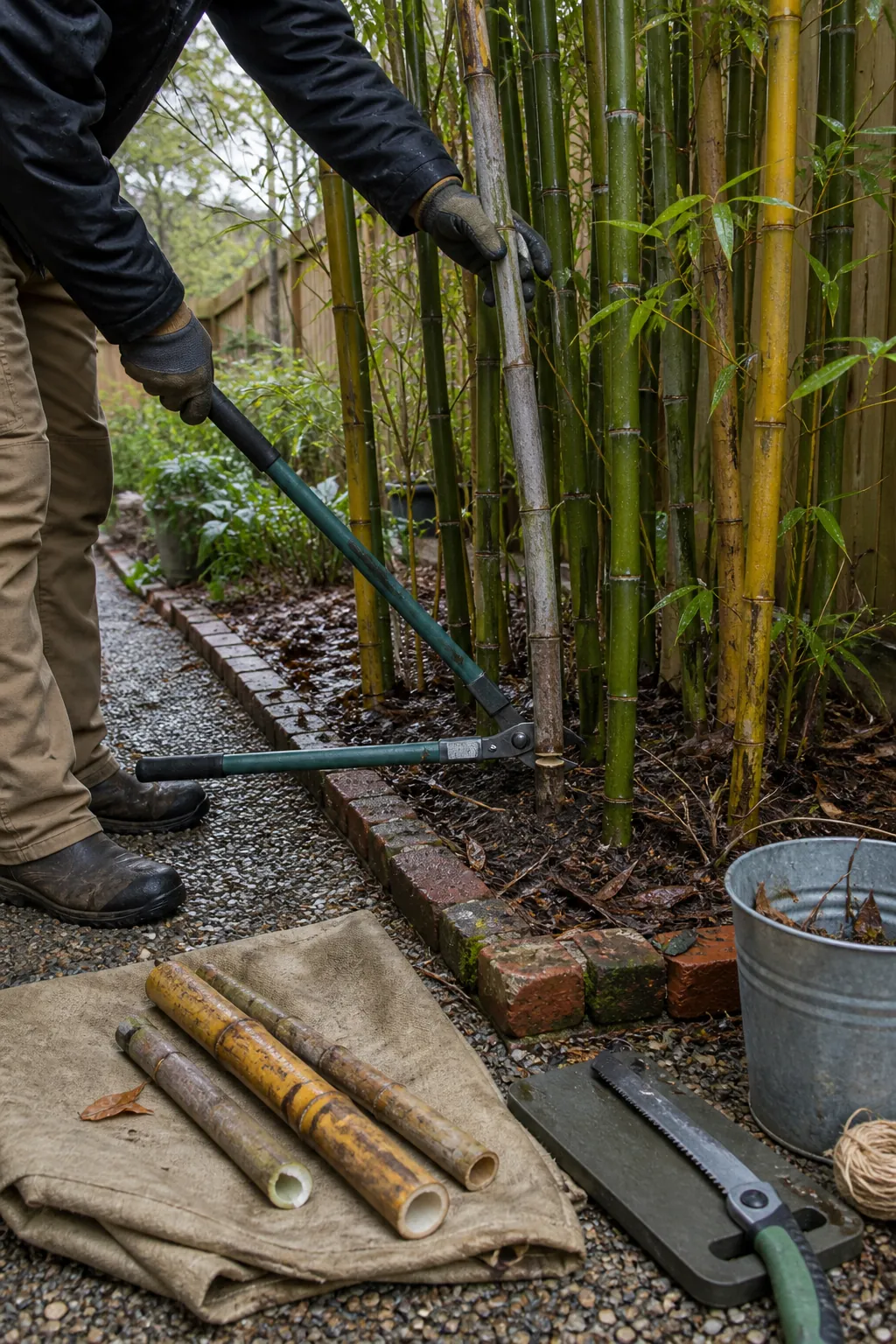
True bamboo responds best when each cut has a clear purpose. Remove dead, weak, damaged, or crowded canes at ground level with clean pruning shears or loppers, especially during spring maintenance. If you want to display colorful canes, remove selected lower branches and foliage close to the cane while preserving the leafy canopy above.
To contain height, cut a cane just above a node at the chosen level. That cane will not continue upward from the cut tip, although side foliage may become fuller below it. Avoid shearing the entire outer surface into a rigid wall because scattered cuts through leaves and fine branches often create a brown, ragged finish. Thin individual canes instead, then step back between cuts to judge light, airflow, and balance.
Correct the Cause and Watch the New Growth
After trimming lucky bamboo, place it in bright indirect light and keep it away from hot windows, cold drafts, and air conditioning vents. If it grows in water, use clean water that is low in chlorine and irritating salts, keep only the roots submerged, and refresh the vessel regularly. If it grows in soil, water according to moisture in the pot rather than a rigid calendar, and never leave the roots sitting in stale drainage water.
Expect the cut edge to dry slightly, but watch new leaves for the real verdict. Healthy new growth suggests the care adjustment is working, even when older trimmed leaves retain small scars. Expanding brown areas, soft yellow stems, a bad smell, black roots, webbing, sticky residue, or clusters of insects call for closer diagnosis. Judge recovery by the condition of fresh growth, not by whether an old damaged leaf becomes flawless.