
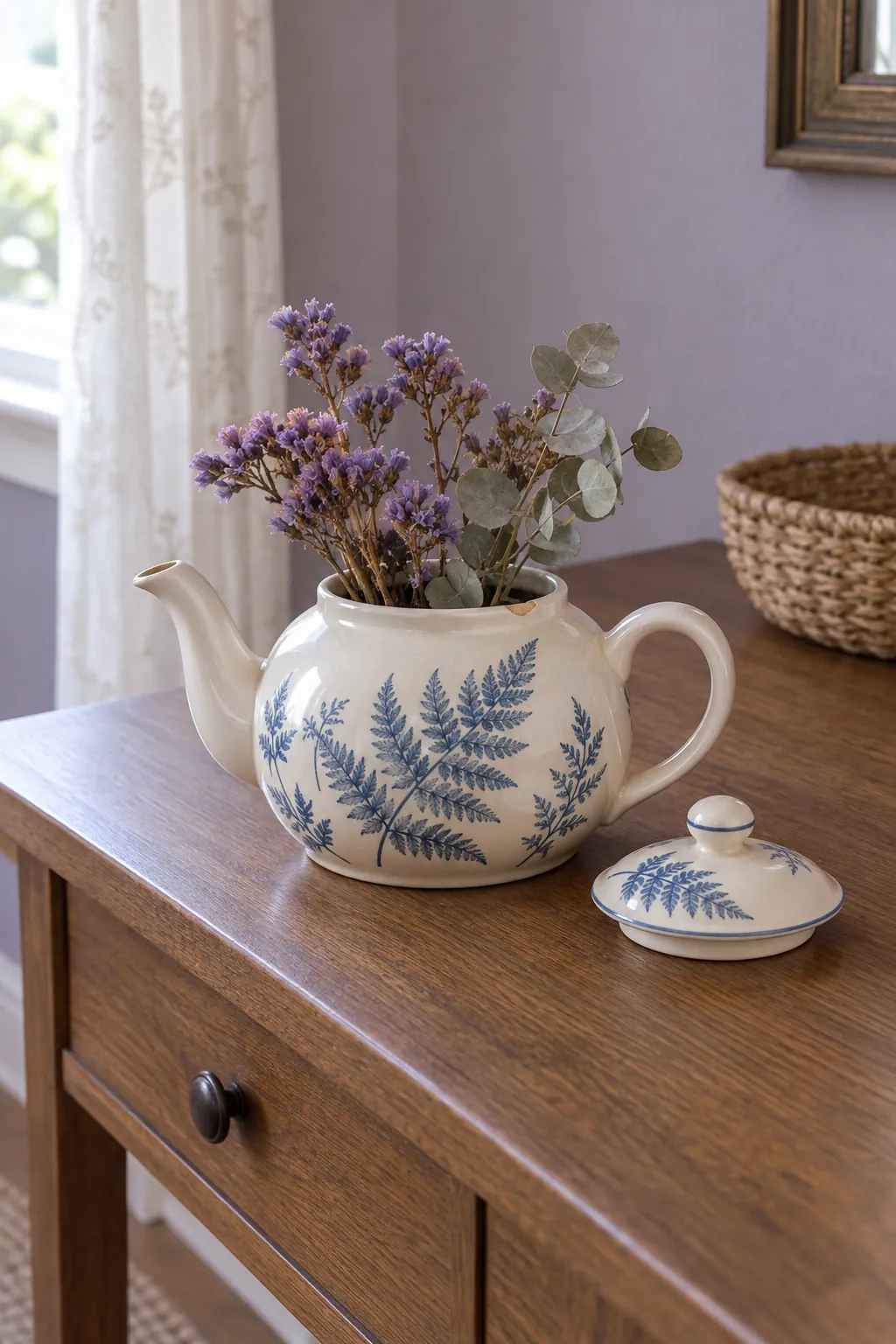
You can keep a familiar piece of china without asking it to serve another cup. The useful distinction is between a vessel that is stable enough to display and one that is safe to handle or use with food. Start with the damage, then choose a decorative role that keeps water, heat, and frequent handling away from it.
Decide whether the teapot can stay on display
A missing sliver at the rim is different from a cracked body or a loose handle. Set the teapot on a stable surface and inspect the base, spout, handle attachments, and lid without running a finger over damaged edges. Look for hairline cracks that continue beyond the chip, pieces that move, and a base that rocks. If the body is unstable or a fragment is loose, stop using it as a container and ask a ceramic restorer about an enclosed display.
An old glaze, a chip, and a home repair do not give you a reliable basis for judging food safety. Keep this project decorative, even if a filler or adhesive claims to be safe for some food contact applications. Do not use the teapot for tea, drinking water, loose food, utensils, or pet bowls. Avoid candles and incense inside it because heat adds another stress to already damaged ceramic.
Place the finished piece where children and pets cannot reach it, away from a shelf edge or a frequently bumped doorway. Turning the chip toward the back can improve the view, but it does not remove a sharp edge. Choose a protected cabinet if the damage cannot be kept clear of handling.
Clean gently and keep the damage accessible
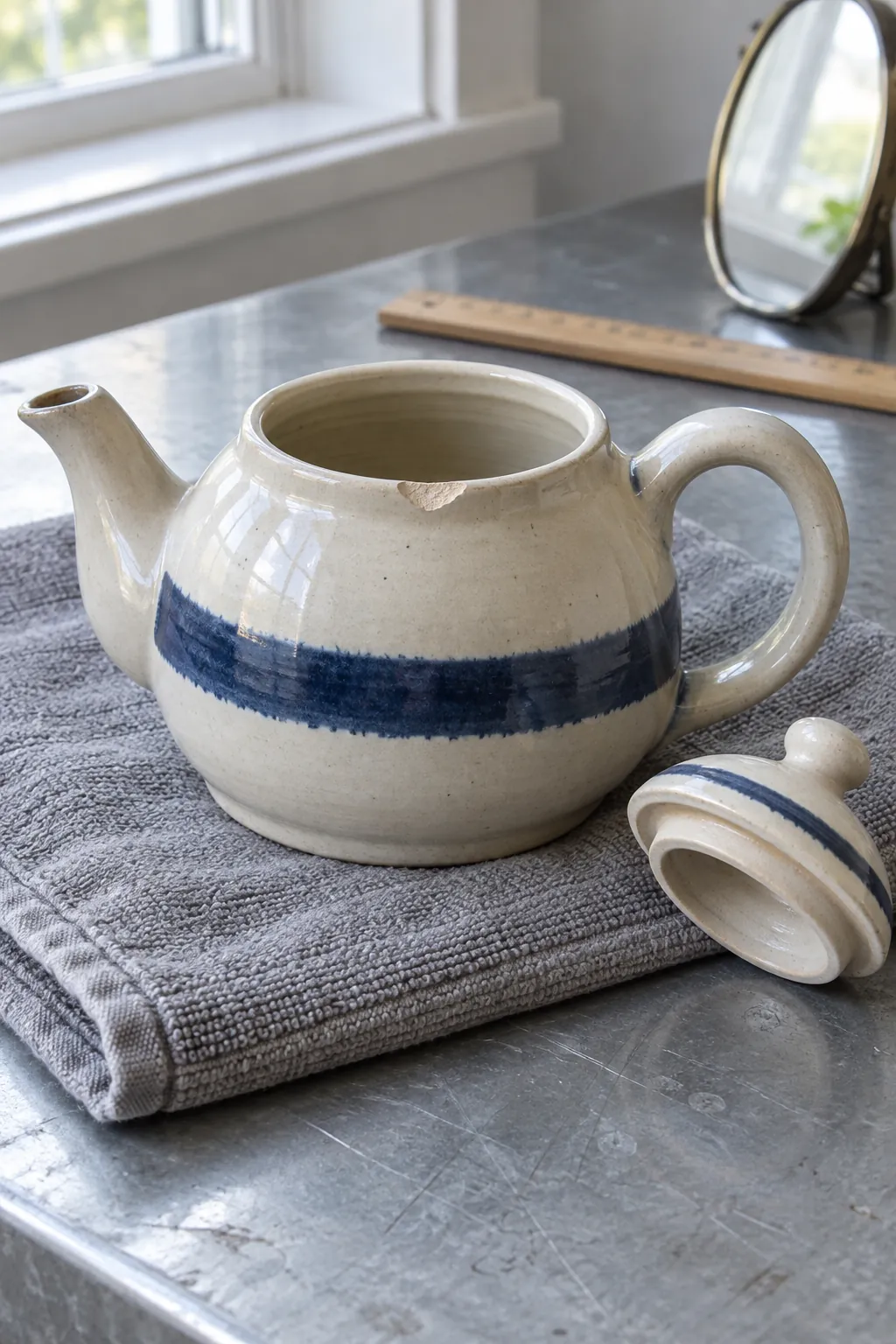
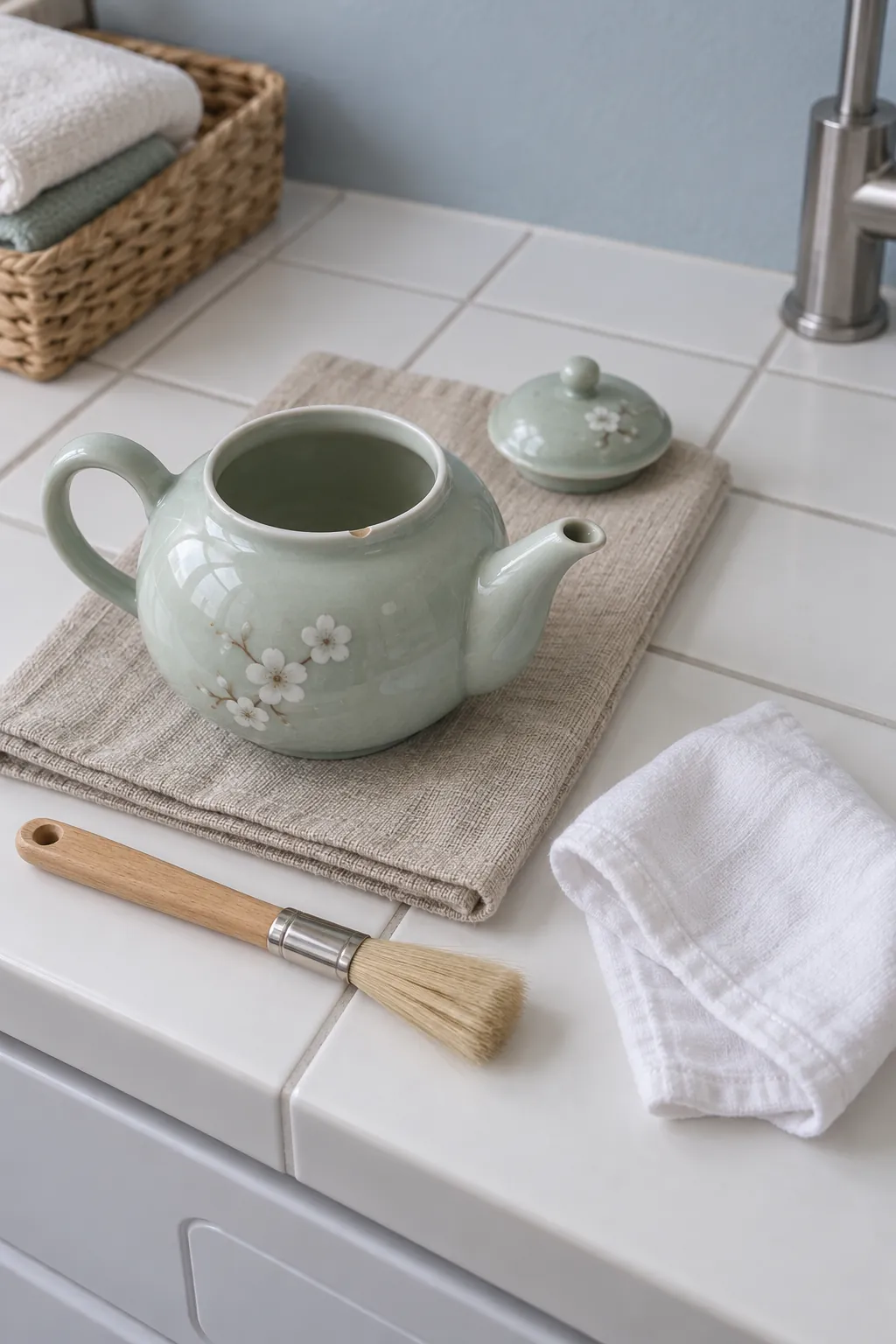
Place the empty teapot on a folded towel before cleaning so the base cannot scrape or slide. Remove dust with a soft brush, then test a barely damp cloth on an inconspicuous area. If the surface is sound, wipe gently and dry it promptly; stop if decoration transfers, a finish flakes, or the ceramic seems powdery. Avoid soaking an unknown antique or pushing moisture into a crack.
Do not grind, drill, or sand the chip for this project. Those steps can create dust, remove original decoration, and turn a small defect into a larger fracture. A ribbon may disguise a blemish, but it must not become the only barrier between a sharp edge and a hand. For valuable or sentimental china reuse, ask a qualified restorer before applying glue, filler, or paint.
Start with a dry botanical arrangement
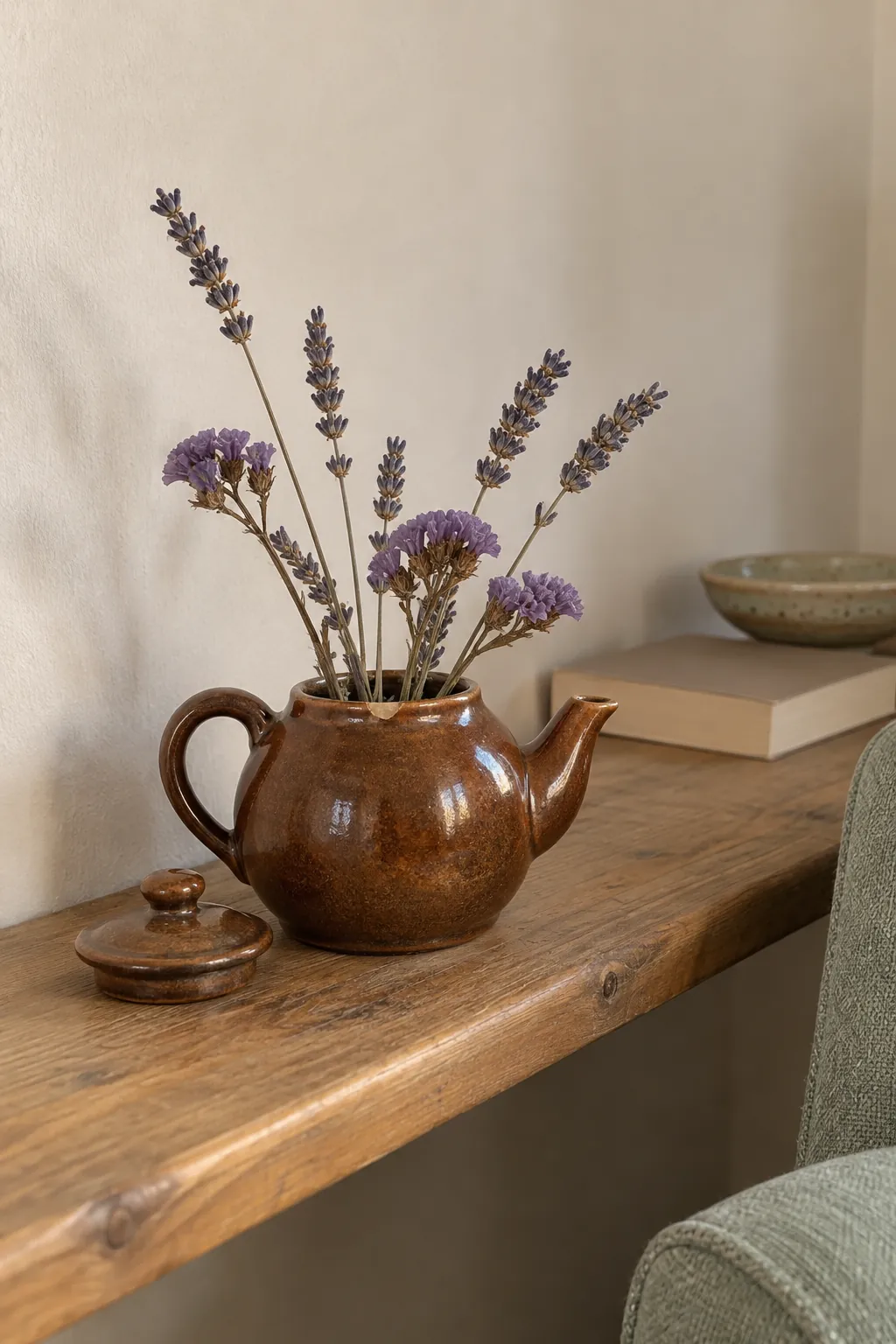
Dried stems offer the simplest teapot decorative arrangement because there is no water to leak and no soil to empty. Choose a few lightweight stems, such as dried lavender, statice, or slender seed heads, that pass through the opening without scraping it. Keep the arrangement short enough that the teapot remains the visual focus. A tall, dense bouquet can make a small base easy to tip.
If the stems need support, place them in a small removable container that fits inside without force. Do not pack floral foam against a fragile rim or push stems into a damaged spout. Keep the lid beside the teapot on the same stable shelf, provided the lid itself is safe to handle. Avoid highly shedding material if the piece sits near a fan or a busy walkway.
Use a separate insert for fresh flowers
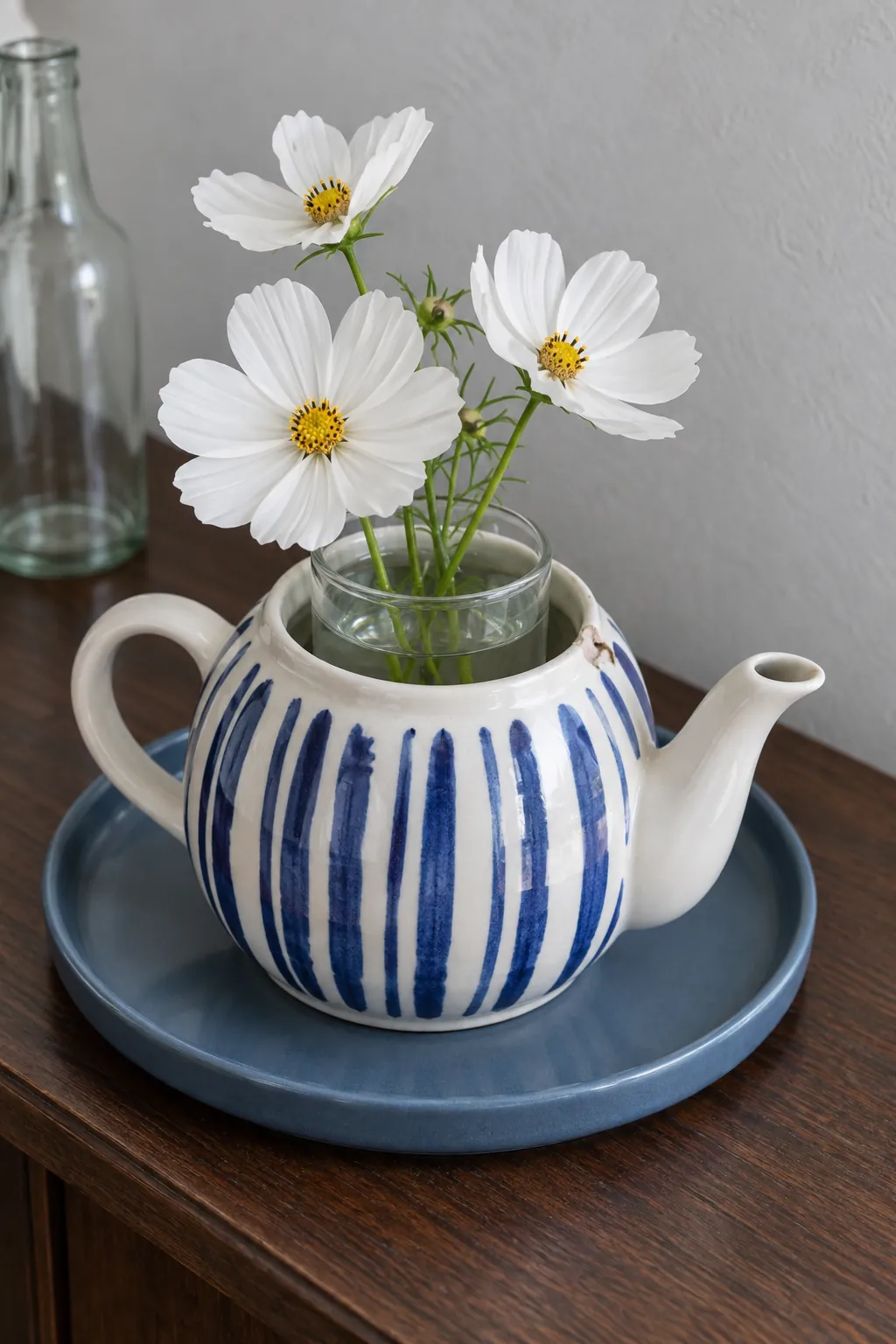
A repurposed teapot can hide a small watertight vase, but the teapot itself should stay dry. Measure the opening and choose a narrow vessel with room to lift it out without touching the chip. Its rim should remain accessible, and its base should sit level rather than wedge into the curved ceramic body.
Fill and arrange the insert over the sink, dry its outside, and then lower it into the empty teapot. Leave enough clearance for flower stems to lean without bearing on the damaged rim. Use a waterproof tray underneath the display, and remove the insert to change the water. If the teapot has a crack, an awkward opening, or a loose handle, choose the dry arrangement instead.
Keep flowers clear of the spout so nobody mistakes the display for a working serving piece. Check the cavity for moisture whenever you remove the insert. A smaller bunch is usually easier to lift and maintain than a bouquet that hides the entire opening.
Treat a plant as a removable guest
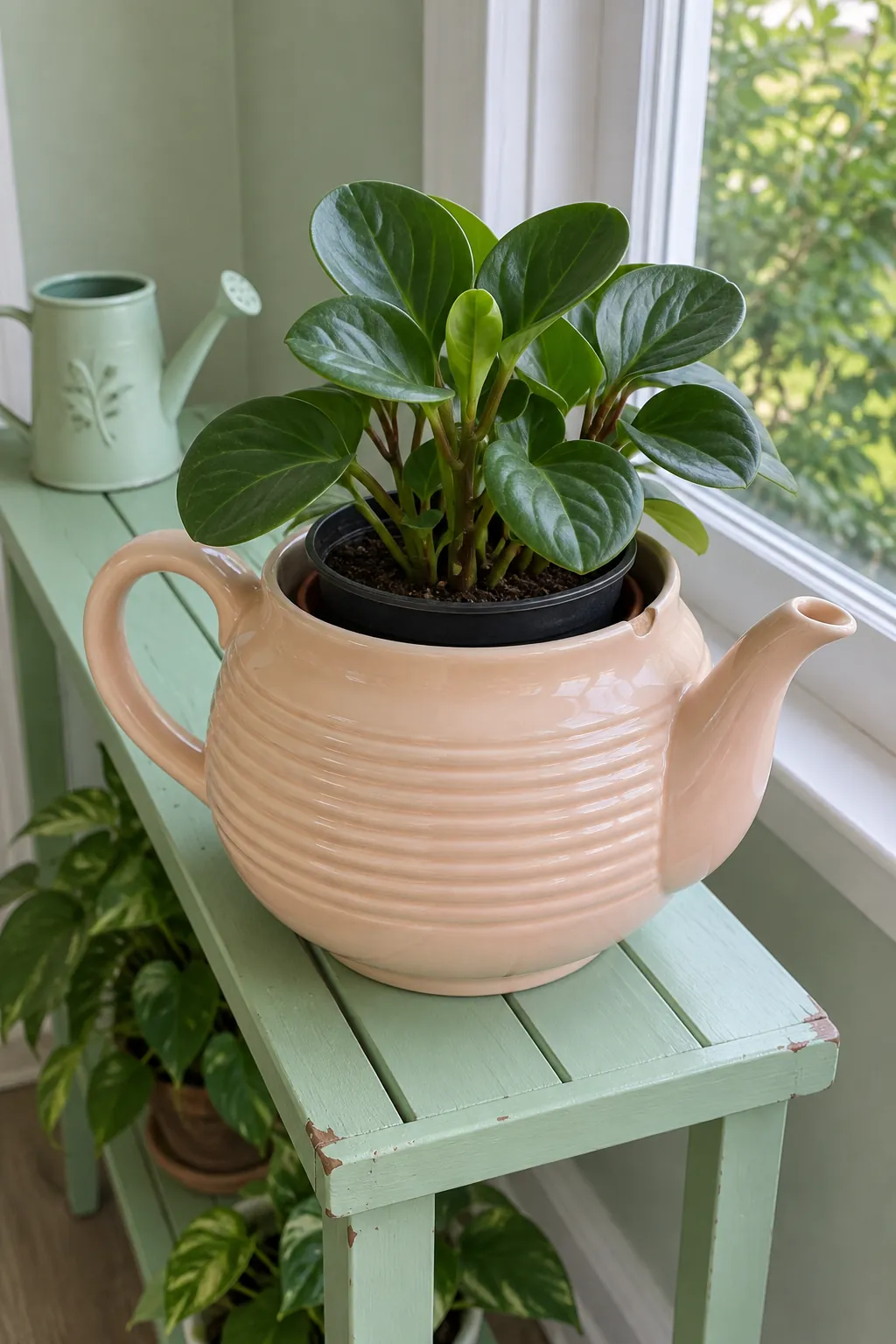
For a plant display, use the teapot as an outer decorative cover rather than planting directly into it. Choose a small nursery pot with drainage holes that lifts out easily, and place a separate watertight inner saucer beneath it. The pot should fit below the rim without becoming stuck. Keep soil, roots, and standing water away from the damaged ceramic.
Take the nursery pot out for watering and let it drain fully before putting it back. A teapot has no reliable drainage simply because it has a spout, and a layer of pebbles does not replace drainage holes. Do not drill an old chipped vessel to solve that problem. Pick a plant that suits the available light and check that its leaves will not pull the display off balance as it grows.
Give sentimental china a quiet display
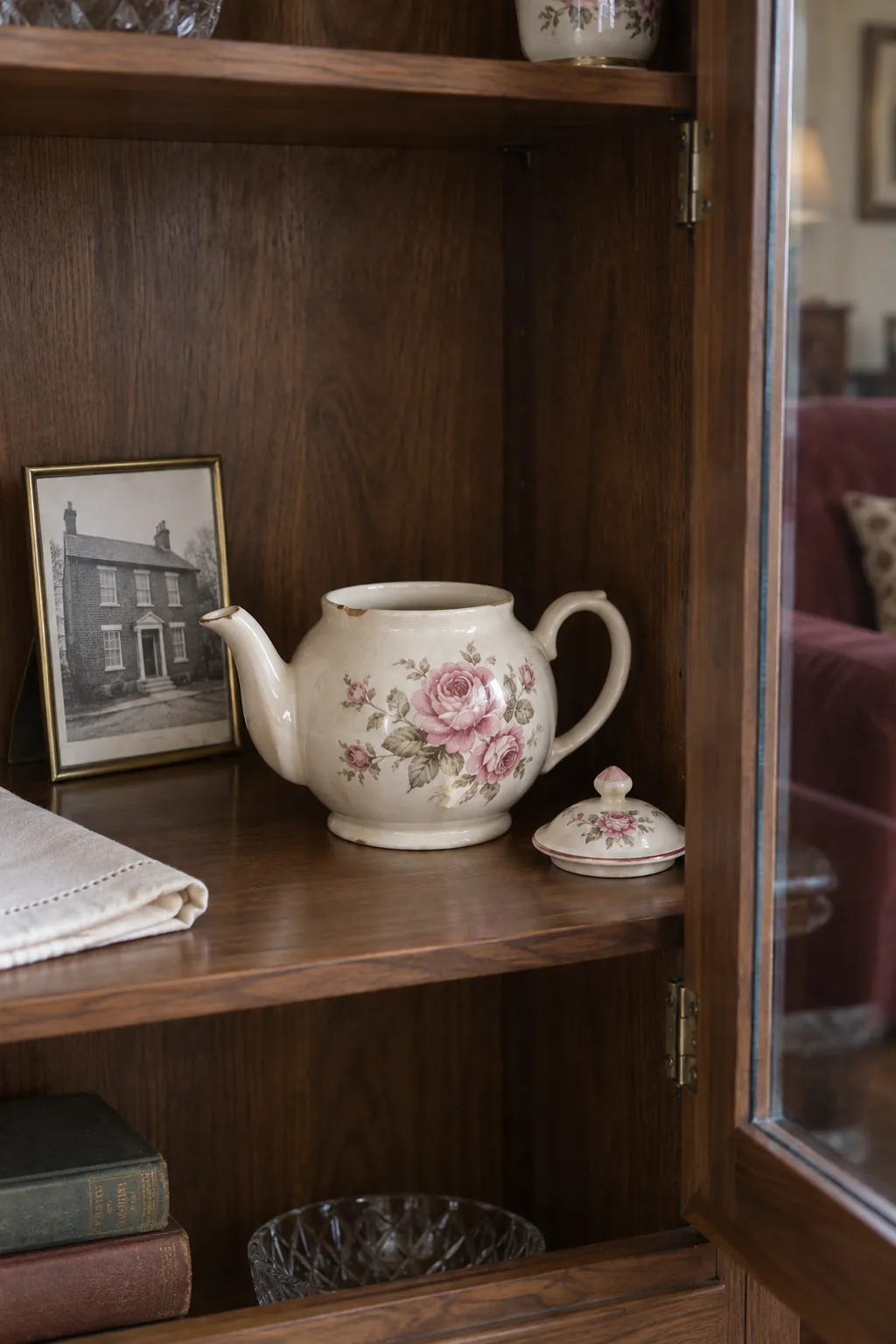
Nothing needs to go inside a teapot for it to earn a place in the room. A vintage teapot display can pair the empty vessel with its lid and a small family photograph in a freestanding frame. Keep the ceramic on a level cabinet shelf with space around the handle and spout. If the shelf is slippery, use a discreet stable pad beneath the base that does not stain or adhere to the glaze.
Choose companions that explain why you kept the piece rather than adding unrelated objects. A photograph of the person who owned it or a folded textile from the same household can create that connection without a permanent alteration. Put paper and fabric beside the teapot, away from chipped edges. Do not hang the vessel by its handle or glue a mounting hook to it.
For damaged china display in a shared home, make its decorative role clear to everyone who might use it. An empty teapot on a serving counter can drift back into use by mistake. A closed display cabinet or a living room shelf provides a clearer separation from everyday tableware.
Keep the display easy to inspect
Every time you dust, check for a new crack, a shifting handle, or an insert that has started to rub against the opening. Lift a sound vessel with support beneath the body rather than carrying it by an old handle. If safe lifting is uncertain, move the supporting tray instead or leave the piece in its protected cabinet. Remove any loose fragment from the display area without touching its edge.
Change the arrangement by swapping removable stems or nearby objects, not by adding a fresh layer of adhesive. Keep a note with the household care instructions that the teapot is for decoration only. The best upcycled ceramic decor preserves what matters while making its new job unmistakable. Let the pattern, shape, or family memory do the work; the missing chip does not need to be hidden at any cost.