
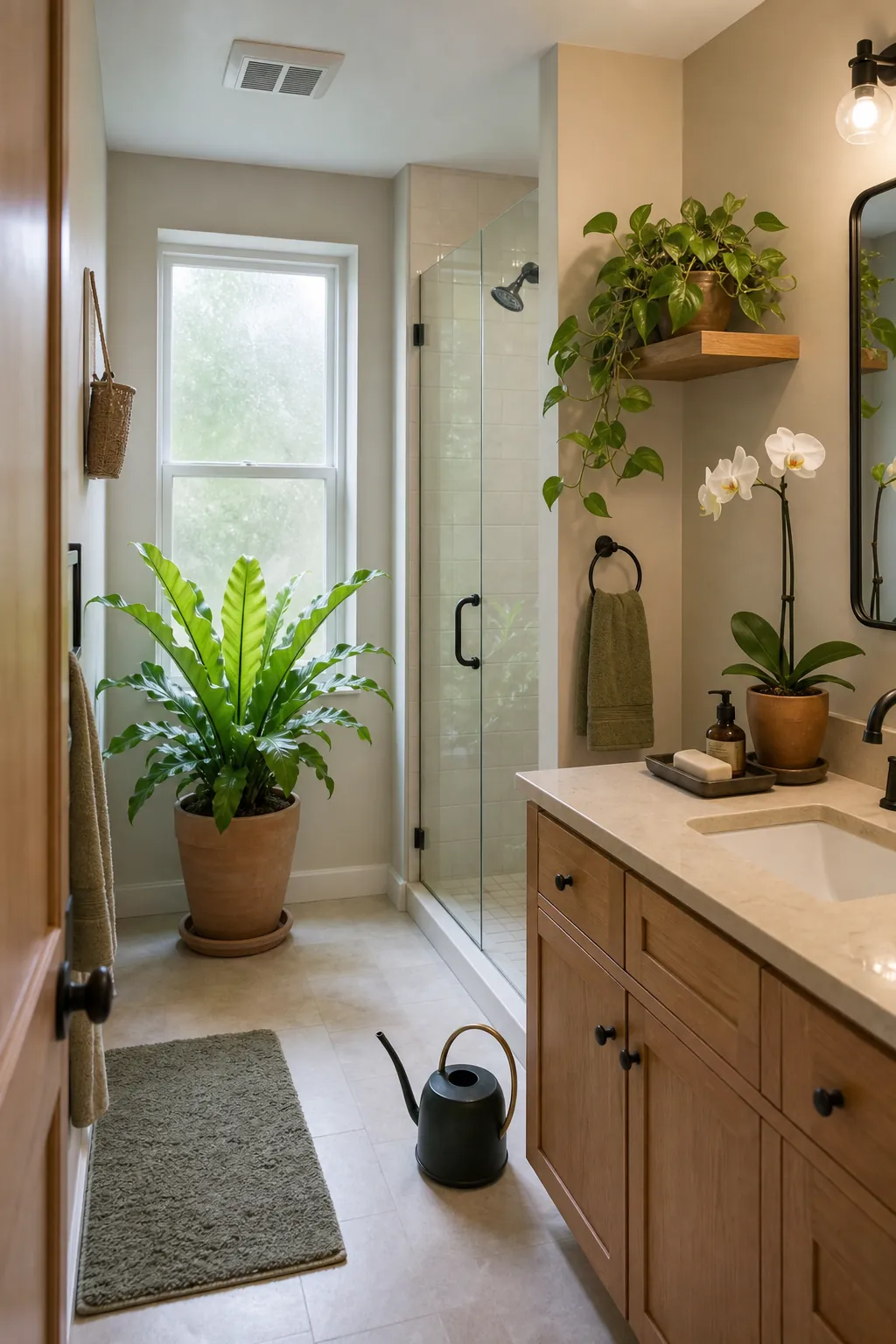
Bathroom plants are often sold as the easiest shortcut to a fresh, spa-like room. Then the fern browns, the pothos stalls, or the pot stays wet for weeks. The problem is rarely that the bathroom is “not humid enough.” Plants eat light, roots need oxygen, and humidity is only one part of the placement decision.
The good news is that one healthy plant can transform a bathroom more convincingly than a shelf crowded with struggling greenery. Use the room’s real light, temperature, splash pattern, storage, and maintenance routine to decide what belongs where.
Map the Light Before You Pick a Plant
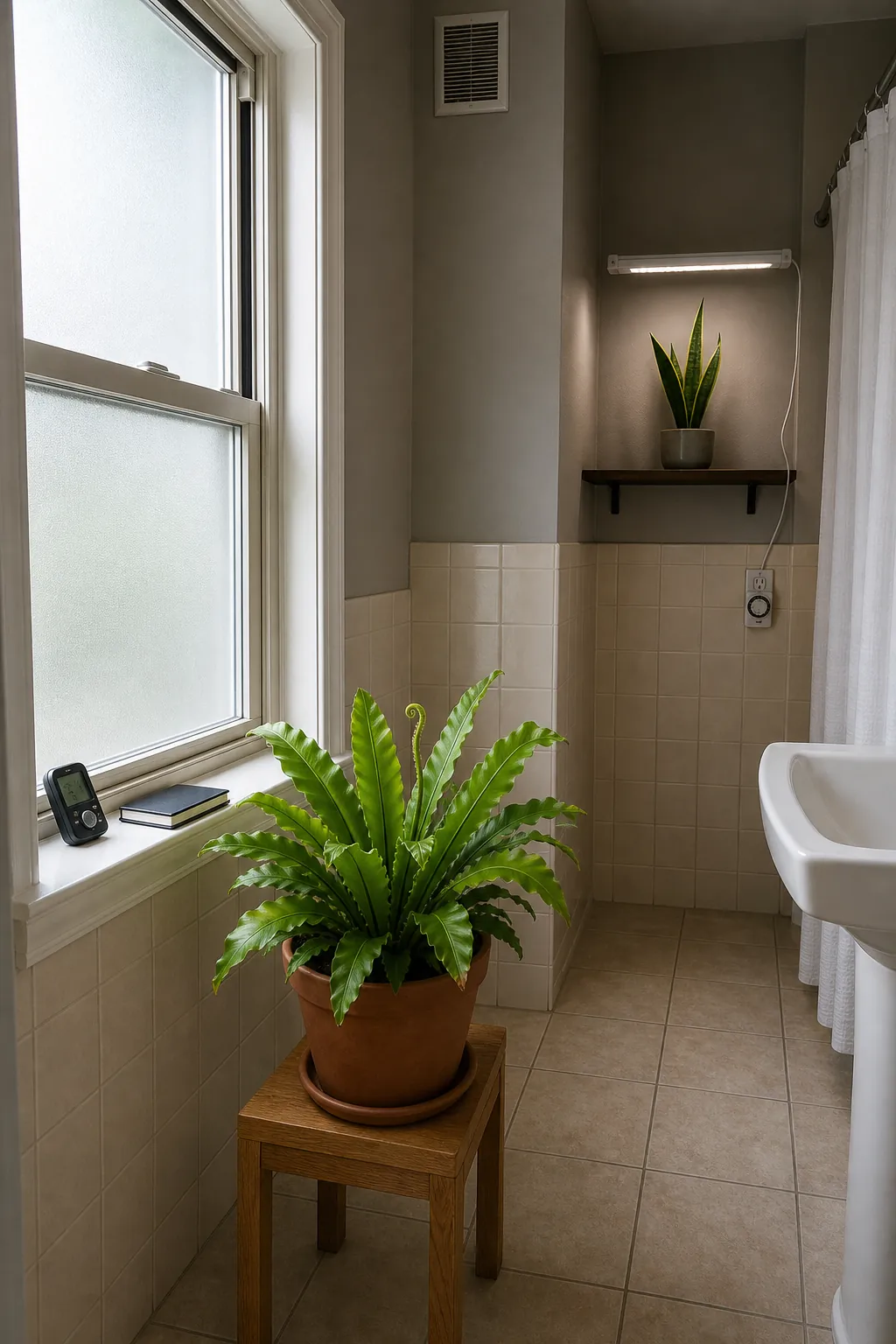
Watch the bathroom at several times of day. Note whether the window receives direct sun, bright diffused light, or only a dim glow. A frosted window can still provide useful light, but distance matters: a shelf across the room receives far less than the sill. Pennsylvania State University Extension warns that bathrooms often lack an appropriate light source even when their humidity seems ideal.
If there is no window, there is no “no-light plant.” A snake plant or ZZ plant may decline slowly enough to look fine for a while, but it is not thriving. Use a proper grow light on a timer, positioned at the distance recommended for that fixture, or skip living greenery. Start with available light, then choose a species that fits it.
Match the Species to the Bathroom You Have
Bright indirect light and regular humidity can suit a bird’s nest fern, moth orchid, calathea, or heartleaf philodendron, depending on the exact conditions. A pothos or spider plant can handle somewhat lower indirect light. Do not choose a cactus merely because the sill is small; high humidity and slow-drying soil work against plants adapted to dry air.
Also consider the plant’s mature size and growth habit. A trailing vine needs a secure route that will not brush faces or fall into the sink. A fern needs clearance for its crown. An orchid needs air around its roots and protection from direct spray. Buy for the actual shelf, ledge, or floor space—not the empty corner in an inspiration photo.
Keep Plants Near the Shower, Not in the Spray
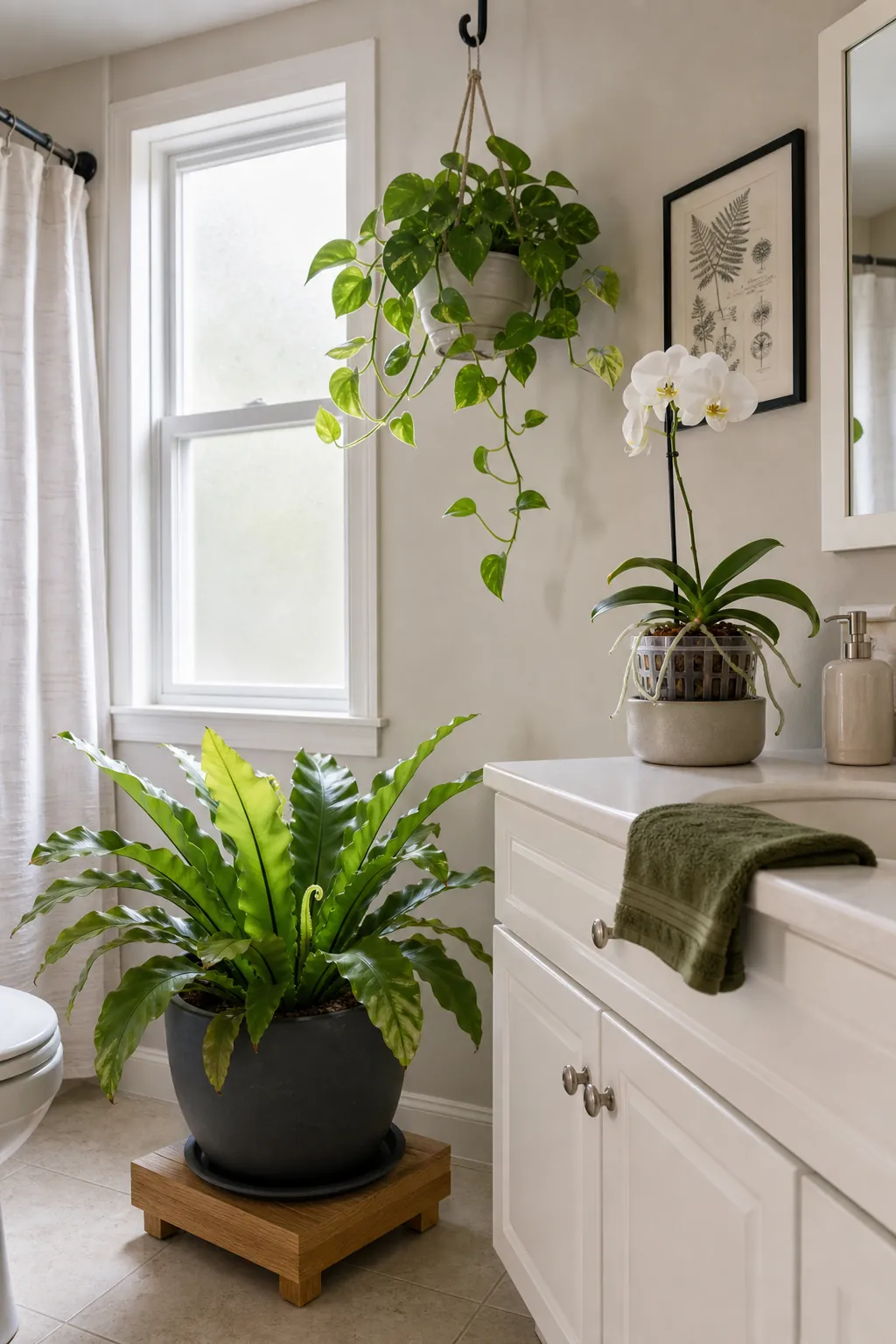
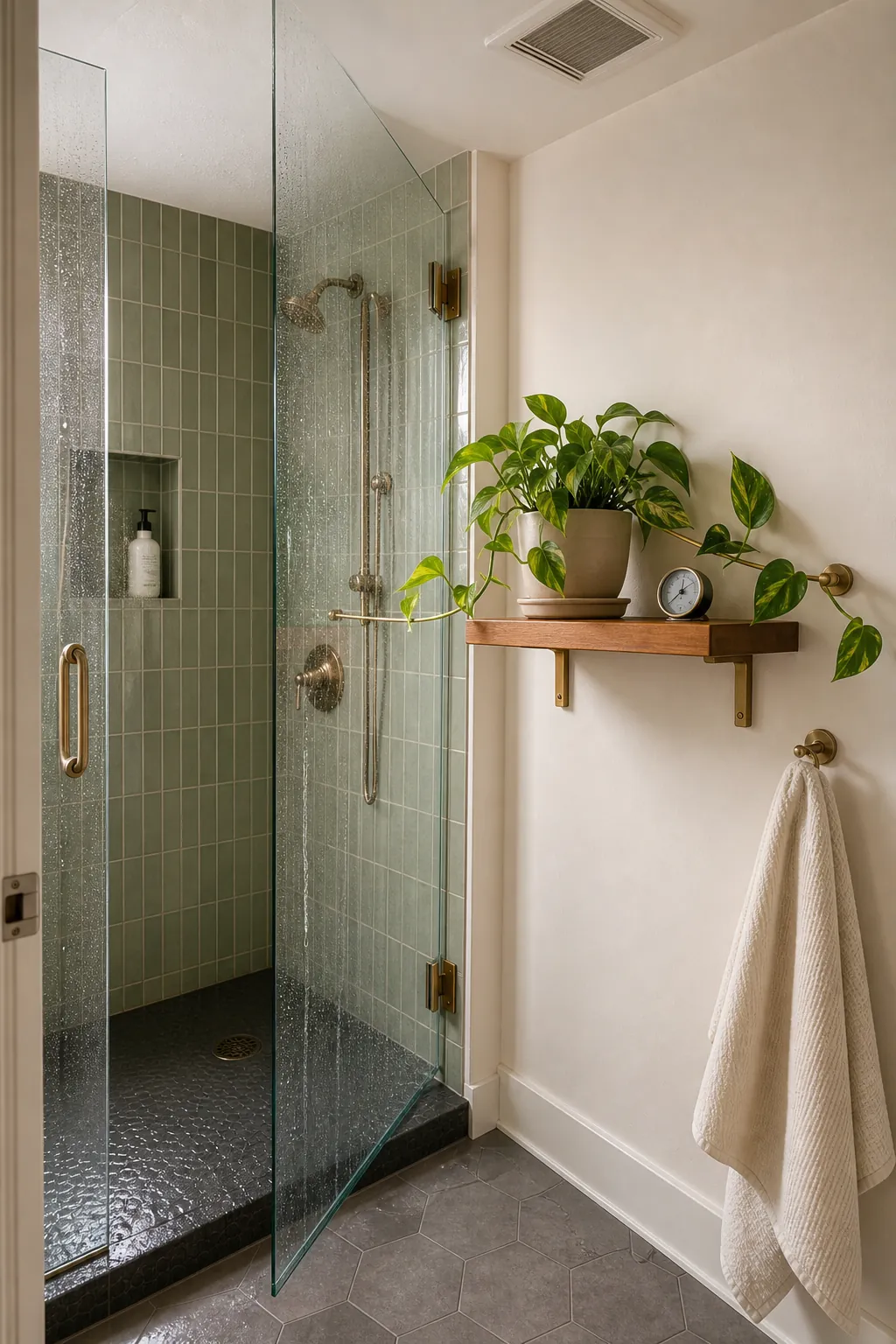
A plant beside the shower can benefit from the room’s humid periods. A plant directly under the shower head gets abrupt temperature changes, oversaturated potting mix, and residue from soap or hair products. Reddit plant owners repeatedly report that moving a pothos just outside the curtain made the difference between decline and healthy growth.
Place pots beyond the spray line and away from hot radiators or cold drafts. Keep foliage clear of wet glass and leave the exhaust fan usable. Bathrooms still need ventilation; trapping moisture to help a plant can also encourage mold on walls and slow the drying of towels. Let normal showers supply incidental humidity without turning the room into a greenhouse.
Use Drainage and Water by the Soil
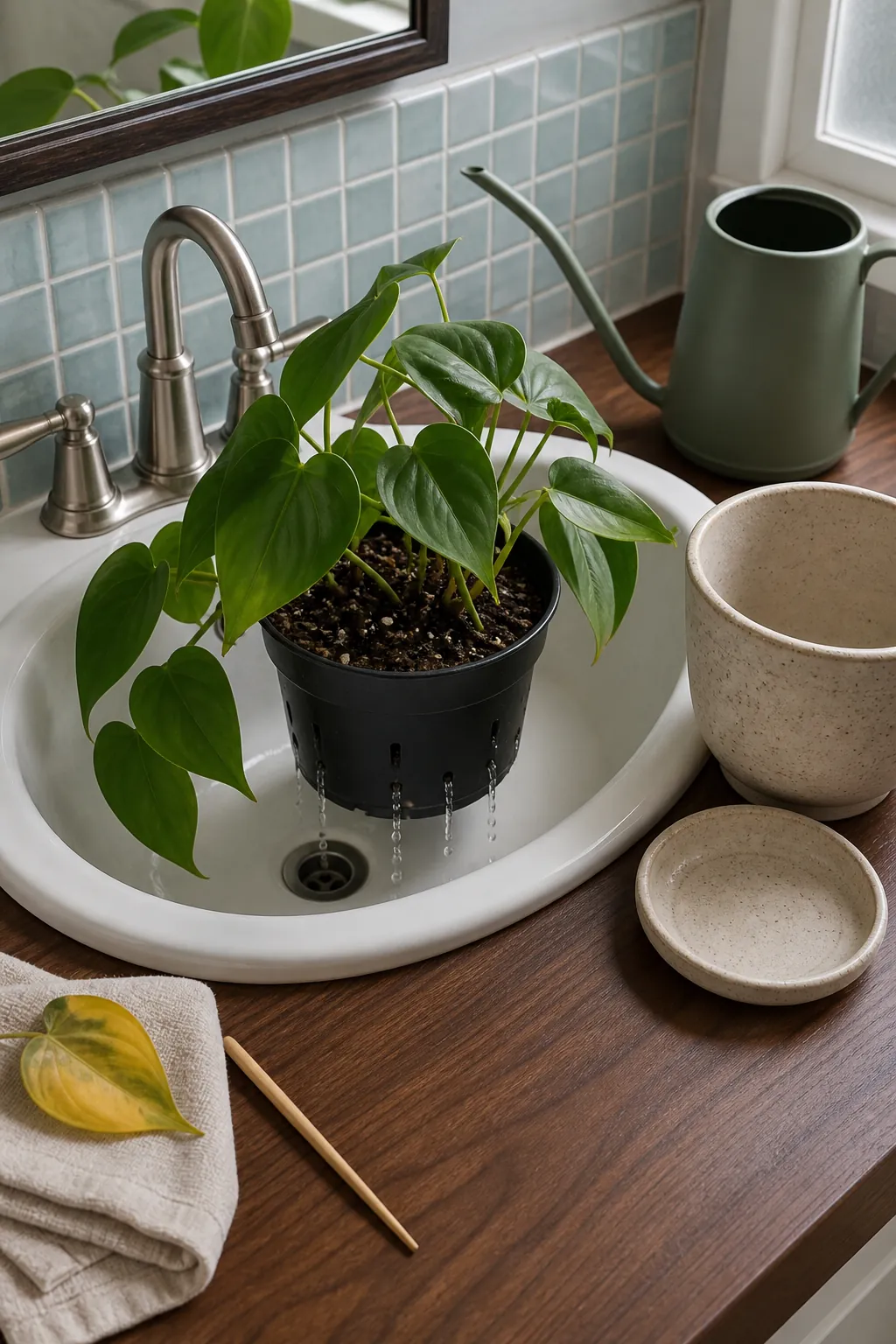
Higher humidity can slow water loss, so a bathroom plant may need less frequent watering than the same species in a dry living room. Do not water on a fixed weekly schedule. Feel the mix, check the pot’s weight, and learn how dry that species prefers to become. When watering, saturate the root ball and let the excess drain completely.
A decorative cachepot is useful only if you remove the nursery pot for watering and empty trapped water afterward. Keep drainage holes above any water in a pebble tray. Root rot can make a wet plant wilt because damaged roots can no longer move water. The answer is not another pour from the watering can; it is better drainage and a slower schedule.
Style Greenery Without Creating Clutter
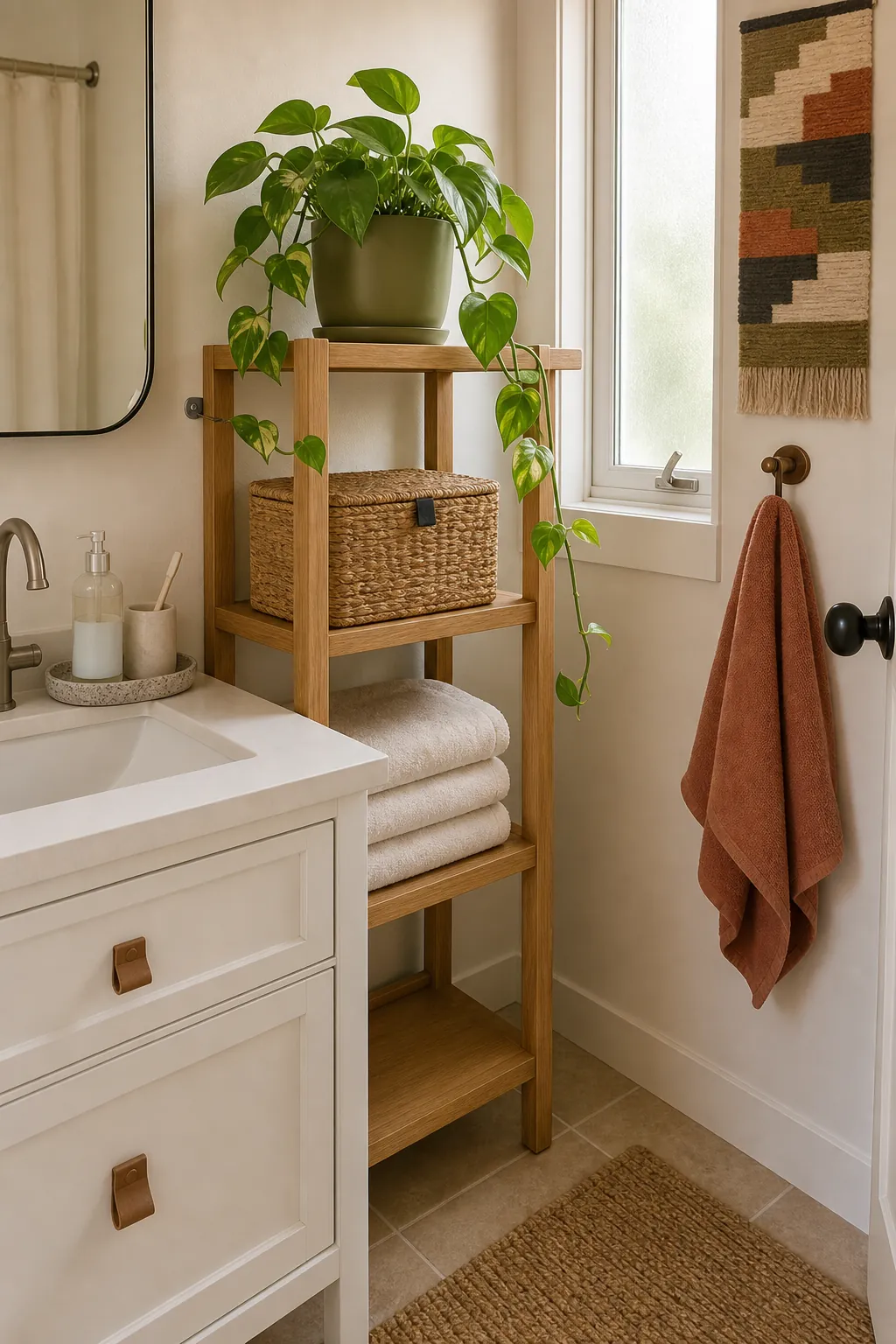
Choose one lead plant, then support it with clean lines and repeated materials. A trailing pothos on a high bathroom shelf can soften tile; a fern on a floor stand can fill an unused corner; a small orchid can bring shape to a vanity. Avoid putting a tiny pot on every ledge. Too many containers make cleaning harder and dilute the impact of healthy leaves.
Use saucers and cachepots that relate to the bathroom decor—matte clay, speckled ceramic, or sealed wood—without turning everything green. Keep toiletries in closed bathroom storage and leave breathing room around foliage. In a guest bathroom, check that vines do not interfere with towels, mirrors, shelves, or the door.
Use Plant Health as the Freshness Test
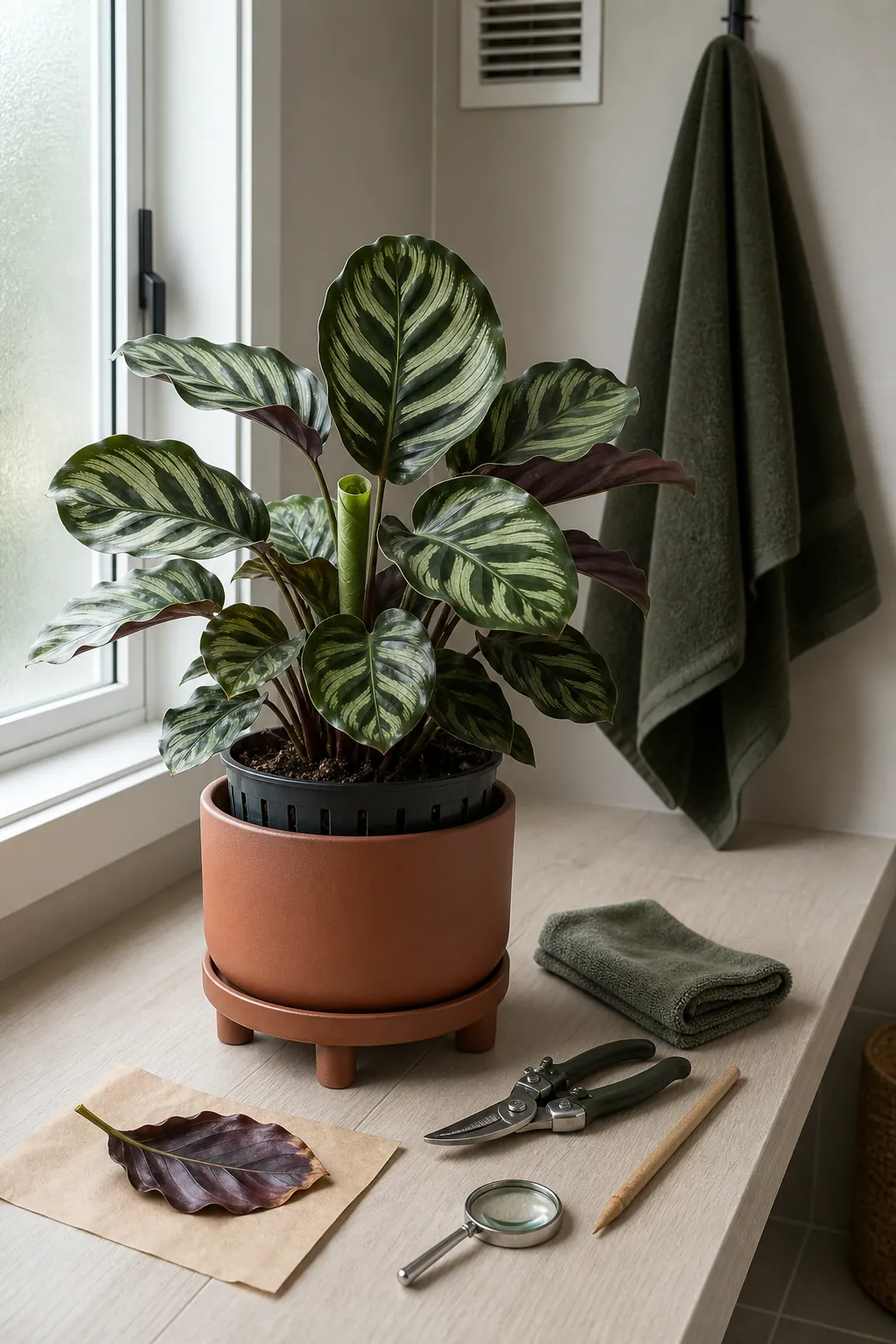
Once a week, look at new growth, leaf color, soil moisture, pests, and the underside of the pot. Wipe dust from broad leaves, rotate the pot if growth leans strongly toward the window, and remove dead material promptly. If the plant stretches, pales, or stops producing healthy growth, increase appropriate light rather than adding fertilizer blindly.
A fresh bathroom is not defined by how many plants it contains. It is defined by clean air movement, dry towels, clear surfaces, and greenery that is visibly alive. One well-matched plant, placed just outside the splash zone and cared for according to its soil and light, does more for a natural bathroom than a dozen fashionable pots in the wrong place.